Riomaggiore, Italy
Watch the same video on the dedicated video page.
Riomaggiore is the southernmost of the five villages of the Cinque Terre, and for many visitors the most beautiful of all. Its tall pastel houses pile up on both sides of a steep ravine, tumbling down to a tiny harbor on the Ligurian coast, and the view of the village rising from its little cove is one of the most photographed scenes in Italy. As the easiest of the five to reach, it is often the first stop on a Cinque Terre visit, and it makes a memorable introduction to this stretch of the Italian Riviera.
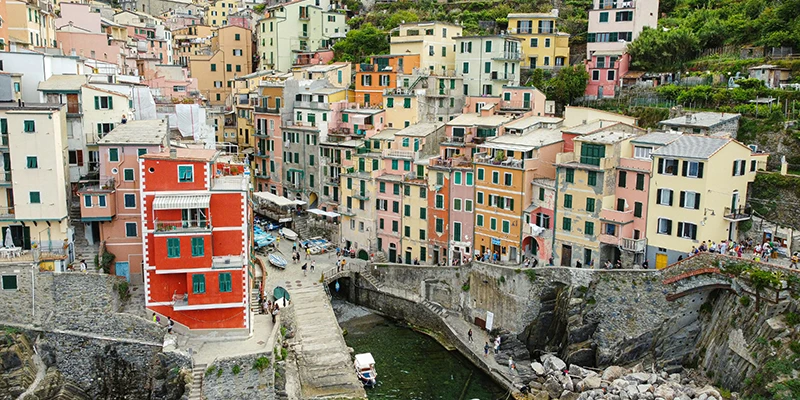
The Cinque Terre — the name means "Five Lands" — is a rugged stretch of the Ligurian coast in northwest Italy, between Levanto and La Spezia and about an hour south of Genoa. The five villages, from north to south, are Monterosso, Vernazza, Corniglia, Manarola and Riomaggiore, strung along the cliffs and linked by train, by boat in the warmer months, and by walking trails. The whole coastline is both a national park and a UNESCO World Heritage Site, protected for its extraordinary terraced landscape and its centuries of human settlement.
Getting here is easy, and yet unusual, because no road comes directly into the village — you arrive by train, by boat, or on foot. The train service is frequent and brings you right to the station, where there is a gift shop and one of the national park's information offices; in the busy season you can buy your park pass here along with a map or a T-shirt. From the station a tunnel cuts under the hill that stands between the tracks and the town, leading you through to the main street and down to the waterfront. Each of the five villages has a similar tunnel, and this one is clean, well lit and nicely decorated.
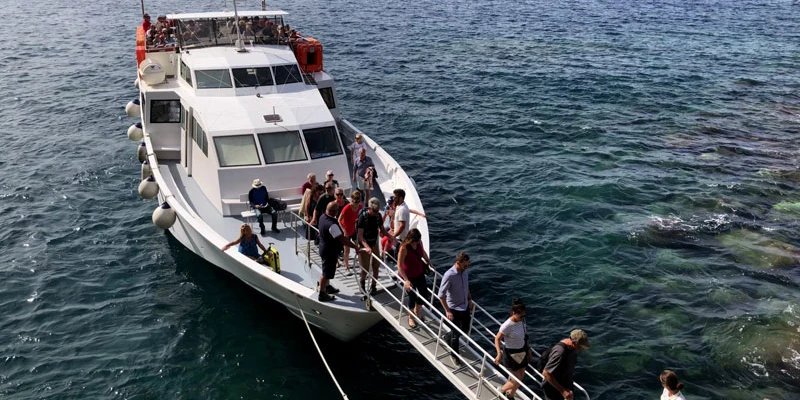
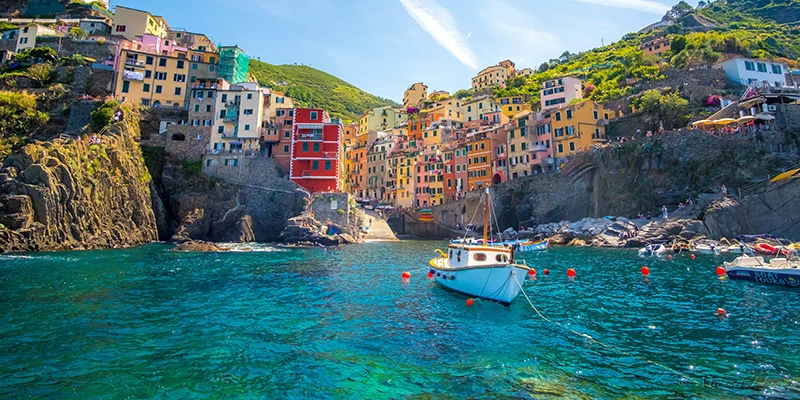
Arriving by boat, however, gives the most spectacular introduction of all. The ferry rounds the coast with splendid views of the green hills, cliffs and the blue sea, and then Riomaggiore comes into sight, the pastel village heaped above its cove. The boat dock sits in the open Ligurian Sea rather than a sheltered cove, so the boat may bob up and down as you are helped onto the gangway. Then comes a big stone staircase of around a hundred steps up from the dock — worth the climb, because from the top you get the perfect view looking up into the village before walking back down to sea level.
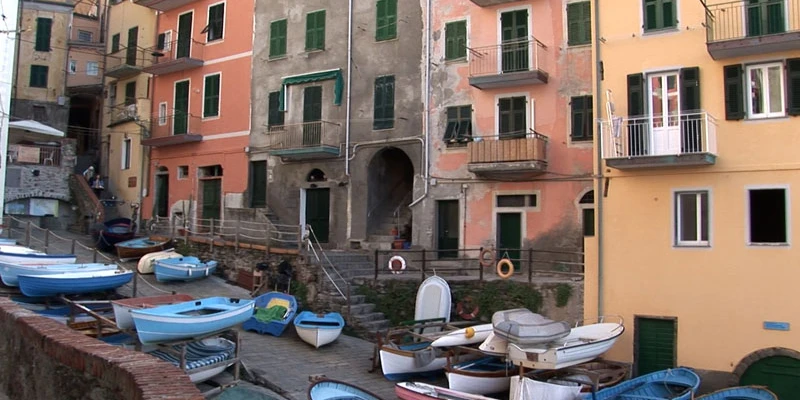
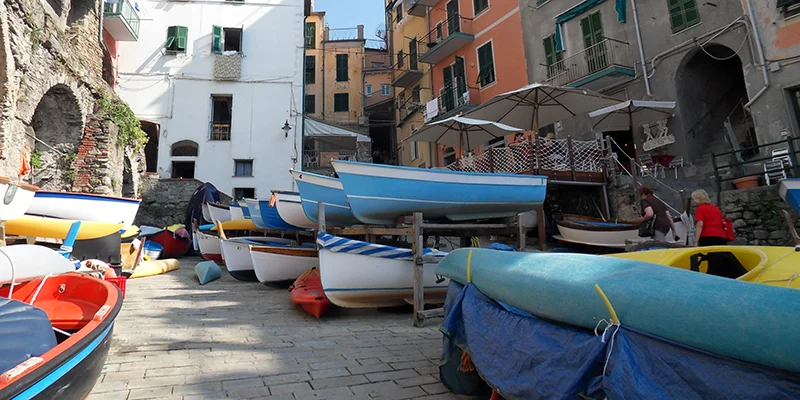
The heart of the village is its harbor, a tiny colorful cove at the foot of the ravine. It is so small that the fishing boats are kept stacked up on dry land rather than left bobbing in the water, and in the off season there is little fishing activity, which only adds to the quiet charm. The buildings around the harbor are about four hundred years old, a little beat up but well cared for, with residences right on the harborfront — and, as in any marine village, there are cats, hanging about among the boats and nets in hope of a few fish scraps.
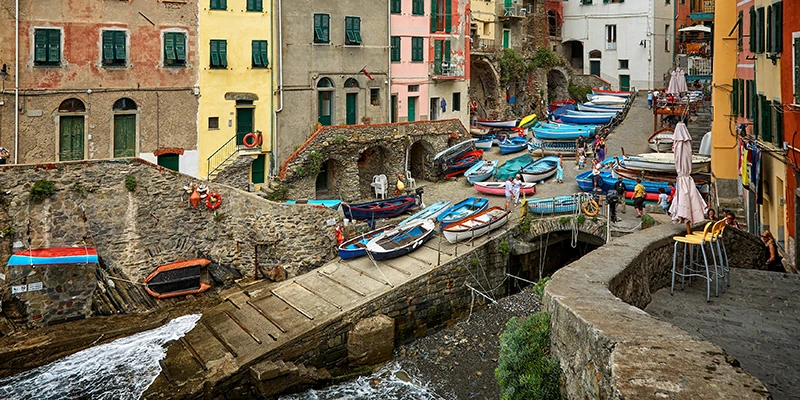
The brightly painted boats drawn up along the waterfront are one of the most characteristic sights of the village, a reminder that Riomaggiore began as a fishing community. Pulled up out of the water and lined along the quay and the foot of the main street, they add still more color to an already vivid scene, and they make the little harbor one of the most photogenic corners of the whole Cinque Terre.
Watch the same video on the dedicated video page.
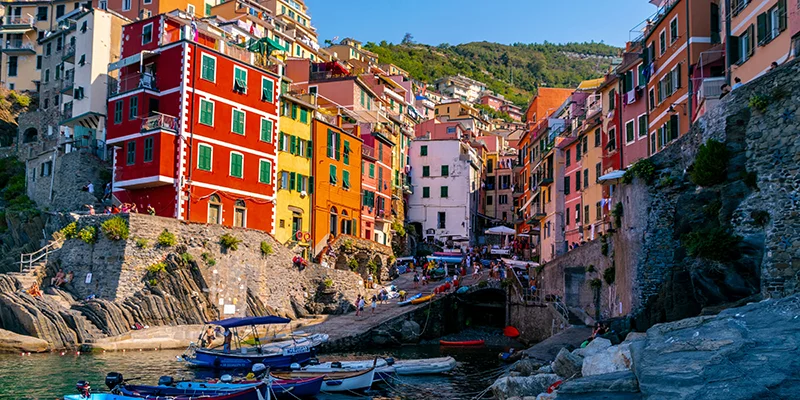
The great view of Riomaggiore is the one looking back at the village from the point beside the harbor. Walk out to the waterfront and up the little staircase on the left side, and you gain a gorgeous vista of the hillside covered with pastel-colored houses tumbling to the sea — it looks like a cubist painting. You simply cannot appreciate how pretty the village is from within its lanes; you have to get out to this point, and it is well worth the few extra steps. The terrace here gets crowded, as everyone wants the same view.
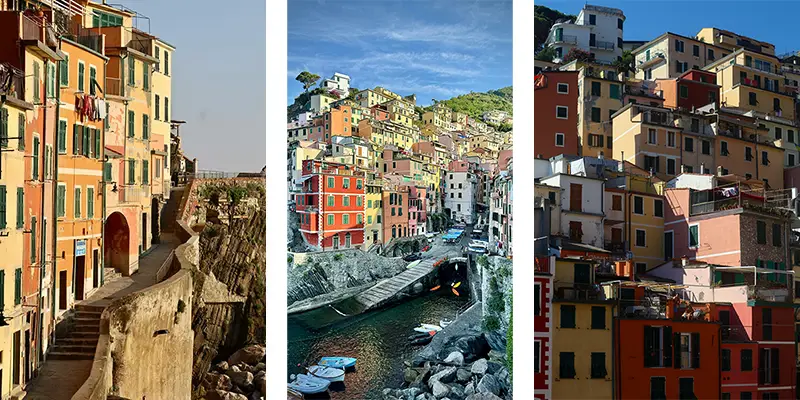
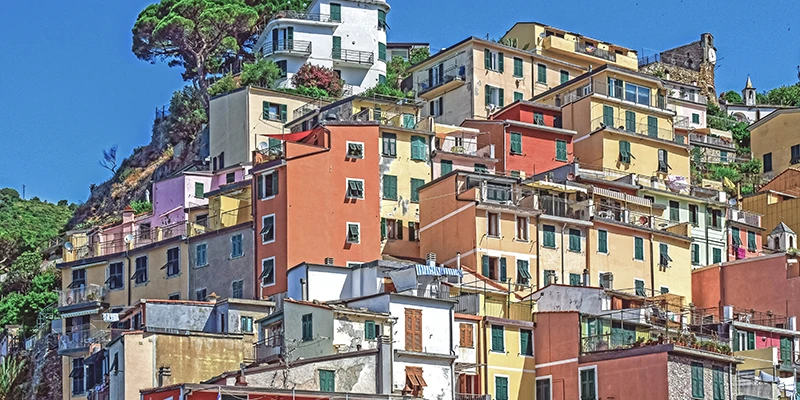
The pastel-colored homes spilling down the hill on both sides of Riomaggiore make an astonishing sight, the familiar Cinque Terre pattern of houses tumbling down the cliffs to the water's edge with a single main pedestrian street rising up from the cove. It is a surprising mix of urban high density set in a tranquil, rural landscape — the village is tightly packed, yet the side streets are very quiet, especially in the off season.
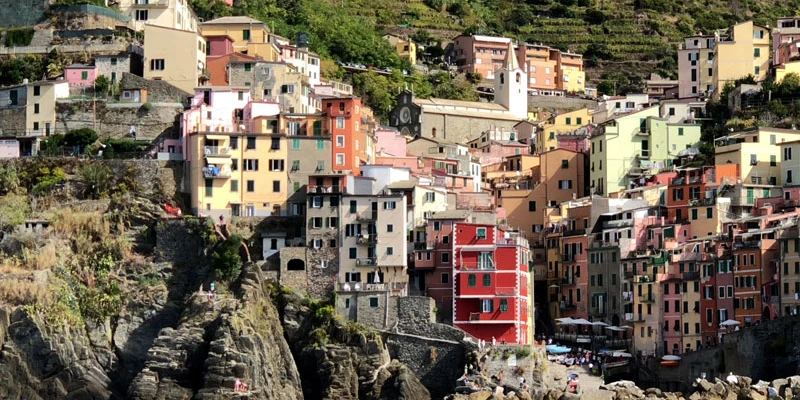
The main pedestrian street climbs up from the waterfront and is lined with shops, cafés and restaurants. There is a fruit and vegetable stand, small shops selling the T-shirts and souvenirs that make an easy gift to take home, and plenty of places to stop for a drink or a bite. Laundry hangs from the windows above, a reminder that this is a fully occupied, living town and not a museum. One of the main activities here, as everywhere in the Cinque Terre, is people-watching, the locals watching the tourists and the tourists watching the locals.
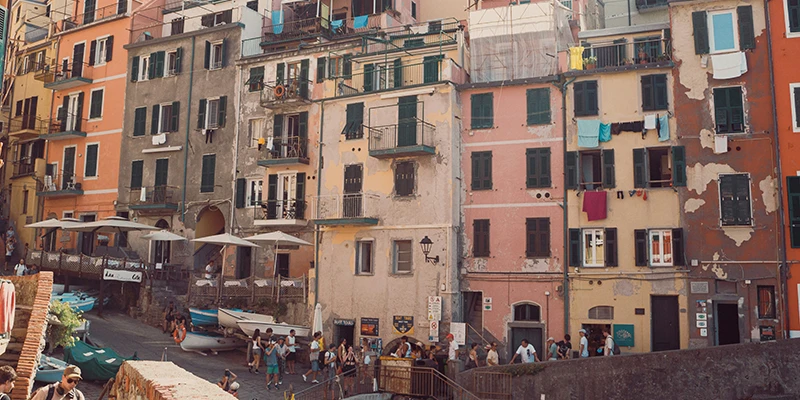
Up and down the lanes the buildings crowd close together, their facades painted in every shade of ochre, pink, red and yellow, with green shutters and lines of laundry strung between them. It is this dense tumble of color, climbing the walls of the ravine, that gives Riomaggiore its unforgettable look and draws photographers from all over the world.

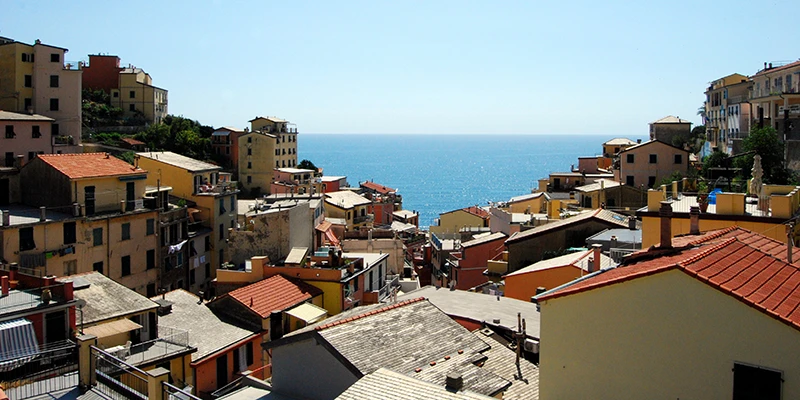
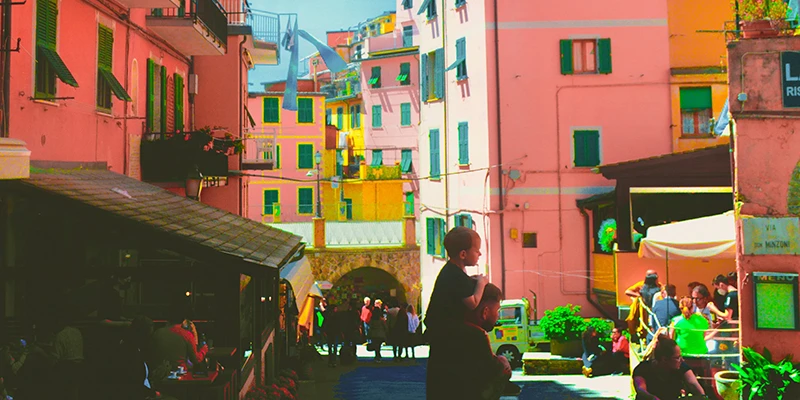
Riomaggiore has an authentic character that comes through most strongly in the quieter months. There are a few shops and a place for a drink up the main street, but if you keep climbing past them the village thins out, with little more to see — so you do not need to hike all the way up. The upper slopes are residential, reached by steep little alleyways that turn out to be staircases, this being a village built in a tight valley; it is a strenuous detour that most visitors can happily skip, though an elevator helps for those who want to explore up top.
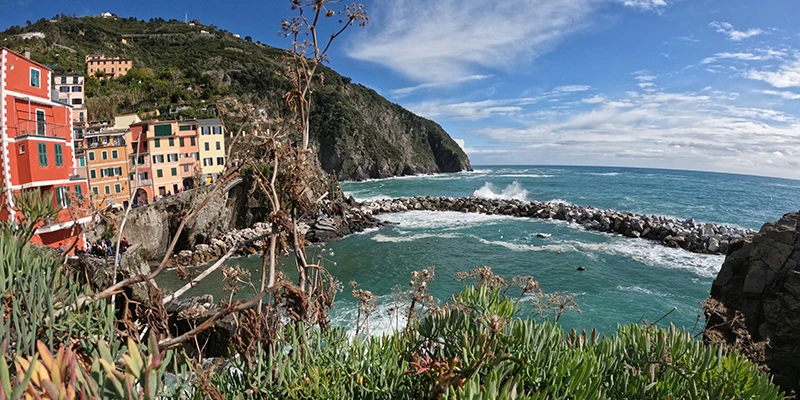
Unlike the other villages, Riomaggiore's train station is down at the waterfront rather than up the hill, reached back through that same tunnel. In the summer people swim in the little cove, and the boat ramp serves as a kind of beach for sunbathing, for locals as much as for visitors. This is a real town where people live year-round — roughly five hundred residents in winter, rising to about fifteen hundred in the busy summer, when it can get quite crowded. Many travelers prefer the shoulder seasons, with October and November, or February through April, offering mild, sunny weather and far smaller crowds.
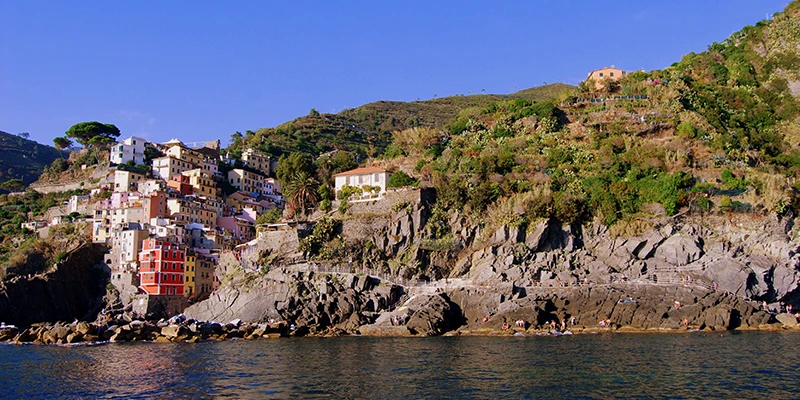
One of Riomaggiore's famous features is the Via dell'Amore, the "Way of Love," a short, level cliffside path that leads to neighboring Manarola in about twenty minutes — the easiest and most pleasant walk between any two of the five villages. A terrible storm in 2011 flooded the villages and brought landslides down onto the walkway, destroying much of it, and it was closed for rebuilding for years afterward. It has reopened in stages, so it is worth checking locally whether the full path is open during your visit; the more rugged mountain trails connect the other villages for those who want a longer hike.
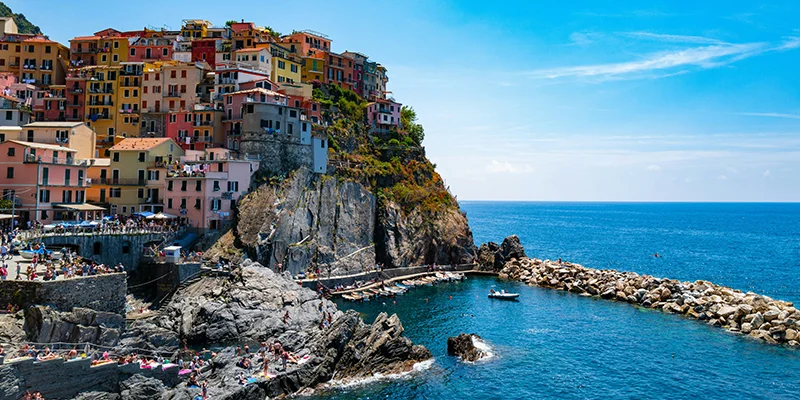
Compact, colorful and dramatically set, Riomaggiore is a fitting climax to any tour of the Cinque Terre. Whether you arrive by the scenic boat, step off the frequent train, or walk in along the Via dell'Amore, the village rewards an unhurried visit — a climb to the viewpoint, a wander up the main street, a drink on a terrace above the harbor, and time simply to take in one of the loveliest small places on the Italian coast.
Watch these same videos on dedicated pages: Riomaggiore - Video 1, Riomaggiore - Video 2.