Corniglia, Italy
Corniglia is the odd one out among the five villages of the Cinque Terre, and the most dramatic in its setting. While the other four tumble down to little harbors at the water's edge, Corniglia sits high on a rocky promontory about a hundred meters above the sea, with no direct access to the water at all. It is the smallest, the most isolated and perhaps the oldest of the five, a hilltop village of narrow lanes and pastel houses perched on its cliff — and reaching it, naturally, involves some stairs.
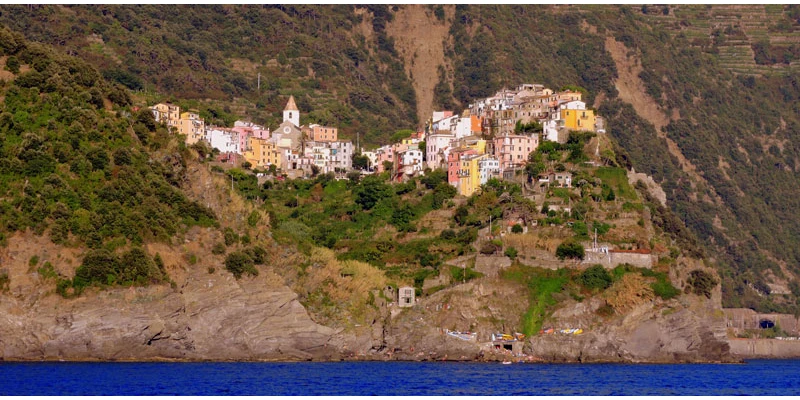
The Cinque Terre, meaning "Five Lands," is a stretch of the rugged Ligurian coast in northwest Italy, between Levanto and La Spezia and about an hour south of Genoa. The five villages — Monterosso, Vernazza, Corniglia, Manarola and Riomaggiore — are linked by train, by boat in the warmer months, and by a network of walking trails, and the whole coastline is both a national park and a UNESCO World Heritage Site. Corniglia sits in the middle of the chain, the third village counting from either end.
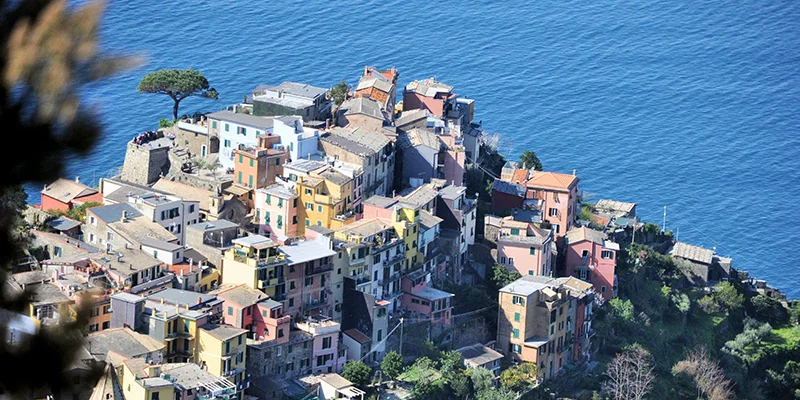
Getting up to the village is the first order of business. From the train station down by the shore you climb the Lardarina, a long brick stairway of 33 flights totaling 382 steps, zigzagging up the cliff face — or you can wait for the shuttle bus that runs up the road. When you are done with your visit you walk back down, or set out on the fine hillside trail that leads about three kilometers to Vernazza, a walk of roughly ninety minutes. Either way this little speck of a town is well worth the effort for its views and its quiet, old-fashioned character.
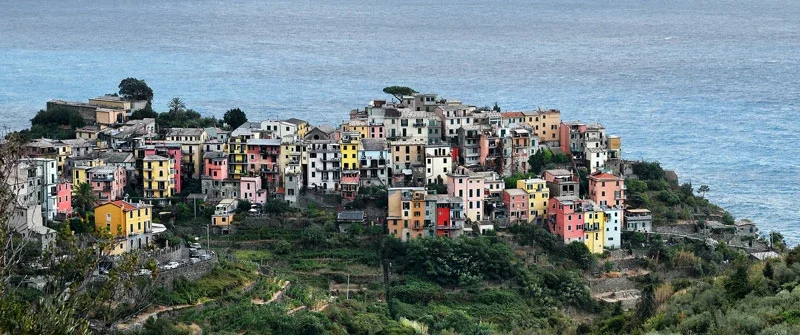
The hilltop position is no accident. In earlier centuries all the Cinque Terre villages were built up on the hillsides rather than at the water's edge, for defense — set back and elevated, they were better protected from the seafaring pirate raids that plagued this coast. Corniglia, being so old, is just oozing with historic charm as a result. Its houses are notably lower and more compact than those of the other villages, built in the Genoese style, and the whole place has the feel of an inland hill town that happens to overlook the sea.
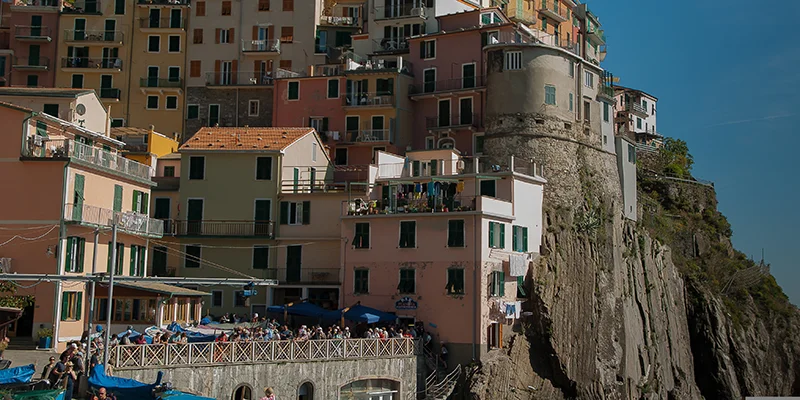
The heart of the village is its single main street, Via Fieschi, which runs the length of the promontory. It is narrow, as you would expect, lined with small shops, wine bars, gelaterias and trattorias, and it seems like there are more locals than tourists out and about — Corniglia draws fewer day-trippers than its waterfront neighbors precisely because of all those stairs, which is part of its appeal. Along the way you can stop to taste the local wine or try a cup of the honey-flavored gelato the village is known for.

The main square is tiny — only about ten yards across in one direction and twenty in the other — but big enough to hold a few restaurant tables and host some picnic lunches for the intrepid hikers who pass through. It is an unhurried, sociable spot, shaded and lined with old stone buildings, where villagers and walkers pause in the middle of the day. Nearby stands the village's handsome church, the Gothic-style San Pietro, one of the finest of the Cinque Terre churches.
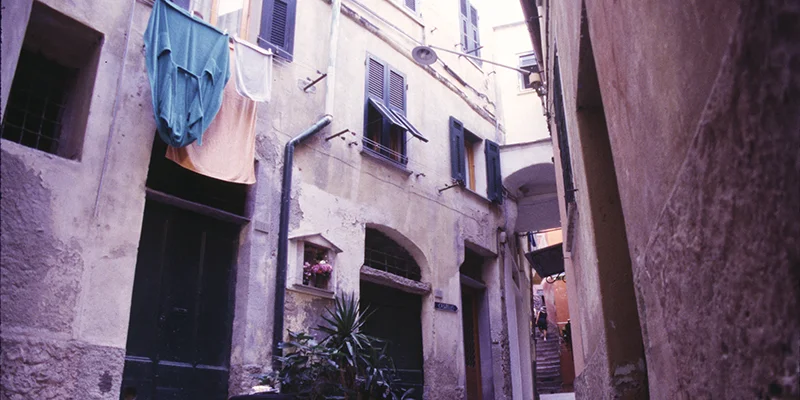
Wandering the side lanes is the real pleasure of Corniglia. Steep little alleyways and stone staircases branch off the main street, passing under arches and between the tall houses, with laundry strung across the gaps and cats dozing in doorways. The buildings wear the patina of age — a little peeling paint here and there — but they are well looked after, and the whole village has an authentic, lived-in character that the off season only deepens.
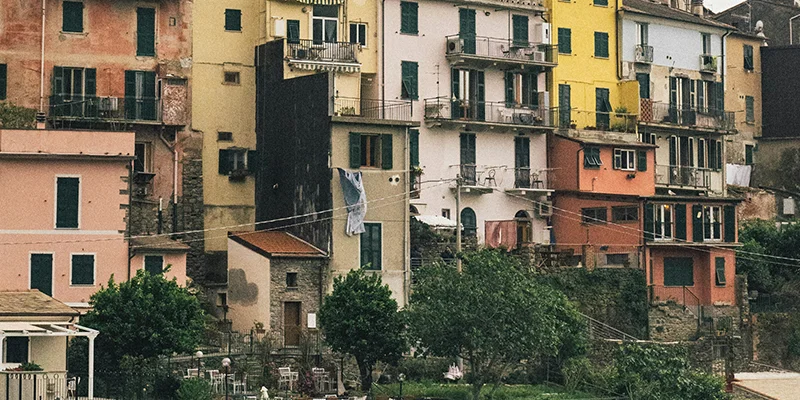
Like the other villages, Corniglia is surrounded by the terraced vineyards that climb the steep slopes above and behind it, where the grapes are grown for the local white wine. The dry-stone terraces, built and maintained by hand over many centuries, are one of the defining features of the Cinque Terre landscape, and the wine they produce — including the prized sweet Sciacchetrà — has been made here since ancient times. The Romans are said to have known the wine of this coast, and some trace the village's very name to a Roman landowner.
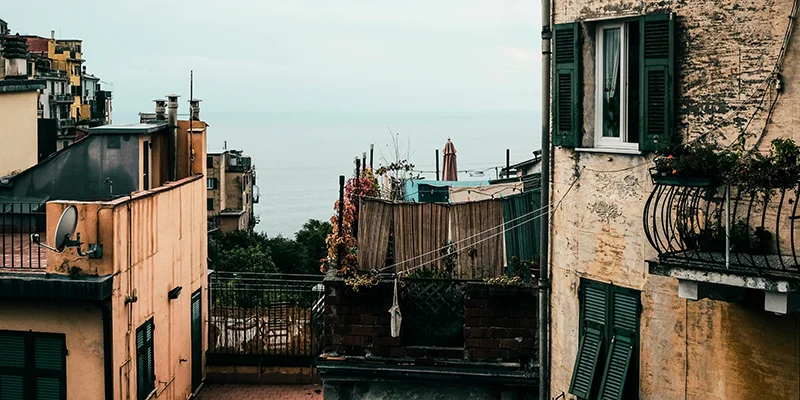
For all that it has no harbor, Corniglia does have a way down to the water for the determined. A path and a long stairway lead to Guvano, a secluded former nudist beach below the cliffs, while a small terrace at the end of the village, the Santa Maria belvedere, gives one of the great views of the coast. From this lofty perch you look out over the vineyards and down the shore to the next village, Manarola, with the open Mediterranean stretching to the horizon.
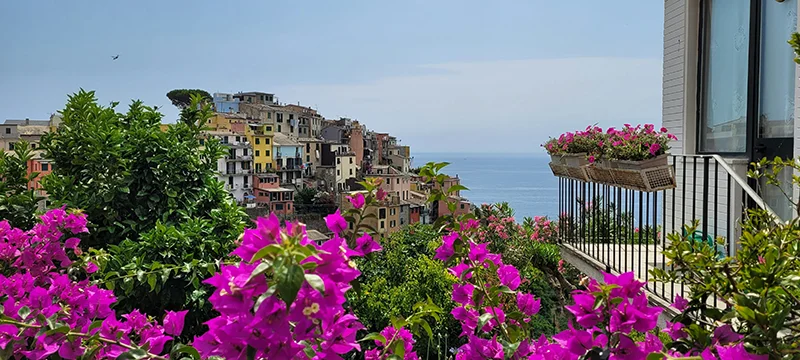
From Corniglia you can carry on to Manarola on foot along a coastal trail, or simply walk back down to the train station. By rail the next village is only about seven minutes away once you are rolling. Bear in mind that the tracks also carry freight trains and intercity expresses that rush straight through without stopping, so when you are hopping between villages you wait for one of the frequent local trains, which is the one that will actually stop for you.
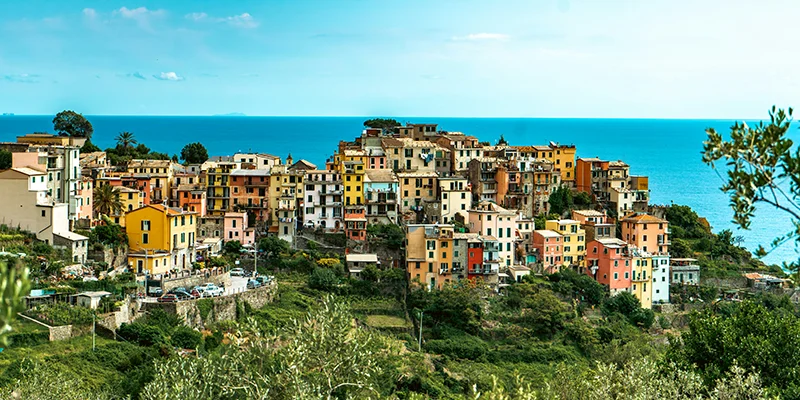
Small, steep and splendidly situated, Corniglia offers a quieter, more rustic experience than the other four villages — fewer crowds, cooler breezes on its height, and sweeping views in every direction. It makes a rewarding stop on any tour of the Cinque Terre, and for many visitors its hard-won hilltop calm is exactly what makes it the most memorable of the five.
Watch the same video on the dedicated video page.