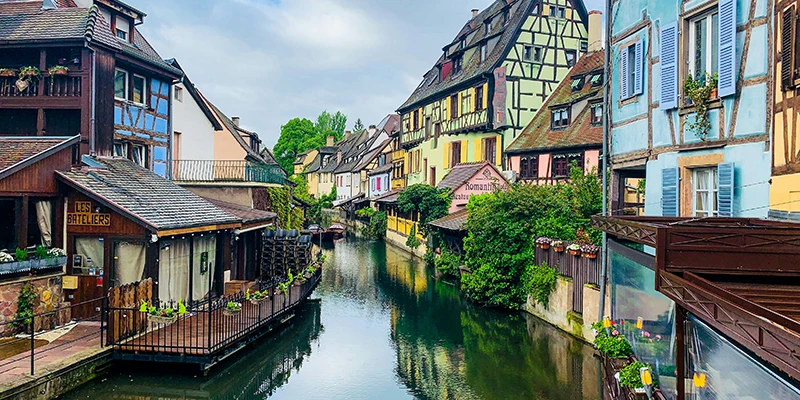
Colmar, France
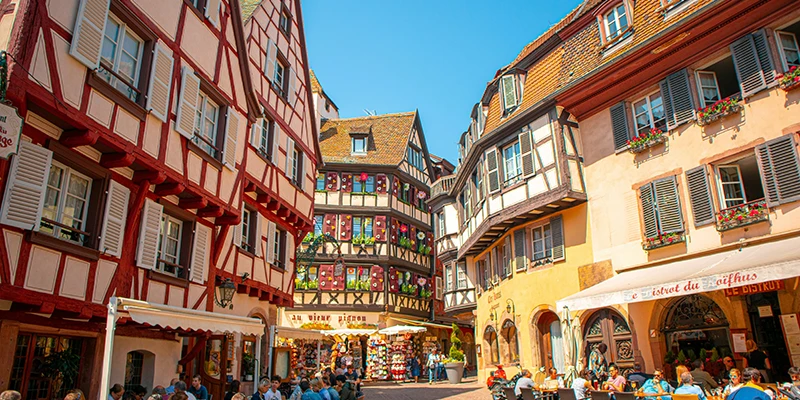
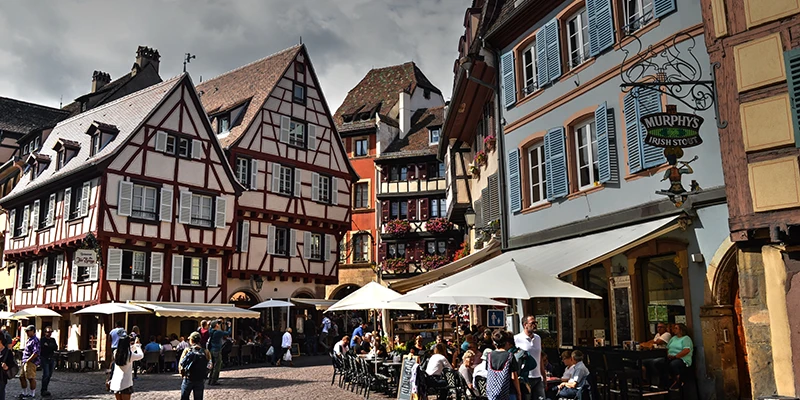
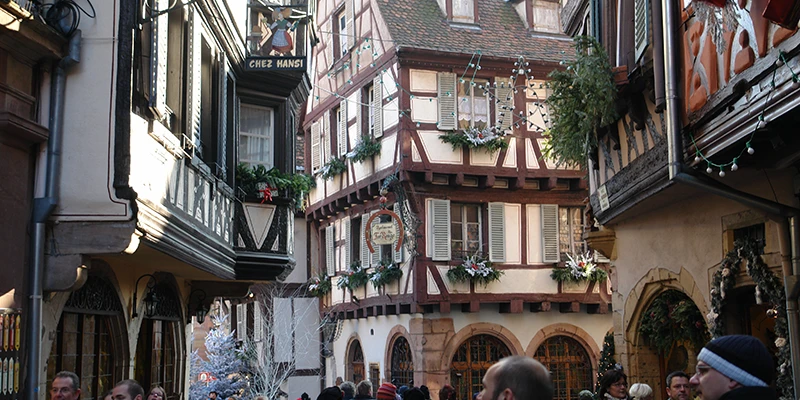
Colmar is one of the most beautiful towns in France, a remarkably well-preserved medieval and Renaissance old town at the heart of the Alsace wine country in the east of the country. Its cobbled pedestrian lanes wind past brightly painted half-timbered houses, flower-decked canals and grand old churches, forming a townscape so intact it looks like a snapshot in time from the 1500s and 1600s. Add a world-class museum, a famous quarter known as Little Venice, and a setting among the vineyards of Alsace, and Colmar rewards a visit in any season.
The town lies in the Alsace region of eastern France, close to the German border and about three hours from Paris by high-speed TGV train. The grand old station sits right on the edge of the old town, so everything is easy walking distance. Because it takes a few hours to reach from Paris, Colmar is well worth an overnight stay or two, and it also makes an ideal base for exploring the surrounding wine villages.
The Old Town
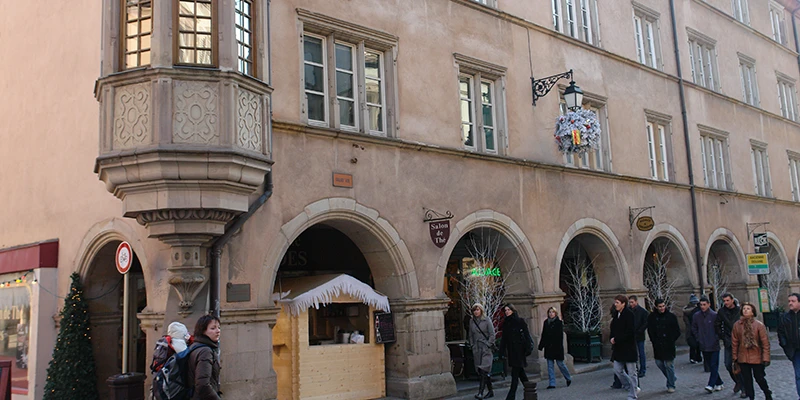
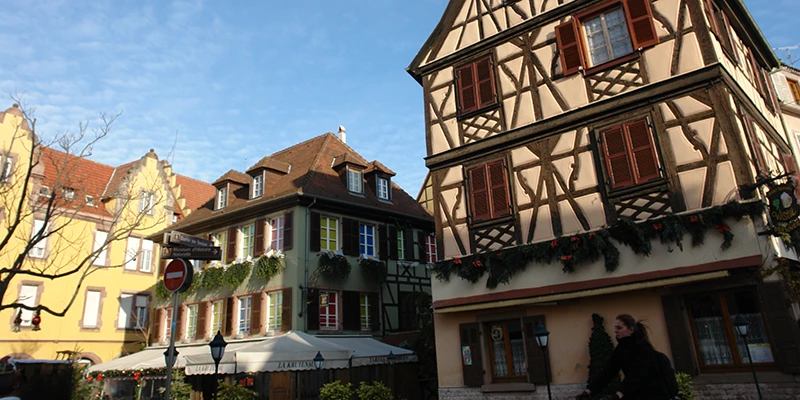
The entire old town is a historic and protected area, most of it dating back around 500 years, with some buildings older still. What makes Colmar exceptional is how little it suffered over the centuries: despite endless wars fought over this frontier region, the town itself escaped serious destruction, surviving the French Revolution and both World Wars almost untouched. The result is a rare, homogenous cityscape of medieval and Renaissance buildings that has made Colmar renowned among travelers.
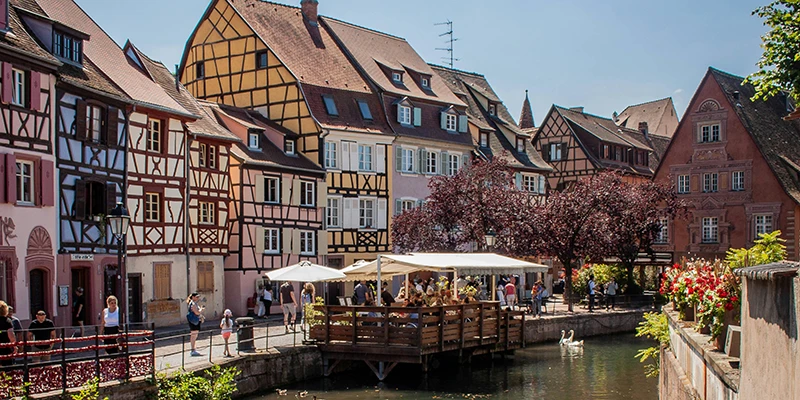
Wandering is the great pleasure here. The pedestrian zone is extensive, with dozens of lanes, alleyways and promenades reserved for walkers. A map from the tourist office helps, but the town is small enough that getting a little lost is part of the fun; you simply look up and down the lanes and turn whichever way appeals. Around every corner is another timber-framed façade, another canal view, another shopfront.
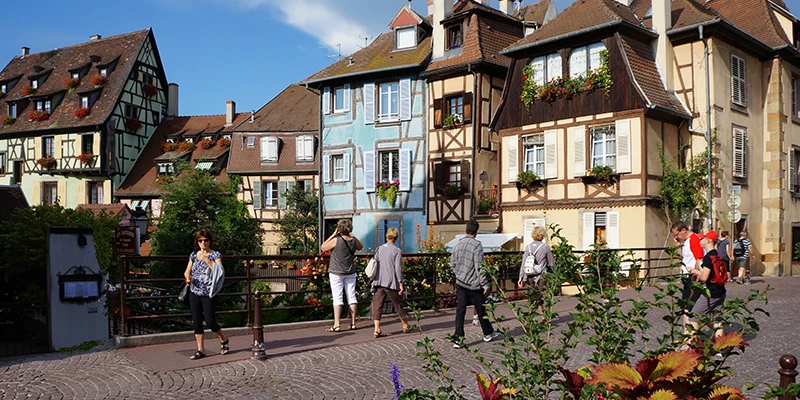
Little Venice
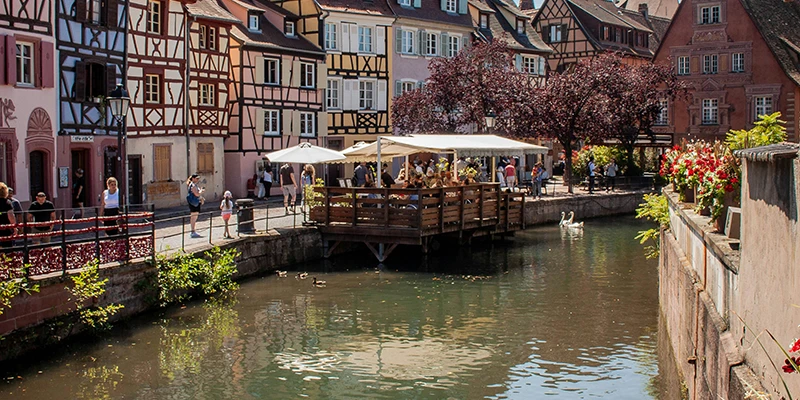
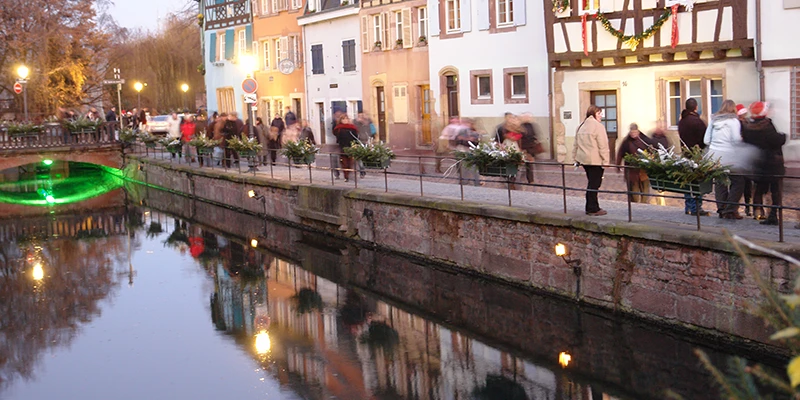
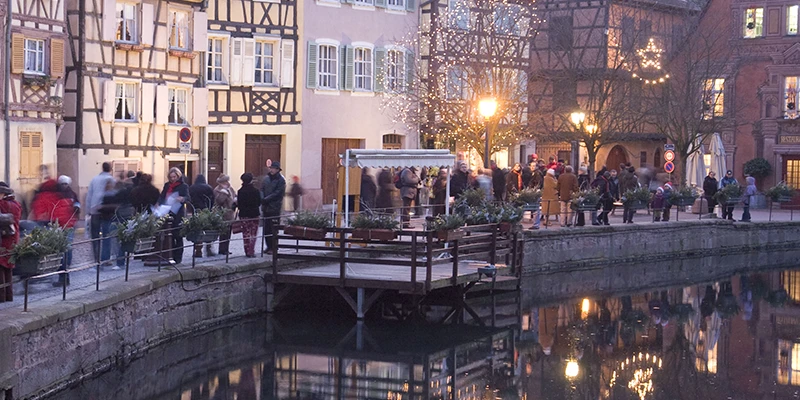
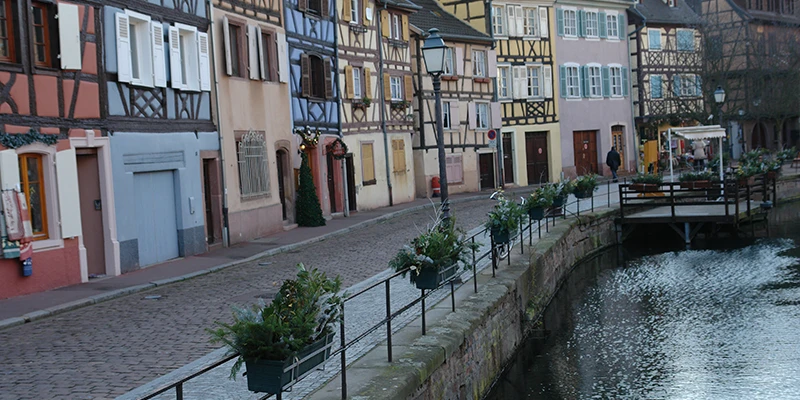
The most photographed part of Colmar is the quarter known as Little Venice, where canals run right through the heart of town, lined with colorful houses whose foundations rise from the water. Once the district of the tanners, fishmongers and market gardeners who used the waterways for transport, it is now the town's romantic centerpiece. Flower boxes spill over the bridges in summer, and small flat-bottomed boats carry visitors along the water. Lovely by day, it becomes truly breathtaking in the evening when the lighting reflects off the canals.
Landmark Buildings
Colmar's streets are lined with landmark buildings that tell its history. The Koïfhus, or old Customs House, stands right in the heart of town and was long the commercial and political center of the city. Nearby is the Pfister House, one of the great landmarks of Colmar, built in 1537 in a medieval design with Renaissance-style painted panels on its exterior depicting allegorical figures — a showpiece of the town's prosperous merchant era.
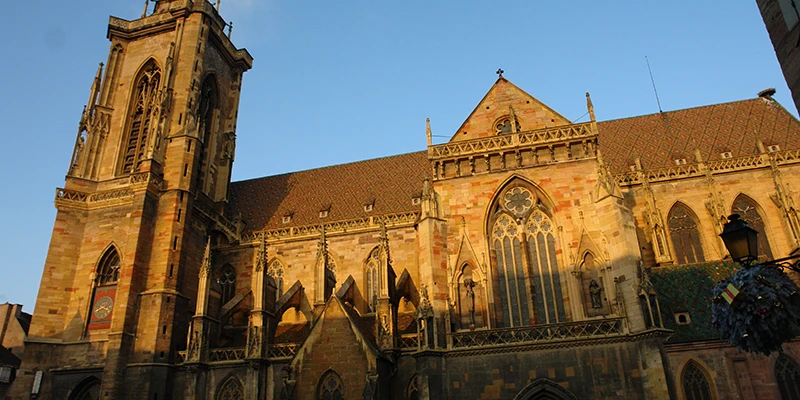
The principal church is the collegiate church of St. Martin, the main Gothic monument of Colmar, built between 1235 and 1365. It looks like a cathedral and indeed served as one for about a decade in the 1700s, though it has always been a church. Renovated and rebuilt several times, it stands today as a grand Gothic structure, with fine flying buttresses along its sides and a high tower rising above the rooftops.
The Unterlinden Museum
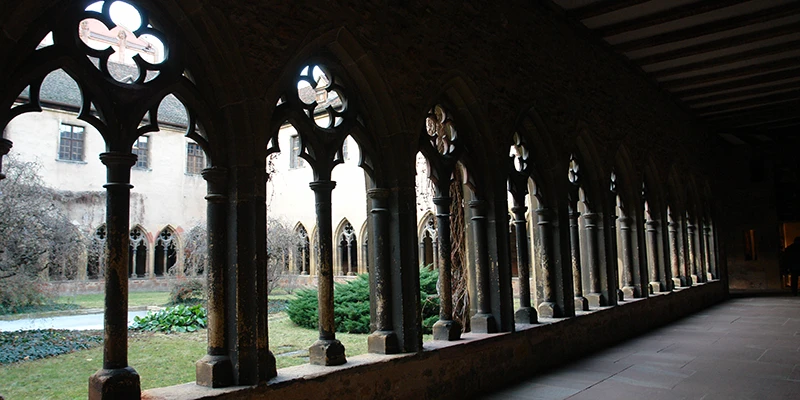
Colmar's cultural jewel is the Unterlinden Museum, housed in a former medieval Dominican convent and one of the most visited museums in provincial France. Its treasure is the Isenheim Altarpiece, a masterpiece of early German Renaissance painting by Matthias Grünewald, whose vivid, emotionally powerful panels draw art lovers from around the world. Beyond the altarpiece, the museum holds a rich collection spanning archaeology, medieval art and modern works, all set around the convent's peaceful cloister.
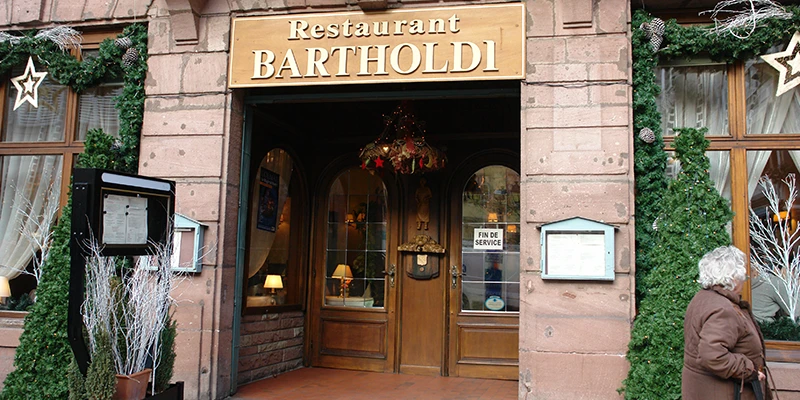
The town has another notable museum in the Bartholdi Museum, the birthplace and home of the sculptor Frédéric Auguste Bartholdi, who created the Statue of Liberty. Colmar is quietly proud of its most famous son, and his presence turns up around town, including at restaurants that bear his name.
The Christmas Markets
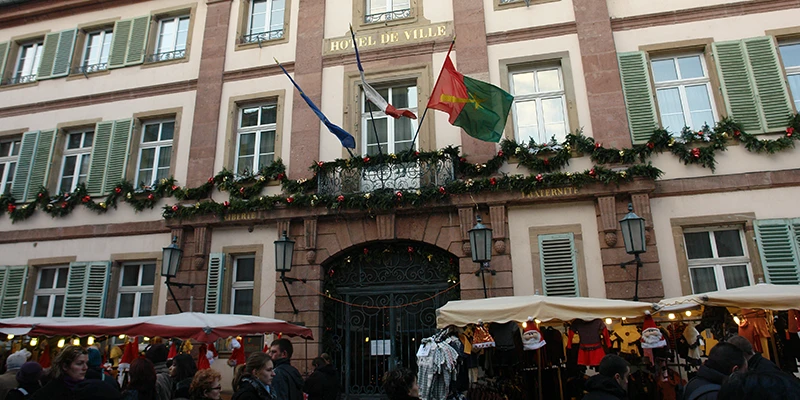
Colmar is celebrated across Europe for its Christmas markets, among the finest anywhere. From mid-November through the end of December, the historic center fills with five separate markets, together offering as many as 162 craft booths, many selling handmade items directly from the artisans who made them. The medieval setting, illuminated after dark, gives the markets a magic that few places can match.
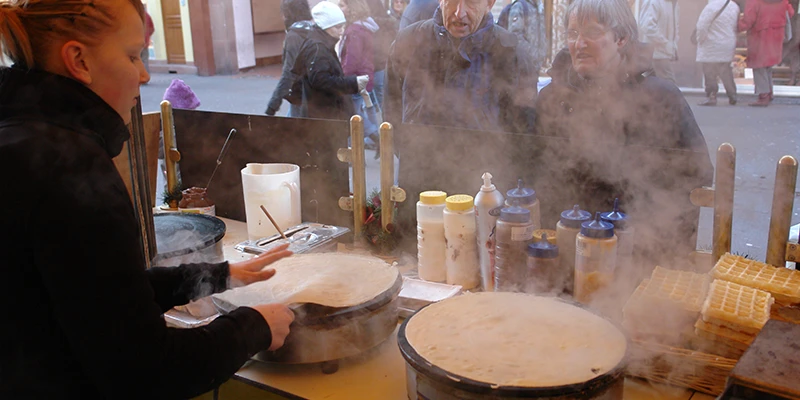
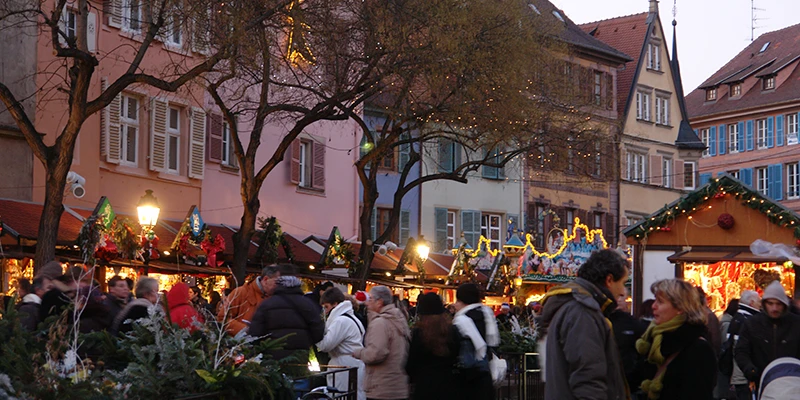
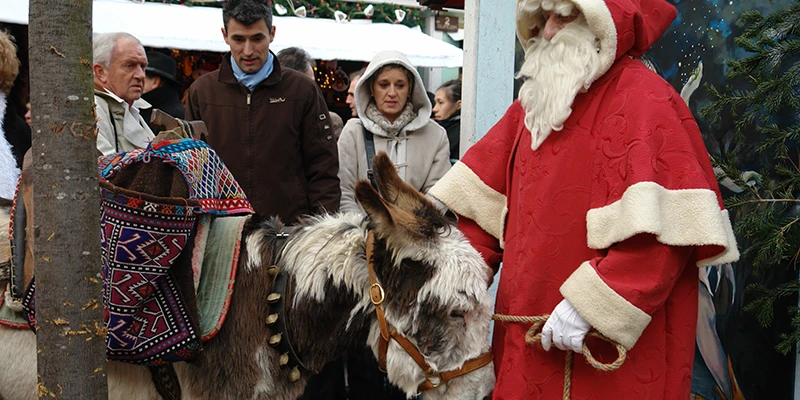
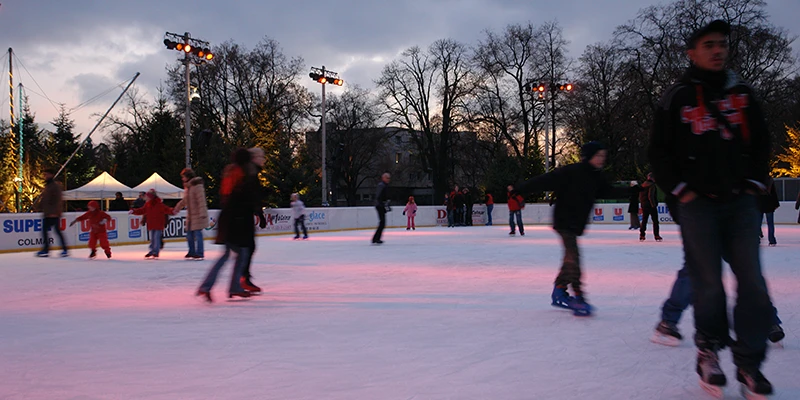
The stalls brim with candles, ornaments, decorations and gifts, alongside the seasonal food and drink that make an Alsatian Christmas market so festive: hot pretzels, sausages, sauerkraut and potatoes, mulled wine and beer. There is skating for those who want it, concerts held regularly through the season, including in the Dominican church, and a visit from Santa Claus with his little donkey for the children.
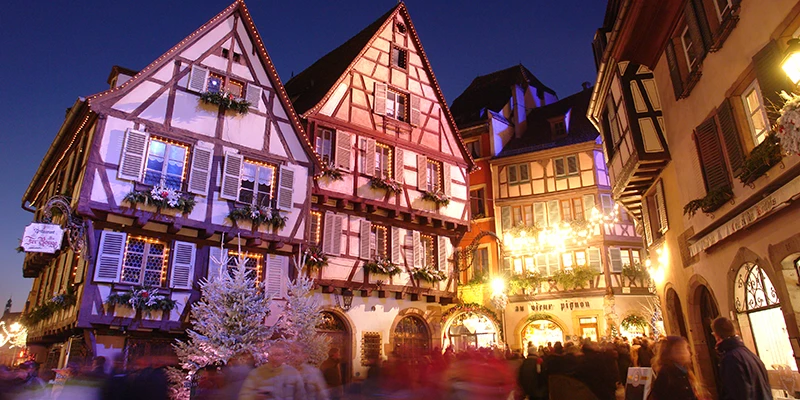
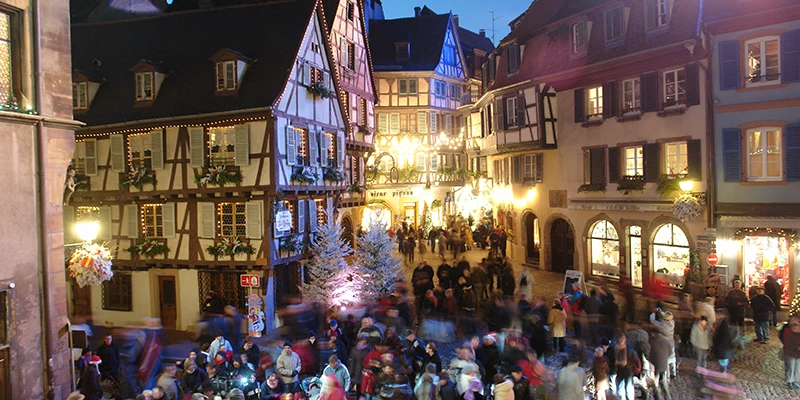
The whole town takes on a lively rhythm, quiet in the early morning, busy by midday, and most magical of all at twilight around five o'clock, when everyone comes out and the streets glow with lights reflected in the canals.
The Wine Country
Colmar sits in the middle of the Alsatian wine country, and the surrounding vineyards are a major reason to visit. Within twenty or thirty miles lie some of the loveliest wine villages in France — places like Riquewihr, Eguisheim and Kaysersberg — their flower-filled lanes and half-timbered houses echoing Colmar itself. Local minibus tours run from town, driving visitors through the vineyards for sightseeing and tastings of the crisp white wines the region is known for.
The larger city of Strasbourg, another Alsatian gem with its own famous Christmas market and soaring cathedral, lies only about 35 miles away and makes an easy day trip. Together with the wine villages, it means Colmar can anchor a rewarding several-day exploration of Alsace.
A Blend of Two Cultures
Colmar's character owes much to its location on the frontier between France and Germany. Founded in the ninth century, it was made a free imperial city in 1226, adopted the Protestant Reformation in 1575, and changed hands repeatedly over the following centuries — held briefly by Sweden during the Thirty Years' War, taken by Louis XIV's France in the 1670s, annexed by Germany after the Franco-Prussian War of 1871, returned to France after World War I, seized again by the Nazis in 1940, and finally restored to France in 1945 after being one of the last battlegrounds of the war in the region.
That back-and-forth history has left a lasting blend of the two cultures. People here drink both beer and the local white wine, the cooking draws on both traditions, and some older residents still speak the Alsatian German dialect, though Colmar today is thoroughly French. It is this fusion, set within one of the best-preserved old towns in Europe, that gives Colmar its distinctive and enduring charm.