Rostock
Rostock is a working Baltic port with a handsome historic heart, the largest city on Germany's northeastern coast and the liveliest. It pairs a compact medieval old town of red-brick Gothic buildings with a buzzing university population and, just a short ride away, one of the country's most popular beach resorts. The combination of seafaring history, walkable streets and seaside access makes it the natural anchor of any trip along this stretch of coast.
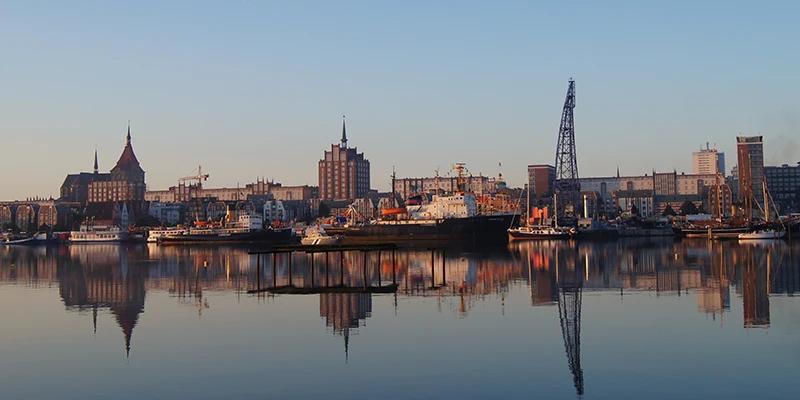
The city sits on the Warnow River a few miles inland from the Baltic Sea, in the state of Mecklenburg-Vorpommern, roughly two hours by train from Hamburg and within easy reach of Berlin. Founded in the 13th century, Rostock grew rich as a member of the Hanseatic League, the medieval trading alliance that linked the ports of northern Europe, and that prosperous past is written all over the old town in the form of gabled merchant houses, soaring brick churches and a defensive wall whose gates still stand.
The spine of the historic center is the Kröpeliner Strasse, a broad pedestrian street that runs from the old western gate to the central market square. This is the city's main promenade for shopping and people-watching, lined with restored Hanseatic facades, cafes, department stores and independent shops, and busy with students from the University of Rostock, founded in 1419 and one of the oldest in northern Europe. At its western end stands the Kröpeliner Tor, a tall brick gate tower that is one of the surviving pieces of the medieval fortifications.
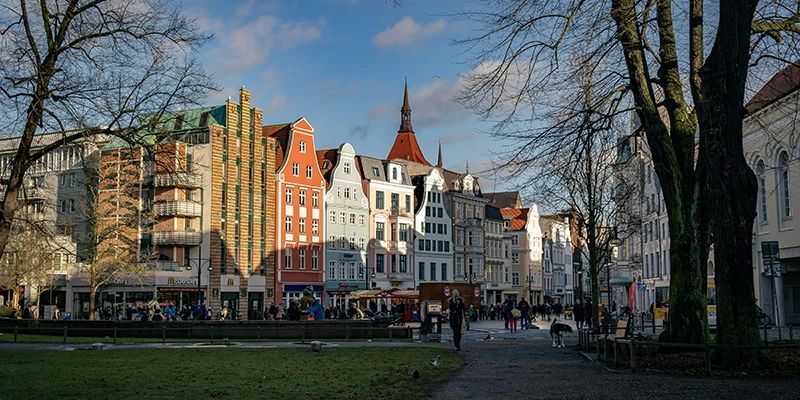
Midway along, the street opens into the Universitätsplatz, a lively square with a fountain and outdoor seating, and continues to the Neuer Markt, the new market square, where the Rathaus, the town hall, presents an ornate facade combining brick Gothic bones with a pink baroque front added later. Around the market stand reconstructed gabled houses in the northern style, their stepped and curved rooflines a signature of the region.
Rostock's churches are among the finest examples of north German brick Gothic. The Marienkirche, St. Mary's, is the great one, a vast medieval church whose treasures include a working astronomical clock from the 15th century, still keeping time and showing the movement of sun, moon and saints. The scale of these brick churches, built without stone in a land that had little, is impressive, and their towers define the city's profile from the water.
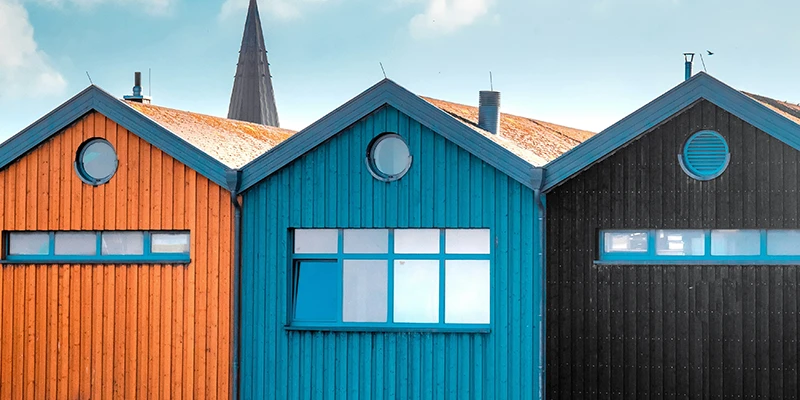
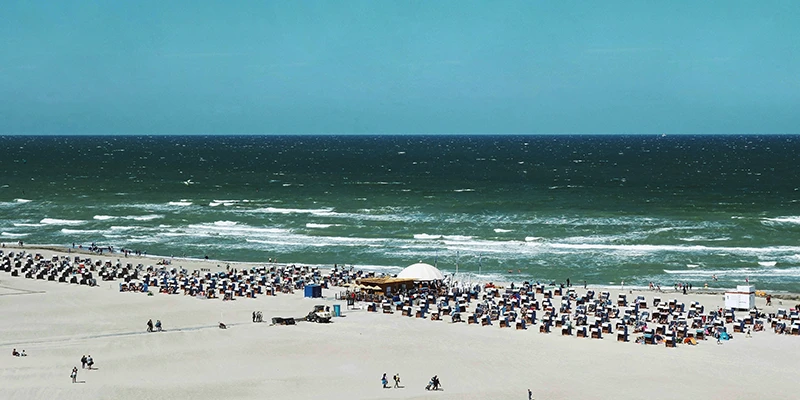
What sets Rostock apart from inland historic towns is the sea. The district of Warnemünde, reached in about twenty minutes by local train or by riverboat, is effectively Rostock's beach: a former fishing village turned resort with a wide sandy strand, a lighthouse, a harbor channel lined with seafood restaurants and a promenade of old captains' houses. In summer the beach fills with the distinctive German hooded beach chairs, the Strandkorb, and the channel bustles with ferries and the occasional cruise ship. Warnemünde alone draws many visitors, and combining it with the historic city makes for a full and varied day.
The waterfront in Rostock proper, along the Warnow, has been redeveloped into a pleasant area for walking, with the city harbor, moored traditional sailing ships and views across to the shipyards that remain part of the working port. Maritime heritage runs deep here, and the harbor festivals, especially the Hanse Sail tall-ships gathering in summer, draw large crowds.
Rostock is easy to reach by direct trains from Hamburg and Berlin, and its main station connects smoothly to the local trains for Warnemünde. The center is flat and compact, best seen on foot, with the single long pedestrian street making orientation simple. The city and regional tourist offices provide maps, church opening times and ferry schedules for the run out to the coast.
For travelers, Rostock offers a different flavor from Germany's southern fairy-tale towns: a salt-air, brick-built Hanseatic city with a genuine port still at work, a student energy in its pedestrian streets, and a real beach resort attached. It is the most rewarding single base for experiencing the German Baltic.