Magdeburg
Magdeburg blends very old and very new in a way few German cities can match. It holds Germany's first Gothic cathedral, begun eight centuries ago, and, a few minutes' walk away, one of the last buildings designed by the painter and architect Friedensreich Hundertwasser, a riot of color and curves he called the Green Citadel. Between these two poles lies a city with more than 1,200 years of history, a broad riverfront on the Elbe, and the green spaces and open avenues of a place largely rebuilt in the modern era.
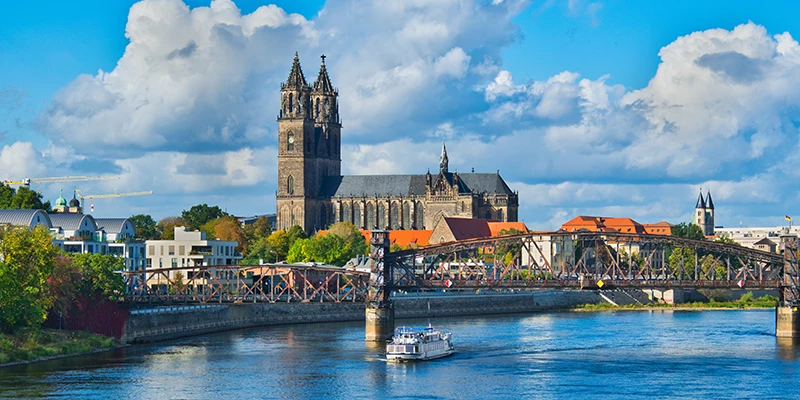
The city is the capital of the state of Saxony-Anhalt, in eastern central Germany, set on the Elbe River roughly midway between Hannover and Berlin and reached by direct trains from both, as well as from Leipzig. Its position on the great river made it an important trading and political center from early times. Magdeburg rose to prominence under Otto the Great, the Holy Roman Emperor, who made it a favored residence in the 10th century and is buried in its cathedral, and the city later gave its name to the Magdeburg Rights, a influential model of medieval town law adopted across central Europe.
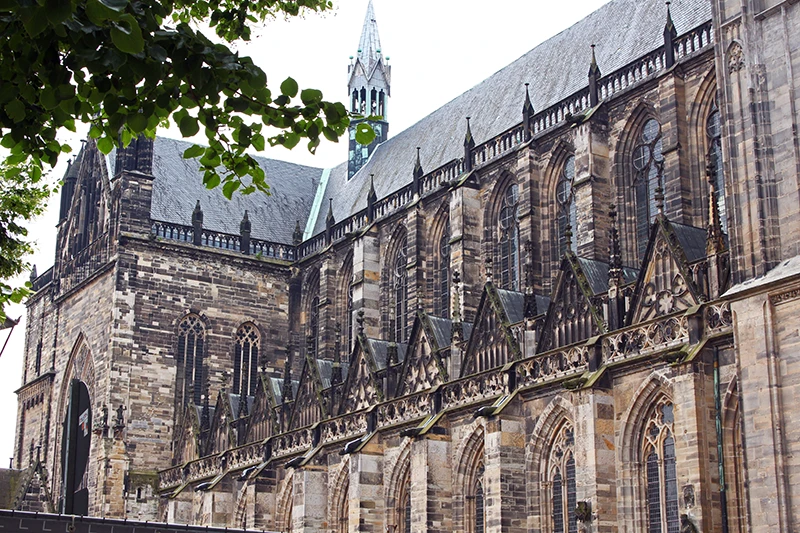
The cathedral, the Dom, is the essential sight. Begun in 1209, it was the first Gothic cathedral on German soil, and its twin towers rise high above the river and the city. The vast interior holds the tomb of Otto the Great, medieval sculpture and a sense of soaring space that rewards a slow visit. Standing on its terrace above the Elbe, the cathedral anchors the historic side of the city and offers fine views over the water.
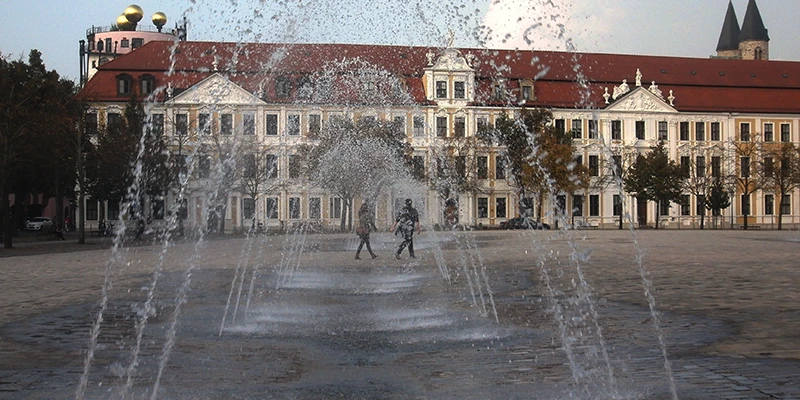
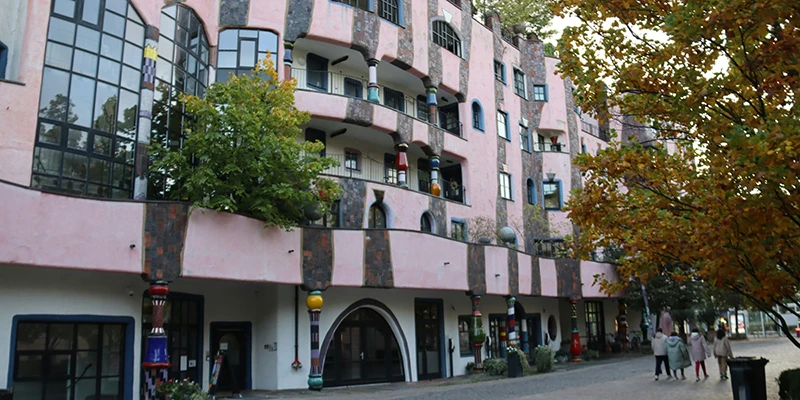
A short walk north brings you to the Grüne Zitadelle, the Green Citadel, completed in 2005 to Hundertwasser's design. Painted pink rather than green, despite its name, it is covered in irregular windows, undulating lines, golden domes and grass growing on the roof, a deliberate rejection of straight-edged modern architecture. It contains apartments, shops, a hotel and a courtyard cafe, and has become one of Magdeburg's most popular and photographed attractions, a startling contrast to the medieval cathedral nearby.
Between and around these landmarks, the city center is largely a product of rebuilding, first after wartime destruction and then in the postwar decades, so it offers broad avenues and open squares rather than a dense medieval core. The main pedestrian shopping is concentrated on and around the Breiter Weg, the city's central axis, a wide street with shops, department stores and cafes running through the heart of town. The pace is relaxed and the layout easy to navigate on foot.
The Elbe is one of Magdeburg's great assets. Riverside paths and parks line the water, and the city is unusually green, with the Rotehornpark on an island in the river offering lawns, old trees and event spaces, a pleasant escape a short walk from the center. The Kloster Unser Lieben Frauen, a beautifully preserved Romanesque monastery now serving as an art museum, is among the oldest buildings in the city and a quiet counterpoint to the bustle of the shopping streets.
Just outside the city, engineering enthusiasts can see the Magdeburg Water Bridge, a remarkable canal aqueduct that carries a shipping channel over the Elbe, one of the longest of its kind in the world. It reflects the city's continuing role as a hub of waterways and transport, a theme that runs through its long history.
Magdeburg is easy to reach, with a main station served by frequent direct trains from Berlin, Hannover and Leipzig, a short walk or tram ride from the center. The flat, open center and riverside are comfortable for walking. The city tourist office, near the cathedral and Green Citadel, provides maps, opening hours and information on river trips and the water bridge.
Magdeburg appeals to travelers who enjoy the meeting of eras: a pioneering Gothic cathedral, a fantastical modern landmark, a broad river with parks and paths, and the easy open feel of a rebuilt capital. It rewards those willing to look beyond the famous names to a city quietly rich in history on the banks of the Elbe.