Exploring Lüneburg
.webp)
Nestled in northern Germany, Lüneburg is a city that feels like it's been plucked straight from a fairytale. Its wealth, built over centuries on the salt trade, is evident in the stunning medieval architecture that fills its historic center. Get ready to wander through cobblestone streets, admire half-timbered houses, and uncover the rich history that defines this Hanseatic city.
The Official Tourist Information website has a large amount of information about the city and surroundings, including sights, accommodations, dining, tours, scenic routes, free brochures, maps and more.
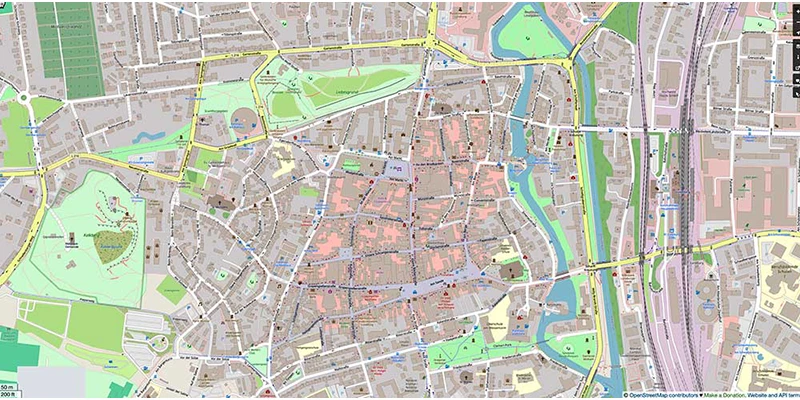
This interactive Google My Map shows locations with information that can be displayed by clicking on the symbols. It has sidebar index and displays best in full-frame by clicking the box in top-right. The map can be used on your phone or tablet when visiting a city, showing you where to go and describing the sights. You are welcome to make a copy as described here. Luneburg can be visited as a daytrip from Hamburg, 30-minutes by train.
A Walk Through History
Begin your journey at the heart of the city's power: Historisches Rathaus, one of the largest medieval town halls in Germany. This impressive building, dating back over 700 years, showcases a mix of architectural styles from different eras and is a prominent city landmark. Right in front of it lies the Market Square, a lively open space surrounded by colorful Gothic and Renaissance buildings.
.webp)
Nearby, you'll find Am Sande, the central market square known for its colorful, gabled merchant houses and vibrant atmosphere. This expansive cobblestone plaza is a hub for shopping and dining, and a perfect spot to watch the city go by. For a quieter stroll, explore the small square of Am Ochsenmarkt, which once served as a livestock market and is now home to charming cafes. The Am Berge street offers a steep, scenic path connecting the upper and lower parts of the old town, providing unique glimpses of the city layout. Don't miss Das Schwangere Haus, a historic building with a visibly bulging wall caused by a unique chemical reaction in its materials. It's a quirky sight near the town hall.
Historic Districts and Waterfront Views
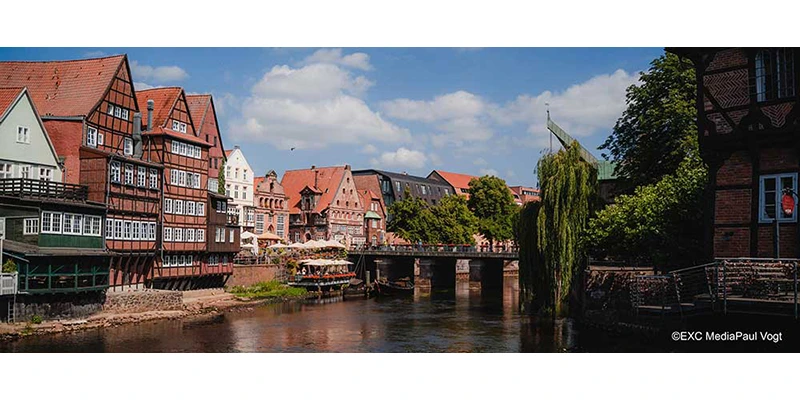
The city's history is best told through its districts and waterways. The Wasserviertel, or atmospheric water district, features canals, medieval mills, and restored industrial buildings now housing restaurants and cultural venues. Along the Ilmenau River Waterfront, you'll find walking paths and scenic views of historic buildings reflecting in the water.
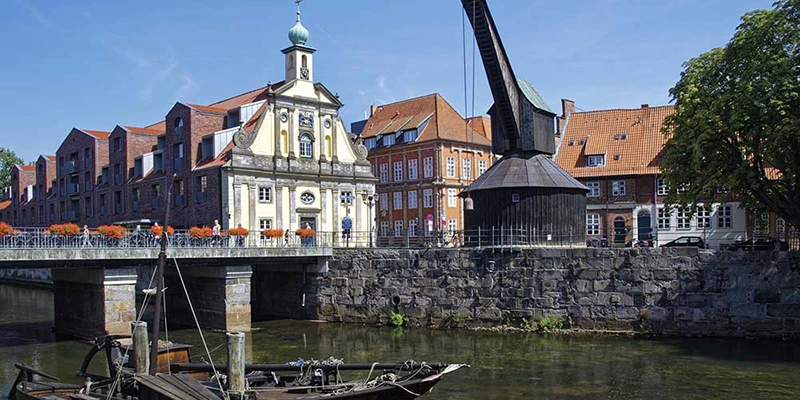
This is where you'll see the Alter Kran, a historic wooden crane dating to the Middle Ages. This 14th-century crane is a symbol of the city's history as a Hanseatic trading center and its salt trade, offering insight into medieval engineering. A short walk will take you to the Luneburg Harbor Area, a modest waterfront zone with old warehouses converted into shops and cafes.
The Stintmarkt is a particularly picturesque waterfront area with half-timbered houses and cobblestone streets. It is popular for leisurely evening strolls. Explore the Brewery Quarter, a historic area showcasing Lüneburg's brewing heritage through its traditional buildings and cultural venues.
.webp)
Shopping, Arts, and Culture
Lüneburg is a delight for shoppers and art lovers alike. The main pedestrian zones are perfect for a stroll. Bäckerstrasse and its larger counterpart, Grosse Bäckerstrasse, are bustling shopping streets running from the market square to Am Sande, filled with shops and boutiques. The Rote Strasse and Salzstrasse are also popular pedestrian streets lined with carefully preserved medieval buildings housing local shops and galleries. For a different vibe, check out Haagestrasse, a pedestrian zone known for independent and artisan shops. When you need a rest, head to Clamartplatz, a small plaza with benches and surrounding eateries, or the lively Rathausplatz, which hosts markets and events.
.webp)
For a deeper dive into the city's past, visit the German Salt Museum, located on the former saltworks site. The museum documents the history of salt production, which was the foundation of the city's wealth. The East Prussian State Museum highlights Baltic German and Prussian heritage, while the Museum Luneburg covers regional history, archaeology, and art. The Luneburg Theater is a great place to catch a show. Don't forget to visit the Heinrich-Heine-Haus, where the famous poet once studied, which now serves as a literary museum.

Landmarks, Parks, and Hidden Gems
For the best views of Lüneburg, climb the Luneburg Water Tower. This converted early 20th-century structure provides panoramic views of the city rooftops, churches, and surrounding countryside. Just outside the city center, you can find serenity in the Kurpark, a beautifully landscaped public park. The Garten der Sinne is a themed sensory garden designed for relaxation and nature appreciation. For a bit of an adventure, head to Kalkberg Hill, a geological wonder with walking paths and gardens, offering panoramic views.
The Churches: Symbols of Wealth and Faith
Lüneburg's wealth is reflected in its magnificent brick Gothic churches. These churches were not just places of worship; they were also a show of the city's economic power. The clergy, known as "prelates," were often part-owners of the salt pans and had significant influence, which sometimes led to conflict with the city council over salt taxes, such as the Lüneburg Prelates' War.
St. John's Church (St. Johanniskirche): This is the oldest church in the city, known for its tall spire and North German brick Gothic style. Its construction was funded by the immense wealth generated from the salt trade.
St. Michael's Church (St. Michaeliskirche): Once part of a Benedictine monastery, this church is famous for its connection to composer Johann Sebastian Bach, who attended school and sang in the choir there. The abbey to which it belonged received the income from salt extraction in the 10th century, which became a major source of wealth.
St. Nicholas' Church (St. Nicolai Kirche): The third of the three main churches, it is also a beautiful example of brick Gothic architecture.
You can also take a guided tour of the Luneburg Convent Lune Abbey, a historic monastery complex with preserved medieval structures. It is set amid peaceful meadows.
The Salt Trade: Lüneburg's Foundation
The German Salt Museum is a key site for understanding the city's economic history. Located on the former Lüneburg Saltworks site, the museum documents the city's 1,000-year history of salt production. Interactive exhibits explain the salt extraction techniques and economic importance of the trade, which was the foundation of Lüneburg's wealth. The city's salt was so valuable that it was transported on the Old Salt Road to Lübeck and shipped throughout the Hanseatic League to preserve herring and other food. The saltworks' main entrance was located on Lambertiplatz, and the site was surrounded by high walls and thick towers.
The extensive salt mining has had a lasting impact on the city's landscape, causing significant subsidence. This can be seen in some of the leaning buildings, like the "pregnant house" (Das Schwangere Haus). Even the Michaeliskirche and other churches show signs of this subsidence, with some of their columns leaning noticeably to the side.
.webp)
.webp)