Kassel
Kassel is a city of grand landscapes and big ideas. Above it rises the Bergpark Wilhelmshöhe, an enormous hillside park of cascading water features crowned by a colossal statue of Hercules, a UNESCO World Heritage Site and one of the most spectacular garden landscapes in Europe. Every five years the city also becomes the center of the art world when it hosts documenta, a vast exhibition of contemporary art. Few cities of this size offer such a combination of monumental scenery and cultural ambition.
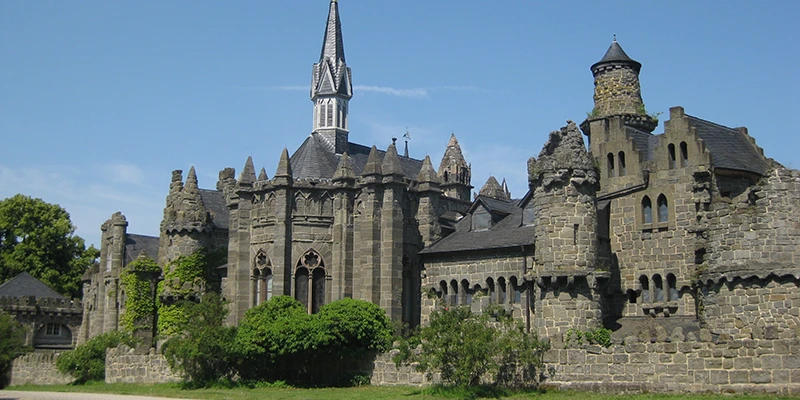
Kassel lies in the state of Hesse, in the geographic center of Germany, on the Fulda River amid wooded hills, and is well connected by high-speed trains that make it a major junction roughly midway between Frankfurt and Hannover. Its central location made it historically a seat of the landgraves of Hesse-Kassel, whose wealth and ambition created the parks and palaces that remain the city's glory. Kassel suffered very heavy destruction in the Second World War, so the center is largely modern, and the great attractions lie in its surrounding parkland rather than a preserved old town.
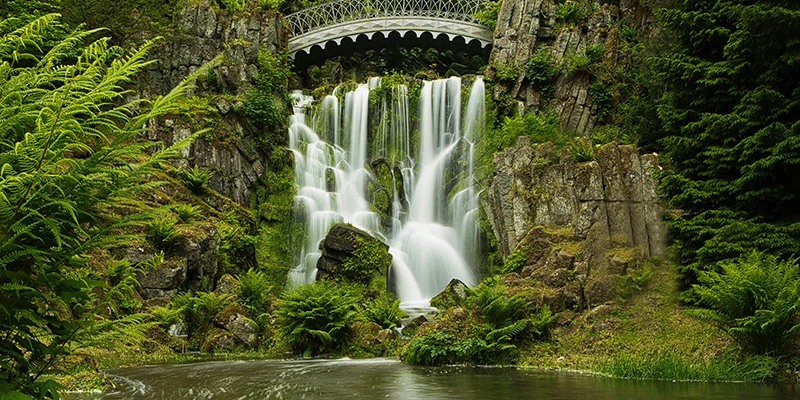
The Bergpark Wilhelmshöhe is the unmissable sight. Laid out over the 18th century on a steep wooded hillside, it descends from the towering Hercules monument, a giant copper statue on a stone pyramid and octagon, down a series of stone cascades and through landscaped grounds to Schloss Wilhelmshöhe, a palace that now houses an outstanding collection of Old Master paintings, including works by Rembrandt. On scheduled days in the warmer months, the Wasserspiele, the water features, are switched on, and water tumbles down the long cascade and through the park in a choreographed display ending in a tall fountain, a spectacle that draws crowds and is free to watch. The climb to Hercules rewards visitors with a sweeping view over the park and city.
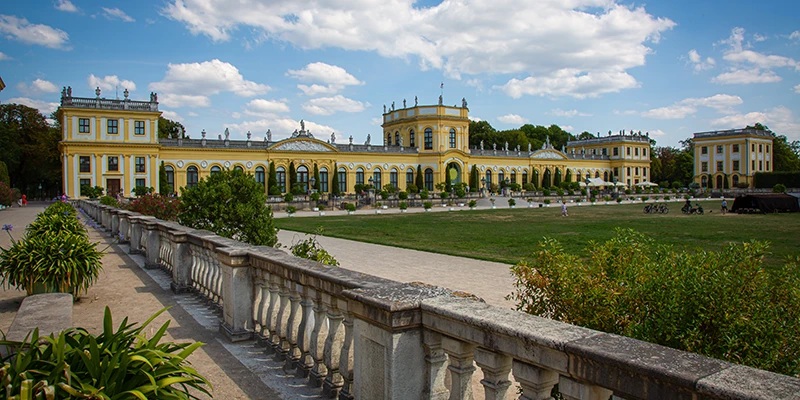
In the center, the cultural institutions are the draw. Kassel is indelibly associated with documenta, founded in 1955 to reconnect Germany with international modern art after the war, and now one of the world's most important contemporary art exhibitions. Even between editions, the Fridericianum, one of the oldest public museum buildings in Europe, and the documenta archive keep the city's art reputation alive, and works left behind by past exhibitions are scattered through the city as permanent installations.
Kassel is also Grimm country. The brothers Jacob and Wilhelm Grimm lived and worked here, collecting the folk tales that became famous worldwide, and the Grimmwelt museum presents their lives, language and stories in an engaging modern building, a worthwhile stop for families and anyone curious about the fairy-tale heritage of the region.
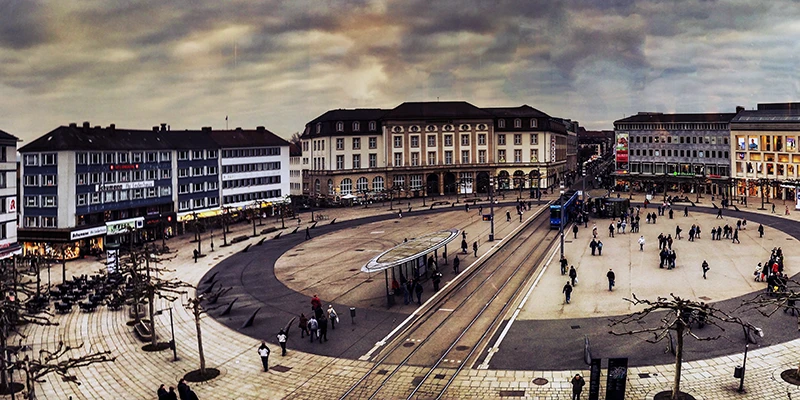
The rebuilt center offers practical, lively shopping. The main pedestrian zone runs along streets such as the Obere and Untere Königsstrasse, broad and traffic-free, lined with shops, department stores and cafes, leading toward the Friedrichsplatz, a large open square that serves as the focal point of documenta and city life. The area is easy to walk, and from here trams run directly up to the Bergpark, making the great park accessible without a car.
The Fulda River and its banks provide green riverside walks, and another palace park, Karlsaue, spreads along the water near the center with lawns, an orangery housing an astronomy museum, and event grounds. Between the riverside park and the great hillside Bergpark, Kassel is a notably green city despite its modern center, with landscape and water as recurring themes.
Kassel is very easy to reach, with the Wilhelmshöhe station served by frequent high-speed trains on the north-south routes, and trams connecting the station, center and Bergpark. The compact center is walkable, and the tram up to Wilhelmshöhe handles the climb to the park's lower entrance. The city tourist office provides maps, the schedule of water-feature displays at the Bergpark, and museum opening hours.
Kassel rewards travelers drawn to dramatic landscape and serious culture. The Bergpark with its Hercules and cascades is a genuinely world-class sight, the art and Grimm museums give the center substance, and the easy trams tie it all together. It is a rewarding stop in the heart of Germany, especially when the waters are running.