Discovering Göttingen
A Historic City in Lower Saxony
-TI.webp)
Göttingen is one of Germany's most distinguished university cities, where centuries of academic excellence merge with well-preserved medieval architecture. Located in Lower Saxony, this compact city offers visitors a concentrated experience of German history, scientific achievement, and cultural heritage. The University of Göttingen, founded in 1737, has shaped the city's character and attracted some of history's most brilliant minds, creating a unique destination that combines intellectual legacy with accessible urban charm.
The Official Tourist Information website has a large amount of information about the city and surroundings, including sights, accommodations, dining, tours, scenic routes, free brochures, maps and more.
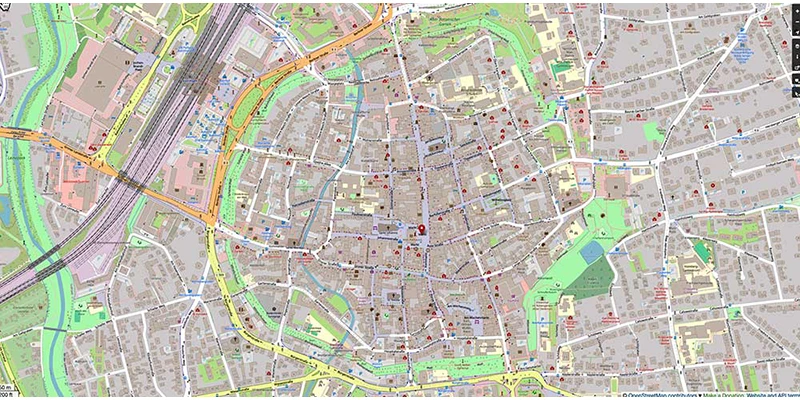
This interactive Google My Map shows locations and hotels with information that can be displayed by clicking on the symbols. It has sidebar index and displays best in full-frame by clicking the box in top-right. The map can be used on your phone or tablet when visiting a city, showing you where to go and describing the sights. You are welcome to make a copy as described here.
The Historic Heart: Market Square and Medieval Streets
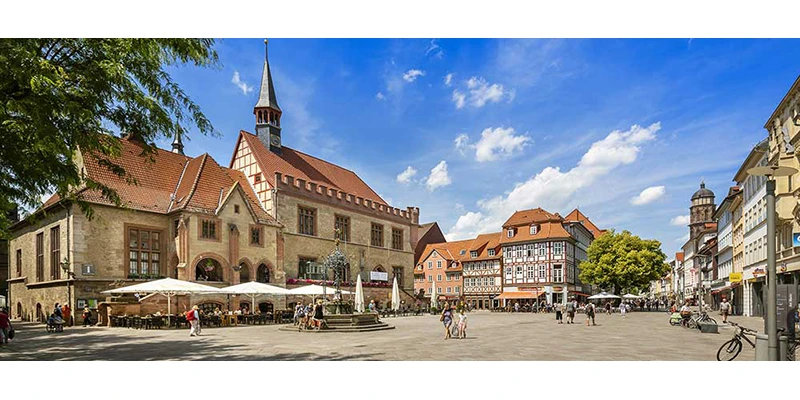
Market Square forms the vibrant center of Göttingen's old town, dominated by the iconic Ganseliesel Fountain. This bronze statue depicts the Goose Girl from the Brothers Grimm fairy tale and has earned the distinction of being the world's most-kissed girl, as new doctorate graduates traditionally kiss the statue upon completing their studies. The square bustles with cafes, shops, and the weekly Farmers' Market on Hospitalstrasse, which operates three times weekly and offers fresh regional produce, artisanal cheeses, bakery goods, and seasonal specialties that attract both residents and visitors.
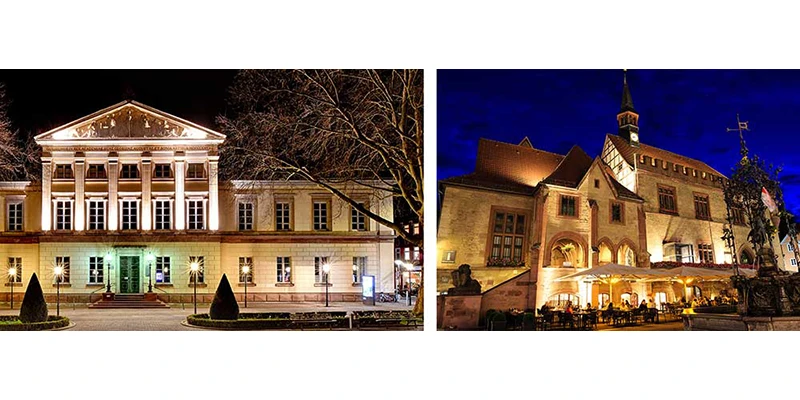
The Altes Rathaus anchors the square with its Gothic architecture from the 13th century. The building features a Renaissance facade adorned with romantic frescoes and period architectural details. Today it houses the tourist office and serves as a civic and cultural hub for events and exhibitions. Nearby, Barfusserstrasse presents a narrow historic thoroughfare lined with timber-framed houses and boutique shops, providing an authentic medieval atmosphere within walking distance of the main square.
-TI.webp)
Judenstrasse extends through the pedestrian-friendly old town with preserved medieval structures and cultural landmarks, its cobblestone surfaces adding to the historic ambiance. The Junkernschanke, a 16th-century timber-framed building complex, displays carved figures, zodiac motifs, and coats of arms while housing restaurants and cultural venues that maintain connections to Göttingen's medieval past.
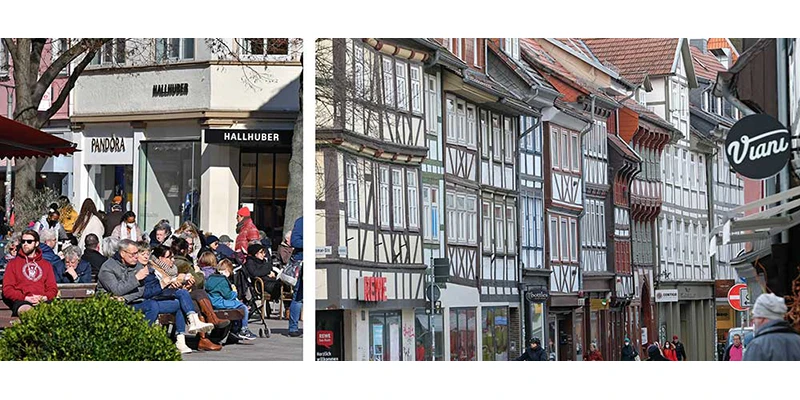
Weender Strasse functions as the main pedestrian shopping street, connecting the train station to the old town with retail stores, restaurants, cafes, bookstores, and small boutiques in a car-free environment featuring frequent street events. The Göttingen Railway Station serves as both transportation hub and architectural landmark with distinctive red brick construction and period details from the 19th century.
Wilhelmsplatz creates a central plaza surrounded by university buildings, cafes, and shops, serving as a popular meeting point with open pedestrian space often used for public gatherings and outdoor seating. The Nikolai Quarter represents a creative and multicultural district known for narrow streets, half-timbered houses, independent shops, art galleries, and cultural institutions including the Literary Center and Kunsthaus Göttingen, offering a charming bohemian atmosphere.
-TI.webp)
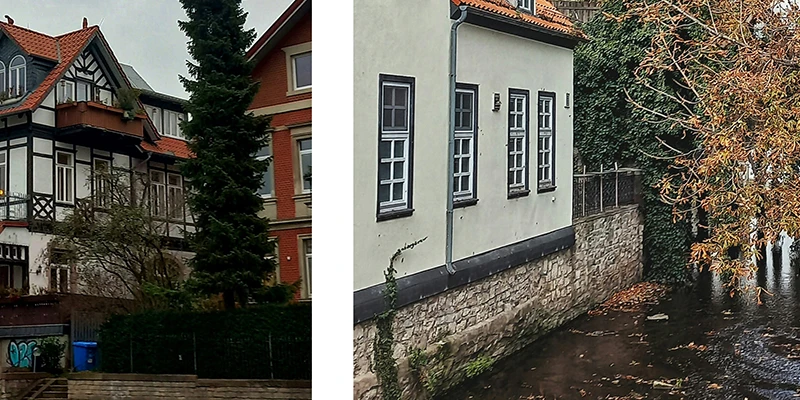
The Leine Canal runs through the city as part of the Leine River system, featuring tree-lined banks, walking paths, bridges, small gardens, and quiet spots that provide scenic views and tranquil settings near the city center.
Contemporary Culture and Arts
Kunsthaus Göttingen operates as a contemporary art center in a historic building, showcasing modern exhibitions, installations, and cultural events that provide platforms for regional and international artists. The Kunstverein Göttingen, located in Lichtenberghaus, features rotating contemporary art exhibitions, artist talks, and cultural programming that promotes modern artistic expression and community engagement. The Torhaus Gallery presents contemporary art exhibitions and cultural programs in the unique architectural setting of a historic gatehouse building at the city cemetery.
The Deutsches Theater Göttingen serves as the city's main theater venue, presenting drama, opera, and musical performances in a historic building that functions as an important cultural institution for the region. International Handel Festival Venues throughout the city host the renowned annual baroque music festival, featuring historic churches, concert halls, and outdoor venues that celebrate Georg Friedrich Handel's musical legacy.

Parks, Recreation, and Natural Areas
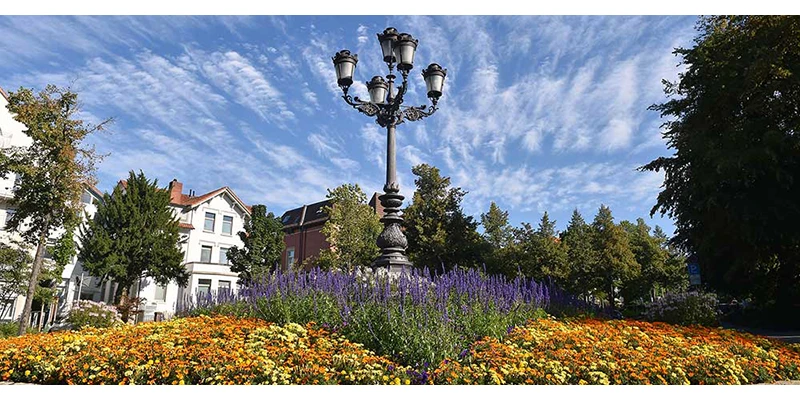
Cheltenham Park occupies the eastern edge of the city with green spaces, lawns, walking paths, playgrounds, sculptures, and recreational facilities located near the university, providing ideal locations for relaxation and outdoor activities. Levin Park offers historic green space near the city center with mature trees, walking paths, and quiet areas positioned between urban development as local recreational space.
The Old Botanical Garden, founded in 1736, presents diverse plant collections, themed sections, rare plants, greenhouses, walking paths, and quiet park-like areas. This tranquil green space in the heart of the city serves both scientific study and public recreation. Schillerwiesen provides a large meadow and recreational area popular for outdoor activities, picnicking, sports, and community gatherings, offering open green space within city limits with views and connections to surrounding neighborhoods.
-TI.webp)
Kiessee Lake, created from former gravel pits, offers swimming beaches, walking and cycling paths, water sports opportunities including canoeing and sailing, birdwatching areas, picnic spots, restaurants, and boat rental services. The Göttinger Wald city forest on the southern outskirts provides hiking trails, nature walks, and recreational opportunities in wooded settings that offer escape from urban environments.
Historic Fortifications and Scenic Views
The Göttingen City Wall preserves remains of medieval fortifications with wall sections, towers, gates, and walking paths that once protected the city. These fortifications have been converted into a scenic green belt encircling the old town, providing insight into defensive history while creating pleasant walking routes.
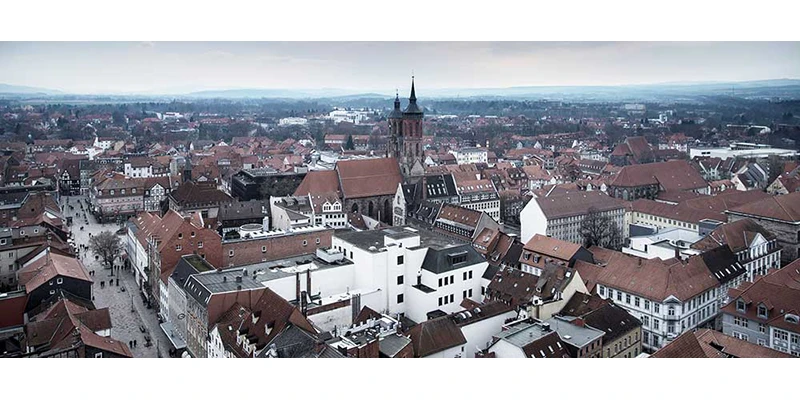
Bismarck Tower, built in 1896 on Kleperberg hill, provides wide panoramic views over Göttingen and surrounding countryside, including the Harz Mountains and Leine valley, while commemorating the German statesman. The Bismarckhauschen serves as a memorial site where Otto von Bismarck lived as a student, now providing historical information about the German statesman's university years.
Plesse Castle, located north of the city, offers partially restored hilltop ruins with scenic views, hiking trails, and interpretive signs about medieval history, providing insight into regional defensive architecture. The Göttingen Observatory on Hainberg hill features restored 19th-century neoclassical design associated with Carl Friedrich Gauss, offering scientific exhibits, guided tours, and landscape views.
Scientific Legacy and Academic Monuments
The city's extraordinary scientific heritage manifests through numerous monuments and memorials. The Monument of the Göttingen Seven honors seven professors, including the Brothers Grimm, who protested against the abolition of the liberal constitution in 1837, representing academic freedom and civil courage in German university history. The Georg Christoph Lichtenberg Monument in the market square commemorates the 18th-century physicist, mathematician, satirist, and aphorist who taught at Göttingen University and contributed significantly to electrical research and witty observations.
The Gauss-Weber Monument in Wallanlage park depicts Carl Friedrich Gauss and Wilhelm Weber, with Weber holding telegraph wire, honoring their pioneering electromagnetic telegraph development in 1833. This bronze monument represents the collaborative scientific spirit that has defined Göttingen for centuries.
Stadtfriedhof (City Cemetery) contains one of Europe's most intellectually significant collections of graves, housing nine Nobel Prize winners including Max Planck, Max Born, Otto Hahn, Max von Laue, Walther Nernst, Otto Wallach, Adolf Windaus, Richard Zsigmondy, and Manfred Eigen. The cemetery also holds the graves of mathematician David Hilbert and renowned physicist Karl Schwarzschild, making it a pilgrimage site for those interested in scientific history.
-TI.webp)
University Museums and Collections
The University of Göttingen campus features beautiful historic buildings, courtyards, and the famous university library. The classicist main building displays memorial plaques for Nobel laureates, while various specialized collections showcase the institution's academic breadth. The Forum Wissen serves as a new university knowledge museum with interdisciplinary research collections, exhibitions, and interactive displays representing various fields of study through modern presentation methods and changing special exhibitions.

The Ethnological Collection (Sammlung fur Völkerkunde), founded around 1780, houses approximately 17,000 ethnological artifacts. Its notable Cook-Forster collection from South Pacific voyages includes items from Hawaii, Tahiti, Tonga, and New Zealand, plus significant collections from Siberia and polar regions. The Zoological Museum contains over 100,000 preserved animal specimens, including valuable holotype specimens and rare extinct species collected worldwide since the 18th century, housed in the Johann-Friedrich-Blumenbach Institute.
The Collection of Mathematical Models represents one of Germany's most important collections of mathematical visualization tools, featuring historical mathematical models, educational panels, instruments, and teaching materials. The Geoscience Museum displays extensive collections of minerals, fossils, geological specimens, and paleontological finds with permanent exhibitions covering earth sciences, geology, and paleontology. The Historical Physical Instruments Collection reflects Göttingen's physics history from 18th-century systematic research through its golden period as a world-leading physics center in the early 20th century.
Religious Architecture and Monuments
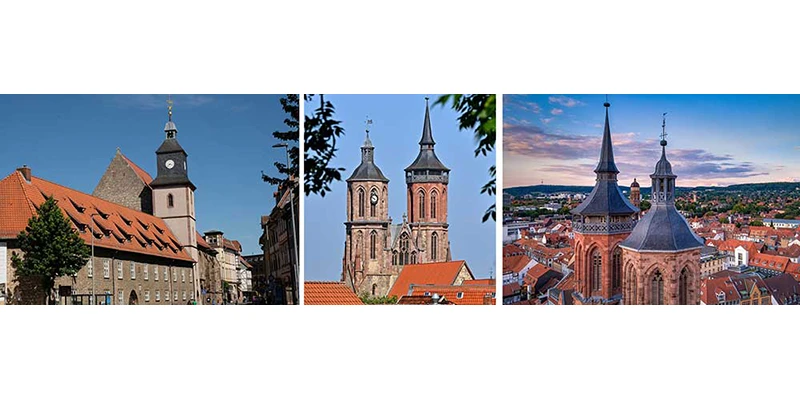
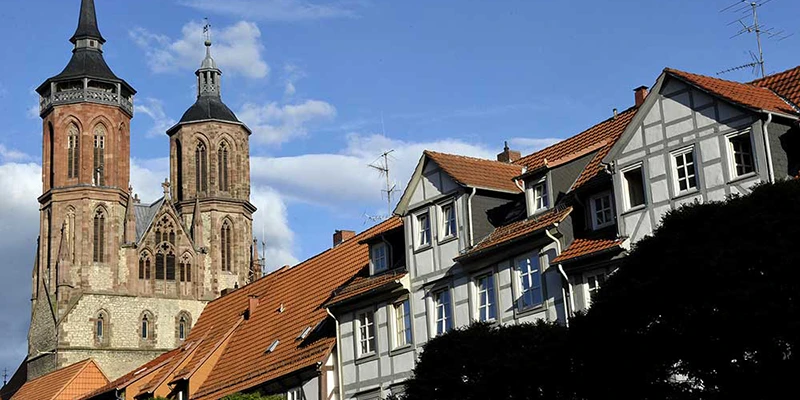
Johanniskirche dominates the skyline with its distinctive twin towers and Gothic architecture from the 13th century. The church features baroque interior elements and offers panoramic views from tower climbs. Regular concerts and community events take place within its notable Gothic interiors. St. Jacobi Church, another significant Gothic hall church from the 14th century, presents three naves, impressive stained glass windows, vaulted ceilings, and a tall bell tower, establishing it as one of the city's most important religious and architectural monuments.
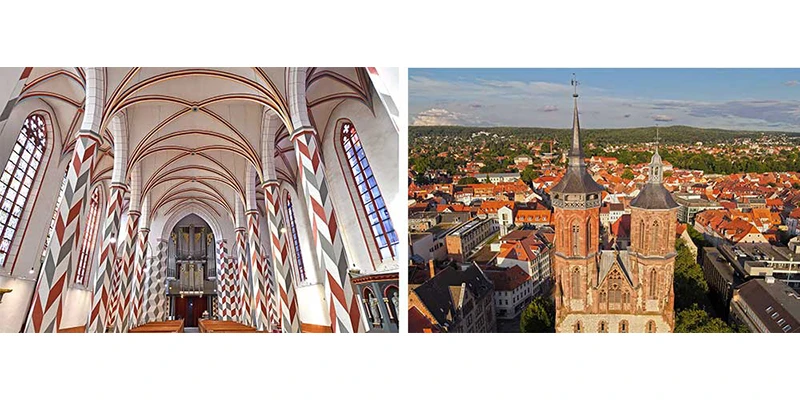
The Albani Church represents Göttingen's oldest religious heritage, with Romanesque architecture dating from the 12th century. Its simple stone construction reflects the city's early development and religious foundations. Paulinerkirche, formerly the university church, now serves as a venue for cultural events, exhibitions, and academic ceremonies, featuring Gothic architecture and hosting regular art exhibitions organized by the State and University Library.
Conclusion
Göttingen successfully preserves its medieval character while maintaining its position as a leading center of learning and research. The city offers visitors a concentrated experience of German academic tradition, scientific achievement, and cultural heritage within a compact, walkable urban environment. From the iconic Ganseliesel fountain to the graves of Nobel laureates, from Gothic churches to contemporary art spaces, Göttingen presents a destination where intellectual history remains vibrantly alive in daily life. The city's combination of historic architecture, world-class museums, scenic green spaces, and active cultural scene creates an appealing destination for travelers seeking both educational enrichment and authentic German urban experience.