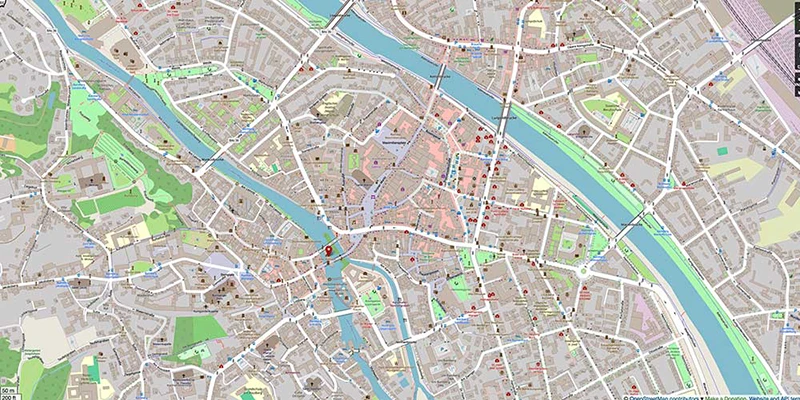
Bamberg
.webp)
Exploring Bamberg
A Journey Through Germany's Medieval Treasure
Bamberg is one of Germany's most remarkable medieval cities. Its UNESCO World Heritage status reflects centuries of preserved history spread across seven hills along the Regnitz River. This Franconian treasure survived the destruction of two world wars, leaving intact a comprehensive medieval urban landscape that demonstrates the power and influence of prince-bishops who shaped the city from the eleventh century onward. The city's unique geography, with its rivers, hills, and bridges, creates distinct districts that tell different chapters of German ecclesiastical, commercial, and cultural development.
The Official Tourist Information website has a large amount of information about the city and surroundings, including sights, accommodations, dining, tours, scenic routes, free brochures, maps and more.
My hotel choice in Bamberg: Hotel Bamberger Hof Bellevue
Visitors encounter a living museum where Gothic cathedrals stand alongside baroque palaces, where ancient brewing traditions continue in medieval taverns, and where cobblestone streets connect market squares that have served communities for nearly a millennium. The interplay between ecclesiastical and secular power, between imperial authority and local commerce, remains visible in every district, from the cathedral heights to the riverside fishing quarters. Bamberg offers an authentic experience of medieval Germany, where architectural grandeur meets traditional craftsmanship and where historical significance combines with contemporary cultural life.
This interactive Google My Map shows locations and hotels with information that can be displayed by clicking on the symbols. It has sidebar index and displays best in full-frame by clicking the box in top-right. The map can be used on your phone or tablet when visiting a city, showing you where to go and describing the sights. You are welcome to make a copy as described here.
The Island City and River Crossings
The Altes Rathaus, Bamberg's most iconic structure, represents the historic town hall built on an artificial island in the Regnitz River, distinguished by baroque frescoes covering its exterior walls and unique positioning that connects the ecclesiastical and civic districts of the medieval city through its bridge location. This Bamberg Old Town Hall, a medieval municipal building constructed on this artificial island in the Regnitz River, features painted facades and serves as the administrative center that symbolically bridges the ecclesiastical and secular portions of the historic city. Within this remarkable building, the Ludwig Collection houses porcelain and ceramics, displaying fine decorative arts and historical artifacts while offering visitors insight into European ceramic traditions and the cultural refinement of the episcopal court.
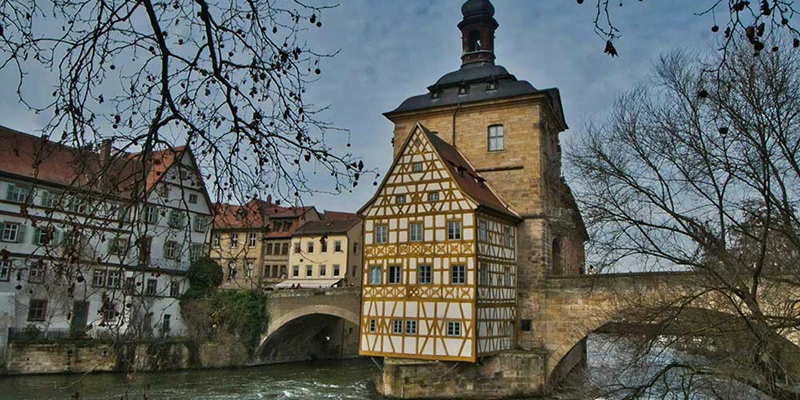
The river system connects different quarters through various bridges. The Obere Brücke, the upper bridge spanning the Regnitz River, connects different districts of the historic center, offering views of the surrounding architecture while serving as an important pedestrian crossing point in the medieval urban layout. The Untere Brücke, the lower bridge crossing the Regnitz River, connects the old town districts, providing pedestrian access and views of the historic waterfront buildings while serving as an essential link in the medieval city's transportation network.
The Geyerswörthsteg, a pedestrian bridge crossing the Regnitz River, connects the island old town with the residential districts while offering views of the half-timbered houses along the riverbank known as Little Venice. The Regnitzbrücke spans the Regnitz River, connecting the island old town with surrounding districts, offering pedestrian access and views of the historic waterfront while serving as an essential link in the medieval urban transportation network.
.webp)
The Wunderburgbrücke crosses the Regnitz River, providing pedestrian access between different quarters of the historic city, offering views of the surrounding architecture while serving as a vital connection point in the medieval urban layout.
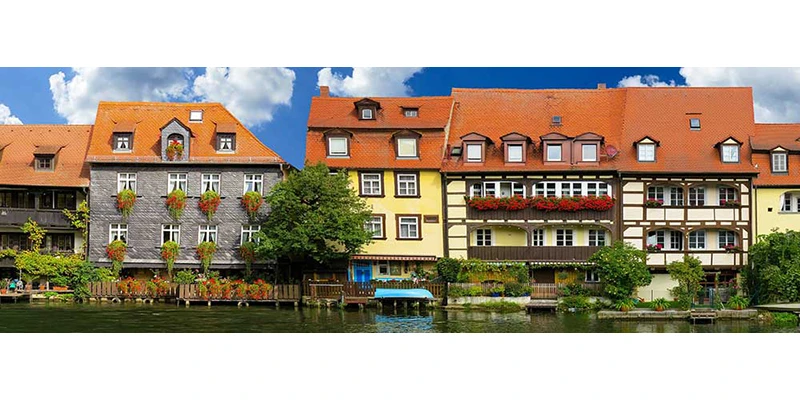
Klein Venedig, the picturesque district of half-timbered fishermen's houses built directly along the Regnitz River, creates a waterfront scene reminiscent of Venice and provides one of the most photographed views in Bamberg's historic center. This area exemplifies the city's relationship with water and demonstrates how medieval architecture adapted to riverside conditions.
.webp)
Markets, Squares, and Commercial Life
The commercial heart of Bamberg centers around several historic squares and market areas. The Grüner Markt, a central market square surrounded by historic buildings, serves as a venue for weekly markets, festivals, and public events, while housing restaurants and shops that maintain the traditional commercial character of the medieval city. At its center stands the Gabelmannbrunnen, a baroque fountain featuring Neptune and other mythological figures, representing eighteenth-century civic art while serving as a landmark for navigation through the historic city center.
The Obstmarkt, a fruit market square featuring the Neptune fountain, serves as a gathering place for weekly markets, surrounded by traditional buildings while maintaining its commercial function as a center for local produce and community activities. The Brunnen am Obstmarkt, a historic fountain located in the fruit market square, serves as a central gathering point surrounded by traditional market buildings and providing a focal point for the commercial district's daily activities and seasonal markets.
Maximiliansplatz, a central square named after King Maximilian, features the New Residence and serves as a focal point for civic activities, surrounded by baroque architecture and providing open space for events and gatherings in the heart of the historic district. The Schillerplatz, a public square named after the German poet, is surrounded by historic buildings and serves as a gathering place for local events and markets while providing open space within the dense medieval urban fabric of the old town.
Additional fountains throughout the city demonstrate baroque artistic traditions. The Fortunatabrunnen, featuring allegorical figures and decorative stonework, is located in a central square and serves as a meeting point while demonstrating the artistic traditions and civic pride of the eighteenth-century city development. The Neptunsbrunnen, featuring the Roman sea god Neptune, is located in a prominent square and demonstrates eighteenth-century sculptural art while serving as a landmark and gathering place within the historic city center's architectural ensemble.
.webp)
Streets and Pedestrian Routes
Bamberg's network of historic streets provides pathways through different eras of urban development. Lange Strasse, an extended pedestrian street connecting various districts of the old town, is lined with historic buildings housing shops, restaurants, and cafes while providing a main walking route for visitors exploring the medieval city center. Sandstrasse, a historic street in the old town characterized by traditional architecture and local businesses, serves as a main pedestrian thoroughfare for shopping and dining while connecting various historic districts and maintaining its medieval urban character. The Obere Sandstrasse represents the upper section of the historic Sand Street, featuring traditional Franconian architecture and local businesses while providing a pedestrian route through the old town with access to shops, restaurants, and historic sites.
.webp)
Karolinenstraße, a commercial street in the city center featuring shops, restaurants, and historic buildings, serves as a main pedestrian thoroughfare for shopping and dining while maintaining its traditional urban character and architectural heritage. Dominikanerstrasse, a historic street in the old town featuring traditional Franconian architecture, local shops, and restaurants, provides a pedestrian-friendly route through the medieval city center while connecting major historic sites and commercial areas.
Am Leinritt, a historic street connecting the cathedral district with the river area, is characterized by traditional Franconian architecture and stone buildings that house local shops and restaurants while maintaining its medieval street layout and pedestrian-friendly atmosphere. Kapuzinerstrasse, featuring traditional architecture and local businesses, provides a walking route through the old town while connecting religious sites and offering access to shops, cafes, and services within the medieval urban fabric.
-2up.webp)
Kesslerstraße, a commercial street in the historic center featuring shops and restaurants, serves as a pedestrian-friendly thoroughfare while maintaining traditional urban character and providing access to local businesses within the medieval city structure. Siechenstraße, featuring traditional Franconian architecture and local businesses, provides a walking route through residential areas while connecting the old town with outer districts and maintaining its medieval street layout and character.
Kunigundendamm, a boulevard named after Empress Kunigunde, connects different districts of the city while featuring tree-lined walkways and serving as a main thoroughfare that provides access to residential areas and commercial establishments beyond the historic center.
Cultural Institutions and Museums
Bamberg's cultural landscape encompasses various specialized institutions. The Diocesan Museum, housed in historic buildings near the cathedral, displays liturgical objects, medieval manuscripts, and ecclesiastical treasures that illustrate the region's spiritual and cultural heritage through various historical periods. The Natural History Museum, a scientific institution housed in historic buildings, displays regional flora, fauna, and geological specimens while offering educational programs about Franconian natural environments and serving as a cultural resource for visitors and researchers.
The Franconian Brewery Museum, a cultural institution documenting the region's beer-making traditions and history, is housed in historic buildings and offers visitors insights into brewing techniques, equipment, and the social significance of beer culture in Franconian society.
Villa Concordia, an international artists' residence housed in historic buildings near the city center, hosts contemporary art exhibitions and cultural programs while serving as the foundation for modern art installations throughout Bamberg's sculpture trail. Concordia Palace, the historic palace building housing the International House of Artists Villa Concordia, serves as a cultural center for contemporary art while maintaining its architectural heritage and providing exhibition spaces for visiting artists and cultural programs.
Haas Säle, a historic building housing cultural events and serving as a venue for rooftop gatherings during summer months, is located on Sandstrasse and provides entertainment space while maintaining traditional architecture within the old town district.
.webp)
The Castle
Commanding the highest elevation, Altenburg Castle consists of medieval fortress remains situated on the highest hill overlooking the city, featuring restored sections and defensive walls that demonstrate military architecture from the eleventh century while providing commanding views across the river valleys and urban landscape below. The Altenburg hilltop castle ruins provide panoramic views over Bamberg's historic center and surrounding Franconian landscape, accessible via walking paths through wooded slopes and offering visitors a combination of medieval fortification remnants and elevated vantage points for photography.
Brewing Heritage and Traditional Establishments
Bamberg's reputation as a brewing center finds expression in its historic establishments. Schlenkerla, a historic tavern famous for its smoked beer and traditional Franconian cuisine, is housed in medieval buildings and represents the authentic brewing culture that has made Bamberg renowned throughout Germany for its distinctive beer traditions. The Schlenkerla Brewery, a traditional brewery producing the distinctive smoked beer that characterizes Bamberg's brewing heritage, offers tours and tastings while maintaining centuries-old production methods in historic facilities within the city center.
.webp)
Agricultural Heritage and Gardens
The Gärtnerstadt, a traditional market gardening area featuring preserved gardens and historic houses where local farmers cultivated vegetables and herbs for centuries, maintains agricultural traditions within the urban landscape while offering insight into Franconian farming culture. The Market Gardeners District, a historic quarter demonstrating traditional Franconian agriculture where centuries-old vegetable growing practices continue in small maintained gardens, showcases the city's connection to agricultural traditions alongside its cultural and ecclesiastical heritage.
Hain Park, a public park area providing green space for recreation and relaxation, features walking paths and garden areas while offering residents and visitors a natural retreat within the urban environment and serving as a venue for outdoor activities.
.webp)
Monuments and Architectural Details
Throughout the city, various monuments commemorate important historical figures and events. The Kaiserin Kunigunde statue, honoring the medieval empress and saint who founded the Bamberg bishopric alongside her husband Emperor Henry II, is located near the cathedral and commemorates the city's imperial founding and ecclesiastical significance.
The Schöne Pforte, a beautiful doorway or portal featuring decorative stonework and architectural details, represents the artistic craftsmanship of medieval builders while serving as an example of the ornate entrances found throughout the historic city center.
The Kranen, a historic harbor crane structure representing Bamberg's past as a river trading center, demonstrates medieval commercial technology while serving as a reminder of the city's economic connections along the Regnitz River and regional trade networks.
The Cathedral District and Episcopal Power
The heart of Bamberg's ecclesiastical grandeur lies in the Bergstadt, the upper town district encompassing the cathedral area and episcopal buildings, characterized by ecclesiastical architecture and monumental structures that demonstrate the power and influence of the prince-bishops throughout medieval and baroque periods. At its center stands Domplatz, the cathedral square considered among Germany's finest public spaces, surrounded by the cathedral and episcopal palaces while serving as the ceremonial heart of the ecclesiastical district and providing a focal point for religious and civic events.
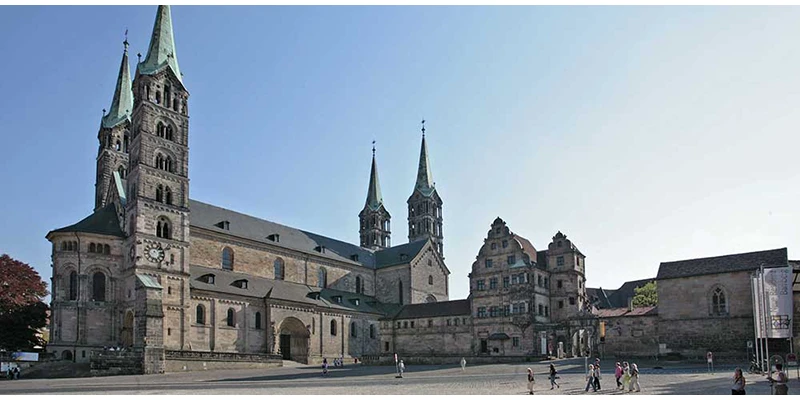
The magnificent Bamberg Cathedral, also known as Bamberger Dom, dominates the skyline with its four distinctive towers. This Romanesque and early Gothic cathedral represents imperial and ecclesiastical power, housing significant medieval art including the famous Bamberger Reiter sculpture and Pope Clement II's tomb, while serving as the architectural focal point of the UNESCO World Heritage old town. The Bamberger Reiter, a medieval stone sculpture of an unknown king or emperor housed within the cathedral, represents one of the most famous examples of thirteenth-century Gothic art and symbolizes the connection between imperial and ecclesiastical authority.
Adjacent to the cathedral, the Alte Hofhaltung presents a medieval episcopal palace complex featuring Renaissance architecture and courtyards that served as the prince-bishops' residence until the seventeenth century, now housing administrative offices and offering visitors glimpses of historical ecclesiastical power through its preserved facades and architectural details. The Historical Museum, housed within this Old Court complex, displays artifacts and exhibits related to Bamberg's urban development, cultural history, and regional traditions through interactive displays and historical reconstructions spanning multiple centuries.
The Bamberg New Residence, known locally as Neue Residenz, showcases baroque palace architecture built in the seventeenth century as the prince-bishops' main residence, containing ornate state apartments, extensive art collections, and formal gardens that demonstrate the wealth and power of the ecclesiastical rulers. The palace's Rosengarten, a formal rose garden associated with the New Residence, features hundreds of rose varieties arranged in geometric patterns and provides a peaceful retreat with views over the city while demonstrating baroque garden design principles.
.webp)
Beyond the cathedral complex, Bamberg's religious landscape encompasses numerous churches and monasteries that reflect centuries of spiritual devotion. The Kloster St. Michael, a Benedictine monastery complex situated on Michelsberg hill, features baroque church architecture, monastic buildings, and terraced gardens while offering panoramic views over the city and serving as a spiritual and cultural center. This historic Michelsberg Abbey crowns the hill above the city, featuring baroque church architecture, extensive gardens, and panoramic viewing areas while maintaining its religious function and offering cultural programs for visitors.
The Carmelite Monastery represents another facet of religious life, featuring Gothic and baroque architectural elements, housing a contemplative community while offering visitors access to historic church spaces and demonstrating the continuity of monastic life in the city center. The Jesuitenkirche, a baroque Jesuit church located in the city center, features ornate interior decoration and serves the religious community while demonstrating Counter-Reformation architectural principles and ecclesiastical art from the seventeenth and eighteenth centuries.
.webp)
Parish churches throughout the city serve local communities while contributing to the architectural heritage. The Obere Pfarre, the upper parish church featuring Gothic architecture, serves the cathedral district's religious needs, housing significant artworks and providing visitors with examples of medieval ecclesiastical architecture complementing the nearby cathedral complex. Kath. Kirche St. Martin, a Catholic parish church featuring Gothic and baroque architectural elements, serves the local community while offering visitors examples of religious art and architecture that complement the city's ecclesiastical landscape and spiritual traditions. The Kath. Pfarrkirche St. Elisabethen serves the local community with regular religious services and features traditional ecclesiastical architecture while hosting seasonal festivals including the annual Kirchweih celebration that draws visitors for cultural events.
The Erlöserkirche, the Church of the Redeemer, features historic architecture and serves the Protestant community, notable for surviving partial destruction during World War II while maintaining its religious function and architectural significance within the city's ecclesiastical landscape. St. Stephen Church, positioned on one of Bamberg's seven hills, features medieval architecture and provides elevated views over the city while serving as a parish church with historic significance and traditional religious art within its stone interior.
.webp)
A Timeless Destination
Bamberg's enduring appeal lies in its ability to transport visitors across centuries while remaining a vibrant, functioning city. The medieval street patterns continue to guide daily life, the historic markets still serve local communities, and the brewing traditions maintain their authentic character in establishments that have operated for hundreds of years. Each district reveals different aspects of German history, from imperial power and ecclesiastical authority to commercial enterprise and artistic achievement.
The city's preservation extends beyond mere architectural conservation to encompass living traditions, active religious communities, and cultural institutions that bridge historical heritage with contemporary creativity. Whether exploring the commanding heights of cathedral squares, wandering through riverside fishing quarters, or discovering the agricultural heritage that sustained the community for generations, visitors experience a comprehensive portrait of medieval German civilization that continues to evolve while honoring its profound historical foundations.
.webp)