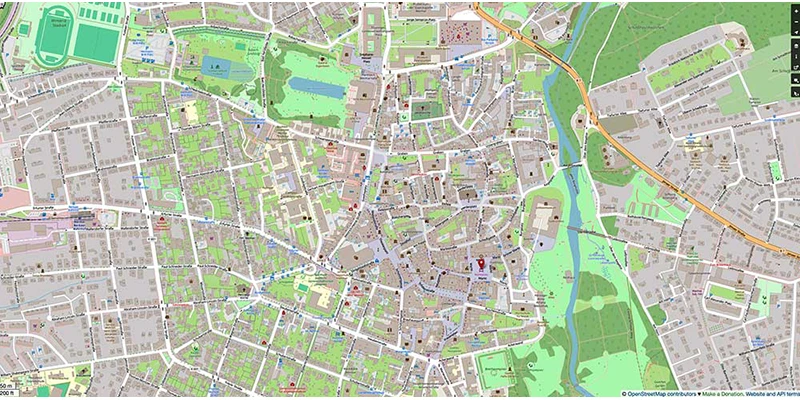
Weimar
.webp)
Germany's Cultural Heritage City
Weimar stands as one of Germany's most significant cultural centers, where literature, philosophy, art, and history converge in a compact city that has shaped European intellectual development for centuries. Located in Thuringia, this UNESCO World Heritage site offers visitors the opportunity to explore the homes and workplaces of Goethe, Schiller, and other influential figures while examining both the heights of German culture and the depths of its darkest historical chapter.
The Official Tourist Information website has a large amount of information about the city and surroundings, including sights, accommodations, dining, tours, scenic routes, free brochures, maps and more.
Ducal Palaces and Castles
This interactive Google My Map shows locations with information that can be displayed by clicking on the symbols. It has sidebar index and displays best in full-frame by clicking the box in top-right. The map can be used on your phone or tablet when visiting a city, showing you where to go and describing the sights. You are welcome to make a copy as described here. Weimar can be visited as a daytrip from Erfurt, 12-minutes by train.
Weimar City Castle represents the former ducal residence that combines baroque and classical architectural elements. The Stadtschloss houses the Schlossmuseum, which displays collections of fine art, decorative objects, and historical artifacts from the city's aristocratic period.
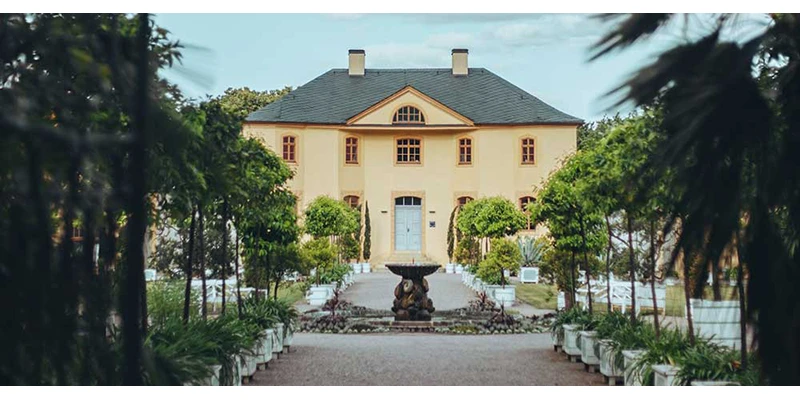
Wittumspalais served as the former residence of Duchess Anna Amalia and now operates as a museum with furnished rooms, art collections, and exhibitions that document courtly life in Weimar.
.webp)
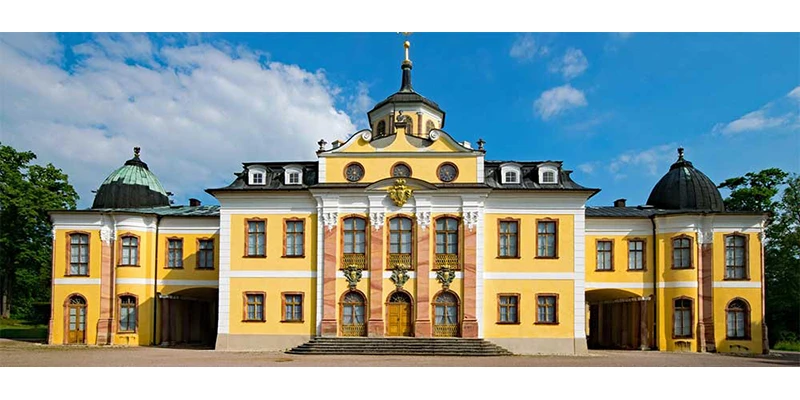
Belvedere Castle and Park offers visitors a baroque summer palace surrounded by extensive parkland on a hill outside town. The former summer residence of the ducal family features historic gardens, walking paths, and panoramic views over the surrounding countryside, with an orangery and access via local transit.
Ettersburg Castle and Park presents a baroque hunting lodge and summer residence built in the early 18th century by the ducal family on Big Ettersberg mountain. The extensive landscaped park, designed by Hermann von Puckler-Muskau, features the curved Pucklerschlag avenue, orangery, and pleasure garden with maze. The castle now serves as a conference center surrounded by romantic parkland.
Historic City Center and Shopping Districts
Marktplatz forms the central square of the old town, surrounded by historic buildings including the town hall. The square regularly hosts markets and public events that bring the community together in this traditional gathering space.
.webp)
Theaterplatz creates a prominent plaza featuring the German National Theatre with its statue of Goethe and Schiller. Cultural institutions and historic buildings surround this important public space.
Kaufstraße connects Marktplatz to Herderplatz as a historic shopping street lined with two to four-story buildings that include Renaissance and baroque structures. The pedestrian-friendly area features cultural monuments, shops, cafes, and restaurants, formerly known as Steinweg and later Dimitroffstraße during the DDR period.
Schillerstraße serves as the main shopping street in Weimar's city center, offering small shops, galleries, restaurants, and cafes in a pedestrian-friendly environment with historic buildings that house boutiques and specialty stores connecting major squares and attractions.
Literary Heritage and Classical Weimar
Goethe House and Goethe Museum preserves the former residence where Johann Wolfgang von Goethe lived for nearly 50 years. The museum contains original furnishings, manuscripts, and personal belongings that showcase his life and work. Located on Frauenplan square, this significant historic site forms part of the Goethe National Museum complex, which features original furnishings, personal artifacts, and exhibits documenting his contributions to German literature.
Goethe's Garden House sits within Park an der Ilm and serves as the preserved residence and working space where Goethe retreated. The building maintains original furniture, personal items, and botanical gardens, forming part of the classical heritage trail that connects Weimar's most important cultural sites.
Schiller Museum and Schiller House occupies the historic residence where Friedrich Schiller lived and worked. The preserved building displays period furniture, manuscripts, and memorabilia alongside an adjacent museum that presents exhibitions on his literary contributions to German culture.
-2up.webp)
Goethe-Schiller Archive houses manuscripts, letters, and autographs of major German writers, philosophers, and composers in Germany's oldest literary archive. The classical building sits in a tranquil garden area and offers views over the town.
Theatrical and Musical Heritage
German National Theater serves as the historic venue where the Weimar Republic constitution was signed and where Goethe worked as theater director. The building now hosts opera and classical performances, featuring a neoclassical facade and maintaining its prominent cultural role in the city. The theater's exterior displays the notable statue of Goethe and Schiller.
Liszt House occupies the former court gardener's residence where Franz Liszt lived from 1869 until his death in 1886. The memorial preserves authentic furnishings, including an original Bechstein grand piano and music salon where he taught talented pianists from across Europe. Audio exhibitions showcase his compositions and transcriptions in this building located at the edge of Park an der Ilm.
Bauhaus Design Legacy
Bauhaus Museum Weimar presents the influential design movement that originated in the city through modern exhibition spaces near the city center. The museum displays works by Walter Gropius, Paul Klee, and Wassily Kandinsky, showcasing furniture, textiles, models, and multimedia exhibits that document the school's revolutionary approach to design and architecture. The collection represents the world's oldest assembly of Bauhaus objects from the school founded in Weimar in 1919.
Haus am Horn stands as the first model house built by the Bauhaus in 1923, designed by Georg Muche as a prototype for modern living. The restored building demonstrates revolutionary architectural principles with its cubic design, flat roof, and steel and concrete construction. Original furniture reconstructions provide visitors with an authentic experience of early Bauhaus domestic architecture.
Architectural Heritage
Anna Amalia Library houses an extensive collection of rare books, manuscripts, and maps within its historic rococo-style interior. The ornate library offers guided tours that highlight its historical book collection and architectural significance.
Stadtkirche St Peter und Paul dominates Herderplatz with its Gothic architecture and prominent tower. The historic Protestant church features the renowned Cranach altar and maintains associations with theologian Johann Gottfried Herder.
Cranach House preserves the historic building where Lucas Cranach the Elder lived and worked. The structure now serves as a cultural venue and gallery space that showcases Renaissance art and history.
.webp)
Parks and Recreation
Park an der Ilm extends along the Ilm River as a large landscaped park featuring walking paths, bridges, statues, and historic structures. The park contains several important sites including Goethe's Garden House and provides a natural corridor through the city.
Roman House sits on an artificial bluff within Park an der Ilm as a neoclassical villa built between 1792-1797 under Goethe's supervision. Modeled after Roman villas, the building served as Duke Carl August's favorite retreat and summer residence, featuring temple-like design with Doric columns and Ionic portico that offers expansive views over the Ilm Valley.
Museums and Cultural Institutions
Museum Neues Weimar occupies the former Grand Ducal Museum built in 1869 as one of Germany's first museum buildings. Reconstructed between 1996-1998 after wartime damage, the museum features the permanent exhibition "Van de Velde, Nietzsche and the Moderne um 1900," showcasing early modernist art from the Weimar Painting School to Henry van de Velde.
Weimarhaus Museum presents 5,000 years of Weimar's cultural and political history through interactive dioramas with wax figures, elaborate light installations, and atmospheric soundscapes. The private multimedia museum covers epochs from the Stone Age to modern times and offers electronic pocket computer guides for city tours.
Museum für Ur- und Frühgeschichte Thüringens exhibits 400,000 years of Thuringian archaeological finds and cultural artifacts on Humboldtstraße. The museum's multistory displays chart regional development from the Stone Age through early historical periods, including proto-human remains.
2up.webp)
Historical Remembrance
Buchenwald Memorial serves as a preserved concentration camp site on the outskirts of Weimar, functioning as a memorial and educational center that documents this chapter of German history through exhibitions and preserved structures.
Fürstengruft Historical Cemetery contains the neoclassical mausoleum built between 1823-1828 as the final resting place of Goethe and Schiller alongside the ducal family of Saxe-Weimar. The UNESCO World Heritage Site features nearly 50 sarcophagi set within a historic cemetery with old trees and weathered gravestones.
Russian Orthodox Chapel stands within the historic cemetery as a funerary chapel built in 1862 for Grand Duchess Maria Pavlovna. The structure represents one of Germany's first Russian-styled buildings with orthodox design elements and distinctive onion domes.
Conclusion
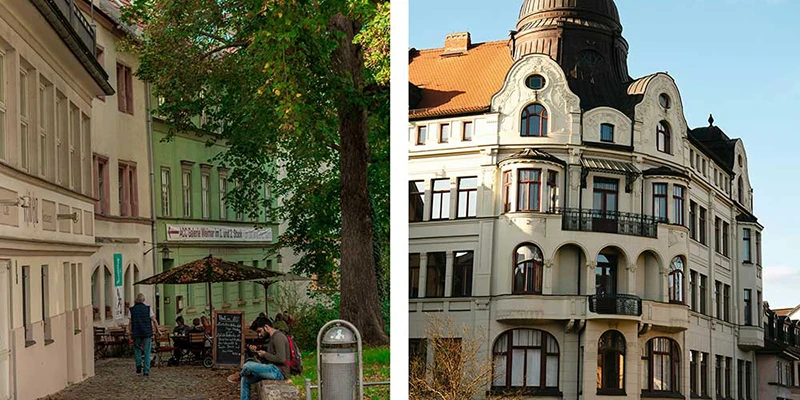
Weimar provides visitors with direct access to the spaces where German intellectual and cultural history unfolded across multiple centuries. The city's compact size allows for comprehensive exploration of literary landmarks, architectural treasures, and design innovations while confronting the sobering realities of 20th-century history. Each site contributes to understanding how this small Thuringian city became central to European cultural development and remains relevant to contemporary discussions of art, politics, and human responsibility.
.webp)