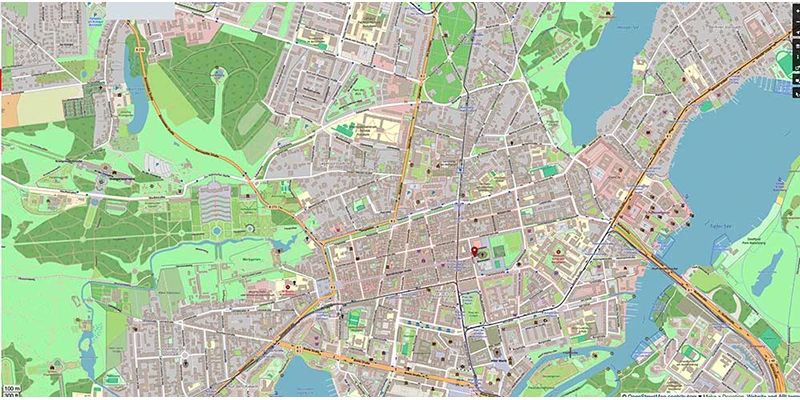
Potsdam Travel Guide
Potsdam stands as one of Germany's most magnificent smaller cities, showcasing centuries of Prussian royal heritage through spectacular palaces, landscaped gardens, and historic neighborhoods. As the former residence of Prussian kings and German emperors, this UNESCO World Heritage city offers visitors an extraordinary journey through European history, from Frederick the Great's rococo masterpieces to Cold War landmarks. This comprehensive guide explores Potsdam's diverse attractions, combining royal architecture with cultural institutions, peaceful parks, and unique international influences.
The Official Tourist Information website has a large amount of information about the city and surroundings, including sights, accommodations, dining, tours, scenic routes, free brochures, maps and more.
Royal Palaces and Sanssouci Complex
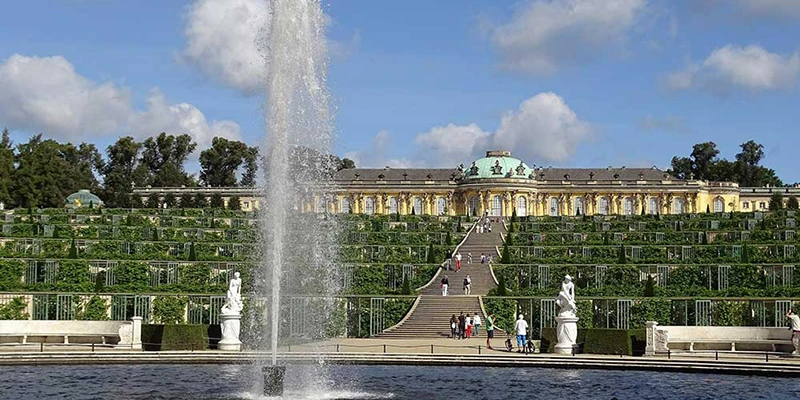
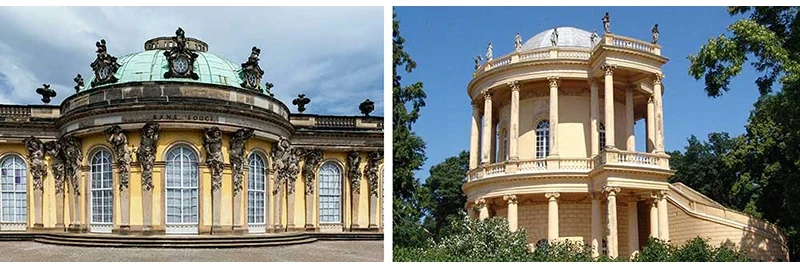
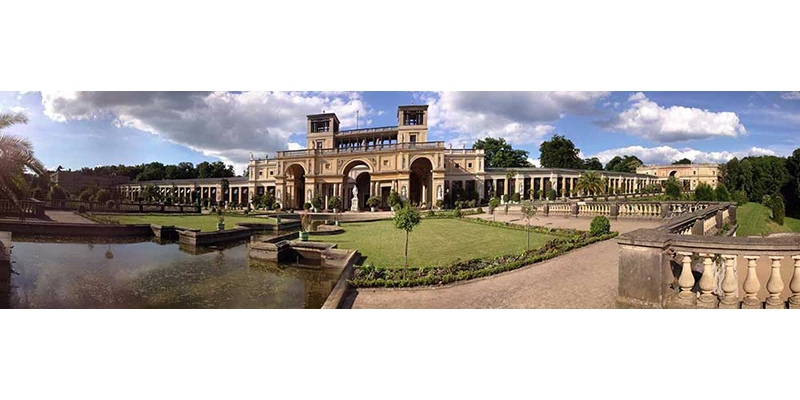
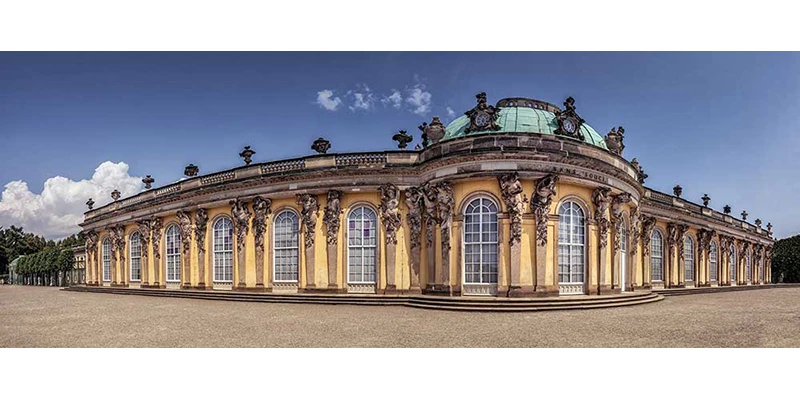
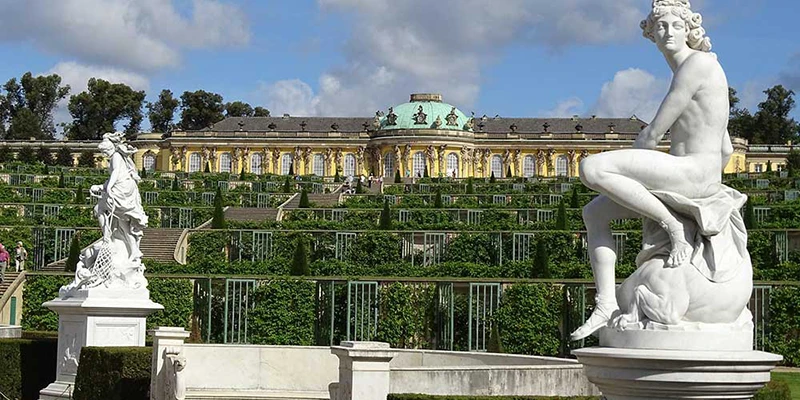
Sanssouci Palace represents the crown jewel of Potsdam, serving as Frederick the Great's former summer residence with rococo architecture, terraced vineyard gardens, ornate rooms, and historical artifacts that showcase 18th-century royal life. Park Sanssouci encompasses these expansive palace grounds with walking paths, fountains, and smaller palaces including the Chinese House tea pavilion and Orangery, along with gardens and statues that create a harmonious landscape of royal leisure. The Church of Peace adds Italian-style architecture to the park with its cloisters and mosaics, while the nearby Botanical Garden extends the natural beauty with diverse plant collections and peaceful walking areas.
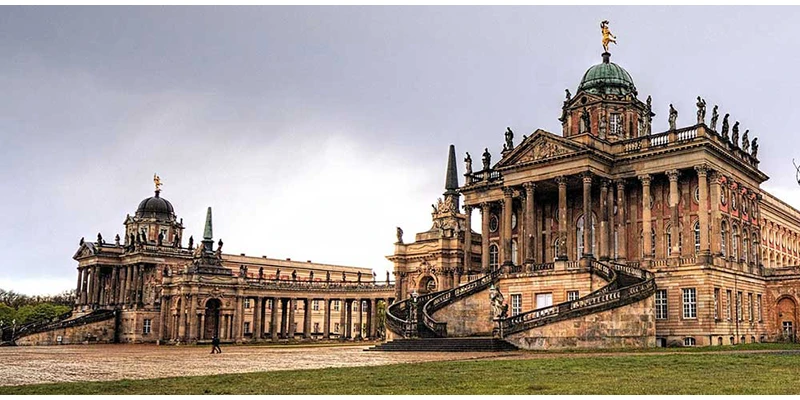
New Palace demonstrates the height of baroque grandeur with its large scale, ornate interiors, royal apartments, paintings, and period furnishings that represent 18th-century Prussian power and wealth. Charlottenhof Palace offers a more intimate neoclassical experience, designed as a mansion resembling a Roman villa set within landscaped gardens that provide elegant contrast to the grander royal residences. The Steam Pump House adds functional architecture designed to resemble a mosque, originally built to power the elaborate fountain systems throughout Sanssouci Park.
This interactive Google My Map shows locations with information that can be displayed by clicking on the symbols. It has sidebar index and displays best in full-frame by clicking the box in top-right. The map can be used on your phone or tablet when visiting a city, showing you where to go and describing the sights. You are welcome to make a copy as described here. Potsdam can be visited as a daytrip from Berlin, 24-minutes by train.
Historic Neighborhoods and Architecture
Jägervorstadt provides a quiet residential experience with historic villas, tree-lined streets, and peaceful atmosphere that demonstrates how Potsdam's wealthy citizens lived beyond the royal palaces. The Historic Old Town encompasses pedestrian streets, historic buildings, and city gates that create an authentic urban experience with artisan shops and public squares connecting various cultural attractions.
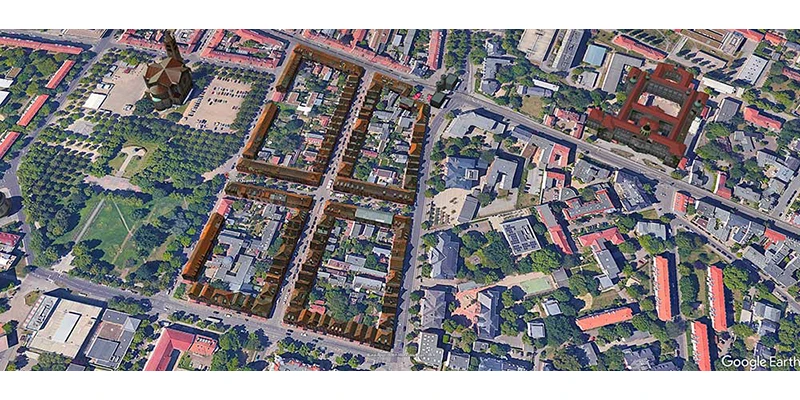
The Dutch Quarter creates a unique architectural enclave with its red brick gabled houses built for Dutch craftsmen in the 18th century, now containing shops, cafes, restaurants, galleries, and specialty stores that maintain the neighborhood's distinctive character. Alexandrowka Colony preserves a 19th-century Russian settlement featuring traditional wooden houses, a Russian Orthodox chapel, timber construction with garden settings, and cultural exhibits that reflect Potsdam's international connections and cultural diversity.
Central Squares and Urban Landmarks
Old Market Square forms the central historic plaza containing the reconstructed City Palace, St Nicholas Church with its tower providing panoramic city views, Old Town Hall, Museum Barberini, and other neoclassical buildings that represent Potsdam's civic architecture. Neuer Markt offers a restored 18th-century square with Baroque facades and cultural institutions surrounded by historic buildings that demonstrate the city's urban planning heritage.
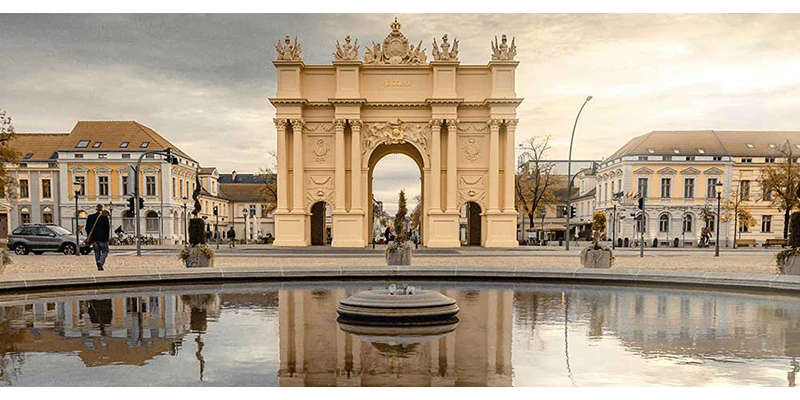
Luisenplatz serves as a public square near Sanssouci Park with convenient tram connections and surrounding shops, while the Brandenburg Gate creates a neoclassical triumphal arch marking the western entrance to the old city with twin towers and detailed stonework. Nauener Tor represents another well-preserved historic city gate with Gothic Revival architecture that showcases Potsdam's former fortifications and defensive heritage.
Shopping and Cultural Districts
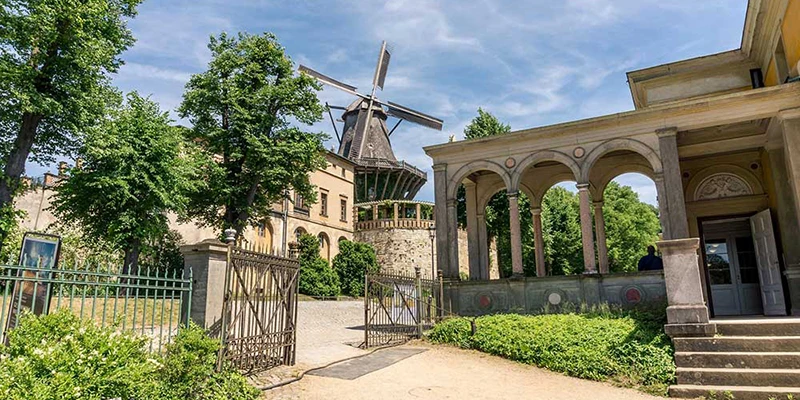
Brandenburger Strasse functions as the main pedestrian shopping street in the old town, lined with boutiques, bookstores, cafes, restaurants, and retail stores that connect the city gate to the historic center, creating a vibrant commercial corridor. The street provides authentic urban atmosphere where locals and visitors can experience contemporary Potsdam life while surrounded by historic architecture and cultural attractions.
Krongut Bornstedt combines historic architecture with local crafts, events, gardens, and royal Prussian heritage, offering visitors opportunities to experience traditional craftsmanship and cultural activities in settings that reflect the region's agricultural and artisanal traditions beyond the royal palaces.
Lakeside Palaces and Gardens
Neuer Garten creates a parkland environment with lakeside views containing both Marble Palace and Cecilienhof Palace, connected by wooded paths and featuring the Gothic Library. The Marble Palace showcases neoclassical architecture situated on Holy Lake shores, surrounded by English-style gardens that offer peaceful lakeside views and elegant architectural details. Cecilienhof Palace provides Tudor-style architecture within this same garden setting, historically significant as the meeting place for the 1945 Potsdam Conference between Allied leaders, with preserved conference rooms, period interiors, and access to the lakeside environment.
Templiner See and Tiefer See extend the lakeside experience with opportunities for waterfront walks, boat tours, scenic views, quiet paths, and natural surroundings that provide peaceful recreation away from the more formal palace gardens while maintaining connection to Potsdam's water-centered landscape design.
Parks and Riverside Recreation
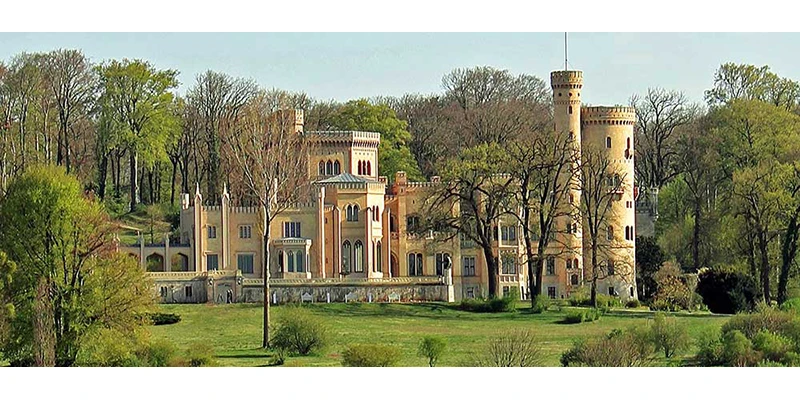
Babelsberg Park offers a large landscaped environment with walking paths, river views, waterfront areas, Babelsberg Palace, and elevated viewpoints across the Havel River to Potsdam's skyline, featuring historic buildings and landscaped gardens that extend the royal park tradition beyond Sanssouci. Friendship Island provides public garden space on the Havel River with pedestrian bridges, flower beds, water views, and walking paths that create intimate natural spaces within the urban environment.
The Havel River waterfront encompasses scenic riverfront areas with boat trip opportunities, riverside walking paths, cafes, and quiet spots that connect various palaces and parks throughout the city. Glienicke Bridge spans the Havel River as a historic crossing known for Cold War spy exchanges, offering scenic views of the waterfront, surrounding parkland, and river landscape that combine natural beauty with significant historical associations.
Museums and Cultural Institutions
Museum Barberini houses impressive art collections in a reconstructed baroque-style palace, displaying Impressionist and contemporary works in the city center that contribute to Potsdam's cultural offerings beyond royal heritage. Film Museum Potsdam focuses on German cinema history near the city center, while Filmpark Babelsberg provides a comprehensive film studio complex showcasing German cinema development with exhibits about movie production and entertainment industry heritage.
These cultural institutions demonstrate Potsdam's continuing role as a center for arts and entertainment, building upon its royal heritage to encompass modern cultural expression and historical preservation that serves both educational and recreational purposes for visitors seeking comprehensive understanding of German cultural development.
Transportation and Accessibility
Potsdam's attractions benefit from excellent public transportation connections, with tram systems connecting major sites and pedestrian-friendly zones throughout the historic center. The city's compact layout allows visitors to experience royal palaces, historic neighborhoods, cultural institutions, and natural areas within reasonable walking distances, while boat tours and riverside paths provide alternative transportation methods that enhance the scenic experience.
This comprehensive approach to urban planning ensures that visitors can efficiently explore Potsdam's diverse attractions while appreciating the relationship between royal heritage, urban development, and natural landscape that defines this remarkable Prussian capital and UNESCO World Heritage destination.
The city's unique combination of architectural grandeur, historical significance, cultural institutions, and natural beauty creates an unparalleled destination for understanding European royal heritage, German history, and landscape design traditions that continue to influence contemporary urban planning and cultural preservation efforts worldwide.