Kiel
Kiel is a city that lives by the water. The capital of Schleswig-Holstein, Germany's northernmost state, it wraps around a long sea inlet that brings ships, sailboats and ferries right into the heart of town. Sailing is woven into its identity, and every summer it hosts Kiel Week, the largest sailing event in the world, when the fjord fills with thousands of boats and the waterfront becomes one long festival. For visitors, Kiel is above all a maritime city, best enjoyed along its quays and promenades.
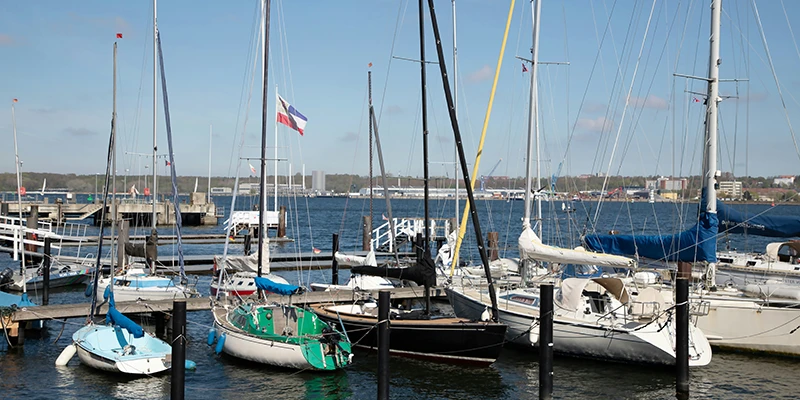
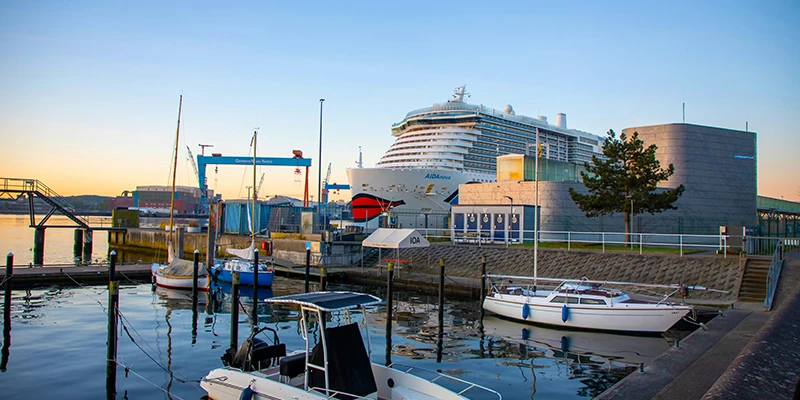
The city sits at the head of the Kiel Fjord, an arm of the Baltic Sea, in the far north of Germany near the Danish border, and at the eastern end of the Kiel Canal, the busy shipping shortcut between the Baltic and the North Sea. This position has made Kiel a naval and commercial port for centuries, and the comings and goings of ferries to Scandinavia, cargo ships and pleasure craft give the waterfront a constant sense of movement. Trains reach Kiel directly from Hamburg in around an hour and a quarter.
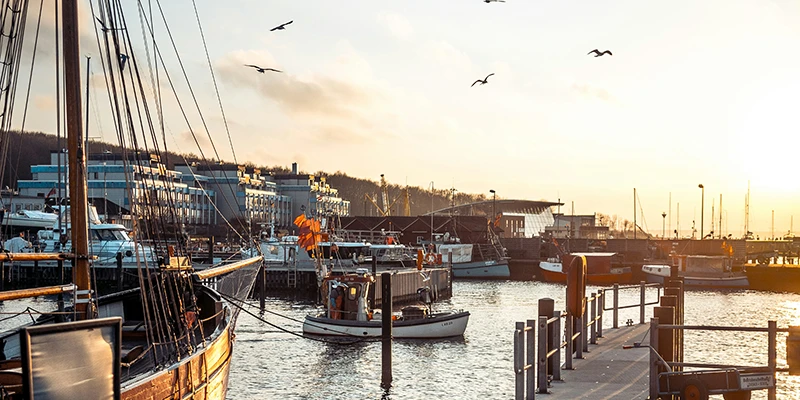
Kiel was heavily damaged in the Second World War and rebuilt largely in a modern style, so visitors should not come expecting a medieval old town of the kind found in Lübeck or Rostock. Instead the appeal is the setting and the sea. The Kiellinie is the city's signature promenade, a waterfront walkway running for several kilometers along the fjord, lined with benches, cafes and moorings, where you can watch the boats, see naval vessels and tall ships, and take in the salt air. It is the natural place to begin and end a visit.
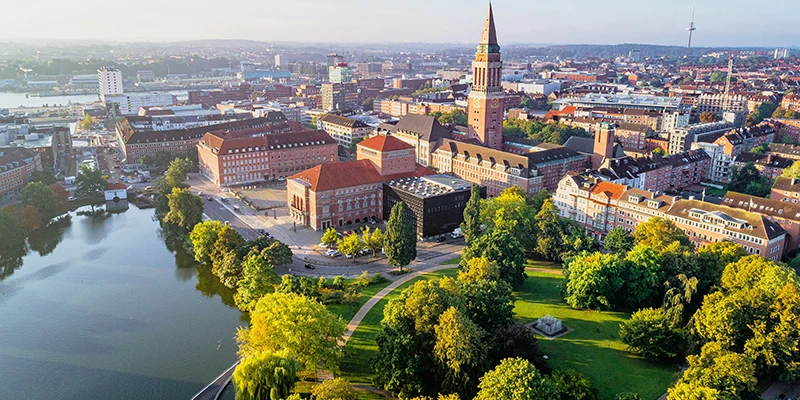
The main shopping district centers on the Holstenstrasse, one of Germany's oldest pedestrian shopping streets, running through the rebuilt center near the harbor. It is a practical, lively retail street rather than a historic showpiece, busy with locals and lined with the full range of shops, leading down toward the water. Around it the rebuilt center offers squares, the market and the modern town hall with its tall tower, which echoes the campanile of St. Mark's in Venice and can be climbed for a view over the fjord.
For understanding what Kiel is about, the maritime attractions are the draw. The Schifffahrtsmuseum, the maritime museum, occupies a handsome old fish auction hall on the water and traces the city's seafaring and naval history. Out at the fjord's mouth, the suburb of Laboe is home to a towering naval memorial and a preserved U-boat that can be visited, reached by a pleasant boat trip down the fjord, itself one of the best ways to experience Kiel. Fjord ferries run as regular public transport, so a ride on the water is both sightseeing and an everyday part of city life.
Kiel Week, held in late June, transforms the city. What began in 1882 as a regatta has grown into a vast festival combining world-class sailing competition with concerts, food stalls, fireworks and millions of visitors crowding the shores of the fjord. Even outside the event, sailing is everywhere in Kiel, from the marinas full of masts to the Olympic sailing center at Schilksee, built for the 1972 games.
The city also serves as a gateway. Ferries cross from Kiel to Sweden and Norway, making it a stepping stone toward Scandinavia, and the surrounding region of Schleswig-Holstein offers beaches, the Baltic resorts and the nearby Hanseatic town of Lübeck, a short train ride away, for those wanting more historic substance to pair with Kiel's modern, maritime character.
Reaching Kiel is simple, with direct trains from Hamburg and a station beside the harbor, within walking distance of the promenade and shopping streets. The flat, water-fronting center is easy to cover on foot, and the fjord ferries extend the range out to Laboe and the fjord villages. The Kiel tourist office, near the waterfront, supplies maps, ferry timetables and the schedule of summer events.
Kiel rewards travelers who enjoy ports, boats and open water rather than medieval lanes. Its pleasures are the long fjord promenade, the constant maritime traffic, a boat ride to Laboe, and, if the timing is right, the spectacle of Kiel Week. It is the essential city for anyone drawn to Germany's sailing culture and Baltic coast.