Fulda
Fulda is a baroque jewel that many travelers pass without realizing what they are missing. Its center is graced with a grand cathedral, a palatial former residence of prince-abbots and elegant gardens, all laid out with the symmetry and flourish of the baroque age. Compact, walkable and far less crowded than Germany's famous cities, Fulda offers a concentrated dose of baroque elegance and a relaxed old town within easy reach of Frankfurt.
.webp)
The city lies in the state of Hesse, in central Germany, on the Fulda River, and sits on the high-speed rail line between Frankfurt and the cities to the north and east, making it a quick and easy stop. Fulda's story begins in 744, when a monastery was founded here that grew into one of the most important religious centers of medieval Germany, the burial place of Saint Boniface, the missionary often called the apostle of the Germans. The wealth and standing of its prince-abbots, who ruled the city for centuries, paid for the baroque transformation that gives Fulda its present character.
The cathedral, the Dom, is the centerpiece. Rebuilt in the early 18th century in full baroque style on the site of the original abbey church, it presents a stately twin-towered facade and a bright, ornate interior, and holds the tomb of Saint Boniface in its crypt, still a place of pilgrimage. Beside it stands the much older Michaelskirche, St. Michael's, a rare survival from the 9th century with a Carolingian rotunda, one of the oldest churches in Germany and a striking contrast to the baroque grandeur next door.
.webp)
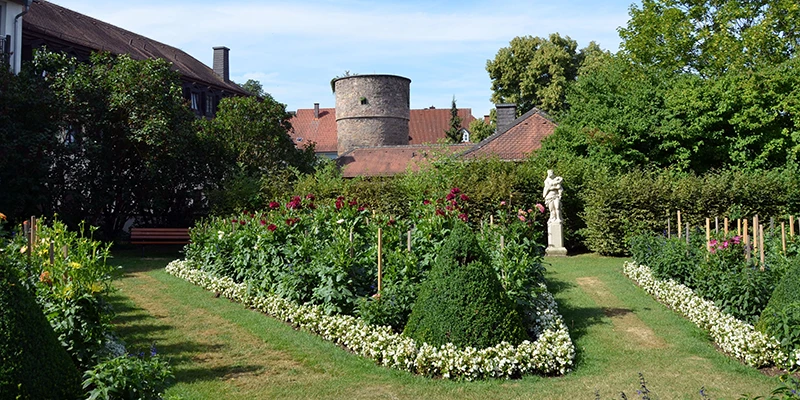
Across from the cathedral spreads the Stadtschloss, the city palace, the former residence of the prince-abbots and later prince-bishops. This large baroque palace contains historic state rooms open to visitors and is fronted by the Schlossgarten, a formal garden with an orangery, statues and flower beds that provides a pleasant green space at the heart of the city. The ensemble of cathedral, old church and palace, set around open squares, forms one of the most harmonious baroque townscapes in the region.
The old town beyond is a comfortable place to walk. A pedestrian zone runs through the center, with the main shopping streets largely traffic-free and lined with shops, cafes and restored townhouses. The market square and the lanes around it hold a mix of baroque and older buildings, some half-timbered, and the scale is intimate, so the historic sights and the shopping sit close together and are easily combined in an unhurried circuit on foot.
.webp)
Fulda makes a good base for the surrounding region. The Rhön, an upland area of rounded hills and nature reserves, lies nearby and offers walking and wide views, while the baroque theme continues just outside the city at Schloss Fasanerie, a handsome palace with parkland and museum collections a short distance away. For visitors wanting to extend a stay, these add countryside and additional palaces to the city's compact attractions.
The river and its banks provide green walks, and the city's parks, including the Schlossgarten and the grounds around the palace, give Fulda an open, leafy feel. Cultural life centers on the palace and cathedral, with concerts and seasonal events, and the city is known for a lively Christmas market set against the baroque backdrop in winter.
Fulda is very easy to reach, with frequent high-speed and regional trains stopping at a station a short walk from the center. The compact old town is ideal for walking, with all the main sights clustered close together. The city tourist office near the cathedral provides maps, palace and church opening hours, and information on excursions into the Rhön.
Fulda rewards travelers who appreciate baroque architecture and a calm, walkable old town away from the crowds. The cathedral, the ancient St. Michael's, the palace and its gardens make a graceful and coherent ensemble, easily seen in a half day or savored at leisure, and its position on the main rail line makes it a simple and worthwhile addition to a central German itinerary.