Munich Travel Guide
A video accompanies this story: You can also see this same video on a separate video page.
The Historic Heart of Bavaria's Capital: Marienplatz and Old Town
.webp)
Marienplatz, the central square has served as the geographical and cultural heart since the city's foundation in 1158. The square features two town halls and hosts daily glockenspiel shows at the New Town Hall at 11 a.m. and noon, where figures emerge from the clock to tell the story of a jousting tournament celebrating a Bavarian wedding. At Christmastime the square fills with vendors selling festive food, mulled wine and holiday gifts at the popular Christkindlmarkt.
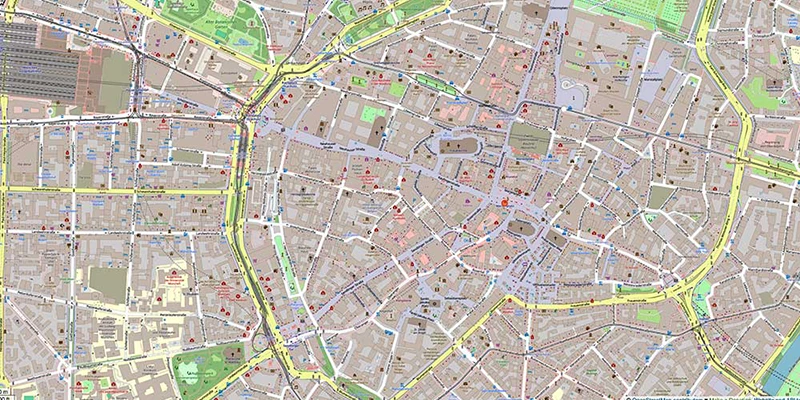
This interactive Google My Map shows locations with information that can be displayed by clicking on the symbols. It has sidebar index and displays best in full-frame by clicking the box in top-right. The map can be used on your phone or tablet when visiting a city, showing you where to go and describing the sights. You are welcome to make a copy as described here. Munich can be visited as a daytrip from Nuremberg, 60-minutes by train.
The Official Tourist Information website has a large amount of information about the city and surroundings, including sights, accomodations, dining, tours, scenic routes, free brochures, maps and more.
-copy2up.webp)
The Maxmonument originally constructed in 1638 honors the Virgin Mary and commemorates the end of Swedish occupation during the Thirty Years' War. The Mariensäule serves as the point from which distances from Munich to other places are measured, representing Munich's Catholic identity.
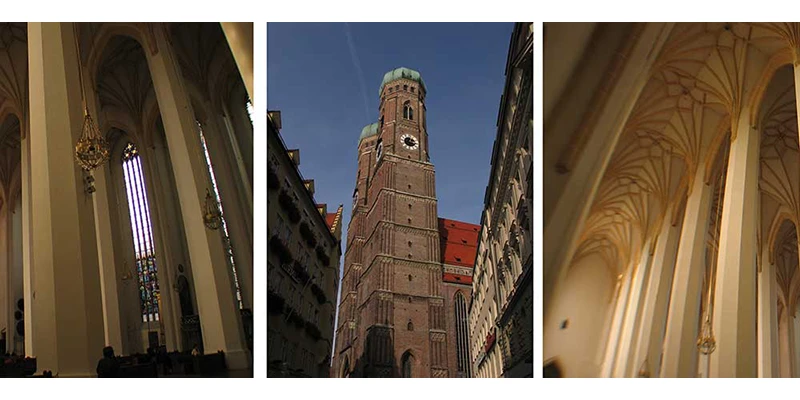
The Frauenkirche was built in the 15th century as the gothic Cathedral of Our Lady, serving as an unmistakable symbol of the city with its distinctive green onion domes visible throughout Munich's pedestrian zone. Legend suggests that the Devil himself once visited this church, adding to its mystique. Frauenplatz in front of the cathedral features a bronze model designed for the visually impaired and provides an unobstructed view of the imposing facade.
.webp)
Odeonsplatz connects with Marienplatz via Theatinerstrasse, featuring the Theatine Church, Feldherrnhalle, and Residenz complex. The Feldherrnhalle was built by King Ludwig I in the 1850s as dedication to the Bavarian Army, now standing as a monument to peace with architecture inspired by Florence's Loggia dei Lanzi.
.webp)
The Pedestrian Zone and Shopping Districts
Munich's shopping heart beats along Kaufingerstrasse and Neuhauser Strasse, among the shopping streets with the highest footfall in Germany, welcoming up to 200,000 shoppers during peak times. These two large streets merge into each other, featuring traditional department stores and shops. The Kaufingerstraße was first mentioned in 1316, making it one of Munich's oldest street names.
The zone extends to Sendlinger Strasse with family-run arts and crafts enterprises and begins at Karlsplatz (Stachus), formed by the Karlstor gate serving as the entryway to Munich's largest pedestrian zone.
Quick video tour of Munich:
For luxury shopping, Theatinerstrasse connects Marienplatz with Odeonsplatz, featuring small boutiques offering exclusive clothes and traditional Munich businesses. The Fünf Höfe shopping arcade gathers more than 60 stores and restaurants across 17,500 square meters in five courtyards connected by passages. Maximilianstrasse begins at Max-Joseph-Platz, featuring high-end boutiques, jewelry stores, and exclusive restaurants.
.webp)
Beer Garden Culture
Munich's beer garden tradition peaks at the Königlicher Hirschgarten, with 8,000 seats making it possibly the world's largest beer garden, serving Augustiner beer under chestnut trees with fallow deer grazing nearby and playgrounds for children.
The Chinesischer Turm Beer Garden is Munich's second largest with 7,000 seats. The 25-meter tall pagoda-style wooden tower was built in 1790, destroyed in WWII, and rebuilt in 1952. Food stalls offer traditional fare including Steckerlfisch and Hendl, while weekend brass bands perform live.
.webp)
Augustiner-Keller, Munich's oldest beer garden, offers 5,000 seats among ancient chestnut trees, opened in 1812. It maintains traditional customs allowing guests to bring their own food while purchasing drinks on-site.
.webp)
The Beer Garden Viktualienmarkt represents Munich's most central beer garden at the heart of the food market, unique as the only one not belonging to a particular brewery. Munich's six major breweries rotate every six weeks. The Viktualienmarkt itself spans over 100 stalls filled with fresh produce, artisan cheeses, and flowers, creating a foodie paradise.
.webp)
World-Class Museums and Cultural Treasures
The Kunstareal between Königsplatz and Theresienstraße offers cultural history stretching back over 5,000 years. A total of 18 museums and exhibition centers, over 40 galleries, and six universities are grouped together in this cultural district, representing one of the world's most concentrated art areas.
.webp)
Königsplatz features the Glyptothek with one of the largest collections of ancient sculptures, representing King Ludwig I's vision for Munich as a leading European art metropolis. The Alte Pinakothek houses an outstanding collection of European paintings from the 14th to 18th century, including Albrecht Dürer's epochal Self-Portrait and Leonardo da Vinci's Madonna of the Carnation, making this the only German museum with its own Leonardo.
2up.webp)
The Lenbachhaus is housed in master painter Franz von Lenbach's historic villa and houses the world's largest collection of Blauer Reiter art, including ninety oil paintings by Kandinsky and works by Franz Marc, August Macke, Paul Klee, and others. The Deutsches Museum stands as the biggest science and technology museum in the world, featuring collections across 50 different fields with an excellent aviation section.
Culture and Entertainment
The Bavarian State Opera at the Nationaltheater houses one of the world's largest opera stages, steeped in 350 years of history and enjoying enormous success with more than half a million visitors per year.
.webp)
Munich's most famous entertainment venue remains the Hofbräuhaus, dating back to 1589 as one of the world's most famous beer halls. Despite being a major tourist destination, it maintains its convivial atmosphere with numerous rooms, a large courtyard biergarten, and traditional Bavarian oompah bands.
Green Spaces and Natural Beauty
The English Garden measures 375 hectares, making it the largest inner city park in the world, even larger than Central Park in New York. The park connects the natural landscape with the old town over five and a half kilometers, offering 78 kilometers of paths for cyclists and joggers.
.webp)
The Monopteros sits as an ornamental Greek-style temple on a small hill, offering views of Munich city center including the Frauenkirche, Theatinerkirche and Neues Rathaus. The Eisbach thrills surfing fans and onlookers worldwide as surfers ride on a standing wave year-round, representing a unique urban surfing experience.
The Chinese Tower is surrounded by one of Munich's largest beer gardens, serving as a traditional gathering place. This wooden pagoda represents 18th-century European fascination with Asian architecture. The Japanese Tea House demonstrates similar cultural fascination through traditional tea ceremonies and cultural events.
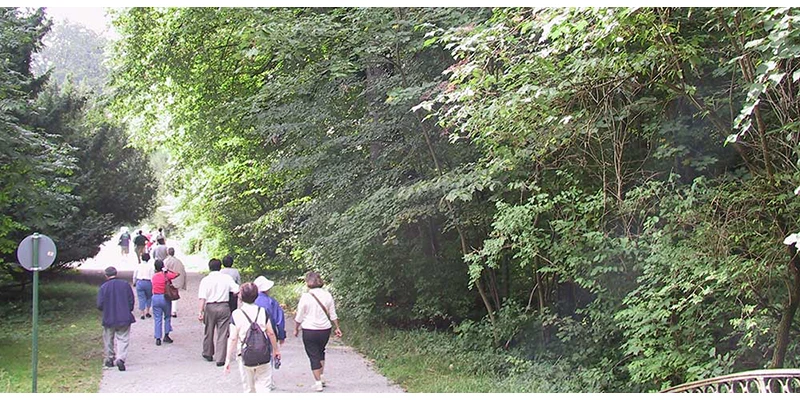
Kleinhesseloher See in the northern part provides ice skating opportunities when frozen and boat rentals during warmer months. The Seehaus represents one of Munich's fancier beer gardens where visitors can observe waterfowl while enjoying Paulaner beer.
The Isar River flows through the city from south to north with spacious gravel banks and meadows. Thanks to 2011 renaturation, the river seeks its own bed with birds nesting on islands and beavers living near the Deutsches Museum. Westpark features gardens from the 1983 International Garden Exhibition with rose gardens, Greek gardens, and Asian ensemble with Nepal Pagoda and Thai Sala.
The Alter Botanischer Garten serves as a verdant oasis near the main station, featuring exotic trees and an impressive Neptune fountain, representing 19th-century urban planning prioritizing public green space.
.webp)
Royal Residences and Palaces
The magnificent Residenz represents the former royal palace of the Wittelsbach monarchs and the largest city palace in Germany with 130 rooms. The Wittelsbach family ruled Bavaria from 1180 until the end of World War I, making this their Munich residence for over 700 years. The complex contains ten courtyards and notable features including the Cuvilliés Theatre and Herkulessaal concert venue.
Within the Residenz complex, the Treasury houses crown jewels and precious items representing one of the world's finest examples of royal treasures, showcasing centuries of Bavarian royal wealth through ornate crowns, ceremonial objects, and precious stones.
Adjacent to the Residenz, the Hofgarten is a beautiful Renaissance garden offering a peaceful retreat where visitors can stroll along manicured paths, marvel at the Diana Temple, and enjoy classical music performances.
.webp)
Nymphenburg Palace began construction in 1664, with its frontal width of 632 meters even surpassing Versailles. The palace served as the main summer residence for Bavarian rulers, featuring the Steinerner Saal with frescoes framed by luxuriant rococo stuccoes. The main building houses three museums: the Marstallmuseum with the Nymphenburg Porcelain Museum and the Mensch und Natur Museum.
Nymphenburg Park spans 200 hectares and evolved from an Italian garden to French style and finally English manner. Park buildings include the Magdalenenklause retreat and the famous Amalienburg, one of the most precious creations of European Rococo. Visitors can spot wildlife including beavers, tawny owls, deer, and Canada geese throughout the parkland.
.webp)
Other Sacred Spaces
For an overwhelming spiritual experience, visit the Asamkirche on Sendlinger Straße, one of southern Germany's most significant Late Baroque buildings. The Asam brothers created an intoxicating mix of Baroque and Rococo elements with opulent decoration featuring a frenzied mass of stucco, angels, and ceiling frescoes with details that even locals continue discovering.
The Theatinerkirche with its distinctive yellow facade represents Italian architectural influence in Bavaria, built by Elector Ferdinand Maria as thanksgiving for the birth of their heir. The Ludwigskirche features the second largest altar fresco in the world by Peter von Cornelius depicting the Last Judgment. St. Michael's Church in the pedestrian zone is the largest Renaissance church north of the Alps, housing Ludwig II, the Fairytale King, in its royal crypt.
.webp)
Modern Attractions and Olympic Legacy
BMW Welt serves as Bavaria's most visited tourist attraction, showcasing automotive technology in cutting-edge architecture with interactive exhibits and driving simulators where customers can watch people receiving their new cars.
The Olympiapark covers 85 hectares and hosted the 1972 Summer Olympics, continuing to serve cultural and sporting events. The Olympic Stadium features a distinctive tent-like roof by Frei Otto and offers adventure activities including roof climbing and zip-lining.
The Olympic Tower at 190 meters high provides views over the city to the Alps, housing a cafe and Rock and Roll museum. The Olympic Mountain was built from WWII destruction ruins, housing the city's highest beer garden, the Olympia-Alm.