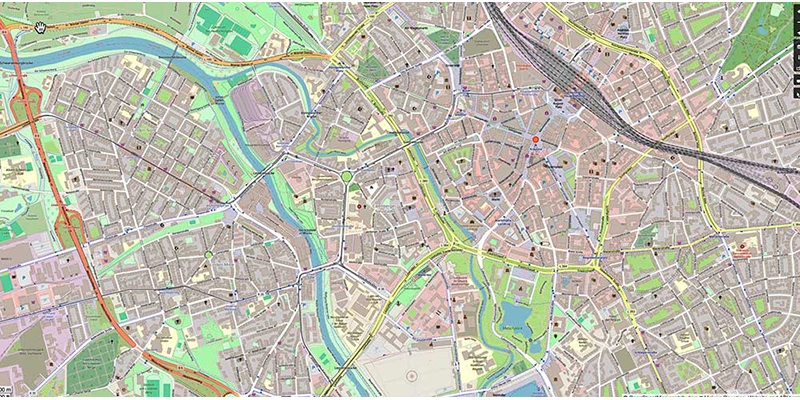
Visiting Hannover
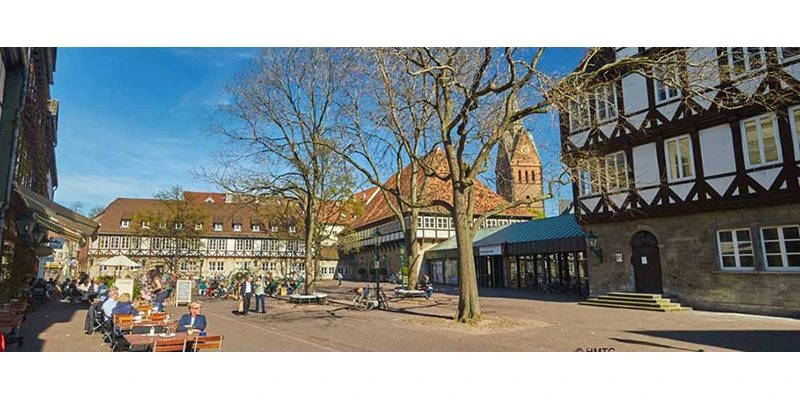
Hannover invites discovery through a rich blend of medieval heritage, urban energy, and cultural depth. The Altstadt sets the stage with its cobblestone streets, Gothic spires, and historic landmarks like the Marktkirche and Altes Rathaus, which reflect the city's religious and political past. Nearby, the Leibniz House honors intellectual legacy while lively squares such as Ballhofplatz showcase daily life and performance. Yet Hannover is not only about history—it thrives through its neighborhoods. Linden's bohemian spirit, Südstadt's elegant calm, and Nordstadt's student-driven energy reveal a city alive with community and character. Culinary rituals like the Lüttje Lage, markets bustling with fresh produce, and welcoming beer halls complete the picture of local life. To explore Hannover is to trace the threads of a city that balances memory and modernity, where every district and landmark adds new dimensions to its story.
The Official Tourist Information website has a large amount of information about the city and surroundings, including sights, accommodations, dining, tours, scenic routes, free brochures, maps and more.
My hotel choice in Hannover: Concorde Hotel am Leineschloss
This interactive Google My Map shows locations and hotels with information that can be displayed by clicking on the symbols. It has sidebar index and displays best in full-frame by clicking the box in top-right. The map can be used on your phone or tablet when visiting a city, showing you where to go and describing the sights. You are welcome to make a copy as described here.
Historic Heart
.webp)
Your exploration of Hannover begins in the Altstadt, the historic old town district where preserved and reconstructed half-timbered houses line cobblestone streets alongside historic churches, atmospheric squares, and cultural landmarks. At the center stands the Marktplatz, a historic town square that serves as a central gathering place and features regular markets alongside the district's most significant buildings.
The Marktkirche dominates this space as the main Protestant church and old town landmark. Built in Gothic brick style with a tall spire, this 14th-century church offers visitors a glimpse into the city's religious heritage through its historic interior. Nearby, the Altes Rathaus showcases the wealth and importance of medieval Hannover through its ornate Gothic brick architecture and distinctive stepped gable. This 15th-century building, which houses city archives, stands as one of the finest examples of North German brick Gothic style, its intricate facade drawing visitors exploring the historic core.
.webp)
The Leibniz House adds intellectual gravitas to the old town experience. This reconstructed historic building commemorates philosopher Gottfried Wilhelm Leibniz through its museum and library functions, its ornate facade serving as a tribute to one of history's great minds. Moving through the narrow Königstrasse, visitors encounter specialty stores housed within period architecture that maintains the district's authentic medieval atmosphere.
Just steps away, Ballhofplatz provides a perfect pause in your historic journey. This small square surrounded by cafes, half-timbered houses, and cultural venues buzzes with activity during open-air events and gatherings, while the adjacent Ballhof tells its own story as a 17th-century building that once hosted royal ball games and now serves as a theater venue with distinctive baroque architecture.
Neighborhood Character and Local Life
Linden emerges as Hannover's bohemian quarter, a trendy district known for its diverse population, alternative shops, vibrant nightlife, and strong community spirit. The neighborhood contrasts sharply with the traditional city center through its independent businesses, street art, and cultural events. Limmerstraße exemplifies this character as a pedestrian-friendly street lined with boutiques, trendy shops, bars, cafes, and international dining options alongside weekly markets that serve the local community.
2up.webp)
Calenberger Neustadt offers a different residential experience through its 18th and 19th-century architecture, tree-lined streets, and local shops that reflect a more settled residential character. Südstadt provides another perspective on residential Hannover through its well-preserved Wilhelminian-style apartment buildings, quiet tree-lined streets, and variety of local shops and cafes that create a strong community feel.
.webp)
Nordstadt pulses with student energy, featuring a lively population alongside street art, independent shops, and historic churches like Luther Church and St. Elisabeth. The district's academic atmosphere blends with alternative culture to create a dynamic neighborhood experience.
Local culinary tradition finds expression in Lüttje Lage, Hannover's distinctive beverage consisting of a shot of schnapps and a glass of beer, often served with specific ritualistic drinking techniques that connect visitors to authentic local culture. Brauhaus Ernst August embodies this brewing tradition through its historic building housing a traditional German brewery and restaurant. House-brewed beers, regional food, and live music create a lively atmosphere that celebrates both local craftsmanship and social tradition.
.webp)
The Market Hall (Markthalle) continues daily food traditions through its covered market offering fresh produce, meats, cheeses, and international food stalls that serve both residents and visitors seeking authentic local ingredients and prepared foods.
The Hauptbahnhof serves as both transportation hub and architectural landmark, connecting Hannover to national and international destinations through its mix of historic architecture and modern infrastructure. The bustling main hall, numerous platforms, and extensive commercial facilities create a vital gateway that provides many visitors with their first impression of the city.
For systematic exploration, the Roter Faden (Red Thread) offers a self-guided walking tour through a painted red line on the pavement that connects Hannover's main historical and cultural sights. This ingenious system allows independent travelers to navigate efficiently between major attractions while ensuring comprehensive coverage of the city's highlights.
Architectural Grandeur
.webp)
Hannover's architectural ambitions reach their pinnacle at the New Town Hall, a grand domed city hall from the early 20th century. Its ornate facade houses an observation platform offering panoramic views of the city, while historical exhibits within tell the story of Hannover's development. The building's scenic setting by Maschteich creates one of the city's most photographed vistas.
The Leineschloss represents royal heritage transformed into democratic purpose. This former royal palace now houses the Lower Saxony State Parliament, its neoclassical architecture creating an elegant backdrop along the Leine River. The building's transition from monarchical residence to seat of regional government symbolizes Germany's historical evolution.
A contrasting architectural statement emerges in the Bürgeramt am Schützenlplatz, a central service center near the Hannover Fairgrounds. Its modern architecture represents a departure from historical styles, its contemporary design and clean lines demonstrating a different facet of Hannover's urban landscape while providing functional public services.
The Architekturforum extends this conversation about urban development through its exhibitions and events housed in a modern building that showcases contemporary design principles. This space promotes dialogue about the city's urban development through lectures, workshops, and displays exploring the intersection of design, history, and community life.
Urban Pulse
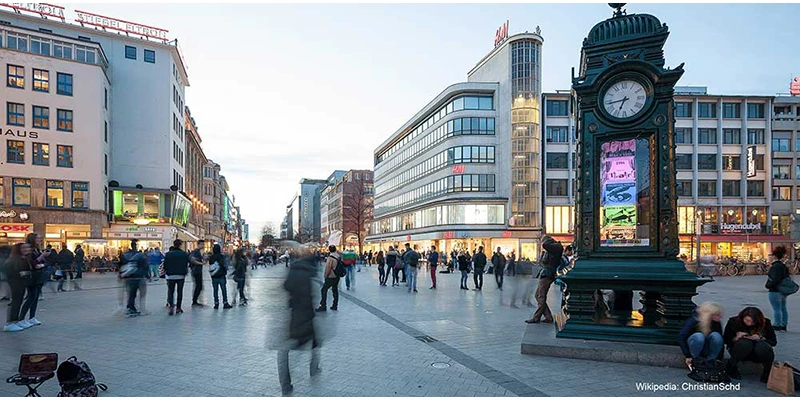
The commercial heart of Hannover beats strongest around Kröpcke, the central pedestrian plaza and meeting point marked by its signature clock. Surrounded by shops, cafes, restaurants, and department stores, this space provides public transport access while serving as the city's primary gathering place. The adjacent Kröpcke Passage offers a more intimate shopping experience through its covered arcade filled with specialty shops and boutiques.
Georgstrasse extends this commercial energy as a major shopping boulevard connecting luxury stores and department shops with cultural institutions while linking Kröpcke to the main station. Bahnhofstrasse creates another vital commercial artery as a pedestrianized shopping street that connects the Hauptbahnhof with Kröpcke, lined with department stores and major retailers that cater to both residents and travelers.
The Ernst August Galerie provides covered shopping convenience near the central train station, offering fashion, electronics, and dining options with pedestrian access that protects shoppers from weather while maintaining urban connectivity. Karstadt anchors the city center's retail landscape as a large department store offering comprehensive product ranges from fashion to home goods.
2up.webp)
Gardens of Royal Splendor
The Herrenhausen Gardens constitute one of Europe's most magnificent garden complexes, featuring baroque layouts, fountains, sculptures, and a palace museum alongside extensive botanical collections. Within this complex, the Berggarten offers a botanical paradise with tropical plants, orchids, cacti, and seasonal displays housed in historic greenhouses that transport visitors to distant climates without leaving Lower Saxony.
The Georgengarten provides a contrasting experience through its English-style landscape design. Open meadows and mature trees create a naturalistic setting that houses the Wilhelm Busch Museum, blending artistic appreciation with pastoral beauty. These gardens collectively demonstrate the evolution of landscape design across centuries and national styles.
The Welfengarten surrounds the University of Hannover with tree-lined paths and lawns that provide a scholarly atmosphere around the impressive Welfenschloss. This former royal palace of the House of Hanover now serves educational purposes through the university while maintaining its Neo-Gothic architecture and historic halls. The palace creates a picturesque backdrop where students and visitors appreciate the blend of historical grandeur and academic function.
.webp)
Waterways and Natural Retreats
The Leine River Promenade provides scenic connection between districts through its riverside walkway offering views of historic buildings, bridges, and parks alongside flea market areas. The Nanas Sculptures by Niki de Saint Phalle add colorful modern art to the riverbank experience, forming part of the city's sculpture mile that brings contemporary creativity to the historic waterway.
Fahrhaus provides a scenic dining spot, positioned on the banks of the Leine River as a historic restaurant and beer garden. Originally serving as a ferry house, this location now offers traditional German dining with scenic water views that create an ideal setting for leisurely afternoons, especially during summer months when the riverside location provides the perfect environment for reflection on a day spent discovering Hannover's many layers of history, culture, and community life.
.webp)
Maschsee transforms the urban landscape through its large artificial lake surrounded by walking and cycling paths. Waterfront cafes and restaurants provide dining with views, while boating opportunities and seasonal events like Maschseefest activate the water throughout the year. The Maschsee Ferry offers scenic tours and transportation around the lake with stops including the Sprengel Museum and Maschseepark.
.webp)
Eilenriede provides one of Europe's largest urban forests, featuring extensive walking and cycling trails, playgrounds, picnic areas, and open lawns that offer recreational facilities within the city limits. Tiergarten in the Kirkel district extends these natural experiences through its large urban park and deer reserve, where free-roaming deer inhabit extensive green spaces connected by peaceful walking paths.
.webp)
For water recreation beyond the city center, Ricklinger Kiesteiche offers a series of lakes with beaches and nature trails in the southern outskirts. These lakes provide swimming, fishing, and birdwatching opportunities alongside general recreation in a more natural setting.
.webp)
Cultural Institutions and Artistic Heritage
The Sprengel Museum near Maschsee houses one of Germany's most significant collections of contemporary art, featuring 20th and 21st-century works including German Expressionism and notable international artists within striking modern architecture. The Niedersächsisches Landesmuseum complements this with comprehensive collections spanning natural history, archaeology, ethnology, and art from prehistoric to modern times.
The Historisches Museum focuses specifically on Hannover and the Kingdom of Hanover, with exhibits detailing the city's development, royal history, and cultural heritage. The Welfenmuseum extends this royal narrative through its dedication to the House of Welf, displaying artifacts, art, and documents related to their historical influence. The Hannover Zoo is a distinguished zoological park with themed, immersive habitats like the African savannah and jungle areas.
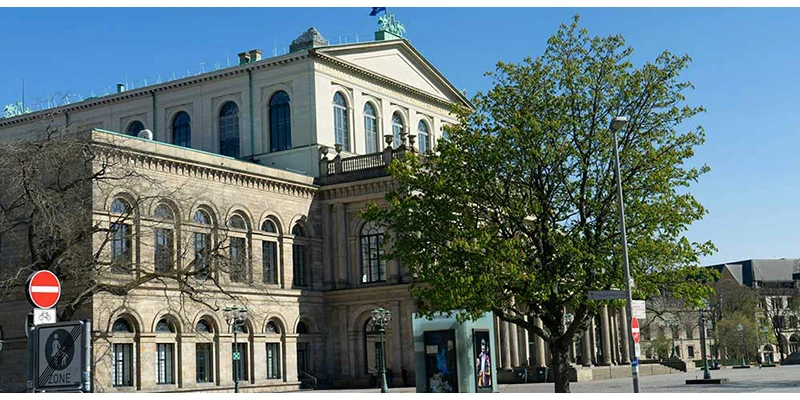
Contemporary art finds expression at the Kestnergesellschaft, housed in a modernist building that showcases international art and photography. The Opera House maintains classical performance traditions through its 19th-century neoclassical theatre hosting opera, ballet, and concerts on Georgstrasse.
.webp)
Sacred Spaces and Spiritual Heritage
Beyond the central Marktkirche, Hannover's spiritual landscape encompasses numerous historic churches that tell different aspects of the city's religious story. St. Clemens stands out through its distinctive dome and baroque architecture, having been rebuilt after World War II damage. St. Godehard near the old town offers Gothic and Renaissance architectural features within a peaceful atmosphere perfect for reflection.
St. Peter in the old town provides another Gothic experience through its stained-glass windows and tranquil environment. St. Petri serves as both cultural and community hub through its tall spire and traditional German architecture, while St. Nikolai maintains community engagement alongside its well-preserved historical elements.
3up.webp)
St. Michaelis in Nordstadt blends Gothic and Romanesque architectural elements with a notable bell tower, and St. Elisabeth in the same district showcases late Gothic and Renaissance features with a particularly well-preserved interior.
The Aegidienkirche provides a sobering counterpoint to these active religious spaces. The preserved ruins of this war-damaged church destroyed in World War II now serve as a memorial with an open-air interior, bell tower, peace bell, and memorial garden in the city center, offering a place for reflection on the costs of conflict.
2up.webp)
Conclusion
Hannover leaves its visitors with an impression of balance—between past and present, tradition and progress. Its Gothic churches and grand New Town Hall highlight resilience and civic pride, while leafy boulevards and the serene waters of Maschsee show its love of nature. Neighborhoods pulse with character, from Linden's street art and nightlife to Nordstadt's student cafés and Südstadt's quiet elegance.
2up.webp)
The city's cultural institutions, from the Sprengel Museum to the Opera House, showcase both classical and contemporary creativity, while memorials like the Aegidienkirche offer places for reflection. Gardens such as Herrenhausen and Eilenriede forest expand the sense of space and peace, anchoring Hannover as much in nature as in history. Whether following the Red Thread, exploring lively squares, or enjoying riverside views, visitors find a city with many voices yet a single spirit—one of openness, resilience, and discovery.