Exploring Goslar
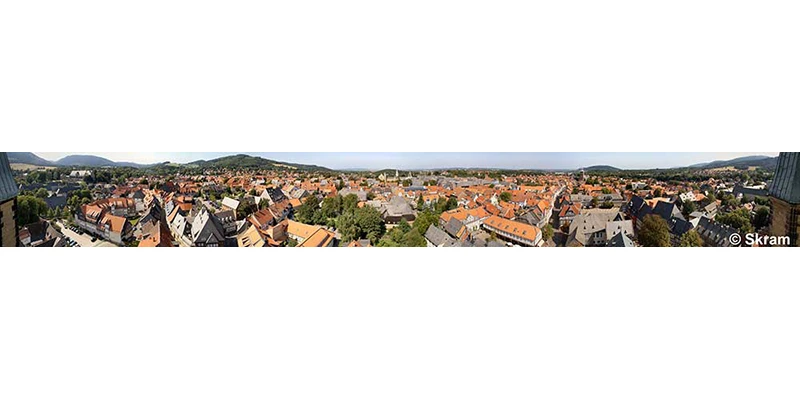
With its UNESCO World Heritage status, Goslar's medieval core is a living museum, where cobblestone streets wind between over 1,500 half-timbered houses. The story of Goslar is one of imperial power, mining wealth, and architectural preservation, inviting visitors to explore its layers of history, from its royal heart to the natural landscape that shaped its destiny.
The Official Tourist Information website has a large amount of information about the city and surroundings, including sights, accommodations, dining, tours, scenic routes, free brochures, maps and more.
My hotel choice in Goslar: Romantik Hotel Alte Münze
Heart of the Old Town
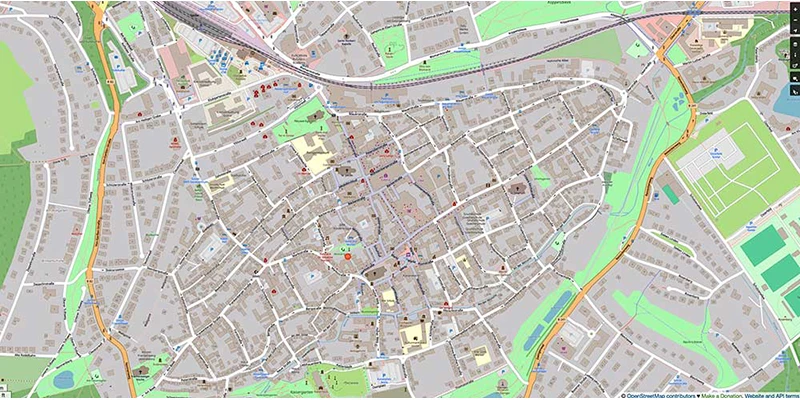
The medieval center reveals itself dramatically through its network of historic streets and squares. Breite Straße serves as the commercial heart of the historic center, lined with timber-framed houses, historic buildings, boutiques, bakeries, cafes, and restaurants that connect the Market Square to surrounding areas. Many shops along this main thoroughfare in Goslar’s city center continue to offer goods and services to this day, where merchants' shops once thrived and now house boutiques, souvenir stores, bakeries, and fashion retailers with ornate carvings, beams, and colorful signs that make shopping itself a sightseeing experience.
This interactive Google My Map shows locations and hotels with information that can be displayed by clicking on the symbols. It has sidebar index and displays best in full-frame by clicking the box in top-right. The map can be used on your phone or tablet when visiting a city, showing you where to go and describing the sights. You are welcome to make a copyas described here.
Walking through the old town reveals architectural treasures like Glockengießerstraße, a charming cobblestone street lined with some of Goslar's most beautiful half-timbered houses from various historical eras, showcasing colorful facades, ornate woodwork, and traditional German building techniques. Neue Straße displays excellent examples of half-timbered architecture from different time periods with colorful facades, intricate woodwork, and traditional construction techniques that create an authentic historical atmosphere while providing access to local shops, cafes, and services.
.webp)
The intimate medieval atmosphere continues along Mauerstraße, one of Goslar's oldest streets following the line of the medieval town walls, lined with well-preserved half-timbered houses, small artisan shops, and quiet cafes. This street offers leisurely strolls far from the bustle of the main squares, with decorative details and atmospheric corners that provide both picturesque architecture and authentic old-town charm.
Market Square (Marktplatz)
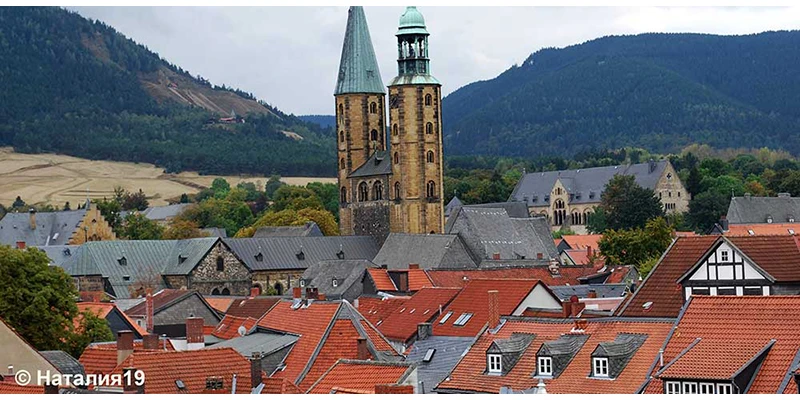
The central gathering place of Goslar is the Market Square, framed by richly decorated buildings that testify to the town's commercial and civic power. Dominating one side stands the Kaiserworth Guildhall, its Renaissance facade decorated with statues and painted details that reflect the wealth of the cloth merchants who once governed local trade. Across the square rises the Marktkirche St. Cosmas und Damian, its twin towers defining the skyline. Those who climb the Marktkirchturm Viewing Platform are rewarded with sweeping views over the dense patchwork of timber-framed houses and the wooded slopes beyond.
.webp)
The Town Hall is one of the most iconic buildings in the center of Goslar with a rich history. Even today, the historic town hall remains the hub of local decision-making, as council meetings take place in the main hall and the city's affairs are steered from there. The building also houses the World Heritage Information Centre and the tourist information office, thereby blending history with modernity. Inside the Town Hall, the Huldigungsaal, or Homage Hall, is an impressive chamber with elaborate ceiling paintings and historical artifacts, offering a window into the political and social life of Goslar during the Holy Roman Empire.
The Goslar Christmas Market & Christmas Forest is one of Germany’s most beautiful Christmas markets, drawing numerous visitors to the historic Old Town every year. Surrounded by picturesque half-timbered houses, an atmospheric blend of tradition, culinary delights, and festive spirit awaits you from November 25 to December 30, 2026. The Christmas Forest—featuring around 60 illuminated conifers and over 160,000 lights—is a particular highlight, enchanting visitors with a genuine forest atmosphere right in the heart of the city. Here, you can relax and enjoy the tranquility over a hot mulled wine or punch. The approximately 70 lovingly decorated stalls offer regional specialties, handicrafts, and unique gift ideas. The Goslar Christmas Market invites you to explore and enjoy the festive season.
.webp)
The market square with the market fountain is a central historical feature of the city, impressing visitors with its architectural diversity.The great significance of the market fountain is immediately apparent: it marks the center of the market square—and thus the heart of the city itself. It is crowned by Goslar’s emblem, the eagle. What appears to the observer at first glance as a unified work of art is, in reality, a complex puzzle: the lower fountain basin (dating from the 12th century) is the largest bronze casting of the Romanesque period. The upper basin is roughly a century younger; originally, it and its pedestal formed a separate, independent fountain. Even the eagle itself is a composite: while its body dates back to the early 13th century, the most recent addition—its crown—was likely not added in its current form until the 18th century.
More Squares and Hidden Corners
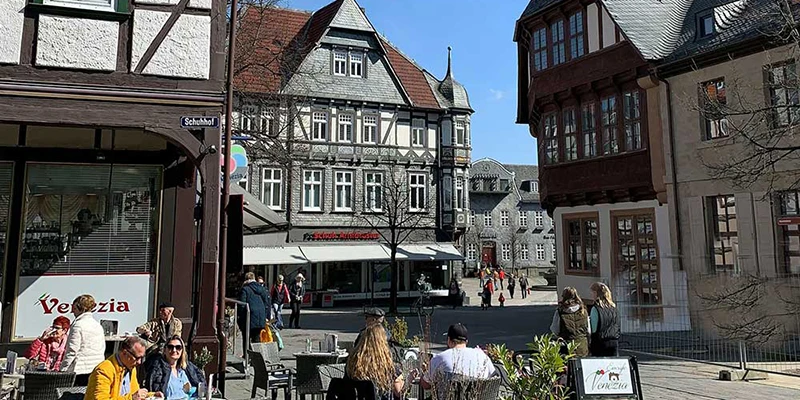
The old town contains numerous squares that served different functions in medieval life. Schuhhof represents a quintessential medieval urban space with its cobblestone paving and surrounding half-timbered houses, where shoemakers and other craftsmen once sold their wares. Today it hosts some outdoor cafes, perfectly representing the charm and intimate scale of medieval urban planning. The Schuhhof Passage creates a narrow pedestrian walkway connecting the square with surrounding alleys, lined by half-timbered houses with ground-floor shops, boutiques, and small eateries that capture the intimacy of medieval Goslar.
Fischemäcker is one of Goslar's shopping streets. The name hints at its historical function as a fish market, though today it serves as a tranquil spot where visitors can experience the authentic residential feel of the old town. It is one of the main routes in Goslar, connecting the market square with the Jakobikirchhof. Similarly, Fischmarkt Square retains its cobblestone layout and traditional scale while hosting cafes and boutique shops that evoke the bustling market life of earlier centuries.
2up.webp)
Jakobikirchhof creates a small, peaceful square next to St. Jacob's Church, surrounded by historic houses with benches where visitors can sit and enjoy the serene atmosphere. This lovely example of intimate urban space adds to the charm and character of the old town, while
Winding Streets and Quiet Corners
The Goslar Old Town as a whole, with its preserved medieval streets and half-timbered houses, presents a compact historic atmosphere that invites exploration. Bäckerstraße branches from the Market Square, filled with bakeries, cafes, and specialty food shops, its historic name reflecting its long association with Goslar's bakers who once sold bread here. Today it blends culinary tradition with boutique shopping, offering pastries, regional sweets, and souvenirs while timber-framed houses with decorated facades line the cobblestone street.

Münzstraße features the old mint building from the 16th century, which was vital to Goslar's economic history, lined with traditional architecture, specialty shops, artisan goods, and bakeries. The street offers a delightful mix of history and modern life where visitors can browse for unique souvenirs or enjoy local pastries while admiring historic facades, with the town's minting past adding historical interest to the shopping experience. Hoher Weg is a bustling thoroughfare with a mix of shops and restaurants.
Kornstraße reflects the grain trade with its half-timbered merchant houses dating back to the 16th century, once serving as a commercial hub for cereal goods.
Hokenstraße takes its name from the Höker or small traders who sold their wares in this area, leading directly toward the Town Hall through the heart of the old commercial district with traditional architecture and cobblestone paving that reflects medieval trading activities and market economy, demonstrating how commercial activities shaped the town's layout and development over centuries.
.webp)
The street Vogelsang and Ziegenstraße also showcase traditional architecture and urban planning, while the quiet and picturesque street of Tappenstraße offers a glimpse into the residential side of the old town, its well-preserved houses showcasing the craftsmanship of past centuries. Another picturesque street is Weberstraße, once home to Goslar's weavers, with its colorful half-timbered houses and decorative facades.
Waterways and Riverside Walks
Goslar's relationship with water shaped both its mining heritage and scenic beauty. The Abzucht River flows through the town, creating scenic waterfront stretches with stone bridges, garden walks, and quiet seating areas. The historic water channel system was originally built for mining operations but now forms pleasant walking paths, offering waterside views and a peaceful atmosphere that contrasts with the bustling streets.

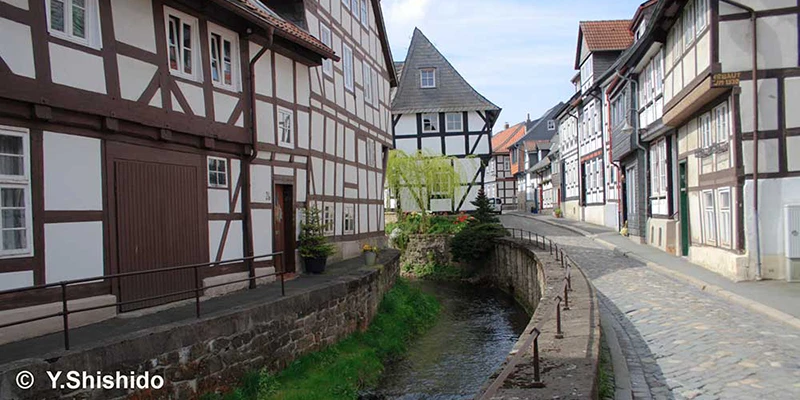
An der Gose runs alongside the Gose creek, featuring charming half-timbered houses that overlook the waterway, creating picturesque views and peaceful walking opportunities with historic buildings reflecting in the water. Traditional architecture lines the banks with access to quiet spots along the stream, providing romantic strolling areas and photography opportunities while experiencing the natural beauty that complements Goslar's urban historical landscape.
Klapperhagen, translating to "Painter's Corner," offers a scenic spot near the Abzucht River with classic views of the Marktkirche and surrounding half-timbered houses reflected in the water. The area becomes particularly beautiful at sunset when light illuminates the historic buildings, making it a favorite for photographers and a perfect place to sit and soak in the tranquil atmosphere of the old town.
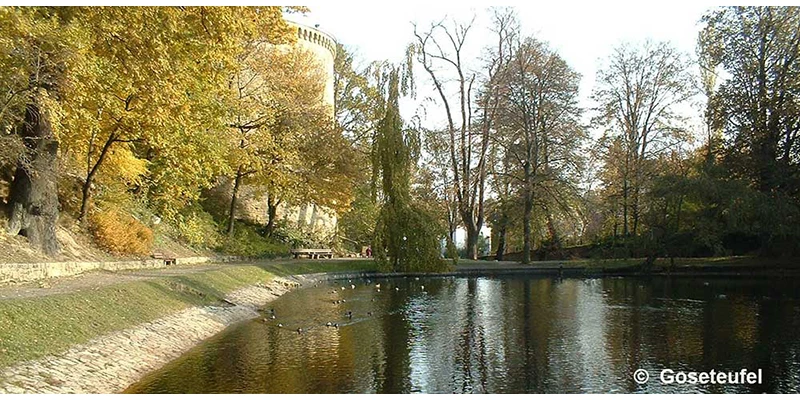
The Oker River Promenade runs along the Oker River just outside the old town, lined with leafy trees, bridges, and quiet benches, offering a natural contrast to Goslar's urban spaces. Visitors enjoy leisurely strolls with scenic views over the water where ducks and swans are often spotted, while the sound of flowing water and shaded greenery create an appealing place for relaxation or photography.
Religious and Institutional Heritage
Goslar's religious architecture extends beyond its major churches to include smaller chapels and institutional buildings. Klauskapelle represents a small 12th-century chapel located near the former city gate where Rammelsberg miners would pray before heading to work in the silver mines, representing the spiritual life of the medieval mining community with simple Romanesque architecture and stone construction that provides insight into the religious practices and daily routines of workers who created Goslar's wealth.
2up.webp)
A short walk from the center, Untere Schildwache is a historic street that leads toward the Neuwerk Church, a Romanesque complex outside the old town walls, and the Neuwerkgarten, a landscaped public park. Neuwerk Church stands as a Romanesque church complex featuring well-preserved medieval architecture and peaceful cemetery grounds that provide a serene and contemplative atmosphere. The church's design and history make it a significant architectural and historical landmark, while its quiet surroundings offer a peaceful visit away from main tourist crowds.
.webp)
The Hospital of the Holy Spirit preserves Gothic architecture with arcaded courtyards, pointed windows, and vaulted interiors from its founding in the Middle Ages as a charitable institution. Once serving as shelter for the poor and travelers, it now functions as a cultural site where exhibits and explanatory panels detail the hospital's history while the preserved chapel retains original frescoes and altars, combining architectural beauty with human heritage.
Kloster Frankenberg Ruins offer remains of a medieval monastery in the Frankenberg district with stone walls, arches, and cloister fragments still visible.
Mining Heritage and Educational Legacy
The connection between Goslar and mining extends throughout the town's fabric. Bergstraße historically connected Marktstraße to Clausthaler Straße, first mentioned in 1367 as Berchstrate leading toward the Rammelsberg mine, featuring several windings and directional changes with the Bäckergildehaus from 1501 at its beginning, displaying an ornate erker added in 1557 that creates architectural interest along this pathway that historically served mining operations and trade activities.
2up.webp)
Forststraße features the former Bergmannhaus at number 23, built around 1600 as a miner's residence within the Frankenberger quarter, demonstrating the housing provided for mining workers who extracted precious metals from the Rammelsberg with authentic period architecture and timber-frame construction that relates to the mining industry that created Goslar's wealth and imperial importance.
The Bergbauschule represents the former mining school, a significant historical building that highlights Goslar's deep connection to the mining industry. While not a typical tourist sight, its impressive facade and historical context make it a noteworthy landmark representing the educational and technical advancements that supported the Rammelsberg mine for centuries.
Rammelsberg Waterwheels preserve remnants of the historic water management system used for centuries to power Goslar's mining industry, located near the Rammelsberg UNESCO site. These enormous wooden wheels demonstrate the ingenious medieval technology of channeling rivers and streams to provide mechanical energy, with reconstructed models and explanatory panels that reveal how vital these innovations were to the town's prosperity.
2up.webp)
Residential Quarters and Neighborhoods
The Frankenberger Viertel represents a quiet residential quarter that serves as a hidden treasure with well-preserved medieval houses and narrow alleys. The area centers around the Frankenberg Church and includes Frankenberger Straße, noted for its charming timber-framed houses, where exploring feels like stepping into a different world.
Bulkenstraße connects to the Frankenberger quarter with authentic cobblestone surfaces and medieval urban planning elements, providing access to different areas of the old town while maintaining the characteristic narrow width and intimate scale of historic German street design. Peterstraße connects different areas of the historic district with traditional cobblestone surfaces and preserved architecture reflecting centuries of urban development within the UNESCO World Heritage site boundaries.
.webp)
Rosenstraße maintains the characteristic narrow width and intimate atmosphere of historic German city centers with continuous centuries of development and architectural adaptation, while Klapperhagen offers a quiet street with picturesque houses and access to green areas near the river and old town, providing a peaceful walking path that offers a different perspective on the town's architecture and layout.
Museums and Cultural Institutions
The Goslar Museum provides an excellent resource for understanding the town's history through exhibits covering mining, crafts, town development, art, and culture. The museum's collection offers detailed historical context for the town's architecture and development, helping visitors appreciate the significance of what they see on the streets.
Mönchehaus houses the Museum of Modern Art in a 16th-century townhouse, highlighting contemporary art enthusiasts with regularly changing exhibitions showcasing works from internationally recognized artists that provide a modern contrast to the town's medieval setting. The building itself represents a well-preserved example of Goslar's historic architecture with its half-timbered facade and gabled roof.
The Goslar Guildhall Museum within the historic Town Hall complex highlights centuries of civic governance and cultural history through preserved rooms, artifacts, and manuscripts. Visitors can explore council chambers and ceremonial halls learning about Goslar's role as an Imperial Free City, with exhibits covering guild traditions, municipal justice, and imperial assemblies.
You may also visit the Kaiserpfalz and Zinnfiguren museums.
2up.webp)
Natural Escapes and Elevated Views
Several hills and natural areas provide respite from the medieval streets. Petersberg overlooks the town, topped with ruins of St. Peter's Church, providing excellent panoramic vistas across Goslar's red rooftops and the Harz Mountains. The climb rewards visitors with stunning views particularly beautiful at sunrise or sunset, while the ruins themselves remind visitors of the town's long history.
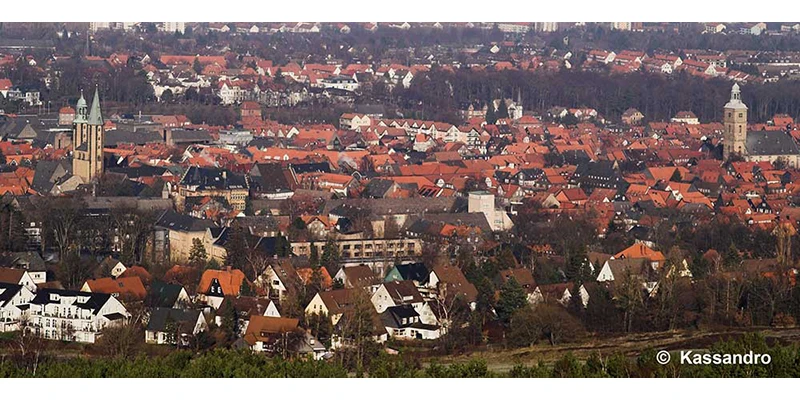
Georgenberg represents a wooded hill overlooking Goslar from the south, featuring scenic trails and viewpoints accessible from the town center that offer hikers a chance to escape into nature without leaving the city limits. Paths lead past old quarries, ruins, and panoramic clearings providing sweeping views of the red rooftops of the Old Town and the Harz mountains beyond.
Klapperberg offers a small hill near the town center with elevated views over Goslar's rooftops and historic skyline, easily reached by footpaths that provide photographers with picturesque perspectives especially at sunrise and sunset. The hill is crowned with patches of woodland and meadows creating a natural retreat while still close to pedestrian zones.
Monuments and Memorials
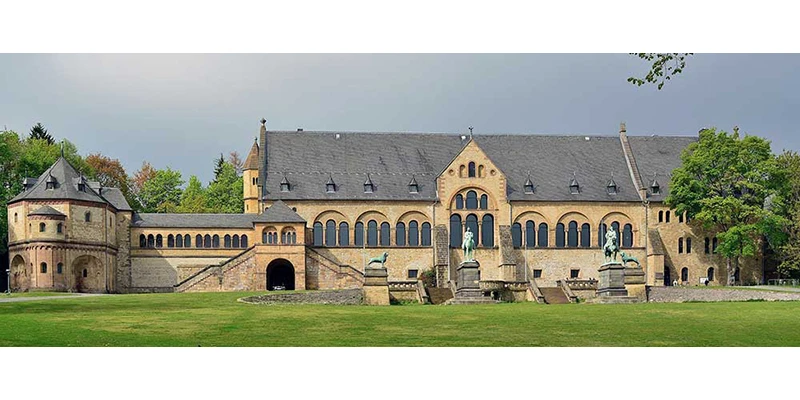
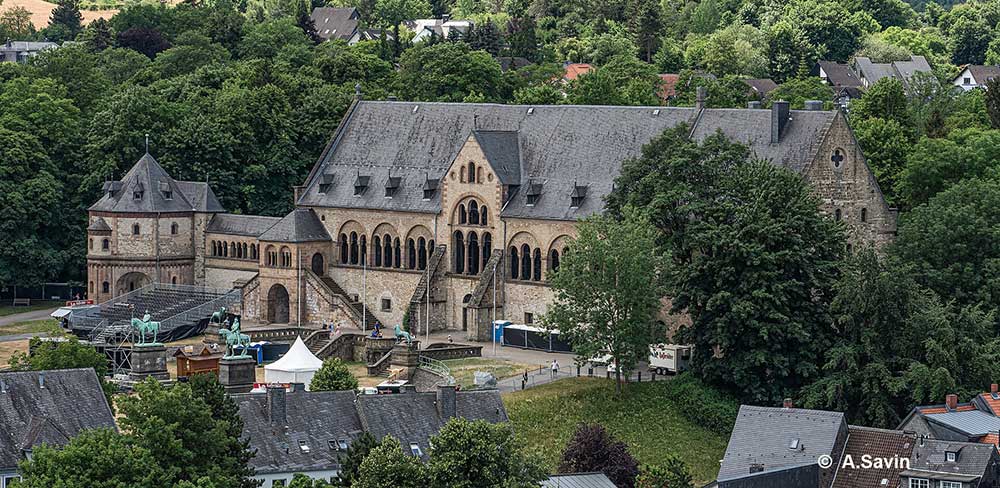
Henry Moore Sculpture Garden features the outdoor sculpture area behind the Imperial Palace with the bronze sculpture "Goslar Warrior" by renowned British artist Henry Moore, installed in 1975 as part of the Kaiserring art prize program. This creates a unique combination of medieval architecture and modern artistic expression within the UNESCO World Heritage site.
The Domburg Archaeological Area contains remains of the former cathedral complex and Imperial Palace district where significant historical events occurred, including the birth of Henry IV in 1050 and various imperial ceremonies, with preserved foundations, archaeological discoveries, and interpretive information about the medieval imperial court.
.webp)
Zwinger Tower stands as a massive cylindrical medieval defense tower with incredibly thick walls that now houses a museum of weapons, artifacts, and local history. Visitors can climb to the upper levels for panoramic views of the town, while the tower's imposing structure serves as a powerful reminder of Goslar's fortified past and strategic importance, with the museum inside providing context for the town's military and defensive history.
Transportation and Connectivity
Bahnhof Goslar represents the historic railway station built in the late 19th century with neo-Renaissance architectural elements serving as the main transport hub for the region. The station's facade features rich decoration with brickwork, towers, and arched windows, while inside travelers find waiting halls, ticket counters, and small shops connecting Goslar to major German cities.
2up.webp)
The Oker Valley Railway offers a historic railway route connecting Goslar with surrounding Harz valleys, providing scenic journeys through forests, cliffs, and rivers. Originally built in the 19th century for mining transport, today it functions as a beloved heritage line for tourists with trains passing through tunnels, bridges, and viaducts offering spectacular views and photographic opportunities.
2up.webp)
Goslar, with its blend of imperial history, architectural splendor, and natural beauty, provides a multi-faceted travel experience. From the grandeur of the Imperial Palace to the quiet charm of the Frankenberger Viertel, and from the bustling streets to the serene Harz Mountains, the town's narrative unfolds in a seamless journey through time.