Rothenburg ob der Tauber
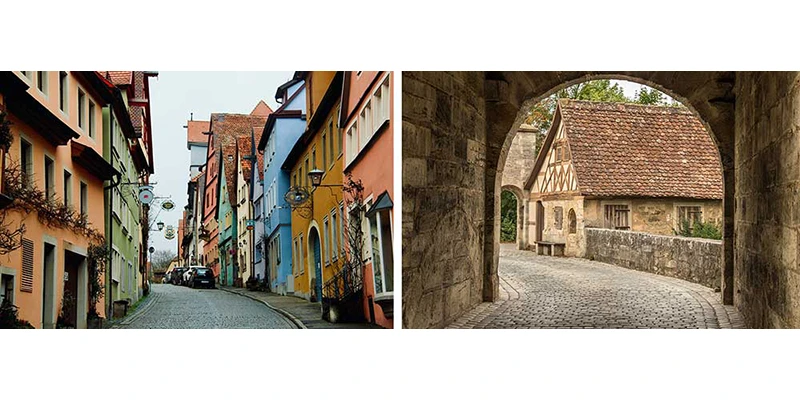
Nestled in the heart of Germany's Franconia region, Rothenburg ob der Tauber stands as one of Europe's best-preserved medieval towns. This enchanting destination offers visitors a genuine journey back in time, with its intact city walls, cobblestone streets, and half-timbered houses creating an authentic fairy-tale atmosphere.
The Official Tourist Information website has a large amount of information about the city and surroundings, including sights, accommodations, dining, tours, scenic routes, free brochures, maps and more.
My hotel choice in Rothenburg: Hotel Eisenhut
The Most Photographed Corner
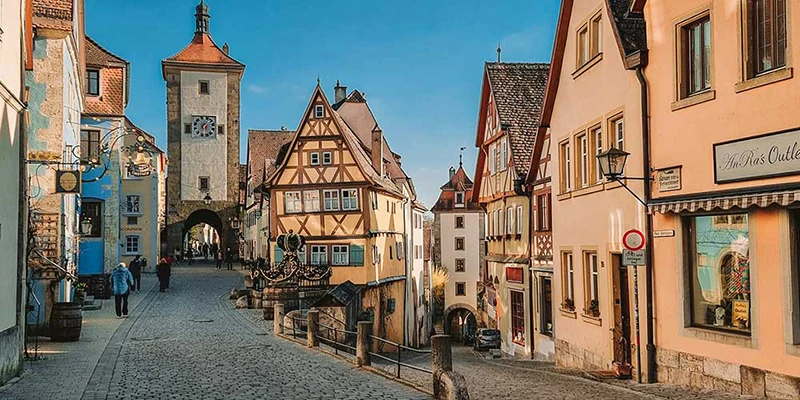
Plönlein (Little Square) is the most photographed spot in Rothenburg, featuring a half-timbered house set at the fork of two cobblestone streets, framed by Siebersturm and Kobolzeller Tor towers. The setting provides a quintessential medieval view of the town. While compact, the site captures the charm of Rothenburg's historic architecture and is a favorite stop for visitors walking through the old town. The name, which means "Little Square," refers to the entire picturesque scene, including a small triangular plaza with a half-timbered house and fountain in the center.
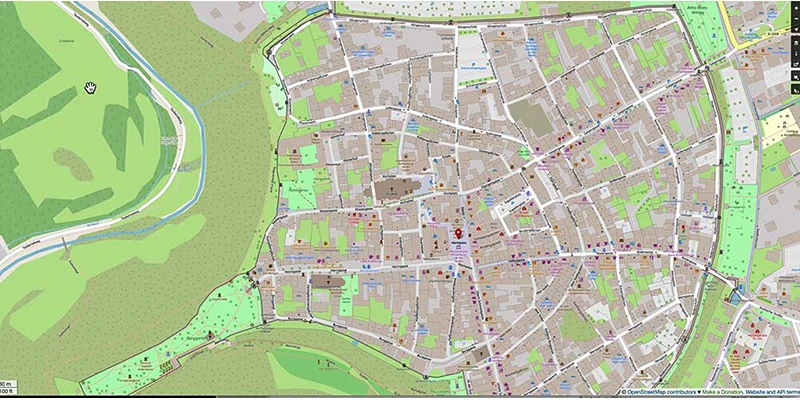
This interactive Google My Map shows locations and hotels with information that can be displayed by clicking on the symbols. It has sidebar index and displays best in full-frame by clicking the box in top-right. The map can be used on your phone or tablet when visiting a city, showing you where to go and describing the sights. You are welcome to make a copy as described here.
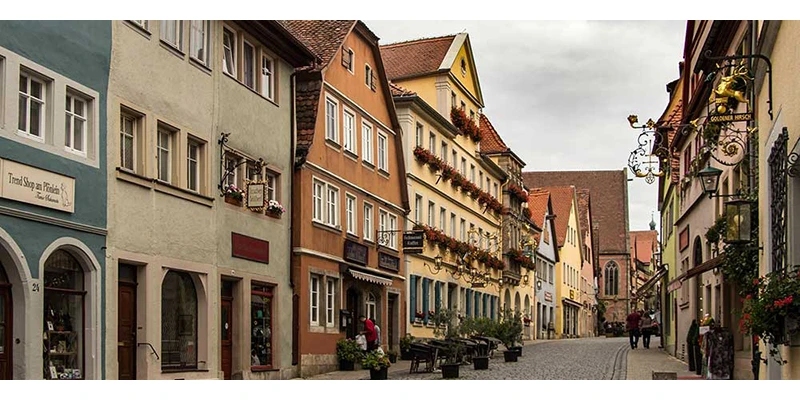
The streets are filled with traditional houses and shops, making it a natural place for photos and exploration. Plönlein illustrates the preserved medieval character of Rothenburg's old quarter and is a must-see for visitors seeking the town's fairytale charm. Gerlachschmiede adds to this picturesque area as a historic blacksmith's house, rebuilt after World War II, and is one of Rothenburg's most picturesque half-timbered buildings. Its triangular roofline and colorful façade make it a favorite photographic subject. Located near the city wall, it recalls Rothenburg's artisan history and the important role of blacksmiths in medieval towns. Although it no longer functions as a smithy, the building is preserved as part of Rothenburg's architectural heritage. Visitors walking the city walls often encounter Gerlachschmiede as part of their route. It stands as a symbol of traditional craftsmanship.
Heart of Medieval Life
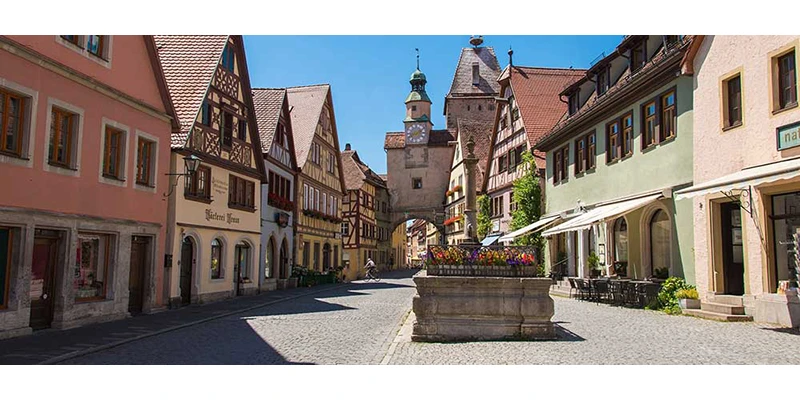
Marktplatz (Market Square) serves as the central hub of Rothenburg, surrounded by historic buildings including the Town Hall and the Councillors' Tavern. This lively gathering point hosts festivals, markets, and public events throughout the year. Visitors can observe the Renaissance-style architecture of the town hall tower and the medieval structures framing the square. The area is pedestrian-friendly, with cafés and shops offering local specialties and crafts. Seasonal highlights include the Christmas market and guided tours that often start here. Marktplatz is both the heart of social life and a prime location for orientation.
.webp)
The magnificent Rothenburg Town Hall (Rathaus) stands prominently on Marktplatz as a landmark with two distinct architectural sections: the Gothic building from the 13th century and the Renaissance façade added in the 16th century. Visitors can climb the 200-step tower for panoramic views over the old town and surrounding Tauber Valley. The interior includes historic chambers that once hosted council meetings and judicial proceedings. The town hall exemplifies Rothenburg's political importance in the Middle Ages and serves as a reminder of the city's self-governing past.
Historic Streets and Shopping Districts
Herrngasse is one of the main shopping and residential streets in the old town, leading from the Marktplatz to the Burggarten. This street is characterized by its wide, elegant cobblestone path and a concentration of well-preserved patrician houses. Many of these stately buildings now host a variety of shops, cafes, and hotels, including the famous Käthe Wohlfahrt Christmas store. The street is a central part of the town's pedestrian zone, and its grand architecture and well-maintained facades provide a glimpse into the town's wealthier past. Walking along Herrngasse offers a pleasant and refined shopping experience.
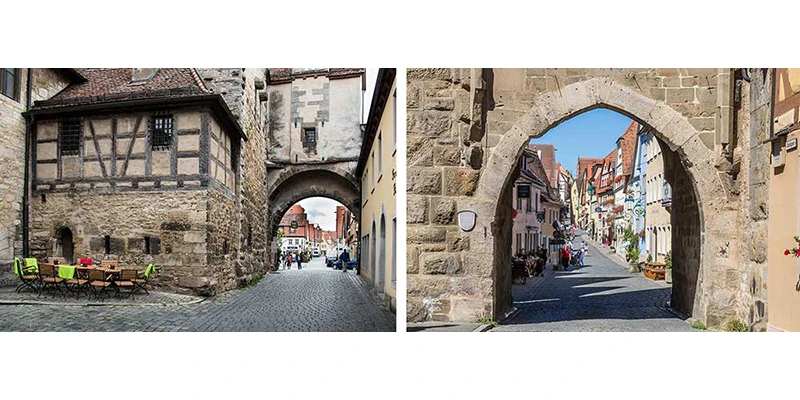
Schmiedgasse is one of Rothenburg's main historic streets, running from Marktplatz down to Plönlein. It is lined with colorful half-timbered houses, inns, and specialty shops offering local crafts and souvenirs. The street is pedestrian-friendly and often busy with guided tours and visitors. Its alignment and architecture reflect the prosperity of medieval merchants and craftsmen. Schmiedgasse is also a direct route to many of the town's landmarks, making it an essential part of any walking tour. Seasonal decorations, particularly during Christmas, add to its atmosphere.
Klingengasse is another central shopping and walking street that connects Marktplatz with the western gate of the old town. It features boutiques, bakeries, and cafés housed in traditional buildings. The street also has views of the city walls and leads to several notable towers. It is less crowded than Schmiedgasse, offering a more relaxed atmosphere for strolling and shopping. Visitors will find artisan stores selling leather goods, toys, and regional food products. Klingengasse is part of the pedestrian zone and contributes to the historic charm of Rothenburg's old town.
.webp)
Medieval Fortifications and Towers
Rothenburg City Walls and Towers remain largely intact and can be explored by walking along the covered wall walkways. Visitors gain unique perspectives of the rooftops, towers, and countryside from the elevated path. Key gates and towers, such as Rödertor, Galgentor, and Spitaltor, mark the perimeter. Informational plaques describe the town's history and construction. The walls are accessible throughout the day, and entry is free. Walking the walls provides both a historical experience and excellent photo opportunities of Rothenburg's preserved architecture. The complete circuit can take about two hours at a relaxed pace.
Markusturm and Röderbogen form one of the oldest surviving sections of Rothenburg's defenses, dating back to the 12th century. The Markusturm served as a watchtower and part of the original city fortifications. Röderbogen is the arch that connects it to later buildings. Visitors can pass under the arch and observe how the old tower integrates into the town's later expansion. It is located near several inns and is often photographed due to its medieval appearance. This structure highlights Rothenburg's layered urban development across centuries.
-2up.webp)
Rödertor and Röderturm are located on the eastern side of Rothenburg, with Rödertor being one of the main medieval gates providing access to the town. The adjoining Röderturm tower can be climbed during opening hours, offering excellent views of the old town and surrounding countryside. The gate complex includes a small guardhouse and defensive walls that illustrate the layered fortifications protecting Rothenburg. It is less crowded than central attractions, making it appealing for visitors seeking quieter exploration. Rödertor is often included in evening guided tours and serves as an introduction to the town's fortified perimeter.
Galgentor, known as the Gallows Gate, marked the northern entrance of Rothenburg. Historically, it was associated with the execution site located outside the city walls. The gate itself is a tall stone tower with a fortified passage, showcasing the strength of Rothenburg's defenses. Visitors walking along the city walls can access Galgentor and observe its commanding position over the northern approach. Today, the name recalls its grim past, but the gate remains an important architectural structure within the preserved fortification system.
.webp)
Klingen Gate (Klingentor) is an imposing gate from the 14th century that guards the western side of Rothenburg. The adjoining tower rises prominently above the city wall and once housed a bell used for both church and civic purposes. The gate controlled trade routes leading westward and was essential for defense. Visitors can admire its Gothic design and connection to the nearby St. Wolfgang Church, which was built directly into the fortifications. Klingentor is one of the most striking gate complexes in Rothenburg, offering a direct look at how military and religious architecture were integrated.
Spital Bastion (Spitalbastei) is a fortification built in the 16th century that represents one of the strongest defensive structures of Rothenburg. It consists of multiple gates, walls, and a central courtyard, designed to protect the town's southern entrance. Visitors can explore the bastion's passageways and towers while observing the scale of its construction. The site illustrates the military strategies of the period and the importance of fortifications in protecting wealthy trade towns. The Spital Bastion also serves as a scenic access point to the southern section of the city walls.
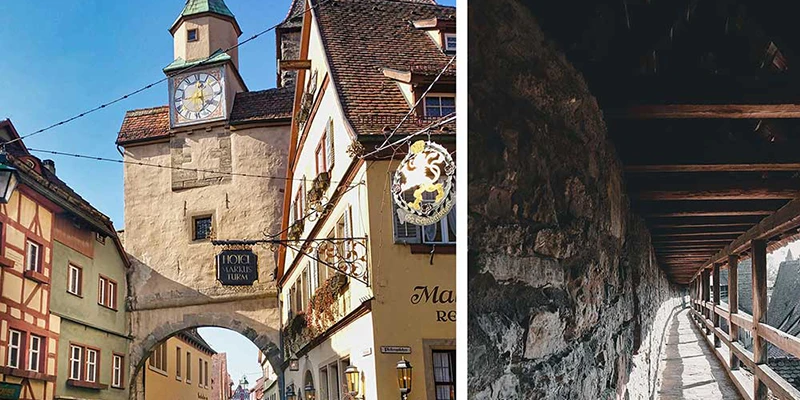
Weißer Turm (White Tower) once served as part of the town's fortifications and later as a bell tower for a nearby church that no longer exists. Its name comes from its light-colored exterior. Weißer Turm is located in the center of town near the bustling pedestrian areas and remains a notable landmark for orientation. The structure reflects the various phases of Rothenburg's urban changes as it shifted from a defensive function to a civic one. Today, it stands surrounded by shops and restaurants in the lively town center.
Sacred Architecture and Religious Heritage
St. James's Church (St. Jakobskirche) is a large Gothic church built between 1311 and 1484 and serves as an important pilgrimage site. Inside, visitors can see the Holy Blood altarpiece carved by Tilman Riemenschneider, renowned for its intricate detail and biblical depictions. The church also houses impressive stained glass windows and an organ used for concerts and services. Its twin towers rise above the town skyline, making it a visible landmark. St. James's Church is part of the pilgrimage route to Santiago de Compostela, adding cultural and religious significance. Guided tours explain the artworks and architecture in depth.
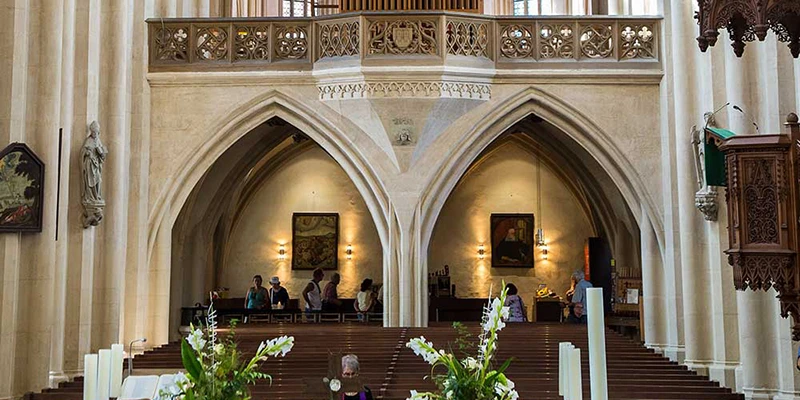
St. Wolfgang Church, built into the fortifications near Klingentor, is also known as the Shepherds' Church. Constructed in the 15th century, it combined religious function with military defense. The interior includes late Gothic altars, frescoes, and a vaulted hall. Below the church are defensive passages once used by soldiers guarding the city wall. The church is less frequented than St. James's, making it a quieter place to explore. It provides a strong example of Rothenburg's blending of practical fortifications with spiritual life during the late Middle Ages.
Franciscan Church (Franziskanerkirche) is a simple Gothic church built in the 13th century and is one of Rothenburg's oldest surviving religious buildings. Known for its plain architecture, it contrasts with the elaborate design of St. James's Church. The interior contains medieval stained glass and an important wooden altar from the early Renaissance. The church was used by the Franciscan order and reflects their values of simplicity and humility. It is located near the southern section of the old town and offers visitors a quieter experience compared to larger tourist sites.
.webp)
Gardens and Natural Retreats
Burggarten (Castle Garden) is located on the site of Rothenburg's former castle and offers landscaped gardens, old statues, and scenic views over the Tauber Valley. The area is peaceful compared to the busy town center, with walking paths, benches, and flowerbeds. The garden also features a memorial cross commemorating victims of World War II. Visitors can enjoy panoramic views of vineyards, river bends, and medieval towers from the edge of the garden. It is a recommended stop for a quiet break during sightseeing. Burggarten highlights both Rothenburg's natural surroundings and the city's layered history.
Blasius Chapel (Blasiuskappelle) is located within the Burggarten and stands on the foundations of the former imperial castle. Today, only remnants remain, but the site illustrates the religious significance of the castle grounds before the castle was destroyed in an earthquake in the 14th century. The surviving structures and memorials in the area mark one of Rothenburg's oldest sacred sites. Visitors walking through Burggarten can easily access the chapel ruins, which provide historical insight into the city's earliest architecture.
Museums and Cultural Attractions
Imperial City Museum (Reichsstadtmuseum) is housed in a former Dominican convent and covers Rothenburg's history from the Middle Ages to the 19th century. Exhibits include medieval weaponry, artwork, Jewish cultural artifacts, and monastic treasures. The preserved cloister offers a quiet courtyard with Gothic architecture. One section of the museum focuses on Rothenburg's role as a Free Imperial City, emphasizing its economic and political importance. The museum provides context for many of the landmarks seen around town. Visitors interested in history and cultural heritage will find the Imperial City Museum informative and well-organized.
Medieval Crime Museum (Mittelalterliches Kriminalmuseum) presents historical legal practices, punishments, and instruments of justice from the Middle Ages through the 19th century. Exhibits include executioner's swords, torture devices, and documents illustrating laws and societal norms. Visitors learn about public shaming, witch trials, and the development of European legal systems. The museum also explains the role of civic authority in maintaining order in medieval towns. While some exhibits are graphic, the museum provides context through educational displays. It is housed in a former monastery and offers a detailed perspective on past justice systems.
-2up.webp)
German Christmas Museum is housed inside the Käthe Wohlfahrt store and explores the history and traditions of Christmas in Germany. Displays include historic ornaments, nativity scenes, Advent calendars, and tree decorations from various centuries. The museum explains how certain customs, such as Christmas trees and glass baubles, spread internationally from Germany. The adjacent shop sells handcrafted ornaments, nutcrackers, and seasonal items year-round. Visitors often combine a museum visit with shopping for souvenirs. The German Christmas Museum appeals to those interested in cultural traditions and festive heritage.
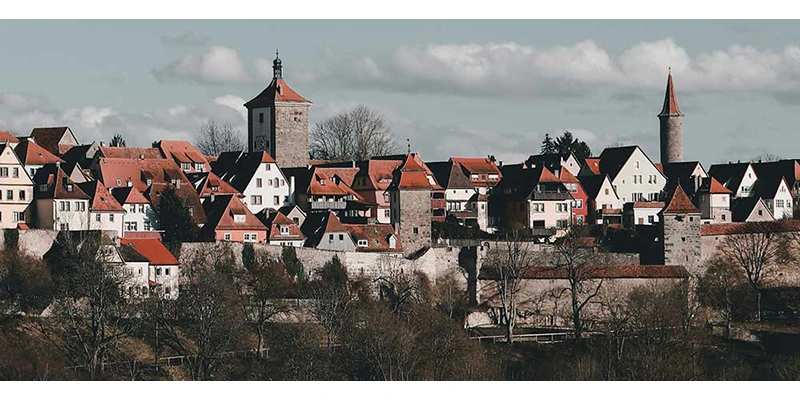
Exploring the Tauber Valley
Tauber Valley (Taubertal) surrounds the town and provides natural scenery with vineyards, river views, and hiking paths. Visitors can explore trails such as the Romantic Road and cycle routes that pass through the valley. The area also includes small villages, mills, and farmhouses that complement the medieval atmosphere of Rothenburg. Popular viewpoints from Burggarten and the city walls look directly into the valley. For visitors seeking outdoor activities, the Tauber Valley offers opportunities for walking, cycling, and photography while connecting Rothenburg with the surrounding Franconian countryside.
Tauber Bridge (Doppelbrücke) is located below the town and spans the Tauber River with a unique double-arched structure. Built in the 14th century and expanded in the 16th century, it is an example of advanced medieval engineering. The bridge connects Rothenburg with nearby villages and farmlands, illustrating its role as a trade route. From the bridge, visitors have picturesque views of the town rising above the valley. It is a popular walking destination from Burggarten or via paths leading down from the city walls. The bridge remains well-preserved and accessible to pedestrians.
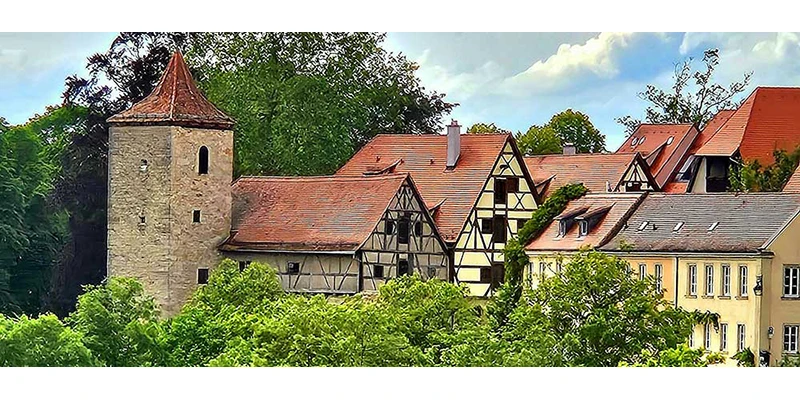
Toppler Castle (Topplerschlösschen) was built in 1388 by former mayor Heinrich Toppler and is a small moated house that sits just outside Rothenburg in the Tauber Valley. Its unique half-timbered structure above a stone base makes it an unusual example of late medieval residential architecture. Surrounded by water and greenery, the building once served as a summer residence. Today it is privately owned but can sometimes be visited on guided tours. The castle illustrates Rothenburg's history of prominent local leaders and their influence on the region. Its location offers a scenic walk from the town center.