Marburg
Marburg is one of the most picturesque small towns in central Germany, a tumble of medieval houses climbing a steep hillside toward a castle at the top. A historic university town, it has the lively feel that students bring, combined with a remarkably intact old town of crooked lanes, stairways and timber-framed houses that reward every uphill wander. The Brothers Grimm studied here, and the town indeed looks the part of a fairy tale come to life.
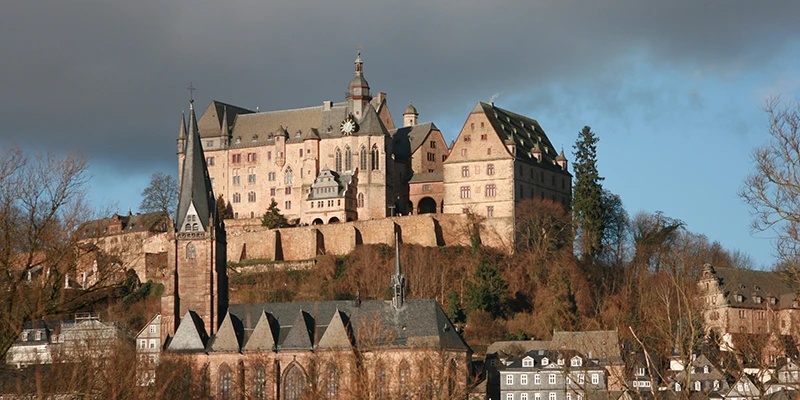
The town lies in the state of Hesse, in central Germany, on the Lahn River north of Frankfurt, and is reached by direct regional trains in about an hour from the city. Its defining feature is the slope: the old town rises sharply from the river up to the Landgrafenschloss, the castle, so that streets become stairways and the buildings stack above one another, giving Marburg its dramatic, layered profile. The university, founded in 1527, was the first Protestant university in the world and remains the heart of the town's life, filling its lanes and cafes with students.
At the top stands the Landgrafenschloss, the hilltop castle of the landgraves of Hesse, reached by a climb through the old town or by an elevator that saves the steepest part. The castle offers historic halls and a commanding view over the rooftops, the river valley and the surrounding hills. The walk up is itself the pleasure, threading through the Oberstadt, the upper old town, where narrow lanes open onto small squares and viewpoints.
The other great monument is the Elisabethkirche, the Church of St. Elizabeth, at the lower end of the old town. Built from 1235, it is considered one of the earliest purely Gothic churches in Germany, raised over the grave of Saint Elizabeth of Hungary, who devoted her short life to caring for the sick in Marburg and became one of the most venerated saints of the Middle Ages. The twin-towered church became a major pilgrimage site, and its soaring, austere interior and medieval shrine make it a highlight of any visit.
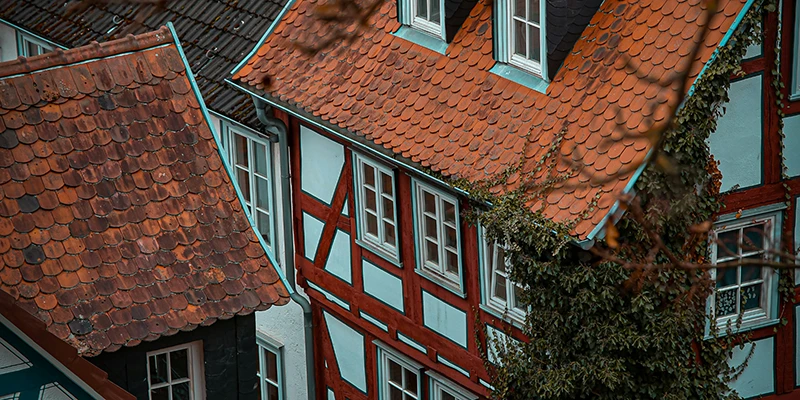
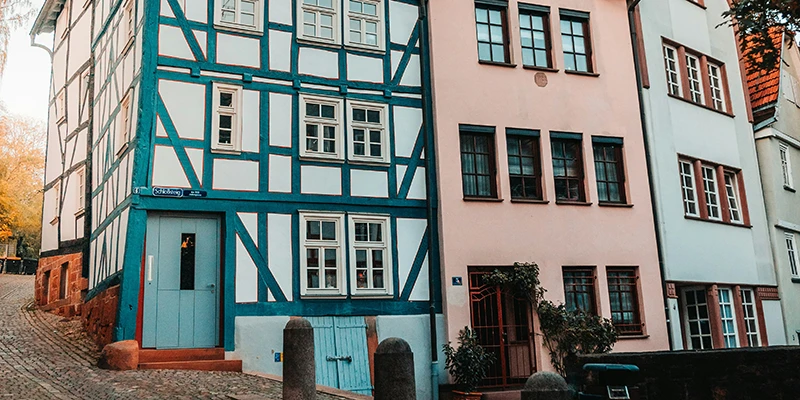
Between church and castle, the Oberstadt is the historic core and the most rewarding area to explore on foot. The Markt, the market square, is lined with handsome timber-framed and gabled houses and overlooked by the Rathaus, the town hall, dating from around 1500. From here the lanes branch off and climb, full of small shops, student cafes, bookshops and wine bars tucked into centuries-old buildings. Because so much of the upper town is stepped and narrow, it is largely free of traffic and a pleasure to wander.
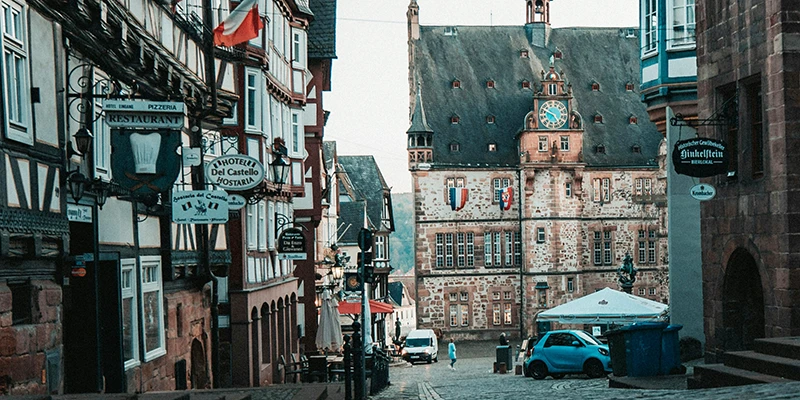
Shopping in Marburg splits between the atmospheric upper town, with its independent and specialty shops among the historic facades, and the more conventional pedestrian shopping streets in the lower town near the river, where the everyday retailers cluster. The contrast is part of the town's charm: practical shopping below, characterful browsing above, connected by the climb that defines the place.
The Lahn River at the foot of the town adds a gentler dimension, with riverside paths, lawns and, in the warmer months, rowboats and pedalos. The university's botanical garden and the museums, including a regional cultural-history museum, give visitors additional reasons to linger, while the surrounding hills offer walking for those wanting to escape into the countryside.
Marburg is easy to reach, with frequent regional trains from Frankfurt and a station beside the river, a short walk or bus ride from the old town. The upper town's steep lanes are best tackled on foot, with the castle elevator easing the climb. The town tourist office provides maps, castle and church opening hours, and information on the university sights.
Marburg suits travelers who love atmospheric old towns and don't mind a few steps. Its hillside lanes, hilltop castle, pioneering Gothic church and student energy combine into a genuinely charming and less-visited destination, an easy and rewarding day trip from Frankfurt or a stop on a route through central Germany.