Nuremberg
Historic Old Town and Iconic Landmarks
Nuremberg offers a wide range of attractions that reflect its long history, cultural heritage, and modern development. Visitors can explore medieval landmarks, museums, squares, parks, and districts that together define the character of the city. The following list presents key places of interest, described in consistent detail for orientation and planning.
The Official Tourist Information website has a large amount of information about the city and surroundings, including sights, accommodations, dining, tours, scenic routes, free brochures, maps and more.
My hotel choice in Nuremberg: Hotel VICTORIA
This interactive Google My Map shows locations and hotels with information that can be displayed by clicking on the symbols. It has sidebar index and displays best in full-frame by clicking the box in top-right. The map can be used on your phone or tablet when visiting a city, showing you where to go and describing the sights. You are welcome to make a copy as described here.
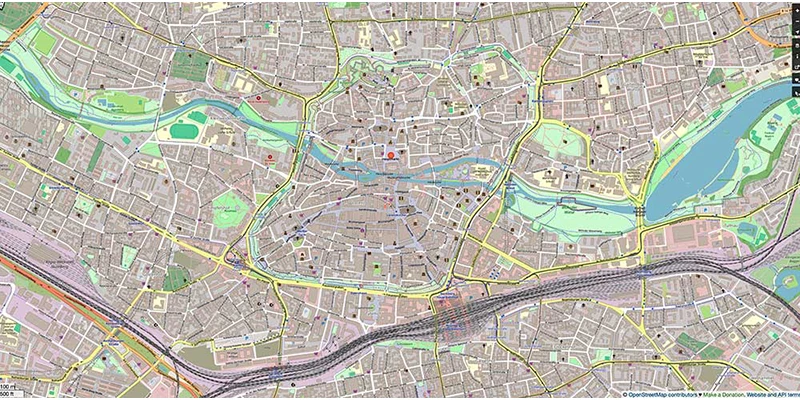
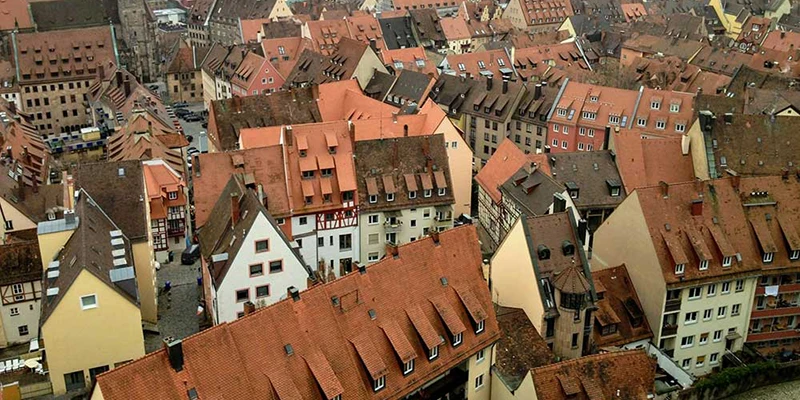
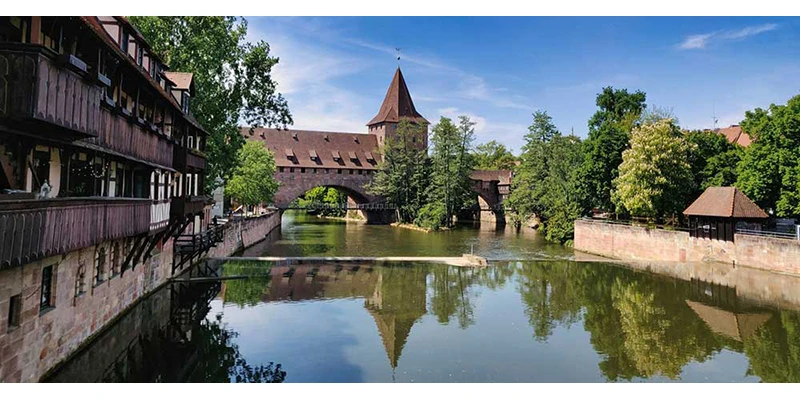
Old Town (Altstadt). Nuremberg's Old Town is enclosed by well-preserved city walls and filled with half-timbered houses, cobblestone streets, and historic squares. The Pegnitz River divides the area, with picturesque bridges such as the Fleischbrücke connecting the two sides. Shops, cafés, and traditional restaurants make it a lively district for exploring. Important buildings such as Albrecht Dürer's House and the Gothic churches of St. Lorenz and St. Sebaldus are located here. Walking through the Old Town gives visitors a direct impression of the city's rich history and architectural heritage.
Imperial Castle (Kaiserburg). The Imperial Castle dominates Nuremberg's skyline and is one of the city's most important landmarks. Visitors can explore the medieval fortifications, the Romanesque chapel, and the castle museum, which provides insight into the Holy Roman Empire. The Sinwell Tower offers panoramic views across the city, while the Deep Well illustrates medieval engineering. The castle complex is surrounded by gardens and old town walls, making it an excellent starting point for walking tours. It reflects the city's medieval power and importance as an imperial residence.
2up.webp)
City Walls and Towers. Nuremberg's medieval city walls remain among the most complete fortifications in Europe. They extend around the Old Town, punctuated by gates and towers that once protected the city. Visitors can walk along sections of the walls to appreciate their scale and strategic design. Notable structures include the Frauentor, Spittlertor, and the distinctive round tower known as the Luginsland. Many towers house small exhibitions or serve as vantage points. The walls illustrate the defensive strength of Nuremberg during its medieval height and provide a scenic route around the Old Town.
2up.webp)
City Hall (Rathaus). Nuremberg's historic City Hall consists of Renaissance and Gothic wings built between the 14th and 17th centuries. Its grand façade and arcades symbolize the wealth of the city during its period as a free imperial city. Visitors can explore the council chambers, ceremonial halls, and dungeons, which once held prisoners awaiting trial. The building remains an active seat of local government while functioning as a tourist attraction. Located near the Hauptmarkt, it is easily combined with visits to surrounding landmarks. The City Hall illustrates the civic pride and authority of historic Nuremberg.
Albrecht Dürer House. The former residence of painter and engraver Albrecht Dürer is now a museum dedicated to his life and work. The half-timbered house, built in the 15th century, stands near the Imperial Castle and is one of the few surviving homes of its kind in Nuremberg. Exhibits cover Dürer's artistic achievements, Renaissance art, and printing techniques. Rooms are furnished to reflect daily life in his era, and guided tours feature costumed interpreters presenting the story of the artist's household. It is a key destination for art enthusiasts and history visitors.
Tiergärtnertorplatz. This square is located near the Albrecht Dürer House and the Imperial Castle. Surrounded by half-timbered houses, cafés, and small shops, it is one of the most atmospheric spots in the Old Town. The square frequently hosts cultural events, markets, and open-air gatherings. Its intimate size and historic architecture make it a favorite place for locals and tourists to meet. The cobblestones and medieval layout add to its character. Tiergärtnertorplatz combines charm with accessibility, offering a traditional setting just steps away from major attractions in the northern Old Town.
2up.webp)
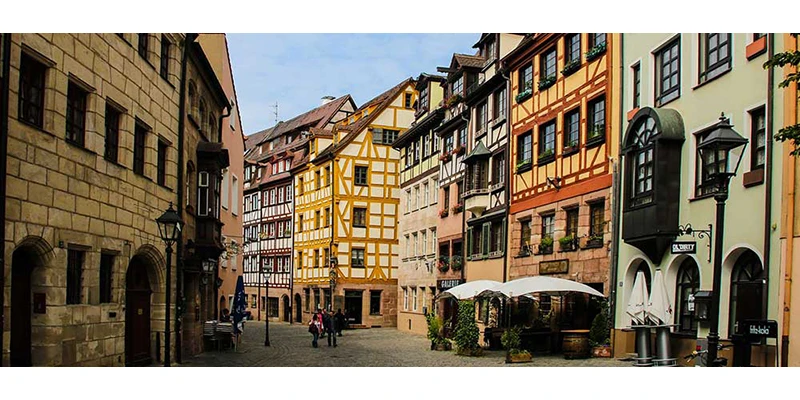
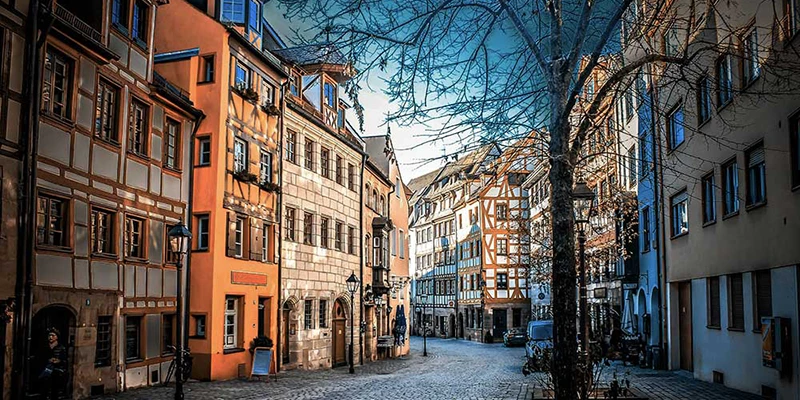
Weissgerbergasse. Weissgerbergasse is one of the most picturesque streets in Nuremberg, lined with colorful half-timbered houses once belonging to tanners. Today, the buildings host cafés, boutiques, and artisan shops, making it a lively area to stroll and shop. The narrow street retains much of its medieval character, with cobblestone paving and traditional façades. It survived much of the wartime destruction that affected other parts of the city, allowing visitors to see original structures. The atmosphere combines historic charm with modern leisure, making it a favorite for photography and casual exploration.
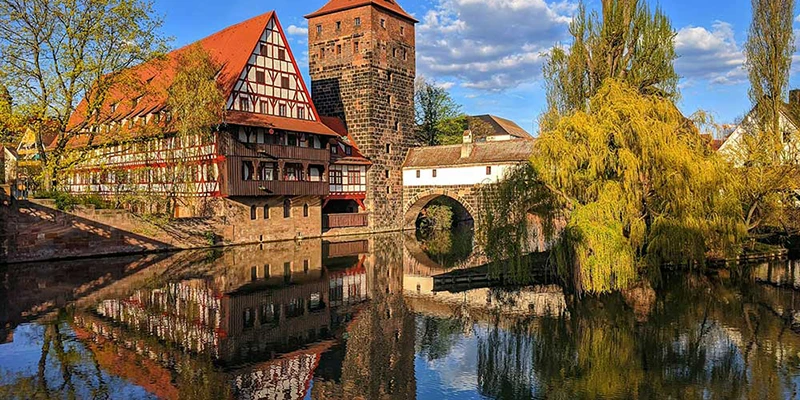
Trödelmarkt and Henkersteg. The Trödelmarkt is a small island in the Pegnitz River, once used as a flea market and now home to boutique shops and craft stores. Nearby, the Henkersteg, or Hangman's Bridge, crosses the river, leading to the former residence of the city's executioner. These sites showcase Nuremberg's medieval history and provide picturesque views along the water. The narrow alleys and wooden bridges create a unique atmosphere distinct from the larger squares. It is a quieter yet historically significant area, ideal for visitors interested in local traditions and riverside scenery.
Markets, Squares, and Shopping Streets
2up.webp)
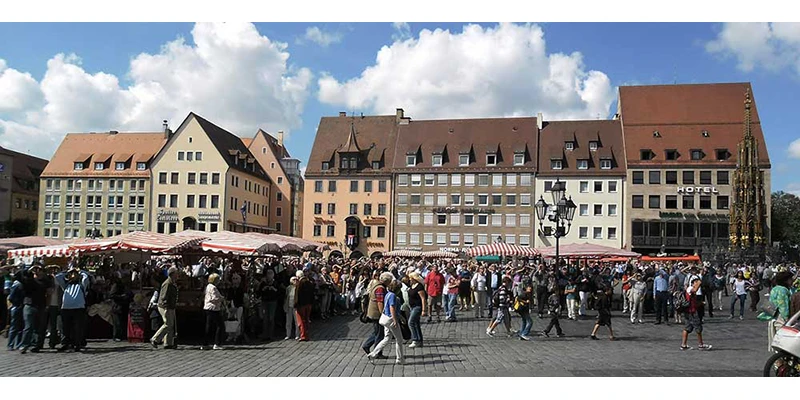
Hauptmarkt (Main Market Square). The Hauptmarkt is the central square of Nuremberg and a focal point for daily life and events. It hosts the famous Christkindlesmarkt during the Christmas season, attracting visitors worldwide. At its center stands the ornate Schöner Brunnen (Beautiful Fountain), decorated with colorful figures representing philosophy, religion, and governance. The Gothic façade of the Frauenkirche overlooks the square, where daily markets sell fresh produce, local sausages, and baked goods. The Hauptmarkt is surrounded by shops and restaurants, making it a central meeting point and hub of activity.
Karolinenstrasse and Breite Gasse. These two streets form the main shopping area of Nuremberg's pedestrian zone. Karolinenstrasse hosts international fashion brands and department stores, while Breite Gasse features a mix of retail chains and local shops. The wide, car-free streets are designed for easy walking, making them popular destinations for both locals and visitors. Street performers, seasonal decorations, and nearby cafés create a lively atmosphere. Together, they represent the modern commercial side of the city while still being integrated into the historic Old Town. Shopping here complements sightseeing and offers a complete city experience.
.webp)
Maximilianstrasse and St. Jakob Church. Maximilianstrasse is a pedestrian-friendly street lined with shops, cafés, and restaurants, located near the Weisser Turm. At its northern end stands St. Jakob Church, a Gothic structure originally built for pilgrims traveling to Santiago de Compostela. The church is noted for its medieval artworks and baroque interior elements added later. The surrounding district combines shopping opportunities with historic architecture. The location offers an accessible and less crowded alternative to the busier market square while still providing a rich cultural and urban experience. Visitors can explore both commerce and heritage here.
Jakobsplatz. Jakobsplatz is a central square bordered by St. Jakob Church and cultural institutions such as the Nuremberg State Archive. The square serves as a quiet urban space compared to the busier Hauptmarkt. It features open seating areas and provides a link between the shopping streets and historic sites. Seasonal markets and local events occasionally take place here, creating a community-oriented atmosphere. The combination of religious, administrative, and civic functions makes it a versatile part of the Old Town. For visitors, it offers a less crowded alternative to relax and observe daily city life.
Kornmarkt. Kornmarkt is a square located south of the Old Town's main market area. It is known for the Way of Human Rights, a monument consisting of 27 tall white columns inscribed with articles from the Universal Declaration of Human Rights. This modern installation highlights Nuremberg's role as a "City of Human Rights" after its historical association with the Nuremberg Trials. Surrounding the square are shops, cafés, and cultural institutions, making it both a place of reflection and activity. Kornmarkt stands out as an urban space where history, commemoration, and modern civic life intersect.
Weisser Turm and Ehekarussell Fountain. The Weisser Turm is a medieval tower that once formed part of the city's defensive wall. Today it stands beside a busy square and underground station. Next to it is the Ehekarussell, or Marriage Carousel Fountain, an elaborate modern sculpture by Jürgen Weber. The fountain illustrates the joys and hardships of marriage through dramatic figures and scenes. Its bold design contrasts with the historic tower, symbolizing Nuremberg's blend of past and present. The square serves as a lively urban space with shops and transport connections, making it a notable city landmark.
Museums and Cultural Institutions
Germanisches Nationalmuseum. The Germanisches Nationalmuseum is the largest museum of cultural history in the German-speaking world. It houses an extensive collection of art, artifacts, and historical objects spanning from prehistoric times to the present. Exhibits include medieval sculptures, Renaissance paintings, scientific instruments, textiles, and everyday household items. The museum complex combines historic cloisters with modern architecture, offering both a scholarly resource and a visitor-friendly attraction. Temporary exhibitions often highlight specific themes in European culture. For those seeking a deep understanding of German and Nuremberg heritage, this museum provides a comprehensive and informative experience.
Nuremberg Toy Museum (Spielzeugmuseum). The Toy Museum presents a detailed history of toys from antiquity to the present. Its collection includes dolls, tin soldiers, wooden toys, trains, and model cars, reflecting Nuremberg's role as a historic toy-making center. Modern exhibits showcase LEGO, Playmobil, and contemporary designs. Interactive areas invite children to play, while adults can explore the cultural meaning of toys across generations. The museum is located in a historic townhouse in the Old Town and attracts both families and collectors. It demonstrates how play and craftsmanship have shaped the city's reputation worldwide.
.webp)
Adler Railway Museum (DB Museum). The DB Museum focuses on the history of the German railway system, beginning with the Adler, Germany's first steam locomotive, which ran between Nuremberg and Fürth in 1835. Exhibits include historic trains, carriages, railway technology, and interactive displays. The museum highlights the role of rail transport in industrialization, urbanization, and modern travel. Visitors can explore both indoor and outdoor sections, with model railways and hands-on activities for children. As Nuremberg was the birthplace of German railways, the museum has particular local significance while also addressing broader transport history.
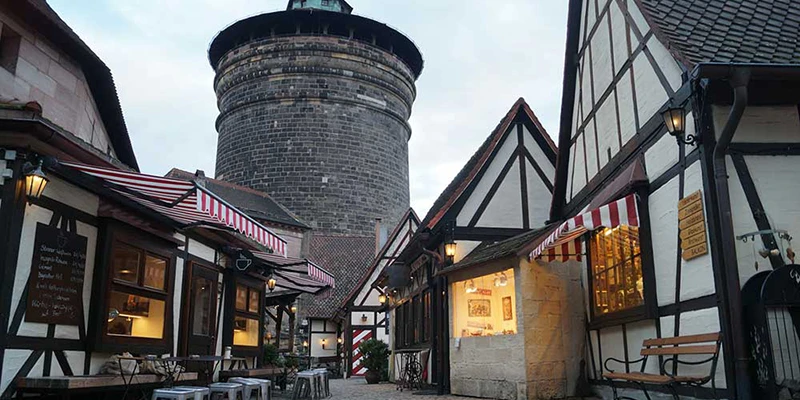
Handwerkerhof (Craftsmen's Courtyard). Located near the Königstor city gate, the Handwerkerhof is a recreated medieval-style courtyard showcasing traditional crafts. Visitors can see artisans producing glass, leather goods, wooden toys, and other regional specialties. Small workshops and shops sell handcrafted souvenirs, while taverns serve local dishes such as bratwurst and Franconian beer. The site offers a glimpse of old craftsmanship within a modern city setting, preserving traditions that shaped Nuremberg's economy. Its central location near the main train station makes it easily accessible and an appealing stop for visitors seeking cultural experiences.
Religious Architecture
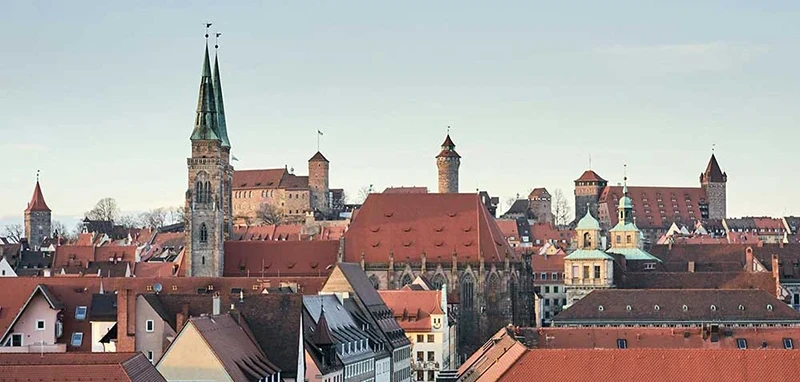
St. Lorenz Church (Lorenzkirche). St. Lorenz is a monumental Gothic church and one of Nuremberg's most important religious buildings. Its twin towers dominate the skyline of the southern Old Town. Inside, visitors find masterpieces such as the Angelic Salutation by Veit Stoss and an impressive rose window. The church's construction began in the 13th century and it stands as a symbol of the city's wealth and devotion during the Middle Ages. Despite wartime damage, it has been carefully restored and continues to function as both a parish church and a heritage site.
St. Sebaldus Church (Sebalduskirche). This medieval church, dedicated to Nuremberg's patron saint, is located in the northern part of the Old Town near the Imperial Castle. Its Romanesque and Gothic architecture showcase centuries of construction and modification. Inside, visitors can see the ornate bronze shrine of St. Sebaldus, created by Peter Vischer the Elder, and stained-glass windows that survived destruction. As one of the oldest churches in the city, it holds significant cultural and spiritual value. The location near key attractions makes it an essential stop for those exploring historic Nuremberg.
Frauenkirche (Church of Our Lady). This 14th-century Gothic church overlooks the Hauptmarkt and is notable for its intricate façade and the mechanical clock known as the "Männleinlaufen." Each day at noon, the clock presents a procession of figures commemorating the Golden Bull decree. Inside, the church contains significant religious art and altars. Built on the foundation of a former synagogue, it reflects both the city's medieval religious life and turbulent history. The Frauenkirche remains an active parish church while also serving as an important tourist attraction during festivals and daily markets.
Parks, Green Spaces, and the River
Dutzendteich Park. Located near the former Nazi rally grounds, Dutzendteich is a large park with lakes, walking paths, and picnic areas. The park provides space for leisure activities such as boating, jogging, and cycling. It is especially popular during warm months when residents enjoy outdoor concerts and festivals held nearby. The combination of natural beauty and historical significance makes it a versatile destination. Visitors often combine a visit here with the Documentation Center to balance education with recreation. It serves as a reminder of how former political grounds have been integrated into modern urban life.
Stadtpark. Stadtpark is one of the largest green areas in Nuremberg, located north of the Old Town. It features landscaped gardens, ponds, walking paths, and playgrounds. The park is popular for jogging, picnics, and relaxation, providing a quiet retreat from the urban center. Seasonal flowers and sculptures add to its appeal. Historically, the park grounds were once part of the city's outer fortifications, later converted into a public space. Today, it combines recreation with cultural events such as open-air concerts. Visitors looking for fresh air and greenery will find Stadtpark a convenient destination.
.webp)
Johannisfriedhof and Hesperidengärten. The Johannisfriedhof cemetery is known for its historic gravestones of artists, scholars, and patricians. It provides a solemn yet significant insight into Nuremberg's cultural past. Nearby, the Hesperidengärten are restored Baroque gardens originally maintained by wealthy merchants. These gardens feature geometrically arranged hedges, fountains, and statues, offering a quiet escape within the city. The combination of cemetery and gardens creates a unique cultural landscape highlighting memory, tradition, and leisure. Located slightly west of the Old Town, they are best visited together as part of a cultural walking route.
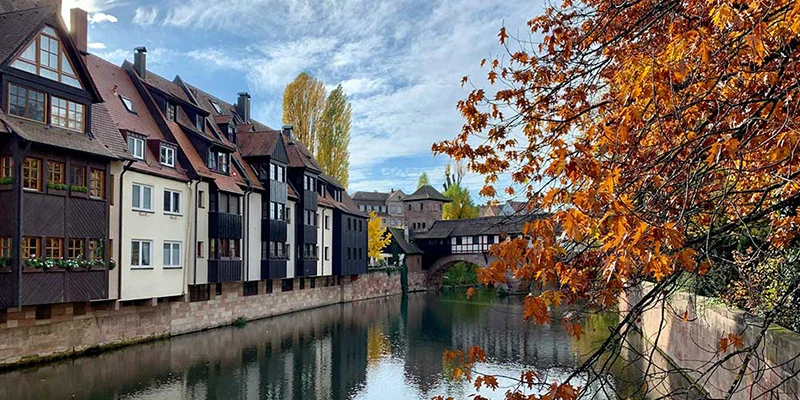
Pegnitz Riverside and Wöhrder See. The Pegnitz River flows through Nuremberg's Old Town, creating picturesque bridges, walkways, and river views. Areas along the river are popular for strolling, photography, and dining at riverside cafés. East of the city center, the Wöhrder See reservoir provides a larger recreational space with trails, cycling routes, and water activities. Both locals and visitors enjoy picnics, boating, and outdoor relaxation here. The combination of natural scenery within an urban setting offers a balance to historic sightseeing. The riverfront adds to the city's atmosphere and provides peaceful green spaces within reach.
.webp)
Nuremberg Zoo (Tiergarten). Situated in a landscaped forest area, the Nuremberg Zoo is known for its natural enclosures and spacious habitats. It features a dolphin lagoon, a manatee house, and a variety of species from around the world, including big cats, primates, and local European animals. The zoo emphasizes conservation and education, offering programs for families and children. Paths wind through wooded terrain and past scenic rock formations, providing a pleasant environment for walking. Its combination of wildlife, recreation, and learning makes it one of the city's most visited attractions for locals and tourists alike.
Hauptbahnhof and Königstor Area. The main train station is an architectural landmark and a gateway to the city. Nearby lies Königstor, one of the main medieval gates still standing. The surrounding area serves as an entry point to the pedestrianized Old Town, lined with shops, restaurants, and cultural sites. From here, visitors can easily reach attractions like the Handwerkerhof and shopping streets. The lively atmosphere reflects Nuremberg's role as a transportation hub and commercial center. The mix of modern transit, historic fortifications, and urban life makes this district significant for both orientation and exploration.
The variety of sites in Nuremberg shows the city's role as both a historic center and a modern urban hub. From the Imperial Castle to contemporary districts, visitors can experience culture, history, and everyday life in one place. Exploring these attractions provides a complete picture of Nuremberg's significance and appeal.