Regensburg on the Danube
A Medieval Gem
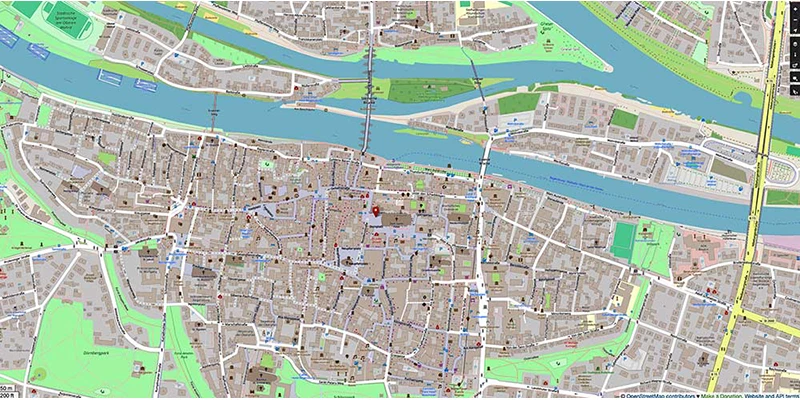
Regensburg is one of Germany's best-preserved medieval cities, located on the Danube River in Bavaria. It retains the street patterns of a trading city shaped between the 11th and 13th centuries, when the market, City Hall, and cathedral became focal points.
.webp)
The city features cobbled alleyways, Italian-looking squares, narrow winding streets, and numerous mansions and churches leading visitors through centuries of architectural evolution from Roman foundations to Gothic spires. The old town contains patrician houses, ancient churches, and medieval tower houses that once belonged to wealthy merchant families, alongside Roman remains and Renaissance buildings now integrated with modern shops and cafes.
This interactive Google My Map shows locations with information that can be displayed by clicking on the symbols. It has sidebar index and displays best in full-frame by clicking the box in top-right. The map can be used on your phone or tablet when visiting a city, showing you where to go and describing the sights. You are welcome to make a copy as described here. Regensburg can be visited as a daytrip from Nuremberg, 60-minutes by train.
The Official Tourist Information website has a large amount of information about the city and surroundings, including sights, accomodations, dining, tours, scenic routes, free brochures, maps and more.
Regensburg has around 1,500 listed buildings, including 984 that form the UNESCO World Heritage ensemble "Old Town with Stadtamhof," making it the largest preserved medieval old town north of the Alps. The compact old town is largely pedestrianized, encouraging exploration on foot through cobblestone streets, impressive squares, hidden courtyards, medieval passages, historic churches, and the famous Stone Bridge while experiencing one of Europe's most authentic medieval urban landscapes. The compact and walkable urban core combines cultural heritage with modern amenities.
.webp)
Situated directly on the Danube, the city also offers scenic riverfront walks, boat tours, and panoramic views. The combination of its authentic medieval fabric, Roman remains, Gothic monuments, and vibrant modern urban life makes Regensburg a destination of both historical significance and contemporary appeal.
The historic center survived World War II largely intact, preserving its remarkable collection of Roman, Romanesque, and Gothic architecture spanning nearly two millennia. The cityscape is defined by patrician towers, testament to the wealth of medieval merchant families, and the dominant spires of its Gothic cathedral. Regensburg's medieval architecture from the 11th-13th centuries, including the market, City Hall, and Cathedral, still defines the character of the town with tall buildings, dark narrow lanes, and strong fortifications. The integration of residential, commercial, and cultural functions provides a comprehensive view of historic European urbanism in a contemporary context.
-2up.webp)
Its history spans Roman times through the Middle Ages to its role as a center of the Holy Roman Empire, with visible remains from each period including Roman ruins, Gothic cathedrals, Renaissance merchant houses, and Baroque civic buildings. The city center features a dense network of pedestrian zones and cobblestone streets that reflect its long history as a trading hub. Key landmarks include the Gothic cathedral with its dominant spires, a 12th-century stone bridge connecting the old town with Stadtamhof district, and patrician towers that showcase medieval merchant wealth.
Regensburg offers both cultural landmarks and contemporary urban life, making it a destination of historical significance and modern appeal where Roman, Romanesque, and Gothic architecture coexist to provide visitors a comprehensive look at German urban history.
Shopping Streets
Goliathstrasse This central street is one of the most popular walking and shopping areas, featuring a pedestrianized zone lined with shops housed in medieval buildings that create unique shopping experiences within historic architectural settings. It features a mix of historic architecture with modern retail stores, small boutiques, traditional Bavarian specialties, handcrafted items, international brands, and cafes that occupy spaces once serving medieval merchants and craftspeople.
The narrow cobblestone street creates an intimate shopping atmosphere quite different from modern commercial districts, with discoveries around every corner including hidden courtyards and architectural details. Many buildings retain their original facades and architectural elements while adapting interiors for modern commercial use, making shopping safe and pleasant while preserving the medieval street patterns that define the old town's character. Goliathstrasse leads toward the Goliathhaus.
.webp)
Maximilianstrasse This pedestrian shopping street forms one of Regensburg's main commercial arteries, lined with shops, cafes, and historic buildings. The street joins the old town with modern commercial areas, connecting the train station to the city center. Medieval architecture provides the backdrop for contemporary retail activity, creating an appealing blend of old and new. The pedestrian zone makes it ideal for leisurely strolling, window shopping, and experiencing daily life in historic Regensburg while enjoying the protected medieval streetscape.
Keplerstrasse is a central shopping and pedestrian street named after the astronomer Johannes Kepler, who lived in Regensburg. It links Neupfarrplatz with Arnulfsplatz and contains a variety of shops, cafés, and services. Visitors can explore both modern retailers and smaller specialty stores. The street also offers views of historic façades and access to side alleys of the Old Town. It serves as an active pedestrian corridor for both residents and tourists. Keplerstrasse is a key part of the city's commercial life while retaining its historical connections.
.webp)
Ostengasse The Ostengasse is one of the main streets in Regensburg's Old Town, running from the east side of the city towards the center. The street is known for its well-preserved medieval buildings, including the Ostentor, or East Gate, a remnant of the city's old fortifications. The Ostengasse is a commercial street with a variety of small shops, cafes, and historic pubs. It is part of the city's pedestrian zone and offers a pleasant walk through a historic neighborhood.
Schwarze Bären Strasse is a pedestrian-friendly street connecting Neupfarrplatz to Haidplatz. It features a mix of shops, cafés, and historic buildings. The street is often used by visitors navigating between central squares, making it a practical and scenic walking route. Its narrow layout and traditional façades reflect the medieval structure of the Old Town. Seasonal decorations enhance the street during festivals and holidays. Schwarze Bären Strasse combines commercial activity with architectural charm, providing both shopping and sightseeing opportunities. It is part of Regensburg's active pedestrian zone network.
Market Squares
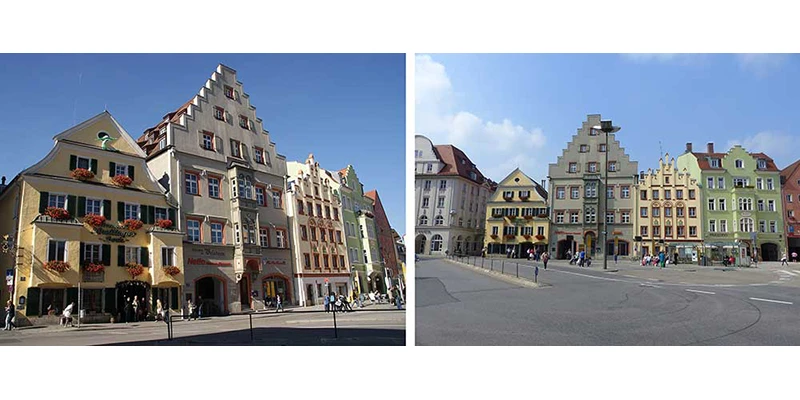
Arnulfsplatz is a square at the edge of the Old Town, known for its historic buildings and central location near transport routes. The square provides access to pedestrian streets leading into the town center, connecting different neighborhoods. The square demonstrates typical medieval urban planning with its irregular shape adapted to the existing street pattern. It provides open space within the dense historic city center for community activities and civic life. It features outdoor seating areas, small shops, and connections to nearby cultural sites. Historically, Arnulfsplatz served as a commercial and residential area, and today functions as a meeting point with cafés and restaurants.
Krauterermarkt is a square adjacent to the Cathedral of St. Peter, historically used as a herb and produce market. Today, it remains a lively space with cafés, shops, and access to important landmarks. The square is framed by historic buildings, including the Domschatzmuseum and the Alte Kapelle nearby. Seasonal markets and events are held here, keeping its commercial tradition alive. Its central position makes it a natural stop when visiting the cathedral and surrounding streets. Krauterermarkt continues to function as a hub for both local activity and tourism.
Watmarkt is a square situated near the Cathedral and Old Town Hall, historically linked to medieval trade. Today, it is a lively area with cafés, restaurants, and small businesses. The square is framed by colorful façades of historic houses that showcase Regensburg's architectural heritage. Outdoor seating creates a vibrant atmosphere for visitors. The area also connects to smaller alleyways leading deeper into the Old Town. Watmarkt remains a compact but important location for experiencing the rhythm of daily city life. Its central position makes it easily accessible during walking tours.
Kohlenmarkt opens toward the cathedral and serves as a busy hub for both visitors and locals, a popular walking route that connect major squares and landmarks.
Historical Landmarks and Architecture
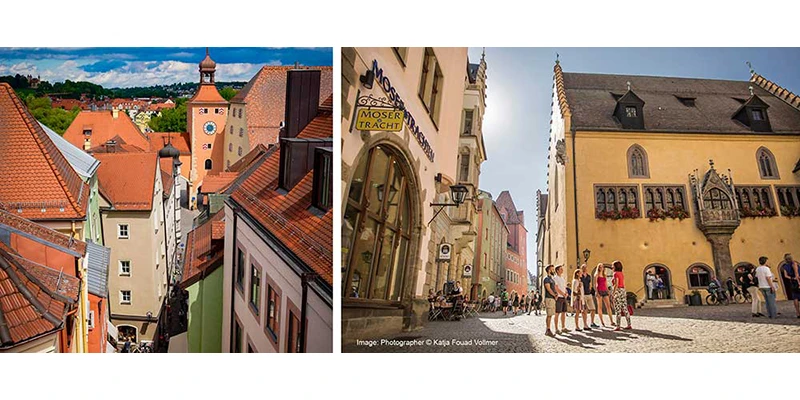
Altes Rathaus, or Old Town Hall, is a complex of buildings built on Rathausplatz over several centuries. The oldest part dates to the 13th century and features a gothic tower. A significant part of the complex is the Reichssaal, or Imperial Hall, where the Perpetual Imperial Diet of the Holy Roman Empire met from 1663 to 1806. The Gothic structure features multiple building phases dating to the 13th century, with additions continuing through later periods. Visitors can tour the historical apartments, the medieval courtroom, the famous Reichstag Hall where the Holy Roman Empire's permanent diet held sessions, and the Imperial Hall where the Perpetual Diet met. A museum within the complex details the history of the Holy Roman Empire and its influence on European politics. The building complex is located on Rathausplatz, a central point in the Old Town, offering views of the surrounding medieval architecture.
Porta Praetoria One of Germany's oldest Roman structures dating to 179 AD, representing the northern gate of the Roman fortress Castra Regina, it remains a key link to the city's Roman past. Built with large stone blocks demonstrating Roman engineering, it was integrated into later buildings and recognized for historical significance in the 19th century. Archaeological investigations have revealed additional Roman foundations, serving as testament to Regensburg's two-millennia history.
Goliathhaus Built in the 13th century, the Goliath House is a large medieval patrician residence, famous for its 16th-century mural of David and Goliath. The artwork remains one of Regensburg's best-known landmarks and reflects the wealth and influence of merchant families. Combining medieval architecture with Renaissance art, it serves as both a navigational landmark and a window into the city's cultural evolution. Goliath House represents the wealth of Regensburg's merchant families, who displayed prosperity through architectural grandeur.
Central Squares
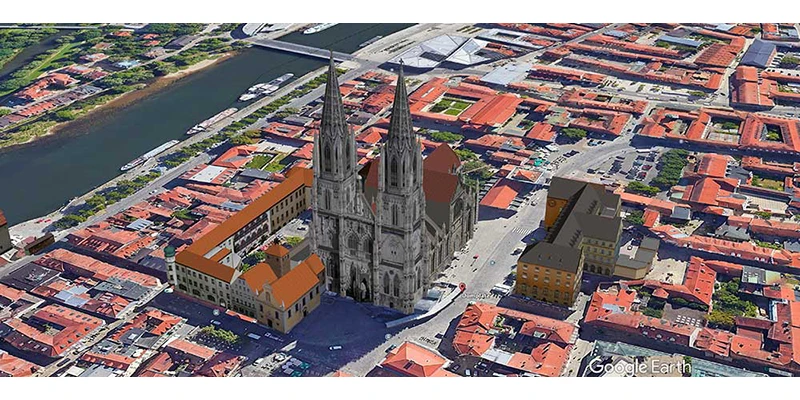
Domplatz is the main square surrounding the Cathedral of St. Peter and serves as a central gathering space in the Old Town. Historic townhouses line the square, and visitors can enjoy open-air cafés and small shops. The square frequently hosts markets and cultural events, especially during the Christmas season. Domplatz is also a hub for guided city tours, making it an essential orientation point for tourists. Its proximity to major attractions, including the Old Town Hall and Porta Praetoria, adds to its importance. The square provides both lively urban atmosphere and historic architectural context.
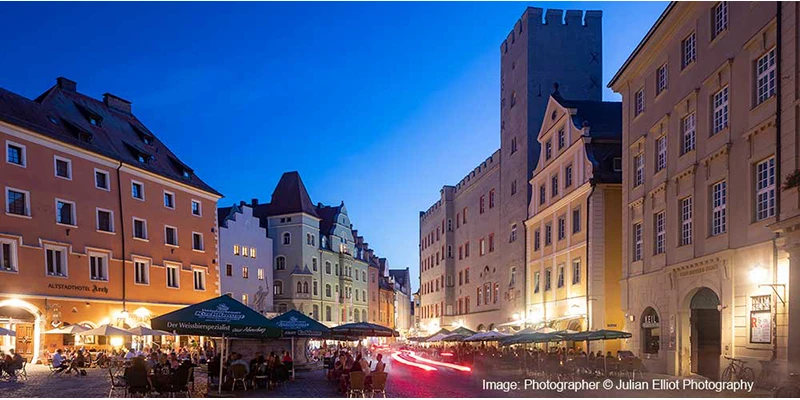
Haidplatz A large triangular square in the old town center, surrounded by impressive medieval patrician houses including the historic Goldenes Kreuz inn. Since the Middle Ages, it has hosted markets, tournaments, and festivals. Today it remains a lively pedestrian zone with cafes and restaurants offering outdoor seating. Its open layout contrasts with narrow city streets, providing space for gatherings while maintaining its traditional role as a community hub.
Neupfarrplatz A central square with significant historical importance, built on the site of Regensburg's former Jewish quarter, once one of Europe's most significant Jewish communities until expulsion in 1519. The square features the Neupfarrkirche church, a Jewish community memorial, shops, cafes, and hosts events including the Christmas market.
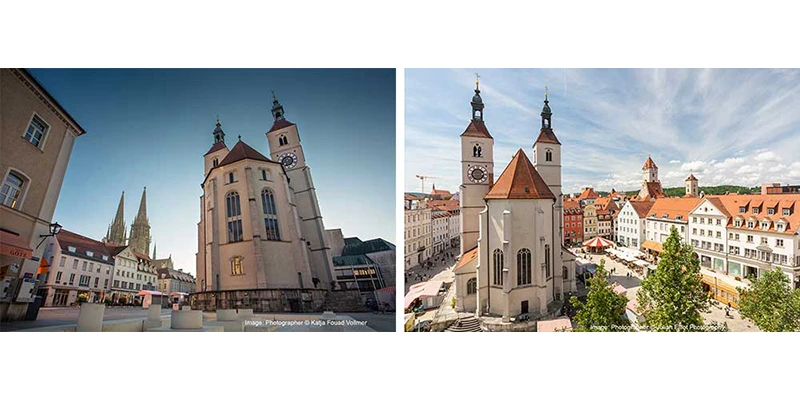
Bismarckplatz is a busy square and transport hub on the western edge of the Old Town. It is known for the Regensburg Theater, which hosts opera, drama, and concerts. The square is surrounded by shops, cafés, and restaurants, making it a popular gathering place, with its combination of medieval buildings and later architectural additions. Tram and bus stops connect the area to other parts of the city. Visitors often use it as an orientation point before entering the pedestrian zone. Its lively atmosphere contrasts with the historic center, yet it remains a key part of the city's daily activity. Seasonal events also take place here.
-2up.webp)
Medieval City Gates
Jakobstor This medieval city gate represents one of the few remaining original entrances to Regensburg's fortified old town. The Gothic tower gate dates from the 13th century and showcases medieval defensive architecture with its massive stone construction and strategic positioning. The structure provides insight into the city's medieval fortification system and serves as a tangible connection to Regensburg's past as a fortified trading center. Visitors can appreciate the craftsmanship of medieval builders and understand how the city protected itself during turbulent historical periods.
Ostentor is a preserved medieval city gate located on the eastern side of Regensburg's Old Town. It once served as a defensive structure and entrance to the city. Today, it stands as a historical monument and local landmark. The gate's Gothic design reflects the town's fortified past. Visitors can view it as part of walking routes connecting the Old Town to surrounding neighborhoods. The area around Ostentor has restaurants and cafés, making it a lively part of the city. It remains one of the best-preserved gates of the former fortifications.
-2up.webp)
Steinerne Brücktor This medieval bridge tower located at the southern end of the Old Stone Bridge once served as a fortified gateway into the city, controlling access from the north. Today, it is preserved as a historic structure and provides an introduction to the bridge itself. The tower's architecture reflects the defensive needs of the medieval town. Visitors can view it from the bridge and surrounding riverfront paths. Its position makes it part of the iconic river landscape and a reminder of Regensburg's strategic importance in trade and defense.
Palaces and Noble Residences
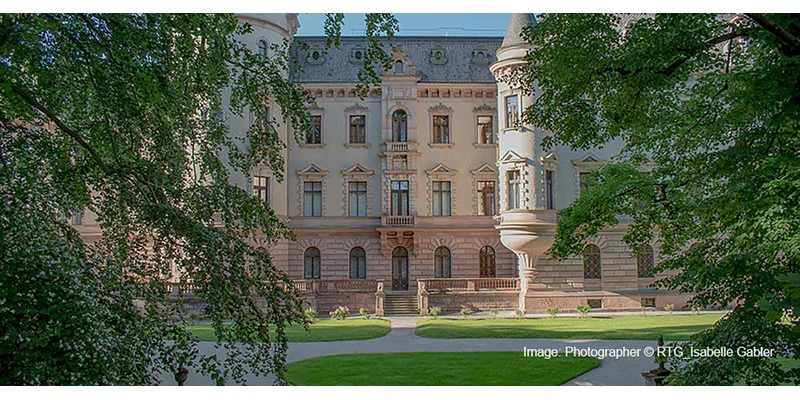
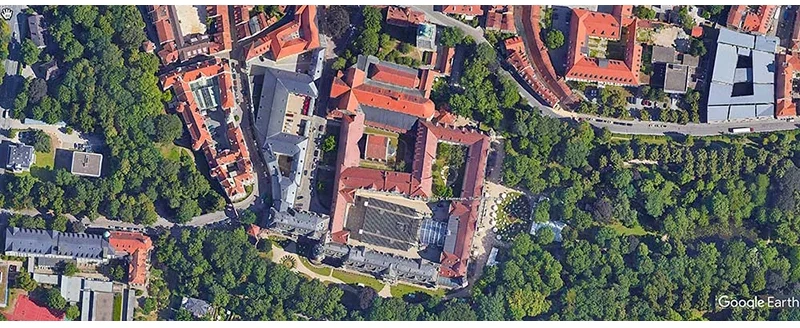
Thurn und Taxis Palace A Baroque complex in the former St. Emmeram Monastery, serving as the largest privately inhabited palace in Germany with over 500 rooms. Still home to the Thurn und Taxis family, parts are open for public tours featuring richly decorated interiors, courtyards, and gardens. The site illustrates the transition from monastic architecture to aristocratic residence and hosts seasonal events.
Fürstliche Schatzkammer The Princely Treasury houses an impressive collection of precious objects, ceremonial items, and historical artifacts from the Thurn und Taxis family collection. Located within the palace complex, this treasure chamber displays centuries of aristocratic wealth including jewels, religious artifacts, and royal regalia. Visitors can explore rooms filled with gold, silver, and precious stones that tell the story of one of Europe's most prominent noble families. The treasury provides insight into the opulent lifestyle and cultural significance of the postal dynasty.
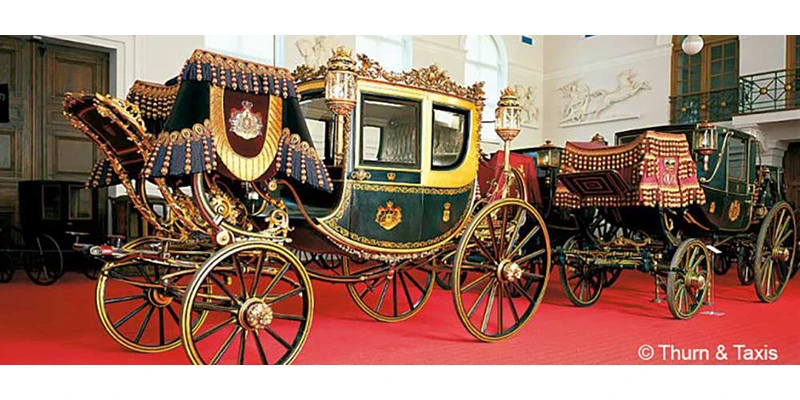
St. Emmeram's Abbey Grounds The grounds of St. Emmeram's Abbey surround the Thurn und Taxis Palace and contain historic monastic buildings. Visitors can see courtyards, gardens, and remnants of the medieval abbey. The site illustrates Regensburg's religious history and its transition into a noble residence. Guided tours of the palace often include parts of the abbey grounds. It is a quieter space compared to the central squares, offering a balance of history and green areas. St. Emmeram's remains a distinctive complex within the Old Town. Its layered history continues to attract cultural interest.
.webp)
Riverfront
Old Stone Bridge A 12th-century medieval engineering marvel connecting old town with Stadtamhof district across the Danube. This 310-meter bridge with sixteen stone arches served crusader knights and was the region's only fixed river crossing for centuries. Now primarily pedestrian, it offers excellent views of the old town skyline and cathedral spires, making it ideal for photography and leisurely strolls.
.webp)
The Danube shapes Regensburg's landscape, with promenades along both banks offering views of the skyline, cathedral towers, and Old Stone Bridge. The waterfront features parks, benches, and cafes, making it a lively spot for walking, relaxing, and watching river traffic. Historic warehouses reflect the city's trading past, while landmarks like the Wurstkuchl highlight its medieval character. Popular in summer, the riverfront combines scenery, history, and activity, making it a central part of the visitor experience.
.webp)
Donau-Schiffahrt Boat tours on the Danube provide a different perspective on Regensburg's landmarks, with trips passing the Old Town, cathedral, and riverfront parks. Commentary explains the city's history as seen from the water.
It is also the departure point for boat tours offering a different perspective on the city's historic waterfront, including trips to the Walhalla. Various companies operate boat tours from the pier near the Old Stone Bridge. The cruises provide views of the Old Town, the Cathedral, and the Old Stone Bridge from the water. Tours typically go up or down the river, passing by riverside parks and historic buildings. Some tours offer commentary on the city's history and landmarks.
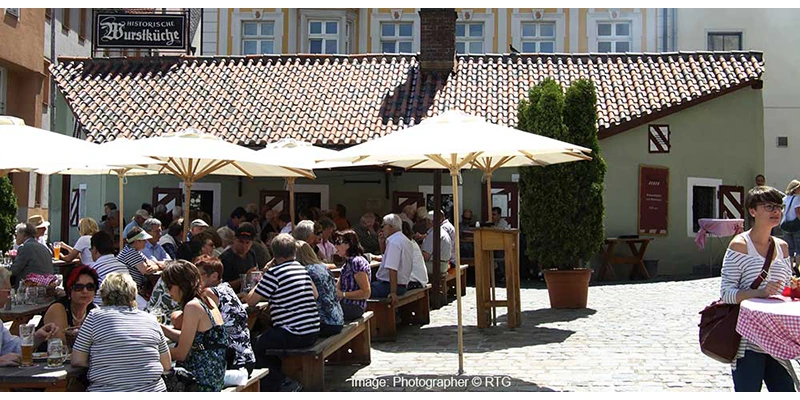
Am Brückturm is the riverside area at the end of the Old Stone Bridge. Visitors can dine outdoors with views of the Danube and the bridge. The area provides a central vantage point for photography and sightseeing. Small shops and restaurants add to the lively atmosphere. It connects directly into the Old Town pedestrian zone. The place is known for the historic Wurstkuchl, considered one of the oldest continuously operating public restaurants in the world, with a history dating back to the 12th century. The restaurant is famous for its grilled sausages, which are served with sweet mustard and sauerkraut. It is a popular spot for both locals and tourists and offers an authentic Regensburg culinary experience in a historic setting.
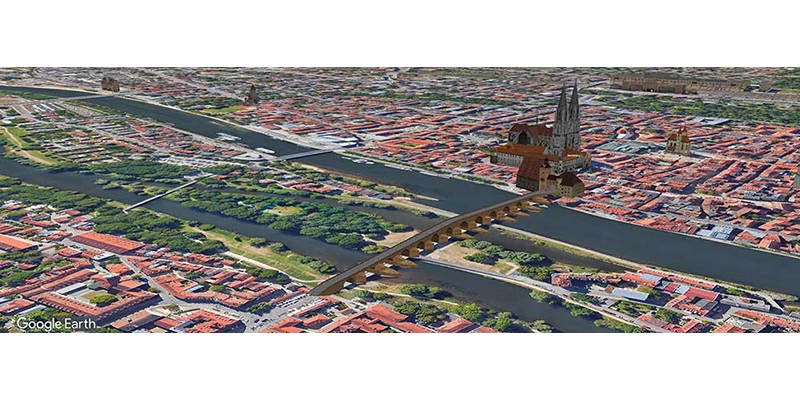
Stadtamhof across the Stone Bridge, was once a separate medieval village, incorporated into Regensburg in 1924 and now part of the UNESCO World Heritage Site. With narrow streets, colorful houses, and intimate scale, it offers a quieter, village-like charm compared to the old town. The area offers excellent views of the cathedral and old town skyline, featuring historic churches, restaurants, and beer gardens with a quieter atmosphere than the main old town.
Parks and Recreation Areas
Herzogspark A landscaped public park at the western edge of old town along the Danube, offering green space for relaxation near the historic center. The park features botanical gardens, manicured lawns, sculptures, and medieval city wall remains including the Prebrunnturm tower. Its elevated position provides excellent Danube River views, serving as both a recreational area and reminder of the city's historic defenses.
Grieser Spitz A park and recreational area in Regensburg, located at the tip (Spitz) of the Stadtamhof district, where the river Regen flows into the northern arm of the Danube. It is known for its scenic riverfront setting, family-friendly amenities including playgrounds, sports facilities, and green spaces, and serves as a popular destination for both leisure and community events such as concerts and festivals. The area features walking and cycling paths, and is especially favored by locals for relaxing, picnicking, and social gathering.
.webp)
Dultplatz is a large open area along the Danube River, best known for hosting fairs and festivals. It is the location of the Regensburg Dult, a traditional fair held twice a year with rides, food stalls, and entertainment. Outside of festival times, the area is used for events, parking, and gatherings. Its riverside position provides open views and connections to cycling paths. Visitors can reach it easily from the city center via pedestrian routes. Dultplatz remains one of the city's most important event spaces, combining modern leisure with historic tradition.
Gothic Cathedral and other Religious Sites
.webp)
Cathedral of St. Peter The Cathedral of St. Peter is the most prominent religious building in Regensburg and a key example of German Gothic architecture, regarded as the main work of Gothic architecture in Bavaria. Construction began in 1275 and was completed in 1634, with the exception of the twin spires which were finished in 1869, defining the city's skyline and visible from great distances across the Danube valley. It is the city's most prominent religious and architectural landmark. The cathedral's interior features stunning medieval stained-glass windows, intricate stone carvings, numerous historic monuments including masterpieces by renowned sculptors, and a famous "hanging" organ. It serves as home to the Regensburger Domspatzen, an internationally recognized boys' choir that has performed for centuries. The cathedral treasury houses an extensive collection of religious artifacts, vestments, and textiles accumulated over centuries of ecclesiastical history. The adjoining cloisters contain two chapels that predate the main cathedral structure, offering visitors a glimpse into the site's earlier religious history.
-2up.webp)
St. Emmeram Basilica The Papal Basilica of St. Emmeram is one of the oldest and most important baroque churches in Bavaria, built on the site where Benedictine monks settled around 800 AD at the grave of St. Emmeram. It is part of a larger complex that includes the Thurn und Taxis Palace. The basilica features Romanesque architecture and a richly decorated interior. The crypt of the church holds the tomb of St. Emmeram. The surrounding Emmeramsplatz is a quiet area with views of the palace grounds and historic buildings.
Schottenkirche St. Jakob The Schottenkirche St. Jakob, or Scots' Church of St. James, is a Romanesque basilica with a notable decorative portal. It was built in the 12th century by Irish Benedictine monks, known as "Scots" at the time. The church's portal, the Schottenportal, is a significant example of Romanesque sculpture. The church is located on Jakobstrasse, a street in the western part of the Old Town. The church and its portal are a major historical and architectural attraction.
3-up.webp)
Dreieinigkeitskirche The Trinity Church serves as the main Protestant church in Regensburg and represents the city's religious diversity beyond its Catholic heritage. Built in baroque style, the church features impressive interior decoration and serves an active congregation while welcoming visitors interested in Protestant church architecture. The building demonstrates how different religious traditions have contributed to Regensburg's cultural landscape. The church regularly hosts concerts and cultural events, making it both a spiritual center and cultural venue within the historic city.
Minoritenkirche This Gothic church represents one of Regensburg's important medieval religious buildings, originally built by the Franciscan Minorite order. The church features typical Gothic architecture with pointed arches, ribbed vaults, and tall windows that create an atmosphere of spiritual contemplation. The building has served various religious and cultural functions throughout its history and contains significant medieval art and architectural details. Today it stands as both an active place of worship and a monument to Regensburg's rich ecclesiastical heritage within the UNESCO World Heritage site.
Other Points of Interest
Kepler Monument This memorial honors Johannes Kepler, the famous astronomer and mathematician who lived and worked in Regensburg during his final years until his death in 1630. Located in the city center, the monument commemorates Kepler's groundbreaking contributions to astronomy and his laws of planetary motion. The site marks an important connection between Regensburg and scientific history, as Kepler spent his last years in the city working on his astronomical calculations. The monument attracts visitors interested in the history of science and Regensburg's role in European intellectual development.
Aussichtspunkt Dreifaltigkeitsberg The Trinity Mountain viewpoint, is located on a hill on the north side of the Danube. It provides panoramic views of Regensburg's Old Town, including the Cathedral of St. Peter and the Old Stone Bridge. The hill is a pleasant spot for a walk and offers a different perspective on the city's historic core and the surrounding landscape. The area is a residential neighborhood, and the viewpoint is accessible via walking paths.
.webp)
Conclusion
Regensburg offers visitors a concentrated experience of European history, from Roman foundations and Gothic cathedrals to merchant houses, Baroque palaces, and modern cultural life. Its compact Old Town, framed by the Danube, provides a walkable environment where nearly every corner reveals a landmark or story. Whether exploring its religious monuments, strolling along the riverfront, or visiting squares that have hosted civic life for centuries, travelers find in Regensburg a city where past and present coexist in everyday life.
.webp)