Exploring Stade
A Hanseatic Jewel Along the Elbe
Stade emerges as one of northern Germany's most enchanting historic towns, a living testament to the power and prosperity of the medieval Hanseatic League. This remarkable destination preserves centuries of maritime heritage through its well-maintained harbor, timber-framed architecture, and cobblestone streets that tell the story of medieval merchants and their enduring legacy along the Schwinge River.
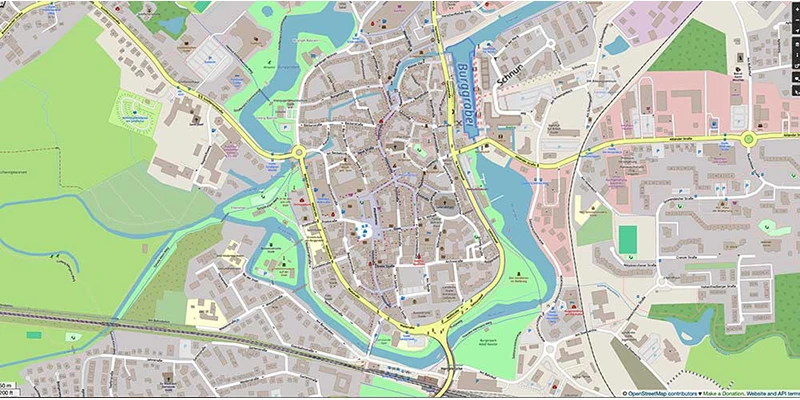
The Official Tourist Information website has a large amount of information about the city and surroundings, including sights, accommodations, dining, tours, scenic routes, free brochures, maps and more.
This interactive Google My Map shows locations with information that can be displayed by clicking on the symbols. It has sidebar index and displays best in full-frame by clicking the box in top-right. The map can be used on your phone or tablet when visiting a city, showing you where to go and describing the sights. You are welcome to make a copy as described here. Stade can be visited as a daytrip from Hamburg, 50-minutes by train.
The Historic Heart: Market Squares and Medieval Streets
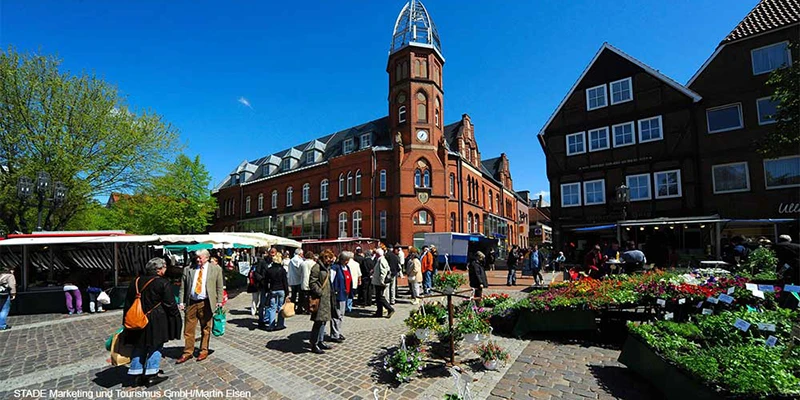
The journey through Stade begins naturally at the Old Town Market Square, the historic medieval square that serves as the central plaza of the town. This gathering point for locals hosts weekly markets and is surrounded by half-timbered houses, colorful facades, and traditional North German architecture. The Town Hall dominates this space with its Renaissance building featuring decorative facade, clock tower, and historic council chambers that represent civic architecture from Stade's prosperous merchant period. The Altes Rathaus serves as a landmark for municipal functions and guided tours, while the nearby St. Wilhadi Church adds Gothic grandeur with its distinctive twin spires that serve as Stade's main landmark, featuring medieval architecture and panoramic views from the tower.
.webp)
Within the Historic Old Town, visitors discover a charming district with well-preserved half-timbered houses, merchant mansions, and narrow alleys dating mostly from the 15th to 17th centuries. This Hansestadt Stade Old Town forms a preserved medieval district with cobblestone streets and pedestrian zones ideal for walking and sightseeing. The Old Town creates a pedestrian zone with a network of narrow streets and half-timbered houses dating back to the 17th and 18th centuries, where streets like Grosse Schmiedestrasse house the city's independent shops and cafes in a quiet and charming area perfect for walking.
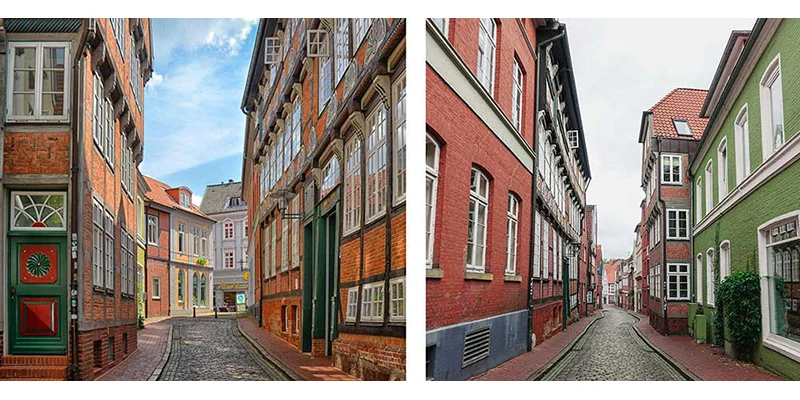
The Pedestrian Shopping Streets form compact zones offering local boutiques, cafes, and artisan shops that reflect small town character. Hökerstrasse stands out as a pedestrian shopping street in the old town featuring boutiques, cafes, restaurants, and well-preserved medieval building facades. Meanwhile, Bremer Strasse serves as the main shopping street in the town center, lined with boutiques, cafes, and specialty stores within pedestrian-friendly zones. For modern shopping needs, the Einkaufscenter Neuer Pferdemarkt provides retail stores, restaurants, and services located near the central plaza.
.webp)
The historic Alte Hansestrasse showcases well-preserved half-timbered houses, medieval architecture, and examples of traditional North German building styles, while Pferdemarkt represents a historic square that once served as a horse market and now features traditional buildings and surrounding architecture, serving as a quiet area for walking.
Hanseatic Harbor Heritage and Maritime Legacy
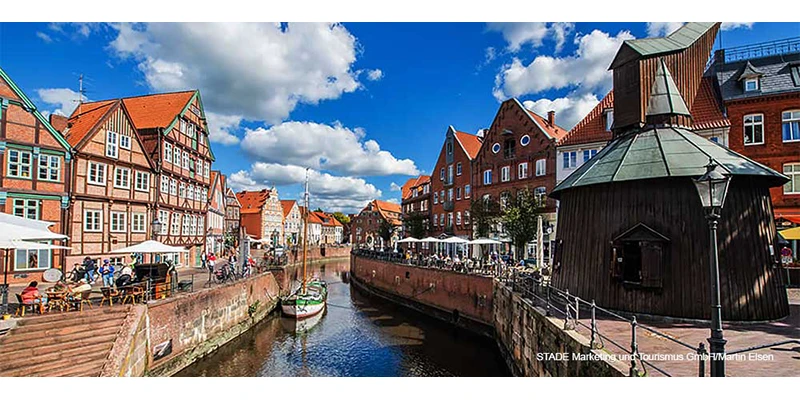
The Old Hanseatic Port forms the historic heart of Stade, featuring a central water basin surrounded by historic buildings and cafes that create a picturesque sight and provide a central location for people-watching and enjoying the maritime atmosphere. This Hansehafen showcases timber-framed buildings, moored museum ships, and waterfront cafes that reflect the town's maritime heritage, while the Harbor and Fish Market along the Schwinge River features traditional fish market buildings, marina facilities, and waterfront dining options.
.webp)
The Stade Harbor maintains its role as an active waterfront area along the Schwinge River with moored boats, walking paths, cafes, and views of historic warehouses and ships, while the Tourist Information am Hafen provides a visitor center offering maps, brochures, and guidance for exploring local attractions and planning day trips.
The Fish Market Square (Fischmarkt) creates a central plaza surrounded by cafés and bars that hosts regular markets and events, serving as a social hub that opens onto the old port area. This Hanseatic Harbour and Fish Market features a wooden crane symbolizing Stade's Hanseatic past, with waterfront cafés and restaurants around the lively square perfect for strolling and enjoying the maritime atmosphere.
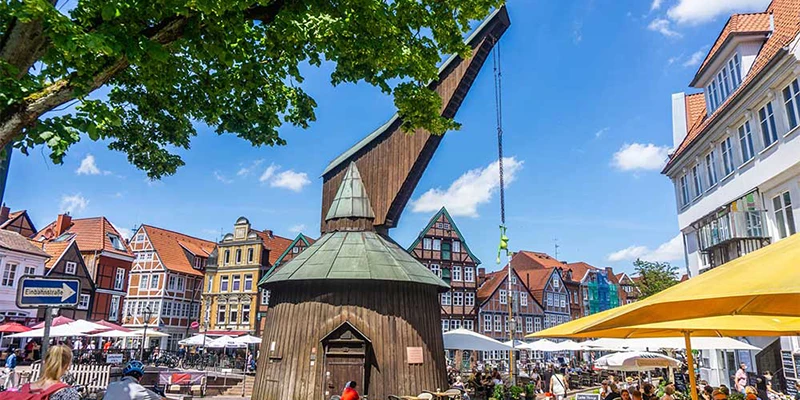
The Old Wooden Crane and Historischer Tretkran represent the reconstructed medieval treadwheel crane at the harbor, once used for loading goods and now serving as landmarks illustrating the city's trading heritage, situated near the fish market and waterfront paths.
.webp)
The Old Warehouse District along the harbor showcases restored historic storage buildings now converted into shops, galleries, restaurants, and cultural venues. The Museum Schwedenspeicher, housed in the former Swedish victual storehouse, now hosts exhibitions on Stade's history and Hanseatic League displays in a striking red brick building by the harbor. This Swedish Storage House represents a historic baroque warehouse from the Swedish occupation period, now housing the regional museum with exhibits on local history and the Swedish colonial era.
Maritime history comes alive through the Museumsschiff Greundiek, a museum ship docked in the harbor showcasing maritime artifacts and offering insight into local shipping history. The Hanseatic Museum provides deeper context with its dedication to Stade's role in the Hanseatic League, featuring exhibits on medieval trade, maritime history, and the city's commercial importance.
Waterfront Promenades and Canal Networks
The Schwinge River Promenade offers scenic riverside walkways with benches, green spaces, and views of boats passing along the river, popular for strolls and relaxation. This Schwinge River Waterfront provides scenic walking paths and green spaces along the river surrounding the old town, ideal for leisure and viewing small boats and nature. The Wasser West area encompasses the western waterfront along the Schwinge River with walking paths, historic buildings, and views of traditional architecture reflected in water.
.webp)
Adding to Stade's aquatic charm, the Fleth Canal System creates a historic canal network running through the old town with small waterways, bridges, and traditional buildings lining the water channels. The Fahranleger Stade serves as a ferry terminal providing connections across the Elbe River with waterfront views and access to regional boat tours, while families can enjoy the Spielplatz An der Schwinge, a playground area beside the river providing family-friendly facilities and scenic views.
Medieval Fortifications and Defensive Heritage
Stade's defensive past remains visible through several preserved fortifications that tell the story of medieval urban protection. The City Wall Remnants include surviving sections of medieval fortifications with gates and defensive structures that once protected the historic city center. These Medieval Bastions and City Walls form surviving fortifications encircling parts of the Old Town, offering walking trails, historic perspective, and occasional guided tours.
The Stade City Walls and Gates preserve remnants of medieval fortifications including historic gates and sections of the old defensive walls accessible via walking tours. Beyond the town center, Grauerort Fortress provides a historic military site with preserved fortifications and a small museum located outside the main urban area.
.webp)
Merchant Mansions and Civic Pride
The prosperity of Stade's Hanseatic merchant class manifests through impressive Historic Merchant Mansions including notable buildings such as Bürgermeister-Hintze-Haus and Goeben House that exemplify the town's prosperity and merchant class heritage with detailed facades and preserved interiors. These magnificent structures demonstrate the wealth accumulated through maritime trade and the architectural ambitions of successful merchants.
Sacred Architecture and Spiritual Heritage
Stade's religious architecture provides impressive examples of medieval craftsmanship and spiritual devotion. St. Wilhadi Church stands as the town's primary Gothic brick church with distinctive twin spires, featuring medieval architecture and offering panoramic views from its tower. St. Cosmae Church presents a medieval church with a distinctive octagonal tower, baroque organ from the 17th century, impressive altar, and interior decorative art, with guided tours available including climbs to the tower for panoramic city views.
The Monastery and Hospice of St. John represents a historic religious site with medieval origins that adds cultural depth to the town's architecture and heritage, visible along pedestrian routes throughout the old town.
.webp)
Cultural Venues and Artistic Heritage
Stade's cultural landscape includes several museums and performance venues that preserve and celebrate the town's rich heritage. The Kurmarkisches Museum serves as a regional museum presenting local history, art, and culture housed in a historic building with exhibitions on the Hanseatic era and maritime heritage. The Museum für Kunst und Kulturgeschichte functions as an art and cultural history museum featuring rotating exhibitions on regional artists and historical artifacts located near the town center.
The Kunsthaus Stade operates as an art museum with rotating exhibitions of contemporary and classical works housed in a historic building, while Stade Theater provides a cultural venue hosting theater performances, concerts, and community events near the historic center. The Freilichtmuseum auf der Insel creates an open-air museum experience with traditional buildings and displays of rural life and crafts on a small island near the town center.
.webp)
Parks, Recreation, and Natural Escapes
Stade offers numerous opportunities for outdoor recreation and peaceful retreat. The Bürgermeister Hintze Park serves as a central park with landscaped gardens, walking paths, recreational areas, and green space providing relaxation near the historic center. Kuhberg Park offers a public park with mature trees, walking trails, and open spaces for relaxation within walking distance of the old town.
The Erlebnispark Stade provides an urban park with playgrounds, walking paths, picnic areas, and green lawns offering family-friendly outdoor recreation close to the town center. Local Parks and Green Spaces include small urban parks and tree-lined avenues that provide quiet spots for rest within walking distance from historic and commercial centers.
For water recreation, Baggersee Lake offers a nearby recreational lake with opportunities for swimming, walking, sunbathing, and water sports in a natural setting outside the town center.
.webp)
Vibrant Social Spaces and Gathering Places
Am Sande creates a lively square with cafes, restaurants, and seasonal events surrounded by historic buildings, often used for outdoor dining and social gatherings. The Stade Market Square functions as a central plaza surrounded by historic buildings that hosts weekly markets, festivals, and public events, serving as both social and commercial hub for the community.
For panoramic perspectives of this maritime jewel, the Wasserturm Stade serves as a historic water tower offering panoramic views of Stade's rooftops, harbor, and surrounding countryside, providing visitors with a comprehensive overview of this remarkable Hanseatic town that continues to celebrate its medieval maritime heritage while embracing contemporary life along the banks of the Schwinge River.