Cologne
Cologne is dominated by one of the most magnificent buildings in Europe. Its Gothic cathedral, with twin spires soaring above the Rhine, is the city's unmistakable symbol and the first thing every visitor sees, rising directly beside the main train station. But Cologne is far more than its cathedral: a 2,000-year-old Rhineland city with Roman roots, a tangle of old town lanes along the river, lively pedestrian shopping streets, and a famously warm and good-humored local culture that comes to a head each year in its riotous carnival.
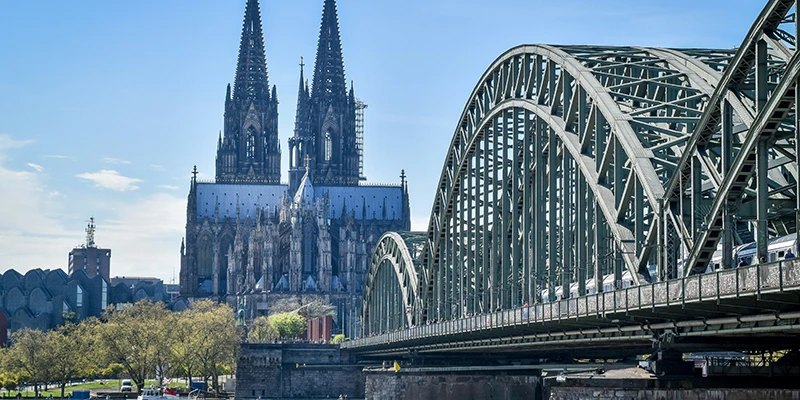
The city lies in the state of North Rhine-Westphalia, in western Germany, on the Rhine River, and is a major rail hub with fast connections across Germany and to neighboring countries, the cathedral standing right at the central station. Founded by the Romans, who made it an important provincial capital named Colonia, Cologne has been a significant city for two millennia, growing into a great medieval trading and religious center on the Rhine. Like many German cities it was heavily bombed in the war, yet the cathedral survived, and much of the old town and its monuments have been restored.
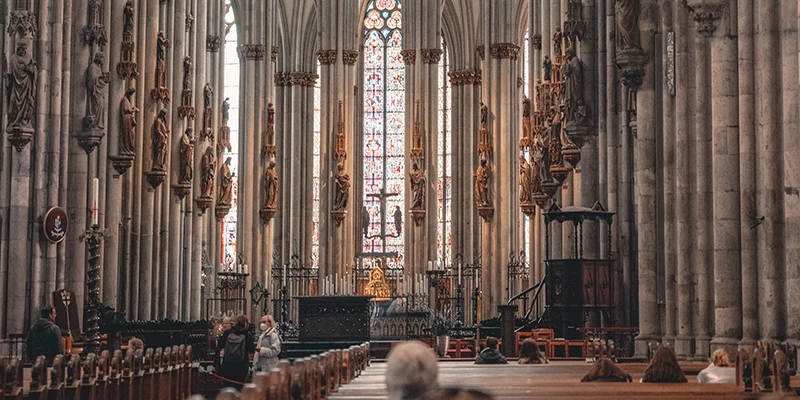
The Kölner Dom, the cathedral, is a UNESCO World Heritage Site and the heart of any visit. Begun in 1248 and finally completed in 1880 to the original medieval plans, it is a masterpiece of Gothic architecture, its blackened stone facade and twin spires reaching over 150 meters. Inside, it holds the gilded Shrine of the Three Kings, said to contain the relics of the Magi, which made the cathedral one of the great pilgrimage destinations of medieval Europe. Visitors can climb the south tower, a long spiral stair rewarded by a panoramic view over the city and river.
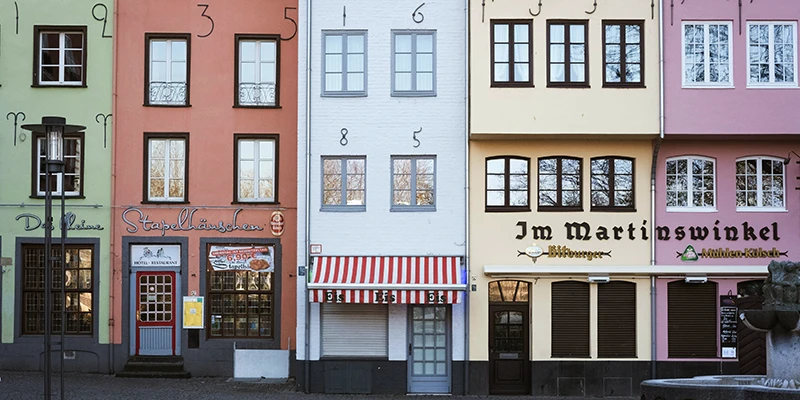
Below the cathedral, the Altstadt, the old town, spreads toward the Rhine in a network of restored lanes and squares. The Alter Markt and Heumarkt are the central old-town squares, ringed by colorful gabled houses and brewery taverns, and busy with outdoor seating. This is the place to sample Kölsch, the city's distinctive light beer, served in small straight glasses by waiters who keep them coming until you signal otherwise, in atmospheric brauhaus taverns that are an essential part of the Cologne experience. The riverbank promenade nearby offers walks along the Rhine, views of the boats and bridges, and the chance to see the city from the water on a river cruise.
Cologne is also a great shopping city. The main pedestrian shopping streets, above all the Hohe Strasse and the Schildergasse, run through the center near the cathedral and are among the busiest retail streets in Germany, entirely traffic-free and lined with department stores, fashion shops and cafes. The Schildergasse in particular is consistently one of the most visited shopping streets in the country, and the whole central area is easy to cover on foot, linking the cathedral, old town and shopping in a compact, walkable zone.
The city's Roman past is visible throughout. The Romano-Germanic Museum displays mosaics, glass and artifacts from Colonia, and fragments of the Roman wall and a preserved Roman gate survive in the streets. Cologne also has a dozen Romanesque churches, a remarkable concentration of medieval architecture beyond the Gothic cathedral, scattered through the center for those who want to explore further. For art, the Museum Ludwig beside the cathedral holds an outstanding collection of modern and contemporary work, including major Picasso and Pop Art holdings.
The Rhine itself is central to Cologne's character. The riverbanks are lined with promenades and parks, bridges including the cable-stayed and railway crossings frame the views, and the Hohenzollern Bridge by the cathedral is famously covered in thousands of love padlocks. River cruises range from short sightseeing loops to longer journeys up the scenic Rhine Valley. In late winter, Cologne's carnival fills the streets with costumes, parades and celebration, one of the largest and most exuberant in Germany.
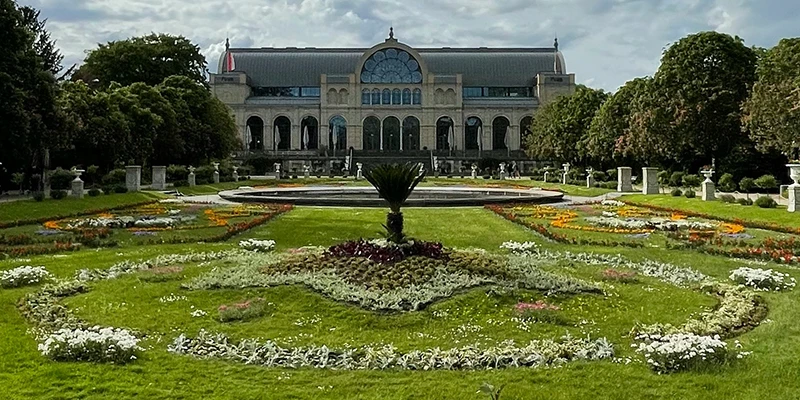
Cologne could not be easier to reach, with its central station beside the cathedral served by fast trains from across Germany and beyond. The center is flat and compact, ideal for walking, with the cathedral as a constant landmark for orientation. The city tourist office, directly opposite the cathedral, provides maps, tower-climb and museum information, and details on river cruises.
Cologne rewards every kind of traveler: the cathedral is a world landmark, the old town and its beer halls are full of character, the shopping streets are among Germany's best, and the Rhine ties it all together. Lively, historic and welcoming, it is one of the essential cities of western Germany and an easy highlight of any Rhineland journey.