Eyam, England
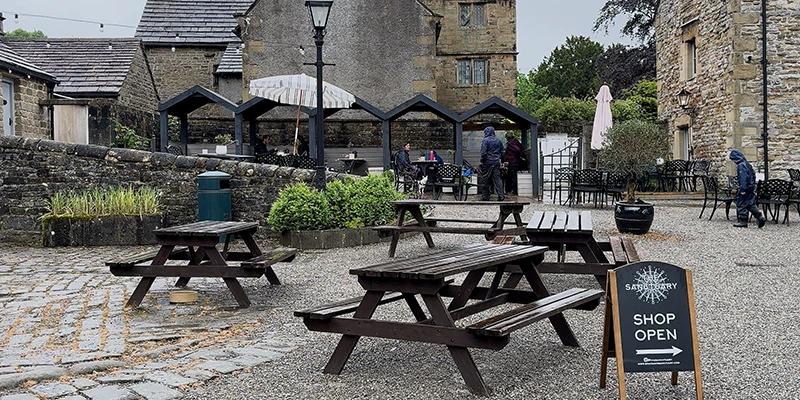
Eyam is a village built almost entirely of local gritstone, its cottages, shops, walls and church all shaped from the same honey-gray Derbyshire stone that gives the Peak District its distinctive look. Set in a fold of the hills with green pastures rising on every side, it is a compact and walkable place, its handful of lanes lined with historic buildings, small independent shops and welcoming tea rooms. For all its quiet size, Eyam draws a steady stream of visitors who come to wander its streets, browse its shops and explore the countryside that surrounds it.
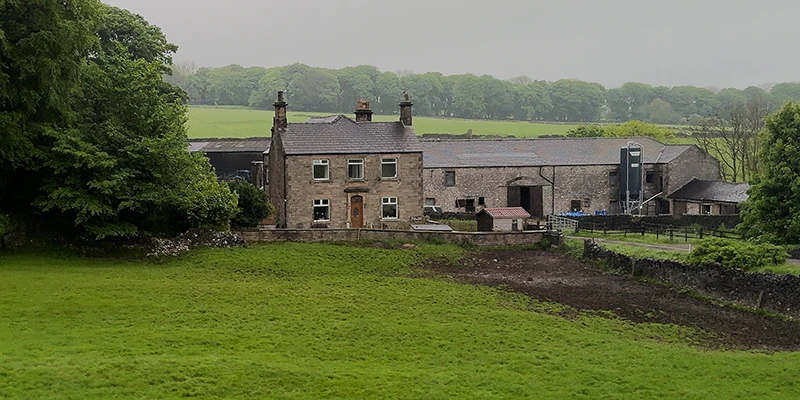
The village sits within the Peak District National Park in the county of Derbyshire, in the heart of England, about twelve miles southwest of the city of Sheffield. This was Britain's first national park, established in 1951, and it remains one of the most beloved, a landscape of rolling moorland, limestone dales, drystone walls and grazing sheep. Eyam lies in the gentler White Peak part of the park, surrounded by farmland that has shaped the life of the village for centuries.
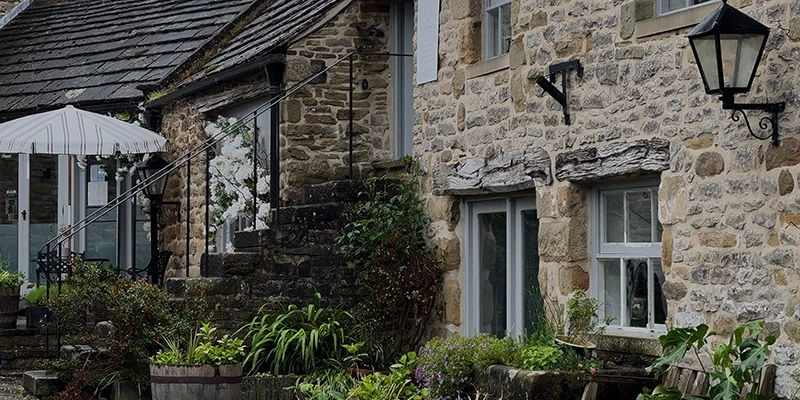
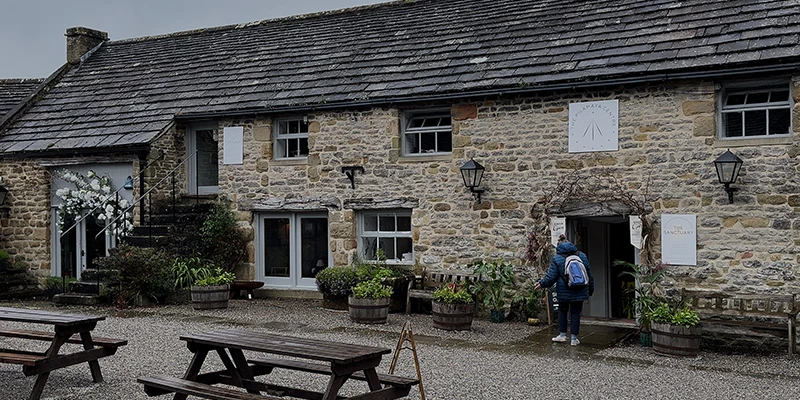
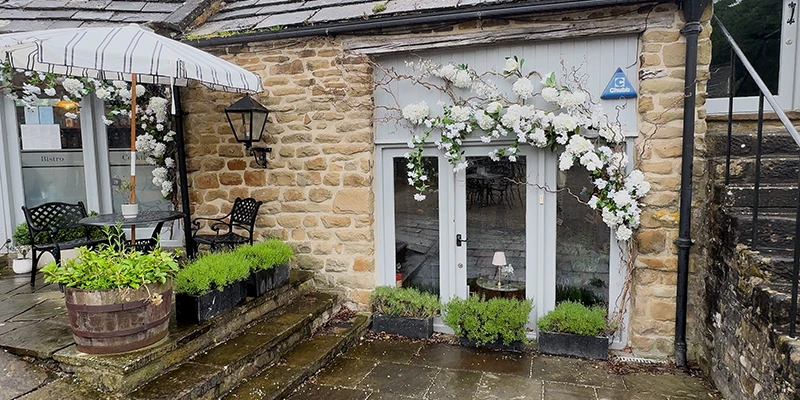
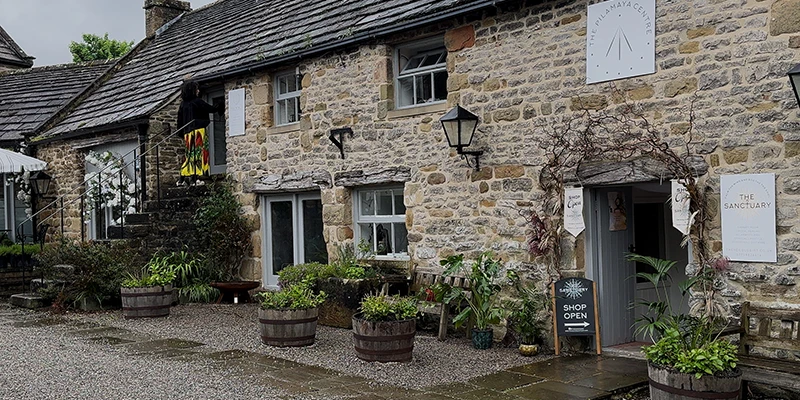
The architecture is the first thing that strikes a visitor. The cottages are solid and low, built to withstand Peak District winters, with thick stone walls, small windows and roofs of heavy stone slate or slate tile. Many date back several centuries, and though they have been carefully maintained and modernized inside, their exteriors preserve the character of a much older England. Flower boxes, climbing roses and potted plants soften the stone and add color to the lanes.
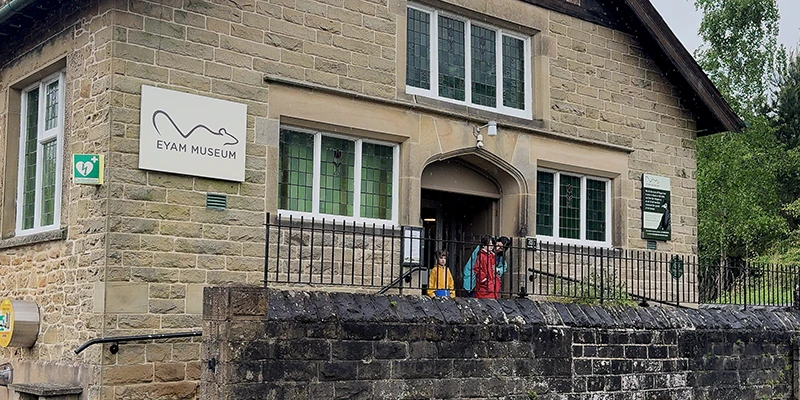
Walking through the village is an easy pleasure. The main street runs through the center past the church and the museum, with narrow lanes and footpaths branching off to quieter corners. Everything is within a few minutes' walk, and the scale is thoroughly human, made for strolling rather than driving. Benches here and there invite a pause, and the whole place rewards an unhurried ramble with camera in hand.
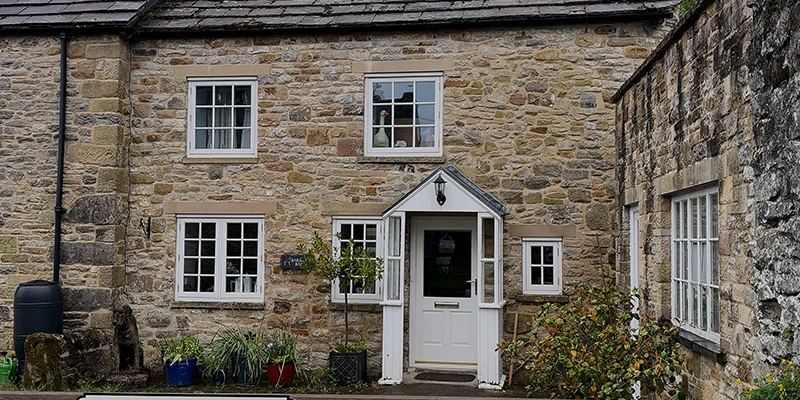
Many of the cottages carry small plaques recording their history and former residents, a reminder of how long these houses have stood and how many generations have lived in them. The doorways, mullioned windows and worn stone thresholds all speak of centuries of continuous village life. It is this sense of deep continuity, of a place that has changed slowly and gently, that gives Eyam much of its charm.
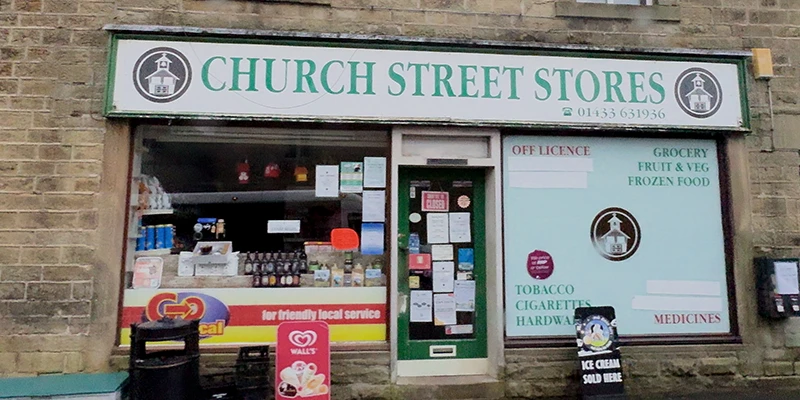
For a small village, Eyam has a good scattering of shops. The village store on Church Street serves as grocer, newsagent and meeting point all in one, the kind of independent local shop that has vanished from many larger towns. Stocked with everyday supplies, local produce and the small necessities of village life, it is a hub of the community and a friendly first stop for visitors looking for directions or a cold drink.
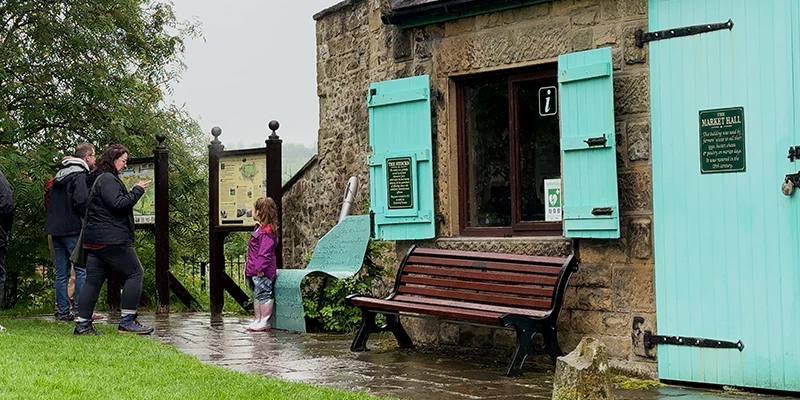
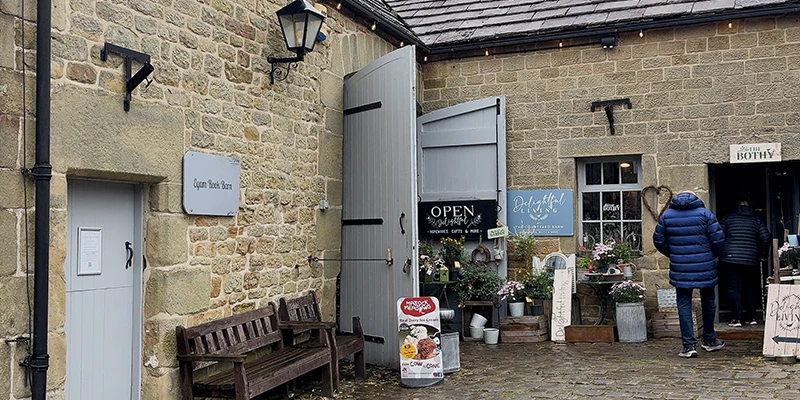
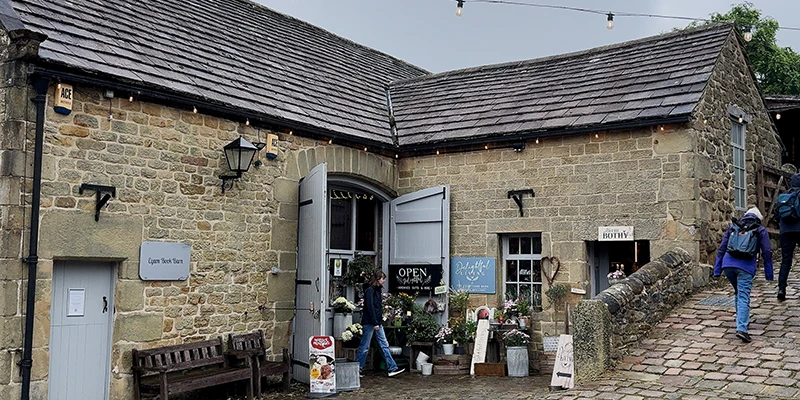
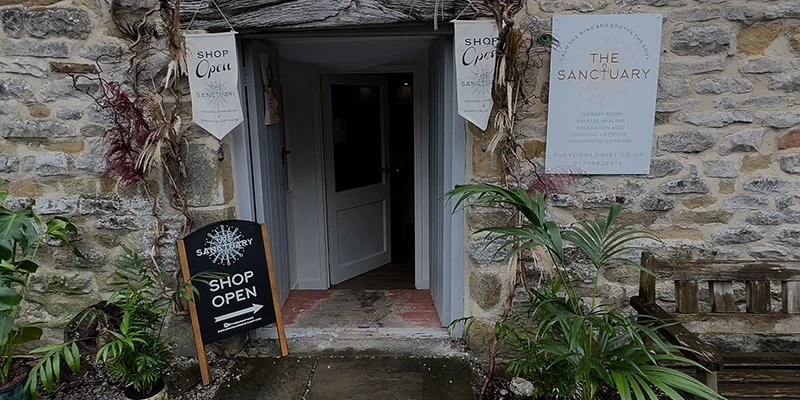
Alongside the practical shops are several that cater to visitors, their brightly painted fronts standing out against the gray stone. Painted shutters, hanging signs and window displays add cheerful splashes of color to the street. These small enterprises, run by local people, give the village its lived-in, working character, quite different from a preserved museum-piece town.
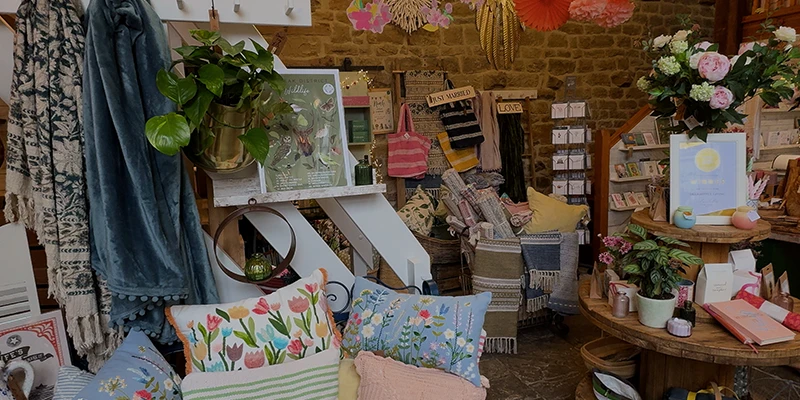
Inside, the shops reveal Eyam's creative side. Gift and craft shops are stocked with handmade goods, textiles, artwork, cards and locally produced items, many by artisans from the surrounding area. Browsing them is a pleasure in itself, and they make good places to find a distinctive souvenir or gift that reflects the character of the Peak District rather than the mass-produced sameness found elsewhere.
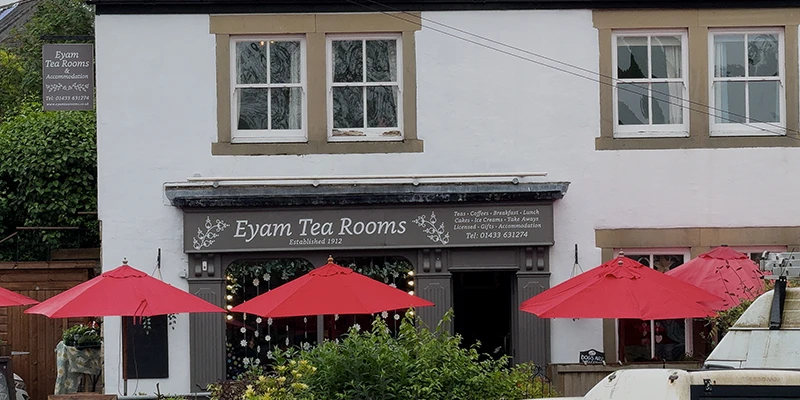
No English village is complete without its tea rooms, and Eyam is well supplied. The Eyam Tea Rooms, with its cheerful red umbrellas set out on the terrace, is a favorite stop for a proper afternoon tea of scones, cakes and a pot of tea. Sitting outside on a fine day, watching the quiet comings and goings of the village, is one of the simple pleasures of a visit here.
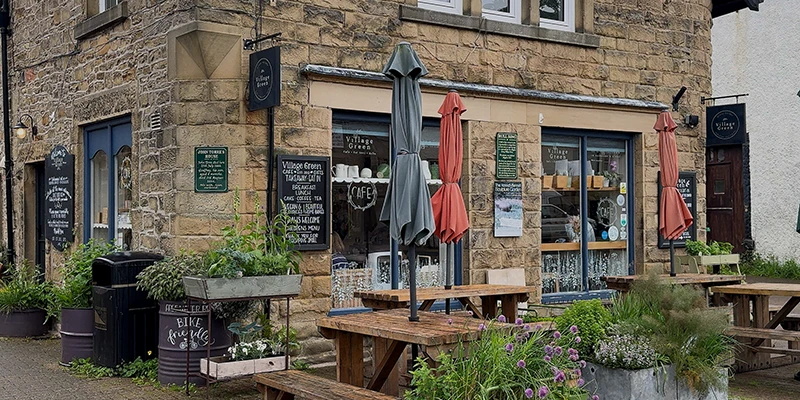
The village pub is another essential gathering place, serving traditional ales and hearty English food to locals and walkers alike. After a day's rambling on the surrounding hills, the pub is where villagers and visitors come together over a pint, and its outdoor tables fill quickly on a warm afternoon. Like the shops and tea rooms, it is a working part of the community rather than a tourist facility.
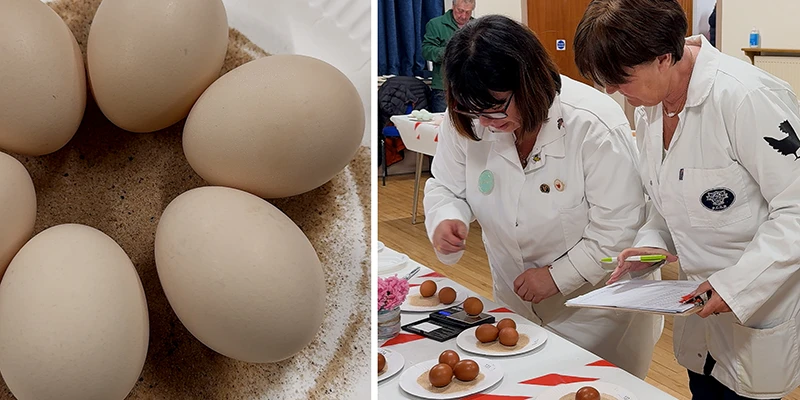
Eyam remains at heart a rural, agricultural community, and nothing shows this more clearly than the local produce competitions held in the village. Here judges in white coats carefully assess entries of fresh eggs and other farm produce, weighing, measuring and comparing them with great seriousness. These country traditions, in which villagers take real pride in what their land and animals produce, are a living link to the farming life that has always underpinned the village and the wider Peak District.
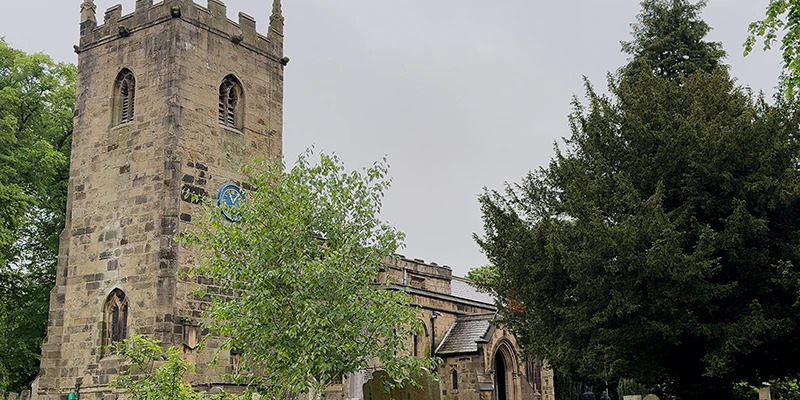
Rising above the rooftops is the tower of the parish church of St. Lawrence, the spiritual and historical heart of the village. Parts of the church are very old, with origins reaching back many centuries, and its solid square tower is a familiar landmark visible across the village. The church has stood at the center of Eyam's life for generation after generation, marking the milestones of village existence.
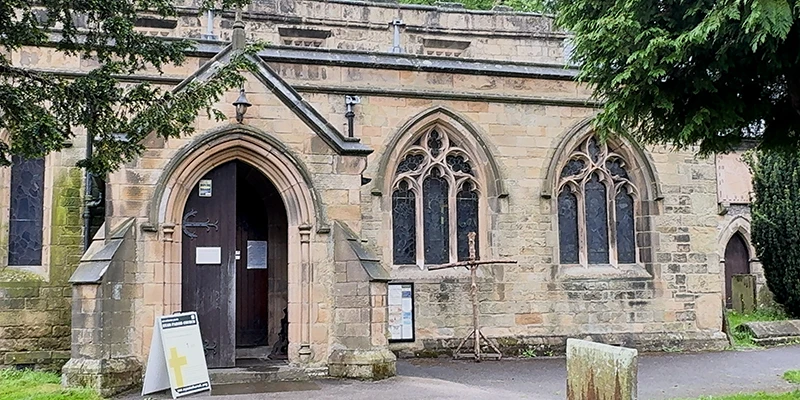
The churchyard and its surroundings reward a slow look. Ancient gravestones lean among the grass, and the weathered stone porch frames a doorway that has welcomed worshippers for centuries. In the churchyard stands a fine old Celtic cross, one of the village's treasures, its carved stone shaft a rare survival from Anglo-Saxon times. The peaceful churchyard is a fitting place to pause and reflect on the long history of the place.
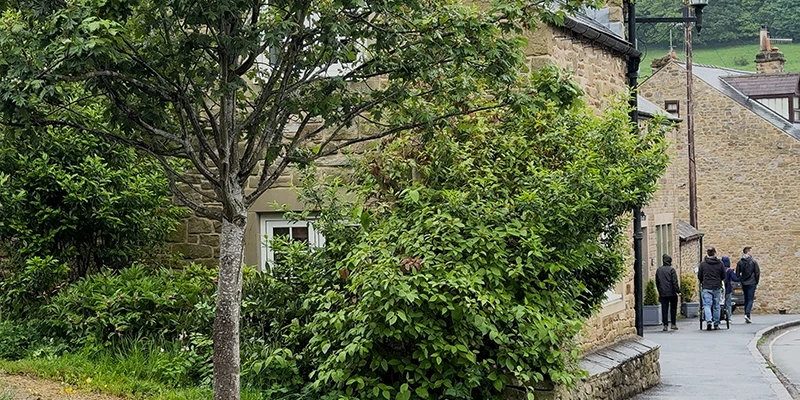
Beyond the buildings, the countryside is never far away. Green lanes and footpaths lead out from the village into the surrounding fields and hills, and Eyam is a popular base for walkers exploring this part of the Peak District. Well-marked trails climb to breezy viewpoints and wind down into quiet dales, offering the kind of gentle, scenic walking for which the region is famous. A short stroll in almost any direction brings open country, drystone walls and grazing sheep.
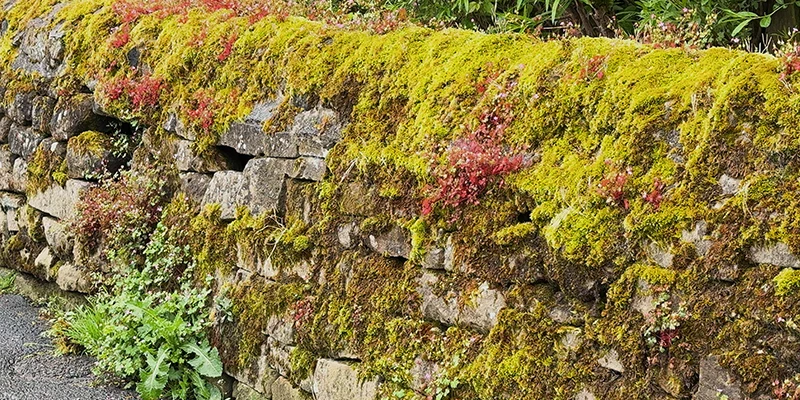
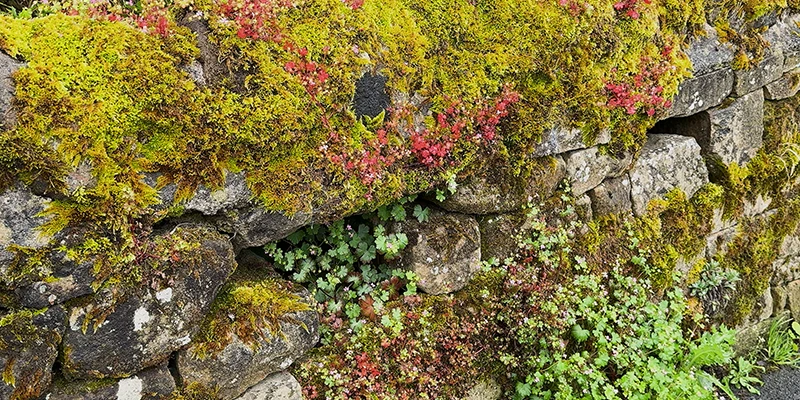
The drystone walls that thread across the landscape are themselves a distinctive feature, built without mortar by skilled hands over many generations to divide the fields and pen the livestock. Softened by moss and lichen and glowing green after rain, they trace the contours of the hills in every direction, a defining element of the Peak District scene and a testament to the region's long farming heritage.
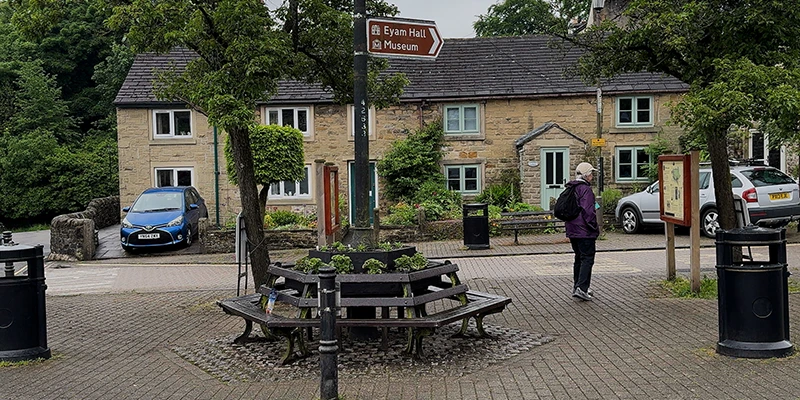
Eyam makes a rewarding stop on any exploration of the Peak District, and it pairs naturally with nearby attractions. The handsome market town of Bakewell, famous for its Bakewell pudding, lies a short drive away, as does Chatsworth House, one of the grandest stately homes in England, set in vast landscaped grounds. Together they make an easy and varied day of touring, but Eyam itself, with its stone cottages, friendly shops and beautiful setting, is well worth taking slowly and savoring on its own.
More Photos of Eyam