Dover, England
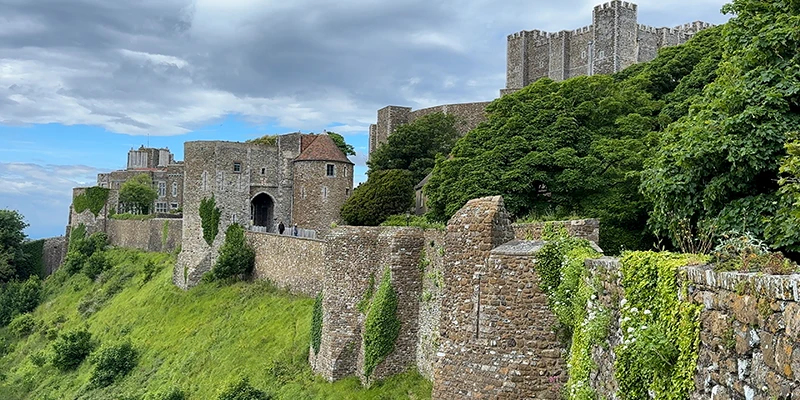
Dover is famous for its White Cliffs, but the thing that will occupy most of your day here is the castle on top of them. It is one of the most spectacular medieval fortifications in Europe — an outer wall, a massive inner wall, and at the center a great stone tower that was both a fortress and a royal palace.
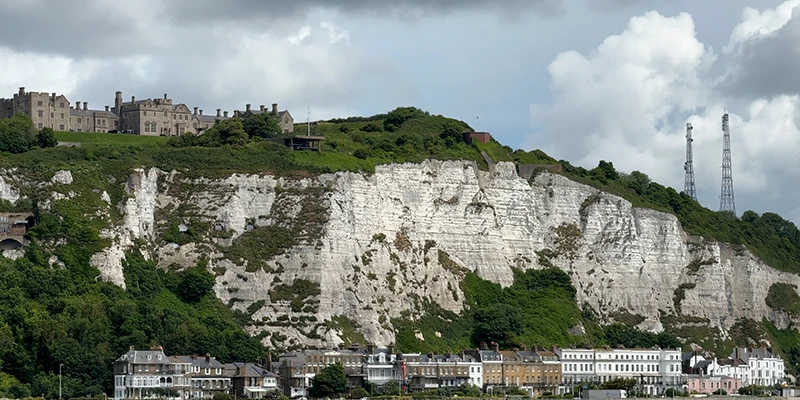
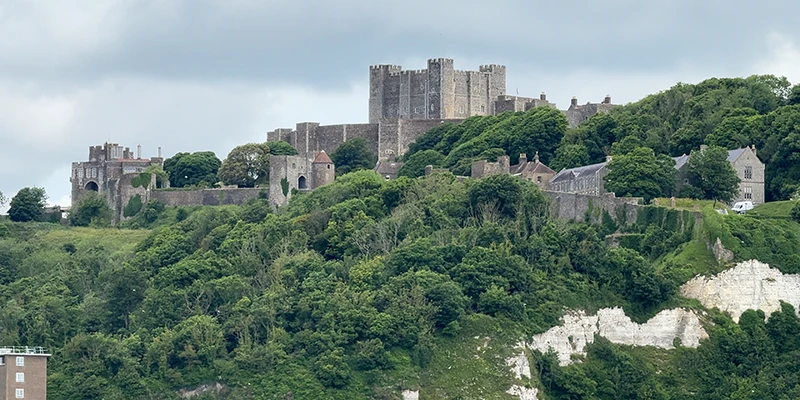
The cliffs and the castle work as a single object. The chalk rises straight out of the Channel to about 110 meters, and the castle sits on the green crown above it, so from the water you see the natural wall and the built one stacked on top of each other. That was exactly the point.
You can also see this video on a separate video page.
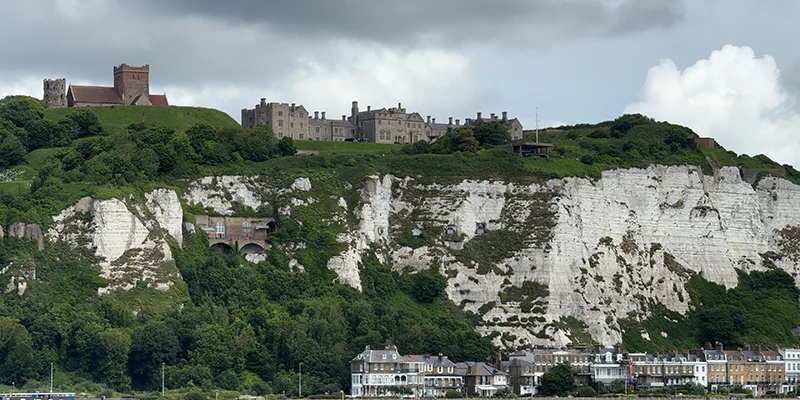
Dover is the second largest castle in England after Windsor, and English Heritage has done a remarkable job re-creating how it would have looked in the time of Henry II, who built it in the twelfth century. There are around 1,200 artifacts and pieces of replica furniture inside, and the effect is theatrical in the best sense.
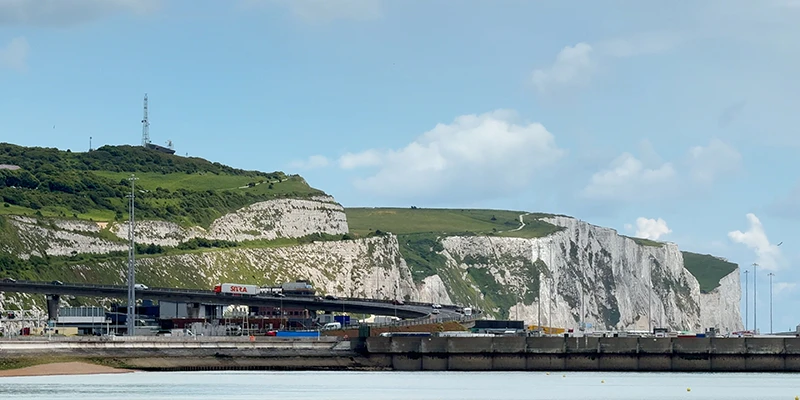
The town below is small — about 30,000 people, with a center only 800 meters across. You can see the shops, the pedestrian zone, the seafront and the cliffs in about two hours, add at least two more for the castle, and the whole thing works as an easy half-day trip, or a full day if you want to take your time.
Getting There
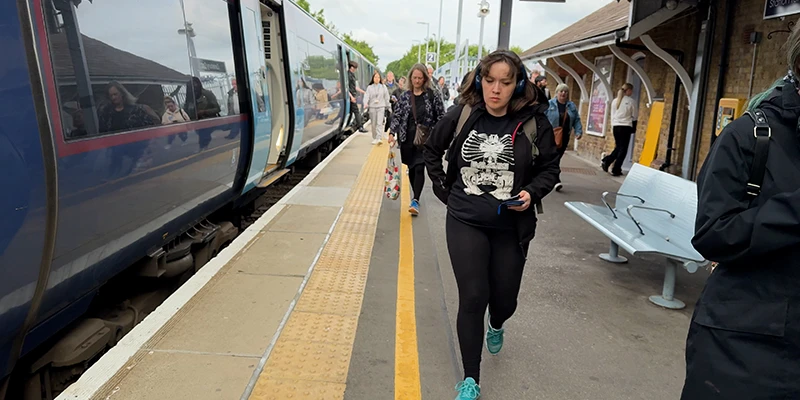
It takes just over an hour to reach Dover from London by train, departing from St Pancras. From Canterbury it is only thirty minutes, leaving from Canterbury East.
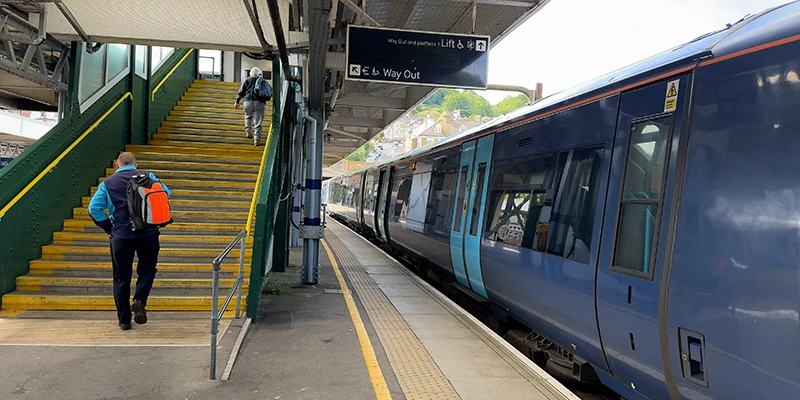
You arrive at Dover Priory, a small but attractive station about 600 meters from the town center. Everything from there is walkable.
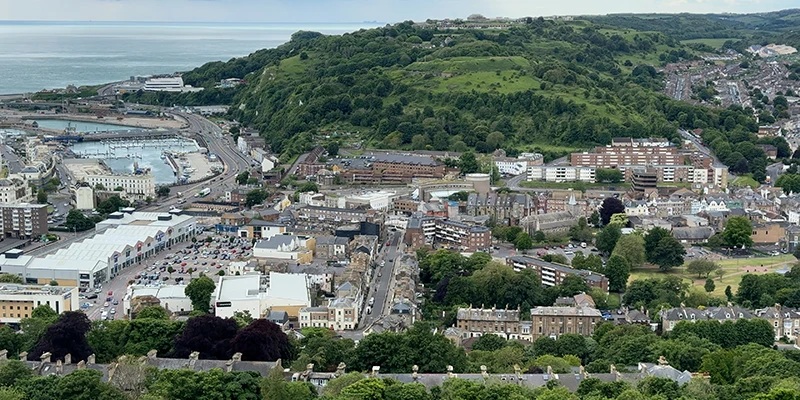
Dover sits on the southeast tip of England, 26 kilometers from Canterbury, and the layout is simple: castle on the hill, White Cliffs below it, town center and station a few blocks inland.
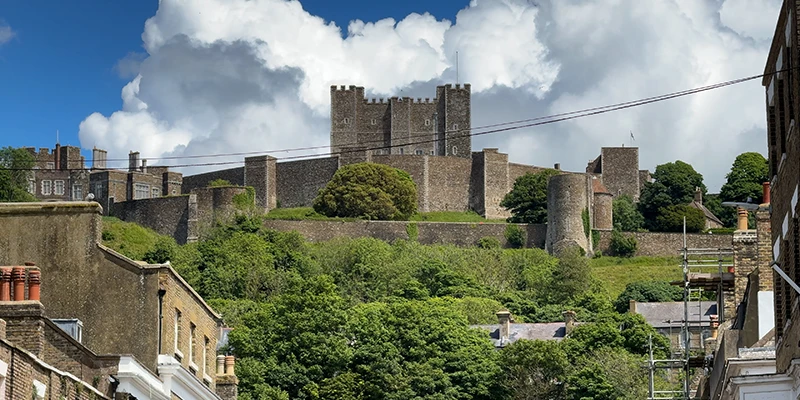
The castle is visible from almost everywhere in town, which makes navigation easy and also means you keep catching sight of it between buildings as you walk.
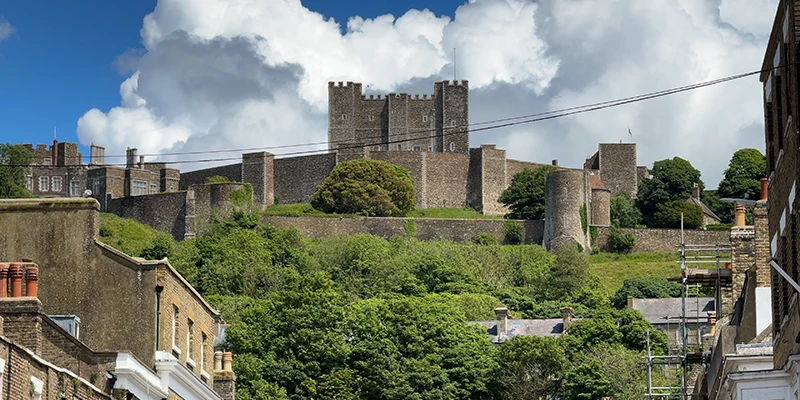
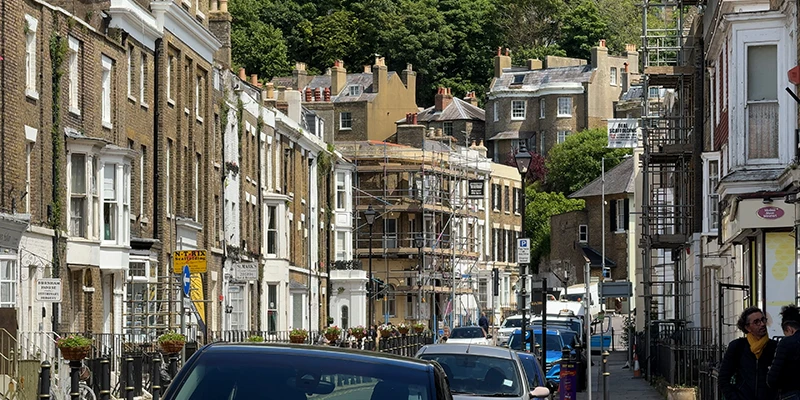
From the residential streets climbing the hillside the view back is the classic one — terraced houses in the foreground, the castle walls along the ridge above.
Walking Up to the Castle
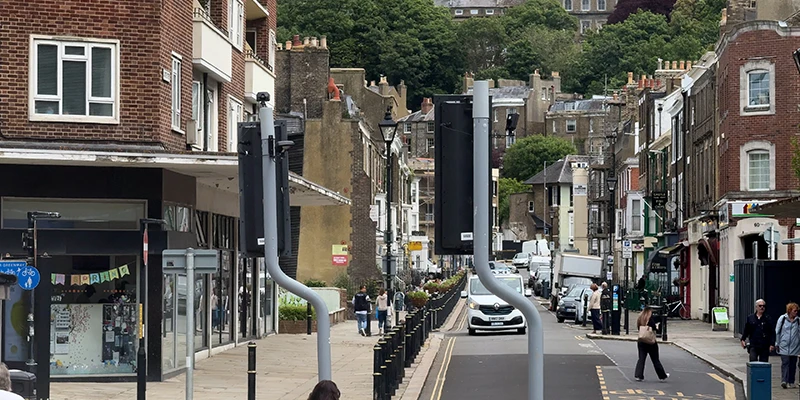
It is only 800 meters from Market Square to the castle, but it is 800 meters uphill. You can take a taxi or walk along Castle Street and continue on foot up the hill. In hindsight, take the taxi.
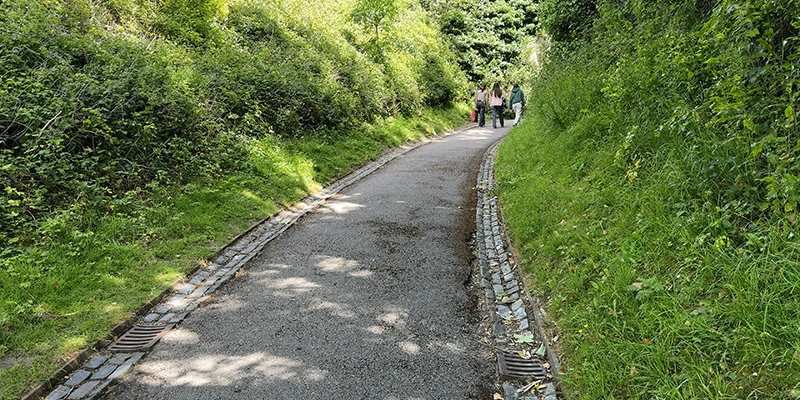
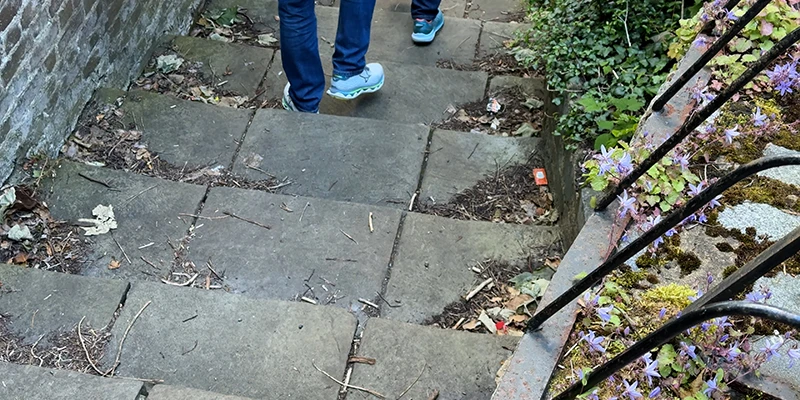
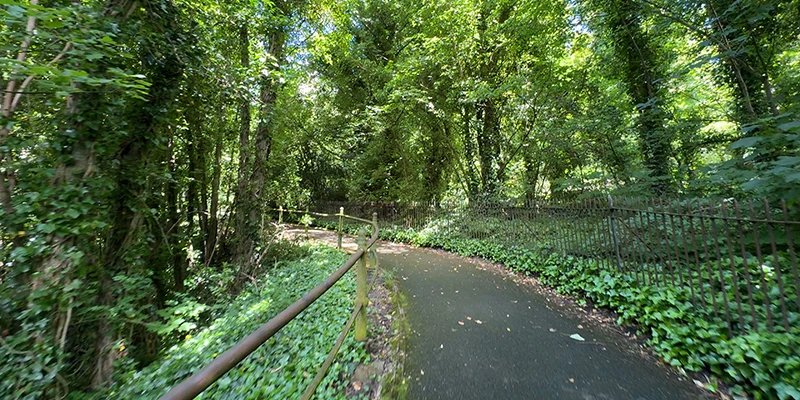
The walk is a genuine hike. You go up the street, then up a garden path between banks of green, and then finally you reach a staircase.
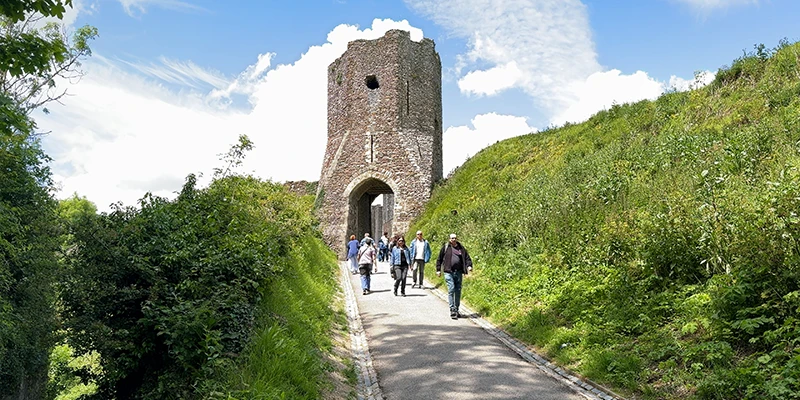
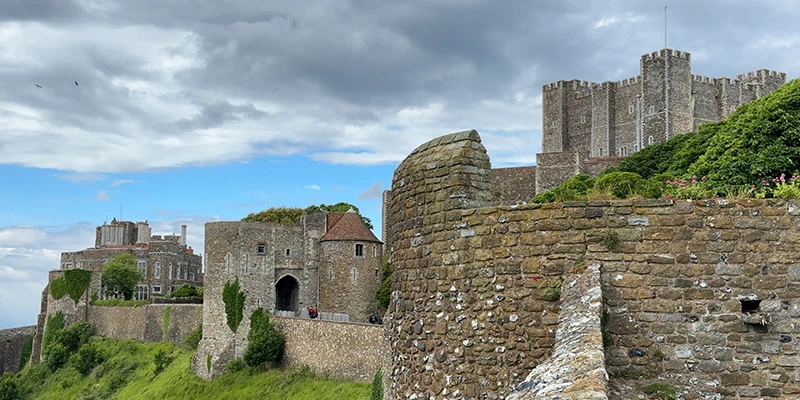
At the top the path leads to a fortified gateway in the outer wall, with the ground falling away on both sides. The castle is protected by a ditch, huge stone walls, and its position high on the hilltop, and it was never conquered by a foreign invader.
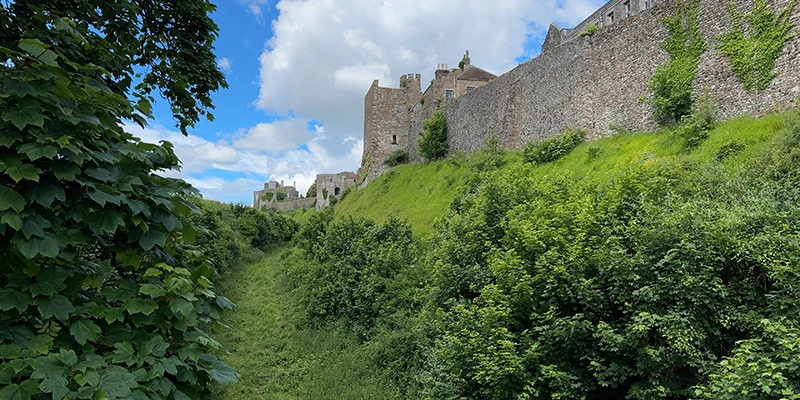
From below, the scale only registers once you are close. The walls run along the contour of the hill for a considerable distance, and what looks from town like a single building is a complex covering many acres.
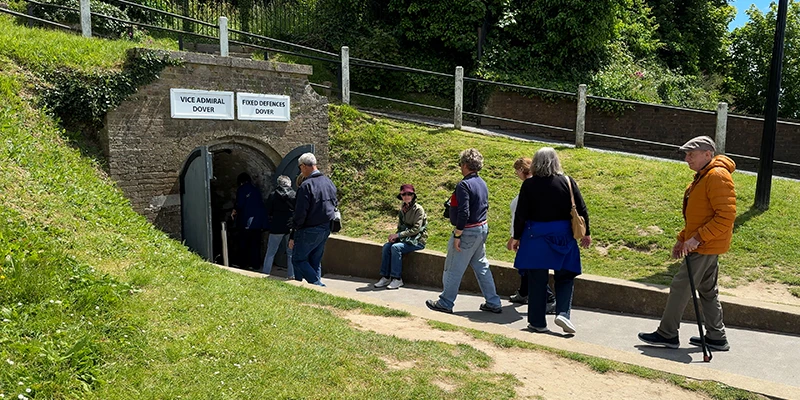
There are paths and open ground all around the outside, and plenty of visitors simply walk the perimeter without going in, which is free and gives you most of the exterior views.
The Outer Walls
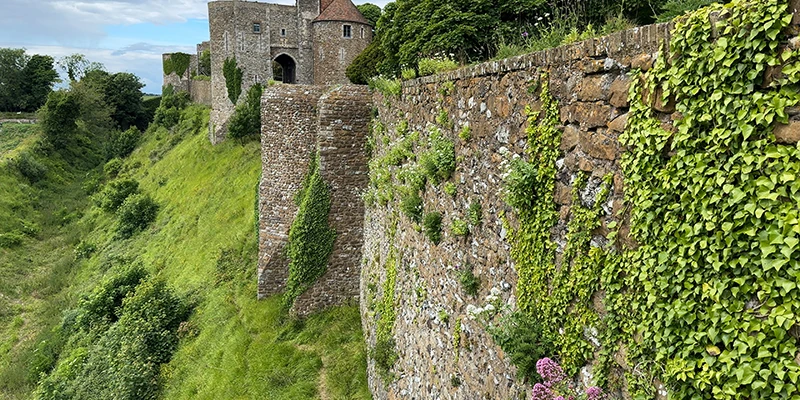
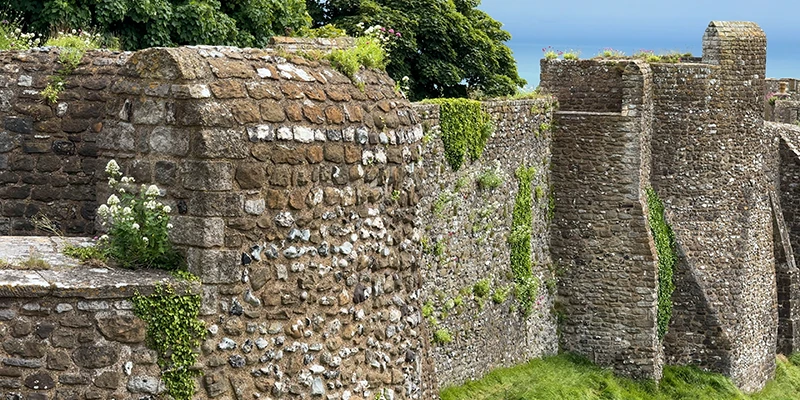
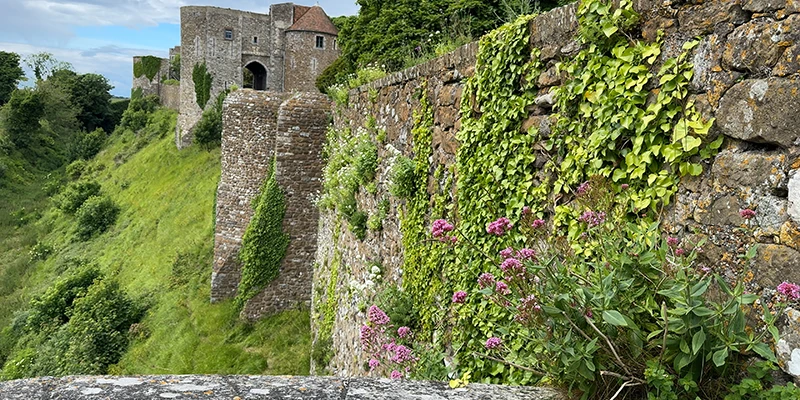
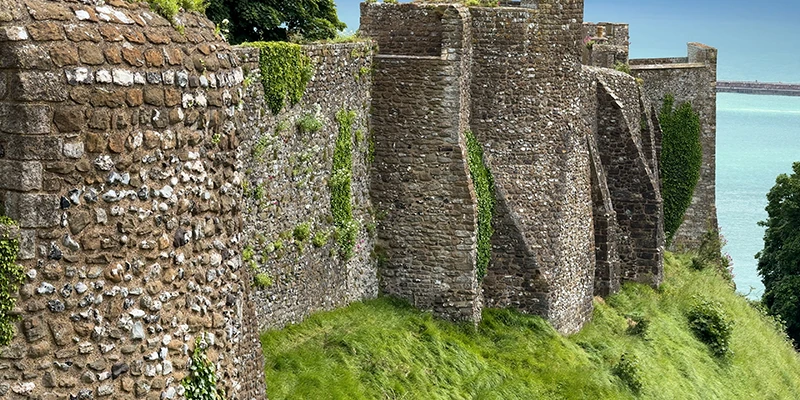
The outer wall features twenty towers along with some rounded battlements, which gave archers better visibility when defending against attack. This is the Outer Bailey, and its fortified gates control access to the grounds.
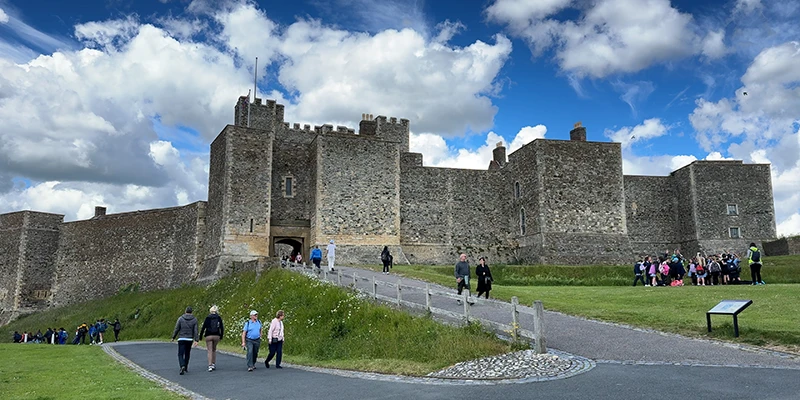
Walking in, it looks as though you have arrived at the main castle. You have not. This is the inner wall, another complete layer of protection, and there is a great deal more beyond it.
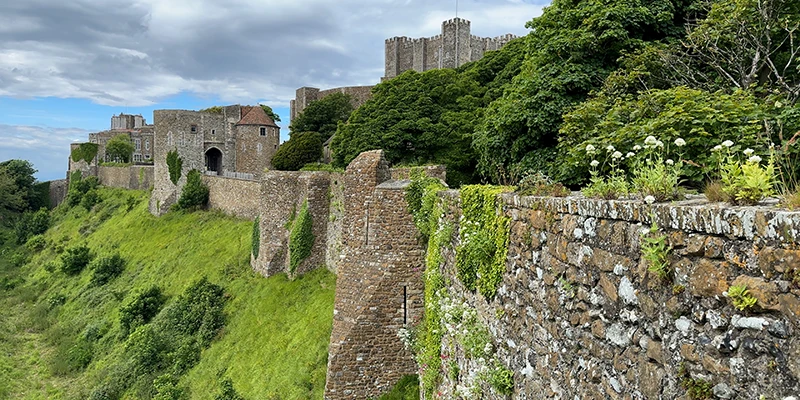
The walls follow the natural shape of the hill, rising and dropping with the ground, which is why the circuit is so long and why no single point commands the whole of it.
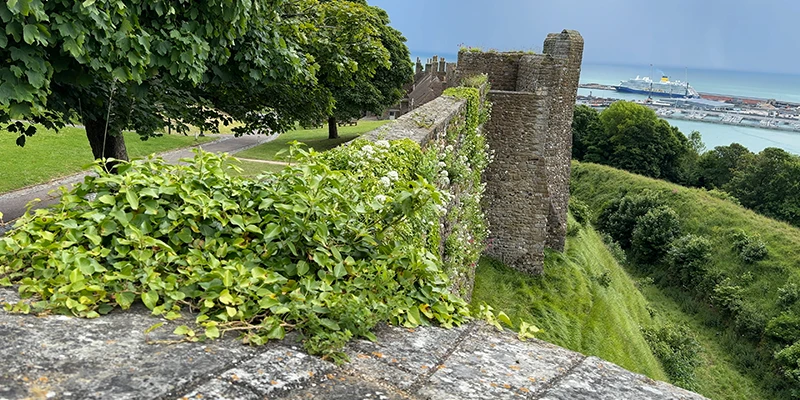
Inside the walls are rooms that housed soldiers and stored weapons, and passageways that let defenders move between towers without exposing themselves to anyone shooting from outside.
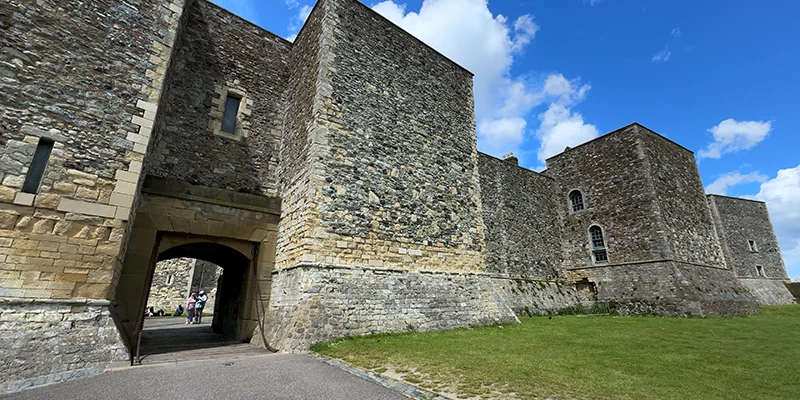
The gateways are the most heavily built parts of the whole structure — deep arched passages with room for portcullises and gates in sequence, so that getting through one still left an attacker trapped.
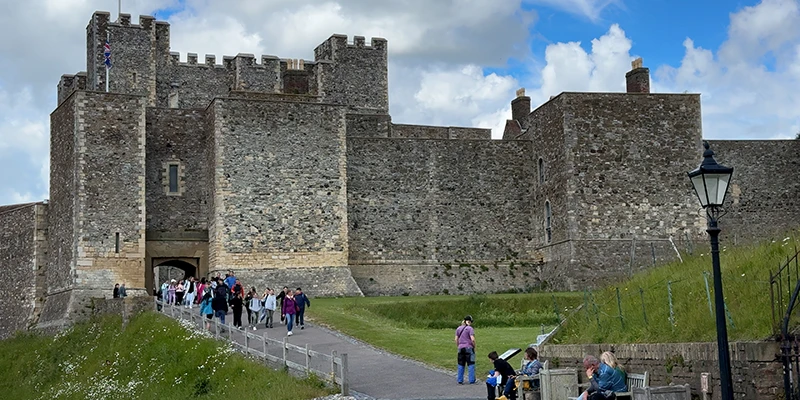
The inner wall has two fortified gateways and fourteen towers; the outer wall has twenty towers of various shapes and sizes. Several building extensions project out from the inner wall and functioned as barbicans, positions from which soldiers could shoot down at attackers.
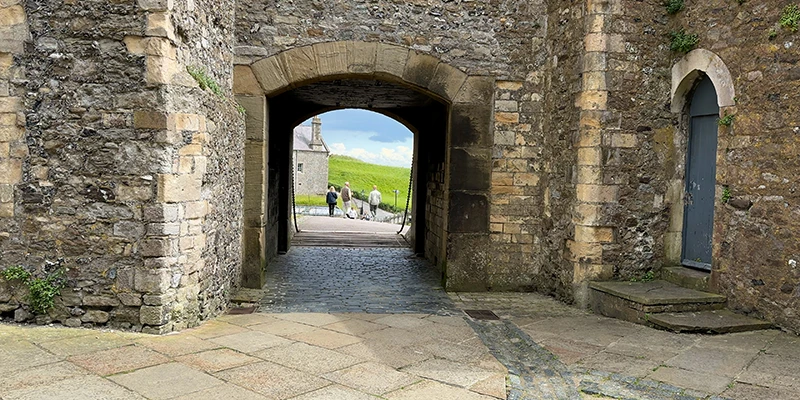
Some of the passages through the wall are open to walk, and they give you a sense of the thickness of the masonry that no photograph of the outside conveys.
Nowadays the only invading armies are groups of English students who come to learn about their history, plus tour groups and individual travelers. The castle gets nearly a million visitors a year.
The Great Tower
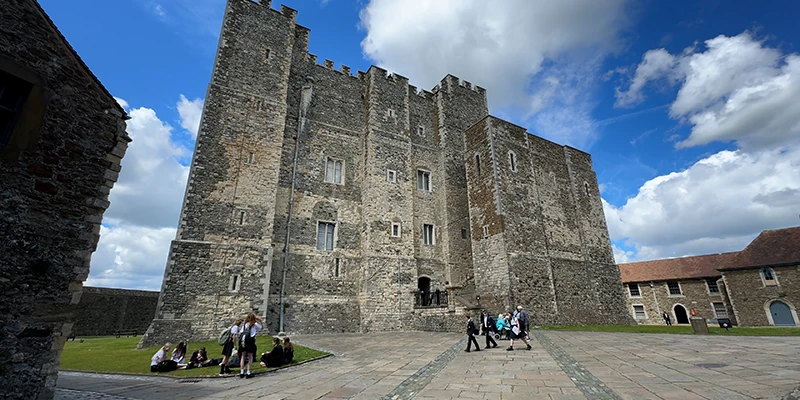
Through the inner gateway is the Great Tower, the keep, and it is the reason everything else exists. Unlike the young lads racing ahead, do not rush — there is a great deal to see inside the tower and in the buildings around it, so allow at least a couple of hours for the castle.
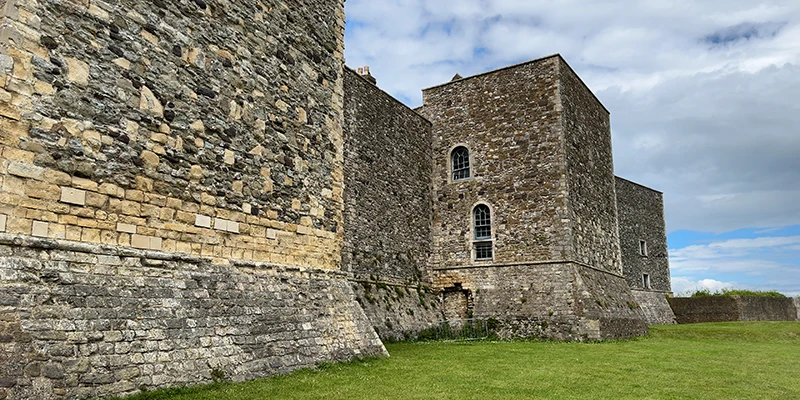
The tower has only three floors — ground, first and second — plus a rooftop terrace, but each floor is enormous and the walls are correspondingly thick.
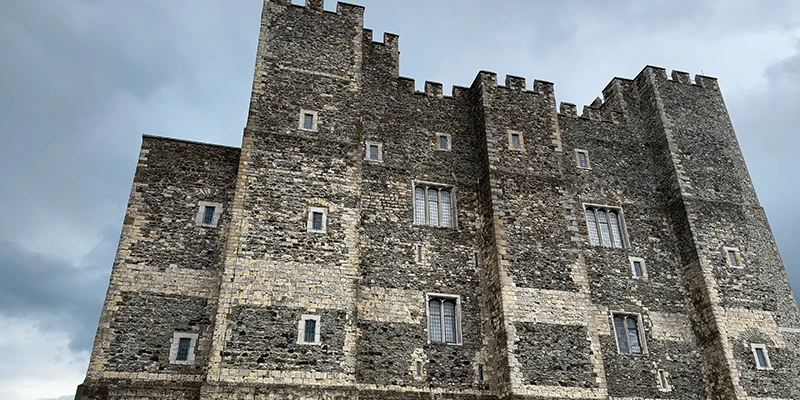
Seen from directly below, the tower is almost featureless: a plain rectangular block with shallow buttresses and small windows, built to be hit rather than admired.
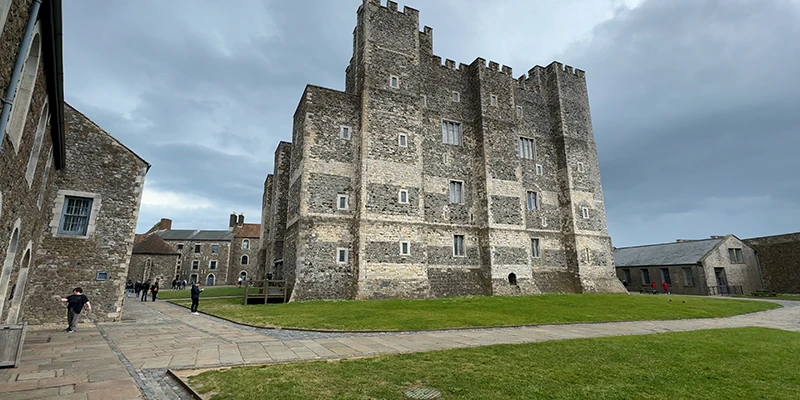
From across the grass of the Inner Bailey the proportions make more sense. The forebuilding on the near side contains the stairs, and the whole approach was designed so that a visitor climbed and turned repeatedly before reaching the royal floor.
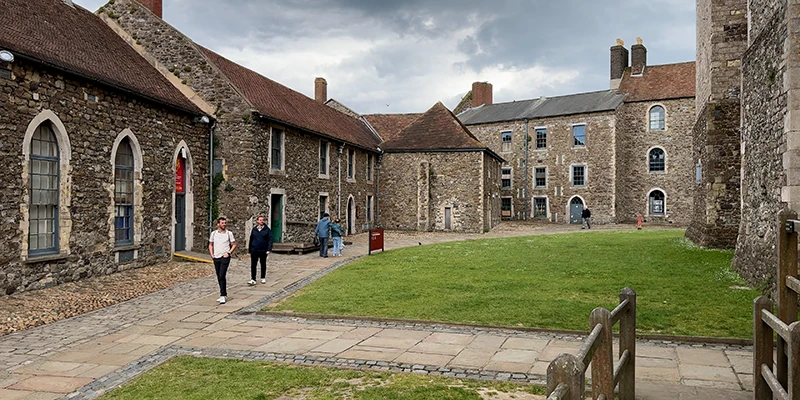
The stone buildings around the Inner Bailey were barracks, offices and storage. Some date to the Middle Ages and others to the eighteenth century, when the castle was still an active military installation.
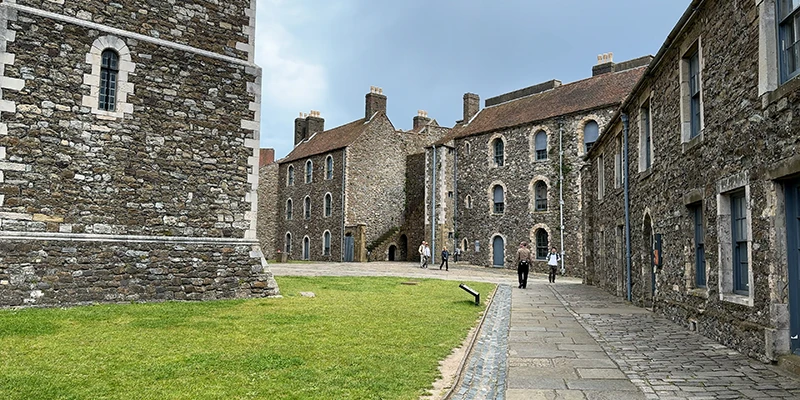
The mix of periods is visible everywhere once you start looking — medieval masonry with Georgian brick windows cut into it, and Victorian ironwork bolted onto both.
Inside the Tower
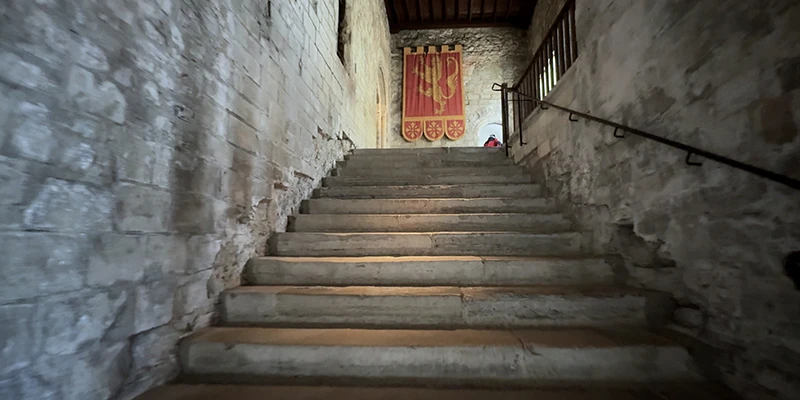
You enter through the doorway and climb stairs to reach the various levels. The first room is the Lower Chapel, with the rounded stone arch typical of Norman work.
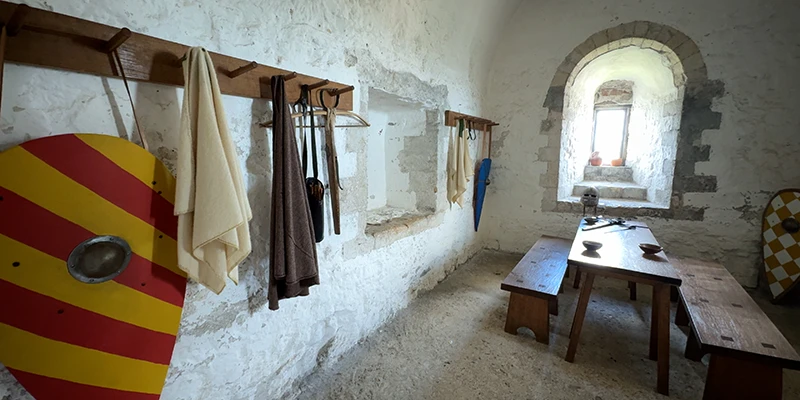
From the chapel the stairs go up, bypassing the first floor and going directly to the second, over what were once small drawbridges protecting the building. Originally this was the outside of the tower; it was enclosed in the fifteenth century.
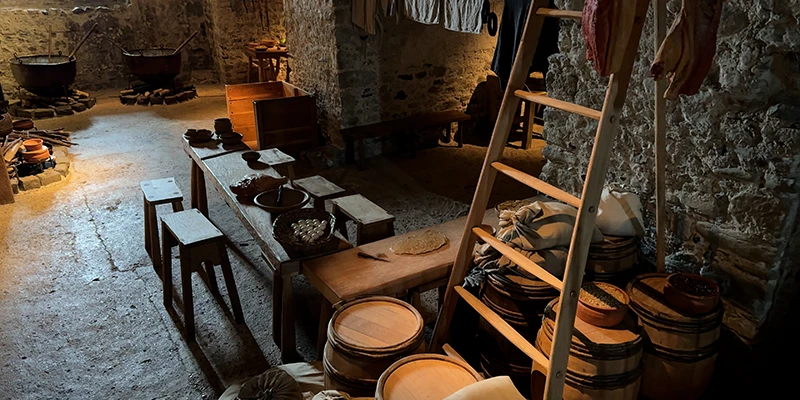
The great medieval kitchen served the king, his court and the soldiers. The display shows it as it would have looked in Henry II's reign, with replica hanging meats, cooking pots and a central fire pit.
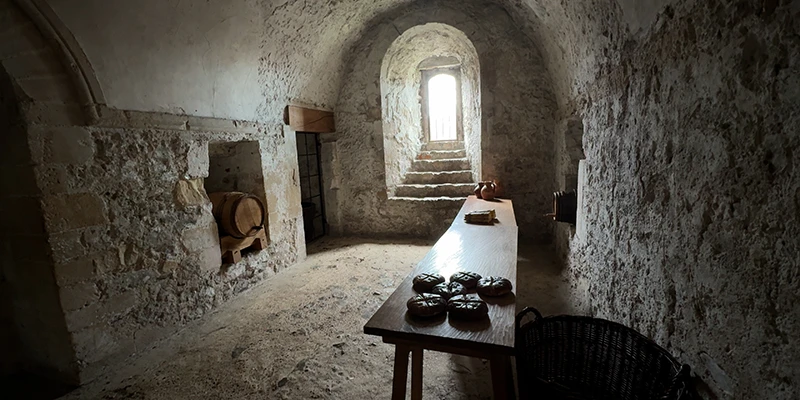
Smaller chambers off the main rooms held stores, guards and servants. They are plain, cold and lit by narrow windows, and the contrast with the decorated rooms above is the point of walking the building in order.
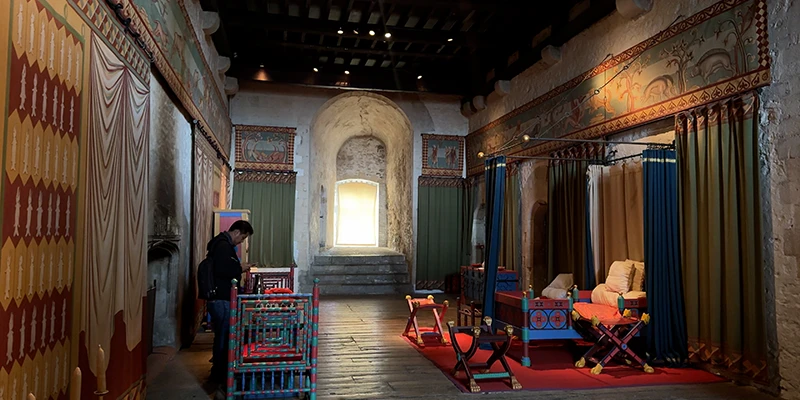
Textiles do most of the work in the reconstruction. Hangings, curtains and painted cloth cover the stone, which is how these rooms were actually furnished — the bare-stone medieval interior is a Victorian invention.
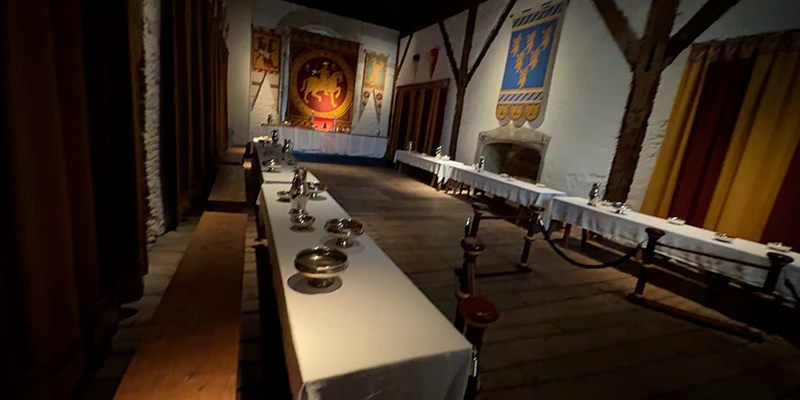
Long tables, benches, candles and pottery fill the service rooms, all of it replica and all of it based on documented examples rather than guesswork.
The Royal Rooms
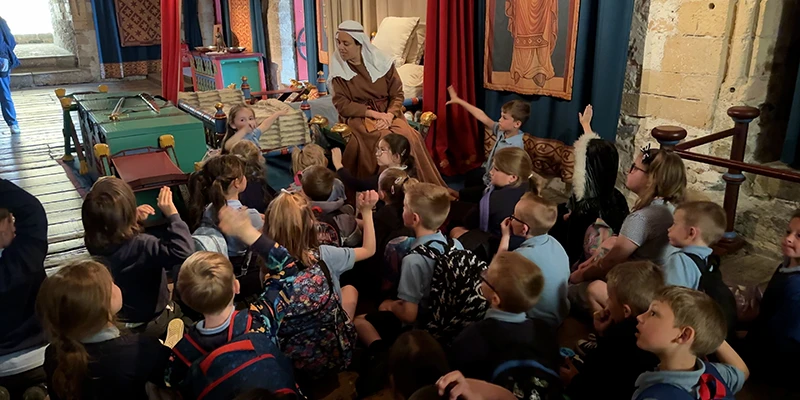
There is an education program for students and adults alike, with guides in period costume explaining the history and function of the building. Groups fill the halls on weekdays during term.
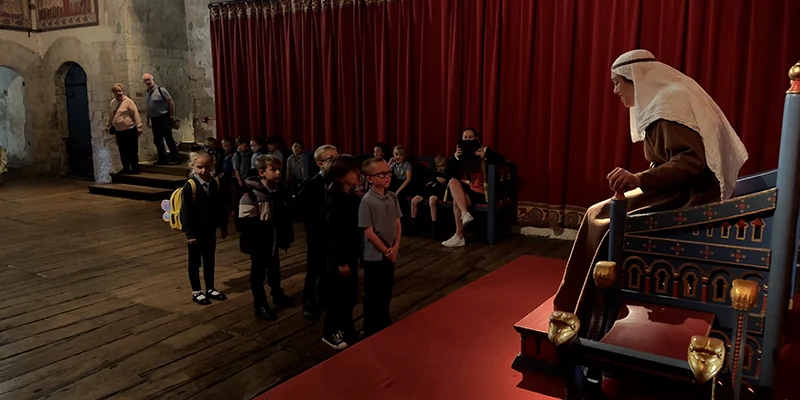
On our visit a group of students was in conversation with a Royal Advisor, a role-play version of the audiences the king would hold in this space. They were getting royal advice, engaging with the past directly and developing some critical thinking along the way.
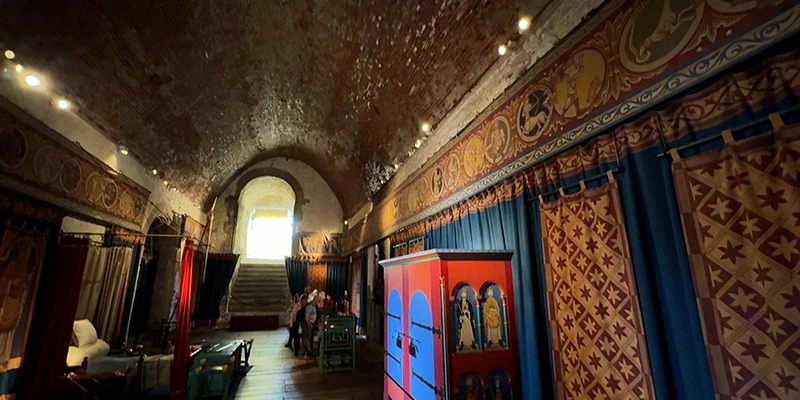
The most spectacular room is the King's Hall, with its vaulted ceiling, tapestry banners and red curtains all around. It served as the main gathering space for royal banquets, entertainment, diplomatic receptions and ceremonial events.
Next to it is the King's Chamber, the same size and shape and even more heavily decorated. Both rooms have been restored using replica furnishings and textiles chosen for historical accuracy rather than effect.
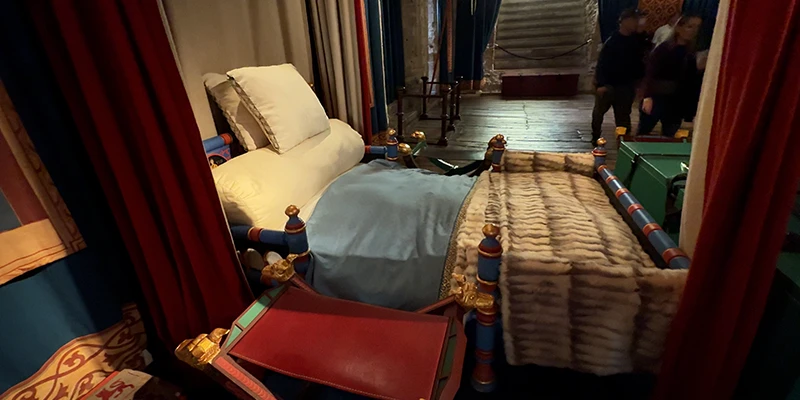
This was the king's bedchamber, which was essentially a working room with a bed in it. As one of the staff put it, the bed could be used for relaxation, but beds were as much status symbols as they were furniture.
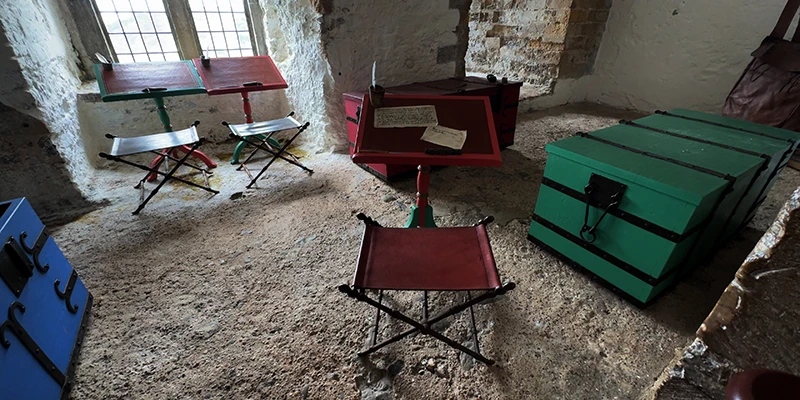
The personal quarters extend through several adjoining rooms with replica medieval furniture, and the exhibit includes a display of replica crown jewels.
The lion banner that hangs in the stairwell is the royal emblem, and the heraldry throughout the building is part of the same argument the architecture is making about who owns this place.
Directly below the King's Hall, on the first floor, is the Guest Hall, and beside it the Guest Bedchamber — the same dimensions as the royal rooms above but with lower ceilings.
A Hotel for Nobles
The guest rooms existed for a specific reason. Pilgrims came from all over the continent to venerate Thomas Becket at Canterbury, and they crossed at the shortest point, Calais to Dover. Henry wanted something opulent enough and powerful enough to receive them, whether they were noblemen or ordinary pilgrims.
Castle guide Kate described the arrangement: the guest bed would have been used by the queen if she were here with Henry, and otherwise by noblemen, dukes, lords and barons, with their knights and servants in the smaller beds alongside. The beds are shorter than we are used to because people slept sitting up.
Asked whether this amounted to a hotel for the nobility, her answer was that it was basically a posh B&B. The present structure is Henry II's, and the fabric of the building was finished in 1189.
The Stairs and the Roof
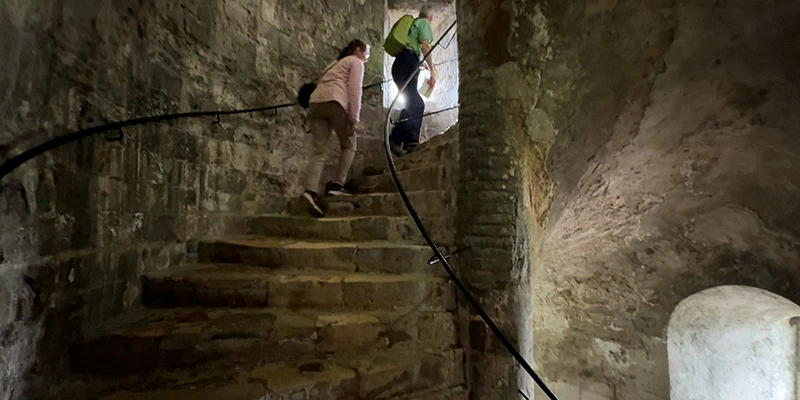
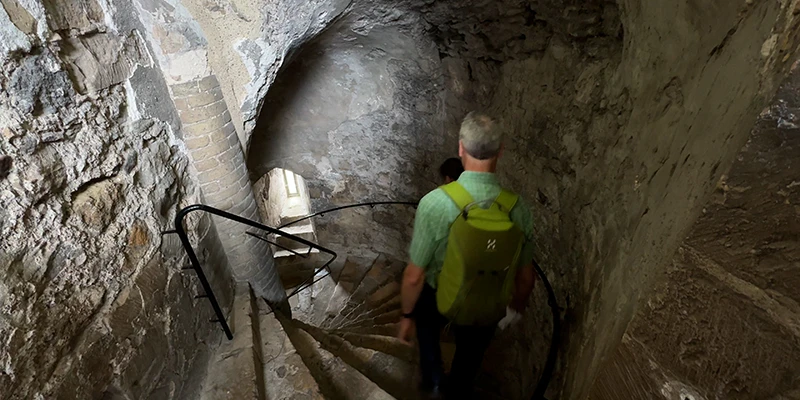
Two spiral staircases serve the tower. They are relatively wide, with shallow steps and handrails on both sides, which makes them far easier than most castle stairs. There is no elevator, but these reach every level.
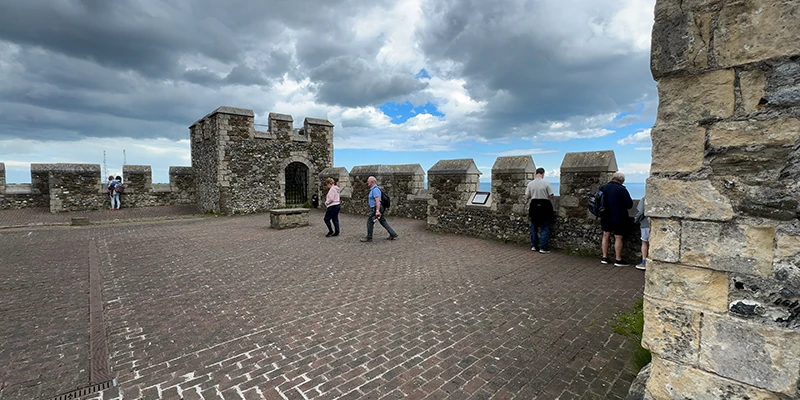
You can detour along a narrow internal passageway, part of the labyrinth that let soldiers and servants move from one end of the building to the other, with fortified windows that gave a view out and a position to shoot from.
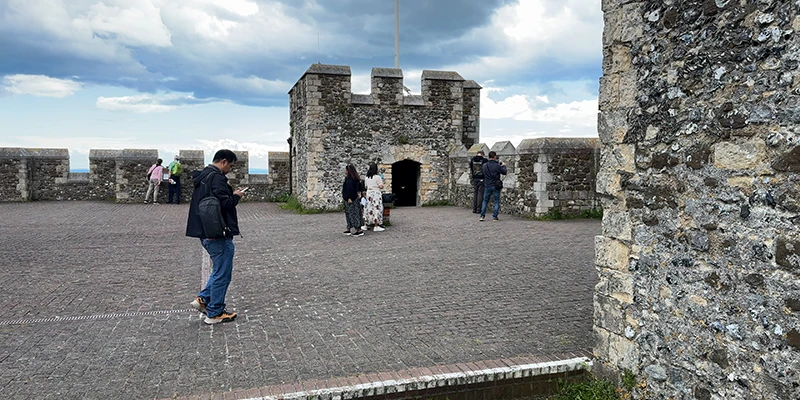
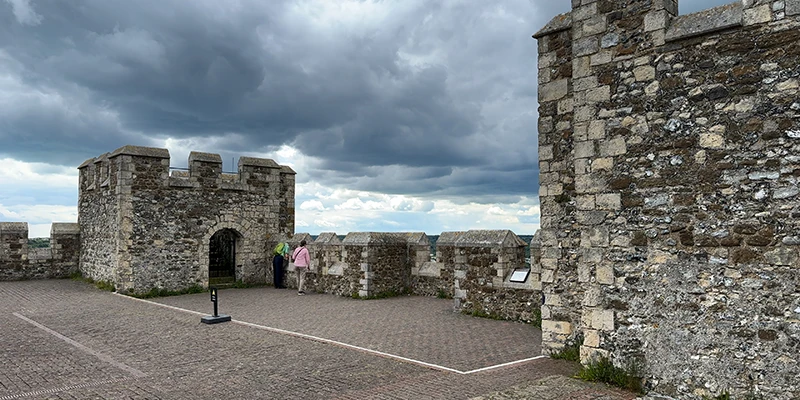
The stairs continue all the way to the rooftop, a large fortified terrace where you get a view in every direction.
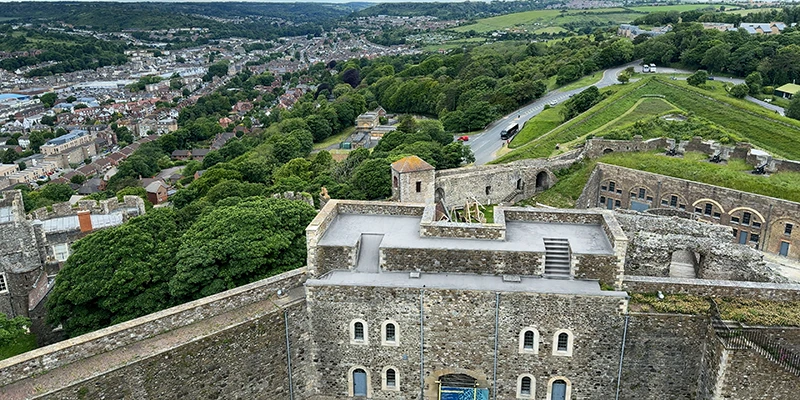
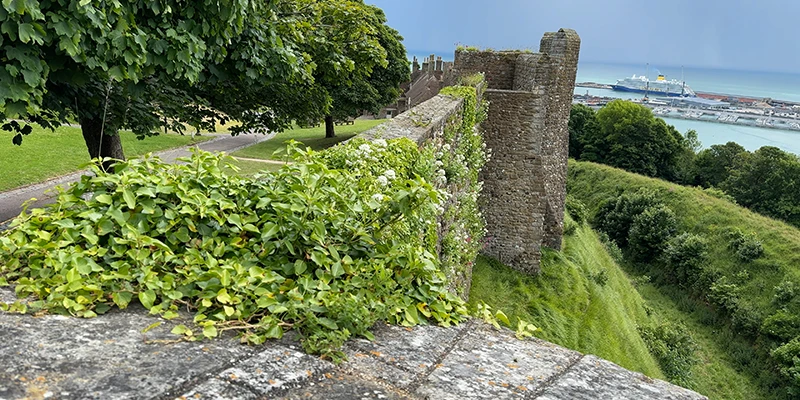
Below is Dover Harbour, which has always been an important transport center, and beyond it the town, the seafront and the beach.
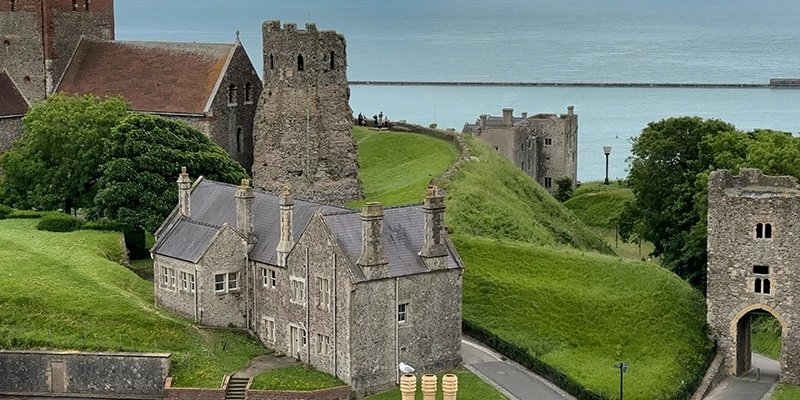
Looking the other way you see the castle grounds laid out — the church, the Roman lighthouse, the barracks and the line of the outer wall running along the ridge.
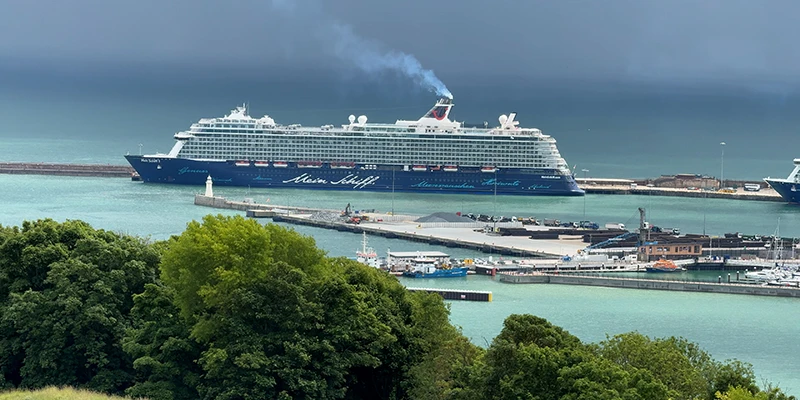
Cruise ships come and go in the harbor below, and the modern port is as busy as the medieval one, which is a useful thing to see from a castle built to control exactly this stretch of water.
The Castle Grounds
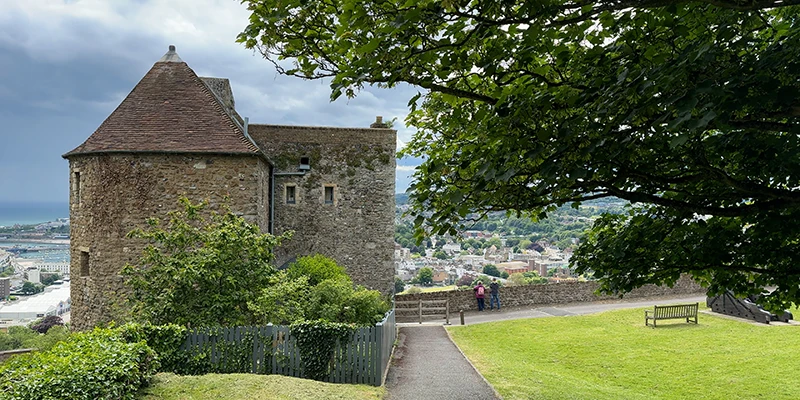
The lighthouse was built by the Romans in the second century as part of a small fort, making it one of the oldest lighthouses in the world. The Romans had occupied Britain and needed it to guide their navy on frequent crossings.
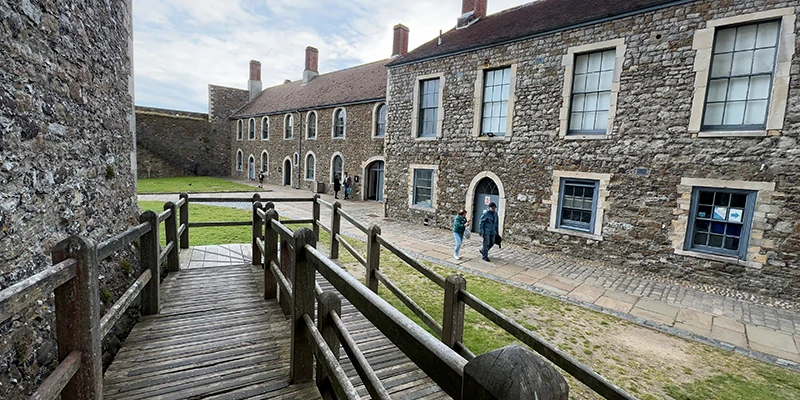
Beside it stands St Mary in Castro, built about a thousand years ago and among the oldest churches in the country, still in use and still standing next to a Roman building.
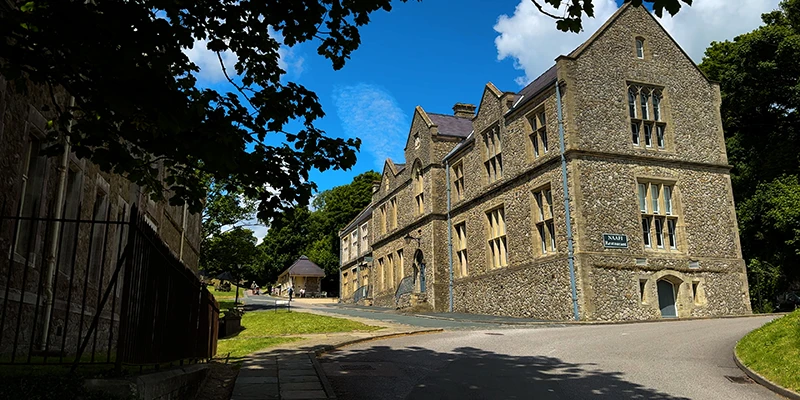
Arthur's Hall, built in the thirteenth century, was a social and administrative space, and was converted into barracks in the eighteenth century when the castle was garrisoned against Napoleon.
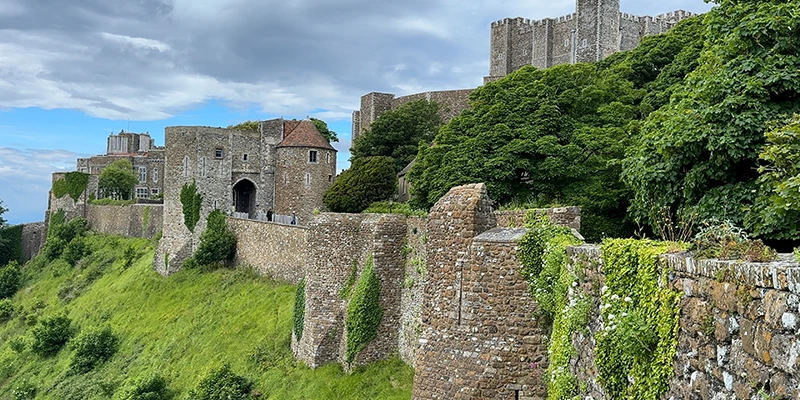
More walls extend out from the King's Barbican, which also served as a prison in the Middle Ages. The grounds are extensive and largely open, and the walk between the buildings is part of the visit rather than an interval between attractions. The green slopes below the walls are as much a part of the defense as the masonry — an attacker had to climb them under fire, with nothing to hide behind.
The Wartime Tunnels
The castle's last active service was the most consequential. In the Second World War it was a strategic command center, most famous for directing the evacuation of Allied troops from Dunkirk in 1940.
Throughout the war it was critical for monitoring and defending the English Channel, housing coastal artillery and observation posts against a German invasion that was expected and never came.
The military command center and hospital were underground, in caverns cut into the White Cliffs, and some of the medieval tunnels beneath the castle were expanded and converted into the headquarters. Entry is included in the castle ticket, but photography is not permitted inside.
Visiting the Castle
The tunnel complex is the first thing you reach when you enter the grounds. It may be worth doing first, before the crowds build, though it also works as a finish.
To avoid the crowds generally, come in the off season, avoid weekends, and arrive either in the morning or the late afternoon.
Buy your ticket at the booth by the entrance and take the free map, which you will need — the grounds are extensive and not self-explanatory. The staff are helpful about what to see first.
There are two places to eat: a cafe, and the NAAFI restaurant, which occupies a mess hall formerly used by the soldiers.
Down into the Town
Walking back down the hill takes about five minutes and is considerably easier than the climb. Turn around at the bottom for another view up at the castle.
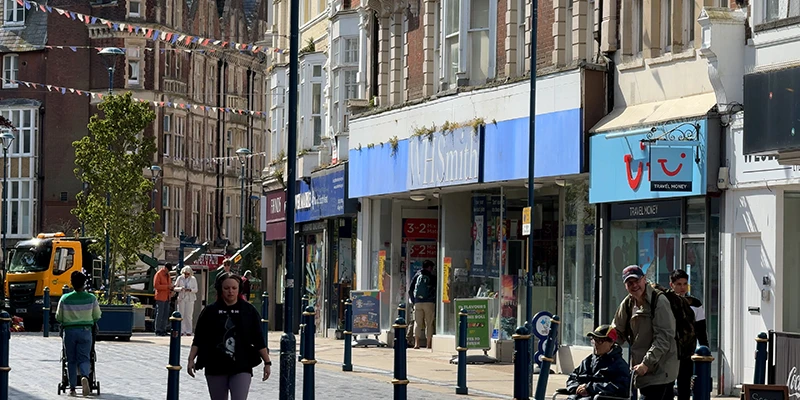
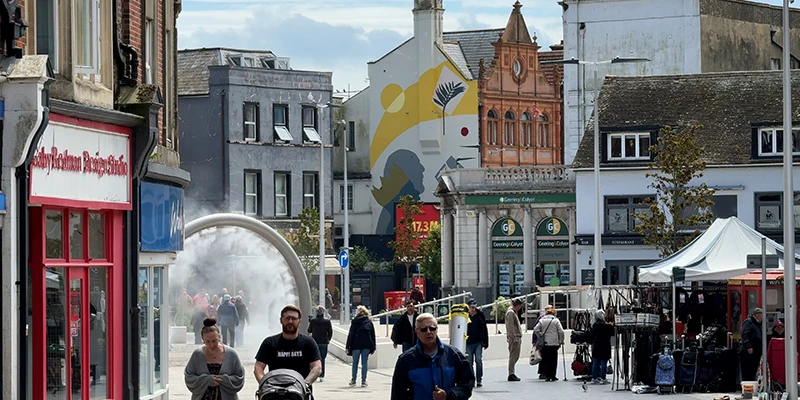
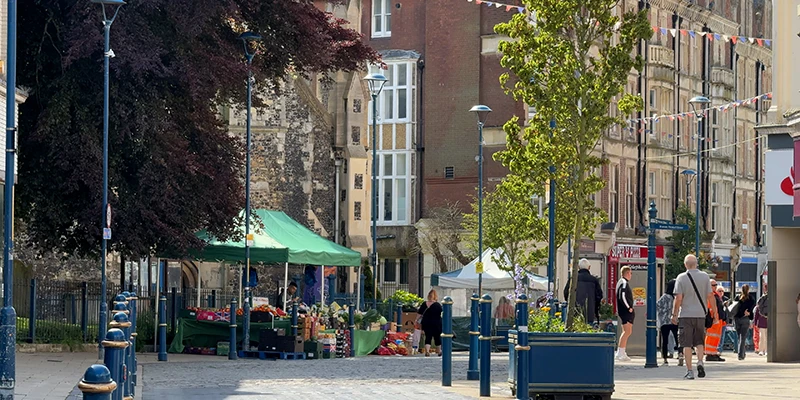
The town center is a small, recently created pedestrian zone with a cluster of shops, some outdoor cafes and a casual pace. It is a town primarily for locals.
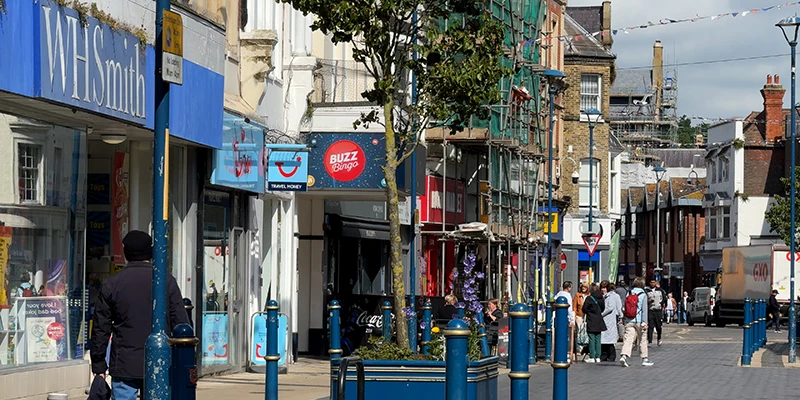
Strolling through the center you find shopping streets with boutiques, cafes and shops offering local goods alongside international brands.
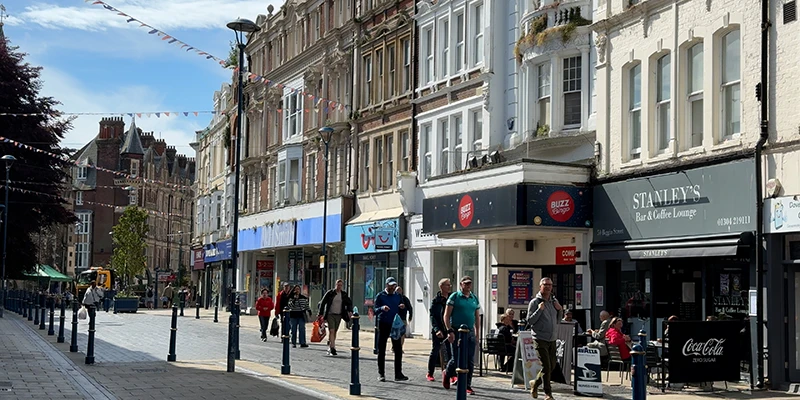
Biggin Street is the high street, running up to Market Square at the end, with a couple of bars and pubs and live music at weekends.
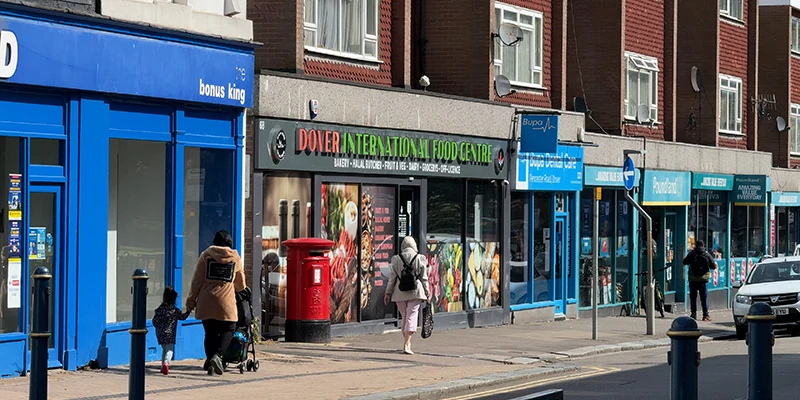
The architecture is a mix of modern, Georgian and Victorian, all of it low-rise, and the scale is human rather than imposing.
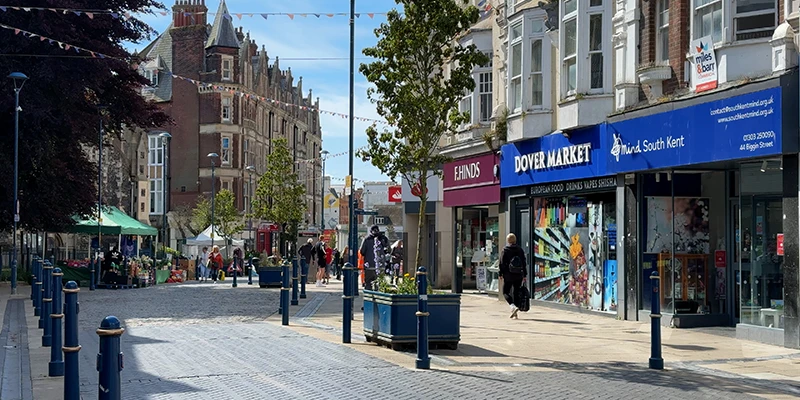
The pedestrian zone was a recent addition and has worked. People stop and chat with their neighbors in the street, which is the clearest sign that a town center is functioning.
Market Square
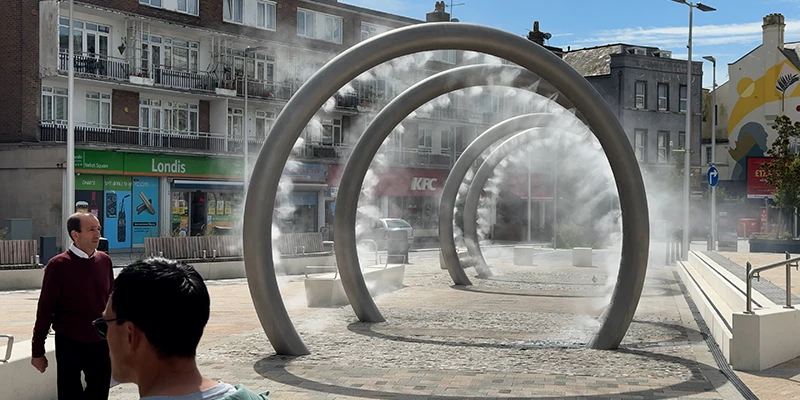
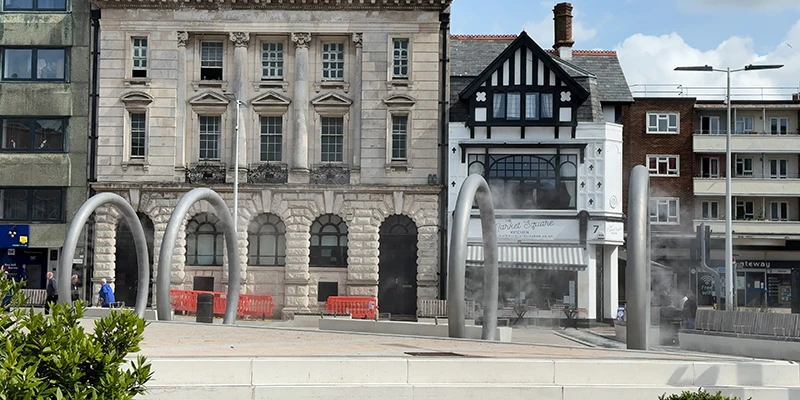
Market Square is the heart of town, recently repaved and fitted with a circular steel sculpture that sprays a fine mist. It opened in 2022 and it draws you straight in — like a tunnel through cloud, shifting in the breeze, cooling the square without leaving you wet. Children love it.
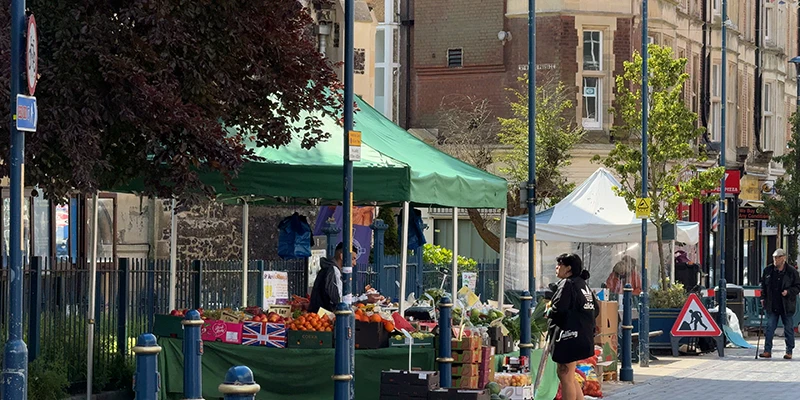
Around the square are shops, benches, outdoor cafes and the new paving, and the whole space now works as a place to sit rather than cross.
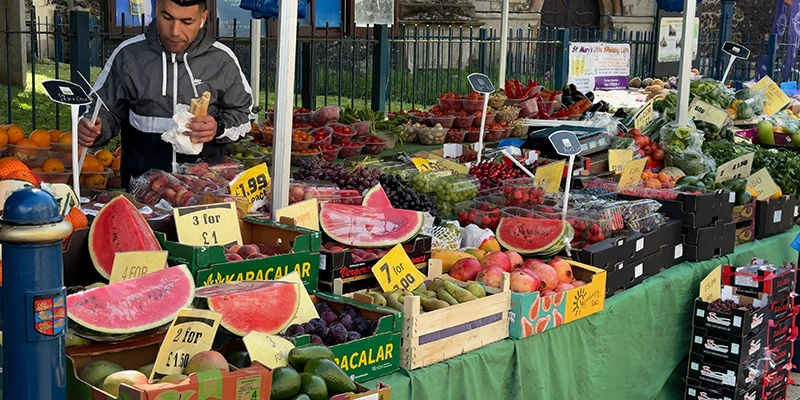
Outdoor produce markets set up in the square, with fruit and vegetable stalls that are worth a look even if you are not buying.
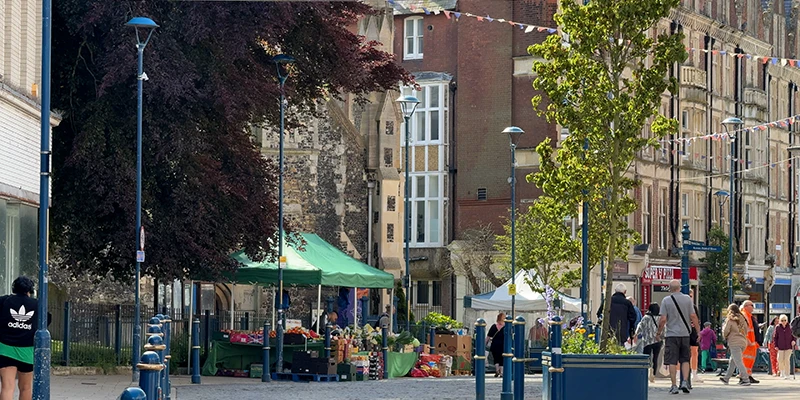
The mix of old and new is the character of the place — market stalls under modern canopies in a square that has held markets for centuries.
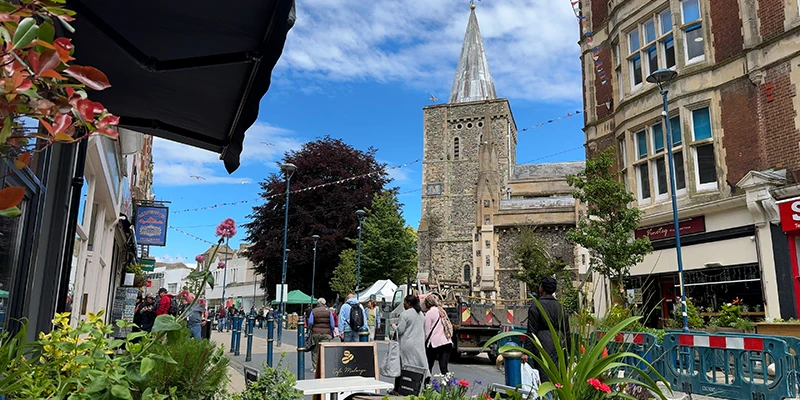
The Visitor Information Centre and the Dover Museum are at the corner of the square. The museum was first established in 1836, making it one of the oldest in Kent, and moved into its present building in 1991, with displays running from prehistoric archaeology and Saxon artifacts through to recent maritime history.
Cafes and Pubs
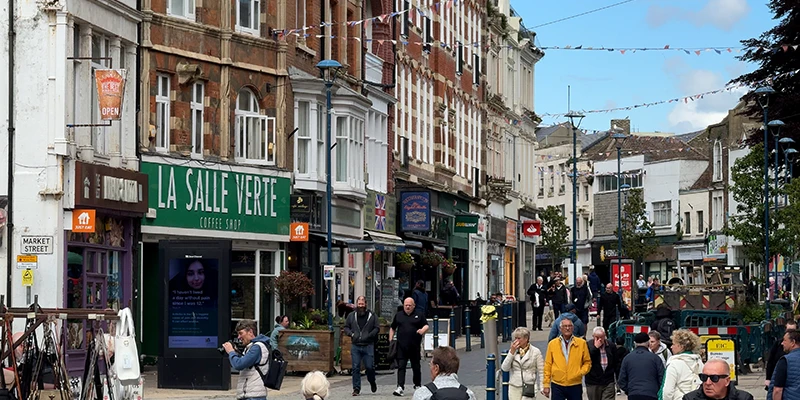
There is one clear favorite coffee shop in town, La Salle Verte — the green room — on the main street.
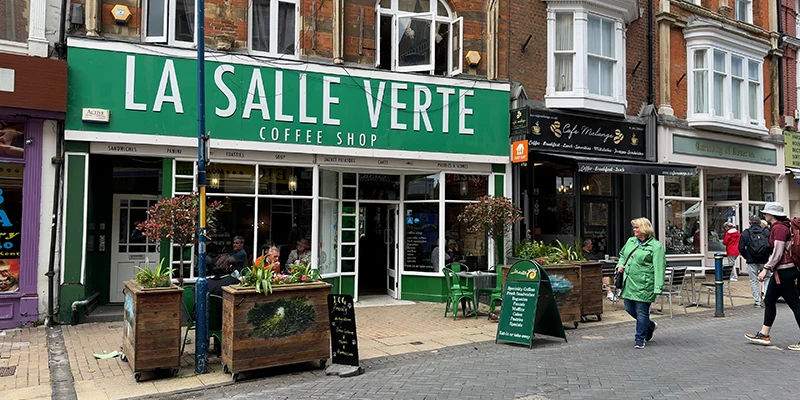
It does sandwiches, panini, jacket potatoes, soup and a range of coffee, with a garden terrace at the back.
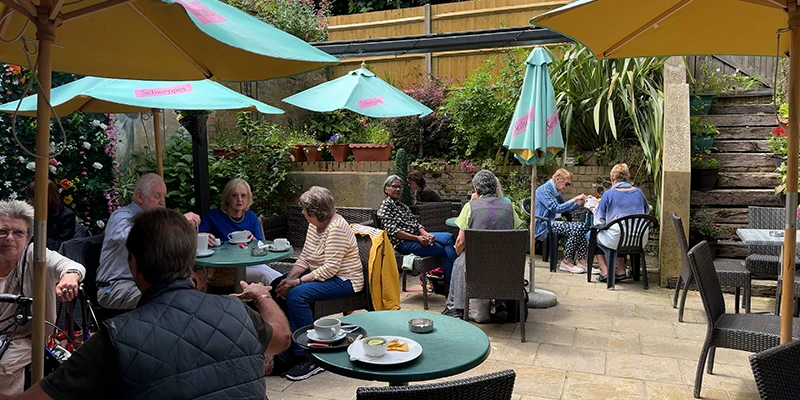
It is a friendly, one-of-a-kind local place with quick service at the counter and outdoor seating at the front. One regular's verdict: the best cafe in Dover and for miles around.
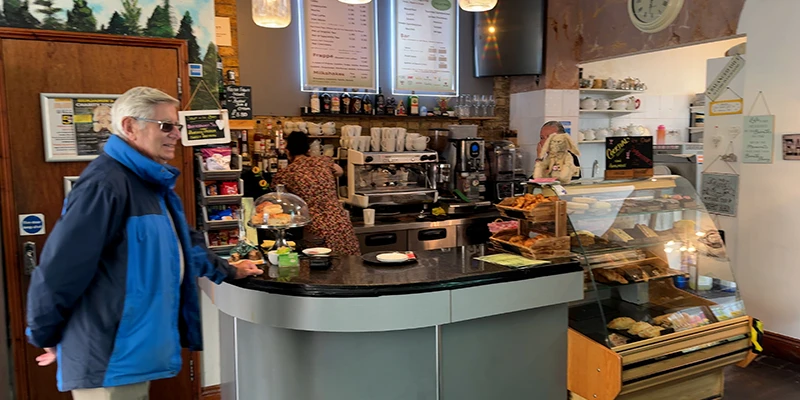
Otherwise there are pubs nearby for some grub and a pint, several with outdoor terraces that are good for watching the street.
The Seafront and the White Cliffs
From the town center a pedestrian underpass runs beneath the highway, which is busy with heavy trucks heading for the port. The path is shared with bicycles, so stand clear of any group coming through.
Coming up on the other side you pass New Bridge House, a nineteenth-century neoclassical building with government offices, and beside it a cenotaph memorial to soldiers who fell in the Indian campaigns of the nineteenth century.
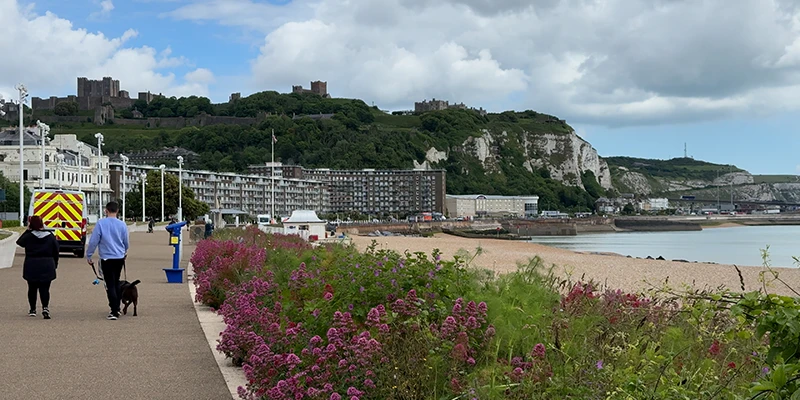
That brings you to the seafront promenade, which runs along the coast past Georgian houses and small hotels to the pebble beach and the pier. There is a flower garden along the way and the cliffs rise on the right, with the castle on the hill above.
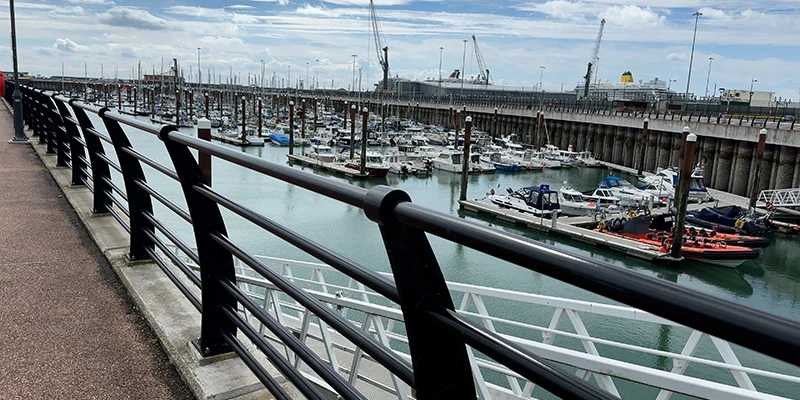
Dover is still a working harbor for pleasure craft and cargo alike. The Channel Tunnel opened in 1994, but ferries still run daily to Calais and Dunkirk.
From the pier and the marina you get the best view in Dover — the cliffs along one side and the castle above them. A local put it plainly: go down the pier or the marina and you get a view like a postcard.
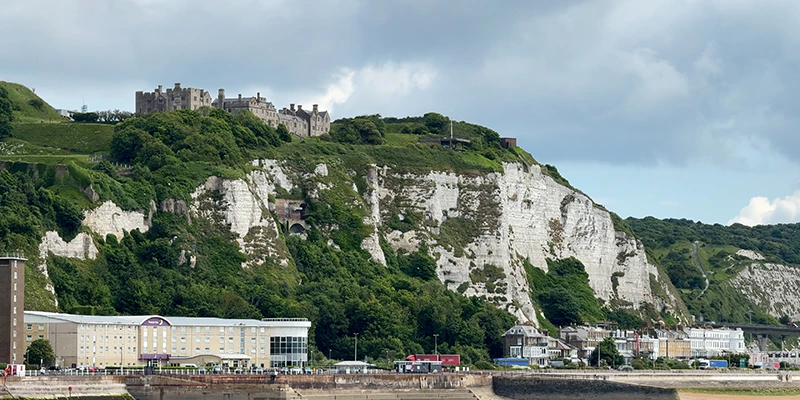
The Marina Pier is a good vantage point, with benches and shelter. From here you can see exactly why the cliffs mattered — a natural wall of defense with the castle set on top of it.
The cliffs rise about 110 meters and extend some eight miles along the coast, visible from a great distance and, on a clear day, from France. They remain one of Britain's most powerful symbols, standing for both natural beauty and national identity, and this mountain of white chalk is one of the great natural wonders of the world.
The Church of St Mary
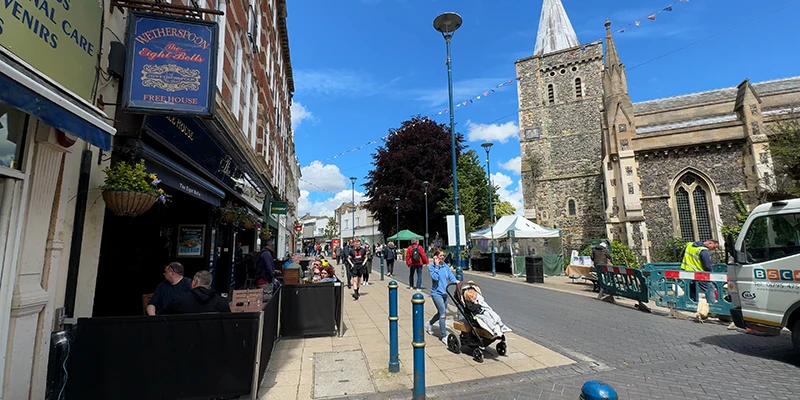
The Church of St Mary the Virgin, next to Market Square, dates from the early twelfth century, and its tower is the one landmark in the town center that predates everything around it.
The building has Roman material in its fabric, reused from the earlier settlement, and although it was heavily restored in the Victorian period the Norman core is still legible. It is the parish church of the town rather than a monument, and it is generally open.
The other St Mary, up at the castle, is the older and stranger of the two — St Mary in Castro was built around a thousand years ago beside the Roman lighthouse, and the lighthouse was pressed into service as its bell tower. Two buildings roughly eight centuries apart, joined into one structure.
The History
Dover has been the front door of England for two thousand years, for the simple reason that it is the closest point to the continent. The crossing to Calais is the shortest there is, and everything that has happened here follows from that.
The Romans arrived first, building a fort and a harbor and putting up a pair of lighthouses on the heights above to guide the fleet across. One of them survives inside the castle grounds, which makes it one of the oldest standing buildings in Britain and one of the oldest lighthouses anywhere in the world.
The Saxons fortified the hilltop and built a church beside the Roman lighthouse. William the Conqueror built a small fort here immediately after his victory in 1066, recognizing that whoever held Dover controlled the crossing.
The castle you see today was built by Henry II in the 1180s, and the reasons were tangled. He needed a fortress against the possibility of civil war at home or attack from Europe. He also needed a ceremonial palace grand enough to impress noble visitors from the continent, who were arriving in growing numbers on pilgrimage to venerate Thomas Becket at Canterbury.
Becket had been Henry's friend, then his political rival, and was murdered in his own cathedral on Henry's behalf. The cult that grew up around the martyrdom was dangerous to Henry — and his response was to absorb it. He built Dover into a stage on which the pilgrimage became a demonstration of his own sovereignty: French nobility were received in his hall, entertained at his expense, and shown a fortress that would defeat any attack they might later contemplate.
It worked. Henry ruled the largest empire in Europe at the time, extending across most of France, and his castle was never taken by a foreign invader. The fabric was finished in 1189, the year he died.
The closest it came to falling was under his grandson. King John lost most of England's French territories and provoked a rebellion, and in 1216 a French army under Prince Louis besieged Dover with English rebels alongside them. The siege ran for more than a year of savage fighting. By its end John was dead and Henry III was king, and the castle was strengthened rather than surrendered — the northern gateway, which the French had undermined, was blocked up permanently and new works were thrown out around it.
Power struggles and rebuilding continued through the following centuries, and the castle was never abandoned in the way most medieval fortresses were. It was still a working military installation in the Napoleonic wars, when the medieval tunnels beneath it were extended into barracks for troops, and again in the twentieth century.
Its last great moment came in May 1940, when Vice Admiral Bertram Ramsay directed Operation Dynamo, the evacuation of Dunkirk, from a command post in the tunnels cut into the cliff below the castle. More than 300,000 Allied troops were brought off the French beaches. For the rest of the war Dover watched, listened to and shelled at the Channel, and was shelled in return from the French coast.
That is the through-line of the place: a Roman lighthouse, a Saxon church, a Norman fort, a Plantagenet palace, a Napoleonic barracks and a wartime headquarters, all on the same hill, all still standing, all facing the same twenty-one miles of water.