Castleton, England
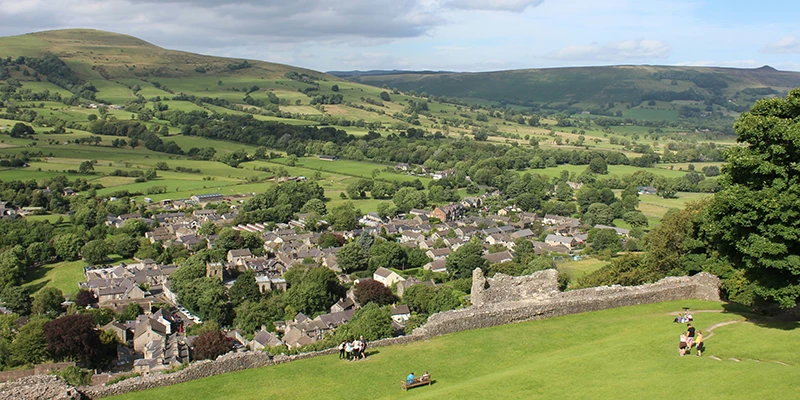
Castleton is a small stone village set at the head of the Hope Valley, in one of the most dramatic corners of the Peak District. Cradled by steep green hills and overlooked by the ruins of a Norman castle, it is among the most scenic villages in the region, drawing visitors for its spectacular walking country, its remarkable cave systems and its cluster of old pubs and cottages built from the local gray limestone. For a place of only a few hundred residents, it offers a great deal to see both above and below ground.
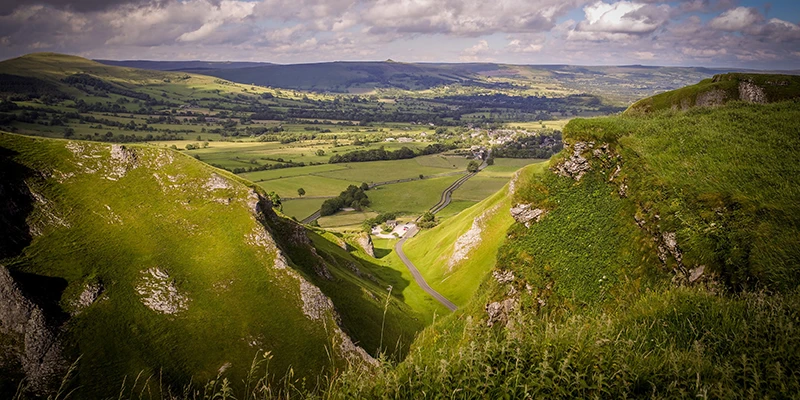
The village lies in Derbyshire, in the heart of England, within the Peak District National Park, Britain's first national park. It sits at the western end of the Hope Valley, hemmed in by high ground on nearly every side, with the long line of the Great Ridge rising to the north and the great bulk of Mam Tor looming above. This setting, where the gentler limestone country of the White Peak meets the wilder gritstone moors of the Dark Peak, gives Castleton some of the finest scenery in the whole park.
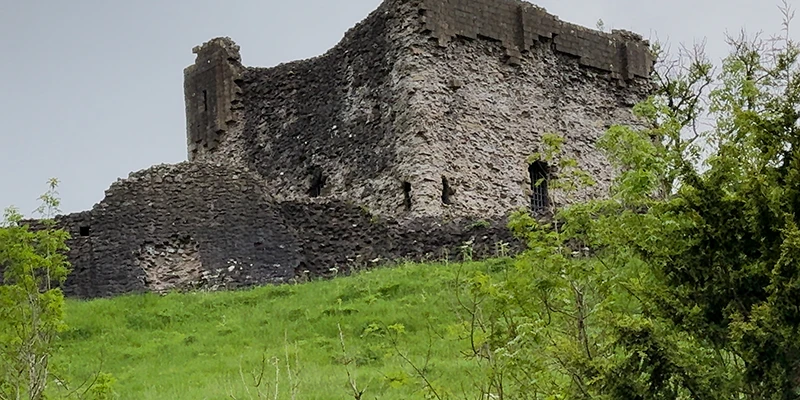
Presiding over the village are the ruins of Peveril Castle, perched high on a crag and giving Castleton its name. One of the earliest Norman stone castles in England, it was founded shortly after the conquest of 1066 and its surviving keep dates from the twelfth century. The climb up to the ruins is steep but rewarding, opening up sweeping views over the village rooftops and down the length of the Hope Valley. The castle later lent its name to a novel by Sir Walter Scott, one of many literary associations of the Peak District.
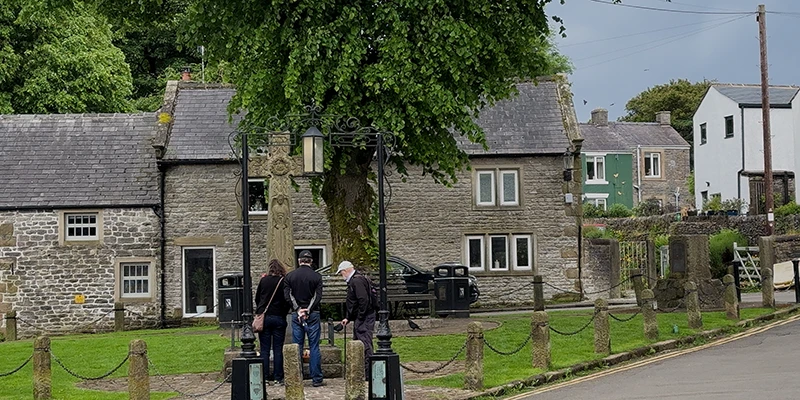
Castleton itself is a delight to wander. Its narrow lanes are lined with sturdy stone cottages, many of them centuries old, and little bridges cross the clear stream that runs through the village. Everything is on a small and human scale, easily explored on foot in an hour or two of gentle strolling, with something pleasing around every corner, from flower-filled gardens to an ancient market cross.
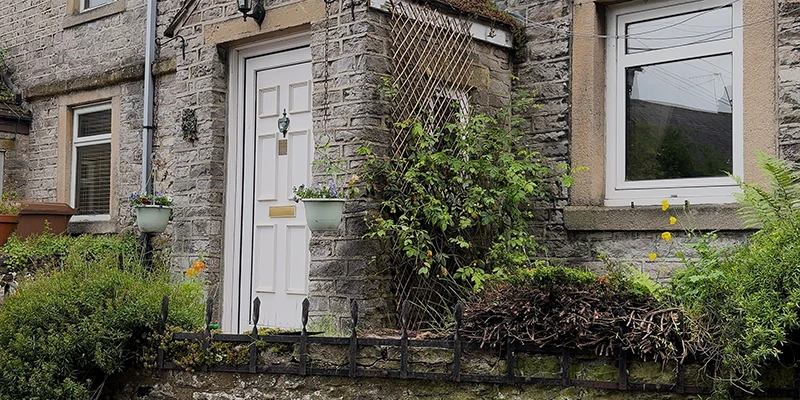
The buildings are typical of the Peak District, solid and low, built to withstand the hard upland winters, with thick walls of local stone and roofs of heavy slate. Climbing roses, potted plants and hanging baskets soften the gray stone and add splashes of color to the lanes. Many of the cottages have stood for generations, and the village has an unhurried, timeless feel that makes it a pleasure simply to be in.
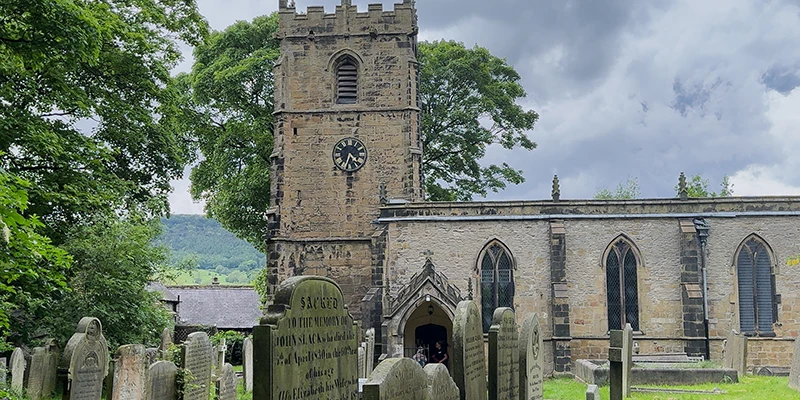
At the center of the village stands the parish church of St. Edmund, its square tower a familiar landmark. Parts of the church are very old, with Norman origins, though it was much restored in later centuries, and its churchyard of leaning gravestones adds to the sense of deep history. The church has been the heart of village life for many hundreds of years and remains a quiet, dignified presence among the surrounding cottages.
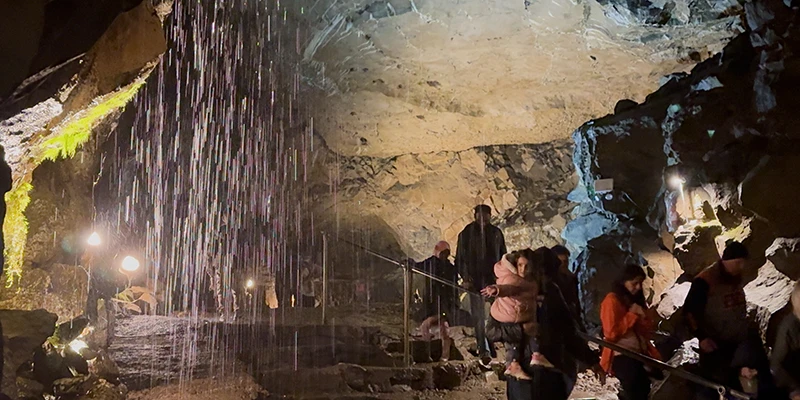
Castleton's greatest surprise lies beneath the surface. The village is famous for its show caves, a network of vast caverns carved out of the limestone and open to visitors. The cave system here is a real bonus when you are visiting the Peak District: the scenery above ground is the reason most people come, but there is brilliant scenery below ground too, in these giant chambers hidden inside the hills.
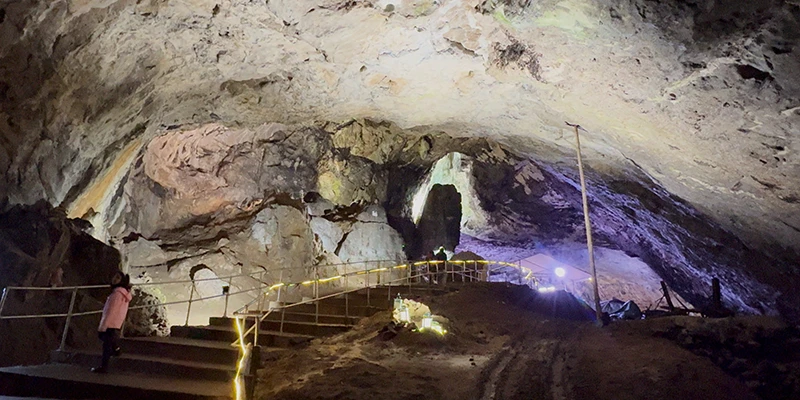
The caverns are well lit and fitted with good stairways and pathways, so exploring them is comfortable and safe, though you do have to bend down here and there where the passages narrow. Inside, the caves open into enormous chambers, some large enough to swallow a house, their walls glowing under colored lighting that picks out the shapes and textures of the rock. It is a genuinely memorable experience and well worth the time.
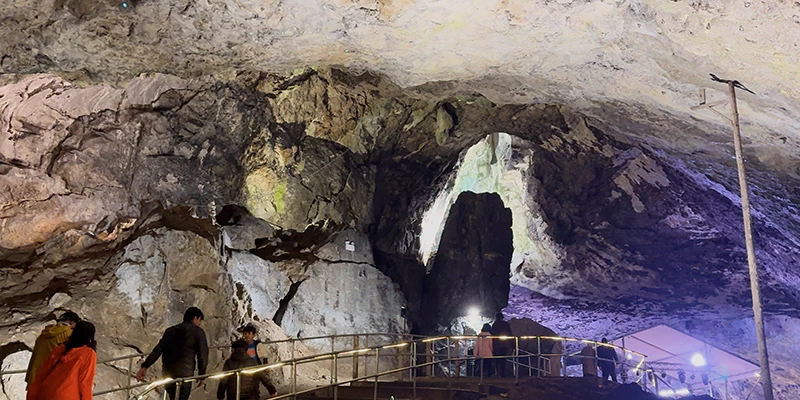
There are several different caves to choose from, each with its own character. Some are entered on foot down into the hillside, while one is reached by an underground boat ride along a flooded passage, a strange and atmospheric journey through the dark. The caves are also the source of Blue John, a rare and beautiful banded mineral found nowhere else in the world, mined locally and worked into jewelry and ornaments sold in the village shops.
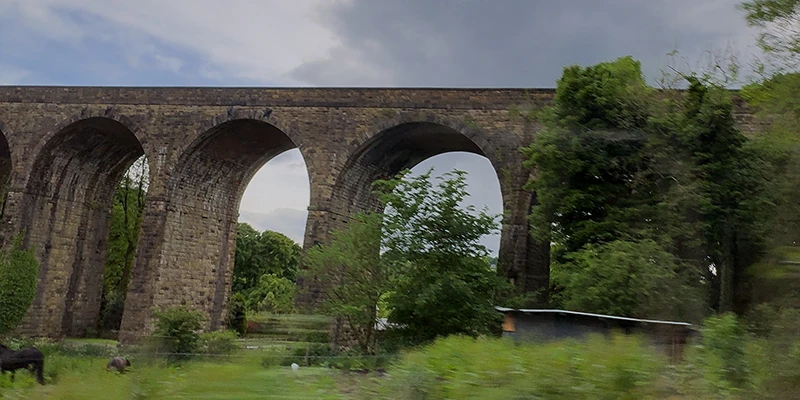
Another striking sight in the area is a great stone railway viaduct, its tall arches striding across the landscape. It was built by the Victorians as part of the Midland Railway, the line that once connected Manchester with the industrial towns of the Midlands. The railway is long gone from this stretch, but the viaduct remains, and over time people have come to appreciate the accidental beauty of these grand old structures, planted in the countryside for purely practical reasons and now admired as landmarks in their own right.
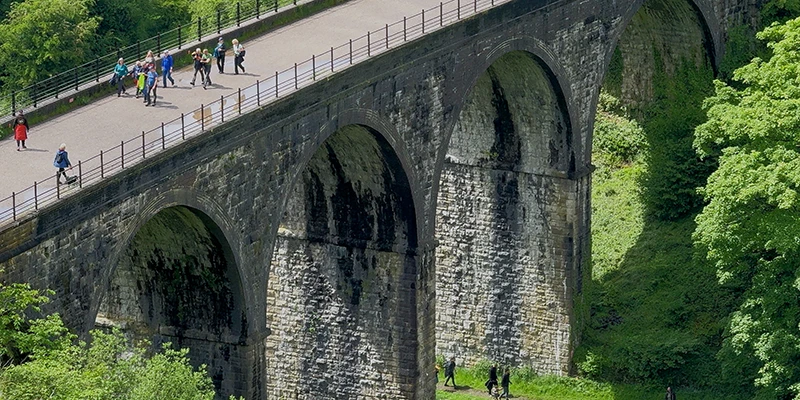
The viaduct is a good example of how these Victorian works have found new life. No longer carrying trains, part of it now serves walkers and cyclists on a trail, and because it was built so long ago it is protected as a listed structure that cannot be demolished. One half survives in fine condition while the other has partly gone, so that what remains looks almost like half of a great amphitheater, a curious sight that lets you admire the skill of its builders while wandering across the top.
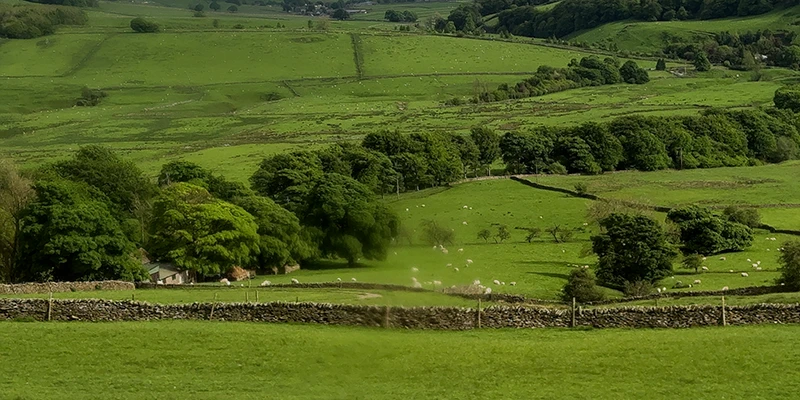
The countryside around Castleton is the real reason many visitors come, and it is superb walking country. Footpaths lead out from the village in every direction, across fields divided by the drystone walls that are such a feature of the Peak District, built without mortar over many generations. Sheep graze the green hillsides, and the paths climb from the valley floor up onto the high ridges, offering the kind of scenery that has made this region one of the most popular walking destinations in Britain.
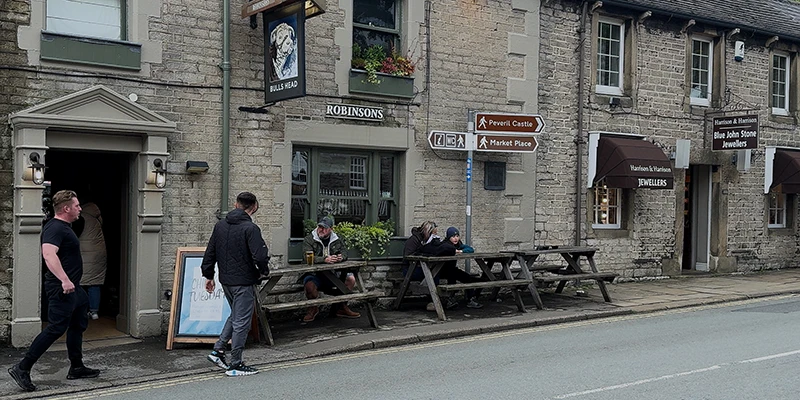
Mam Tor, the great hill that rises above the village, is one of the most popular climbs in the Peak District. Known as the Shivering Mountain because of the way its unstable shale face crumbles and slips, it can be reached by a well-trodden path and rewards walkers with tremendous panoramic views. From its summit the Great Ridge runs eastward in a magnificent high-level walk, one of the classic outings of the entire national park.
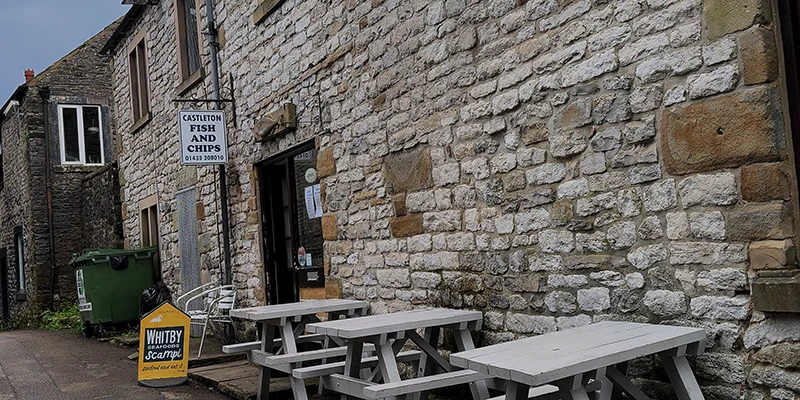
After a day out on the hills or underground in the caves, Castleton's pubs are a welcome sight. The village has several traditional inns, their stone frontages hung with flower baskets and their interiors warm with the atmosphere of centuries. They serve real ales and hearty English food, and on a fine day their outdoor tables fill quickly with walkers and visitors resting after their exertions.
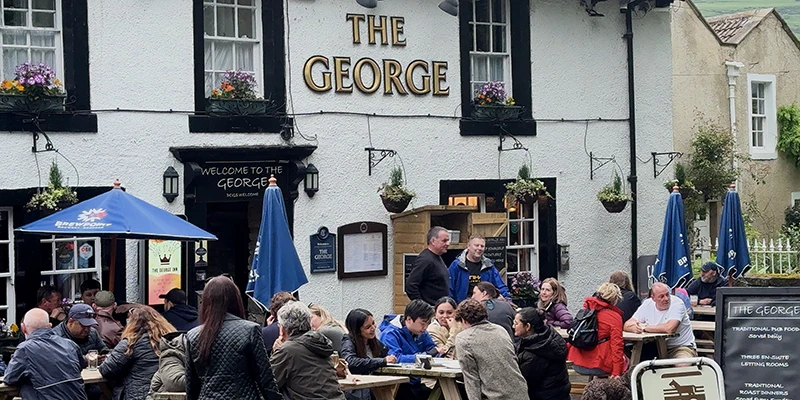
These pubs are the social heart of the village, gathering places for locals and visitors alike. A good pub lunch or an evening meal by the fire is one of the great pleasures of a Peak District visit, and Castleton is especially well supplied for a village of its size. Dogs, as always in this walking country, are welcome, and the mood is friendly and unhurried.
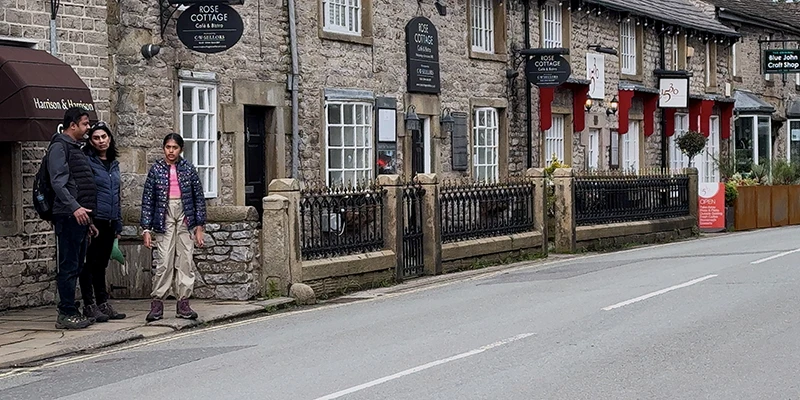
Castleton makes an ideal base for exploring this part of the Peak District, whether for a day trip or a longer stay. With its castle and caves, its walking trails and its handsome old streets, it packs a remarkable variety into a small village. Combined with the beauty of the Hope Valley all around, it is one of the most rewarding places to visit in the north of England, a place where the scenery above ground and the wonders below it come together in a single memorable destination.