Ely, England
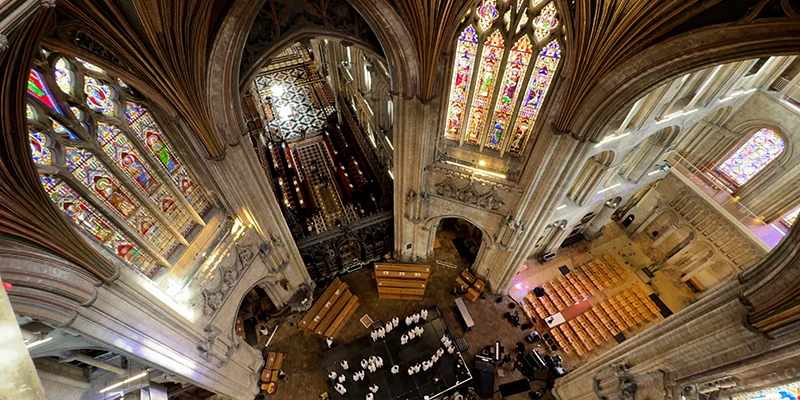
Looking down from the tower of Ely Cathedral is one of the great sights in England. This Octagonal Tower, rising over the center of the church, is considered one of the most impressive structures of the medieval world, and you can stand inside it and look straight down to the stone floor far below. Very few cathedrals anywhere will let you do that, and fewer still have anything like the octagon to show you.
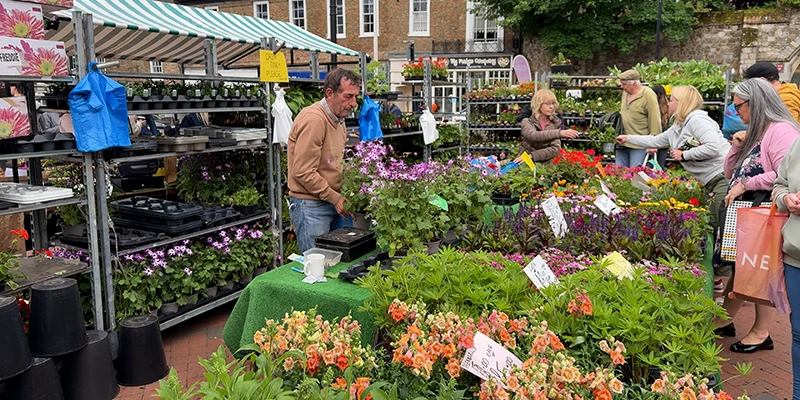
But there is a lot more to enjoy in this picturesque city: historic buildings like the gateway in the medieval wall, a charming marina with pubs and restaurants around it, and a compact town center with an attractive pedestrian zone and variety of places to eat, including at the big weekly market where you can get delicious food in a casual, inexpensive outdoor setting. Buy some clothing or flowers and pet the puppies. You can visit the house of Oliver Cromwell, one of England's most important historical figures, and there's a small museum showcasing local history.
You can also see this video on a separate video page.
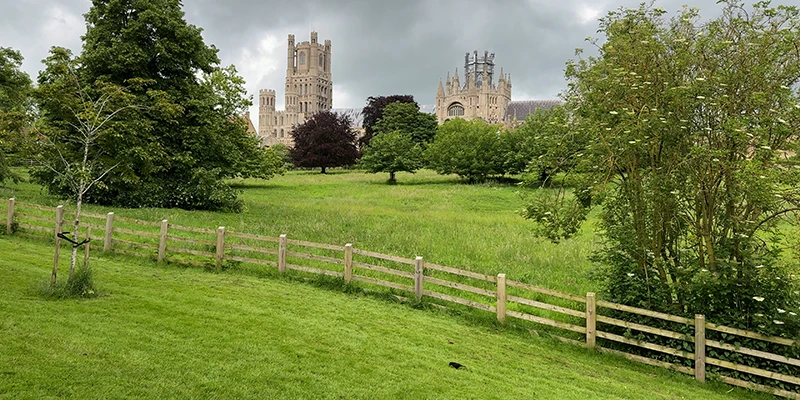
Ely sits in Cambridgeshire, in the flat country of East Anglia called the Fens, about fifteen miles north of Cambridge and roughly seventy miles from London. The city occupies a low clay hill that stands only about twenty-five meters above the surrounding land, which does not sound like much until you understand that everything around it is essentially at sea level. That modest rise was once enough to make Ely an island, and it is the reason the cathedral can be seen from so far away in every direction.
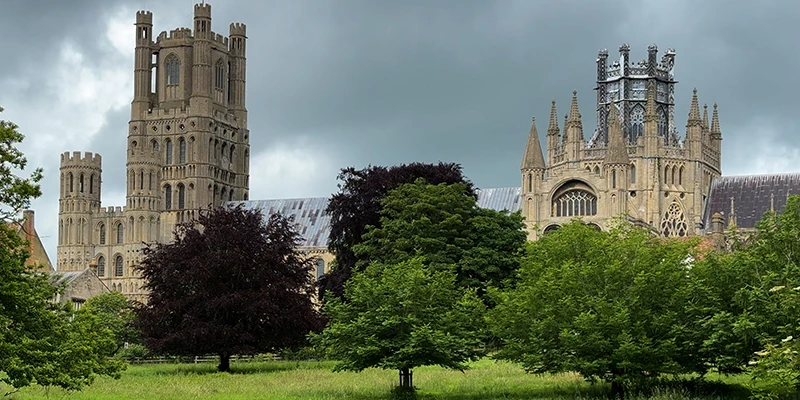
Many things to see, but this is the second smallest city in England, so it's easy to get around and has some lovely parks you can take a stroll in, including some nice views of the cathedral. The whole visit described here, from the train station through the parks to the cathedral, around the town center and back again, comes to about four kilometers of easy walking on level ground, apart from one gentle hill.
The Porta
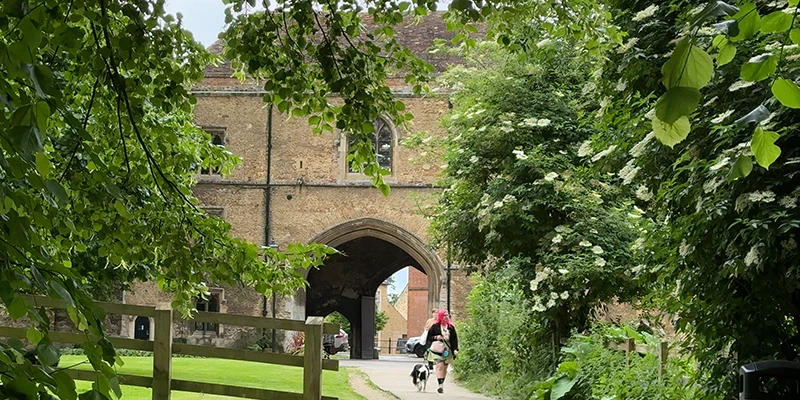
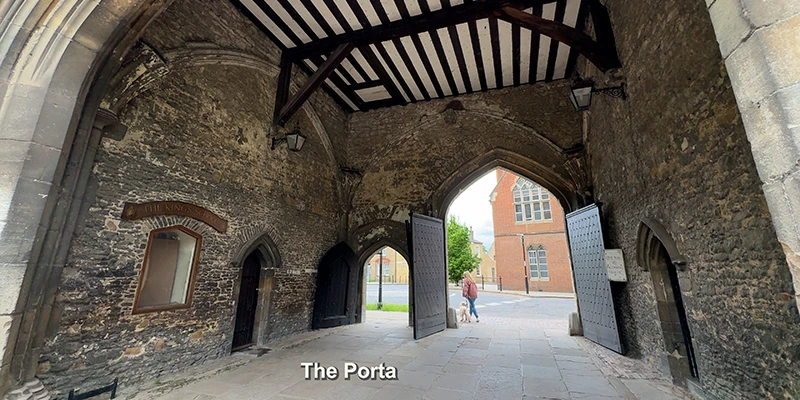
After walking from the train station for about 10 minutes you arrive at the park that leads to a historic gateway called the Porta. It's one of the few remaining structures of Ely's medieval past, a rare surviving section of the fortified wall that once ran around the town as part of the medieval fortifications.
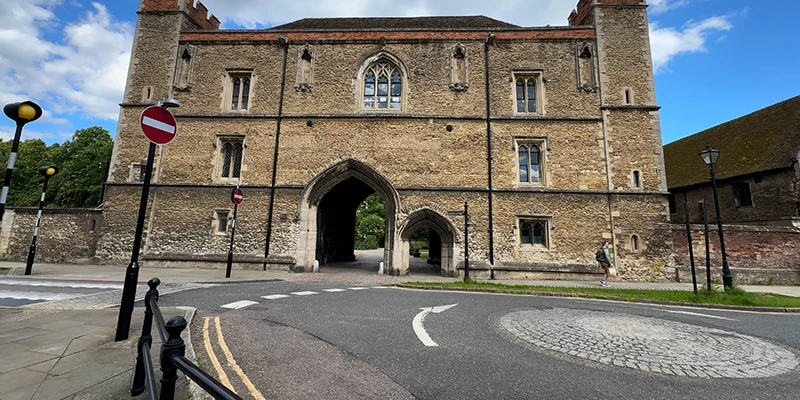
The gate complements the town's other historic buildings, including nearby Ely Cathedral and the Bishop's House, which is where the bishop lives. Dating back to the 15th century, conveniently located for the bishop next to the cathedral, which we are going to visit right now.
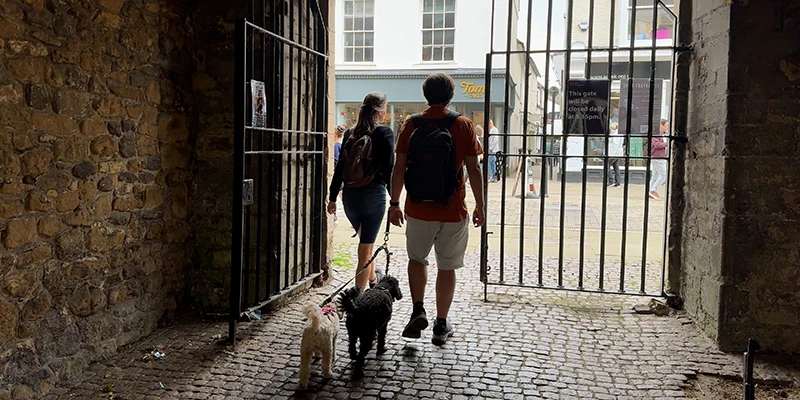
The Porta was the main gateway into the monastery precinct, the walled enclosure that held the cathedral and all the buildings that supported it. Walk through the passage and look up and you will see the timber roof structure and the grooves in the stonework where the gates and portcullis once ran. On the far side you step directly into the precinct, and the change in atmosphere is immediate: traffic noise drops away and you are on lanes of stone and gravel between old buildings, most of them still in use.
Ely Cathedral
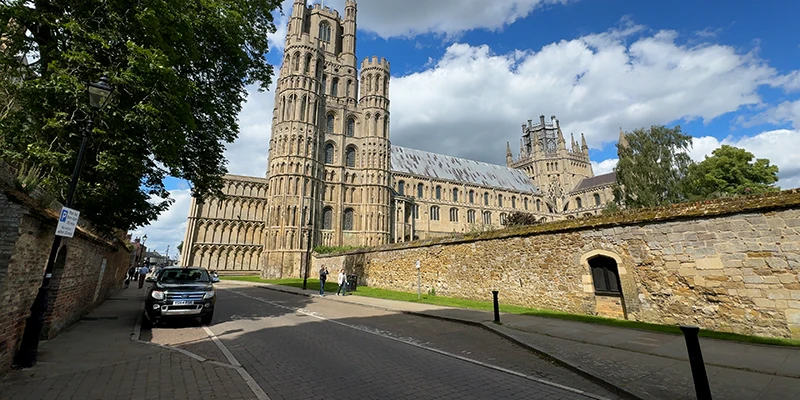
The cathedral is famous for its remarkable blend of Romanesque and Gothic architecture and marvelous octagon tower, and we'll take a close look. On the right side, rounded arches from the Romanesque, on the left, the later Gothic pointed arches that we walk through to enter. That contrast is the short version of the building's whole story. Construction began in 1083, in the heavy round-arched Norman manner, and continued in stages for the next three hundred years as taste and engineering moved on, so the cathedral records the change from one style to the other along its own length.
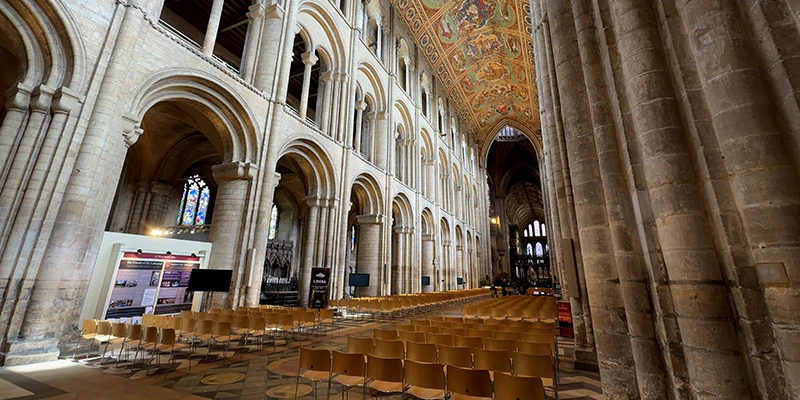
At 75.5 meters in length the nave is one of the longest in England and one of the oldest, dating back to the 11th century. One of the most historically significant buildings in England, with so many features to discover as you walk through it. You'll find various statues representing burials and monuments to different saints and important church members, some of them medieval, others Victorian, set into the aisles and against the walls where you might walk past them without noticing.
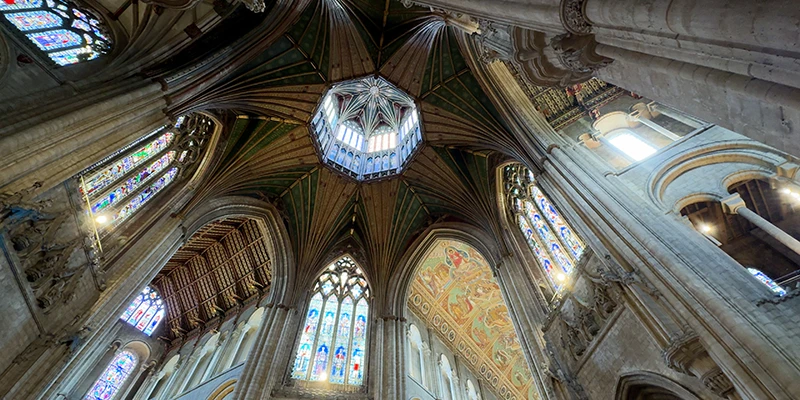
The best view is looking up to the Octagonal Tower, 142 feet high. Stand directly beneath it at the crossing, where the nave, the choir and the two transepts meet, and the eight sides open above you into a lantern of glass and painted timber. What makes it remarkable is that there is no stone vault up there at all. The whole thing is a wooden structure, and it has been holding itself up since the fourteenth century.
You can also go up and look from it to the floor down below. When you take a walk outside on top of the roof during a tour led by an official church guide, you can walk all the way around the outside at the top of the tower, getting a close view of the octagonal lantern holding the stained glass, and again as you can see it from the inside, looking down. The views from the outside of different parts of the building and distant landscape are also wonderful to appreciate.
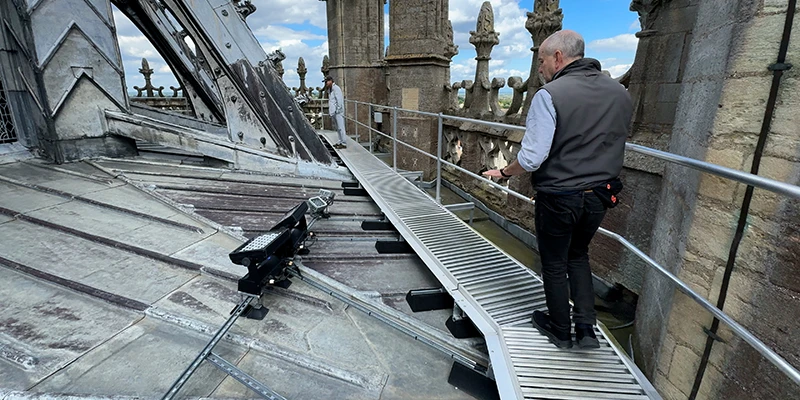
The cathedral is such a masterpiece of medieval architecture and engineering that we're going to take you back inside later for an extended visit.
The Town
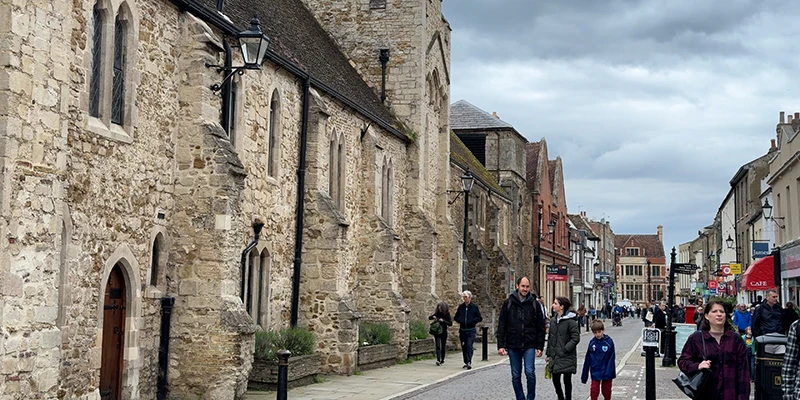
We have a lot to see in Ely with its historic town center, outdoor market, many shops and little museums. So we're walking through a small adjacent park and through a side gate, entering into the pedestrian zone of the town center.
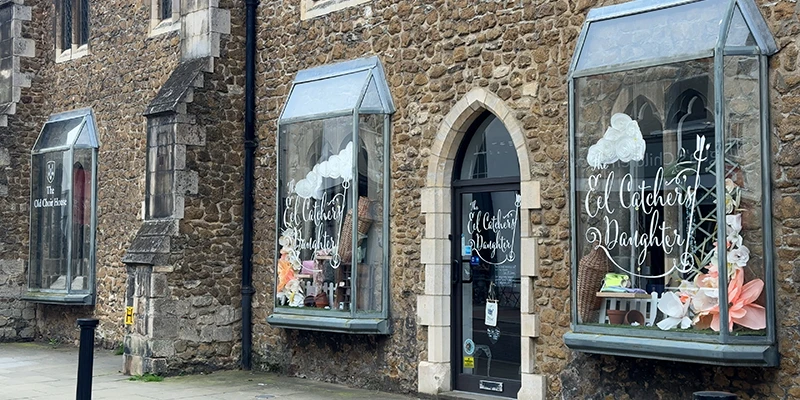
As you step onto the High Street, you'll notice right away a very large, impressive stone building which is part of the cathedral complex, including the Sacristy, the Goldsmiths tower, and the Almonry. One of its original functions was providing food for the poor, now it's been transformed into a restaurant, tearoom and shops. The stonework is worth a moment on its own, since it is medieval fabric that has simply been given a new use rather than restored into a monument.
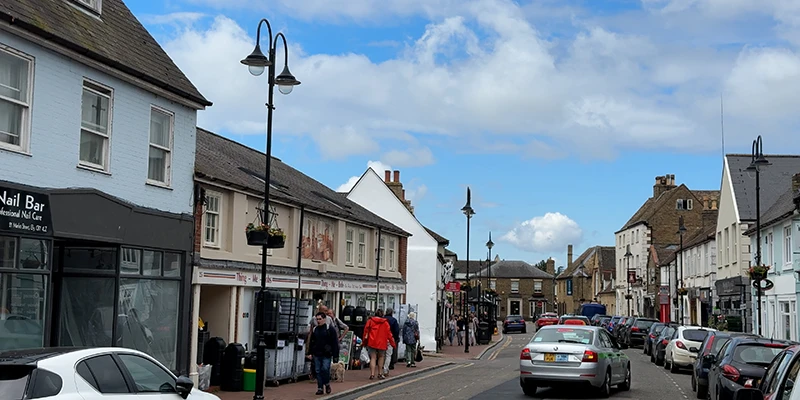
The town center is a rather compact area, quite easy to explore on foot, just over 200 meters from one end to the other, with two main streets, High and Market. Those two run roughly parallel and are joined by short lanes, so you can walk the whole commercial center in a loop without ever retracing your steps. We'll soon see more of those shopping streets, but first, let's take a walk in the marketplace and get a bite to eat, take a look at what's on sale, do some people watching.
Market Place
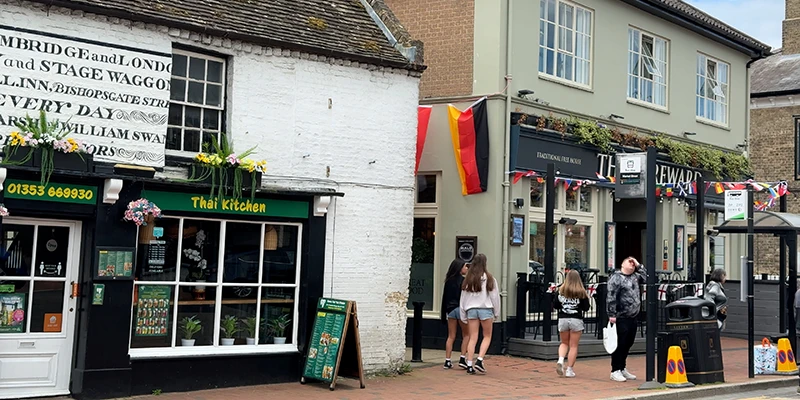
The town is a beautiful small city, but it's got the market, on Saturday and Thursday, with fresh vegetables, if you're into that kind of thing. The market fills the open square in the middle of town, and it is the one thing that will most change your impression of Ely depending on which day you arrive. On a quiet weekday the square is a parking area. On a market day it is the busiest place in the county.
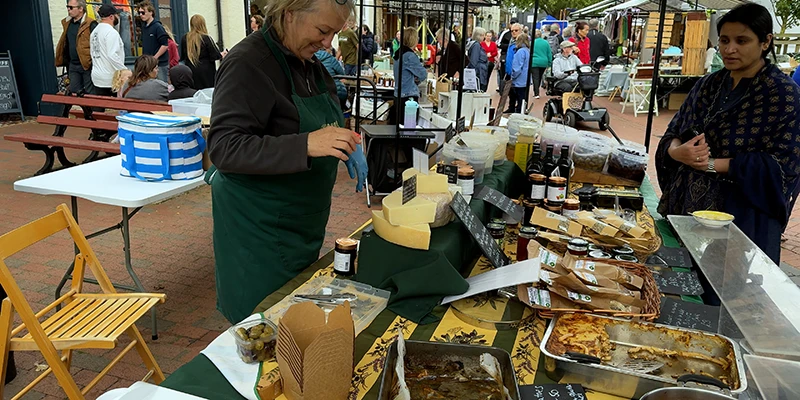
Cheese vendors offer a variety of locally produced and artisanal cheeses, reflecting the region's agricultural heritage, and one of the perks of being a customer is that you'll get some free samples. The variety includes cheddar, Stilton, and a selection of continental cheeses, Brie, Camembert, some of it smoked, others infused with herbs and spices.
Just part of the wide variety of foods available here, including Indian takeaway from the Cambridge Samosa Company, a family enterprise offering vegetarian and vegan Indian cuisine freshly cooked in their little wagon.
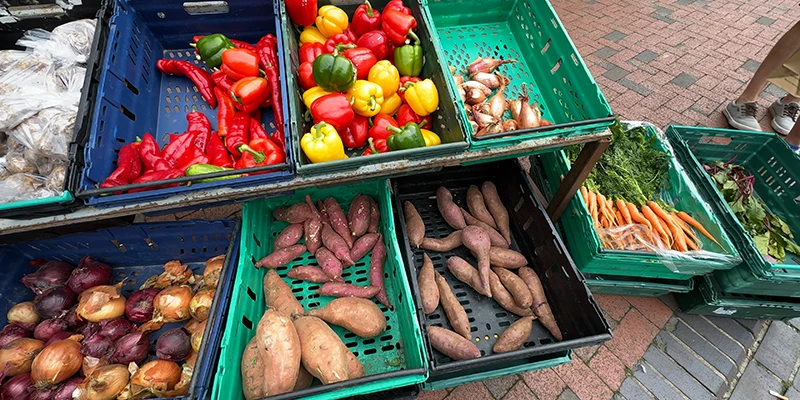
The second and fourth Saturdays of the month experience the market in maximum size with all of the farmers' produce, in addition to what's on at the normal Saturday market, which is the clothing and takeaway foods and various kinds of items for sale. The basic market happens every weekend and there are markets Tuesday, Wednesday, Thursday and Friday as well, though on a smaller scale. If you are planning your visit around it, aim for a second or fourth Saturday and you will see it at full size.
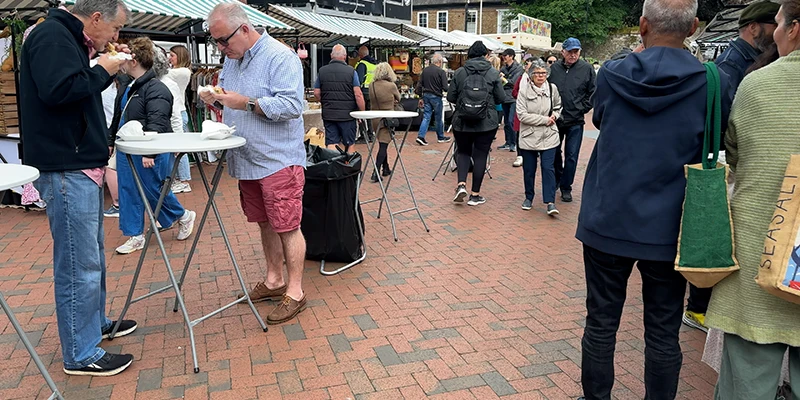
The market is a historic and vibrant center of community life that's been an integral part of the city for over 800 years. First granted a charter by Henry the Third in the year 1224, it's evolved from a traditional trading center into this modern, diverse marketplace that serves as both a commercial hub and a social gathering place, providing that direct connection between local producers and consumers, emphasizing quality and sustainability.
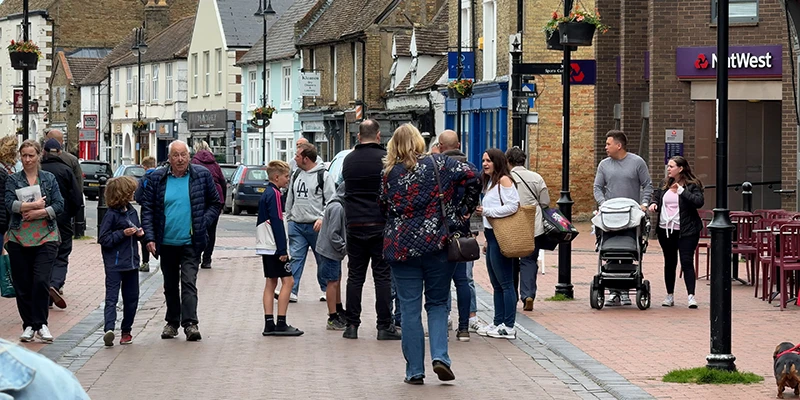
Well, that's all very nice for the locals to have clothing and knickknacks, but most people are here for the food, such as a giant Reuben sandwich on a bagel with pastrami and cheese, sauerkraut and pickles, and a special sauce. Bigger than a Whopper, you can eat it while you're standing up, but these round tables are a good place to meet some locals, or stroll along eating your pastry, or you can sit down. There are some cafes with tables and chairs, but if the market's busy and there are no seats, just utilize one of those stand-up tables.
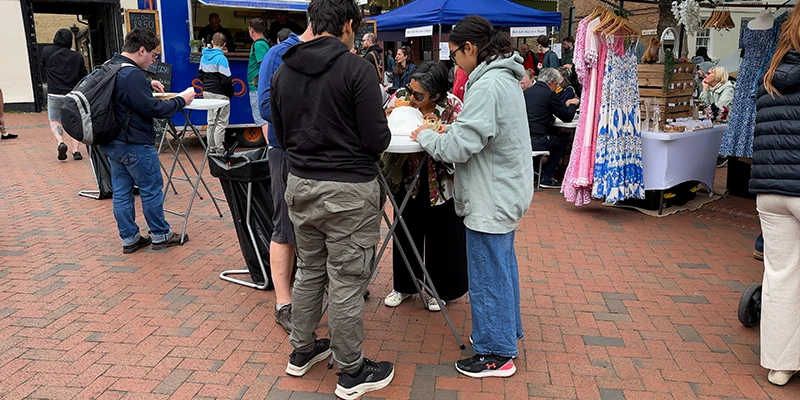
Have a British sausage roll, Mexican street food from a big wagon or something from Tibet, then leave room for a dessert: hazelnut brownie, apple tart, black cherry cheesecake, cherry slice.

You will find the fastest sandwich makers you'll ever see. He's experienced. Not only quickly made, but delicious and not expensive. Try the falafel wrap with hummus, mixed salad, tahini and chili sauce, Mediterranean falafel. You could get a mixed wrap with falafel, halloumi, hummus, salad, tahini and chili sauce. He's serving up seven different meals every weekend.
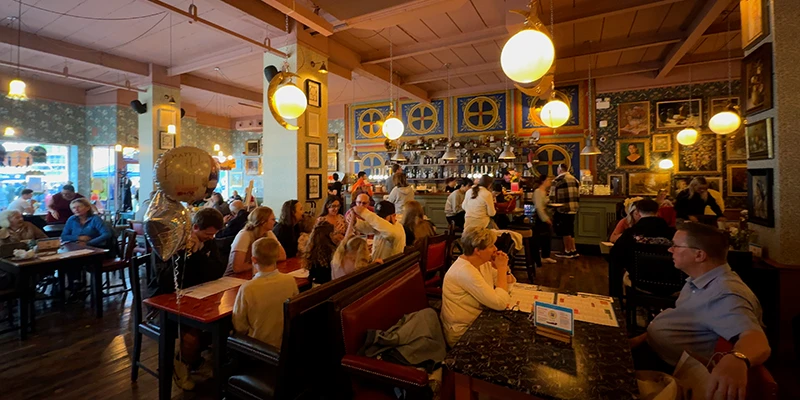
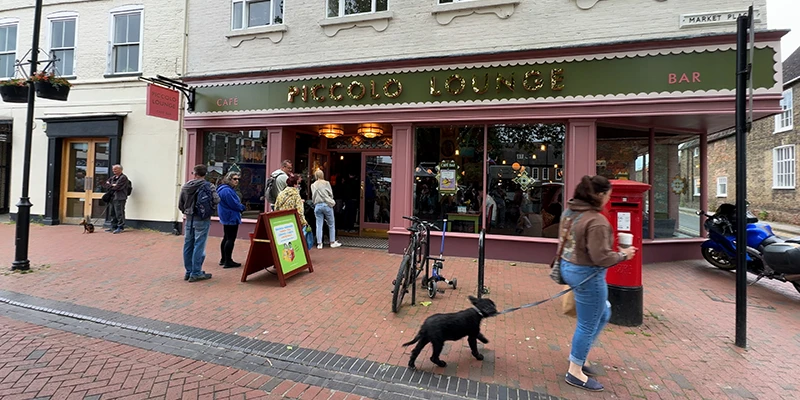
There's also a restaurant at the Market Place called Piccolo Lounge. It just opened in 2024 and already has become one of the most popular places to eat in town, serving breakfast, lunch and dinner. Although quite new, it's part of an extensive dining group called Loungers. They have 220 establishments in England, most of them featuring this rustic, comfortable design with a lounge atmosphere.
Market Street
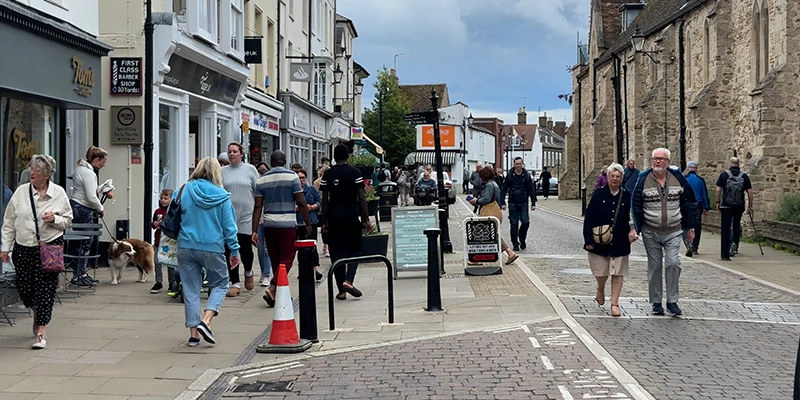
After you've finished your browsing and had something to eat, it's time to step out and explore more of the town, walking along Market Street, which extends directly from the marketplace. In the first block, the street is for pedestrians only, and there are some charming side lanes, also pedestrianized. So this neighborhood is one of the best places to hang out and relax, enjoying this tranquil urban setting.
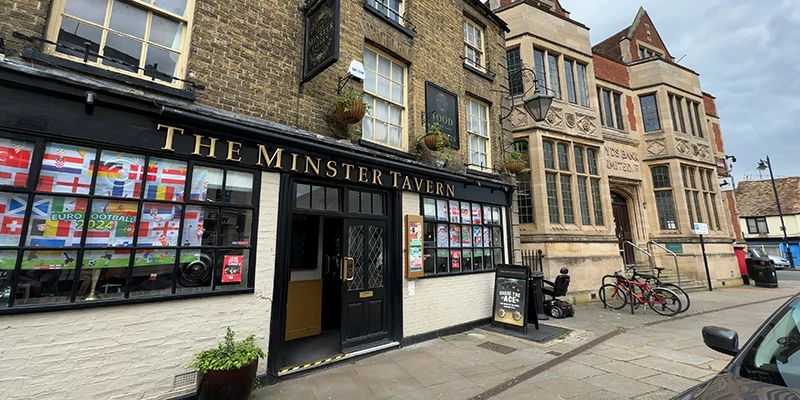
Nearly everybody here is a local, so this town is not crowded or a victim of overtourism. At this intersection, Market Street transitions into being a regular automobile street, with sidewalks for people to stroll on and a low speed limit for cars to make it safe and comfortable for everybody.
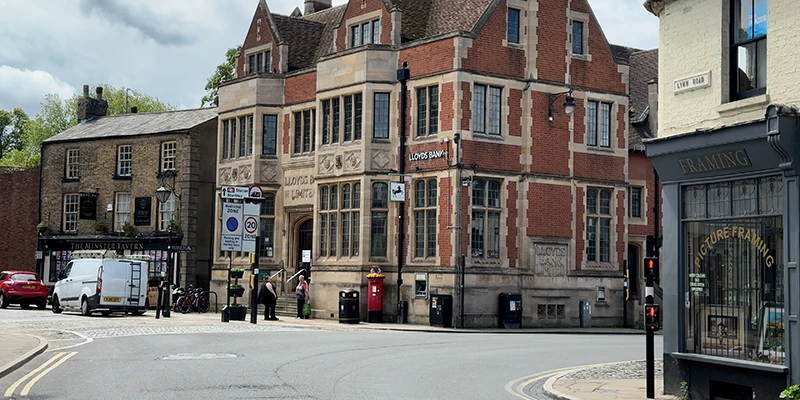
Like most English towns and small cities, it has that village atmosphere in the main streets lined with historic buildings and mostly individually owned shops, rather than the big, expensive chain stores. Usually one pub is on every block.
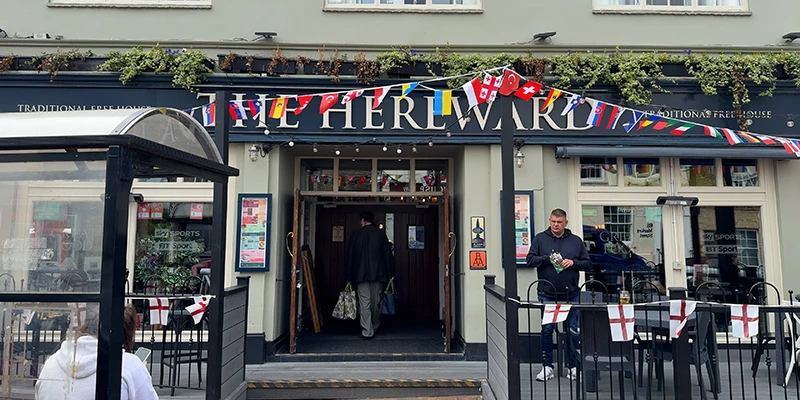
The street's only 230 meters long, so you could walk it easily in five minutes, but take your time and reach the end because there is a nice little bonus.
Ely Museum
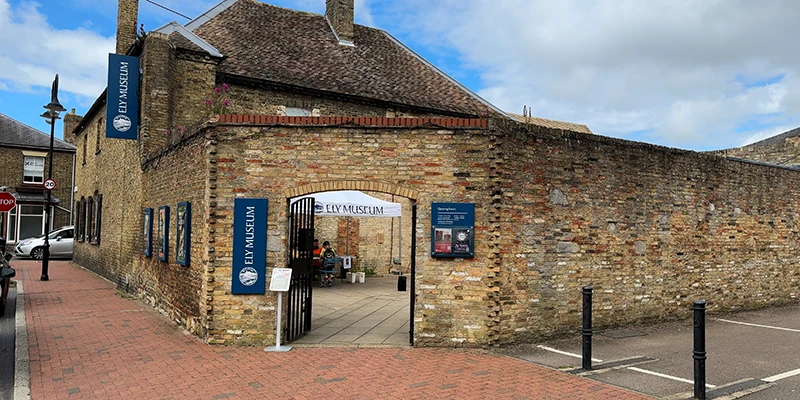
It's the Ely Museum. This small museum is located in an old jail, offering a compact exploration of the region's development from prehistoric times to the present day. There's Roman pottery, Saxon jewelry, and weapons from ancient times. Many of these items were discovered locally. The museum is ideal for anyone looking to understand the history.
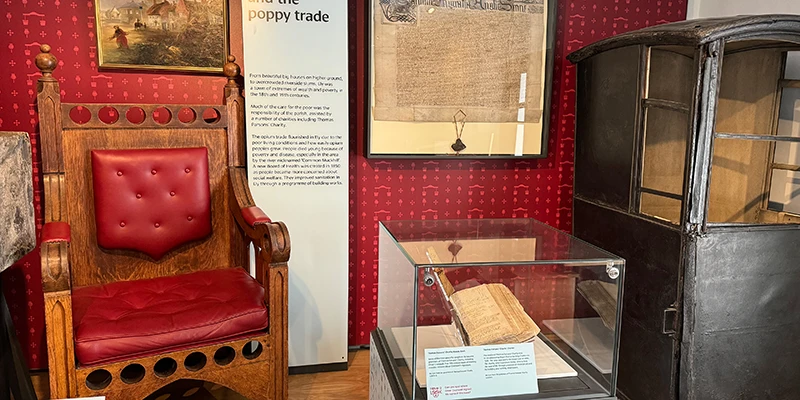
The building itself is part of the exhibit. It served as the Bishop's Gaol, and some of the original cells survive, complete with the graffiti prisoners scratched into the walls. The museum reopened after a major refurbishment, so the displays are modern even though the setting is not.
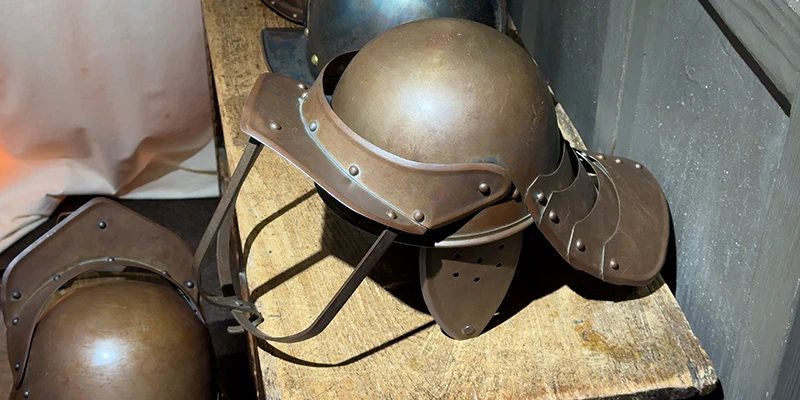
The fenland collection is the part that gives you a sense of what this landscape was like before it was drained: eel traps, punts, and the tools of a way of life that depended on water rather than fields. There's another small museum for us to visit four blocks away.
Oliver Cromwell's House
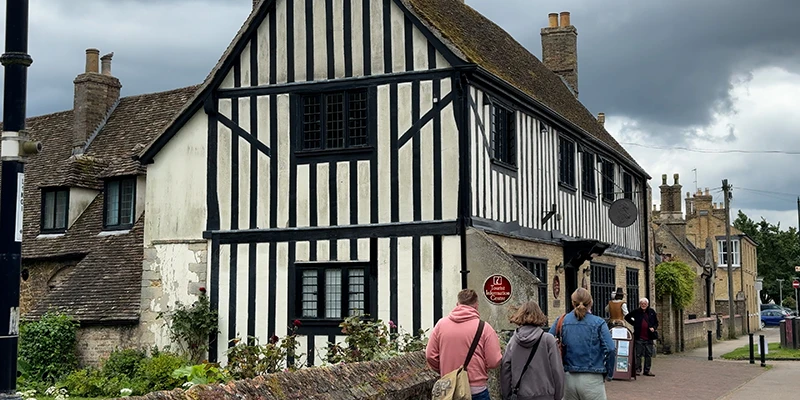
This well-preserved building was the home of Oliver Cromwell from 1636 to 1646, when he represented Ely in Parliament, and then became the leading general of the parliamentary army in the English Civil War, battling against King Charles the First.
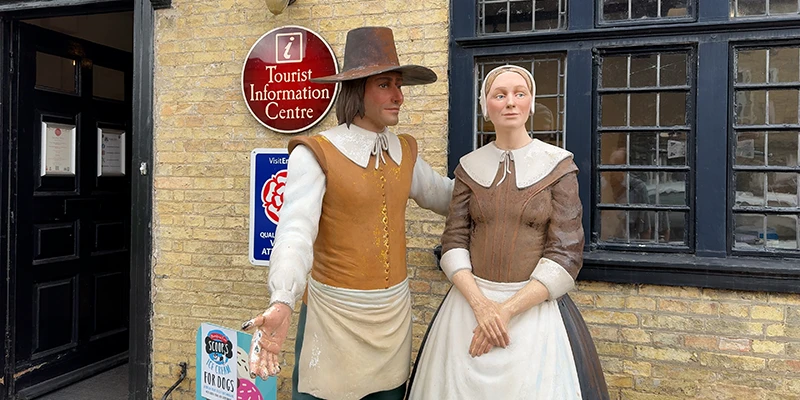
Cromwell's victories and leadership resulted in him becoming the leader of England, the Lord Protector from 1653 until his death in 1658. He remains one of the most argued-over figures in English history, and the house does not try to settle the argument for you. The museum details Cromwell's life and the turbulent times that he lived in, along with a glimpse into domestic life during the English Civil War.
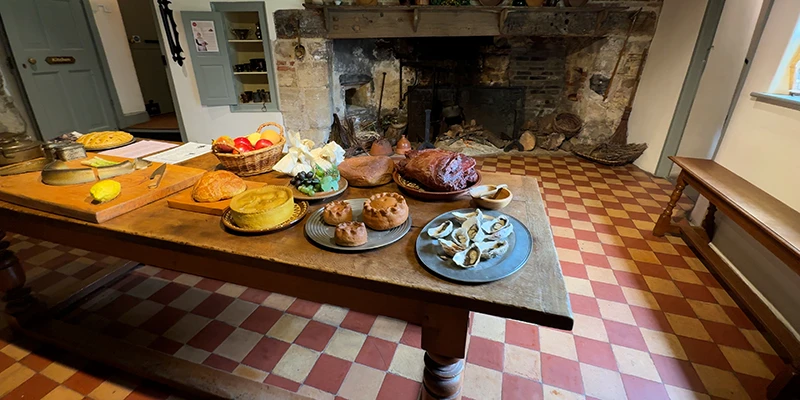
The rooms are furnished with period-appropriate decor and display various artifacts related to Cromwell and his time, including interactive exhibits, video presentations, documents, and reconstructions of what the house would have looked like, and the clothing that people wore back in those days.
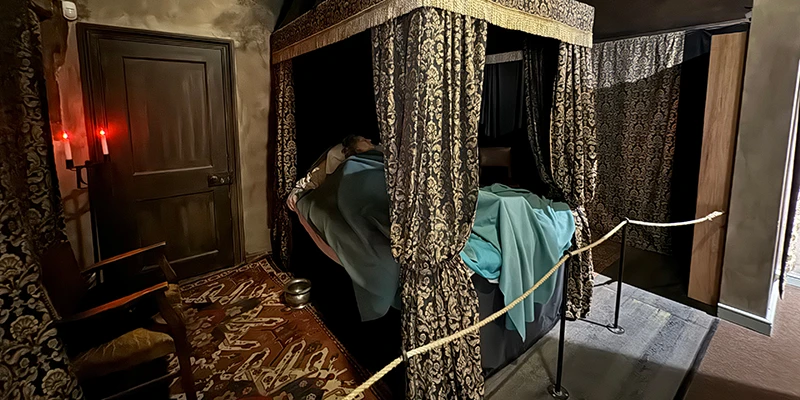
This room was Cromwell's office before he came to power as a national leader. He was a local politician here, where he would collect the taxes, called a tithe, in the form of corn and other produce. That job is the reason he was living in Ely at all, and it is a useful reminder of how ordinary his position was before the war changed everything.
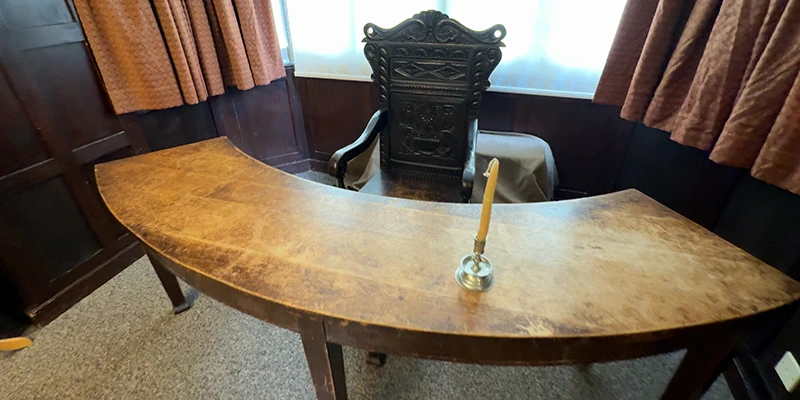
The official Tourist Information Office of Ely is located in this building on the ground floor. They can provide local travel information, box office services, local interest books and maps, and they are a gift shop, all of it in this one building first constructed in the 13th century.
Saint Mary's Church
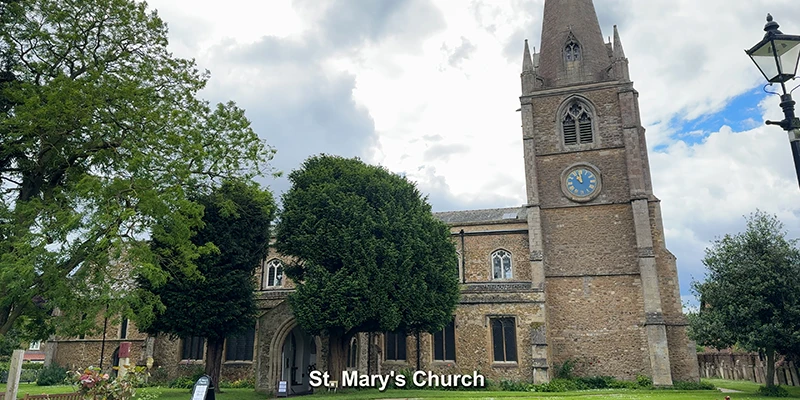
Next door is Saint Mary's Church, also built in the 13th century. A fine example of Early English Gothic architecture. It's free and worth a quick visit to see all those pointed arches and coffered ceiling, with occasional exhibits like the student art show.
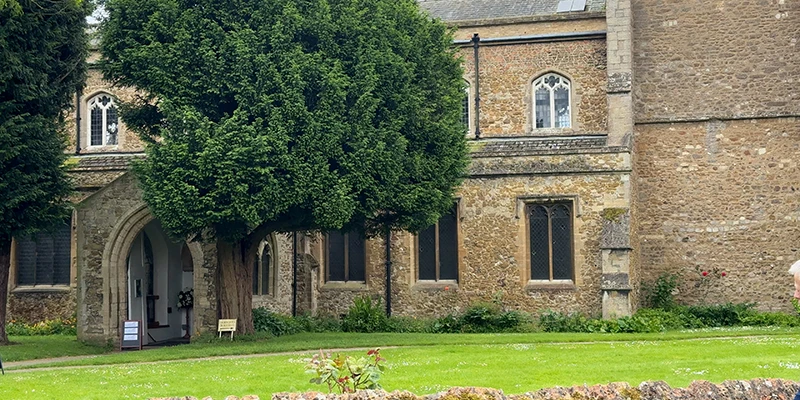
It is the parish church, as distinct from the cathedral, which was the monastery church and then the bishop's church. For most of Ely's history the ordinary people of the town worshipped here rather than in the great building up the road.
The Cathedral history
William the Conqueror decided that he was going to build something very, very large to say I have conquered Britain. That was a lot of history summarized in one quick breath. Let me unfold that for you a bit, to explain how Ely resisted the invasion of William the Conqueror, which made William very upset because Ely was one of the last holdouts to Norman control of England, as I'll describe for you as we walk along High Street.
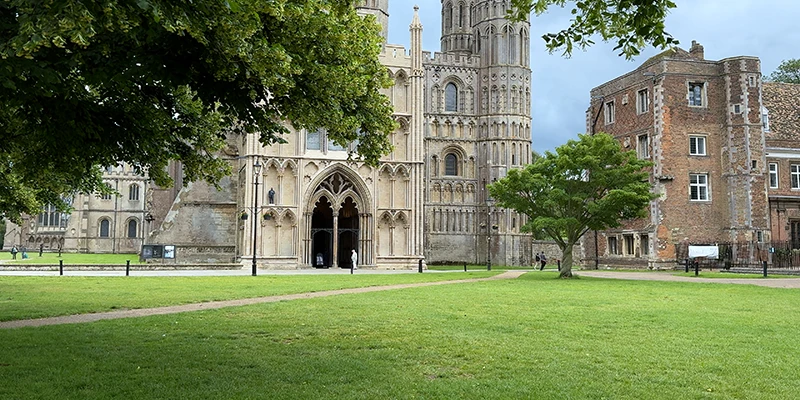
When William the Conqueror invaded England in 1066, his large army controlled most of the country within a few years, until they got to Ely, which was a fortified city surrounded by marshes, and put up a major resistance that lasted for several months with fierce counterattacks and major battles. The marshes were the whole defense. An army in armor could not cross them, and the defenders knew the causeways and the water. But inevitably, William's larger army laid siege and finally succeeded in their conquest. So one way that William asserted his dominance was building the massive new cathedral.
One block over brings us to the cathedral precinct, which also features this old palace that dates back to the 15th century, when the bishop lived here. The building is now used by King's Ely, one of England's oldest schools, founded over a thousand years ago. Students still cross the green between classes, which keeps the precinct from feeling like a museum.
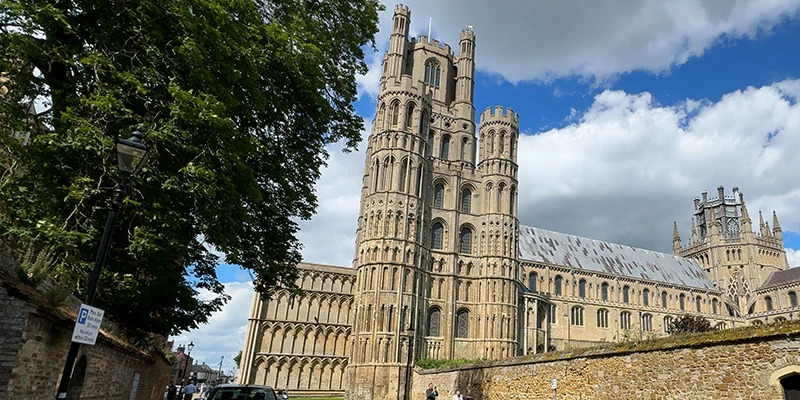
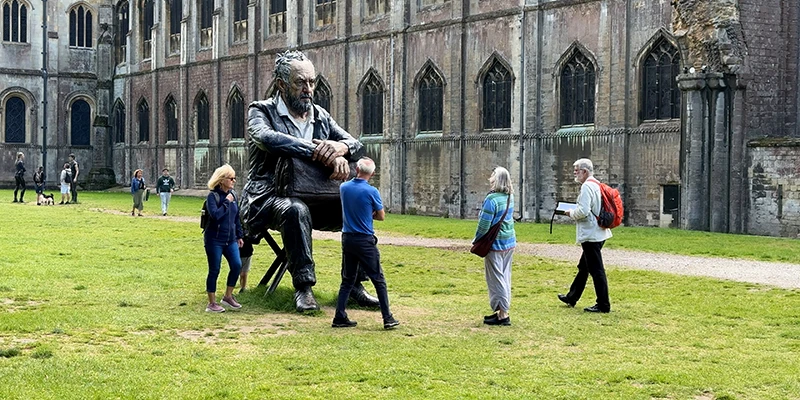
From the front of the cathedral, when you stand back a ways, you'll have a fine view, especially of that west tower rising 66 meters above the town. On the tower you can see the rounded arches and fortified turrets typical of the earlier Romanesque style, while in the front you see the pointed arches of the later Gothic style. There is a temporary art exhibit featuring a very large seated figure by the sculptor Sean Henry, its modern style contrasting nicely with the ancient architecture.
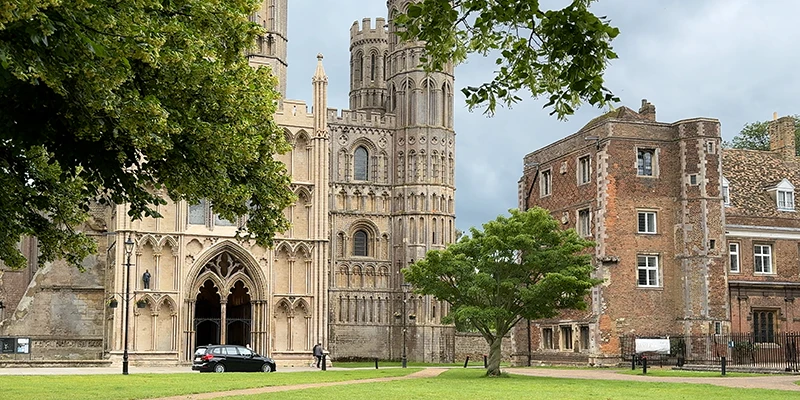
The front doorway forms the main entrance through what is called the Galilee Porch, that originally served as a ceremonial entrance reserved for special occasions, and a gathering point for pilgrims, and occasionally as a chapel. Now it's the main door into the church.
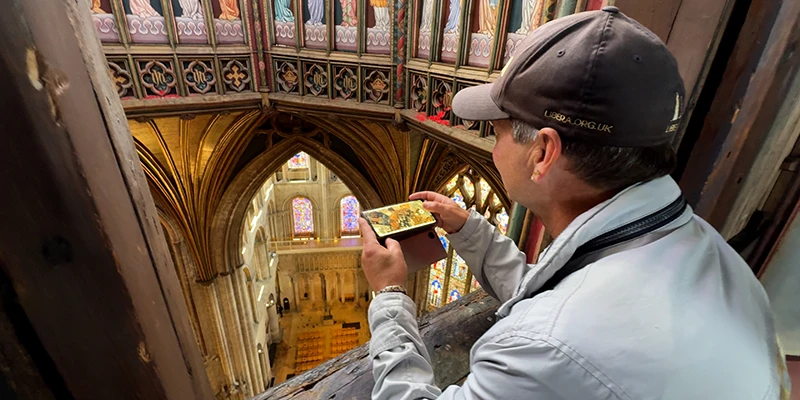
The massive size and grandeur of the interior is quite astonishing. The nave has some unusual features, such as this painted ceiling, which was done with bright colors during Victorian restorations in the mid-19th century, vividly depicting scenes from the Bible. You can look down to see it as reflected in this mirror in a box. These mirrors are found in many old churches to make it easier to see up, and they become popular items for people shooting selfies reflected in the mirror.
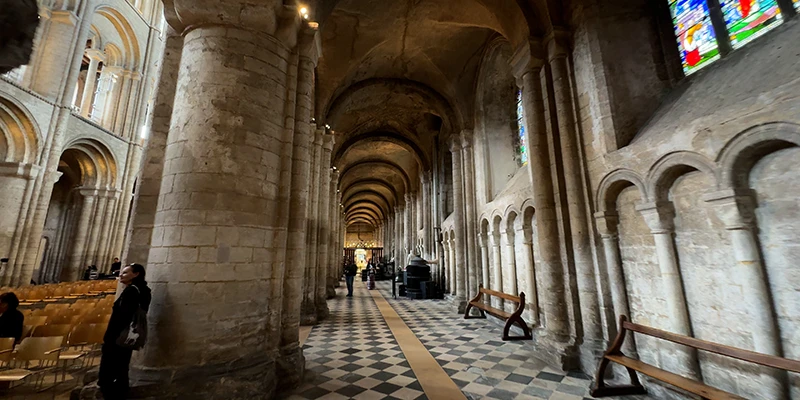
Notice the different pattern in the piers, those large columns holding up the building, which alternate from one column to multiple columns. The large, simple round piers contrast with the compound piers, which have a series of pilasters attached all around them. This complexity adds depth and rhythm to the nave's appearance.
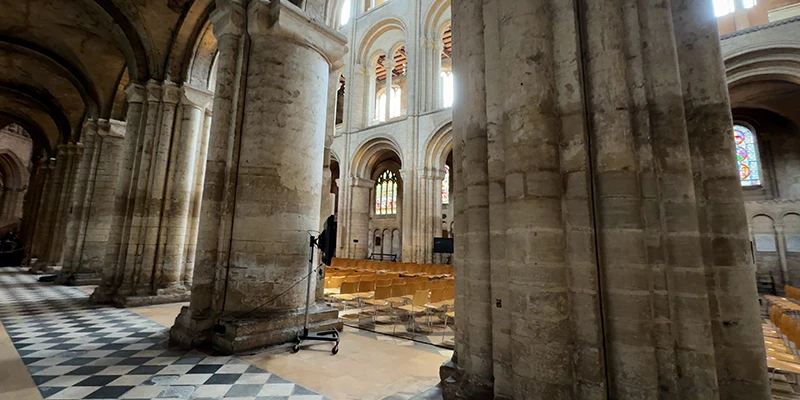
Before the cathedral was built, the first religious structure on the site was a monastery founded in 673 by Saint Etheldreda, a princess of the kingdom of East Anglia who gave up two royal marriages to found it. After Saint Etheldreda's death, her relics were kept in the abbey's church and attracted many pilgrims, making åthis an important and very wealthy Christian site. It was later attacked by Vikings and fell into ruins. The building we see today was first constructed in 1083.
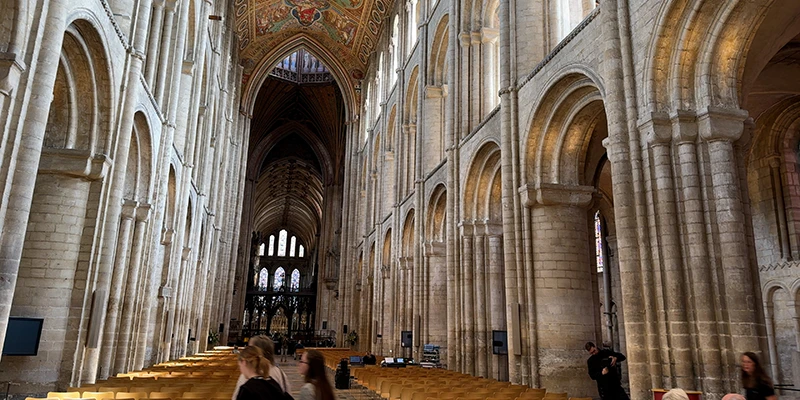
Take a dramatic walk along the north aisle with chapels on the left, the nave on the right with those big columns, and entering the crossing at the center of the church with the most spectacular feature rising above, the eight-sided Octagonal Tower. We'll have a closer look and climb up inside it in a couple of minutes.
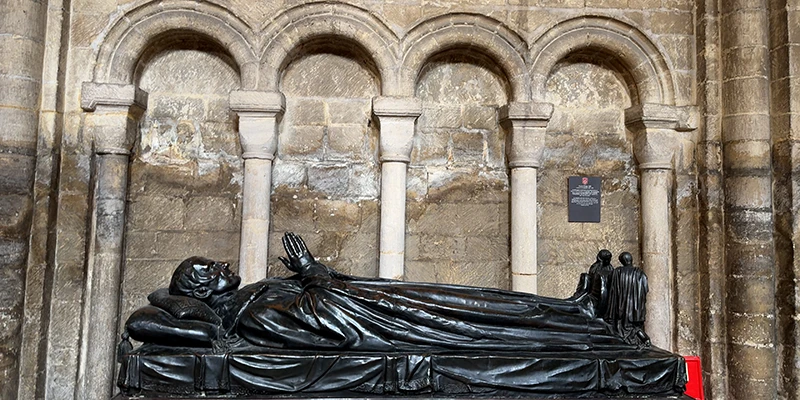
The north aisle runs parallel to the nave. It dates back to the 12th century. During later renovations, Perpendicular Gothic elements were added, including raised walls, side chapels, stained glass windows, pointed arches, memorials, tombs, and the rib vaulted ceiling.
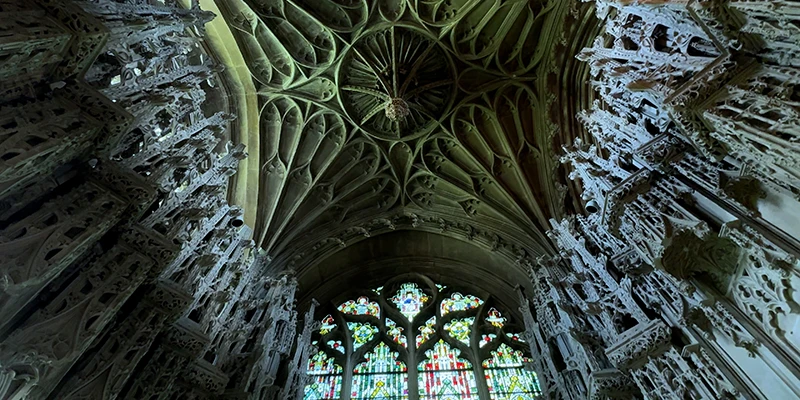
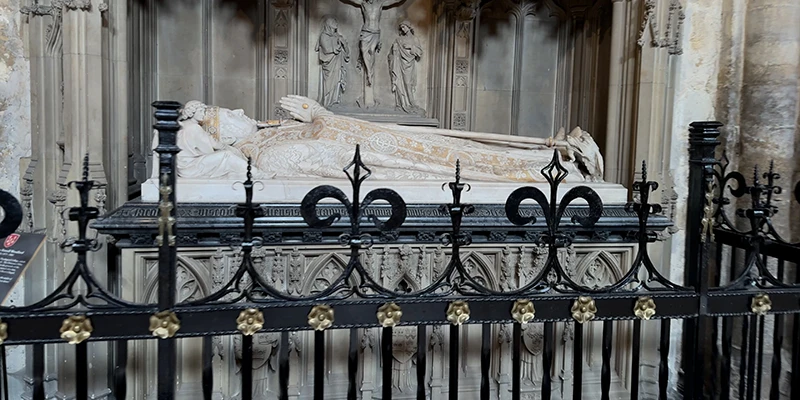
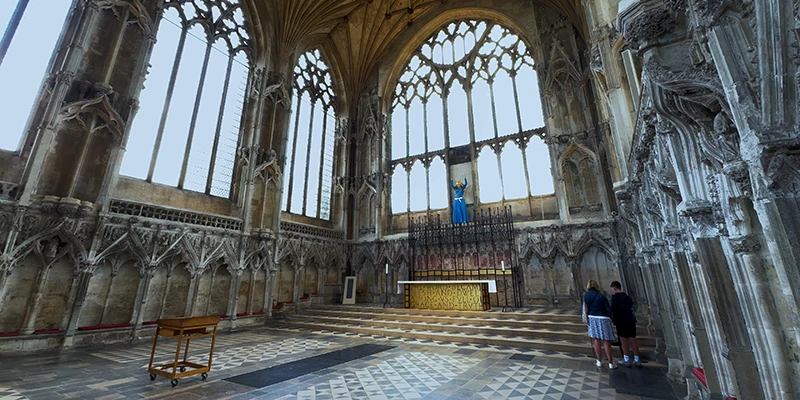
The end of the north aisle leads into Bishop Alcock's Chantry Chapel, a stunning example of Late Gothic architecture in a flamboyant Perpendicular style with rich decorations. He was Bishop of Ely in the late 1400s, and funded this chapel so he could be buried here, and others could come and pray for him and conduct mass in this little chapel to help send him to heaven.
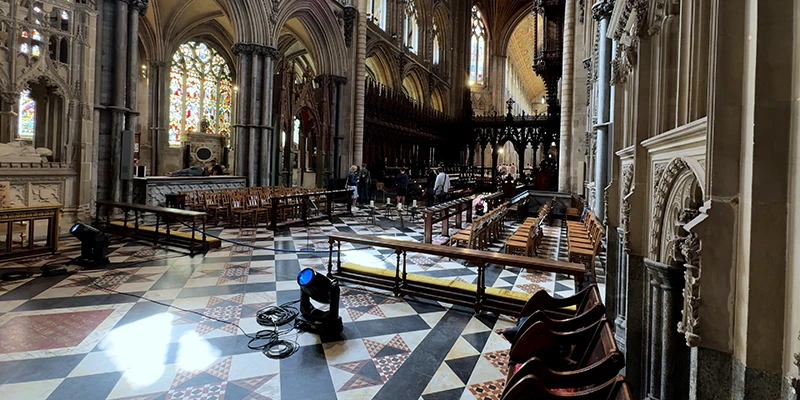
Next to the chapel we are in the choir with carved wooden stalls, soaring arches, rib vaults and stained glass windows, all done in Early Gothic style. The choir is connected to the Presbytery, also Early Gothic with pointed arches, stained glass and ribbed vaulted ceiling with an intricate tile floor. A place where clergy would gather and masses were held.
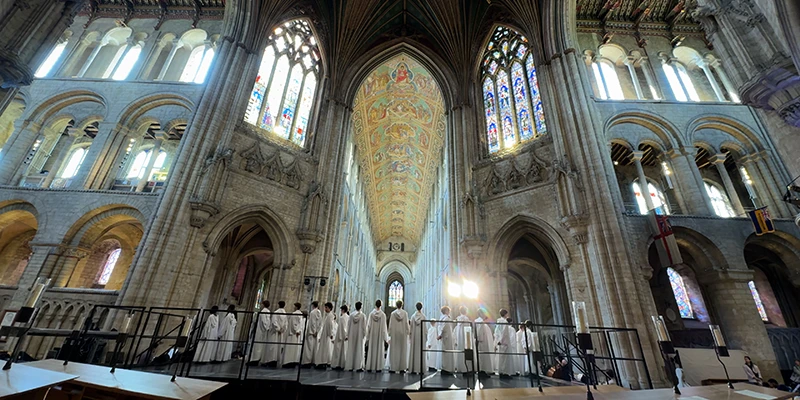
There is a very large and special chapel at the back of the church, so keep walking along that aisle to reach the Lady Chapel, one of the cathedral's most beautiful parts, dedicated to the Virgin Mary. Completed in 1349, this Gothic chapel is known for its expansive size, excellent acoustics, intricate stone carvings, rib vaulting, and large windows that create a bright, airy, ethereal ambiance. The chapel is one of the finest examples of English Gothic architecture, with elaborate stone tracery and detailed carvings, many of which depict scenes from the Bible and the life of the Virgin. It is the largest Lady Chapel attached to any English cathedral, and standing in it after the dim nave is a genuine surprise, because it is filled with light.
We can show our walking route on the cathedral's floor plan, which also has color codes showing the dates of construction. We entered through the front, then the nave and side aisles, walking along the north aisle to Bishop Alcock's chapel, the Lady Chapel, and now to the transept at the crossing. Then we'll have a close look at the Octagon, the grand Octagonal Tower.
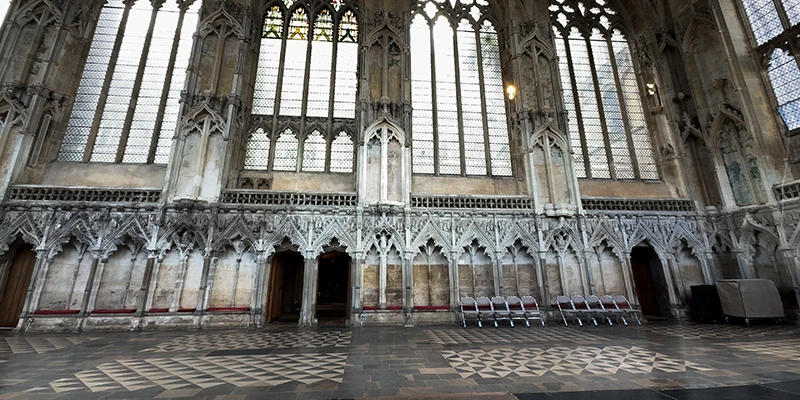
We're now in the cathedral transepts, which are the oldest part of the church, with rounded Romanesque arches dating back to the end of the 11th century. The ground floor has those massive Romanesque columns, while the top floor has pointed arches and stained glass windows, a sign of the later Gothic development. Here we can look up at the extreme height of the octagon soaring above us, 142 feet high. One of the most spectacular examples of medieval architecture, seen here in a very wide angle view taking in all the columns, windows and arches.
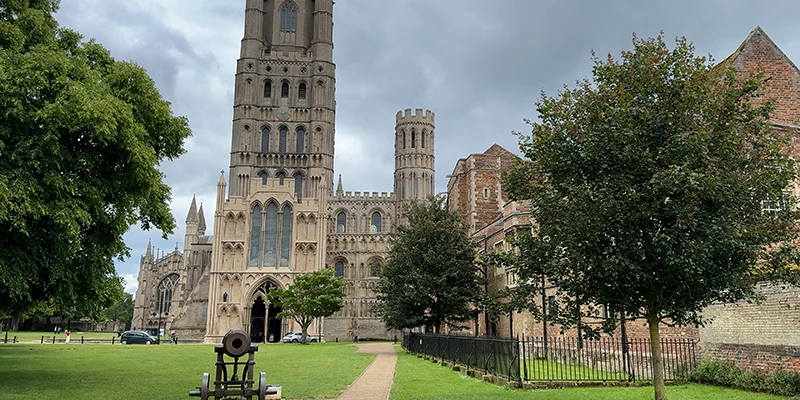
The cathedral is also a working church. Not only is it a historical monument, it's an active Christian church offering daily worship and a place of prayer and sanctity, with services open to everyone. Choral music has been sung here for centuries and the acoustics of the nave and Lady Chapel are still used for concerts.
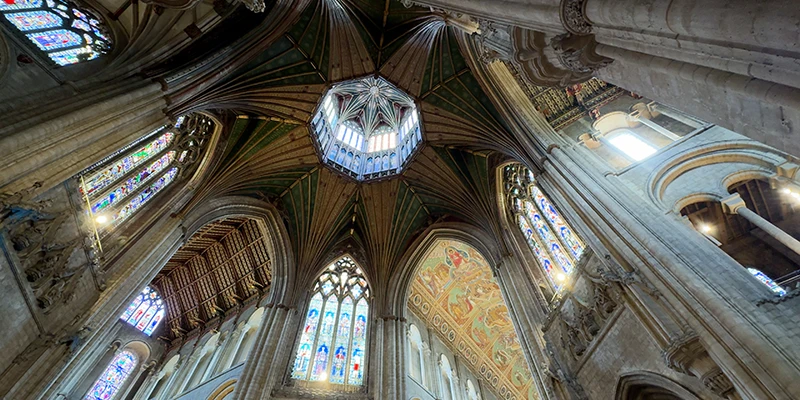
Now we're going to take you up inside the dome and show you how it's built out of wood with painted panels of angels and windows that you can look out of and see the floor far down below, which is part of a guided church tour we're going to take you on.
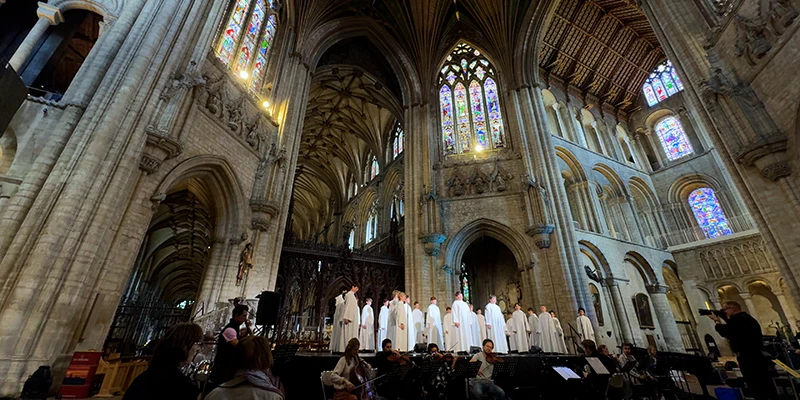
There are concerts inside the cathedral on a regular schedule, or maybe you will get lucky and hear a rehearsal while you are visiting during the day.
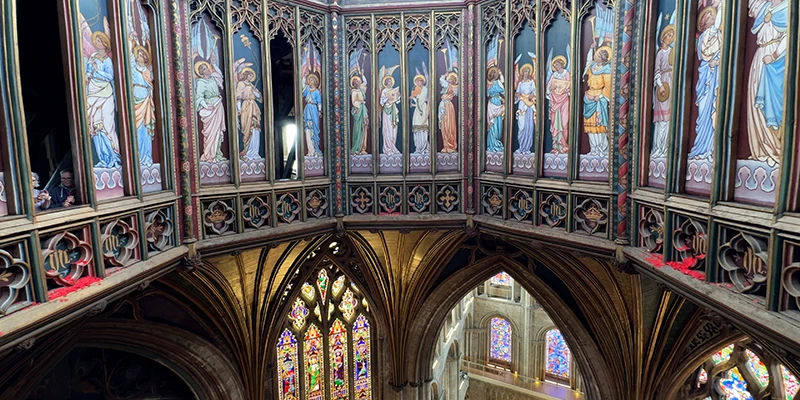
From the outside you have a fine view of the top of the octagonal stone tower that we are going to walk around, with its smaller octagonal lantern rising above that, which we will see close up right now. The sturdy walkway brings us around to a heavenly view of the rest of the church, with the west tower rising at the front. It was completed in 1189 during the late Romanesque period.
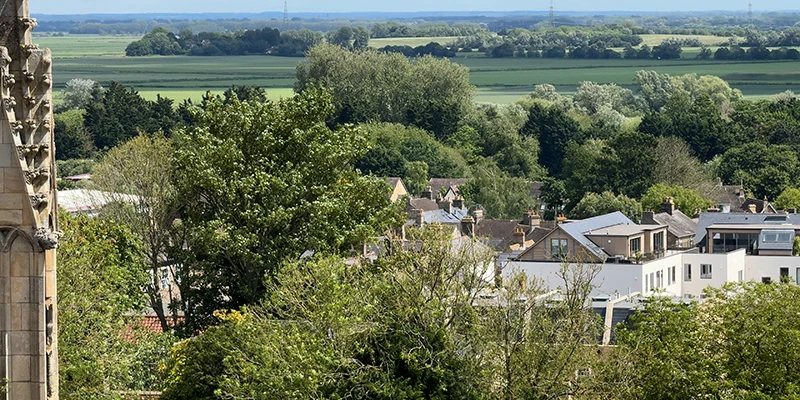
In the distance we see the flat pastoral landscape called the Fen, the former marshlands. Down below we see a cluster of historic structures, some of which are the monastic buildings associated with the cathedral, still utilized for church functions, offices, and residences. Walking along the outside of the lantern gives you a clear view of the flying buttresses made of lead covering large pieces of timber, and the stained glass windows.
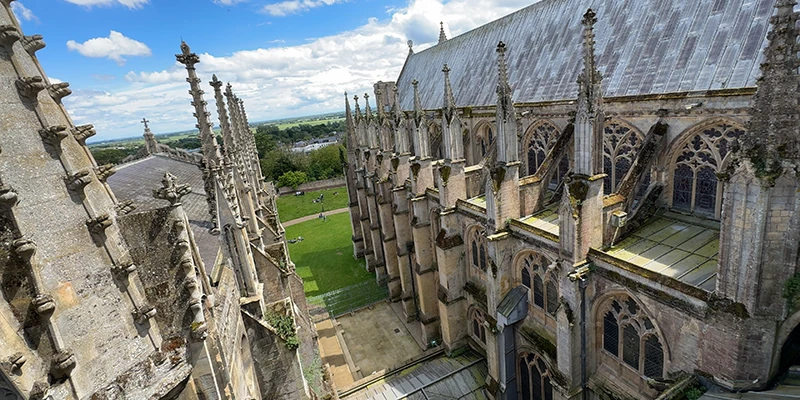
Looking down, we see the stone flying buttresses supporting the upper level clerestory at the back of the church, with the choir and presbytery. Next to that we see the outside of the Lady Chapel, which is a single level, not as high, so its buttresses did not have to be flying. Our church guide provided commentary and will soon bring us inside the lantern.
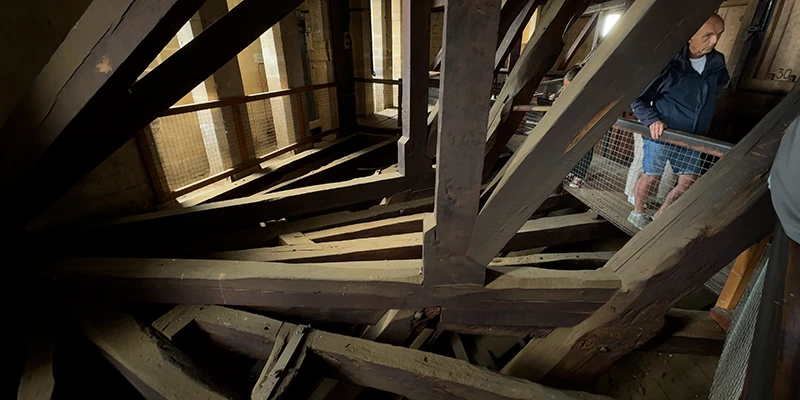
Inside the lantern, we see the massive wooden beams that are holding up the lantern and the outer stone wall. There are 16 of these, what are essentially wooden flying buttresses, and they're moving the weight down through the spokes to where they rest on ledges, and that transfers the weight yet again from the center to the sides, and then as you see externally to the buttressing you're seeing, down into the ground. You'll also see that they were originally pegged together with wooden dowels, no ironwork.
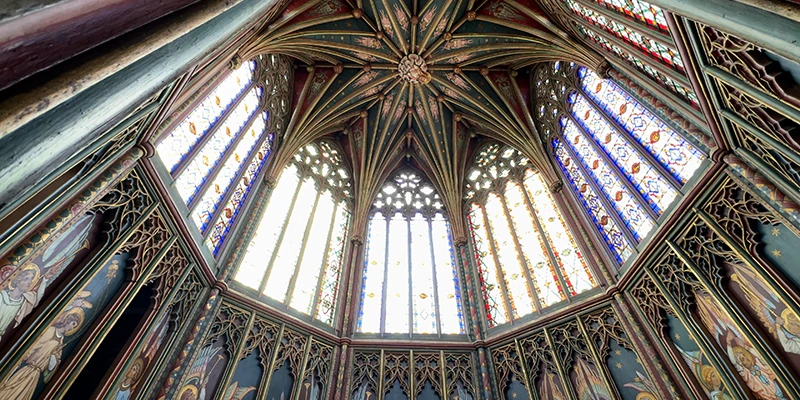
So when you look, you realize that you have a kind of semi-circle of wheel-like spokes coming out from each corner, going all the way around. And the thickness of the wall, so there's the outer skin of limestone, and here is the inner and there's rubble fill, a lot of which is the sandstone in the center.”
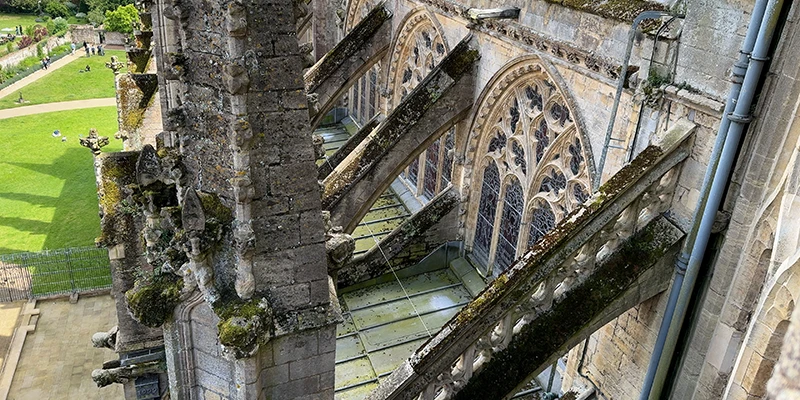
We get to walk all the way around the lantern for a close-up view of these massive wooden beams. And notice on the right side there are some windows that open, which is where we get one of the most amazing views of the entire visit to the cathedral, looking straight down.
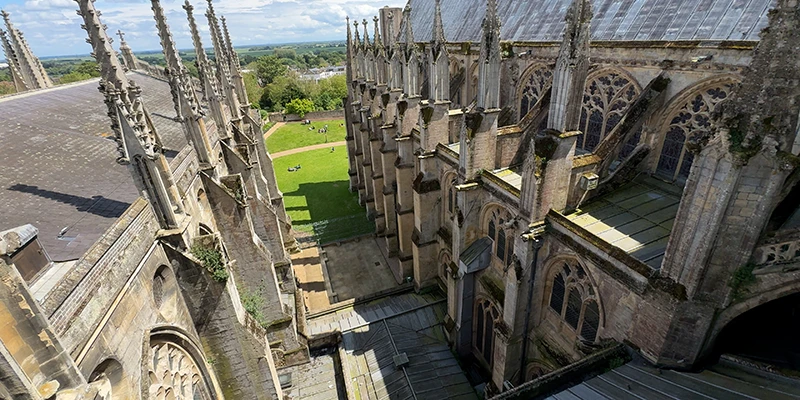
Construction of this central Octagon Tower began in 1322 when the previous tower collapsed, and was finished in just 18 years. The collapse destroyed the Norman crossing tower and the choir bays next to it, and rather than rebuild what had fallen, the sacrist Alan of Walsingham took the bold decision to clear away the four corners of the crossing and span the much wider opening with an eight-sided structure. Nothing like it had been attempted before, and nothing like it was attempted again. You must come visit Ely in person to experience the beautiful town and the grandeur of the cathedral.
Getting Here
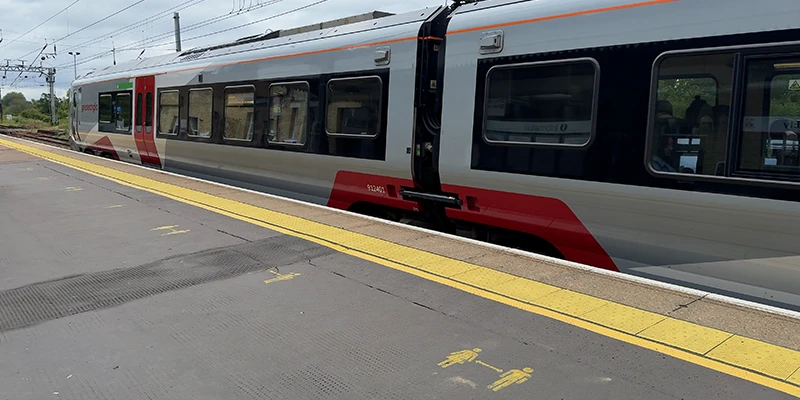
Getting to Ely is quite easy. It's just over an hour by train from London or 15 minutes from Cambridge, making it ideal for a day trip, with nice scenery out the windows. Ely is a rail junction well out of proportion to its size, with lines running to Cambridge, Peterborough, Norwich, King's Lynn and Ipswich, so it is reachable from most of East Anglia without changing trains.

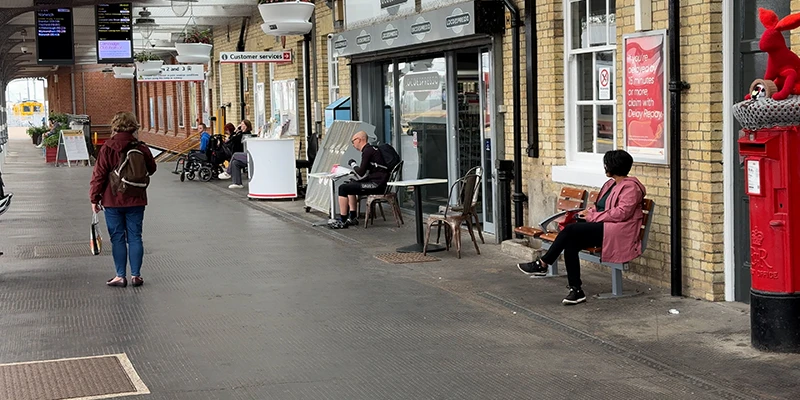
The Ely train station is rather small, with the regular facilities, a snack bar and ticket office, and out front there is a taxi stand if you would like to ride into the town center just one kilometer away, and it makes for a very nice walk.
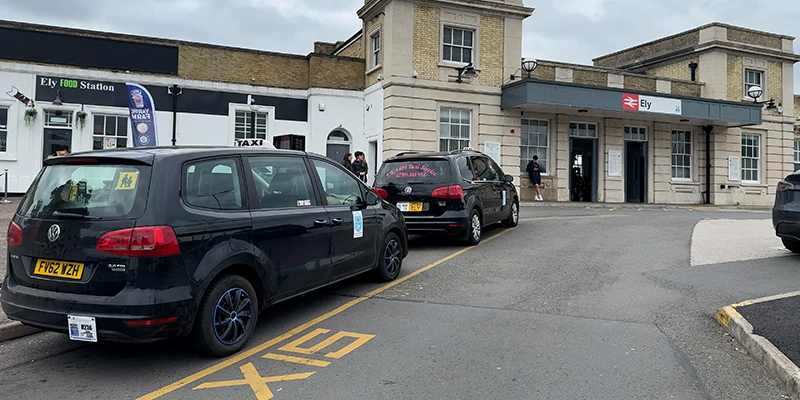
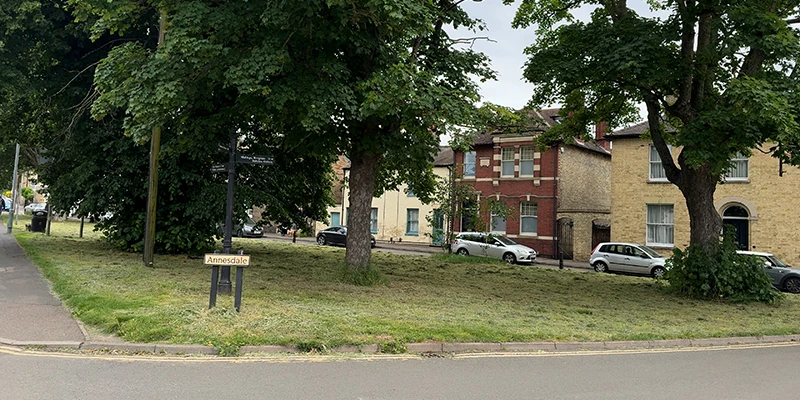
At this point you'll have a choice of two different routes. One is direct to the town center along the road, which includes walking up a rather steep hill lined with typical residential buildings. However, the other direction is more scenic and just 200 meters longer. So take a right turn and around the corner you'll be at the lovely Marina, which leads into a couple of small parks.
When leaving the train station, you'll reach that intersection where going straight brings you uphill directly to the cathedral. The nicer route is take a right, then along the waterfront through a couple of parks to the cathedral. Then either way, walk through a few blocks of the town center and then walk back to the train station, total distance about four kilometers.
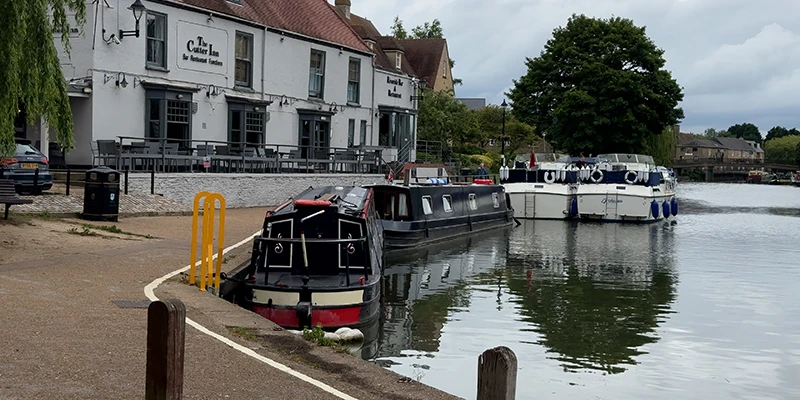
The Ely Marina provides mooring facilities for various types of boats, including some houseboats. It's situated on the tranquil waters of the Great Ouse, one of the main rivers of this county of Cambridgeshire. In the old days, Ely was an island surrounded by marshland, so this river played a crucial role in trade and transportation.
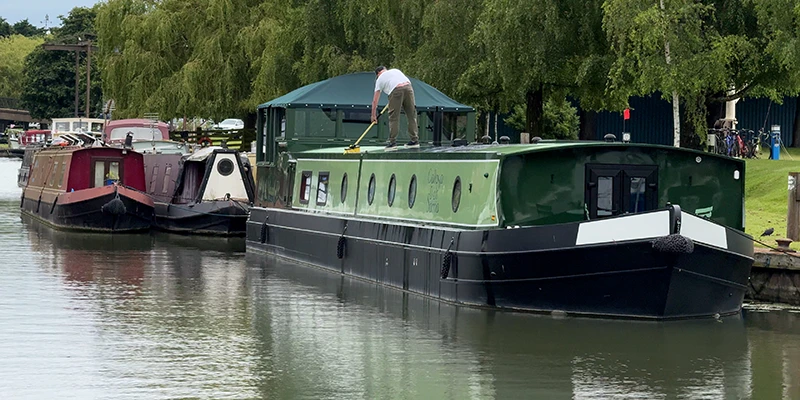
There were a lot of eels swimming in the surrounding waters, which is how Ely got its name. The marshland was drained in the 17th century, which really transformed the region, so the river became more navigable, boosting Ely's economic importance. That drainage is the single biggest event in the history of this landscape. It turned water into farmland, created the flat black fields you see from the train, and ended Ely's existence as an island. Now the Marina is for pleasure craft, restaurants and hotels.
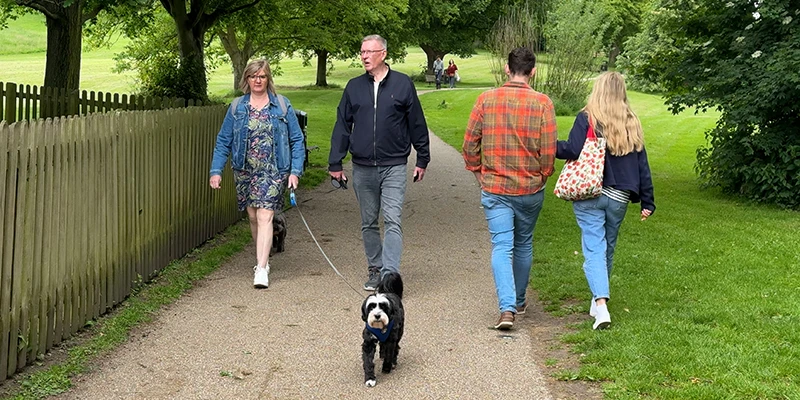
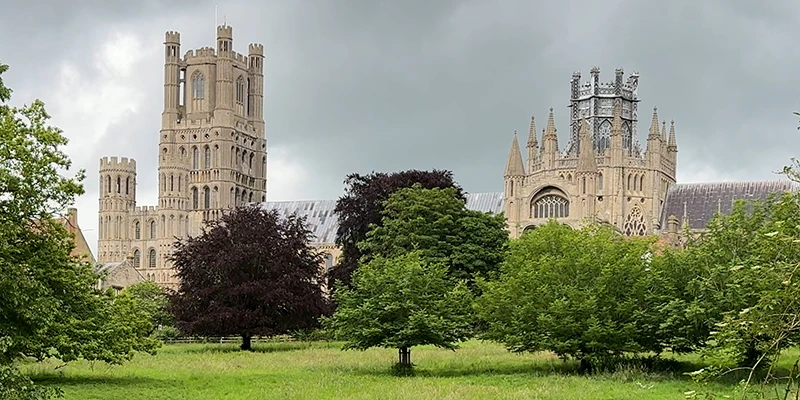
Next to the Marina, you'll step into Jubilee Gardens with grassy areas, a kiosk, pathways and a peaceful environment for walking and outdoor activities. At the edge of the park, walk across Broad Street into another peaceful and scenic part of Ely. It's Cherry Hill Park, that rewards you with a superb view of the cathedral. From this angle, you see clearly why the cathedral is often called the Ship of the Fens, due to its commanding presence over that surrounding flat landscape of the fenland.