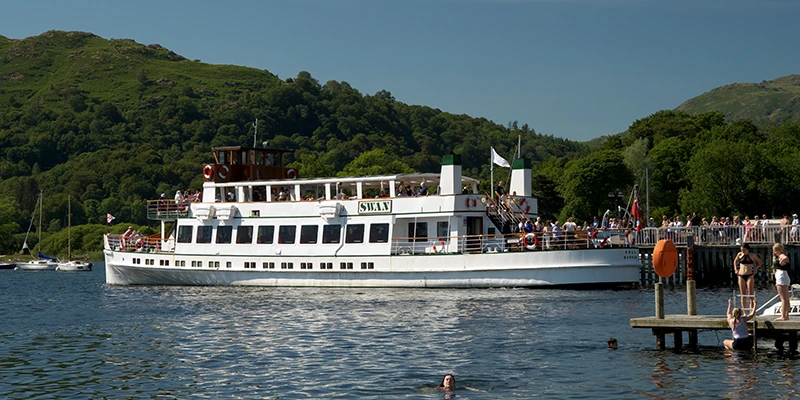
Ambleside, England
Ambleside sits at the head of Lake Windermere, a compact town of grey slate buildings hemmed in by fells on three sides and open to the water on the fourth. It is the busiest walking base in the Lake District, and the best way to arrive is by boat.
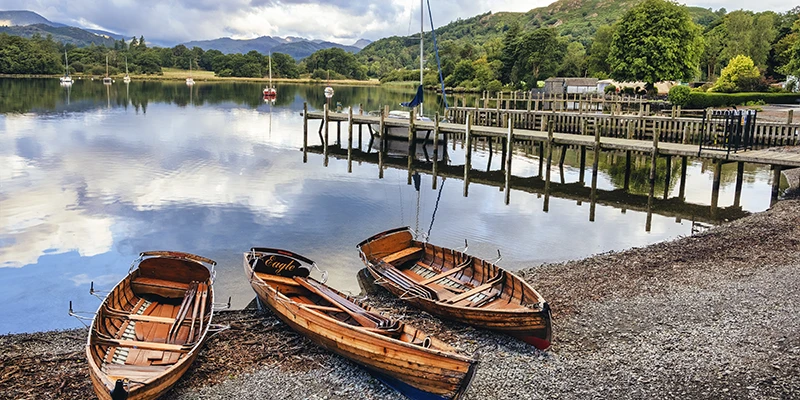
Launches run the length of Windermere all year, calling at Bowness and Lakeside to the south. The trip up from Bowness takes around half an hour and costs a fraction of what the view is worth, with the fells rising steadily ahead as the lake narrows toward its northern end.
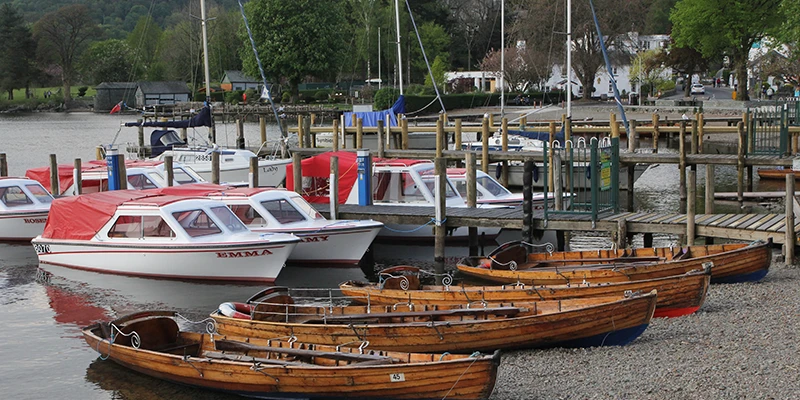
The boats put in at Waterhead, a small harbour of jetties, rowing boats and a shingle beach. Windermere is the largest natural lake in England, eleven miles long, and Waterhead is where it ends. In summer the pier is busy from mid-morning; in spring it can be almost empty.
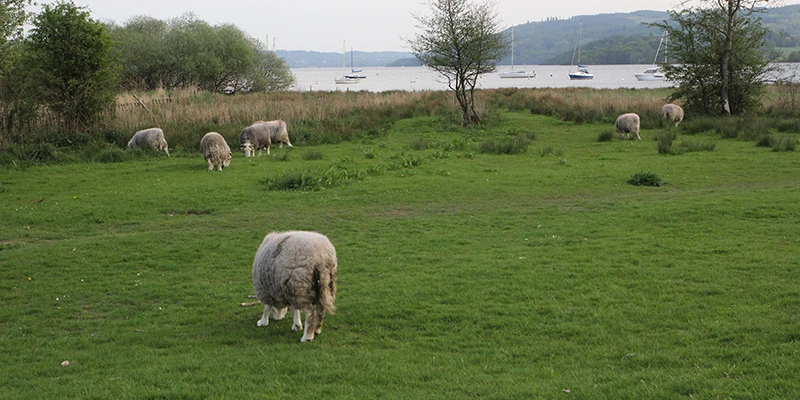
The town center is about a mile inland, and the walk in takes fifteen minutes across open ground. Herdwick sheep graze the fields either side, a hardy local breed that spends most of the year loose on the fells and comes down only in the worst weather.
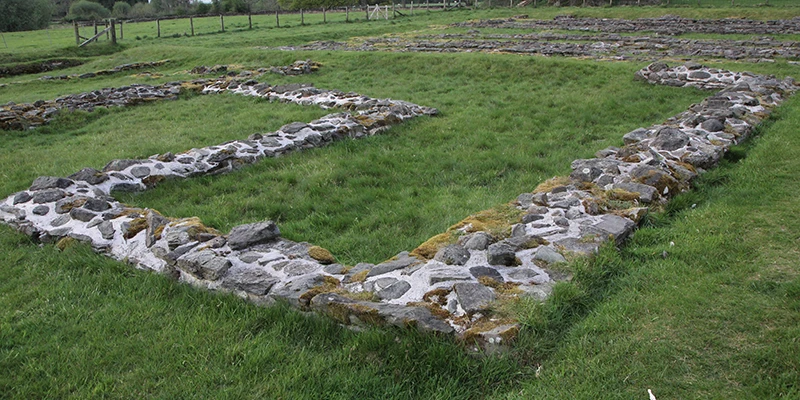
On the way you pass the outline of a Roman fort. Galava was built around AD 120 on Borrans Field to guard the road running from Brougham to the coast at Ravenglass. Only the foundations survive, laid out in the grass at knee height, but the plan of the gates and granaries is clear enough to walk around.
Stock Ghyll
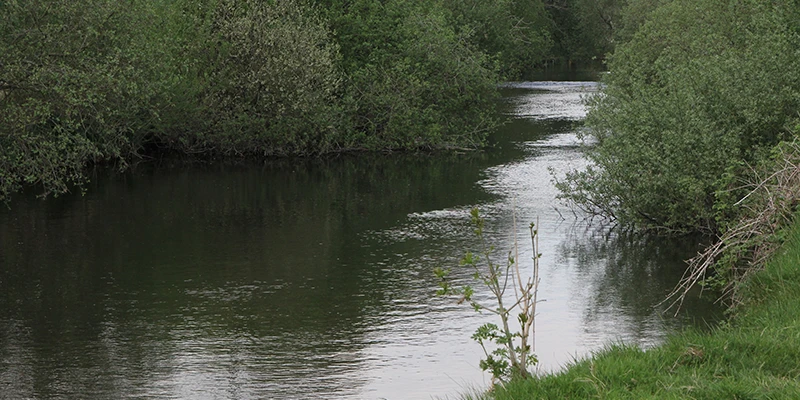
Water runs through everything here. The Rothay and the Brathay both reach the lake within a mile of the town, and Stock Ghyll comes down off the fell straight through the middle of it. The becks powered Ambleside's mills for centuries, grinding corn and turning bobbins for the Lancashire cotton trade.
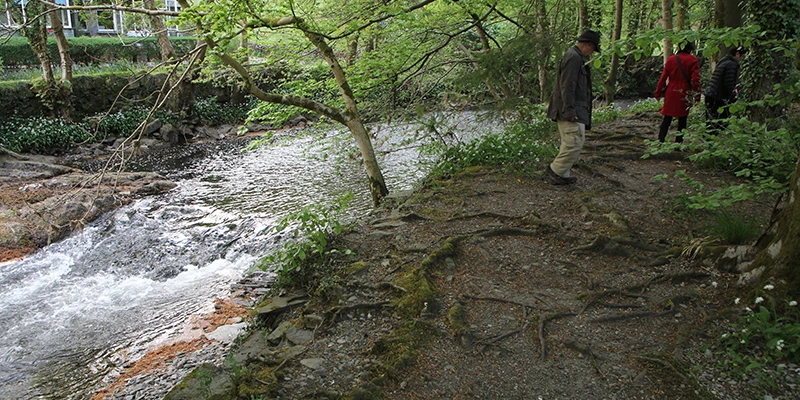
The path up Stock Ghyll begins behind the Salutation Hotel and climbs through woodland beside the water. It is a short walk, twenty minutes to the falls, and the surface is made up well enough that most people manage it in ordinary shoes.
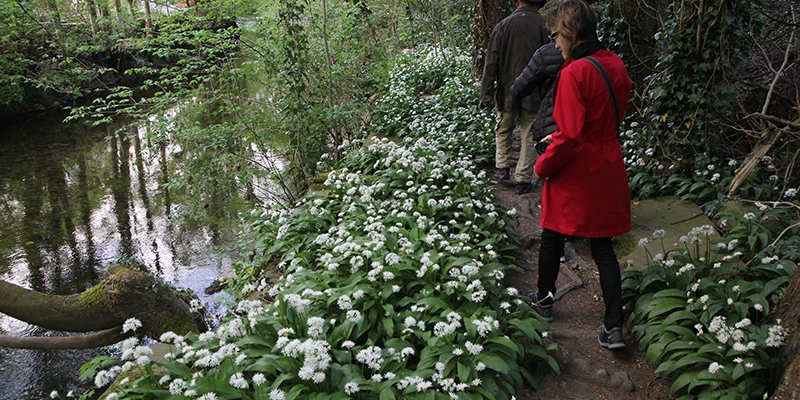
In late spring the whole glen floods with wild garlic, white flowers over broad green leaves, and the smell reaches you before the flowers do. Bluebells follow in the same weeks. The Victorians laid out these woods as pleasure grounds and charged admission at a turnstile; the paths are theirs.
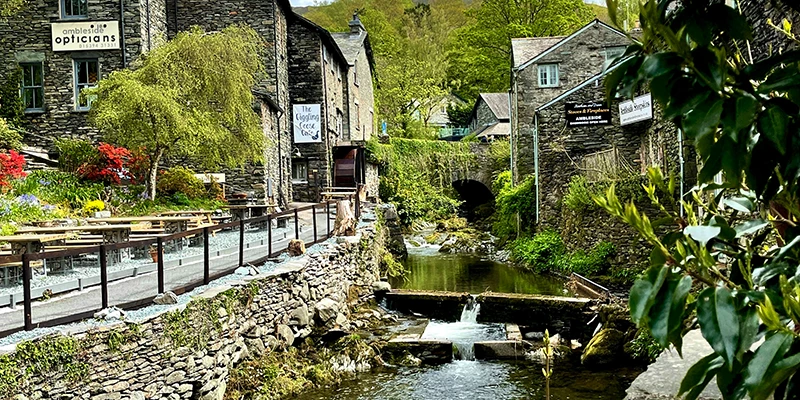
At the top is Stock Ghyll Force, a fall of about seventy feet dropping in two stages into a wooded pool. Back down in the town the same beck runs between buildings and under footbridges, with cafés set out along it wherever there is room for a table.
The Town
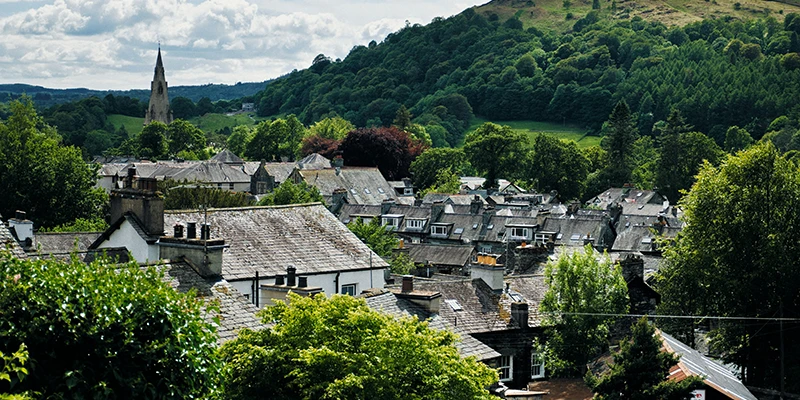
Seen from the slope above, Ambleside is a mass of grey slate roofs packed into the valley floor with the fells closing in behind. The spire belongs to St Mary's, built in the 1850s to a design by George Gilbert Scott and unusual in a district where church towers are squat and square.
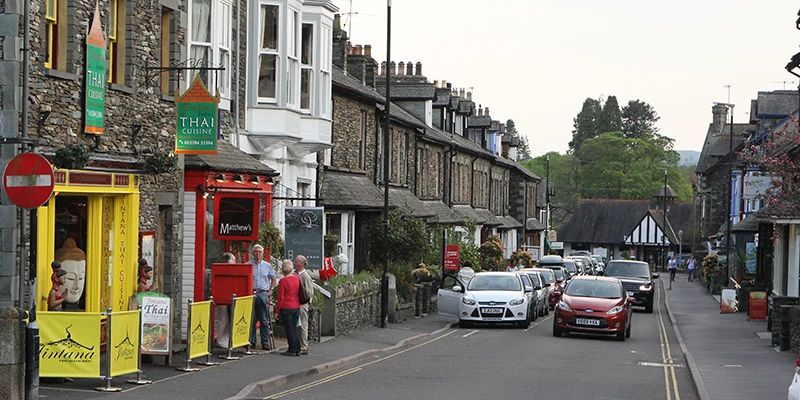
The center is small enough to cross in ten minutes and holds far more shops than a town of fifteen hundred people would normally support. The visitors account for that. Ambleside has been taking in walkers since the railway reached Windermere in 1847 and has been organised around them ever since.
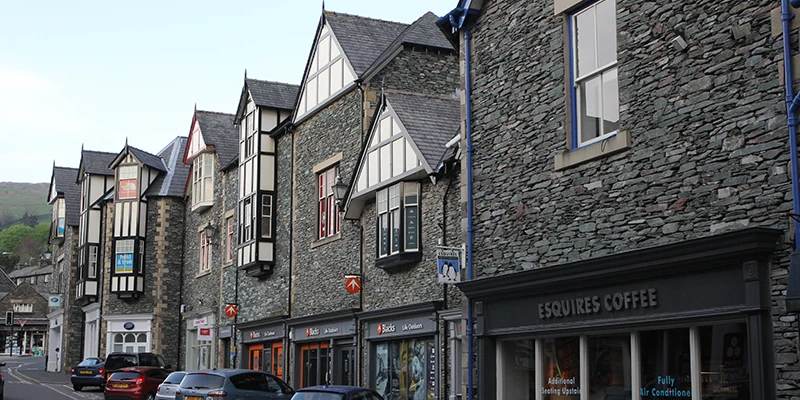
Nearly everything is built of the local slate, a dark blue-green stone quarried from the fells around Langdale and Coniston. It weathers to grey and looks severe under cloud, but in sunlight the green comes through and the walls change colour completely.
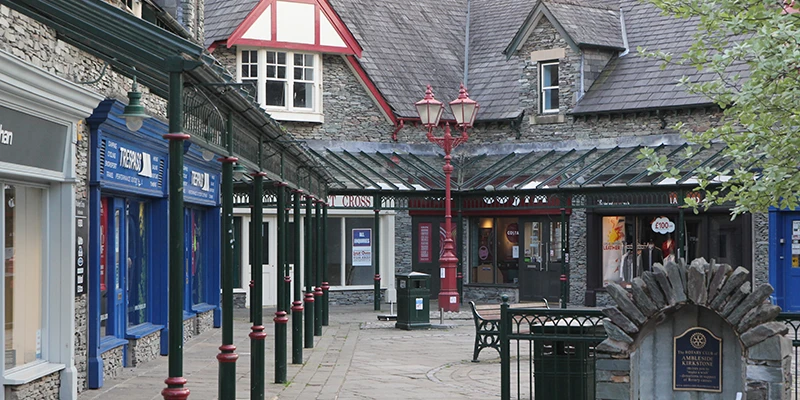
Outdoor equipment is the dominant trade. There are more boot and waterproof shops per street here than anywhere else in England, several of them long-established local firms rather than chains, and they stay open late in summer for people coming off the fells.
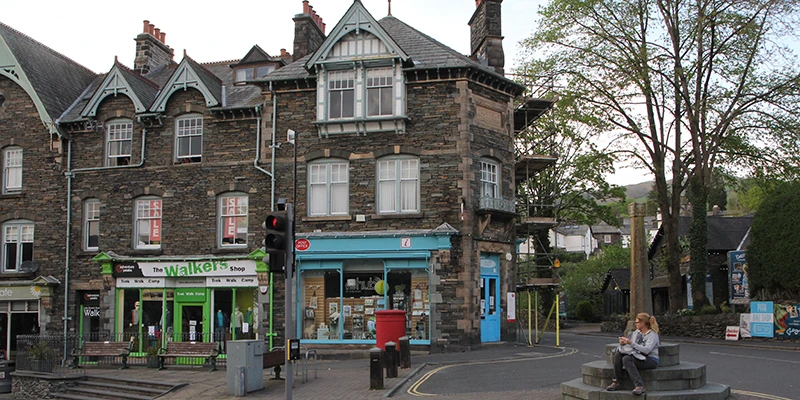
Between them are bookshops, galleries, outfitters and a good number of places selling Kendal mint cake. The Armitt, the town museum, holds local history alongside Beatrix Potter's watercolours of fungi, which she painted with a mycologist's precision long before the rabbits made her famous.
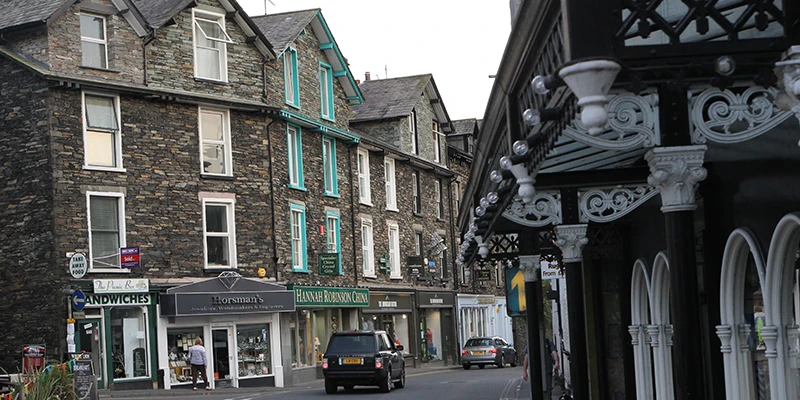
The painted shopfronts are a recent softening of what was a working town. Ambleside was granted a market charter in 1650 and spent most of its history in wool, then in bobbins and slate, and only turned decisively to visitors in the nineteenth century.
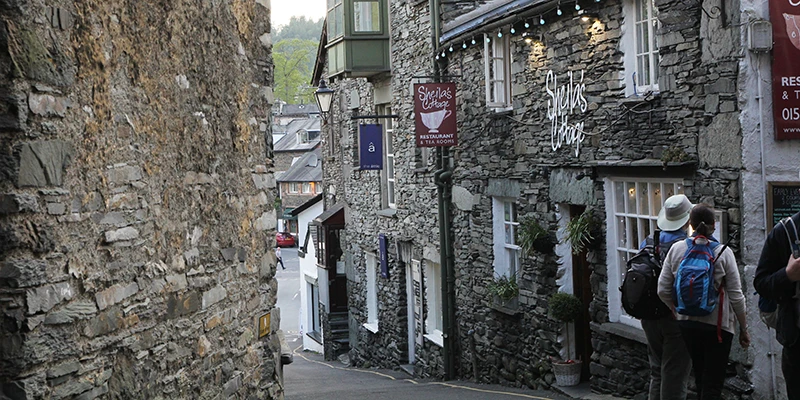
Walkers set off from the town in every direction. Loughrigg Fell and Wansfell Pike are both half-day climbs from the door, and the Fairfield Horseshoe, a ten-mile ridge circuit and one of the classic Lakeland rounds, starts and finishes on these streets.
Bridge House
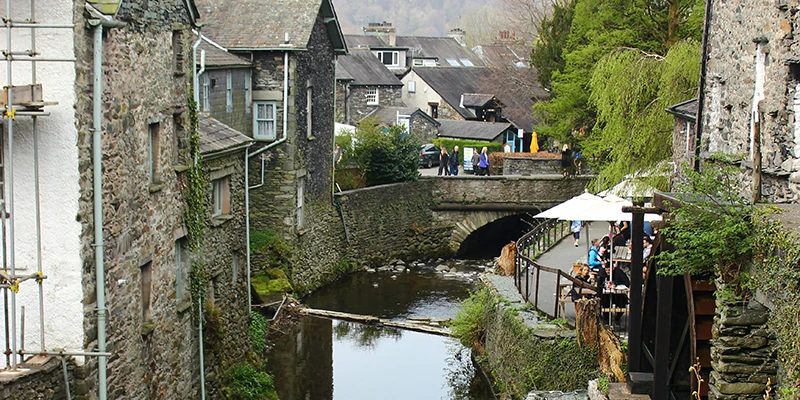
Bridge House is the building everyone photographs, a two-room stone cottage perched on a single arch directly over Stock Beck. It went up in the seventeenth century, probably as an apple store for Ambleside Hall, and the position was almost certainly chosen to avoid paying land tax.
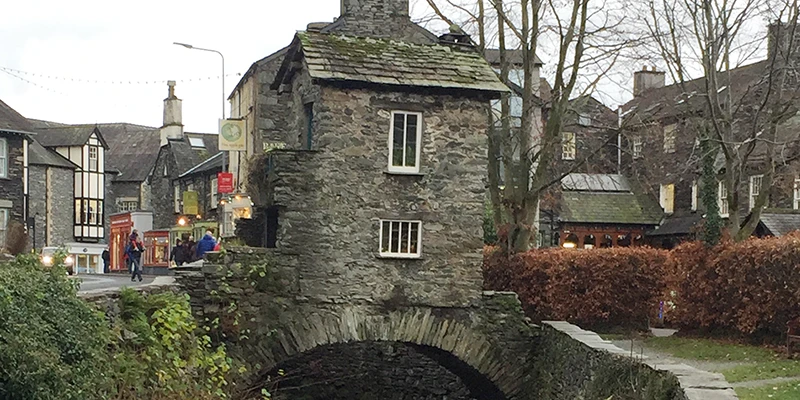
It has since been a weaving shop, a cobbler's, a tea room and a family home — a couple with six children lived in it in the 1850s. The National Trust bought it in 1926 and runs it as an information point, which makes it one of the smallest staffed buildings the Trust owns.
Eating and Staying
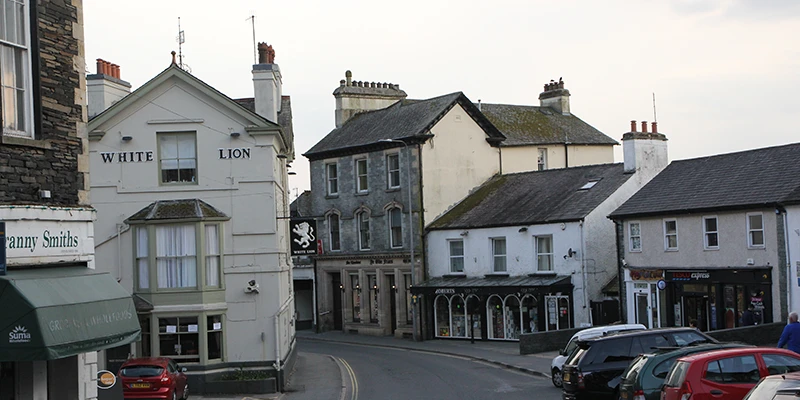
Market Place is the centre of things, with pubs on three sides and the old market cross site in the middle. The pubs serve walkers rather than tourists in the main, which means early food, large portions and a fire lit well into May.
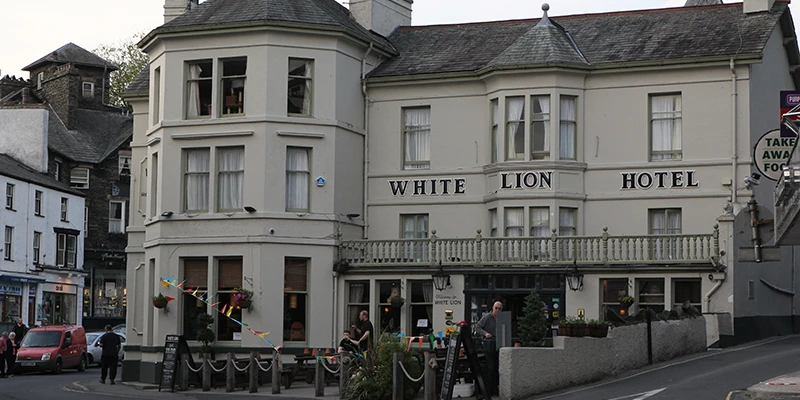
Accommodation runs from coaching inns of this kind through to guesthouses, hostels and a large youth hostel down at Waterhead. Prices climb steeply in July and August and over bank holidays, and the town fills completely during the Rushbearing ceremony in July and the Ambleside Sports in August.
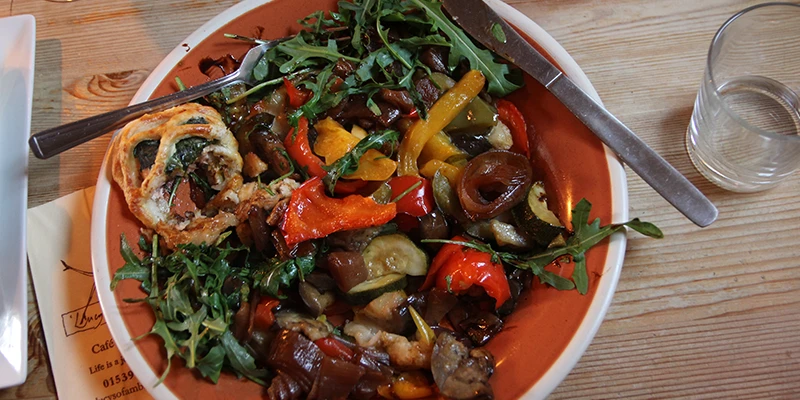
Eating is better than the size of the place suggests. Zeffirellis and Fellinis have been running for decades and combine a restaurant with a cinema, and there is decent cooking in several of the hotels, alongside the expected cafés turning out soup and cake for people who have been out in the rain.
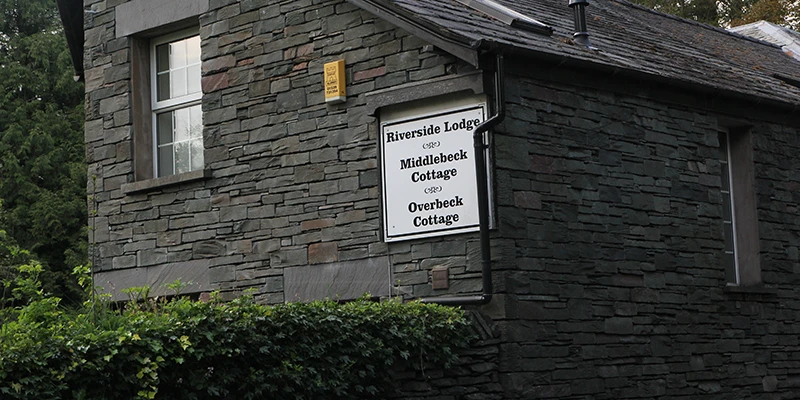
Ambleside works well as a base for several days. Grasmere and Rydal Mount, both tied to Wordsworth, are within a few miles north; Coniston, Hawkshead and Langdale are all short drives; and the boat that brought you up the lake will take you back down again in the evening light.