
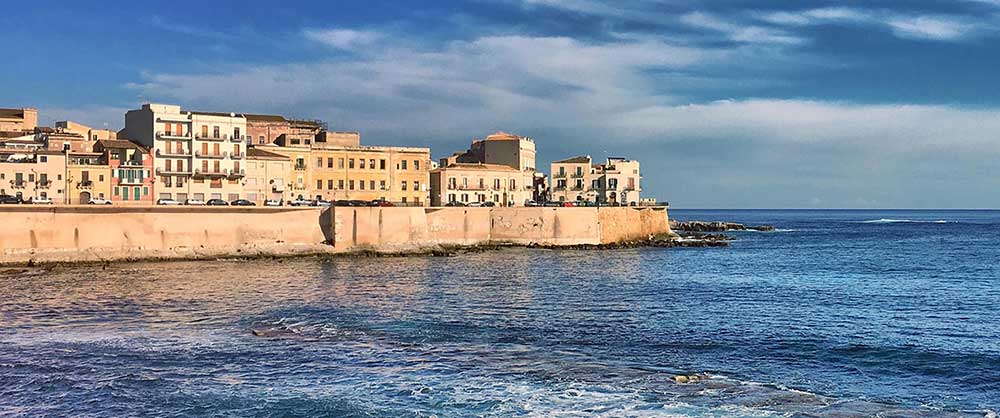
Siracusa stands on the southeastern coast of Sicily where the ancient Greeks established one of their most powerful colonies in the eighth century BC. The city occupies both the small island of Ortigia and the adjacent mainland, with the historic center concentrated on the island while modern development extends across the broader urban area. The combination of Greek, Roman, Byzantine, medieval, and baroque architectural layers creates a complex urban fabric where structures from different periods stand beside one another or incorporate elements from earlier buildings.
This interactive Google My Map shows locations of attractions mentioned in this story, with information that can be displayed by clicking on the symbols. It has a sidebar index and displays best in full-frame by clicking the box in top-right. You are welcome to make a copy as described here. The map can be used in your mobile phone or tablet, very useful to help navigate while visiting a city. There are many hotels listed in the map with contact information. My hotel choices are Palazzo Artemide and Hotel Centrale Siracusa.
The Official Tourist Information website has a large amount of information about the city and surroundings..
Ortigia: The Historic Island
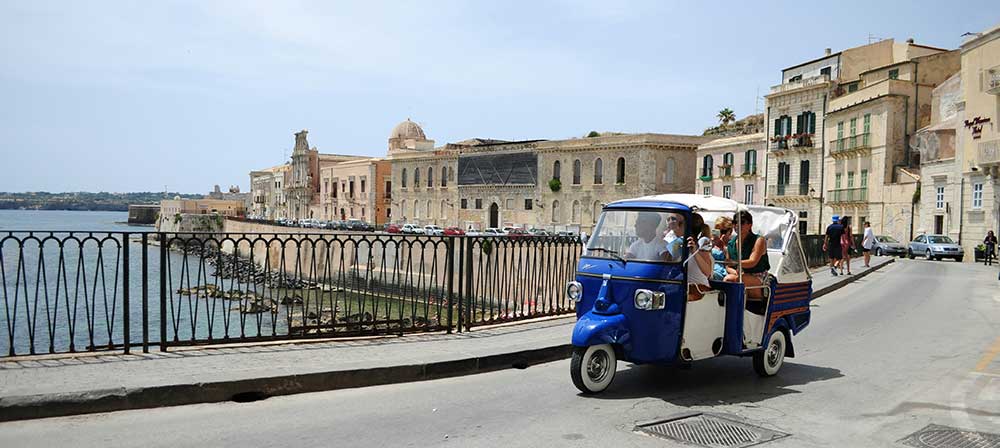
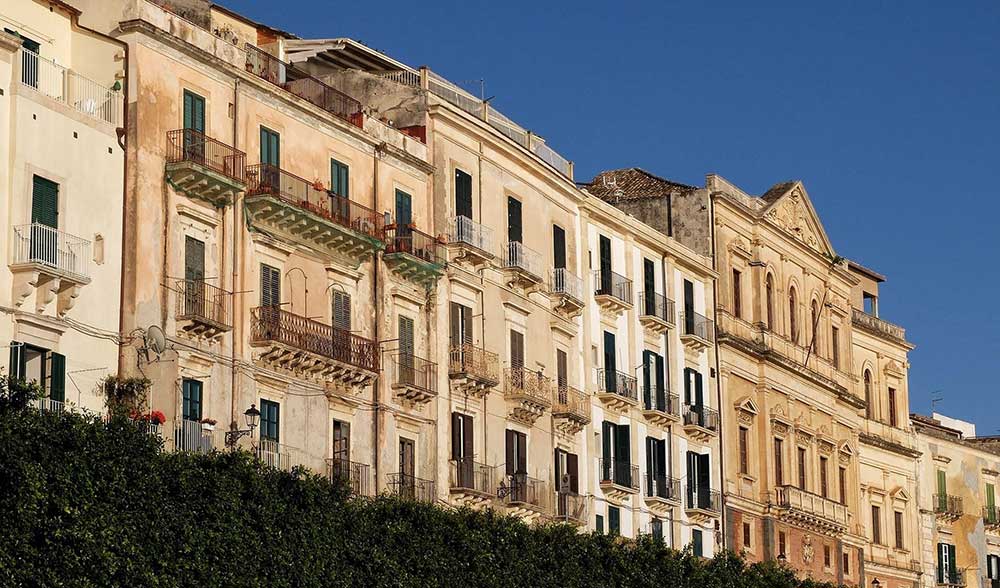
Ortigia measures approximately one kilometer in length and contains the nucleus of Siracusa within a compact walkable area. Bridges connect the island to the mainland, with Ponte Umbertino and Ponte Santa Lucia carrying vehicle and pedestrian traffic across the narrow channel. The island maintains residential character alongside tourist accommodations and restaurants, with stone buildings creating continuous street walls interrupted by narrow passages and occasional small piazzas.
The Temple of Apollo near the bridge entrance represents one of Sicily's oldest stone temples, dating from the sixth century BC. Only portions of columns, steps, and foundation walls survive after the structure served successively as a Byzantine church, Islamic mosque, Norman church, and Spanish barracks. The visible Doric architectural elements demonstrate the original scale and provide tangible evidence of Siracusa's Greek origins at a prominent position encountered when entering Ortigia.

Via Cavour serves as the main thoroughfare crossing from the bridge through the island, accommodating contemporary traffic while passing through historic architecture. Shops, cafes, and services line portions of the street serving both residents and visitors. The via provides an entry route offering first impressions of the island's varied urban fabric.
Central Ortigia and Piazza Duomo
Piazza Duomo forms the ceremonial center of Siracusa and ranks among Sicily's most beautiful urban spaces. The elongated baroque square displays unified architecture in warm stone, with palaces and the cathedral creating a coordinated ensemble. Palazzo Beneventano del Bosco and the Archbishop's Palace frame sides of the square opposite the cathedral. Cafes and restaurants provide outdoor seating in this constantly active gathering point where residents and visitors circulate throughout the day. Evening light creates dramatic effects on the stone facades.

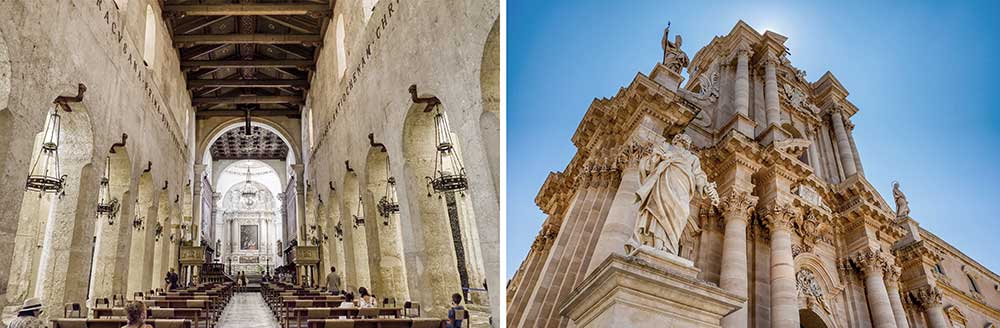
The Cathedral of Syracuse occupies the eastern side of the piazza on the site of the ancient Greek Temple of Athena. The original fifth-century BC Doric columns remain visible both inside and outside the structure, incorporated into the walls when the temple was converted to a Christian church in the seventh century. The current baroque facade dates from the eighteenth century following earthquake damage. The interior preserves Greek columns as part of the nave arcade, creating a fusion of ancient and baroque architecture. The building demonstrates over twenty-five hundred years of continuous religious use with layers of Greek, early Christian, Norman, and baroque elements.
The Church of Santa Lucia alla Badia faces Piazza Duomo and contains Caravaggio's Burial of Saint Lucia, painted during the artist's time in Sicily in 1608. The painting displays Caravaggio's dramatic use of light and shadow depicting the martyrdom of Siracusa's patron saint. The baroque church also serves as a concert venue due to its acoustics and contributes to the architectural ensemble of the piazza.
The Ipogeo di Piazza Duomo consists of underground tunnels and water cisterns dating back centuries. These passages served as air-raid shelters during Allied bombing in 1943. Visitors can follow tunnels under the piazza to emerge by the harbor on Foro Vittorio Emanuele II near the Fonte Aretusa. Staffing limitations sometimes affect opening hours.
Streets and Neighborhoods of Ortigia
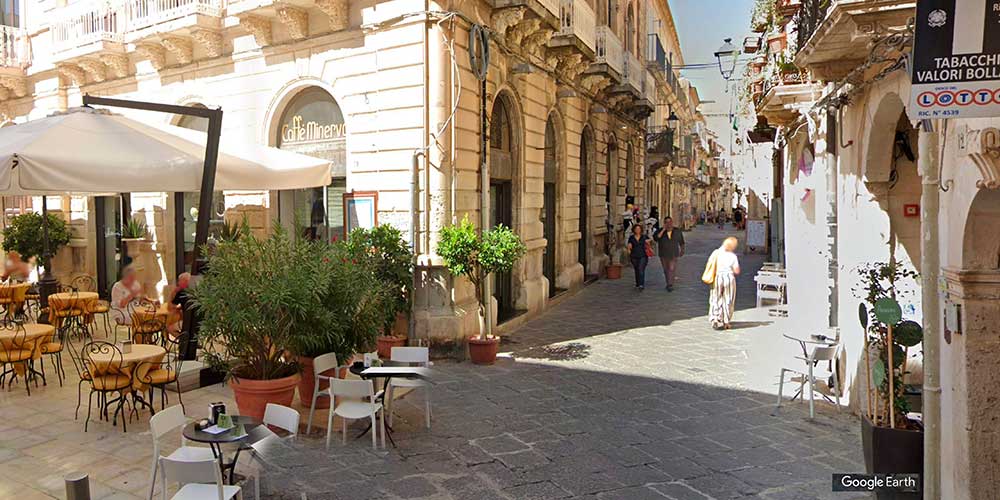
Via della Maestranza runs through the historic center lined with baroque palaces displaying elaborate facades, balconies, and architectural details. Aristocratic families built their residences along this prominent route, creating structures with rusticated ground floors, decorated piano nobile windows, and projecting balconies with iron railings. The street maintains historic character while accommodating shops, galleries, and restaurants in ground floor spaces. Walking this via provides immersion in baroque domestic architecture representing Siracusa at its most architecturally refined.
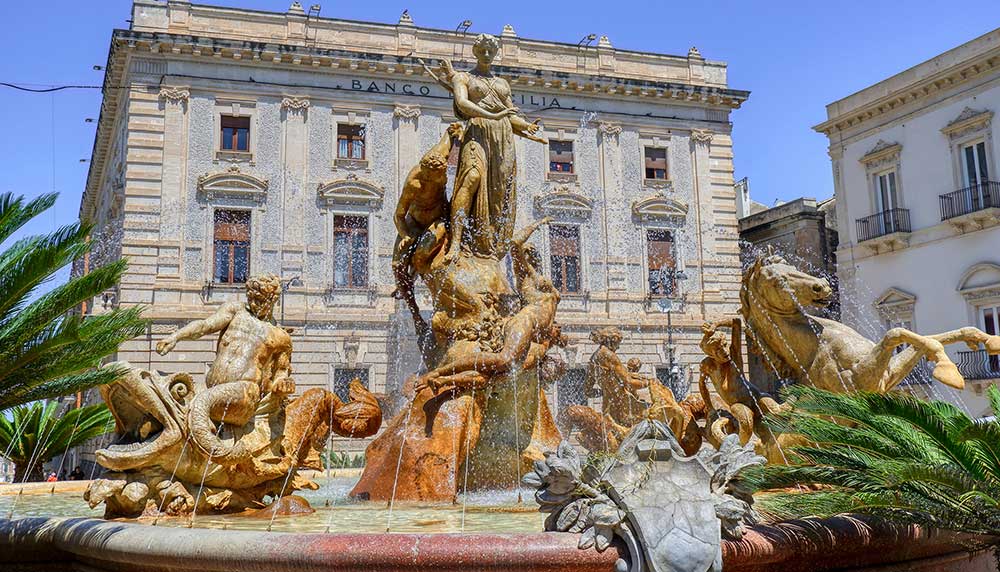
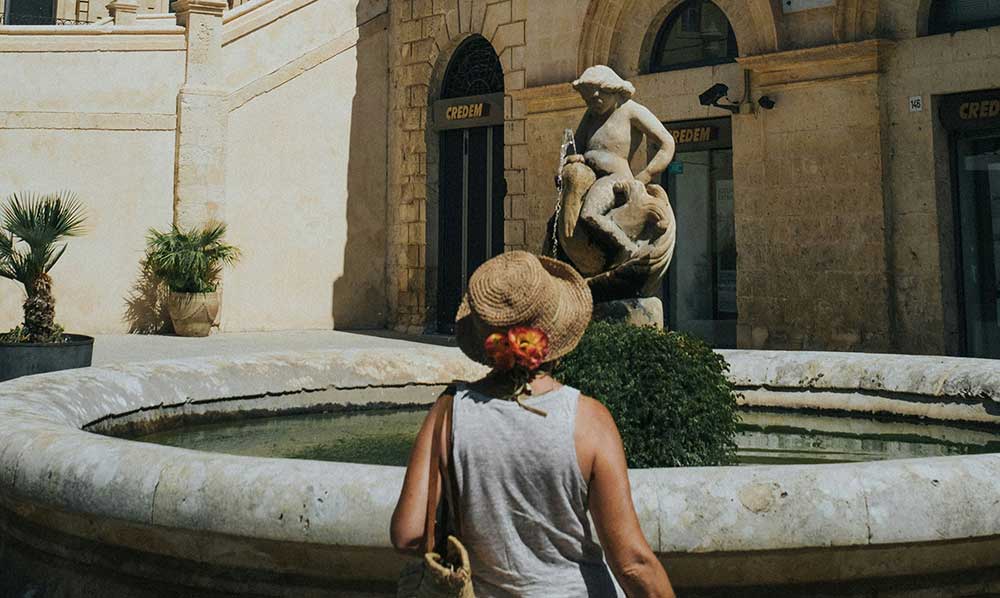
Piazza Archimede serves as a neighborhood gathering point in central Ortigia with the nineteenth-century Fountain of Diana at its center depicting the goddess and mythological scenes. Cafes and shops occupy surrounding buildings. The square functions as a landmark for orientation and provides a pause in the network of streets crossing Ortigia. Residents and visitors use the piazza as a meeting point and resting place during walks through the island.
The Jewish Quarter in southeastern Ortigia preserves street patterns and place names recalling the medieval Jewish community that inhabited this area until expulsion in 1492. Narrow streets and compact building patterns show dense settlement characteristic of medieval Jewish quarters. Ritual baths and synagogue remains document the community's religious life. The Chiesa di San Filippo Apostolo, an eighteenth-century church with baroque facade, features underground tunnels linked to ancient mikvahs. The quarter demonstrates the multi-religious character of medieval Siracusa before Spanish policies enforced religious uniformity.
The Church of San Martino preserves Norman architecture from the sixth century with later modifications, representing one of Ortigia's oldest Christian structures still in use. The simple exterior and modest scale contrast with larger baroque churches built after earthquake reconstruction. The building demonstrates architectural continuity from the Norman period and represents the layer of medieval Christian architecture underlying baroque Siracusa.

The Waterfront and Maritime Features
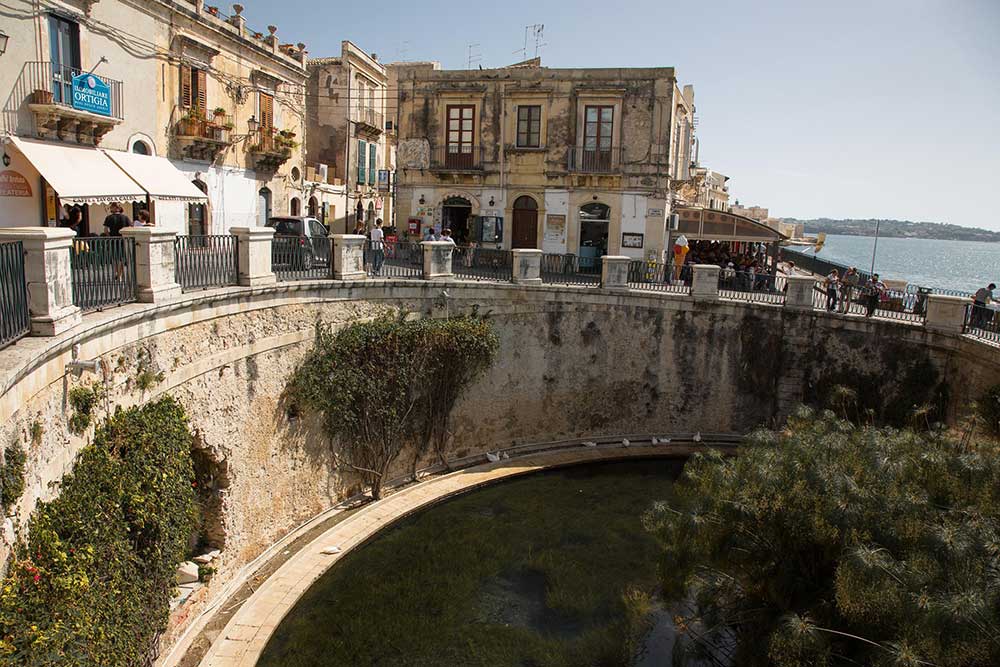
The Fonte Aretusa forms a freshwater spring on Ortigia's waterfront creating a natural pool where papyrus plants grow. Greek mythology associates the spring with the nymph Arethusa who fled underwater from Greece pursued by the river god Alpheus. The spring provided fresh water essential to ancient settlement and remains a scenic spot with views across the harbor. The presence of papyrus, rare in Europe, adds distinctive character to this popular gathering point and landmark.
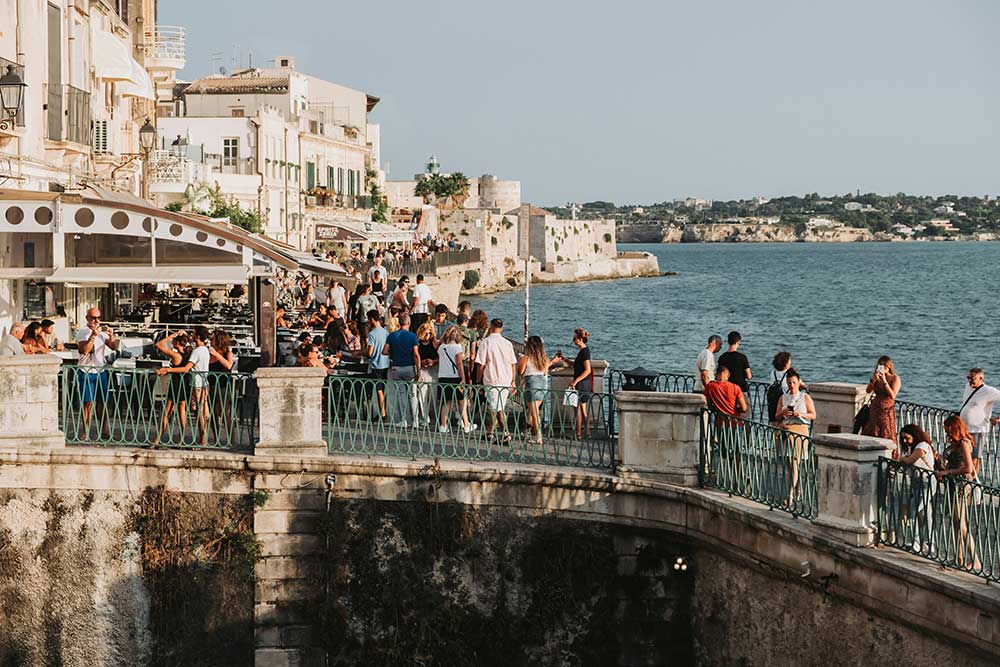
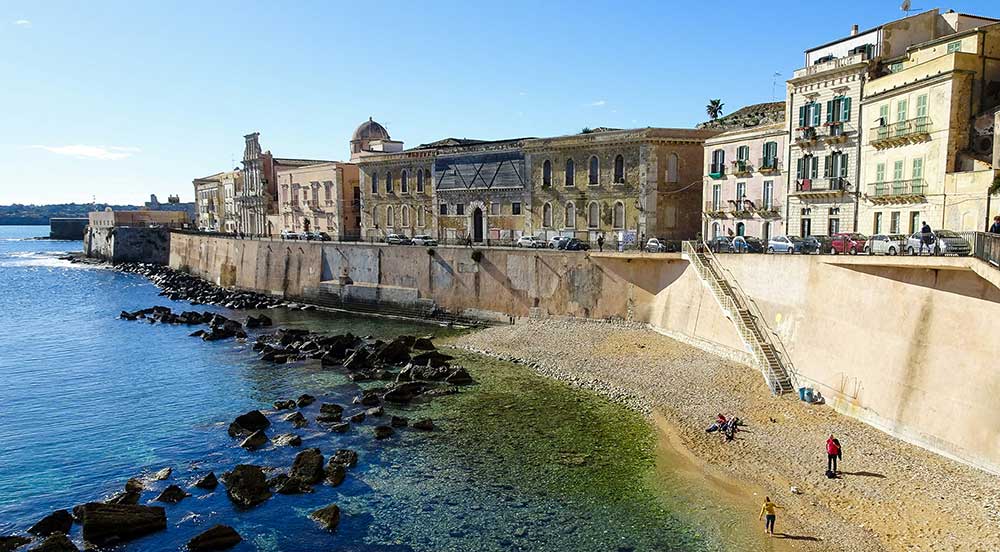
The Lungomare di Levante extends along Ortigia's eastern shore providing walking paths with views across the Ionian Sea. The waterfront promenade offers relief from dense streets with open sea breezes and unobstructed horizons. Residents use the route for exercise and socializing while visitors walk between different parts of the island. The path passes the Fonte Aretusa and continues toward Castello Maniace at the island's tip, combining sea views with proximity to historic monuments.
Castello Maniace occupies the southern tip of Ortigia commanding the entrance to the Great Harbor. This thirteenth-century castle built by Frederick II displays severe military architecture with thick walls, towers, and defensive features designed to protect the strategic harbor.

The fortress served various military and administrative functions over centuries and now opens for visits revealing rooms, passages, and views from ramparts. The position provides panoramic views across the harbor and sea, representing the power of Hohenstaufen rule in Sicily and the military investment required to defend key positions.
Porto Grande, the large natural harbor on Ortigia's western side, provided the anchorage that made Siracusa strategically and commercially important from ancient times. The harbor remains active with fishing boats, pleasure craft, and larger vessels using the protected waters. The waterfront promenade allows walking with views toward mainland Siracusa. Seafood restaurants line portions of the harbor serving catches brought directly from boats. The waters witnessed significant historical events including the Athenian expedition's defeat during the Peloponnesian War.
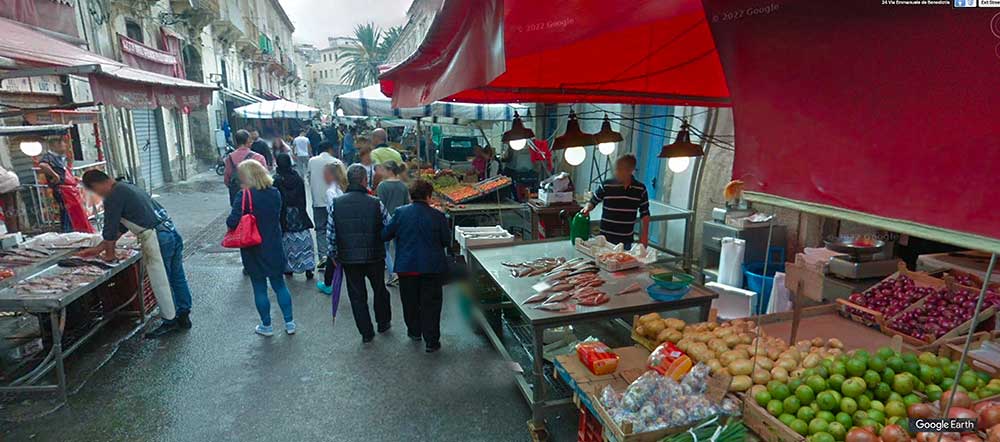
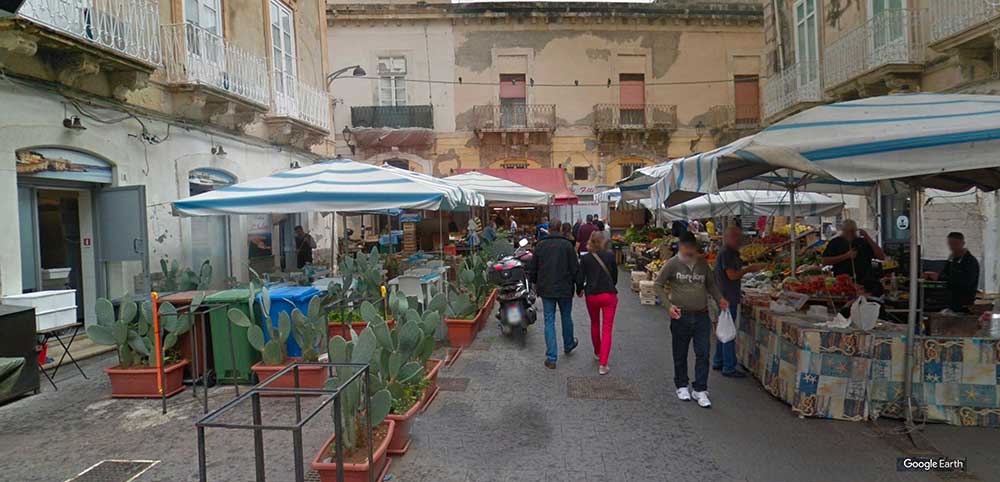
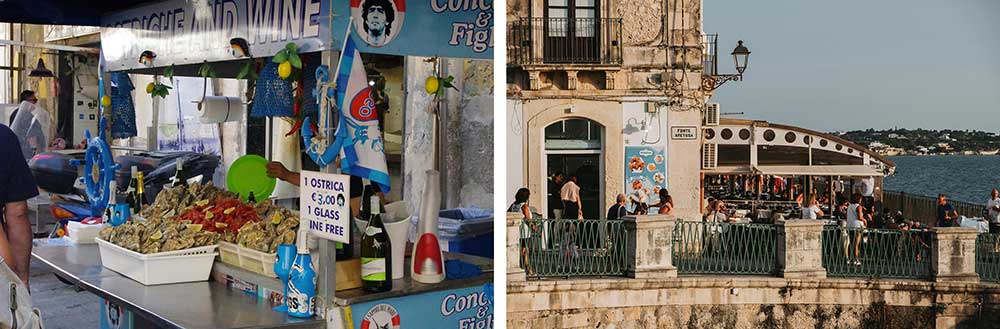
The Market of Ortigia operates daily in streets near the Temple of Apollo with vendors selling fresh produce, fish, meat, cheese, and prepared foods. Fishmongers display catches from nearby waters including swordfish, tuna, and other Mediterranean species. The market occupies public spaces that transform from market to pedestrian streets after vendors depart. The activity demonstrates traditional commerce patterns persisting in the historic center and the practical function of Ortigia as a living neighborhood where residents conduct daily shopping and social interaction.
The Archaeological Park of Neapolis
This extensive park on the mainland preserves major monuments of ancient Siracusa including the Greek Theater, Roman Amphitheater, and various quarries and caves. The site allows visitors to walk among structures spanning Greek and Roman periods demonstrating the urban scale and cultural achievement of ancient Siracusae.
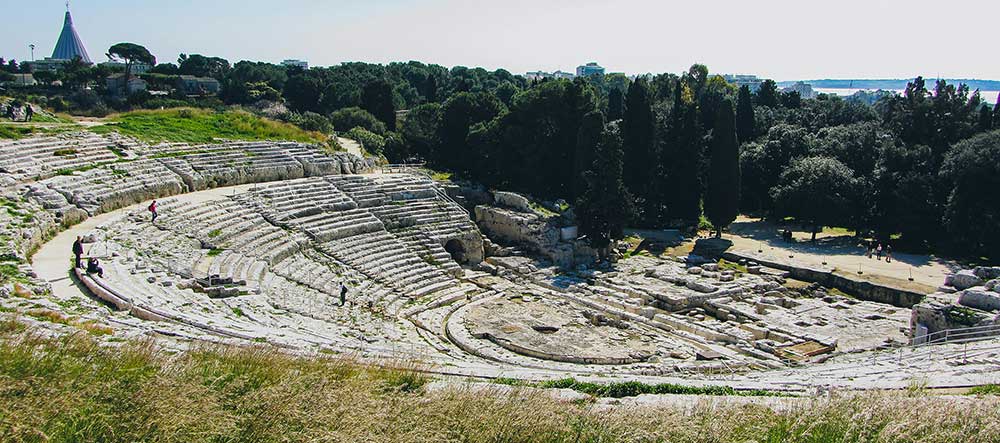
The Greek Theater dates from the fifth century BC and was carved into the hillside to accommodate approximately fifteen thousand spectators for dramatic performances. The theater remains in use for classical drama performances during annual festivals. During spring and early summer, productions present works by Aeschylus, Sophocles, Euripides, and other ancient playwrights in the original setting. The performances attract audiences from across Italy and beyond, filling the ancient seating for evening shows. This annual festival represents cultural continuity and demonstrates the theater's continued viability as a performance space.
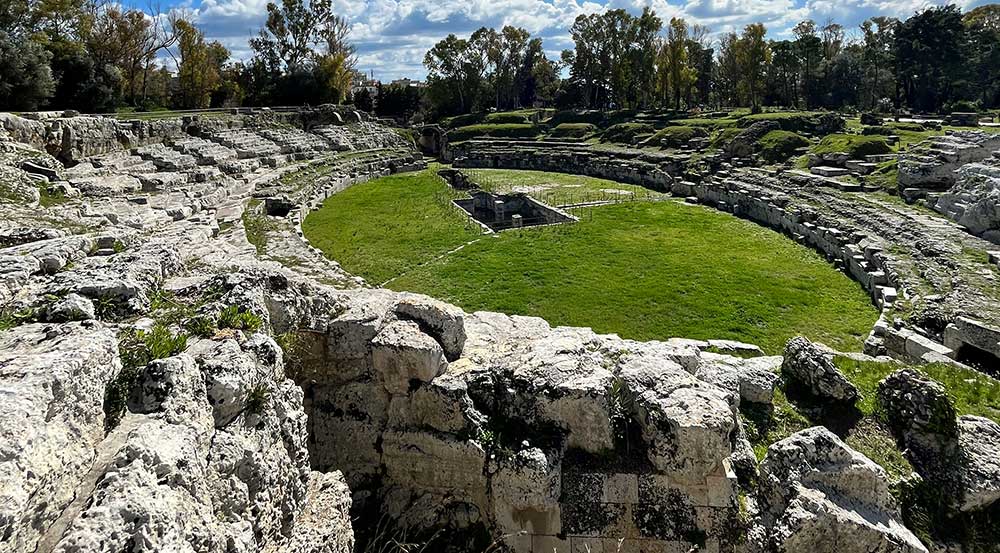
The Roman Amphitheatre, a first-century AD structure, features an elliptical arena with underground passages. Used for gladiatorial contests, it retains partial stone seating. Visitors can walk the perimeter to observe the layout and construction techniques that differ from the earlier Greek theater.
The Latomia del Paradiso, an ancient stone quarry within the park, shows where limestone was extracted to build monuments and fortifications. The quarry walls create a deep excavation with vertical faces exposing geological strata. Garden plantings now occupy the quarry floor creating a green space within the archaeological area. Ancient sources describe quarries being used to imprison Athenian soldiers captured after the failed expedition of 415-413 BC. The site reveals the industrial infrastructure underlying ancient urban development.

The Ear of Dionysius, a limestone cave in the park, measures twenty-three meters high and features notable acoustics due to its ear-like shape. Legend ties the cave to the tyrant Dionysius. Visitors enter to hear echoes and view the carved interior created when the space was quarried for building stone.
The Altar of Hieron II near the Greek Theater dates from the third century BC and measured nearly two hundred meters in length, making it one of the largest Greek altars known. Only the foundation platform survives but its dimensions indicate the scale of sacrificial rituals conducted during major festivals. The structure could accommodate the sacrifice of numerous animals and represents the ceremonial and religious aspects of Greek civic life. The remains provide evidence of Siracusa's importance as a religious center in the Hellenistic period.
Mainland Siracusa Sites
The Catacombs of San Giovanni beneath the Church of San Giovanni date from the fourth through sixth centuries and represent one of the largest catacomb systems outside Rome. Underground passages carved from limestone contain thousands of burial niches arranged along corridors extending over a large area. Guided tours lead through accessible sections revealing the scale and organization of the underground cemetery. The crypt of Saint Marcian, Siracusa's first bishop, occupies a prominent position. The site documents the transition from pagan to Christian Siracusa and the development of Christian ritual spaces.
The Church of San Giovanni alle Catacombe above the catacombs shows Norman architecture with later modifications and earthquake damage that left portions open to the sky. The structure's partial preservation reveals construction techniques and architectural elements while creating an atmospheric ruin. The church served as the cathedral of Siracusa during early medieval periods before that function transferred to the former Temple of Athena. The building demonstrates how earthquakes affected the city's architectural heritage and how some damaged structures were preserved as ruins rather than rebuilt.

The Museo Archeologico Regionale Paolo Orsi in Villa Landolina displays artifacts from prehistoric to Byzantine periods including Greek ceramics, statues, and mosaics. Organized by sector, the spacious galleries cover regional history with gardens outside for additional exploration. The museum provides essential context for understanding the archaeological sites throughout the city and region.
Palazzo Bellomo houses the Regional Gallery displaying art and artifacts from Byzantine through baroque periods. The building combines thirteenth-century Swabian architecture with fifteenth-century Catalan Gothic additions. The museum holdings include Antonello da Messina's Annunciation, one of the Renaissance master's most important works. Medieval sculptures, Byzantine icons, ceramics, and decorative arts document artistic production in southeastern Sicily over several centuries.
The Roman Gymnasium near the Archaeological Park contains remains of a first-century AD structure including portions of a theater, temple, and porticoed courtyard. The complex shows Roman building types and urban development layered over earlier Greek settlement. The visible remains demonstrate the continued prosperity and building activity of Siracusa during the Roman imperial period. Archaeological excavation revealed the structure's function and relationship to surrounding ancient buildings.
The Sanctuary of the Madonna delle Lacrime, built in 1994, features a distinctive conical tower rising seventy-four meters and visible across Siracusa. The sanctuary houses a mass-produced plaster image of the Madonna that reportedly shed tears in 1953, attracting pilgrims and leading to construction of this major church. The building displays contemporary architecture with a circular plan and conical roof creating a landmark on the skyline. The interior accommodates large congregations and contains the venerated image in a prominent position.
The Papyrus Museum documents the history and processing of papyrus, which grows naturally around the Fonte Aretusa and in the Ciane River near Siracusa. Exhibits explain ancient papyrus paper production and display examples of writing on this material from various periods. The museum preserves knowledge of traditional papyrus crafts and the plant's historical importance for writing and documentation. Siracusa's papyrus represents one of few places in Europe where this Egyptian plant grows naturally, demonstrating botanical and cultural connections between Sicily and the eastern Mediterranean.

Fortifications Beyond the City
Euryalus Castle on the plateau west of the city represents one of the most impressive examples of ancient military architecture. The fortifications were constructed by the tyrant Dionysius I in the fourth century BC to protect Siracusa from land attacks. The extensive remains include walls, towers, ditches, tunnels, and defensive systems showing sophisticated engineering. Walking the ruins reveals the fortress's strategic position and complex defensive features. The site demonstrates Greek capabilities in fortification design and the resources Siracusa commanded at its height when the city challenged Athens and Carthage. The castle provides views across the surrounding plateau and toward the city.
Day Trips from Siracusa
The region surrounding Siracusa offers opportunities for organized excursions to nearby sites. The baroque towns of the Val di Noto, including Noto, Modica, and Ragusa, lie within easy reach and display UNESCO World Heritage baroque architecture reconstructed after the 1693 earthquake. These towns feature elaborate churches, palaces, and urban planning representing Sicilian baroque at its most developed.
Mount Etna, Europe's highest active volcano, stands approximately one hour north and offers excursions to observe volcanic landscapes, craters, and lava flows. Tours typically include cable car or vehicle access to higher elevations with opportunities to walk on volcanic terrain and view the surrounding landscape from the mountain's flanks.
The ancient Greek site of Akrai near Palazzolo Acreide preserves a theater, temple foundations, and rock-cut tombs from a colony founded by Siracusa in the seventh century BC. The site demonstrates how Siracusa extended its influence inland and established secondary settlements in the Sicilian interior.
The Vendicari Nature Reserve south along the coast protects wetlands, beaches, and archaeological remains including ancient fish processing facilities. The reserve provides habitat for migratory birds and offers walking trails through coastal landscapes combining natural and archaeological features.
Siracusa combines the density of historical layers found in few Mediterranean cities with functional urban life where residents inhabit structures spanning from Greek foundations through baroque reconstruction to modern additions. The city serves both as a museum of architectural and archaeological heritage and as a working port and regional center. The concentration of monuments on Ortigia allows efficient exploration while the Archaeological Park and mainland sites require additional time. The maritime setting provides both historical context for understanding the city's strategic importance and contemporary amenity through waterfront promenades and nearby beaches.
Caportigia Boutique Hotel; Viale Montedoro 76; This five-star hotel features an unbeatable location with a rooftop terrace offering great hot tub and awesome views over the city within the historic Ortigia district.
Clou Lounge Bar & Restaurant; Passeggio Adorno 10/12; Set on top of the elegant art deco Grand Hotel Des Étrangers in the heart of Ortigia, this fine dining rooftop restaurant and lounge bar blends an elegant panoramic indoor hall with a charming natural outside terrace, offering amazing views over Ortigia Island, the marina and the glittering sea while serving authentic Mediterranean dishes and artfully crafted cocktails created by Head Chef Paolo Gionfriddo.
Grand Hotel Ortigia La Terrazza sul Mare; Viale Mazzini 12; This five-star luxury hotel offers a rooftop terrace restaurant on the top floor overlooking the sea and harbor of Ortygia, serving exquisite regional and international menu with excellent local wines in a magnificent setting next to the main harbor and a five-minute walk from Aretusa Fountain.
Lùme Rooftop Bar; Via Larga 30; This rooftop terrace features sage green seating and unbeatable views of the Mediterranean, serving a stellar list of Sicilian wines daily between 7pm and 9pm in a hyper-local family-owned boutique hotel in the heart of Syracuse's historical center with an Ayurvedic spa.
Mercure Siracusa Prometeo; Viale Teracati 20; Set right next to Siracusa's archaeological area and Greek Theatre, this hotel features a stunning rooftop pool and panoramic restaurant offering breathtaking views of the city of Syracuse with minimalist modern décor, serving outstanding dishes blending local tradition with regional and national wines while guests enjoy aperitifs with local appetizers waiting for sunset.
Ortea Palace Incanto; Via Nazario ; This 1920s former post office features a small dining room with rooftop terrace and stellar views of the surrounding city and ocean, normally open Wednesday nights and for special events offering Mediterranean cuisine overlooking the marina Sauro Porto Piccolo over marina in Ortigia.
Sunset Ortigia Bar; Lungomare Alfeo; A casual yet highly recommended bar set right on the Lungomare seaside promenade on Ortigia, offering one of the most direct and spectacular views of the sunset over the Ionian Sea and the horizon.
Terrazza Ortigia at Il Minareto; Via del Faro Massolivieri, 26; A relaxing terrace bar on cliffs overlooking Siracusa and Ortigia Island, ideal for cocktails with sea views.
UNAHOTELS One Siracusa Sky Roof; Via Diodoro Siculo 4; The Sky Roof terrace offers panoramic views across Syracuse from this hotel with drinks served on the rooftop, featuring a Dream spa set in a natural cave with Finnish sauna and thalasso pool plus Turkish bath built into cliff rock.
Zefiro Solarium & Restaurant; Largo Aretusa, 2; A sea-front solarium and restaurant perfect for catching sunsets with panoramic views over the bay and Ortigia.
The previous information is very detailed, so here we provide a shorter summary of the top-20 sights to see, in a Google My Map, followed by a list of those places with brief descriptions.
Archaeological Museum Paolo Orsi (Viale Teocrito, 66): Sicily's premier collection spans 3,000 years with Greek vases, Roman mosaics, and Bronze Age idols from Thapsos. Housed in a grand 1900s villa, it contextualizes Syracuse's excavations, a treasure trove for ancient history buffs.
Castello Maniace (Via del Castello Maniace): The 13th-century fortress occupies Ortigia's southern tip with commanding sea views and panoramic coastal vistas. Built by Frederick II, the castle features massive stone walls and served defensive purposes for centuries. Recent restoration allows visitors to explore the austere interior, walk the ramparts, and appreciate the strategic position controlling Syracuse's harbors with Mediterranean vistas from defensive positions. Underground vaults, once a prison, now evoke medieval visions in Syracuse's strategic coastal stronghold.
Archaeological Park of Neapolis (Via del Teatro Greco, 1): This extensive park preserves major monuments of ancient Syracuse including the Greek Theater, Roman Amphitheater, and the Ear of Dionysius cave. The Greek Theater dates from the 5th century BC and was carved into the hillside to accommodate approximately 15,000 spectators for dramatic performances.: Siracusa: Sicil
Catacombs of San Giovanni: A haunting network of early-Christian tombs and tunnels beneath the basilica — one of the largest in Sicily.
Chiesa di Santa Lucia alla Badia (Piazza Duomo): The baroque church dedicated to Syracuse's patron saint occupies the main piazza opposite the cathedral. The interior contains Caravaggio's masterpiece Burial of Saint Lucy, painted during his Malta period. The church's location above ancient Greek ruins and its ornate baroque decoration showcase layers of artistic and architectural achievement concentrated in Piazza Duomo's enclosed space.
Duomo di Siracusa (Piazza Duomo, 1): Built atop a 5th-century BC Temple of Athena, dominating Ortigia’s main square, a UNESCO World Heritage site, this cathedral's facade fuses Doric columns with Baroque exuberance. The baroque facade contrasts with the Greek structure beneath, representing architectural evolution over 2,500 years. Inside, Caravaggio's Santa Lucia altarpiece and silver relics illuminate Syracuse's layered Christian and pagan heritage. The building survived earthquakes and served as temple, mosque, and church, embodying Syracuse's complex religious history in a single remarkable structure.
Fonte Aretusa (Largo Aretusa): The natural freshwater spring on Ortigia's seafront supports papyrus plants and creates a unique circular pool. Greek mythology tells of nymph Arethusa's transformation into the spring while fleeing river god Alpheus. The spring provided crucial water for ancient Syracuse and remains a picturesque spot with bars surrounding the pool where freshwater meets saltwater steps from the sea. Fed by underground rivers, it's a lush, shaded haven for ducks and legends, evoking ancient myths in Ortigia's sun-dappled tranquility. It is one of the few places in Europe where papyrus plants grow spontaneously.
Puppet Theatre (Via Orfeo, 13): Traditional Sicilian Opera dei Pupi stages chivalric epics with carved wooden knights battling Saracens. This intimate venue revives 19th-century folk art, blending theater, music, and heritage in lively performances.
Latomia del Paradiso (Viale Paradiso, 14): The ancient limestone quarries within the archaeological park provided stone for building Syracuse while serving as prisons. The most famous section, Ear of Dionysius, features remarkable acoustics in a tall cave shape resembling an ear. Legend claims tyrant Dionysius eavesdropped on prisoners from above. The quarries now contain lush gardens growing within dramatic excavated stone walls.
Mercato di Ortigia: A lively open-air market filled with seafood, citrus, olives and Sicilian street food — the flavours of daily life.
Museo Archeologico Paolo Orsi (Viale Teocrito, 66): One of Europe's finest archaeological museums displays extensive collections from prehistoric, Greek, and Roman Sicily. A treasure trove of Sicilian antiquities, from prehistoric tools to Greek sculptures, housed in a modern museum. The modern building houses artifacts from Syracuse and eastern Sicily including sculptures, pottery, coins, and tomb finds. The chronological organization traces Sicilian civilization from prehistoric settlements through Greek colonization to Roman conquest, providing essential context for understanding ancient Syracuse.
Neapolis Archaeological Park (Viale Paradiso, 14): Syracuse's vast 5th-century BC Greek theater, hewn from rock, hosts ancient tragedies amid olive groves. Nearby Roman amphitheater and Latomia quarries reveal Dionysius' "Ear of Dionysius" cave, echoing Syracuse's classical golden age.
Orecchio di Dionisio (Parco Archeologico della Neapolis): Known as the "Ear of Dionysius," this is a huge, ear-shaped limestone cave within the Latomia del Paradiso quarry, famous for its extraordinary acoustics that amplify sound dramatically.
Ortigia Island: The old town’s baroque streets, markets and seafront views blend history and beauty on this small, vibrant island. Syracuse's historic core, a limestone isle of Baroque palazzos and sea-lapped alleys, blends Greek temples with Norman cathedrals. Wander its markets, hidden courtyards, and sunsets over the harbor for an enchanting maze of Sicilian soul. The compact area includes the cathedral, Fonte Aretusa, seafront promenades, and vibrant markets. Walking through Ortigia reveals layers of Greek, Roman, Byzantine, Arab, Norman, and Spanish history within atmospheric streets and piazzas. The harbour promenade glows at sunset with golden façades and gentle waves lapping against ancient walls.
Papyrus of Ciane (Near Ciane River): Ancient Egyptian papyrus sways along the River Ciane, a rare Sicilian relic from Greek imports. Boat or hike to view these exotic fronds in a nature reserve, linking Syracuse's classical botany with Mediterranean myths and serene riverine escapes.
Parco Archeologico della Neapolis: Home to the Greek theatre, Roman amphitheatre and the “Ear of Dionysius,” this park captures Siracusa’s ancient glory. The main archaeological area of Siracusa contains Syracuse's most important ancient Greek monuments. The massive Greek theater carved from limestone seats 15,000 spectators and hosts classical performances, one of the largest and best-preserved ancient Greek theaters in the world, carved directly into the rock of the Temenite Hill. The Roman amphitheater, Paradise Quarry with Ear of Dionysius cave, and Altar of Hieron II provide comprehensive views of ancient Syracuse's power and cultural achievements through intact structures.
Piazza Archimede: Centered on the Fountain of Diana, this lively piazza mixes myth, cafés and elegant baroque architecture.
Piazza Duomo (Piazza Duomo): Considered one of Italy's most beautiful squares, this elliptical piazza is surrounded by magnificent Sicilian Baroque palazzi and features the Duomo at its center. It is the heart of Ortigia's social life.
Santuario della Madonna delle Lacrime (Via del Santuario, 33): The modern conical sanctuary dominates Syracuse's skyline, built to house a weeping Madonna icon that produced tears in 1953. The enormous concrete structure divides opinion but represents significant 20th-century religious architecture. The sanctuary rises 74 meters, visible throughout the city, containing the miraculous image and offering panoramic views from its elevated position above the archaeological zone.
Tempio di Apollo (Largo XXV Luglio): The oldest Doric temple in Sicily, dating back to the 6th century BC. Its impressive ruins stand right at the entrance to the Isola di Ortigia, showcasing a long and troubled history of conversions. Though only columns and foundation remain, the structure demonstrates early Greek architectural development. The temple transformed through history serving as Byzantine church, Arab mosque, and Norman church, with archaeological excavations revealing these layers beneath current ruins. It stands as a poignant gateway to Syracuse's Phoenician-Greek origins amid modern bustle.

