
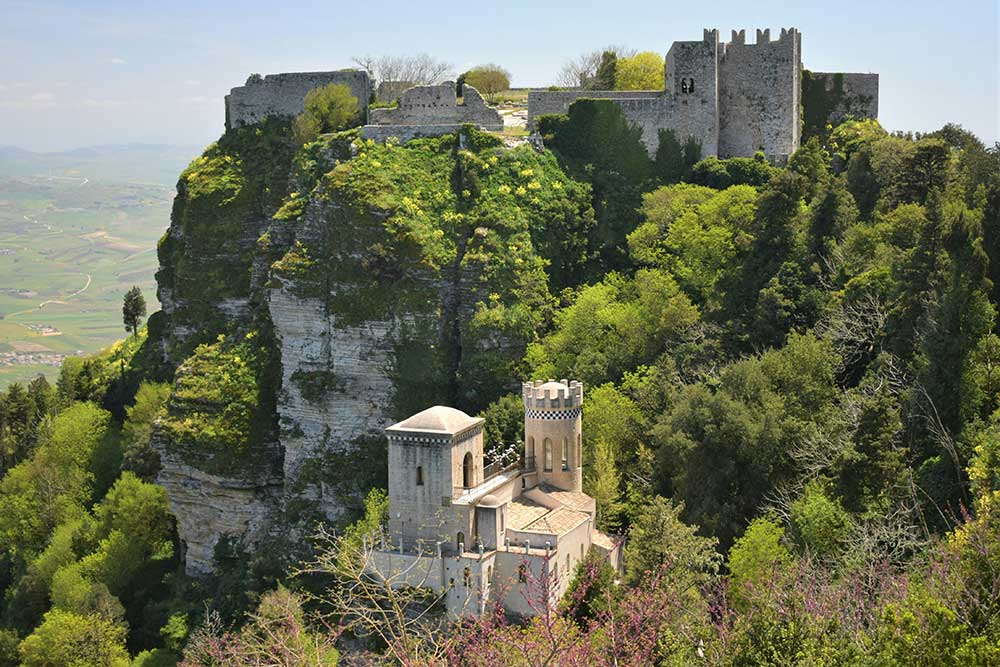
Erice occupies a mountain peak at seven hundred fifty meters elevation directly inland from Trapani, accessible by cable car ascending through dramatic elevation changes or by winding road climbing through twenty-six switchbacks to reach the medieval town perched on the summit.
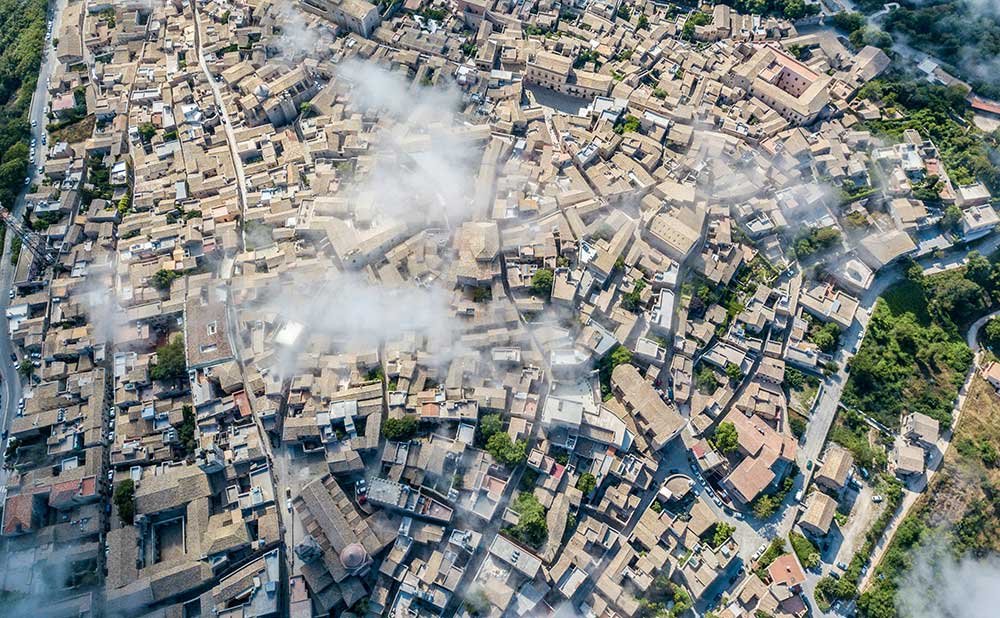
The elevation creates climate distinct from coastal Trapani with cooler temperatures, frequent fog that envelops the streets in atmospheric mist, and occasional winter snow that transforms the stone buildings into a scene from another era. This distinctive weather enhances the medieval ambiance where grey stone buildings, narrow cobbled streets worn smooth by centuries of footsteps, and intact defensive walls preserve character largely unchanged since medieval consolidation under Norman rule.
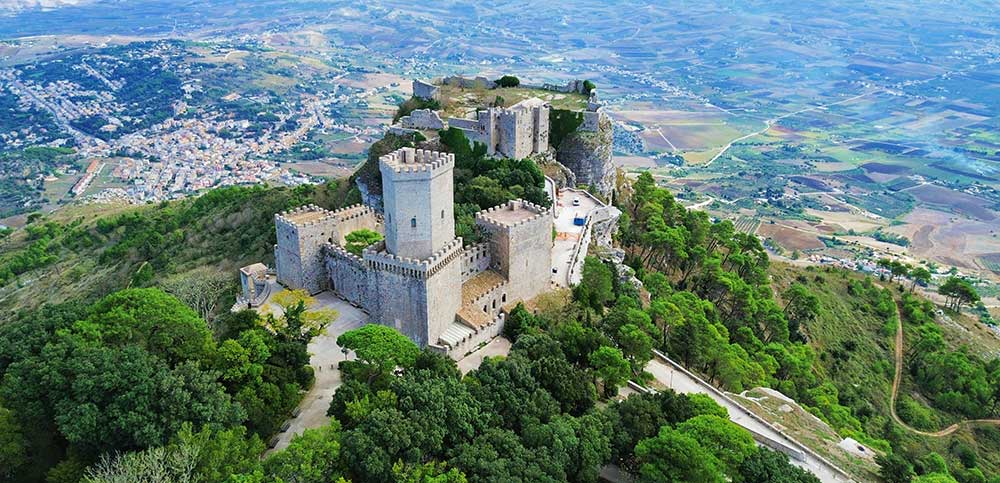
The town served as sacred site from ancient times when the temple to Venus Erycina attracted pilgrims from across the Mediterranean, a religious function that continued through the Christian period with churches replacing pagan sanctuaries while maintaining the site's spiritual significance. The Norman castle occupies the summit where foundations of the Venus temple remain visible beneath medieval fortifications, demonstrating continuity of sacred and strategic use at this commanding position. The fortress shows twelfth-century construction incorporating earlier Phoenician and Roman stonework with defensive walls extending outward to surround the entire mountaintop settlement.
The Venus castle stands on a separate rocky outcrop connected to the main town by a pathway following the ridge line and protected by defensive walls. This structure occupies the actual site of the ancient temple complex where worship of Venus Erycina combined Greek Aphrodite, Phoenician Astarte, and indigenous Sicilian fertility goddess traditions into a syncretic cult that drew devotees from throughout the ancient Mediterranean world.
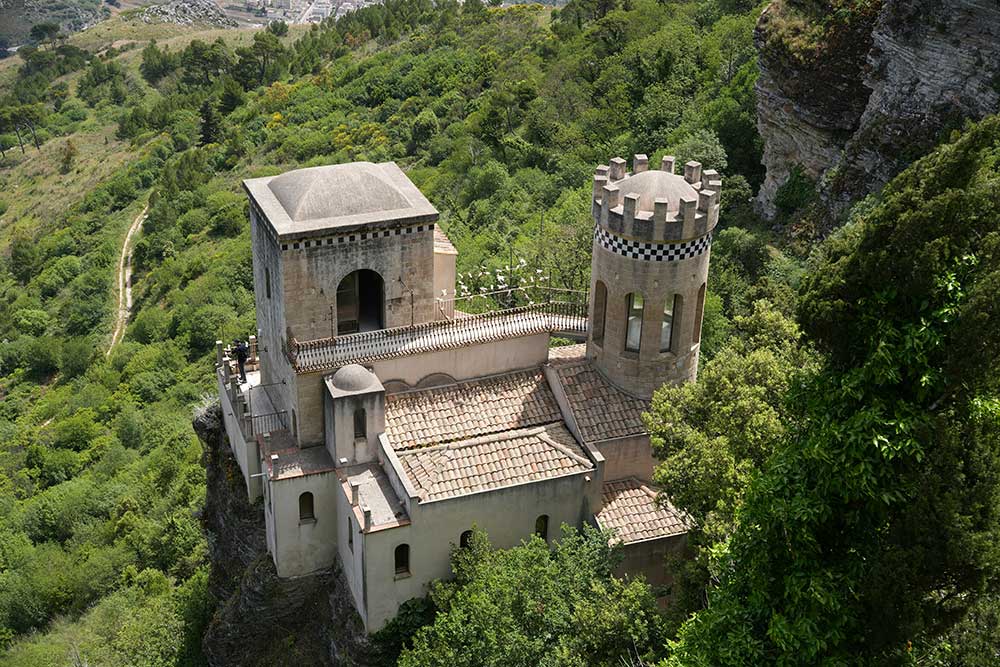
The castle demonstrates medieval reuse of sacred space for military purposes while maintaining the site's prominence in Erice's identity and the psychological power of this elevated position. The placement of two castles at opposite ends of the mountaintop created an integrated defensive system controlling the limited approaches to the summit and protecting the settlement between these fortified anchors.
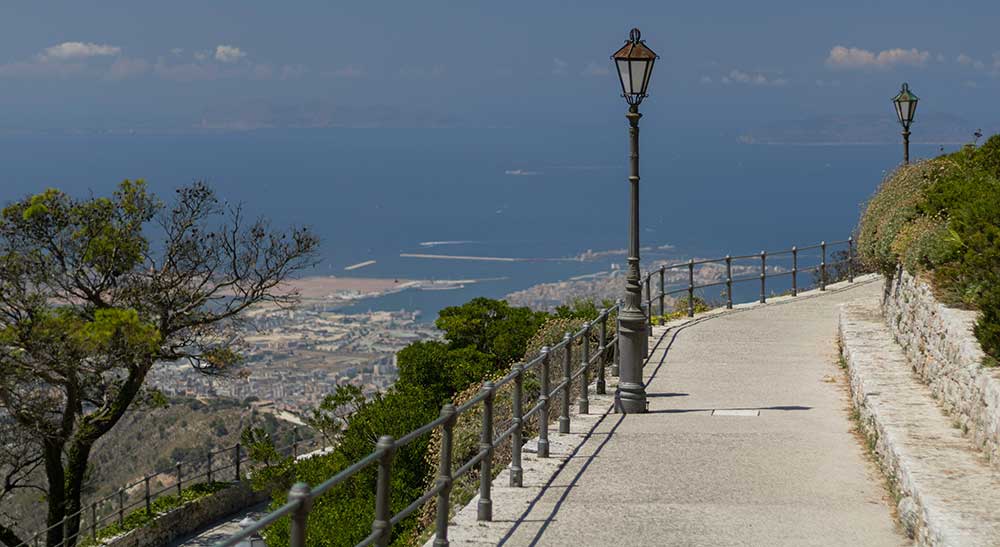
The Balio gardens adjacent to the castle provide landscaped public space with terraced walkways, ornamental plantings, and stone balustrades framing views that extend across western Sicily to Trapani far below, the geometric patterns of the salt pans spreading along the coast, and the Egadi Islands floating in the blue Mediterranean. On exceptionally clear days the vista reaches southeast across the interior mountains and northwest toward the Tunisian coast, demonstrating the geographic position that made Erice strategically valuable throughout its history.
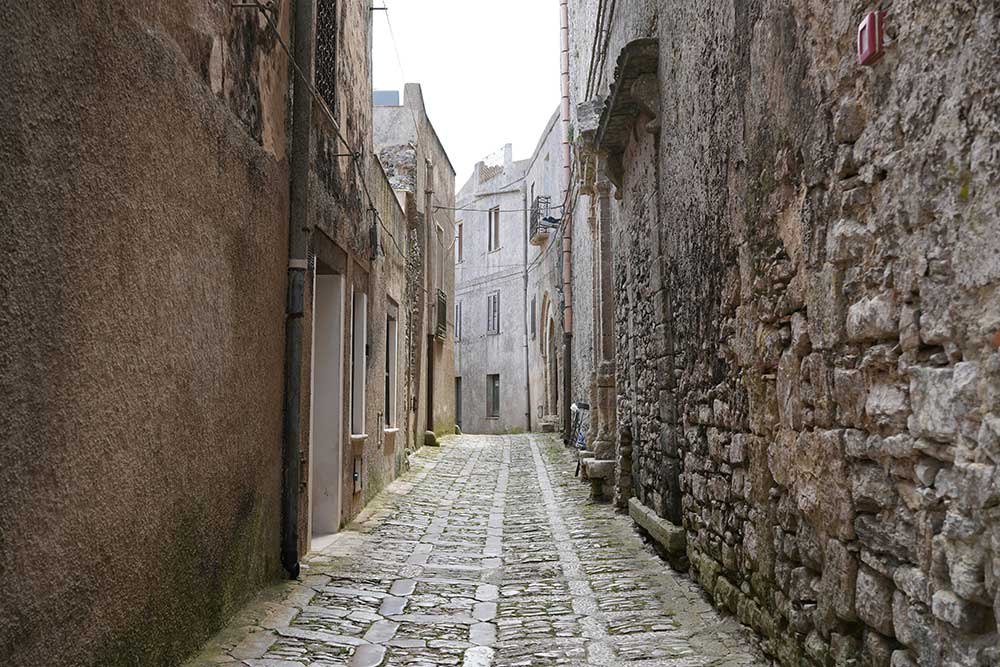
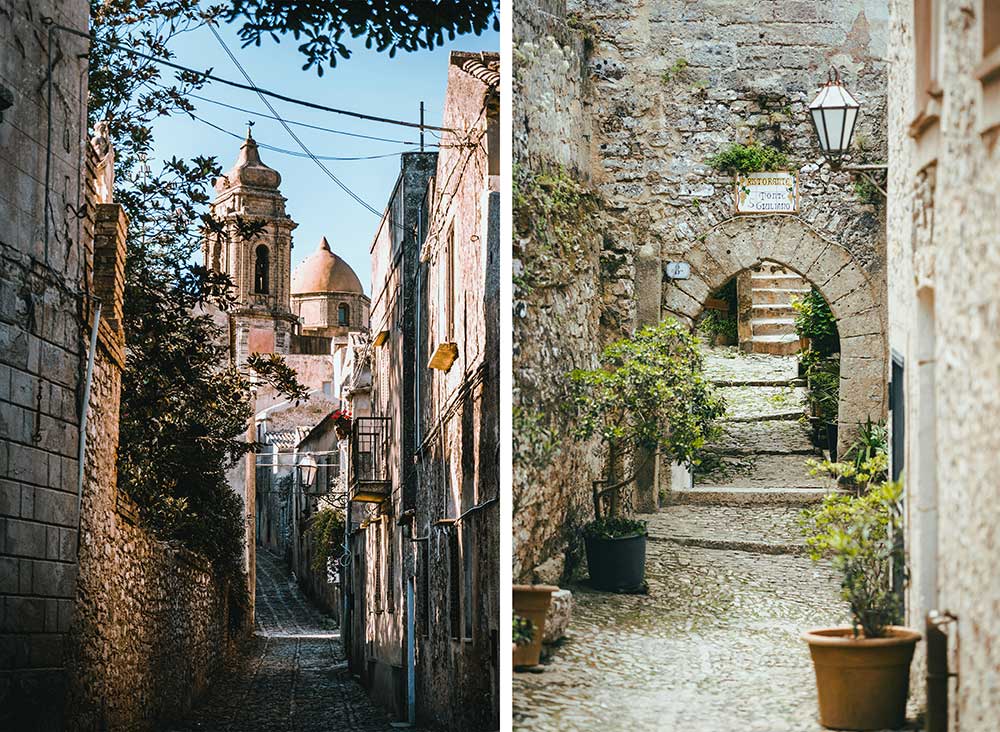
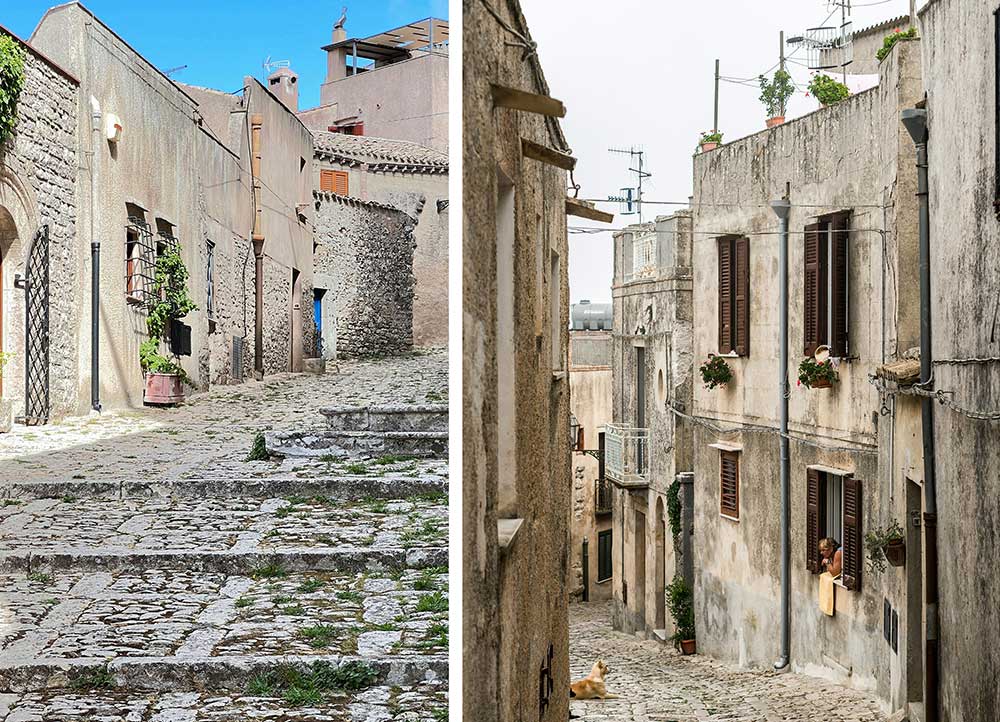
Medieval streets wind through the compact town center in irregular patterns following the natural topography of the rocky summit. Buildings constructed from local grey stone show Norman and later medieval craftsmanship with thick walls, small windows, and sturdy construction suited to the exposed mountain environment. Many structures house craft workshops and small shops selling ceramics decorated with traditional Sicilian patterns, handwoven textiles including rugs produced on traditional looms, and local food products such as almond pastries and marzipan fruits that represent the town's confectionery traditions.
The Chiesa Madre dedicated to the Assumption occupies a central position accessible from the main square, its Gothic structure from the fourteenth century showing a fortress-like facade complete with crenellations that reflect the defensive character pervading all aspects of the town's architecture. The bell tower originally served dual purposes as watchtower for spotting approaching threats and as campanile for calling the faithful to worship.
The combination of sacred history linking back to pre-Roman times, medieval defensive architecture preserved in exceptional completeness, continuing artisan craft traditions, and dramatic mountain setting visible from throughout western Sicily establishes Erice as a destination offering experience fundamentally different from the beach resorts and baroque cities found elsewhere across the island.
This interactive Google My Map shows locations of attractions with information that can be displayed by clicking on the symbols. It has a sidebar index and displays best in full-frame by clicking the box in top-right. You are welcome to make a copy as described here. There are many hotels listed in the map with contact information. My hotel choice in Trapani is Re Sale Boutique Hotel.
The Official Tourist Information website has a large amount of information about the city and surroundings, including sights, accomodations, dining, tours, scenic routes, free brochures, maps and more.
