
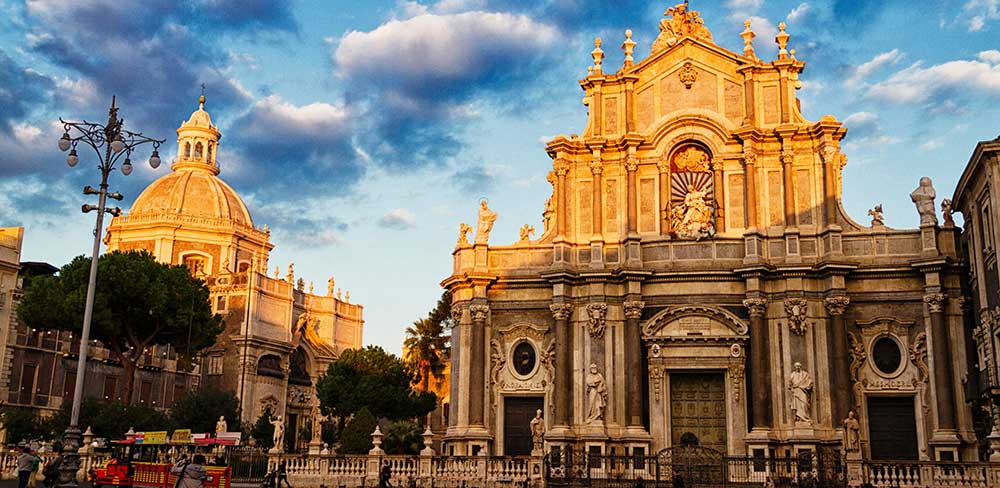
Catania, Sicily’s second-largest city, is a city of contrasts and layers, where medieval fortifications rise beside baroque facades, Roman ruins lie beneath modern streets, and the constant presence of Mount Etna shapes both landscape and history. Located on Sicily's eastern coast, this university city of approximately 300,000 residents serves as a commercial and cultural center while maintaining authentic Sicilian character less polished than more tourist-oriented destinations.
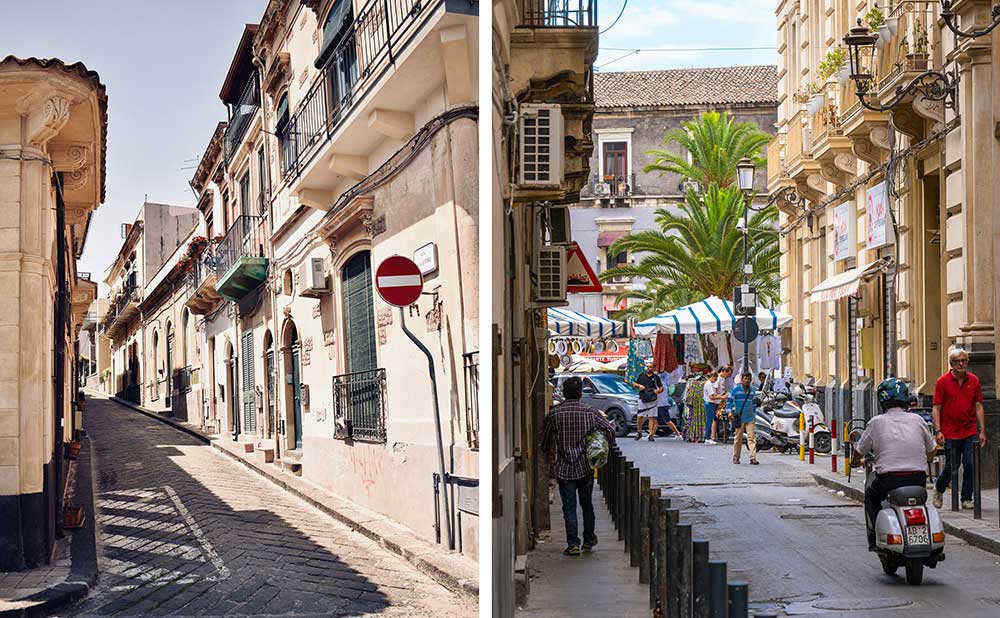
The compact city center encourages walking, with buses and taxis serving outer areas. Accommodations cluster around Via Etnea and Piazza del Duomo, and local cuisine, including pasta alla Norma and fresh seafood, is available at trattorias and market stalls.
This interactive Google My Map shows locations of attractions mentioned in this story, with information that can be displayed by clicking on the symbols. It has a sidebar index and displays best in full-frame by clicking the box in top-right. You are welcome to make a copy as described here. The map can be used in your mobile phone or tablet, very useful to help navigate while visiting a city.
There are many hotels listed on the map with contact information. My hotel choices are Il Principe Hotel Catania and Duomo Suites & Spa.
The Official Tourist Information website has a large amount of information about the city and surroundings, including sights, accomodations, dining, tours, scenic routes, free brochures, maps and more.
The Historic Center and Piazza del Duomo
The baroque heart of Catania centers on Piazza del Duomo, the ceremonial square rebuilt after the catastrophic earthquake of 1693 according to unified architectural designs. The Elephant Fountain stands at the center, featuring an ancient lava stone elephant supporting an Egyptian obelisk that serves as the city's symbol. The Cathedral of Saint Agatha anchors the square's eastern side, its facade incorporating columns salvaged from Roman buildings alongside theatrical baroque elements designed by Giovanni Battista Vaccarini. The cathedral's interior houses the chapel of Saint Agatha, which contains silver reliquaries and the saint's relics displayed during the annual February festival that remains central to Catanian religious life. Norman apses from the original 11th-century structure remain visible, revealing the building's multiple construction phases.
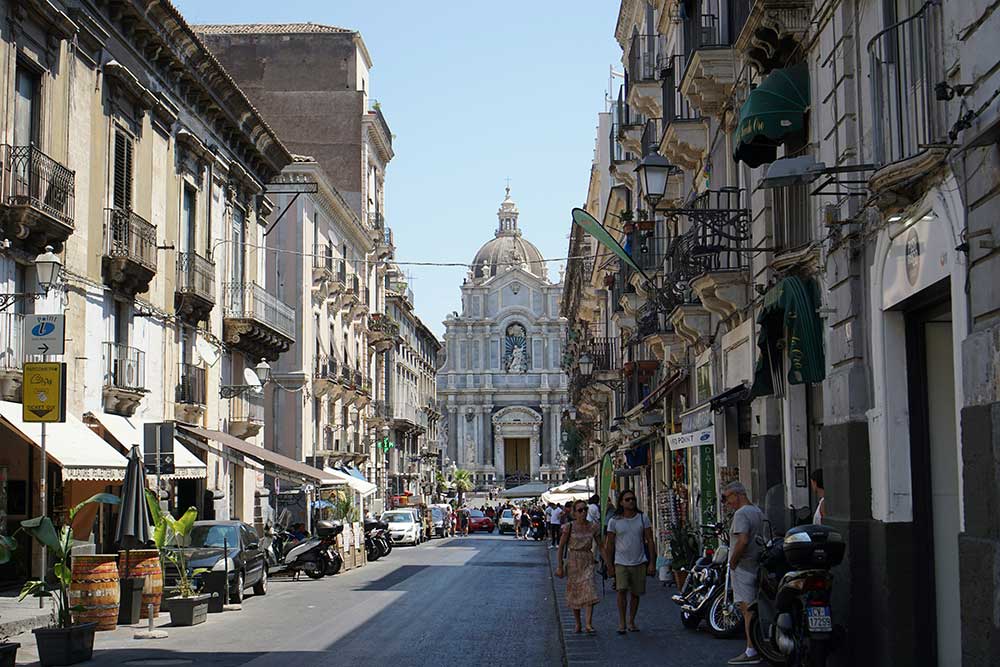
The Church of the Badia di Sant'Agata faces the square with a facade showing the concave and convex surfaces characteristic of baroque design. The attached monastery buildings extend behind the church, their former occupants being Benedictine nuns who maintained enclosure within the complex. The town hall and other baroque palaces frame the remaining sides of the square with facades of light-colored stone, creating one of Sicily's most architecturally unified urban spaces where both locals and visitors converge throughout the day.
Behind Piazza del Duomo, toward the port, the daily Fish Market operates in streets and covered areas where fishermen sell their catches directly to buyers. Vendors call out prices while fish lie displayed on ice-covered tables, and octopus and swordfish undergo cleaning in full view. The market operates during morning hours with peak activity before midday, and surrounding restaurants purchase ingredients directly from the stalls. The energy and theatrical quality of transactions provide observation of authentic local commerce and social interaction.
Via Etnea and Central Squares
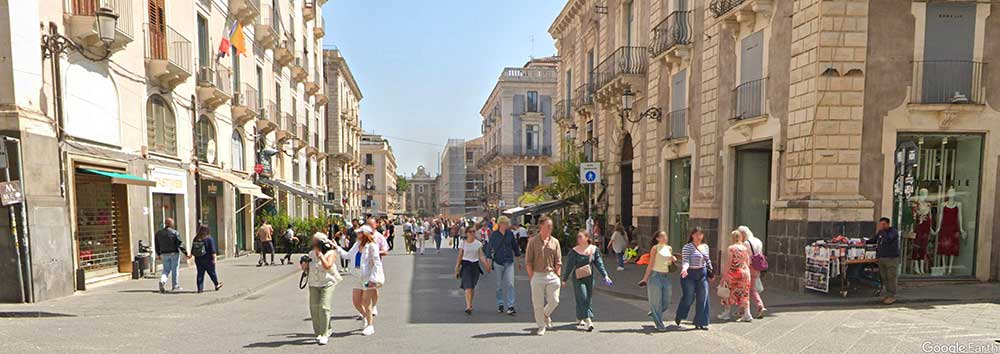
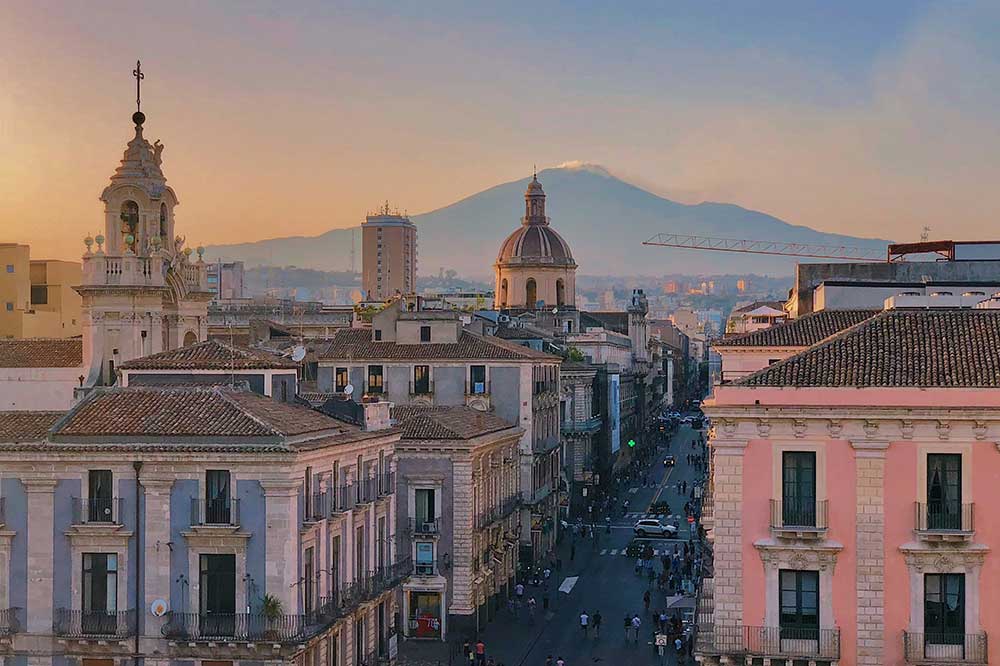
Via Etnea extends northward from Piazza del Duomo as Catania's main commercial thoroughfare, running straight toward Mount Etna, whose distant peak appears well beyond the street's terminus on clear days. Historic buildings house shops, cafes, restaurants, and businesses along the street's length, while pedestrians dominate the space during evening hours when residents engage in passeggiata, browsing windows and pausing for conversation. The street passes through several significant squares that serve as public gathering spaces and architectural showcases.
Piazza Università opens along Via Etnea, framed by the main building of the University of Catania, which has maintained presence in the city since 1434. The university palace, designed by Francesco Battaglia and Giovan Battista Vaccarini, features a courtyard accessible through a grand entrance, representing secular baroque architecture. Students gather between classes while cafes provide observation points for the continuous movement of people through this academic focal point.
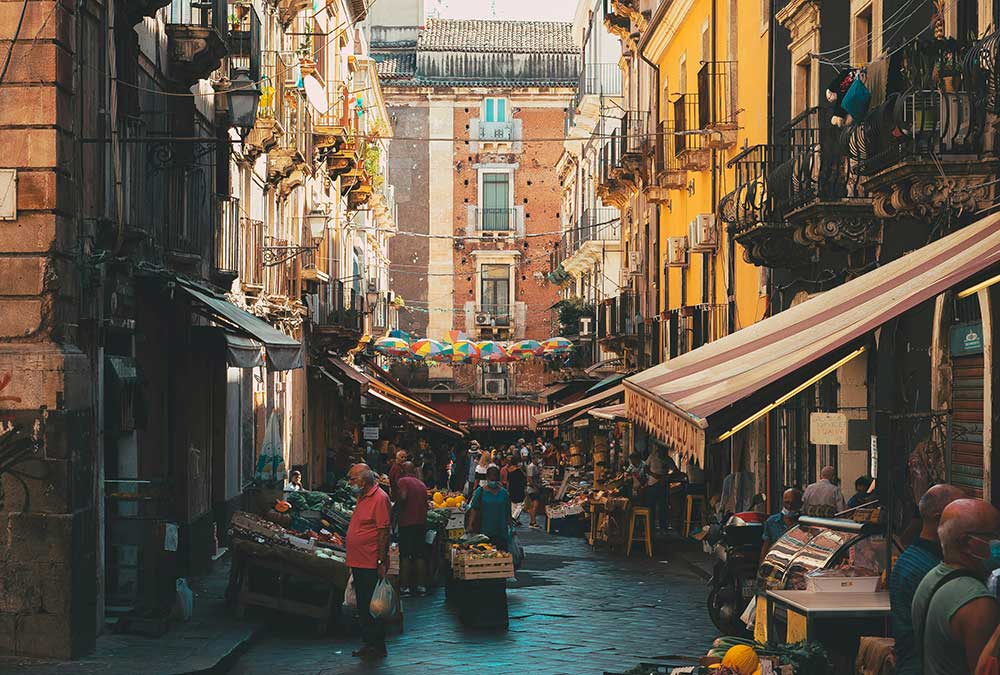
Further north, Piazza Stesicoro marks the division between the baroque historic center and the 19th-century expansion districts. Excavations at the square's southern end reveal remains of the Roman amphitheater lying well below current street level, demonstrating how successive lava flows and rebuilding raised the city over centuries. A monument to composer Vincenzo Bellini stands in the square, surrounded by cafes where patrons observe the constant pedestrian and vehicle traffic. The square functions as a major public transportation hub and meeting point, its juxtaposition of ancient ruins and modern urban activity embodying Catania's layered chronology.
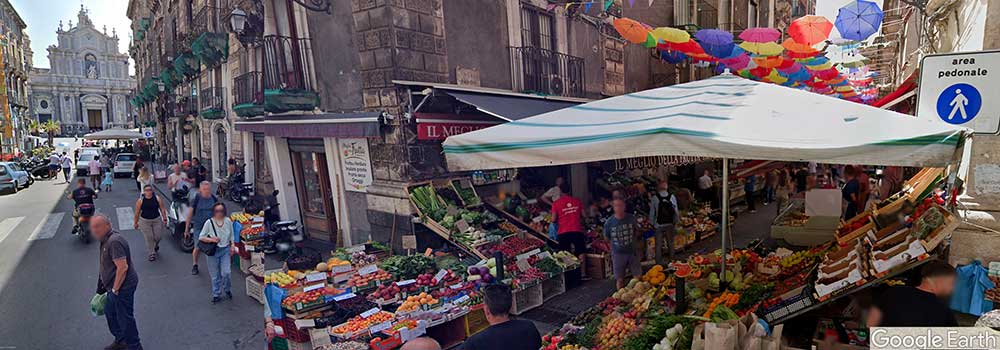
Via Garibaldi is one of Catania's main commercial streets running through the city center. The street connects Piazza Giovanni Verga with the historic area near the Cathedral and fish market. Visitors will find a mix of shops, cafes, and local businesses along this busy pedestrian-friendly thoroughfare. The street showcases typical Sicilian urban architecture with its dark volcanic stone buildings, a characteristic feature of Catania's reconstruction after the 1693 earthquake. Via Garibaldi serves as a practical route for exploring the city on foot, providing access to major landmarks while offering a glimpse of everyday Catanian life. The street becomes particularly lively during evening hours when locals gather for the traditional passeggiata.

Baroque Religious Architecture
Via Crociferi, a short pedestrian street north of the cathedral area, contains an exceptional concentration of churches and religious buildings constructed after the 1693 earthquake. Four churches line the street along with the former Jesuit college, all designed in complementary baroque styles that create one of Sicily's most unified streetscapes. The narrow street and tall facades produce dramatic spatial effects while sculptural details and convex church fronts demonstrate baroque architectural principles. The preserved character has made Via Crociferi a frequent filming location for period productions set in baroque Italy.
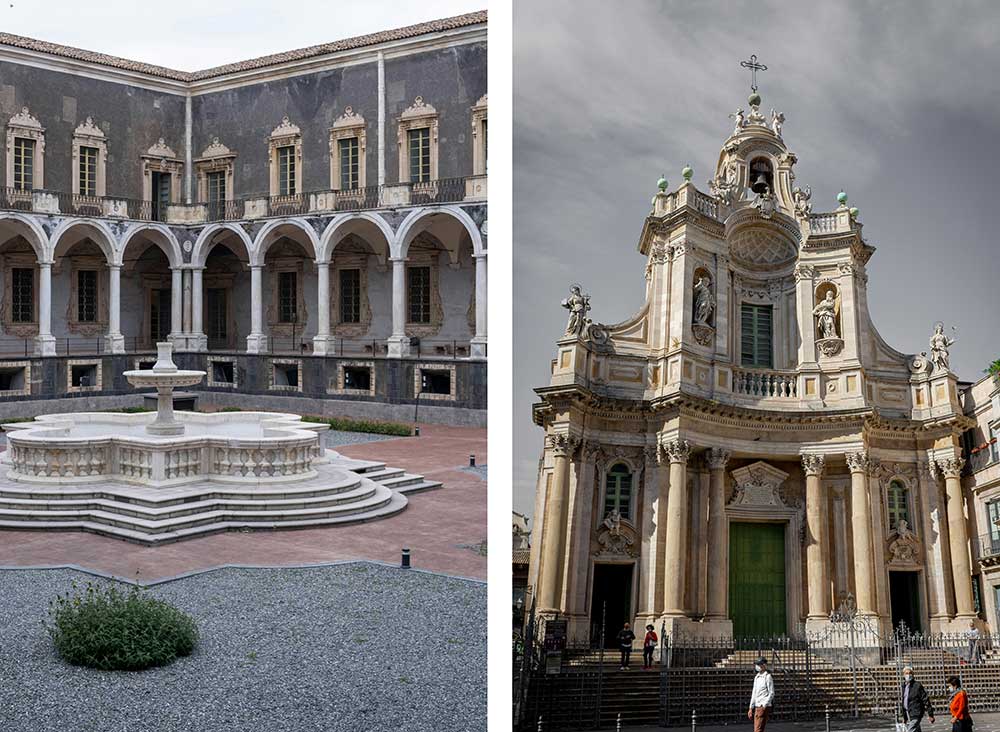
The Church of San Francesco d'Assisi all'Immacolata shows baroque reconstruction while maintaining elements from its medieval foundation. The interior contains 18th-century paintings, sculptures, and decorative elements along with the tomb of Eleanor of Anjou, a medieval queen whose presence connects the building to earlier Sicilian history. Located near Via Etnea, the church represents the pattern of destruction and reconstruction that defines much of Catania's architectural character.
The Monastery of San Nicolò l'Arena stands as one of Europe's largest Benedictine monasteries, a vast complex from the 16th to 18th centuries that now houses the humanities faculty of the university. The buildings contain two cloisters, a library, refectory, and numerous halls decorated with frescoes and baroque architectural details. Guided tours reveal the monastery's scale and the refined lifestyle its inhabitants maintained, including elaborate kitchens, reception rooms, and gardens. The unfinished facade of the attached church of San Nicolò remains deliberately incomplete since the 18th century, creating an architectural curiosity. The monastery demonstrates the wealth and cultural importance of religious institutions in baroque Sicily.
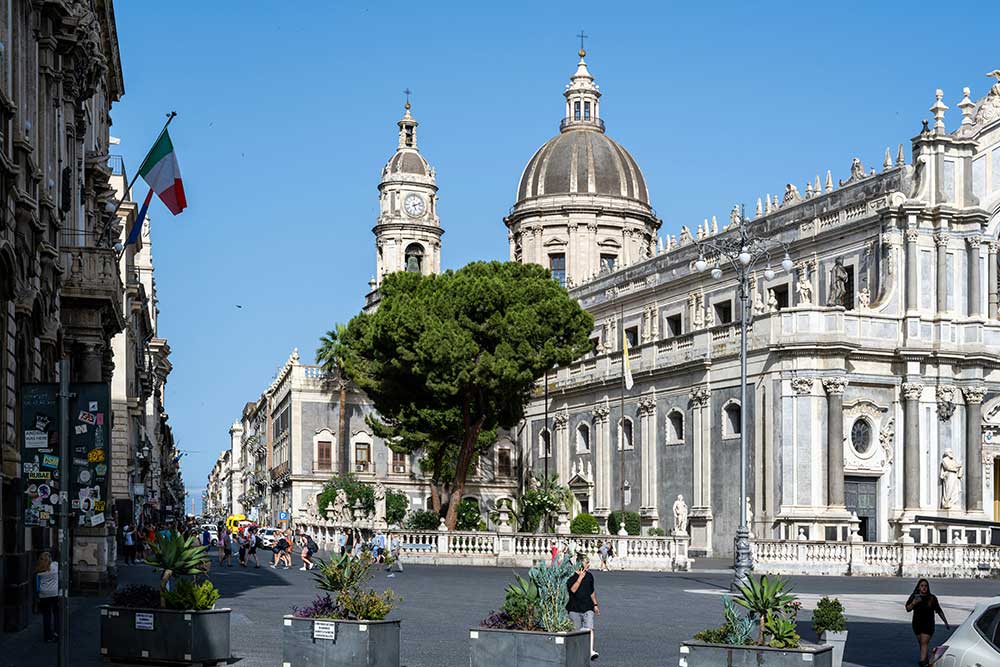
San Benedetto Monastery houses cloistered Benedictine nuns who maintain traditional monastic life while portions of the building remain open to visitors. The attached church features an elaborate interior with marble decoration, frescoes, and baroque altarpieces, while a gallery connects the church to adjacent buildings allowing nuns to attend services while maintaining enclosure. The monastery produces traditional sweets and pastries available for purchase through a rotating wooden window that preserves separation between the cloistered community and the outside world, representing continuity of monastic practice spanning centuries.
Roman Ruins and Medieval Architecture
The Roman Amphitheater from the 2nd century AD once accommodated approximately 16,000 spectators for gladiatorial contests and public spectacles. Much of the structure remains buried beneath later construction, but excavated sections reveal corridors, seating areas, and architectural elements indicating the building's original scale. The visible portions lie below current street level, and visitors can walk through underground passages and chambers where animals and gladiators waited before entering the arena. The site provides evidence of Roman Catania's size and prosperity.
The Roman Theater and Odeon lie partially buried beneath medieval and modern construction in the city center. The theater from the 2nd century AD could seat several thousand spectators for dramatic performances, while the smaller odeon served for musical performances and rehearsals. Excavations have revealed seating areas, stage buildings, and corridors constructed in lava stone, showing adaptation to local volcanic materials. The ruins occupy an entire city block with later buildings constructed directly above portions of the ancient structures, demonstrating continuity of urban occupation.
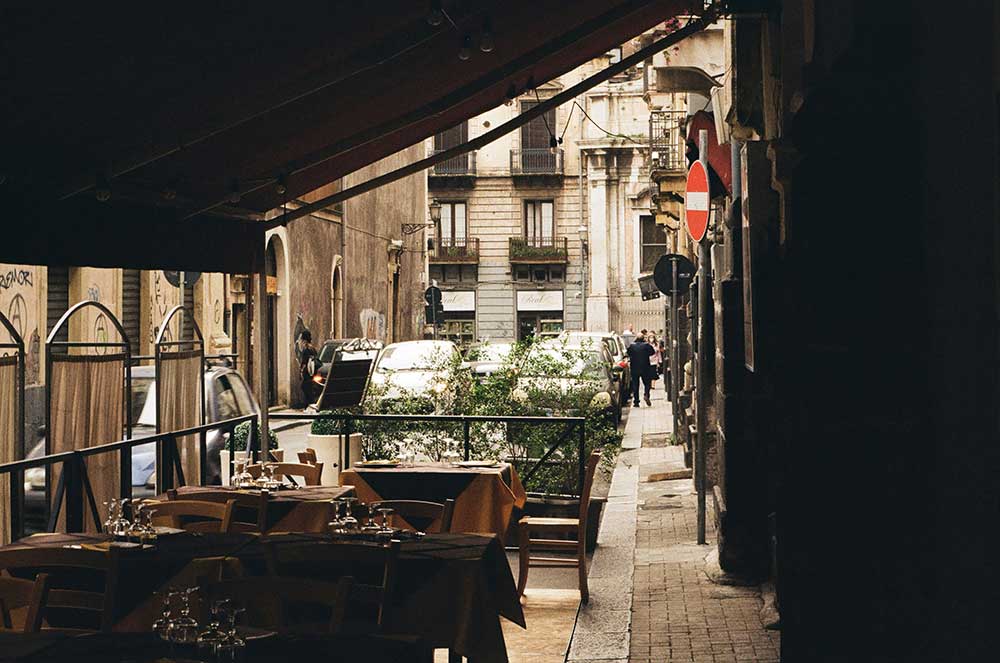
Ursino Castle, built by Frederick II in the 13th century as a coastal fortress, now stands inland due to lava flows from the 1669 eruption that extended the shoreline. The castle maintains severe medieval military architecture with thick walls and corner towers, though it no longer serves defensive purposes. The Civic Museum inside houses collections of archaeology, medieval artifacts, paintings, and decorative arts documenting Catania's history. The castle's rooms and courtyards provide space for temporary exhibitions while the building itself represents one of few medieval structures to survive the earthquakes that destroyed much of old Catania.
Aristocratic Palaces and Cultural Institutions
Palazzo Biscari represents the grandest example of aristocratic architecture in Catania, built by the Paternò Castello princes of Biscari following the 1693 earthquake. The facade extends along Via Museo Biscari with elaborate baroque decoration including balconies, sculptures, and architectural details. Interior rooms contain frescoes, stucco work, a ballroom with musicians' gallery, and collections assembled by the family. Portions of the palace can be visited by appointment, revealing the lifestyle and artistic patronage of Sicily's noble families. The building incorporated sections of ancient city walls into its structure, connecting baroque aristocratic culture with Roman foundations.
Palazzo Valle, also known as Palazzo della Cultura, houses the Ursino Recupero Civic Library with extensive collections of books, manuscripts, and historical documents relating to Sicilian history and culture. The building shows typical features of 18th-century noble residences with courtyards, reception rooms, and decorated halls. The library serves researchers and students while preserving materials that document Catania's intellectual history, representing the preservation of literary and documentary heritage within an architecturally significant building.
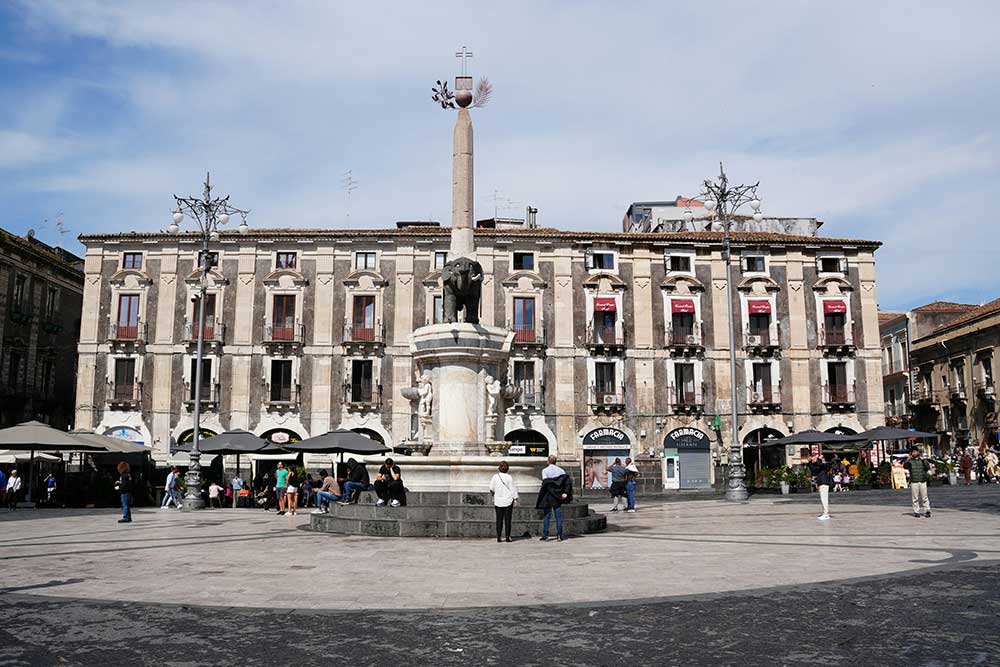
The Teatro Massimo Bellini, named after Catania's native composer, opened in 1890 with a performance of Bellini's opera Norma. The interior displays elaborate decoration in red and gold with a painted ceiling, multiple tiers of boxes, and acoustics that maintain the theater's reputation for opera performances. The season runs from October through May featuring opera, ballet, and classical concerts that attract audiences from across Sicily and beyond. The building's exterior shows neoclassical architecture while the lobby and public spaces demonstrate late 19th-century theatrical design.
The Vincenzo Bellini Museum occupies the composer's birthplace, preserving rooms where Bellini lived during his early years and displaying memorabilia related to his career. Collections include manuscripts, portraits, personal effects, and documentation of opera productions throughout Europe. Display materials trace his education in Naples, early successes, and international fame before his death at age 33, connecting Catania to broader European cultural history through its most famous native artist.
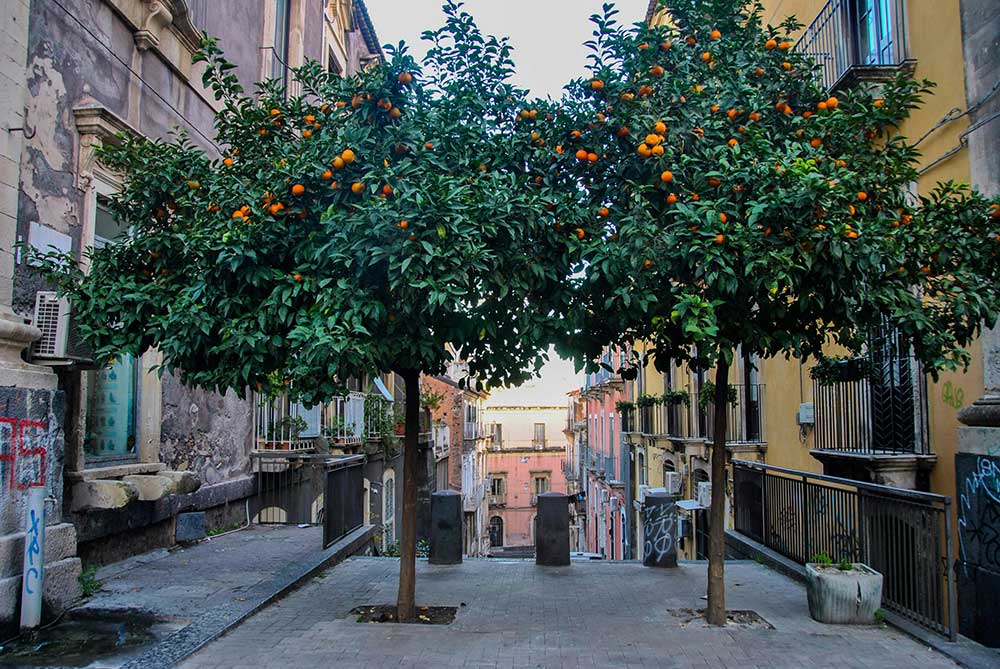
Parks and Green Spaces
Bellini Garden, known as Villa Bellini, occupies elevated ground along Via Etnea, offering shaded walks, formal gardens, fountains, and views across the city toward the sea. The 19th-century park's design includes winding paths, exotic trees, flower beds, and a music pavilion where concerts occasionally occur. Local residents use the gardens throughout the day for recreation, children's play, and socializing on benches beneath the trees. The entrance features a monumental staircase and gate while the interior provides respite from surrounding urban density, representing the type of public space created during Catania's 19th-century expansion.
The Botanical Garden, established by the university in the 19th century, contains collections of Mediterranean, tropical, and succulent plants arranged in thematic sections. Greenhouses shelter sensitive species while outdoor areas display trees, palms, and ornamental plantings. The garden serves research and educational functions for the university's botany programs while also opening to the public as a green space within the urban fabric. Walking paths wind through different planted areas and around ponds, demonstrating Catania's participation in scientific and botanical study during the age of natural history collections.
Piazza Mazzini near the port area features gardens, palm trees, and the monumental Fountain of Proserpina, creating a green space in the southern section of the historic center. The fountain depicts the mythological abduction of Proserpina and dates from the late 19th century. The square provides a pause point between the commercial center and the waterfront with benches shaded by trees, representing 19th-century improvements aimed at providing public amenities in the expanding city.
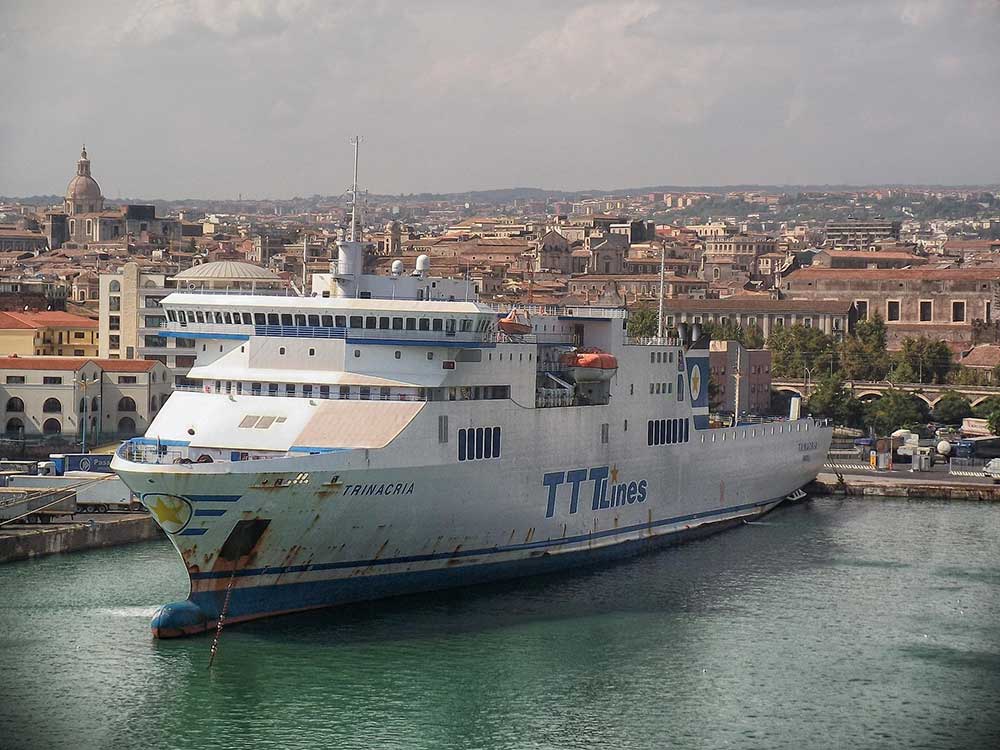
Waterfront and Port Area
The waterfront extends along Catania's eastern edge where the city meets the Ionian Sea, though the area functions primarily as a working port rather than a developed leisure zone. The lungomare, or seafront promenade, provides walking paths where residents take evening strolls with views across the water toward Calabria on clear days. Benches along the promenade offer positions for observing ship movements, sunset colors over the harbor, and the play of light on water while joggers and cyclists use the paved paths during cooler hours.
Restaurants near the port specialize in seafood preparations with ingredients sourced directly from the adjacent fish market. Establishments range from simple trattorias serving grilled fish and pasta with sea urchin to more formal dining rooms offering elaborate preparations of swordfish, tuna, and shellfish. Many restaurants maintain outdoor seating during warmer months where diners can observe maritime activity while eating. The concentration of seafood establishments near Via Dusmet and the streets surrounding the fish market creates a district where the day's catch determines menu offerings.
The Ognina area north of the commercial port contains a small marina where pleasure boats dock alongside remaining fishing vessels. This neighborhood maintains a maritime village character with trattorias overlooking the water and locals gathering near the small harbor. The waterfront here feels removed from central Catania's urban intensity, offering a quieter coastal atmosphere where the relationship between city and sea remains visible in daily rhythms. The relationship between Catania and the sea has shaped the city's history as a trading center, though much of the waterfront remains industrial rather than recreational in character.
Modern Districts and Infrastructure
Corso Italia runs parallel to Via Etnea as another principal axis through Catania with shops, offices, and residential buildings. The corso sees constant traffic and serves local shopping needs more than tourist activity, providing observation of everyday Catanian life. Buildings date primarily from the 19th and 20th centuries, showing the city's modern expansion beyond its baroque core. Locals conduct errands and shopping along this street while cafes serve neighborhood clientele, representing the practical commercial infrastructure supporting daily urban life.
Sections of the Achesiano Aqueduct from the 18th century remain visible in parts of the city, particularly along Via Antonino di Sangiuliano where a series of arches crosses the street. The structure brought water to baroque Catania from sources outside the city and represents infrastructure improvements undertaken during reconstruction after the 1693 earthquake. The visible arches have become incorporated into the urban landscape with modern buildings constructed around them, adding vertical architectural interest to street views while serving as a reminder of practical systems underlying urban life.
The Gammazita Refuge consists of an underground shelter system carved from lava rock that provided refuge during World War II bombing raids. The tunnels and chambers extend beneath parts of the city center and can be visited by guided tour. The spaces reveal how residents sought protection during wartime and how the city's volcanic substrate enabled creation of such refuges. Preserved signs, structural elements, and explanatory materials document this aspect of 20th-century history and civilian experiences during conflict.
Day Trips from Catania
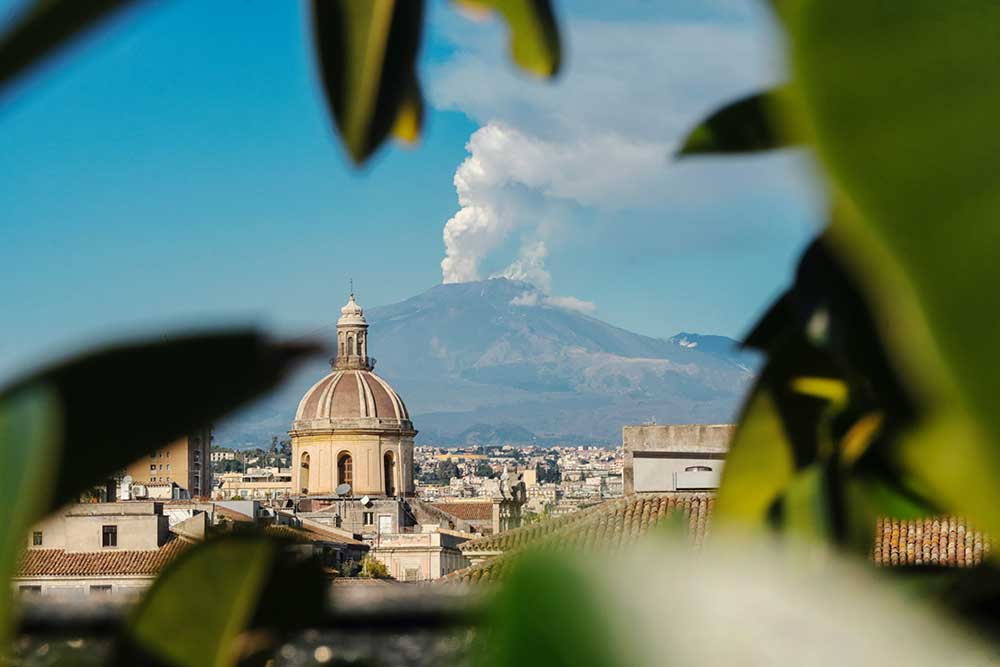
Mount Etna dominates the landscape north and west of Catania, and organized excursions depart regularly for the volcano's slopes and craters. Tours typically reach elevations accessible by vehicle before offering opportunities for guided walks near active zones, visits to extinct craters, and observation of lava fields and volcanic formations. Some excursions combine volcano visits with stops at wineries producing wines from grapes grown in volcanic soil. Winter months add the possibility of snow activities on Etna's higher slopes.
The baroque towns of the Val di Noto, designated as UNESCO World Heritage sites, lie within easy reach of Catania. Organized tours visit multiple towns including Noto, Modica, and Ragusa, each rebuilt after the 1693 earthquake with distinctive baroque architecture and urban planning. These excursions typically allow time for walking through historic centers, observing architectural details, and sampling local specialties including chocolate production in Modica.
Syracuse, located south along the coast, offers archaeological sites including the Greek theater, Roman amphitheater, and the ancient quarries known as latomie. The island of Ortigia, Syracuse's historic center, contains medieval and baroque architecture along narrow streets and waterfront promenades. Day trips typically combine the archaeological park with time in Ortigia's atmospheric streets and squares.
Taormina, positioned on a terrace above the Ionian Sea north of Catania, features a Greek theater with views of Mount Etna and the coast, medieval streets, gardens, and resort atmosphere. Organized excursions allow time for visiting the theater, walking Corso Umberto with its shops and cafes, and possibly including stops at nearby beaches or the mountain village of Castelmola above Taormina.
The Alcantara Gorges, formed by lava flows cutting through rock to create narrow canyons with waterfalls and pools, offer natural scenery distinct from Etna's volcanic landscapes. Some tours combine gorge visits with stops at small villages, local food producers, or additional natural sites in the region between Etna and the Peloritani mountains.
Badia di Sant'Agata Church; Via Vittorio Emanuele II, 182; The viewing terrace on the dome of this Baroque church offers one of the best 360-degree views of the city, encompassing Piazza Duomo, the historic center rooftops, and a dramatic panorama of Mount Etna and the sea
Church of San Nicolò l'Arena; Piazza Dante Alighieri, 12; Climbing the 141 steps to the highest viewpoint in the city provides a unique perspective over the urban landscape, historical buildings, and an extended view that can reach the coast of Siracusa on a clear day
Etnea Roof Bar & Restaurant; Via Etnea, 218; Located on the seventh floor of the Palace Catania UNA Esperienze hotel, this elegant restaurant and bar is famous for its direct, stunning views of Mount Etna and the city's main street, making it ideal for a sunset aperitif or dinner
Grand Hotel Baia Verde; Via Angelo Musco 8/10; Volcanic rocks overlooking natural bay between Acicastello and Catania This four-star hotel features a sun terrace built into the rocks with a staircase leading down to the sea, offering a wide selection of local wines and sea-view terrace with views of the Ionian Sea
Hotel Romano House Roof Garden; Via Giovanni Di Prima 20; This four-star hotel is set in an 18th century noble building in the center of Baroque Catania with a roof garden featuring a gym, where Il Riccio Restaurant serves Sicilian specialties and Mediterranean classics while the House Bar offers international cocktails
Museo Diocesano Terraces (Porta Uzeda Terrace); Via Vittorio Emanuele II, 182; This viewpoint is a hidden gem offering a spectacular angle on the Duomo, the historic Porta Uzeda gate, and a close-up look at the rooftops and domes of the city center
Palazzo Sangiorgio Rooftop Bar; Via Etnea; This intimate and chic rooftop terrace features a mini pool surrounded by comfortable sofas and modern design chairs with scattered greenery, offering enchanting views of the historic center of Catania while serving fine wines and expertly crafted cocktails in a lounge ambience with atmospheric lighting and music
Plaza Hotel Catania; Viale Ruggero di Lauria 43; Rooftop restaurant and cocktail bar offering a spectacular sea view of Ognina bay, great for an evening drink or dinner under the stars
The previous information is very detailed, so here we provide a shorter summary of the top-20 sights to see, in a Google My Map, followed by a list of those places with brief descriptions.
Amenano Fountain (Piazza del Duomo); This fountain occupies the corner of Piazza del Duomo where it marks the location where the underground Amenano River emerges briefly before disappearing again beneath the city.
Basilica della Collegiata (Via Etnea) ; This baroque church dedicated to Santa Maria dell'Elemosina stands prominently on Via Etnea. The elaborate facade and richly decorated interior exemplify Catanian baroque style. The church survived the 1693 earthquake and contains important religious artworks and frescoes representing local artistic traditions.
Castello Ursino (Piazza Federico di Svevia); A well-preserved 13th-century Norman castle built by Emperor Frederick II, once a royal residence and fortress. It now houses the Civic Museum, displaying rich archaeological and art collections. with collections of Greek and Roman artifacts, medieval sculptures, and paintings.
Cathedral of Sant'Agata (Piazza del Duomo, 1); This stunning Baroque cathedral honors Catania's patron saint with intricate lava-stone facades and opulent interiors featuring silver relics and frescoes. Built over a Roman bathhouse Rebuilt after Etna's 1669 eruption, it blends Norman baroque, and medieval architecture. The interior houses Sant'Agata's relics and the tomb of composer Vincenzo Bellini. The facade features grey lava stone columns from the Roman amphitheater, creating a striking black and white contrast, offering a serene escape amid bustling Piazza del Duomo, where visitors admire the iconic elephant fountain.
Fontana dell'Amenano (Piazza del Duomo); A marble fountain representing the Amenano River, which flows underground here and surfaces into a small basin. It is poetically known as the river of Amenano and marks the entrance to the fish market.
Giardino Bellini (Via Etnea) ; The city's oldest public garden provides a green refuge with walking paths, fountains, and scenic viewpoints. Created in the 1870s, the park features palm trees, flower beds, and a ornate bandstand. From elevated areas, visitors enjoy panoramic views of the city and Mount Etna beyond.
La Pescheria (Piazza Pardo); Catania's historic and vibrant fish market, located just behind the Piazza del Duomo. This sensory experience captures the authentic, loud, and bustling atmosphere of the city's daily life with its fresh catches.Vendors sell fresh seafood caught from the Ionian Sea amid animated bargaining and traditional Sicilian atmosphere. The market extends through narrow streets filled with colorful stalls, locals,, spices, and Sicilian chatter and the unmistakable energy of Catania's food culture.Vendors shout deals on swordfish and sardines amid colorful stalls, providing an immersive sensory feast of sights, smells, and tastes—perfect for sampling street food like arancini.
Monastero dei Benedettini (Piazza Dante Alighieri, 32) ; One of Europe's largest Benedictine monasteries, this UNESCO site combines baroque architecture with archaeological ruins including Roman houses beneath its foundations, masterpiece of late Sicilian Baroque architecture,. Now part of the university, it features two elaborate cloisters, ornate staircases, and a stunning library. Guided tours reveal centuries of architectural layers and monastic history.
Piazza del Duomo ; The city's main square, a UNESCO World Heritage site, the majestic heart of Catania hosts the striking black-lava elephant fountain and the Baroque cathedral of Sant’Agata, rebuilt after the 1693 earthquake — it serves as the vivid symbol of the city’s volcanic resilience. features the Fontana dell'Elefante, a whimsical lava elephant carrying an obelisk, symbolizing protection from Etna. Flanked by the cathedral and town hall, this Baroque square buzzes with cafes and vendors, ideal for people-watching and gelato amid historic charm. palazzo degli Elefanti, showcasing the city's reconstruction after the 1693 earthquake.
Piazza Giuseppe Mazzini ; Quiet yet historic, this square features remnants of Doric columns and Baroque palazzi that echo Catania’s layered ancient-to-modern story.
Roman Baths ; Archaeological remains of ancient baths reveal the buried history beneath Catania’s streets, blending Roman ruins with medieval walls.
Teatro Romano e Odeon (Via Teatro Greco, 94); Ancient Roman and Greek theaters in the heart of the city, largely carved out of black lava stone. this ancient amphitheater hosted gladiatorial games and still echoes with summer performances. Its tiered seats and stage ruins offer intimate insights into Roman engineering, surrounded by citrus groves in the heart of CataniaThe Roman theater could seat thousands, and the smaller Odeon was likely used for rehearsals and smaller musical performances.The ancient Roman theater complex dates from the 2nd century AD and accommodated 7,000 spectators. Adjacent stands a smaller odeon used for music and rehearsals.
Teatro Massimo Bellini (Piazza Vincenzo Bellini); A grand 19th-century opera house with an opulent interior and magnificent French Empire style, named after Catania's composer Vincenzo Bellini. It's renowned for its perfect acoustics and beautiful frescoes.This neoclassical opera house, dedicated to the composer, boasts exquisite acoustics and gilded interiors for world-class performances. Built in 1890, its grand auditorium and frescoed ceilings evoke 19th-century elegance, making it a cultural jewel for concerts and architectural admiration.
Terme Achilliane (Piazza del Duomo, 8);These Roman baths from the second through fifth centuries represent one of the most significant surviving structures from imperial Catania. The complex extends beneath Piazza del Duomo and surrounding buildings, accessible through a narrow passage to the right of the cathedral facade.
Ursino Castle (Piazza Federico di Svevia, 14); A 13th-century fortress built by Frederick II, this imposing lava-stone bastion once defended against invasions and now houses the Civic Museum with ancient artifacts. Its moated square design and panoramic terraces overlook Etna, blending medieval might with cultural treasures in a fortified haven.
Via Crociferi (Via Crociferi); A UNESCO-listed street famed for its density of beautiful Baroque churches and monasteries, connected by the symbolic Arco di San Benedetto. It offers a stunning, harmonious example of 18th-century architecture.
Via Etnea (Via Etnea); Catania's bustling main artery is ;;
Villa Bellini ; The city’s lush public park offers shady paths, fountains, and distant Etna views — a peaceful retreat amid the lively streets, featuring sweeping staircases, fountains, and exotic plants. It is a favored spot for Catanese to relax, jog, and enjoy the greenery away from the bustling city streets..
