
.jpg)
Cefalù occupies a narrow strip of land pressed between the Tyrrhenian Sea and the massive limestone promontory of La Rocca on Sicily's northern coast. The town's Norman cathedral rises against the base of this 270-meter rock face, establishing a visual relationship between human construction and natural formation that defines the settlement's character. Medieval streets extend from the waterfront through the historic center, maintaining their original narrow dimensions and irregular paving while accommodating contemporary commercial activity and residential life.
.jpg)
This interactive Google My Map shows locations of the attractions mentioned in this story, with information that can be displayed by clicking on the symbols. It has a sidebar index and displays best in full-frame by clicking the box in top-right. You are welcome to make a copy as described here. The map can be used in your mobile phone or tablet, very useful to help navigate while visiting a city. There are many hotels listed in the map with contact information. My hotel choice is Hotel Riva del Sole.
The Official Tourist Information website has a large amount of information about the city and surroundings, including sights, accomodations, dining, tours, scenic routes, free brochures, maps and more.
The Cathedral District and Central Historic Core
.jpg)
The Cathedral of Cefalù dominates the town from its position at the base of the Rocca, a structure begun in 1131 by King Roger II as fulfillment of a vow made during a storm at sea. The fortress-like facade features two massive towers flanking the entrance and represents one of Sicily's finest examples of Norman architecture. The cathedral's size overwhelms the small medieval town and demonstrates the power and ambition of Norman Sicily's rulers. Inside, the golden mosaic of Christ Pantocrator in the apse stands as a masterwork of Byzantine art, created by craftsmen brought from Constantinople. The interior combines Norman structural elements with Byzantine decorative programs and Arab-influenced geometric patterns in the capitals and arches.
Piazza del Duomo fronts the cathedral and serves as Cefalù's ceremonial center and main gathering point. The square slopes gently upward toward the cathedral steps, creating a natural amphitheater effect. Restaurants and cafes occupy buildings around the plaza's perimeter with outdoor tables offering views of the cathedral facade. Tourists photograph the cathedral while locals cross the space conducting daily business or pause for conversation. The scale of the square suits the small town while providing appropriate setting for the monumental cathedral. Evening hours bring crowds of visitors and residents who occupy the square and surrounding streets in continuous circulation.
2up.jpg)
Corso Ruggero, the main street running through Cefalù's historic center, connects Piazza del Duomo with the rest of the town. This narrow medieval street runs perpendicular from the waterfront through the historic center, lined with shops, restaurants, cafes, and historic buildings. The corso maintains its original medieval width and irregular paving while accommodating modern commercial activity. Locals and visitors move constantly along this main artery, browsing shops selling ceramics, clothing, food products, and souvenirs. Small side streets branch off leading to churches, residential areas, and the base of La Rocca. Evening hours bring increased pedestrian traffic as people engage in passeggiata and gather outside establishments. The street represents the spine of daily life in Cefalù's old town.
The Mandralisca Museum occupies a palace in the historic center, displaying collections assembled by Baron Enrico Pirajno di Mandralisca including archaeological artifacts, natural history specimens, and paintings. The museum's most famous work is Antonello da Messina's Portrait of an Unknown Man, a Renaissance masterpiece showing remarkable psychological depth. Additional collections include Greek pottery, coins, shells, and books demonstrating the wide-ranging interests characteristic of 19th-century private collectors. The museum occupies period rooms within the palace providing context for how such collections were originally displayed. The institution preserves both the collections and the tradition of private scholarly collecting in provincial Sicilian culture.
.jpg)
Osterio Magno represents the remains of a palace complex associated with Roger II and later Ventimiglia family ownership. The structure dates from the Norman period with later modifications and shows architectural elements including arched windows and doorways carved in volcanic stone. The building occupies a prominent position in the historic center though only fragments of walls and architectural features remain standing. Archaeological investigation has revealed more about the structure's original extent and function. The ruins contribute to understanding Cefalù's medieval history as a royal foundation and later baronial seat.
Medieval Infrastructure and Water Systems
The Medieval Wash House, or Lavatoio Medievale, represents one of Cefalù's most distinctive historical sites. Fed by the Cefalino River emerging from underground channels, this covered washing area dates from Arab-Norman times and remained in use until recent decades. Stone basins line the walls where women washed clothes in the constant flow of fresh water coming directly from underground sources. The vaulted stone structure maintains cool temperatures even in summer heat. A series of stone steps descends to the water level where the basins are arranged, with water flowing through stone basins carved with animal heads that served as ancient spouts. The site preserves a functional aspect of daily life that connected women across generations in communal work. The wash house demonstrates medieval infrastructure and water management adapted to local geological conditions.
.jpg)
Medieval Fortifications and Gates
The medieval fortification system that once enclosed the town survives in fragmentary form. Porta Pescara, located near the beach at the eastern end of the historic center, shows a stone arch integrated into buildings. The structure represents one of few surviving elements of Cefalù's medieval defensive system and marks the boundary between the old town and later expansion. The gate's presence reminds visitors of the town's fortified past and provides a tangible connection to medieval urban planning. Stone construction shows weathering from centuries of exposure to sea air.
The Postierla Medieval Gate preserves its original structure and provides passage between the historic center and areas outside the old walls. The gate shows construction techniques using local stone and architectural forms typical of medieval defensive architecture. The structure has been maintained and remains in daily use as a thoroughfare. Like other surviving gates, it marks the boundary of the historic core and provides a sense of entering the medieval town.
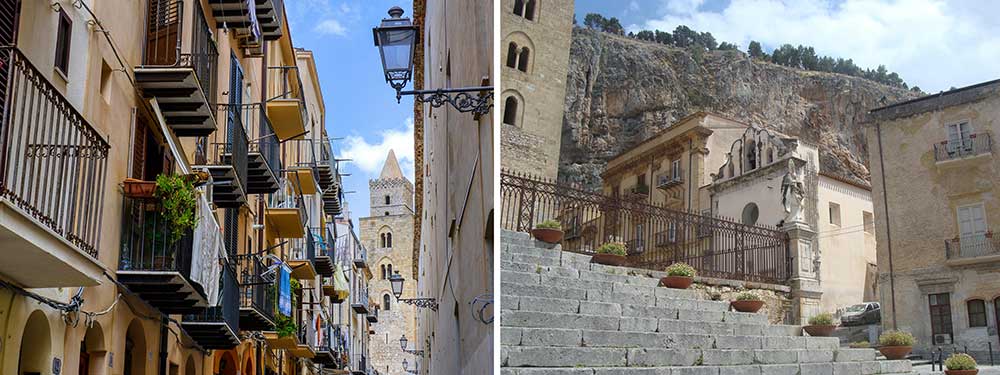
The Bastione di Capo Marchiafava, a defensive bastion at the edge of the old town near the eastern beach, shows the later medieval and early modern fortification systems that supplemented earlier defenses. Stone walls and structural remains indicate the military architecture employed to protect the town from seaborne threats. The position offers views along the coast and across the rooftops of the historic center. The bastion represents adaptations to evolving military technology and threats during the centuries when Cefalù required active defenses. The structure has been partially incorporated into later construction but remains identifiable as a military feature.
.jpg)
Residential Streets and Authentic Quarters
Via Vittorio Emanuele runs roughly parallel to Corso Ruggero, providing another route through the historic center with shops, cafes, and services. The street maintains medieval dimensions with stone buildings rising three or four stories on either side. Balconies overhang the narrow way while shop fronts at street level display merchandise. The via connects to various cross streets and small piazzas creating the maze-like quality of the medieval town plan. Residents conduct shopping and errands along this street while tourists explore the atmospheric passages.
2up.jpg)
Via Carlo Ortolani di Bordonaro retains authentic character with minimal commercial development, showing residential life in the historic center. Stone buildings rise on either side with balconies, small windows, and doorways revealing the dense medieval construction pattern. The street serves primarily neighborhood functions rather than tourist traffic, offering a view of how locals inhabit these ancient structures. Occasional shops or services operate from ground floor spaces. The via demonstrates that portions of the historic center remain primarily residential despite tourism pressure elsewhere.
.jpg)
Via Porpora, a stepped street, climbs steeply from the lower town toward the base of La Rocca, passing through residential areas of the historic center. Stone steps worn smooth by centuries of foot traffic connect different levels of the town built on the sloping terrain between the sea and mountain. Houses press close on either side with small doorways opening directly onto the street. Washing occasionally hangs between buildings while potted plants decorate steps and thresholds. The via demonstrates how the town's topography shaped its development and how residents navigate the vertical dimension of daily life.
.jpg)
The Waterfront Zone
The Lungomare Beach Promenade extends along Cefalù's main beach, offering views of the Norman cathedral rising against the dramatic backdrop of La Rocca. The sandy beach attracts swimmers and sunbathers from spring through autumn, while the promenade accommodates evening strollers and observers of beach activity. Restaurants, cafes, and gelato shops line the landward side of the walkway. Fishing boats rest on the sand near the small harbor at the promenade's western end. The lungomare serves as the primary people-watching location where locals and tourists circulate throughout daylight hours and into evening. The combination of beach, architectural monuments, and mountain backdrop creates Cefalù's distinctive visual identity.
.jpg)
The Old Port occupies the western end of the town beach, where a small harbor shelters fishing boats and pleasure craft between curved stone breakwaters. Fishermen maintain their boats and equipment along the quay while restaurants nearby serve catches brought directly from the sea. The harbor area provides clear views back toward the cathedral and La Rocca showing Cefalù's signature profile. Morning hours see fishing activity while later in the day the port becomes a scenic viewpoint and walking destination. The modest scale of the harbor reflects Cefalù's character as a small coastal town rather than major maritime center. The stone pier extending into the water serves as a popular spot for observing sunset. Small fishing boats bob in the water, framed by the colorful houses of the old town, creating the classic postcard view of Cefalù.
.jpg)
La Rocca and Ancient Sites
La Rocca, the massive limestone promontory rising 270 meters directly behind the town, is crowned by ruins of a medieval castle and ancient fortifications. The steep path to the summit passes through pine forest, Mediterranean scrub vegetation, and eventually bare rock with panoramic views expanding at each stage of the climb. At the top, remains of the Norman castle, Byzantine fortifications, and even more ancient structures from the 4th century BC demonstrate the strategic importance of this commanding height. The climb requires an hour or more and solid footwear, but the 360-degree views encompass the town, coastline, and surrounding mountains.
Partway up the Rocca sits the Temple of Diana, a pre-Greek megalithic structure dating from approximately the 9th-5th centuries BC and representing one of Sicily's most enigmatic ancient monuments. The building uses massive stone blocks fitted without mortar in construction techniques that predate Greek colonization. The temple's function and the people who built it remain subjects of archaeological debate. The structure sits on a natural terrace with views across the landscape. Visitors ascending La Rocca typically pause at this site before continuing to the summit. The temple demonstrates human use of the Rocca for ritual or defensive purposes extending back into prehistory.
2up.jpg)
More Churches
The Church of Purgatorio occupies a prominent position on Corso Ruggero, featuring a distinctive double staircase leading to the entrance and architectural details characteristic of 17th-18th century reconstruction. The interior contains paintings and decorative elements from the baroque period including altarpieces and ceiling frescoes. The church serves as an active place of worship while welcoming visitors interested in its art and architecture. The building demonstrates how baroque taste overlaid and modified Cefalù's earlier medieval fabric following earthquake damage and changing aesthetic preferences.
.jpg)
Near the cathedral, the Church of Maria Santissima della Catena contains artwork and architectural features from various periods of renovation dating to the 15th century. The interior holds paintings, sculptures, and decorative elements of interest to those exploring Cefalù's religious heritage beyond the dominant cathedral. Its name references chains, likely related to either maritime tradition or symbolic religious meaning. The building represents one of several smaller churches that formed the fabric of religious life in medieval and baroque Cefalù.
.jpg)
Panoramic Viewpoints
Various elevated points around and within the town provide panoramic views, often referred to collectively as belvedere locations. These vantage points offer perspectives on the cathedral, the Rocca, the coastline, and the relationship between town elements. Some occupy natural high points while others are accessible from church terraces or defensive structures. Locals and visitors seek these spots particularly during late afternoon and evening when light enhances the stone architecture and sea views. The terraces serve as orientation points helping visitors understand Cefalù's topography and spatial organization.
.jpg)
Day Trips from Cefalù
The Gibilmanna Sanctuary, located in the mountains approximately 12 kilometers south of Cefalù, attracts pilgrims and visitors to its church containing a venerated image of the Madonna. The complex includes the church, monastery buildings, and a museum displaying votive offerings and religious art. The mountain setting at 800 meters elevation provides cooler temperatures and views across forested slopes toward the coast. The sanctuary represents an important pilgrimage destination for the region with particular activity during the annual September festival. The site demonstrates the rural religious culture surrounding Cefalù and the devotional practices maintained by local populations. A winding mountain road connects the sanctuary to the coast.
2up.jpg)
The town serves as a base for exploring the Madonie Mountains to the south, the coastal villages to the east and west along the Tyrrhenian shore, and archaeological sites in the surrounding region. Organized excursions typically depart from the waterfront area or can be arranged through local tour operators in the historic center.
Practical Observations
Cefalù functions as both a working Sicilian town and a tourist destination. The historic center maintains its medieval street pattern and architectural fabric while accommodating shops, restaurants, and visitor services. Residential life continues in upper stories and side streets away from the main commercial routes. The town's compact size allows exploration on foot, though the steep terrain approaching La Rocca requires physical exertion. The waterfront provides a level walking area while the historic center involves navigating steps and inclines. The cathedral and several churches maintain regular visiting hours while shops and restaurants follow seasonal patterns with extended hours during summer months and reduced schedules in winter. The combination of beach access, architectural monuments, medieval urban fabric, and mountain backdrop provides varied experiences within a relatively small geographical area.
Bastione & Costanza; Piazza Francesco Crispi, 13; Restaurant offering refined Mediterranean fare with rooftop seating and lively ambiance serving creative dishes with stunning views of the coastline
Dokeio - Rooftop Lounge Bar; Via Veterani, 40 (Hotel La Giara); This central rooftop lounge bar is highly praised for its magical atmosphere and breathtaking views over the sea, the sunset, the medieval rooftops, and the impressive Cefalù Cathedral and La Rocca
Duomo di Cefalù Rooftop; Piazza del Duomo; The Norman cathedral dating back approximately 800 years offers visitors the option to purchase tickets for the towers and rooftop to get elevated views and a better perspective of this UNESCO heritage site, with the two towers glowing golden at sunset making the piazza a picturesque spot for aperitivo
Enoteca le Petit Tonneau; Via Vittorio Emanuele, 49; Very small enoteca with one of the best sunset views in town featuring three tables on the veranda to enjoy charcuterie and wine with limited capacity requiring advance booking
Hotel La Giara; Via Veterani, 40; Modern hotel near Cefalù town with rooftop pool offering sea and La Rocca views, with spacious clean rooms, rooftop bar serving cocktails, and excellent breakfast with convenient location near beach, dining and attractions
La Rocca; Vicolo Dei Saraceni; Climbing the historic rock that dominates the town offers the ultimate panoramic view of Cefalù's crescent-shaped bay, its entire old town, and the rugged interior of Sicily
Victoria Palace Hotel Rooftop Terrace; Lungomare G. Giardina; This hotel rooftop terrace enjoys views out onto the sea featuring the hotel's own beach area and outdoor pool, providing a great option with its rooftop terrace overlooking the Mediterranean
The previous information is very detailed, so here we provide a shorter summary of the top-20 sights to see, in a Google My Map, followed by a list of those places with brief descriptions.
Bastione di Capo Marchiafava (Piazza Garipoli): Overlooking the harbor, this 13th-century watchtower turned viewpoint offers 360-degree sea panoramas and digital museum exhibits on Cefalù's history. Climb for sunset drinks at its sustainable cafe, blending defense heritage with modern culture and Ionian breezes. It's a perfect spot to take photos of the town's fortified walls meeting the sea.
Beach of Cefalù (Lungomare Giuseppe Giardina): The crescent-shaped sandy beach stretches along the town's northern edge beneath La Rocca. Crystal-clear waters and shallow entry make it ideal for swimming. The beach offers classic Italian resort atmosphere with umbrellas, restaurants, and the dramatic backdrop of the medieval town and towering rock formation behind.
Cefalù Cathedral (Piazza del Duomo): A UNESCO World Heritage site, this massive Norman cathedral was commissioned by King Roger II in 1131. It is famous for its towering twin steeples and the breathtaking Byzantine mosaic of Christ Pantocrator inside the apse. The Norman cathedral dominates the town with its twin towers and fortress-like appearance. Built in 1131 by Roger II, this twin-towered basilica dazzles with magnificent Byzantine mosaics including the Christ Pantocrator in the apse. The church represents one of Sicily's finest examples of Norman-Arab-Byzantine architecture and holds UNESCO World Heritage status. its Arab-influenced cloister and bronze doors blend Byzantine splendor with Sicilian heritage, anchoring the town's medieval charm.
Chiesa di Santa Maria della Catena (Via Carlo Ortolani di Bordonaro): This small church near the duomo features simple architecture and religious artwork. The church maintains active worship and represents the numerous historic churches throughout Cefalù's old town. Its name refers to the chain that controlled harbor access during medieval times, connecting the building to maritime history.
Corso Ruggero: The town’s main street winds through boutiques, Norman stonework and lively cafés, filled with Sicilian warmth and character, connecting Piazza Duomo with the rest of the town. Medieval buildings line the narrow corso featuring shops, cafes, , trattorias,and the Osterio Magno, Roger II's palace ruins. Stroll its pedestrian path for gelato pauses, ceramic shops, and sunset aperitivi, capturing the town's authentic vibe from ancient gates to lively piazzas.The street preserves authentic character with its stone architecture, small piazzas, and traditional atmosphere away from the waterfront crowds.
Fishermen's District (waterfront area near Porta Pescara and Piazza Marina): This quarter developed along the western waterfront where maritime trades concentrated and fishing families lived in houses directly connected to beach access.
Fontana del Porto (Lungomare Giuseppe Giardina): This 18th-century fountain near the waterfront features a sculpted basin and central column, crafted from local stone. It once served as a water source for fishermen, reflecting Cefalù’s maritime culture.
Giudecca District (eastern quarter accessed via Porta Giudecca): This neighborhood occupies the eastern section of the historic center between the main town and the slopes of La Rocca and functioned as the Jewish quarter before expulsion orders. The district maintains distinct character with particularly narrow winding streets adapted to the steep terrain.
La Rocca (Via Saraceni): The massive limestone promontory rises 270 meters above town, crowned by ancient ruins and panoramic views. The steep path passes the Temple of Diana, a pre-Hellenic structure, before reaching medieval fortifications, this hike rewards with panoramic coastal vistas and ruins of a 13th-century Norman castle atop ancient Greek walls. Steep paths wind past wild gardens and WWII bunkers, offering solitude and sweeping views of the Tyrrhenian Sea at sunrise or sunset. The summit provides spectacular vistas across Cefalù, the coastline, and the Madonie mountains, rewarding the challenging climb.
Lavatoio Medievale (Via Vittorio Emanuele): The medieval public washhouse consists of a series of stone basins fed by natural spring water flowing from the Cefalino river, offering a glimpse of daily life in medieval Sicily. Twenty-two washing stations line the covered structure where women historically gathered to wash clothes. The cool, flowing water and ancient stone architecture create an atmospheric glimpse into medieval daily life. A charming medieval public washhouse fed by the River Cefalino, where women historically did laundry in a series of ancient stone basins under a vaulted roof. A cool, serene spot tucked into the heart of the old town. Tucked in a narrow lane, this 16th-century public laundry features stone basins fed by mountain springs, where women once scrubbed linens. Restored arches and flowing water create a serene, time-frozen nook, highlighting Cefalù's everyday medieval life amid blooming bougainvillea.
Lungomare Beach: The town’s golden beach arcs alongside the medieval centre, perfect for swimming, sunset walks, and stunning views of La Rocca looming above.
Lungomare Giuseppe Giardina: Cefalù's picturesque seaside promenade stretches along the beautiful sandy beach. It offers stunning views of the medieval old town backed by La Rocca, especially beautiful at sunset.
Mandralisca Museum (Via Mandralisca, 13): This small museum houses an eclectic collection. This museum, formerly the private residence of Baron Enrico Pirajno di Mandralisca, houses an eclectic collection of paintings, archaeological finds, and natural history, including the famous Portrait of an Unknown Man by Antonello da Messina The collection includes Greek ceramics, coins, shells, and archaeological finds. The intimate space allows close examination of significant artworks and artifacts spanning Sicilian history.
Museo del Mare (Via Bordonaro, 8): This maritime museum, housed in a historic waterfront building, explores Cefalù’s fishing and seafaring traditions. Exhibits include ancient tools, boat models, and artifacts from shipwrecks, tracing the town’s coastal history from antiquity to the present.
Osteria Magno (Via Tumminello, 2): This 12th-century Norman palace, once Roger II's residence, reveals fortified halls and Hellenistic foundations amid medieval alleys. Now a museum, it showcases artifacts from Cefalù's Arab-Norman era, evoking royal intrigue in a labyrinth of stone arches and courtyards. An imposing medieval and Renaissance palace believed to have been the residence of the Ventimiglia counts. Noteworthy for its striking Gothic-Catalan style windows, it stands as a testament to the town's historical nobility.
b: Flanked by the cathedral and bishop's palace, this vibrant piazza hums with locals sipping espresso amid Baroque fountains. Evening passeggiata brings musicians and markets, encapsulating Cefalù's Norman soul in a sunlit gathering spot for people-watching and historic immersion.
Piazza Garibaldi: Enjoy a brioche con gelato while people-watching in this lively square — a sweet pause in the rhythm of seaside life.
Porta Pescara (Via Porta Pescara): The medieval gate forms part of the original town fortifications opening to the harbor area. It provides a stunning, iconic frame for views of the old fishing harbor and the Tyrrhenian Sea. Known also as Porta Marina, the archway preserves the defensive walls that once surrounded Cefalù. The gate provides direct access between the historic center and the seafront, maintaining its function after centuries.
Porto di Cefalù : The picturesque harbor fills with fishing boats and pleasure craft, offering authentic maritime atmosphere. Restaurants line the waterfront serving fresh seafood caught by local fishermen. The port provides sunset views of La Rocca and the town, maintaining its working character while serving tourists with boat excursions and waterfront dining.
.jpg)
.jpg)
