Barcelona Day One
Rambla, Cathedral, Sant Jaume, Royal Square, alleys
.webp)
Begin in the main square, Plaça de Catalunya — a patch of greenery, with trees, lawns, fountains and benches, and flanked by two large department stores, El Corte Inglés and FNAC. Barcelona's modern shopping district is just north, and the Old Town is just south. Catalunya is a transit hub, with several metro and commuter trains underneath, major bus stops all around, and nine streets leading into it.
See our Barcelona Day One video — Gothic Quarter, Ramblas, Plaça de Catalunya, Cathedral, Royal Palace, Plaça de St. Jaume, Carrer de Ferran, Plaça Neri, Plaça dei Pi, Plaça Reial.
Rambla
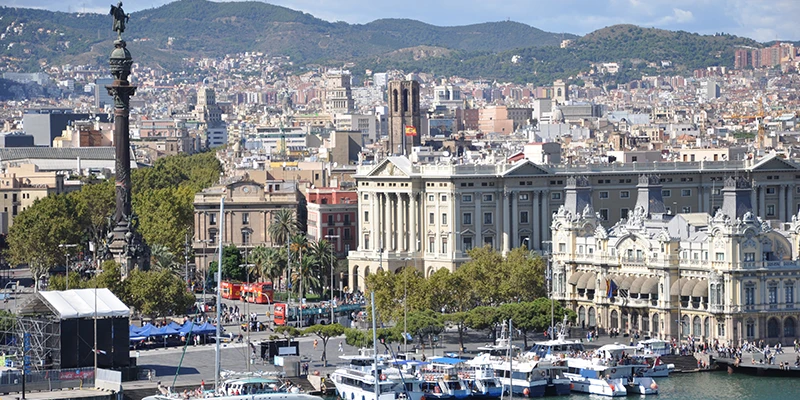
Stroll from Catalunya along the famous Rambla, a broad pedestrian promenade extending from the southwest corner of the square and continuing for ¾ of a mile to the waterfront and column in honor of Columbus. The Rambla is Barcelona at its best, day and night, so plan to come back to this stretch many times during your visit.
.webp)
The Rambla is always busy with people walking past its flower shops, newsstands, bars and cafes, and is alive with activity throughout the day and night, making this one of the top venues for strolling in all of Europe.
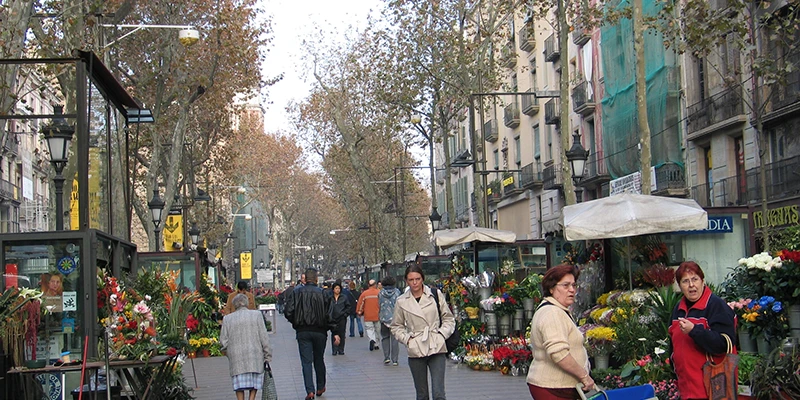
All but one of the lanes extending from the east side of the Rambla into the Old Town are for pedestrians only, so take the plunge. Rather than walking the full length of the Rambla straight to the waterfront this first time, detour into the Gothic Quarter and explore the gold mine of little lanes. Half the fun of this experience is just wandering and getting a little lost, although it always helps to have a map and general itinerary for guidance. Some of the main sights you want to be sure you cover are outlined here, but the network of walking paths is so continuous and compact you could follow your own instincts and have a good time exploring it.
Narrow Alleys
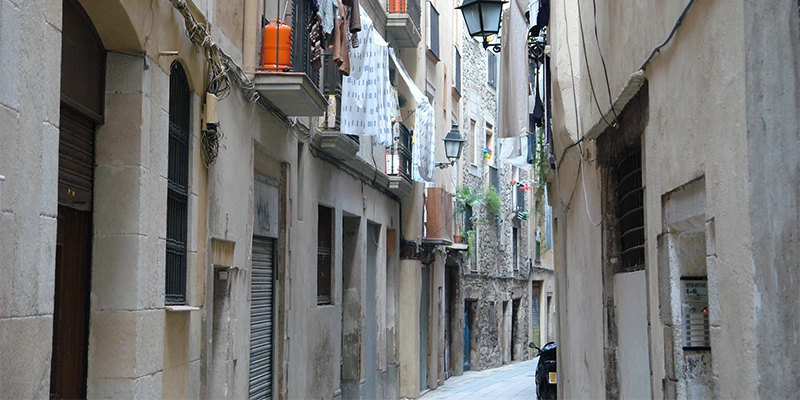
An excellent place to turn east from La Rambla is the pedestrian lane called Carrer de la Portaferrissa, lined with fascinating shops and old buildings. It leads to a small but strategic intersection where you will probably end up at numerous times in your wanderings because the three directions of this unassuming triangle take you to major destinations: the cathedral; Plaça dei Pi; and l'Angel shopping street.
Cathedral
.webp)
Naturally, in the center of the oldest section you are going to find a gothic cathedral, the pattern of many ancient European towns. Catedral de la Seu was first built in the 13th through 15th centuries in the traditional gothic style, with a soaring nave, pointed arches, tall columns, 28 side chapels and a spectacular cloister that is home to a flock of noisy geese with an attitude.
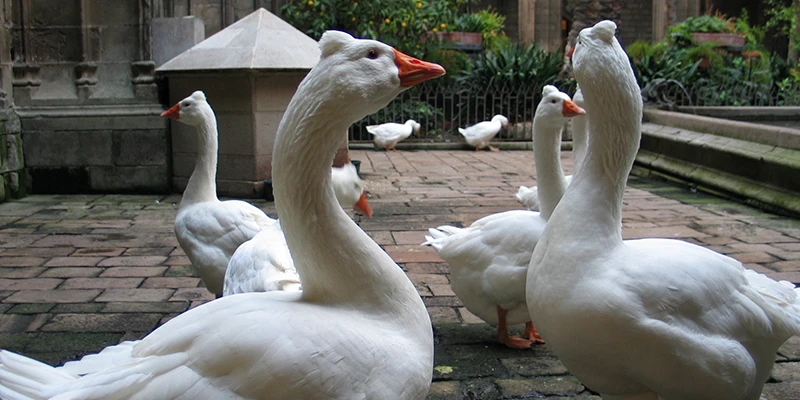
Nobody knows where the geese came from but they have been here for centuries and are said to represent purity, fitting right in with the atmosphere of this wonderful church.
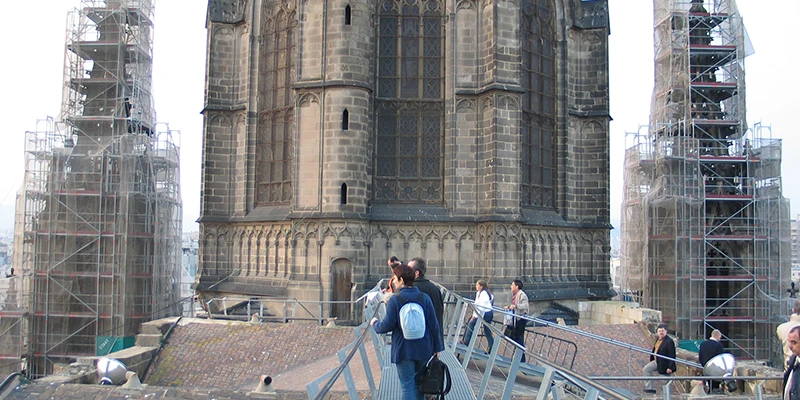
Take a ride up the elevator and venture onto the roof for a stunning view across the center of town, which helps orient you for the walks to come. This prime location atop a low hill was the earlier home of a Roman temple and then a 6th century church, so it's no wonder the narrow lanes immediately adjacent are dense with historic structures and small plazas.
.webp)
Standing in front of the cathedral on Plaça de la Seu, you are flanked by two medieval structures: the former Pia Almoina on the left, which had been a monks' residence and almshouse for the poor and is open now as the Diocesan Museum with medieval religious treasures and changing exhibits, and on the right, the fascinating Archdeacon's Palace, Casa de l'Ardiaca, worthy of closer examination.
.webp)
From the outside you can see the Archdeacon's Palace with three towers which were part of the original Roman fortified wall. Walk around to the entrance and notice the elaborate mail box next to the entrance, with an incised carving of flying birds and a turtle, symbolizing how fast the mail should travel but how slowly it actually moves. This also refers to the wheels of justice, for legal offices were here in the 19th century. Walk into the patio to enjoy the quiet, cloister atmosphere complete with arcaded columns around the central fountain and noble palm tree in the center. You are free to enter the building lobby and admire the beautifully-preserved Roman wall that stands inside.
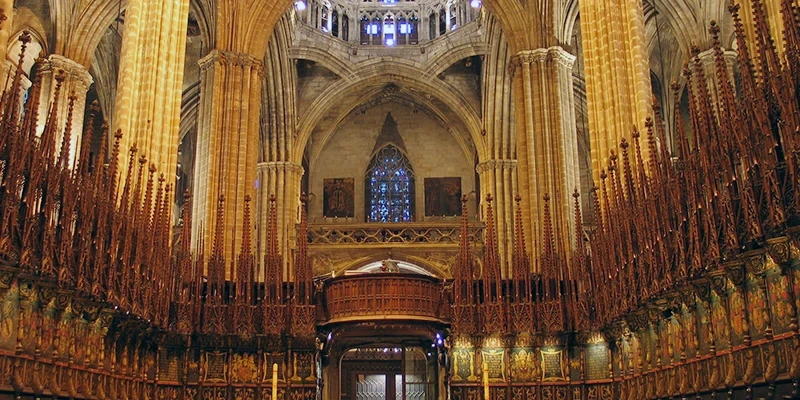
Naturally the cathedral is in the heart of the Old Town, so there are lovely strolls to be enjoyed all around it day and night. Many shops and restaurants are clustered in the nearby blocks, with lots of people out for a stroll and probably several sidewalk musicians providing entertainment.
Royal Palace
One block east you will find the former home of kings and queens, the Palau Reial or Royal Palace, now a history museum, the Museu d'Història de la Ciutat. In 1493 Columbus reported his great discovery to Ferdinand and Isabella in the palace's spectacular Banqueting Hall, "Saló del Tinell," whose roof is formed by the largest medieval stone arches in Europe. Several other halls and chambers exhibit period paintings, furnishings, weapons, altars and artifacts.
Don't leave the museum yet because a more ancient world waits for you below street level. The elevator is a time machine whose button says '-2,000 years' rather than 'basement,' and brings you 30 feet down to the original Roman streets where you can see foundations of buildings that once were houses, wineries, bakeries, leather factories and fortified towers. Smooth paving of the streets and sewers attest to the Roman engineering skills which created the world's most sophisticated cities in those days of long ago. If you don't want to pay to go inside you can peek in a few windows to see a bit of the underground remains, and visit the gift shop to look at pictures of the site and buy souvenirs.
Roman ruins are also visible at street level just around the corner on Carrer de Paradís, in a little patio where four Corinthian columns still stand from the temple of Augustus from the first century, and traces of the Roman wall can be seen a few blocks away along Carrer Tapineria.
.webp)
For another taste of history you might visit the Museum Frederic Marès, on the cathedral side of the Royal Palace on Carrer dels Comtes, or at least walk into its magnificent patio surrounded by a loggia arcade. This private museum contains religious sculpture from the Romanesque through the Renaissance, along with household items from the late 19th century.
Plaça de Sant Jaume
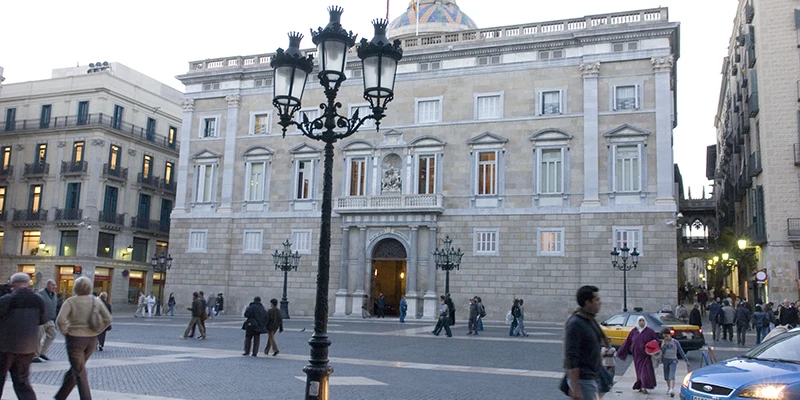
The principal Roman street intersection in the underground museum is the same approximate location today of a major plaza above, Sant Jaume, where the City Hall and regional Catalan parliament, Palau de la Generalitat, face each other. This was originally the site of the ancient Roman forum, which was the center of their ancient town. Two thousand years later this is still a major center of activity, with nine streets leading from the plaza, each worthy of exploration on foot. The main Tourist Information Office is also here, providing helpful free advice, maps, brochures, assistance in booking accommodations and entertainment suggestions.
-10.webp)
On Sunday afternoons the plaza is filled with locals dancing the graceful Sardana, a thousand-year-old Catalan celebration, and most other times of each day and night, music of all kinds will captivate you in the streets of this central part of town. The many people walking about make a good audience for the buskers, who rely on tips for their income. When you hear some decent sounds be sure to stop a while and tune in to the magical ambience. And don't forget to drop a few coins.
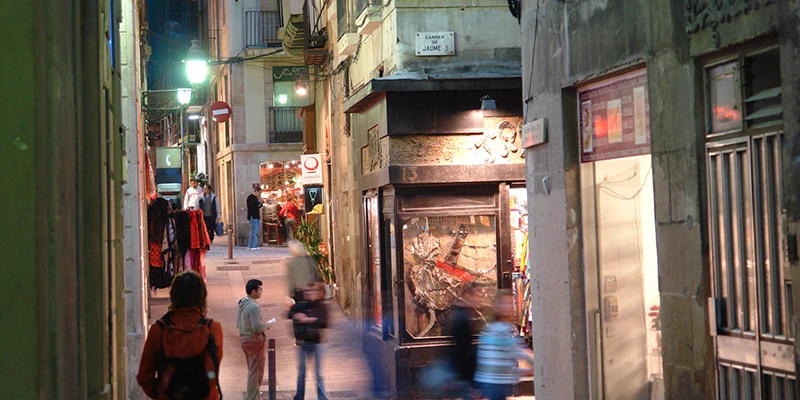
Carrer de Ferran is the main road running through Sant Jaume, and while some cars are allowed, the street is mostly for pedestrians and is the busiest street of the entire Gothic Quarter, with many shops and restaurants along both sides and numerous side alleys extending out to form one of the town's best networks of lanes to explore. This area can provide an excellent focus for the next major portion of your walking tour. Then, come back again at night, for this neighborhood is filled with throngs drawn to the many restaurants and the small shops which stay open until 8:00 or 9:00 p.m. (they close in the afternoon for siesta).
Network of Alleys
This dense labyrinth of attractive alleys is bracketed by another major pedestrian lane that also passes through Plaça de Sant Jaume and runs roughly parallel to Carrer de Ferran, extending from Rambla, where it is called Carrer de la Boqueria, then continuing for a mile all the way across the district, changing names eight times as it winds to the Palace of Justice, making another great route to explore, enhanced by detours into various side alleys and little plazas. Rather than attempting to walk the full length of this eight-part street in one pass you might find it more convenient to focus first on the network of lanes between Jaume and Rambla, then cover the other half extending into the Ribera district tomorrow.
.webp)
Nearly every little lane is worth exploring in the broad area bounded by Sant Jaume and the Rambla, and between Carrer Portaferrissa and Plaça Reial, an area filled with bustling shopping lanes, small plazas, a major gothic church, picturesque fountains, innumerable eateries and a constant stream of locals passing by, all within a manageable, quarter-square-mile package. Because of this concentration of attractions, you could easily meander through this section by turning this way and that, depending on what direction looks best at each corner, which could give you a totally satisfying experience. To methodically cover it from one end to the other without missing anything, you could try the following more organized route, then maybe once you have covered the territory, dive back in again for a rediscovery, perhaps in the evening when it takes on a different character, filled with people shopping and heading for dinner.
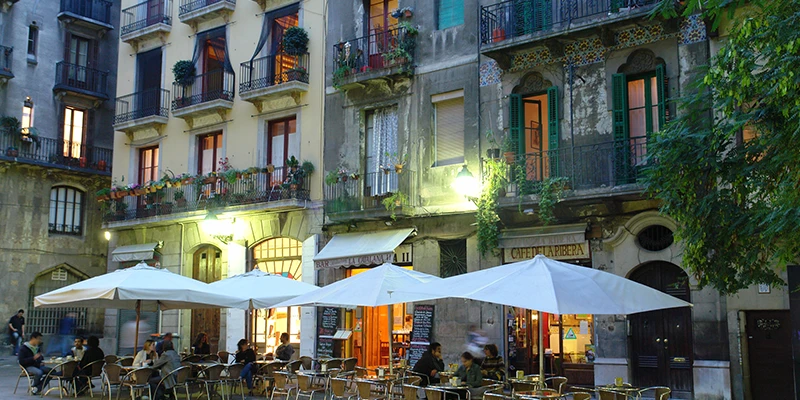
Begin the exploration in Plaça de Sant Jaume facing the parliament, then take Carrer de Sant Honorat, the street on the parliament's left side, which soon leads under a fancy pedestrian bridge, built in 1928 neogothic style, connecting the parliament with the palace of the Catalan president. After the bridge turn left past the Church of St. Sever, whose elaborate baroque altar can be seen through the glass of the locked front doors. You cannot go in normally, but you are always welcome to stand outside the glass doors and have a look inside at the beautiful gold altar.

Passing the deluxe boutique Neri Hotel, take the first right into the small plaza of St. Felip Neri and drop anchor for a moment here to soak up the peaceful atmosphere, which contrasts with a violent role this space played during the 1930s Civil War when it was the scene of executions and skirmishes. Notice all the holes on the church façade blasted by bullets and bombs during that turbulent time, preserved as a memorial.
The church of St. Felip Neri is one of the only significant baroque buildings in Barcelona because during the 16th and 17th centuries very little development was going on in this city. It was the period of colonial conquest of the New World which saw great economic growth, where Spain was plundering the gold and other riches of the Americas, bringing back important crops like sugar and tobacco, but for political reasons this wealth was all directed towards Castille in the central and southern parts of Spain centered around the port of Seville — not to Barcelona, which fell into a long period of economic decline as a result. Queen Isabella was supporting her home territory of Castille to the exclusion of the Catalan area, which suffered as a result. This is a major reason why we have such a well-preserved gothic town to enjoy today, since little construction has taken place since the Middle Ages in this central part of town.
Pi
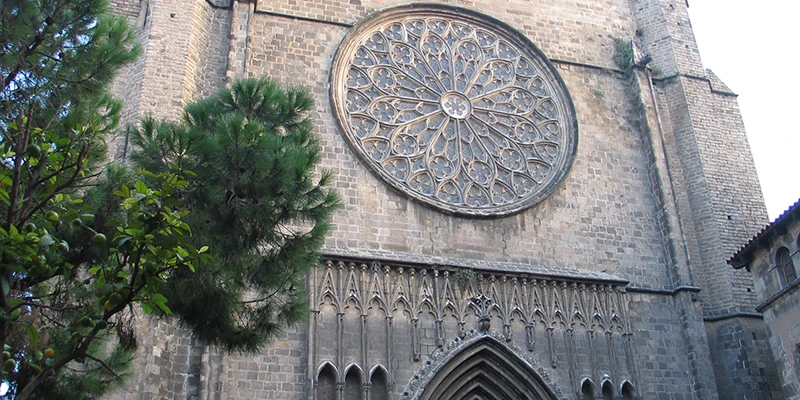
From Plaça Neri walk a short block over to Carrer de Banys Nous, a former site of the Roman wall and now a busy shopping lane worthy of an extended stroll up and down its 300-yard length between Plaça Nova and Carrer de Ferran. Next, make your way another block over to the gothic church of Santa Maria del Pi and its enchanting little plazas. This is another one of the great spaces of Barcelona that has it all: benches to rest, outdoor cafes, shops, statues, three interconnected little plazas, other major attractions within a few blocks, and anchored by this most impressive church with the world's largest round gothic stained glass window. The impressive church interior features a high ceiling with gothic vaulting and many stained glass windows all around, but otherwise simple décor as it was burned out during the Civil War.
At night the three little plazas are lively with people sitting at cafes or simply walking through on the six little lanes that intersect here. The side plaza of St. J. Oriol is especially busy with its popular Taller de Tapas restaurant and nearby Mesón Jesús, a simple restaurant with Catalan cuisine.
Royal Square
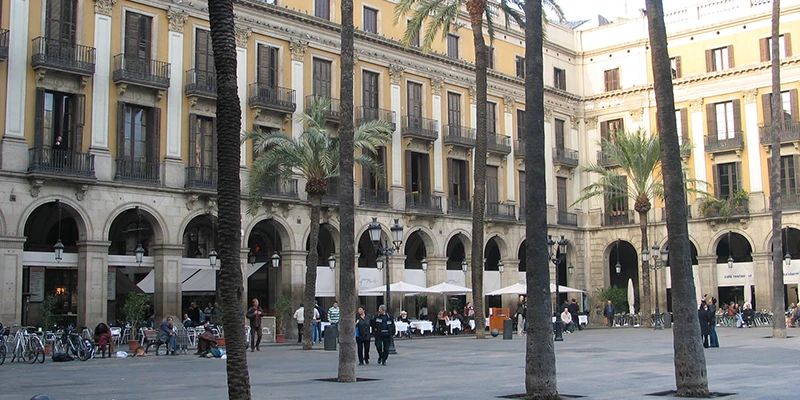
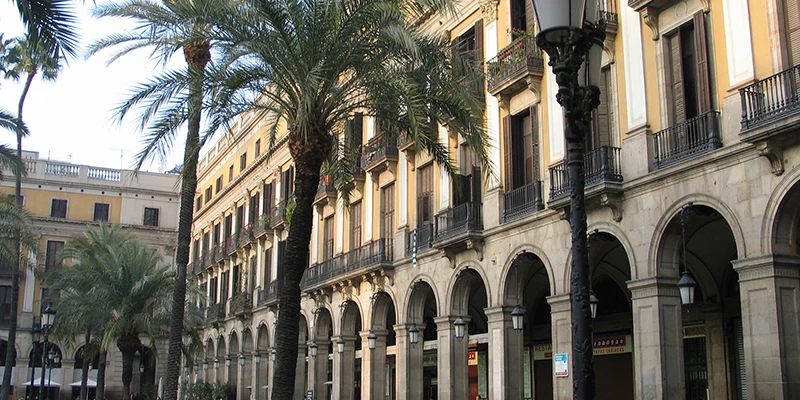
Now you might zigzag through the alley nexus including the main routes of Boqueria and Ferran, the row of lanes between them, and then arrive at the grand plaza of Plaça Reial, the Royal Square built in the 19th century, surrounded by magnificent arcades on all sides anchored by a grand fountain in the center. Most notable among the restaurants here is a phenomenon called Quinze Nits, where people line up for over an hour to get in for dinner, attracted by the low prices, high quality and skyrocketing fame, although sometimes called a tourist trap. You might get lucky. One way to beat the line is to come for late lunch, arriving just before 3:00pm to catch their last seating. (Or you could eat at their other restaurant, La Dolce Herminia, which is as good and less crowded, located one half-mile away at 27 Magdalenes, near Via Laietana. It also gets busy, so arrive for dinner by 8:00pm or make a reservation.)
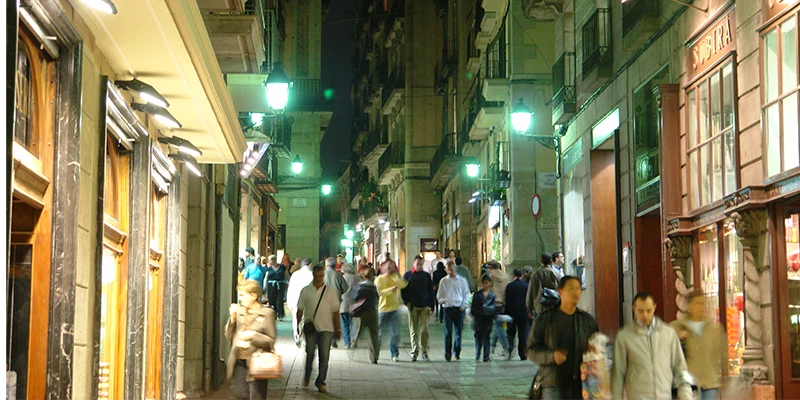
Another busy street two blocks from Plaça Reial towards St. Jaume is Carrer d'Avinyó, which is a pleasure to stroll during the day or at night. At twilight the street takes on a particular character — shop fronts lit up, restaurants just opening, the last of the daylight fading into the glow of street lamps. It sits only a few blocks from the Rambla and yet many visitors walk straight past it, missing one of the more authentic corners of the city. Take this street, or the Rambla, five blocks south to Passeig de Colom, a wide boulevard along the water's edge.
Continue reading: Barcelona Day Two