Seville
Seville is the passionate capital of Andalusia and the spiritual home of flamenco, bullfighting and the Semana Santa processions that fill the streets with extraordinary pageantry each Easter. The city's UNESCO-listed historic centre contains three of Spain's greatest monuments side by side: the Cathedral, the largest Gothic church in the world and home to Columbus's tomb; the Giralda tower, a Moorish minaret converted into a cathedral bell tower; and the Real Alcázar, a royal palace of breathtaking Mudéjar decoration still used by the Spanish royal family today. The atmospheric Santa Cruz neighbourhood, once the Jewish quarter, is a maze of orange-tree-lined lanes and hidden plazas at its most magical in the evening. Seville's tapas culture is among the finest in Spain, and the city's position on the Guadalquivir River makes for beautiful riverfront walks.
Seville Video Collection
See our full collection of Seville videos covering the Alhambra, Santa Cruz, the Alcázar, the Cathedral and more.
You will find in Seville all that a traveler can hope for: pedestrian shopping streets and quiet alleys — flower-scented gardens — an ancient palace and immense cathedral — hundreds of historic sites — three thousand years of conflict and peace — thrilling evening entertainment — excellent museums — great food and drink — rewarding nearby attractions — and the list goes on until you run out of days. Three days, in this case, should be enough to take in the highlights and get you out of town for a day-trip to nearby Cordoba.
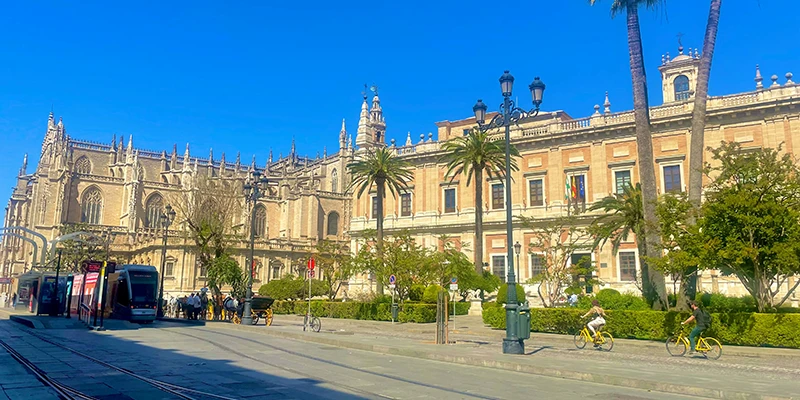
There is so much to see, we divide the itinerary into three convenient days so you can see it all.
Day One: Alcazar, Cathedral, Giralda, Santa Cruz, Shopping
Day Two: Plaza de España, Maria Louisa Park, University, House of Pilate, Museo Arqueológico
Day Three: La Macarena, Alameda de Hércules
More visitors flock to Spain than to any other nation in the world except France, because it has so many wonderful places to enjoy. Among its many attractions, the golden city of Seville, in the heart of southern Spain, ranks as one of the country's top destinations for the sheer beauty and pleasure it offers.
Three thousand years of civilization produced a rich concentration of historic landmarks and fascinating neighborhoods which can be easily explored on foot in the city center. Greeks and Romans began the design of this marvelous city, followed by Goths and then Vandals, who gave their name to this region which is still called Andalusia, which includes the major cities of Cordoba, Granada and Cadiz. Muslims played a major role in shaping Seville during 500 years of occupation in the Middle Ages, creating spectacular palaces, lavish gardens and narrow lanes through residential neighborhoods that still exist today. During the 16th century Age of Discovery, huge amounts of gold brought back from the New World made Seville the world's richest city, putting the final polish on this Andalusian gem.
.webp)
Much of this plundered wealth was spent to create the many churches and convents which are among the prime attractions of this very Catholic city, so you should visit a good sample of them; but perhaps the most enjoyable activity is simply strolling through the quaint streets of this colorful town. Its current population of 700,000 is the fourth largest in Spain, with enough people to sustain a lively city filled with a wide variety of shops, entertainment and restaurants for the visitor to enjoy.
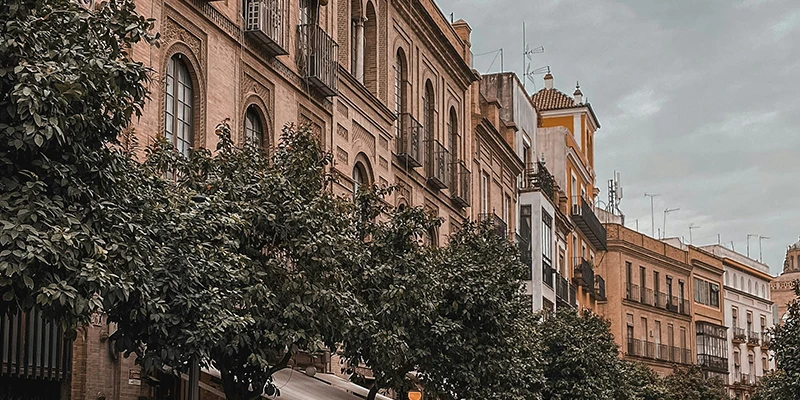
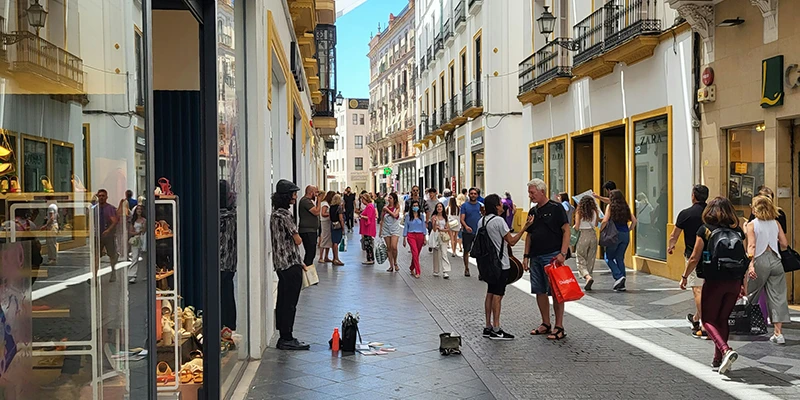
Seville's historic center is quite large — about a mile wide by 1.5 miles long, riddled with countless little alleys and important landmarks — but you can discover it on foot if you are selective and seek out the particular attractions that most appeal to your interests. We suggest an organized plan for doing just that, but it's sometimes better to push the plan aside and just wander: certain neighborhoods, especially Santa Cruz, are perfect for the aimless stroll, and the downtown pedestrian zone of Seville is a shopper's paradise.
Map
This interactive map shows many of the locations described in the following pages.
.webp)