.webp)
Valencia, Spain
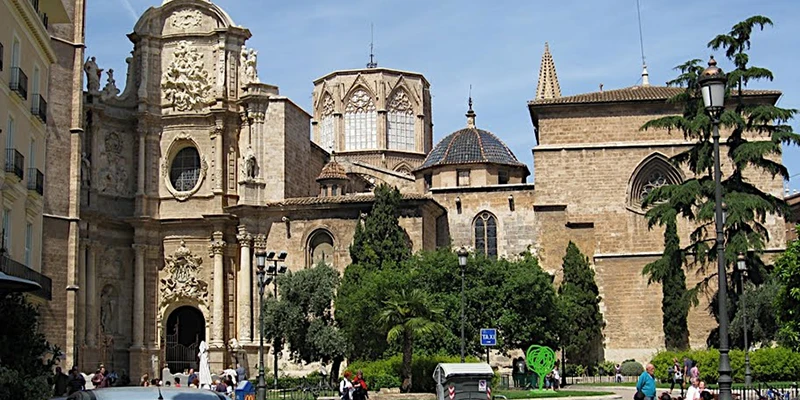
Spain's third-largest city occupies a privileged position on the Mediterranean coast, with a historic old town of Gothic churches and medieval markets, a modern architectural landmark that has become one of the most photographed sites in Europe, and a culinary tradition that gave the world paella. Valencia is less visited than Barcelona or Madrid, which works entirely in its favor — the old town is quieter, the restaurants more local, the pace more relaxed, and the prices noticeably lower.
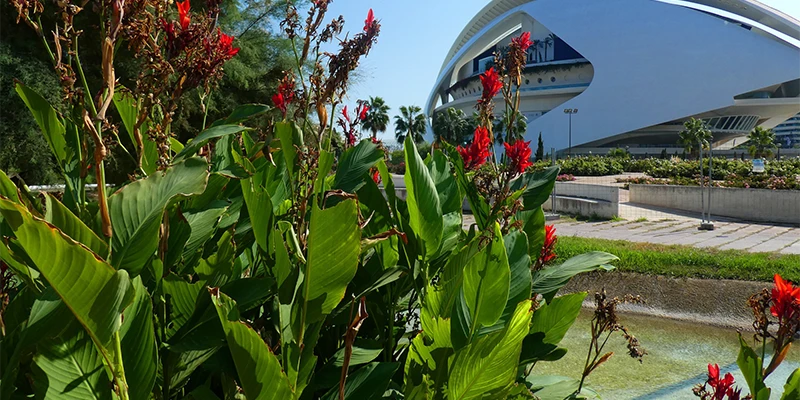
The city sits at the mouth of the Turia River, which flooded catastrophically in 1957. The river was subsequently diverted around the city, and the old riverbed was transformed into a nine-kilometer park that runs through the heart of Valencia like a long green ribbon. This Turia Garden is one of the finest urban parks in Spain, connecting the old town to the sea and passing directly through the futuristic complex that now defines Valencia's image around the world.
.webp)
City of Arts and Sciences
.webp)
The Ciudad de las Artes y las Ciencias occupies the southern end of the Turia riverbed and is the work of Valencia's own Santiago Calatrava, one of the most celebrated architects of the late 20th century. The complex consists of five interconnected structures spread across two kilometers of reflecting pools, each one more dramatic than the last.
.webp)
The Hemisfèric, shaped like a giant eye, contains an IMAX cinema and planetarium. The Museu de les Ciències Príncep Felip is a science museum housed in a structure resembling the skeleton of a whale. The Palau de les Arts Reina Sofía is an opera house whose roof rises 75 meters above the performance halls inside. The Oceanogràfic is Europe's largest aquarium, its pavilions connected by underwater tunnels. The whole complex is best seen in the late afternoon when the low sun turns the white concrete and water surfaces a deep gold.
copy2.webp)
The Old Town
.webp)
Valencia's historic center is compact and rewarding, its streets laid out over a Roman and Moorish foundation and built up through the medieval period when the city was one of the wealthiest trading ports in the Mediterranean.
.webp)
The Cathedral of Valencia, begun in the 13th century and completed over the following three hundred years, presents a mix of Gothic, Baroque and Romanesque styles that reflects its long construction history. The octagonal bell tower, the Miguelete, is the symbol of the city and can be climbed for a panoramic view over the old town rooftops. The Cathedral also claims to hold the Holy Grail — a small agate cup displayed in its own chapel — which attracts a steady stream of pilgrims alongside the regular visitors.
copy.webp)
A few blocks from the Cathedral, the Llotja de la Seda — the Silk Exchange — is one of the finest examples of Gothic civil architecture in Spain and a UNESCO World Heritage Site. Built between 1482 and 1548 when Valencia was at the height of its commercial power, its main trading hall is a vast space of twisted stone columns rising to palm-like vaulted ceilings, elegant and powerful in equal measure. It is one of the most beautiful secular buildings in the country and should not be missed.
.webp)
The Mercat Central, just across the plaza from the Llotja, is one of the largest and most beautiful food markets in Europe, housed in a Modernista iron-and-ceramic building completed in 1928.
 copy.webp)
The market sells the full range of Valencian produce — fresh fish, citrus fruit, vegetables, charcuterie, olives and rice — and is at its best on weekday mornings when locals come to shop.
copy.webp)
Paella
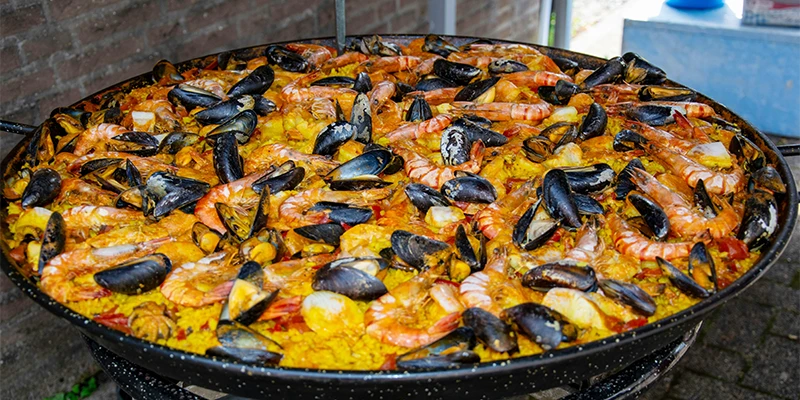
Paella originated in the rice-growing villages of the Albufera lagoon south of Valencia, and the Valencians are particular about its preparation. The authentic version contains chicken, rabbit, green beans and flat white beans cooked with rice in a wide shallow pan over a wood fire. Seafood paella is a later variation, and the Valencians will tell you firmly that the two should never be mixed. The best place to eat paella is not in the tourist restaurants of the old town but in the villages around the Albufera — La Albufera natural park itself, where the rice grows in flooded paddies between the lake and the sea, is worth a visit for the landscape alone.
.webp)
The Beach and Neighborhoods
.webp)
Valencia's beach, Las Arenas and La Malvarrosa, is a long stretch of fine sand backed by a promenade of seafood restaurants. It is about 20 minutes by tram from the old town, and a ride on the historic tram line through the Cabanyal neighborhood — a grid of colorful Modernista fishermen's houses currently undergoing careful restoration — is one of the most pleasant ways to spend an hour in the city.
.webp)
The Barrio del Carmen, the oldest part of the old town, is the liveliest neighborhood after dark, its medieval streets filling with bars and restaurants from early evening onward. The contrast between the crumbling Baroque facades and the animated street life below them is one of Valencia's defining experiences.
.webp)
Getting There
.webp)
Valencia is well connected by high-speed train to Madrid, with a journey time of around 90 minutes. From Barcelona the trip takes about three hours. The city's compact metro and tram network makes it easy to get around without a car.
.webp)