Olympia, Greece
Olympia is famous the world over as the birthplace of the Olympic Games, held here once every four years for a thousand years beginning nearly three millennia ago. But it was a sacred site long before it was an athletic one, a religious sanctuary that held one of the greatest statues of the ancient world. Today its ruins lie at eye level in a beautiful wooded setting, and its museum holds one of the finest collections of classical Greek sculpture anywhere. The combination makes Olympia one of the essential stops on any tour of the Peloponnese.
The site sits in the green, tree-shaded valley of the Alfeios River in the western Peloponnese, a comfortable inland drive from the coast. Spring is an especially rewarding time to visit, when wildflowers bloom among the fallen columns and the crowds of high summer have not yet arrived, leaving the ruins peaceful and unhurried.
.webp)
The Museum
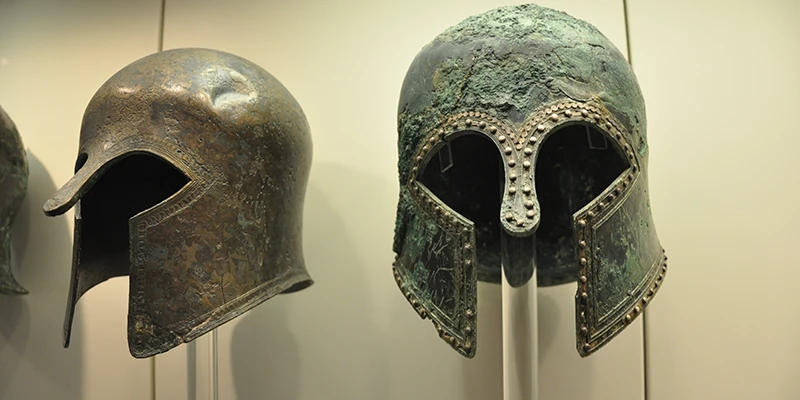
Many visitors begin at the archaeological museum, an educational and rewarding introduction to the site. Its greatest treasures are the sculptures from the pediments of the Temple of Zeus, dating from the fifth century BC and among the finest early classical statues in all of Greece. The compositions show the god Apollo standing serenely at the center of a scene of struggle, a masterwork of the moment when Greek sculpture found its full confidence.
.webp)
The pediment groups are displayed so that the power of the original temple decoration comes through clearly, the figures of gods, heroes, centaurs and combatants arranged as they once crowned the great temple outside. Visitors familiar with Renaissance art often note how these classical prototypes anticipate the work of Michelangelo, whose own sculpture drew directly on the rediscovery of the ancient Greek ideal.
.webp)
.webp)
The single most celebrated work here is the Hermes of Praxiteles, considered the masterpiece of the fourth century BC. It shows the god Hermes carrying the infant Dionysos to safety, pausing to rest and dangling something, probably a bunch of grapes, to please the child who would become the god of wine. Together with the temple pediments, it is the jewel of the collection and one of the truly great works of the ancient world.
.webp)
The Temple of Zeus
Olympia's role as a religious center predated the games. It held the great statue of Zeus, a seated figure of gold and ivory that was one of the seven wonders of the ancient world. It stood inside the Temple of Zeus until Roman times, when it was carried off to Constantinople and later destroyed. The temple itself functioned without interruption for nine centuries, until a law of 395 AD ended the pagan cults and the games held in the god's honor.
.webp)
.webp)
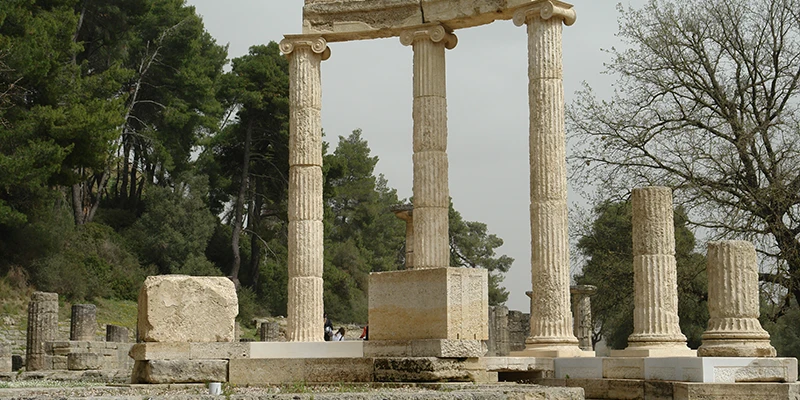
The Temple of Zeus survives as a vast rectangle of foundations, with six columns across the ends and thirteen along the sides. At one point an earthquake toppled the columns almost intact, and here the enormous stone drums lie where they fell, giving a vivid sense of the scale of the building. A big earthquake in the medieval period brought down much of what remained, adding to the ruin left by earlier fanaticism and centuries of neglect.
.webp)
.webp)
.webp)
The Sanctuary
Beyond the temples, the sanctuary spreads across a broad, level site shaded by trees and dotted with the remains of altars, treasuries, administrative buildings and the workshop where the great statue of Zeus was made. Near the center stood an altar where competitors swore their oath: that they were freeborn Greeks, neither slaves nor condemned men, the basic conditions for taking part in the games. The ancient ideal held that a healthy mind and a healthy body belonged together, the body strengthened by sport and the mind by philosophy and learning.
.webp)
.webp)
A processional route lined with the pedestals of victors' statues once led toward the temple, and the Palaestra and Gymnasium, where athletes trained, still show their rows of columns. Modern archaeology at the site now looks less for works of art than for evidence of how the ancient people lived, and the reconstructed sections help visitors picture the sanctuary as it functioned in its prime.
.webp)
.webp)
.webp)
The Stadium
The ancient stadium is entered through a stone archway, one of the early examples of the vaulted arch that the Greeks used in the Hellenistic period. Through this tunnel the competitors once entered as the heralds announced their names and cities. Inside, the simple grass track still shows the stone start and finish lines set about 192 meters apart, the length of a single race, which athletes could run up and back for the longer events.
.webp)
.webp)
The events held here every four years included running, jumping, wrestling, boxing and the throwing of the discus and the javelin, a tradition that continued for a thousand years. Standing at the start line, where generations of athletes once competed before enormous crowds, brings the long history of this place vividly to life.
.webp)
.webp)
.webp)
The Modern Town
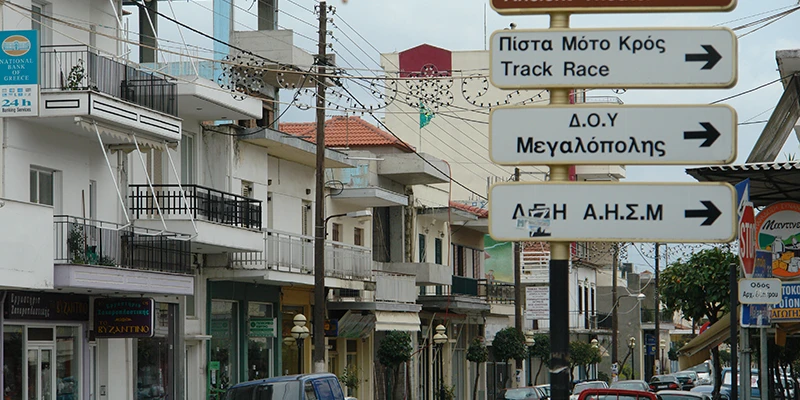
The modern town of Olympia grew up to serve visitors to the ancient site and offers a good range of hotels and restaurants along its main street. The food throughout Greece is one of the pleasures of travel here, built on fresh local ingredients, and the tavernas of Olympia are no exception. Just outside the site, vendors sell fresh regional produce, and the town makes a pleasant place to pause after a day among the ruins.
.webp)
.webp)
Compact and easy to explore on foot, the town provides everything needed for an overnight stay, allowing a relaxed visit to the sanctuary and museum without the long drive back to the coast the same day. An evening in its restaurants, with the ancient site just minutes away, rounds out one of the highlights of the western Peloponnese.
.webp)
.webp)
.webp)