Mykonos
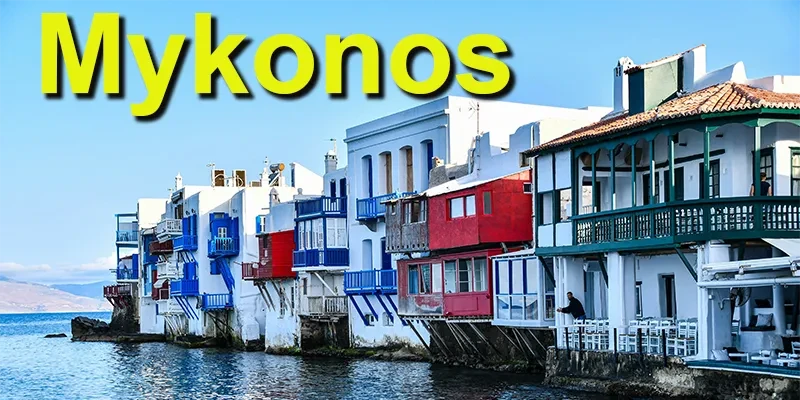
Mykonos is a Mediterranean dream, with its quaint village of whitewashed cubic buildings pressing up against the sandy shore. The perfect beauty of this small town has made Mykonos one of the world's most attractive islands. The town of just a few thousand residents appears to be a single harmonious structure — white two-story buildings connected in long rows, all sharing the same basic cube shape with colorful trim, linked by a network of narrow pedestrian lanes. Often compared to a honeycomb, this living labyrinth is a defining example of Cycladic architecture, with small windmills, colorfully painted doors and windows, stone staircases and alleyways that have been pedestrian-only since the town was first built centuries ago. The noted architect Le Corbusier, a founder of modern design, admired the village so much that he concluded whatever architecture had to say, it said it here.
.webp)
The alleys of Mykonos are famously twisted, almost maze-like by design. According to local tradition, they were deliberately laid out that way to confuse pirates who raided the Aegean, allowing townspeople to run, hide and escape through the labyrinth while invaders lost their way. Today those same alleys are an idyllic setting for unhurried wandering.
Getting There
Most visitors arrive by cruise ship or ferry. Ships either tie up at the harbor and transfer passengers by bus, or anchor offshore and use small tender craft that pull directly into the village dock. Either way the first impression of Mykonos is the waterfront, lined with outdoor cafes. Independent travelers can also fly directly to Mykonos or take a ferry from Piraeus or other Greek islands. Those with time to spare can arrive a few days before a cruise and spend several nights on the island before rejoining a ship when it calls.
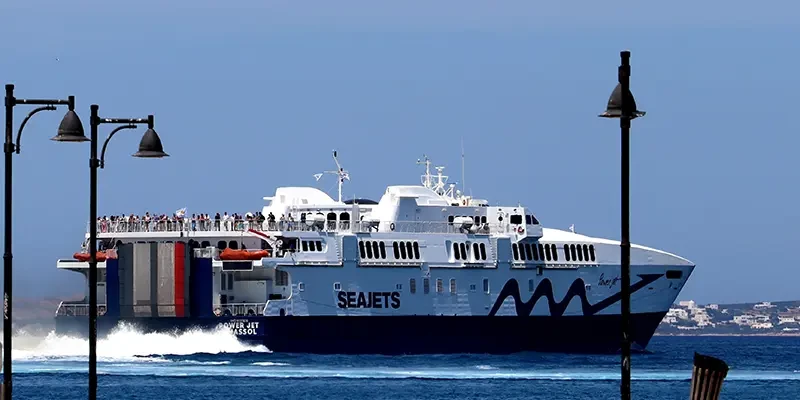
The best time to visit is spring or autumn. From mid-June through mid-September the island is in high season — during July and August there may be ten cruise ships in port simultaneously and the village becomes extremely crowded. In spring and autumn the alleys are uncrowded, the pace of life is relaxed and the restaurants are unhurried. Winter is the other extreme — most shops and restaurants close and only residents remain.
The Town
.webp)
The village is only about 400 yards wide and 500 yards deep, bounded by water on two sides and a steep hill on the inland edge. Cars are entirely prohibited. The only vehicles are the occasional motor scooter pickup trucks that come barreling through the narrow alleys — a surprise to first-time visitors. Everything else moves on foot, and the entire town can be covered in a leisurely two-hour stroll.
.webp)
Primary activities in Mykonos are relaxing, eating, sightseeing and shopping. The harbor area is the social heart of the village, with a cluster of restaurants, bars and cafes where locals and visitors gather at all hours. The little harbor itself is a picturesque scene of fishing boats at anchor, tied to the pier or resting on the beach. The town mascot — a pelican — can often be spotted along the waterfront, along with a gaggle of ducks. Pelicans have been kept as town pets for decades, each one becoming a well-known local character, wandering the restaurants in the evening looking for scraps and blocking the paths of waiters in the alleys.
Early risers are rewarded with a different Mykonos. Around six or seven in the morning the harbor comes alive with fishermen and a small fresh market. By the time most tourists are having breakfast, the golden morning light and the activity are already gone, making the early hours a worthwhile experience for those willing to get up for them.
.webp)
Shoppers will find numerous jewelry stores and art galleries throughout the village, starting along the waterfront and extending into every quarter. Souvenir hunters will find t-shirts, guidebooks and postcards in the waterfront shops, though distinctive local goods are limited. The shops also carry local food specialties — not only baklava but a range of Greek treats worth exploring.
The local wine is worth trying — a rosé served in a metal pitcher, produced from vineyards on this small, dry island. It is a genuine surprise that such an arid place supports viticulture, and the wines are considerably better than their modest origins suggest.
Walking Route
The key to navigating Mykonos is a simple U-shaped route that takes in both sides of the village without getting irretrievably lost. There is one main lane on each side of town, connected by a street at the back. Following this U-shaped path walks through the entire village, across to the other half of town and back out to the waterfront, covering all the main sights with time for shopping and a drink before returning to the harbor.
.webp)
Starting from the waterfront, with the row of cafes ahead, walk left along the shore to Manto Square, the main square of the village and the only place in the center where taxis operate. Turning inland through the square reveals several attractive lanes branching off in different directions. Street names exist — the main shopping lane is called Matogianni — but signs are rare and navigation by name is largely impractical. The better approach is simply to follow the crowd, follow the noise and follow instinct. The shopping district is only a couple of blocks in each direction and impossible to miss.
In the middle of the village feel free to wander a few blocks along the parallel shopping lanes of Zouganelli and Mavrogenous. Some side alleys have scattered shops, others are quiet residential lanes with considerable character. At the end of the main lane, turn right onto Enoplon Dinameo, which leads a few blocks past more shops to the other side of town. Near the end of this crossing lane are a couple of small informal restaurants serving gyros sandwiches, souvlaki and salads — good options for a quick and inexpensive snack.
.webp)
From here, one block over is the lively crossroads with Mitropoleos, the main shopping lane on this side of town, which leads back to the waterfront in ten minutes. At this junction there is a choice. Heading right on Mitropoleos — which changes names, twists and turns, splits and eventually ends at the sea — leads back to the harbor in a meandering but reliable downhill route. Heading left means more exploring uphill through additional short parallel lanes with shops and snack bars, including the casual local restaurant Marco Polo, which posts signs through the neighborhood. A few short blocks uphill marks the edge of the pedestrian zone, where actual streets with motor traffic begin.
.webp)
Before turning back, continue right along Xenias Street for two blocks to one of the most famous symbols of Mykonos — a row of windmills on a promontory overlooking the town. There were originally sixteen windmills on the island, powered by the reliable Aegean winds to grind grain. Baking bread and making cotton fabrics were two of the main elements of the local economy alongside fishing. Today only a few windmills remain, serving as majestic non-functioning landmarks rather than working mills.
Little Venice
.webp)
From the windmills, a long staircase leads down to the coast and the neighborhood known as Little Venice. There are no canals and no gondolas, but the old buildings here are built directly on the water's edge, appearing to rise straight out of the sea — particularly beautiful at sunset or at night. Several cafes have tables on terraces along the water, making an excellent place to stop for a drink and watch the light change. The traditional taverna Alefkandra sits right on the water's edge, known for fresh fish and classic Greek dishes. Two blocks inland is the popular Nikos Taverna, with seating inside or on the sidewalk and a straightforward menu of well-executed Greek food.
Paraportiani Church
.webp)
A few blocks further along the shoreline from Little Venice stands the most photographed monument on the island and one of the most photographed churches in the world — the Church of Paraportiani. Its irregular white form consists of five small chapels with curved vaults and colored cupolas that have merged over the centuries into a single unique curved ensemble. It is so widely reproduced in calendars and travel books that many visitors arrive expecting to find several churches that look like it. There is only one.
There are approximately 360 small chapels scattered through the village, most of them tiny family chapels built by sailors and their families in hopes of divine protection on the open sea. Greek Orthodoxy is the national religion and its presence is felt throughout the island.
Dining
.webp)
Mykonos has a modest but reliable restaurant scene. The waterfront restaurants are genuine local institutions — somewhat touristic by nature but also frequented by local families who have eaten there for generations. Fresh seafood is the specialty, caught in the waters around the island, and the classic preparation of grilled fish, calamari, shellfish and salads served family-style at an outdoor table on the harbor edge is one of the memorable experiences of a Greek island visit. Those arriving by cruise ship with the option of returning to the ship for dinner should seriously consider staying in Mykonos instead, particularly in the off-season when restaurants are unhurried and service is attentive. Dinner on the waterfront in the evening light, with a view of the harbor and a carafe of local wine, is not easily replicated on board.
.webp)
.webp)
Evening
The evening in general is a rewarding time to be in Mykonos. The village is well lit, the lanes are easy to navigate, the shops stay open late for the cruise crowd, and the atmosphere is at its most evocative. In high season the bars get going around eleven at night and continue until dawn — a scene that draws a younger international crowd in summer and gives the island a pronounced split personality between its tranquil off-season character and its summer party reputation.
Delos
.webp)
The major additional attraction for visitors staying more than a day is the nearby uninhabited island of Delos, reachable by ferry from the Mykonos dock in about thirty minutes. In ancient times Delos was the most important harbor in the entire Aegean and a major spiritual center of the Greek world, with a population of nearly ten thousand at its peak in the third century BC. Its proximity to Mykonos — just six miles offshore — is one of the historical reasons why the village grew into the significant port and trading center it became. The island is now a protected national archaeological park with a small museum, open for day visits. There is also an archaeological museum in Mykonos itself, worth visiting for its collection of finds from the region.
.webp)
A Note on History
Greece is a younger nation than its ancient monuments suggest. The country was under Ottoman Turkish occupation for nearly four centuries, and it was not until 1821 that the Greeks began their war of independence. The culture and architecture of the islands — the whitewashed walls, the chapels, the fishing economy — developed largely during and after that long period of occupation, shaped by both Aegean tradition and the particular circumstances of island life far from mainland power.
.webp)
.webp)