Seville Day Two
Plaza de España and Maria Louisa Park
.webp)
Start your morning at Plaza de España, surrounded by a huge pavilion constructed for the 1929 World's Fair and preserved in all of its grandeur for us to enjoy today. This semi-circular Palacio Español is one of the signature sites of Seville, with its mix of Mudéjar and Renaissance styles anchored by high towers at each end. Notice the rowboats gliding in the 500-yard-long moat that curves in front, crossed by picturesque little bridges. Colorful ceramic murals along the face of the pavilion depict the nation's provinces and include allegorical scenes from the past. In the famous movie Lawrence of Arabia, this stunning pavilion was used as the setting for the Cairo headquarters of the British army.
You can also see this video on a separate video page.
.webp)
In front are the extensive landscaped grounds of Maria Louisa Park, first opened in the 19th century and later redesigned with more fountains, benches, statues and pavilions added to create the lush landscape we see today. Seville's largest park contains 346 acres of complex gardens — pick a scenic route along the ponds and fountains in the center, heading south towards the Plaza de America and its Archaeological Museum, which opens at 9:30am.
University
Another walk back through Maria Louisa Park brings you to the nation's second-largest building, the former Royal Tobacco Factory — setting for Bizet's opera Carmen. Now home to the University of Seville's Department of Philosophy, it is open to the public from 8:00am and offers an intriguing glimpse of 18th century Baroque architecture. The rambling structure was a complete world unto itself, with apartments, prison, church, dining halls, offices, stables, warehouses, garden courtyards and factory space to employ up to 3,000 cigar-rollers. Look for the university's cafeteria, open to the public with some of the best food values in town.
River and Arenal
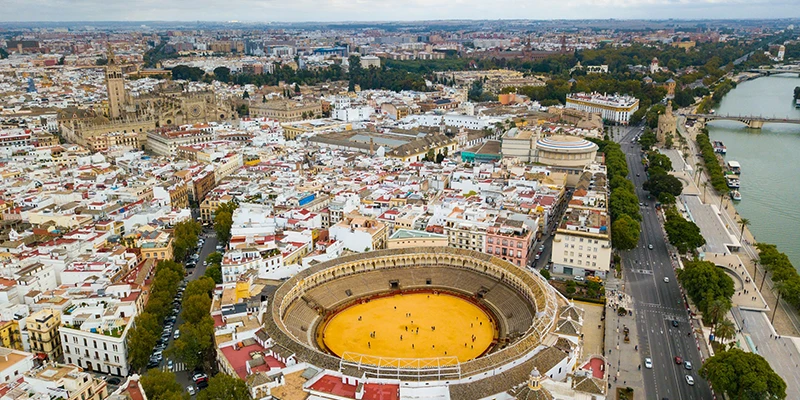
Stroll from these parks along the river in the Arenal district to the Tower of Gold, built as a military fortification guarding the harbor during the Muslim era and now open to the public as a small nautical museum. Another fine Baroque church is two blocks inland at the Hospital of Santa Carida. Continue through the Arenal section of town to the Maestranza Bullring, one of Spain's largest and most beautiful, with an unusual oval shape. Next door is the Arenal Market, offering Seville's largest selection of fresh foods until about 2:00pm each day. Both shores of the river feature many fine restaurants and bars packed with locals.
Walk north through more quaint streets to the large Baroque church of La Magdalena, then continue to the Museum of Fine Arts if you are interested in paintings by Spanish masters such as Murillo and Zurbarán. Continue east to the House of Pilate, strolling along busy Calle Alfonso XII through the central shopping district.
.webp)
Upon reaching the large Plaza de la Encarnacion, turn right on Puente y Pellon which leads into the former market district of the old Muslim city. Quiet little Plaza del Salvador had been the Moors' main square — now replaced by Seville's second-largest church, El Salvador, notable for its grand Baroque interior. Continue north to Plaza de la Alfalfa and walk left three blocks to the church of San Pedro, another architectural masterpiece with an intricate wooden ceiling in the Mudéjar style.
House of Pilate
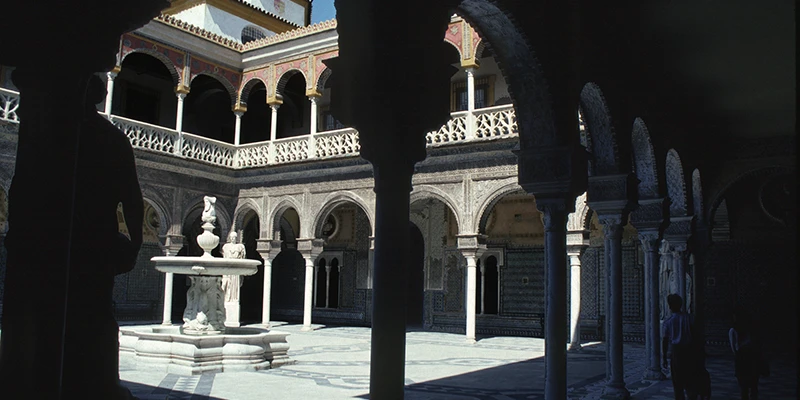
This grand palace was built 500 years ago in a mix of styles combining ancient Rome with Gothic, Muslim and Renaissance, creating one of the most attractive sights in town. Casa de Pilatus offers the triple reward of stunning architecture, lush gardens and museum-quality art exhibits. You will be delighted by this whorl of bougainvillea, potted palms, Roman statues, pointed arches, colorful mosaics and Mudéjar designs, all combined in a unique artistic blend.
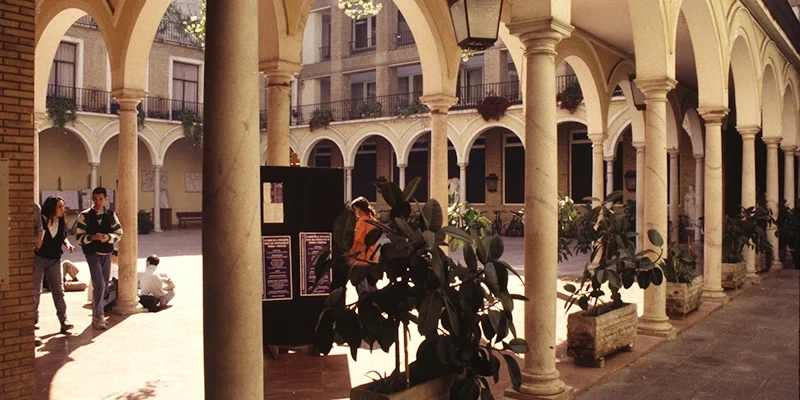
It is quite a surprise when you step into the pretty interior with its arcades, loggia and fountain courtyards, for the villa is constructed around a series of patios and gardens not visible from the street. The gallery balustrades are Gothic, while the Renaissance influence is apparent in the fountains, symmetrical gardens, porticos and overall shape of the palace. Many of the walls are covered in decorative mosaic patterns based on the Moorish style. Worth a second paid admission is the guided tour of the upper floor to see additional furnishings, decorative arts, paintings and splendid architecture.
The house is located on Calle Aguilas, once the main street of town and starting point for Holy Week processions, but now slightly off the beaten path — so you will need to look for this oasis of tranquility.
Museo Arqueológico
The Museo Arqueológico has two floors of exhibits in 27 galleries and covers 3,000 years of local history with displays of fascinating statues, jewelry, treasures and numerous practical artifacts from the Phoenician, Greek, Roman, Egyptian, Islamic and Catholic cultures.
History
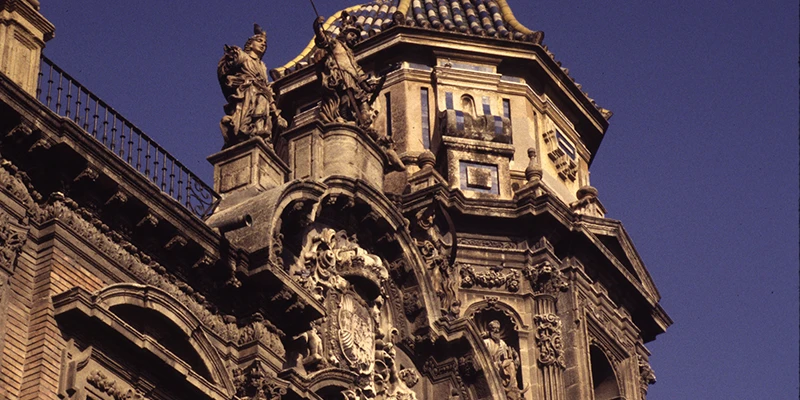
The first historical settlement of the area was founded by the seafaring Phoenicians as early as 1,000 B.C. Carthaginians conquered the area around 500 B.C., followed by the Greeks and then the Romans, who established control in 200 B.C. Most of the Roman pieces in the museum come from the well-preserved city of Italica nearby, home to the emperors Hadrian and Trajan.
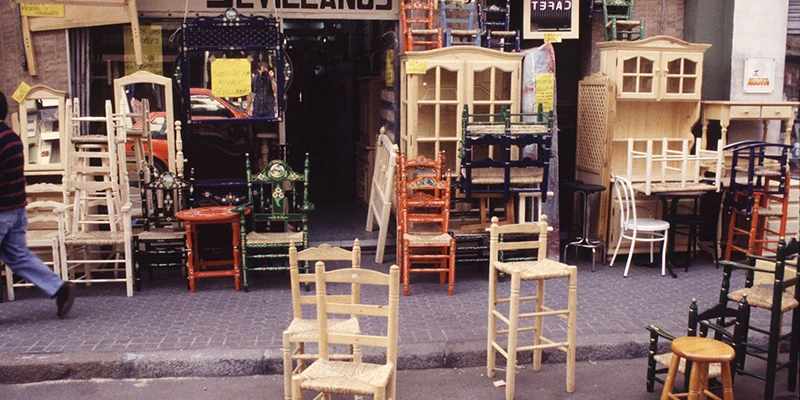
A significant Jewish population moved in from Palestine in the late Roman period and continued to coexist peacefully with the Muslims and Christians in ethnic harmony for centuries. Vandals and then Visigoths took control after the fall of the Roman Empire in the early 5th century, until they were replaced by the invading Muslim armies in the year 711.
With this Muslim conquest of southern Spain in the 8th century, Cordoba and Seville were established as the main urban centers of Andalusia. By the 10th century Cordoba was the largest city in Europe. In 1198 a huge mosque was constructed on the site of the present Seville cathedral, becoming one of the main centers of worship for the Muslim world. During the Muslim golden age of the 9th through 12th centuries, southern Spain became one of the most civilized places in the world.
.webp)
While the rest of Europe plunged into the Dark Ages, the cultures of Andalusia developed graceful urban settings with amenities and comforts unknown elsewhere, including running water, sewage systems, public gardens and well-planned housing. Scholars revived the scientific and philosophical wisdom of ancient Greece and Rome, translating old texts into Arabic while contributing important new insights such as the invention of algebra.
After its recapture by Christians in 1248, Seville served as capital of a kingdom covering western Andalusia. The Age of Exploration ushered in the real golden era for Seville, which had a monopoly on all the gold and treasures flowing in from the New World throughout the 16th century. By 1600 Seville became the western world's richest city, with a population of 150,000. However, Spain gradually fell into decline, the Guadalquivir River silted up driving trade to Cadiz, and Seville's historic neighborhoods were left largely undisturbed for four centuries — luckily preserved for us to enjoy today.