Seville Day One
Morning Walk
.webp)
An excellent central location to start your first walking tour is between the Cathedral and Alcazar palace in the Plaza del Triunfo. Many of the town's main attractions can be easily reached from this space, making it convenient for you to pick a direction and go — but with such an abundance of choices it can be a little tricky to decide where to begin. Which way to turn depends on your priorities and the time of day, but no matter; there will be time in the next few days to fit everything in.
Not much is happening in this notoriously late-night, sleep-in culture right after breakfast, and since the shops, monuments and most museums don't open until 10:00am, you could start with a look at the Alcazar Gardens (open from 9:00am) and then enter the palace when it opens at 9:30am.
Alcazar
The Alcázar is the royal palace of Seville, renowned as one of the most beautiful buildings in Spain. There was previously a Muslim fortress on this site about 1,000 years ago, which was entirely rebuilt in the 1300s and 1400s after the reconquest of Spain. Today the Alcázar is an outstanding example of mudéjar architecture, which is that special blend of Muslim and Spanish styles that displays very elaborate ornamentation. For the next several hundred years the complex expanded and grew into one of the grandest palaces in Europe. Declared a UNESCO World Heritage Site in 1987, it is one of the most popular attractions in Spain and a must-see while you are in Seville. Our visit includes the Alcázar gardens with their labyrinths of flower-lined walks, and glorious date-palms, bananas, orange trees and citron groves. It really is a pleasing spot within the palace enclosure. The Alcázar is situated just next to the Cathedral so it is very easy to find.
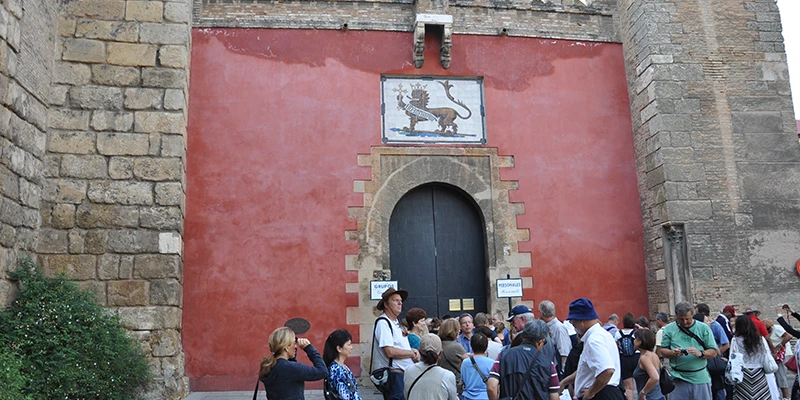
The lush gardens behind the Alcazar Palace offer a serene, green oasis of terraces, fountains, flowers and exotic trees connected by a series of long walkways, with benches for you to relax while enjoying the views. You could spend a couple of hours strolling through this verdant mix of Moorish, Renaissance and 19th century landscape architecture, but it would be better to have a quick look, then line up at the palace entrance by at least 9:15am to beat the main crowds that come swooping into this most popular attraction. Come back to see more of the gardens after the palace visit. An alternative time for the Alcazar is after 1:30pm when most tourists are having lunch.
The Reales Alcazares ("royal palace") was first built as a smaller fortress by the Moors from the year 913, then enlarged by their Spanish successors. It is still used occasionally by the royal family. In 1364 King Pedro I began construction of what would continue growing over the centuries into one of the most important palaces in Europe, further expanded by Ferdinand and Isabella, who used it as headquarters for their conquest of the New World, and later altered by the Holy Roman Emperor Charles V. It is definitely worth paying the admission to visit inside this gorgeous palace, preferably with a palace tour guide who can tell you all about it.
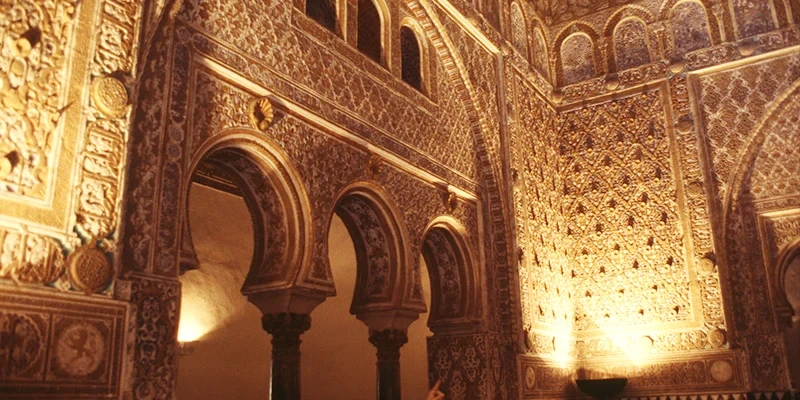
Alcazar is an Arab word primarily meaning "fortress" but this sprawling complex obviously became more of a pleasure palace than military fortification. The rooms are decorated with elaborate, detailed carvings that cover nearly every square inch of wall and ceiling. The mostly geometric and floral patterns are done in the Mudéjar style, meaning it was created by Muslim craftsmen with their traditional techniques, but during the Christian period. King Pedro brought in Moorish craftsmen from Muslim-occupied Granada, who applied many of the same techniques they used in construction of the Alhambra. The surviving section of Pedro's original palace is one of the finest examples of Mudéjar architecture still surviving in Spain.
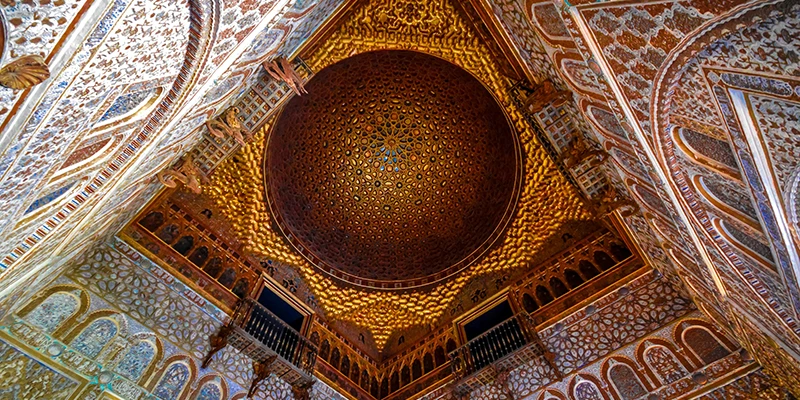
Stucco ornamentations throughout the palace are made of plaster mixed with marble dust and set in place to partially dry but not completely harden, so it could be easily shaped with hammer and chisel. The design was planned in advance, then applied to the pliable surface to form a relief sculpture that would later harden and last for ages. Most of the ceilings are carved in dark wood in a similar style, some of which looks like fine lace, especially in the gilded dome of the Ambassador's Hall built in 1427. There are chapels and audience rooms and private living areas for the royal family, connected by chambers, short hallways and small gardens.
.webp)
Many of the rooms are built around spectacular courtyards, in the Mediterranean tradition, each with its own primary function. A typical courtyard is carefully composed of basic elements that work together in creating a harmonious space, insulated from outside noises by the surrounding walls and often with a lush garden and fountain in the center. The burble of water not only provides a welcome, cool visual relief in this sometimes hot environment, but creates a relaxing sound that mesmerizes you into a peaceful mood. Birds chirping amongst the luxuriant vegetation add another dimension to the calm atmosphere. When finished with the palace and gardens, walk across the plaza for a visit to the other most important site in town.
Cathedral and Giralda
.webp)
The cathedral of Seville is the western world's largest church if you include the patio cloister, slightly bigger than St. Peter's in Rome, twice the size of London's St. Paul's and eight times wider than Westminster Abbey. By any standard, the cathedral is unbelievably huge and amazingly beautiful. There are so many tall columns holding up the lofty ceiling 130 feet above the floor that it seems like you are strolling through a vast, indoor stone forest.
The site of the cathedral has been for millennia Seville's main religious setting. Before the cathedral was constructed this was the location of one of the most important mosques in the Muslim world and 2,000 years ago it was the scene of an important Roman temple. New occupiers often demolished the existing main sanctuary and replaced it to impose their own religion on the holy ground at the most central place in town. The physical structure of the mosque was preserved by the Christians but it was consecrated as a Catholic church which stood until the beginning of the 15th century, when most of it was demolished and the new cathedral was erected.
.webp)
Although built in the gothic style starting in 1402, construction of the cathedral continued for 200 years, resulting in a delightful mix of design motifs including Renaissance and some later Baroque flourishes. It took the first 100 years to finish the basic structure and another hundred years to complete the decoration and build the various chapels and side rooms. This combination of periods is typical of what you find in many of Europe's gothic churches, but never on such an enormous scale as you will find here. It is no accident that one is made to feel tiny and insignificant inside this huge space, for the creators wanted to make you humble and disoriented in the presence of god. The main altar is from the 16th century, with the world's highest "reredos" screen behind it made of carved wood and covered with gold leaf. There are many side chapels with further elaborate decorations, especially the Royal Chapel, featuring a Renaissance dome.
.webp)
One of the cathedral's main attractions is the supposed tomb of Christopher Columbus, whose voyages originated from near Seville; but there is a dispute about the actual whereabouts of his bones. Columbus was first buried in the Seville monastery of La Cartuja, where he lived in between voyages. Then his remains were moved to Santo Domingo in the Caribbean, again to Havana, and finally returned to Seville in 1898 after Spain lost Cuba, resulting in some confusion about where he actually rests. At any rate, there is an impressive tomb and monument of the great explorer to remind us of the major role that Seville played in the conquest of the New World.
The library of 20,000 books acquired by the son of Columbus is also incorporated into the cathedral, just off the Patio of the Oranges. The patio is like a cloister but was part of the original mosque where it functioned as the entrance and ablution area. Important paintings and statues set amid the elaborate architecture further enhance the museum quality of the church, making a visit here rewarding for believers and nonbelievers alike.
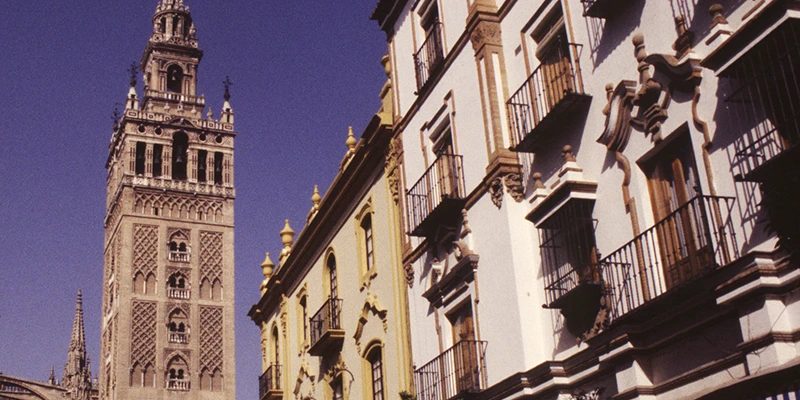
The famous Giralda bell tower rises high above the church and is the town's most recognizable landmark — the symbol of Seville. It was originally built 400 years earlier than the cathedral as the minaret of the mosque which previously stood on this site. This minaret was constructed with brick to a height of 185 feet, and then extended in the Renaissance style to 320 feet during the late 16th century.
Walking up the Giralda is one of the finest things you can do while in Seville: not only will you gain great views over the vast cathedral and surrounding rooftops of the old town, but you will also have the unusual experience of walking up the 35 ramps that wind round and round inside the square tower. More gentle than a staircase, the ramps offer the illusion of an easy climb and are especially effortless on the way back down. You will be encouraged onward with narrow views through small openings until you reach the top, where you can see for miles.
Tapas
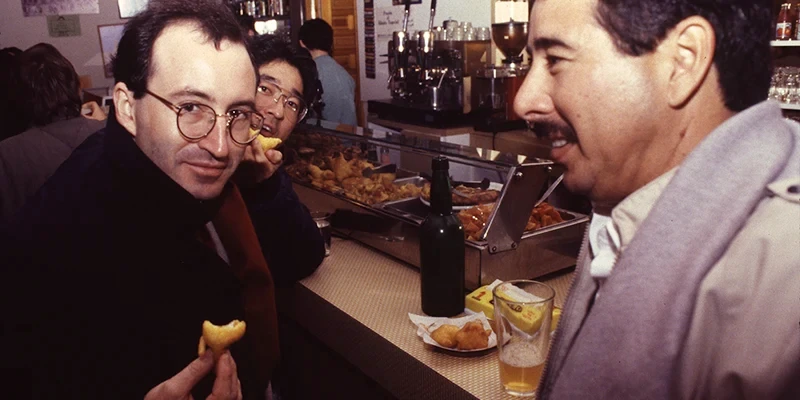
For lunch, local style, try some tapas — small, snack-sized portions of a variety of dishes that Seville is famous for. Crowds of regulars indulge in this gastronomic adventure, especially between 1:00 and 2:00pm, so plunge into them for a friendly, authentic atmosphere; or if you'd prefer making your choices in a less frenzied style, find a tapa bar that opens early. Mouth-watering items are generally on display behind a glass case so all you need to do is point to select such typical morsels as: Marinated olives — pata negra ham from acorn-fed pigs — oxtail stew — batter-fried seafood — gazpacho — cured garlic — meatballs — mushrooms — artichoke hearts — croquettes — sausage — cheese pastries — grilled vegetables — tiny clams and squid — stuffed peppers — grilled fish — mixed salads.
That's only a sample of the unending tastes to discover while tapa-hopping. Each dish is small and inexpensive, allowing you to try a wide variety, preferably in several different cafes as you make your way through town. Those gourmands on a low-carb diet will find plenty of satisfying choices. Wash them down with sherry for the full effect, choosing from different varieties such as the light dry fino and manzanilla, or the stronger amontillado.
.webp)
Properly fortified, you can dive into explorations of the old town. It is possible to take a horse and buggy ride for an overview of the sights, with the driver telling you about the highlights as you pass by, or join a walking tour with a local escort. But you can very easily walk the streets of the Old Town on your own as we suggest here and enjoy the sights for yourself. Seville's city center can be conveniently divided in five parts: Macarena in the north; parks in the south; El Arenal on the west side; Triana across the river; and most exciting of all — Santa Cruz in the very center with the narrowest pedestrian streets and main shopping action.
Santa Cruz
.webp)
Most shops and churches close for siesta from about 1:00–4:00pm, so you might spend this time on a stroll in the quiet back streets of the most picturesque district in town, Santa Cruz, first created as the Jewish quarter nearly 2,000 years ago. This largely pedestrian barrio is a charming tangle of narrow, crooked lanes lined with beautiful homes from the 17th century, enhanced with delicate iron balconies, potted flowers, wooden shutters and hidden courtyards. Among Europe's best neighborhoods for strolling, the main part of this warren is only about six blocks in each direction, enabling you to wander freely and discover it in a couple of hours. Santa Cruz is so magical you should return in the warm atmosphere of early evening to appreciate the soft lighting, and settle into a quaint little tavern for dinner. Once is not enough for a special district like this, which also has several small hotels that make ideal places to stay.
.webp)
Begin strolling through Santa Cruz at one of Seville's most picturesque squares, Plaza de la Virgen de los Reyes, surrounded by the Cathedral, Archbishop's Palace and Encarnacion Convent, with horse carriages patiently lined up along the edge and a monumental fountain in the center. The short lane of Santa Marta next to the convent has a delightful little plaza at the end easily overlooked but worth a glimpse: small pleasures often await down out-of-the-way alleys if we only take the time to explore.
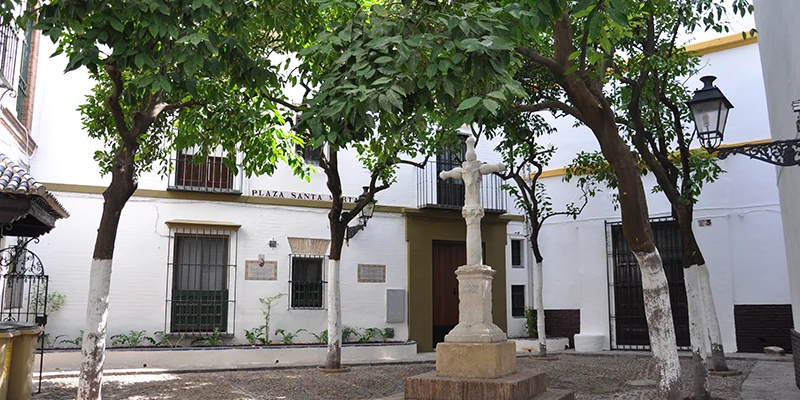
Hidden courtyards, curved lanes, covered passages and five-way intersections are some of the fun elements of this pedestrian puzzle which you are now entering. It helps to have a map but it's also fun to just get lost and wander. The main thing is to enjoy each step and keep your eyes open to absorb the beauties all around.
.webp)
Take a walk along Calle Mateos Gago, whose little restaurants will tempt you with more tapas, and then turn on Santa Teresa, noticing the tranquil Patio de la Escuela de Cristo on the left. Continue to Plaza Santa Cruz, a picturesque 19th century creation with several fine restaurants and a traditional flamenco theater, Tablao los Gallos. The beautiful Murillo Gardens are just beyond the plaza and lead into the larger Catalina de Ribera gardens, which together are considered by some to be Seville's prettiest.
.webp)
Re-enter the Santa Cruz Barrio at Plaza de Alfaro, which leads into the pedestrian lane of Lope de Rueda, dotted with the chairs and tables of several outdoor cafes. Notice the small Hotel Murillo, a fine little two-star place to spend a few nights. Turn left to the Plaza de los Venerables and pay a visit to the Hospital of the Venerable Priests, where you can enter one of Seville's most elaborate baroque churches. By now all the shops have re-opened, so move along through the last two charming plazas of Dona Elvira and Alianza on your way back to the Cathedral and onward to serious shopping and people-watching in the main commercial section of town.
Shopping
.webp)
To reach the main shopping zone, walk along Constitution Avenue to the impressive 16th century Ayuntamiento (City Hall), located between Plaza San Francisco and the much larger Plaza Nueva. Just beyond is the busiest pedestrian street of the city, Calle Sierpes, lined with the best shopping and liveliest atmosphere in town, especially in the late afternoon when the locals are out enjoying their traditional stroll. Two parallel shopping streets of Cuna and Tetuan flank Sierpes, connected by a pedestrian network of little side streets with no automobiles allowed.
.webp)
This central zone is a big, automobile-free shopping mall and will be the most important part of town for certain visitors. Anchoring the north end at Plaza Duque de la Victoria is the city's largest department store, El Corte Ingles, open throughout the afternoon.
Flamenco
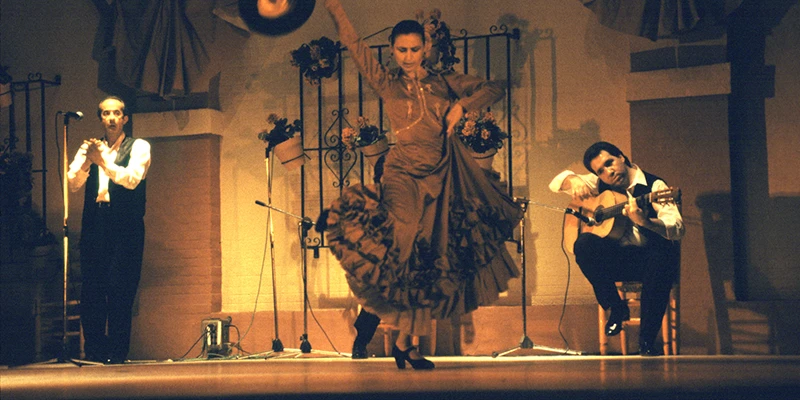
One of the most compelling reasons for visiting Seville is flamenco — the fiery music and dance of Andalusia which you must experience while here. Flamenco is the very essence of Seville: sexy, wild, foot-stomping Arabic rhythm, passionate gypsy soul and tender Spanish heart. This is the world's best place to find it with a range of excellent venues from tourist glitz, which often includes a decent dinner, to absolutely authentic which only gets going well after midnight.