Seville Day Three
La Macarena
Morning is a fine time to explore Seville's north district, La Macarena and Alameda de Hércules, whose square mile of quiet back streets and plazas are more low-key than the rest of town and offer an authentic look at the everyday life of working-class residents. Plan on three hours to walk the three or four miles to properly cover Macarena.
You can also see this video on a separate video page.
La Macarena is one of the most characterful and historically layered neighborhoods in Seville, offering visitors a compelling alternative to the more polished and crowded districts closer to the cathedral. Situated just to the north of the old city center, it lies beyond the remnants of Seville's medieval walls, giving it a distinct identity that blends tradition, local life, and centuries of history. Its location makes it easily accessible on foot while still feeling slightly removed from the busiest tourist routes, which adds to its appeal for travelers seeking a more authentic experience.
Walk from Casa de Pilatus a couple blocks north to Plaza Ponce De Leon, which commemorates the great explorer who was the first European to discover what is now the United States. Along the way you might stop at the San Leandro convent to sample their sweet food specialty, yemas. Walk three blocks along the back streets to the convent of Santa Paula where you can find the most heavenly orange marmalade, lovingly made by the 40 nuns residing here. Thousands of orange trees throughout town grow a bitter crop that makes wonderful marmalade — true Sevillian marmalade is only made here.
Continue walking along Calle San Luis to the surviving portion of Seville's fortified walls, first constructed by the Moors in 1135. At one time the massive wall extended four miles around the center, guarded by 116 watchtowers and 12 fortified gates. Seven towers remain along the surviving 600-yard stretch, which has been restored to original splendor. Walk through the Macarena Gate for a fine view of the higher exterior segment.
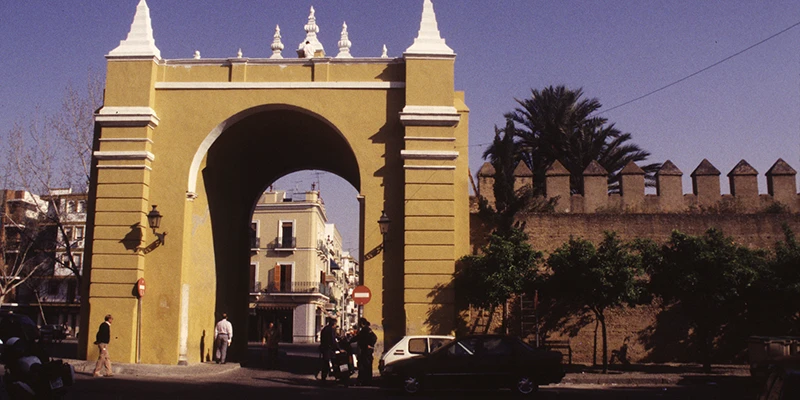
The neighborhood is anchored by this imposing Puerta de la Macarena, one of the last surviving gates of the ancient city walls. This structure provides a striking introduction to the area and serves as a reminder of Seville's Moorish past. Nearby stretches of the wall are still visible, allowing visitors to imagine the city as a fortified enclave centuries ago. The historical atmosphere continues throughout the district, where narrow streets, traditional houses, and small plazas create a sense of continuity with earlier eras.
At the spiritual heart of La Macarena stands the Basílica de la Macarena, a site of deep religious importance. The basilica houses the famous Virgin of Hope, one of the most venerated figures in Seville's Holy Week celebrations. Even outside the Semana Santa period, the church attracts visitors who come to admire its ornate interior and to understand the profound role that religious devotion plays in the city's identity. Attached to the basilica is a small museum that displays ceremonial objects, richly embroidered garments, and other artifacts connected to these traditions, offering further insight into the cultural fabric of Seville. Nearby, San Luis is another important church in the Macarena district due to its large scale and beautiful Churrigueresque décor, the greatly exaggerated Spanish version of Baroque.
.webp)
Beyond its monuments, La Macarena is defined by its everyday life. The streets are filled with local businesses, from traditional bakeries to long-established tapas bars where recipes have been passed down through generations. Visitors can spend hours wandering without a fixed plan, discovering quiet corners, shaded courtyards, and lively squares where residents gather. The atmosphere is unpretentious and welcoming, making it an ideal place to experience Seville as locals do.
La Macarena's appeal lies in this balance between past and present. It is a place where ancient walls coexist with modern street life, where deeply rooted traditions continue to shape daily routines, and where visitors can engage with the city on a more personal level. Rather than offering a checklist of famous landmarks, it invites exploration, rewarding those who take the time to observe, wander, and absorb its unique atmosphere.
.webp)
Calle Feria is the main street of the Macarena district and is especially interesting towards the narrow south end where it is packed with quaint shops. Walk a few blocks west to Alameda de Hercules, a narrow tree-shaded park that has become one of the trendy hot-spots of town with ultra-hip boutiques and yuppie cafes. On Sunday morning this is the scene of a major flea-market.
Alameda de Hércules
.webp)
A short walk from the neighborhood leads to the Alameda de Hércules, a broad, tree-lined square that serves as a social and cultural hub. Here, the pace becomes livelier, especially in the evenings, when cafés and bars fill with people enjoying food, drinks, and conversation. The Alameda also hosts events, markets, and performances, adding a contemporary, creative dimension to the area that contrasts with the historical surroundings.
.webp)
The Alameda de Hércules is one of the most vibrant and historically intriguing public spaces in Seville, offering visitors a unique mix of heritage, leisure, and contemporary urban culture. Located at the southern edge of the La Macarena district, this broad, tree-lined promenade is often considered the oldest public garden in Europe, dating back to the late sixteenth century. Originally created to drain marshy land and provide a recreational space for residents, it has evolved over centuries into one of the city's most dynamic social hubs.
The Alameda is immediately recognizable for its long rectangular layout and the two pairs of towering columns that stand at either end. These columns, topped with statues — one pair representing Hercules, the mythical founder of Seville, and Julius Caesar, and the other more modern additions — give the space a monumental character while anchoring it in the city's layered history. Despite these classical elements, the atmosphere today is far from formal. Instead, the Alameda has become a lively meeting place that reflects Seville's modern, creative spirit.
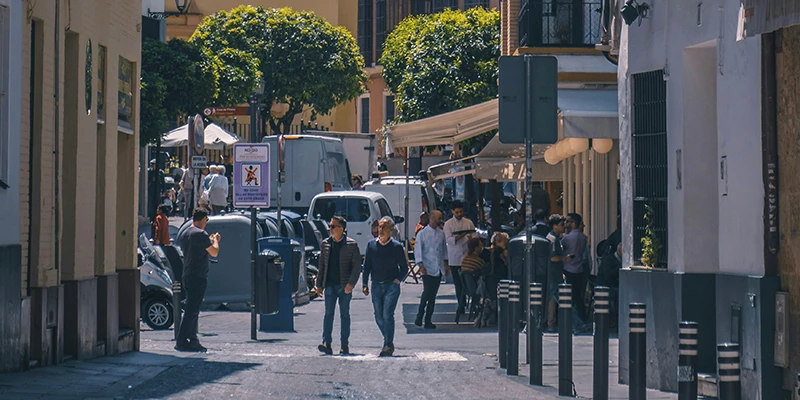
During the day, the promenade has a relaxed and open feel. Locals stroll beneath the shade of orange trees, children play in the open spaces, and cafés begin to fill with people enjoying coffee or a light meal. The wide pedestrian-friendly layout makes it an inviting place to linger, whether you are passing through or settling in to observe daily life. Small shops, galleries, and casual eateries line the surrounding streets, adding to the sense that this is a neighborhood space rather than a purely tourist destination.
.webp)
As evening approaches, the Alameda undergoes a transformation. It becomes one of Seville's most energetic nightlife areas, with bars, terraces, and restaurants drawing a diverse crowd of residents, students, and visitors. The scene is notably more alternative and eclectic than in other parts of the city, with venues ranging from traditional tapas spots to modern cocktail bars and live music spaces. This diversity gives the Alameda a distinctive identity, appealing to those looking for something beyond the conventional Andalusian experience.
 (1).webp)
Culturally, the area is also a focal point for events and artistic expression. It frequently hosts open-air performances, festivals, and markets, contributing to its reputation as a center of creativity and social interaction. Street art and independent cultural spaces further reinforce its contemporary edge, making it a place where Seville's past and present coexist in a particularly visible way.
For visitors, the Alameda de Hércules offers more than just a place to see — it provides a space to experience the rhythm of the city. Whether enjoying a quiet morning coffee, exploring nearby streets, or joining the evening crowds, it captures a side of Seville that is both rooted in history and alive with modern energy.
.webp)
One block east of Hercules is a curious jumble of 13 little streets coming together in two adjacent plazas, Europa and San Martin. Head east back to Calle Feria, then along Calle Espiritu Santo to San Juan de la Palma and you are finished.
Córdoba Day-Trip
If you don't have enough time in Spain to stay in Córdoba for a few days, you could visit it as a day-trip from Seville. It only takes 45 minutes to reach Córdoba on the high-speed AVE train that runs once every hour from Seville. There is one unbelievably amazing site in Córdoba that makes the trip more than worthwhile all by itself: La Mezquita, the great mosque.
However, there are many wonderful sights to see in Córdoba making it worthwhile to stay there for a few days, not as just a day-trip, as you can see in our page about that wonderful city.
.webp)