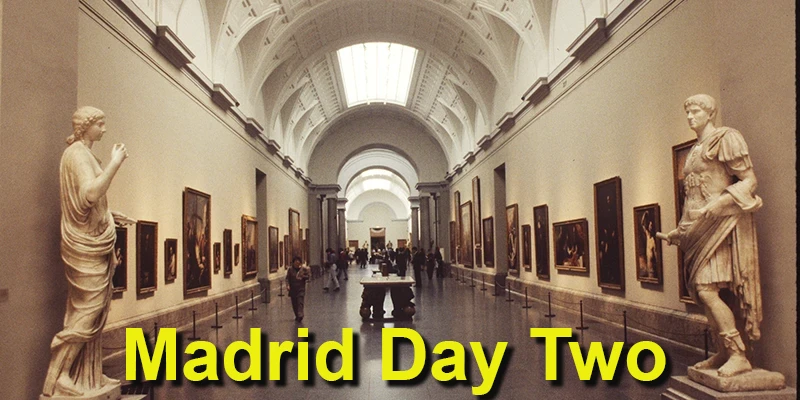
Madrid Day Two
Plaza, Two Museums, and Park
.webp)
A lot of ground was covered Day One so that you could walk to those interesting neighborhoods. Hopefully you have planned at least three days to visit this grand capital city to continue with discovery of major sights.
.webp)
Two major art museums and a park are on today's agenda, but you can also find time to go shopping and continue exploring the streets, shops and plazas of Madrid.
Plaza de la Cibeles
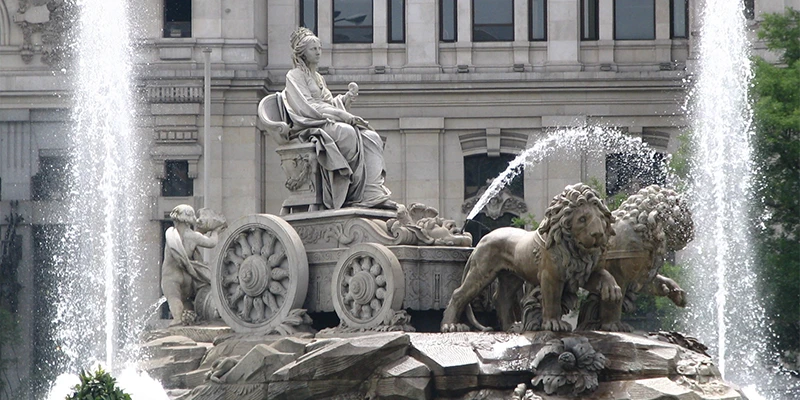
A good place to get an early start to the day is at Plaza de la Cibeles where you can gaze upon one of the great intersections of Europe. The fountain at the center, depicting the ancient Earth Mother goddess riding on her chariot, is a major symbol of Madrid — Real Madrid fans traditionally celebrate championship titles here.
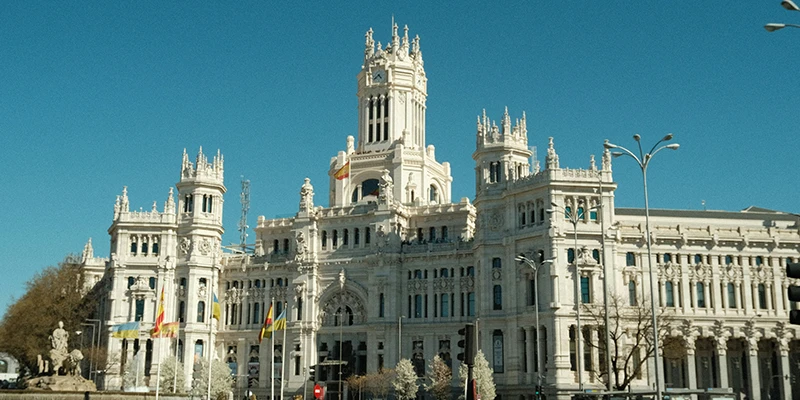
Here you will see the remarkable Palacio de Cibeles, also called Ayuntamiento (City Hall). It was formerly the Palace of Communications, with its elaborate pinnacles looking like a great castle, and the impressive headquarters of the Bank of Spain on the other side. Nearby is the Mudéjar-style Lujanes Tower, Madrid's oldest building, where King Francis I of France was held prisoner in 1525. One of Madrid's first palaces, dating from the 1530s, is the Casa de Cisneros at the back of this square, with a distinctive Plateresque facade carved in elaborate Renaissance detail.
The Prado
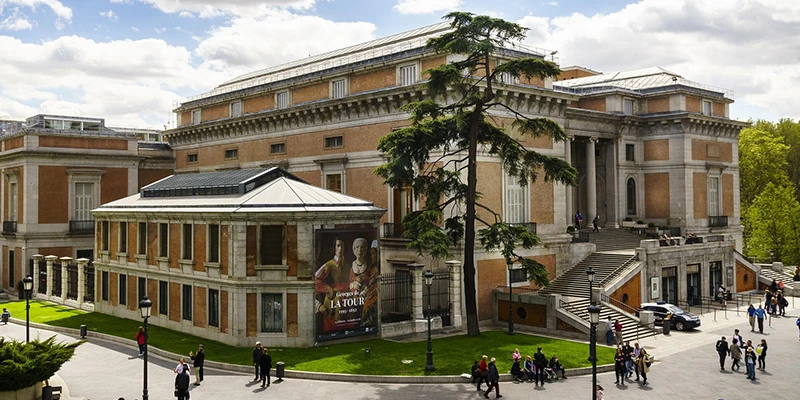
Are you ready to take on one of the world's greatest museums? This morning is a good time to go, while you are fresh. Book tickets online in advance to avoid queuing. It is good to enter when it opens at 10:00 so you will have plenty of time to see the collection.
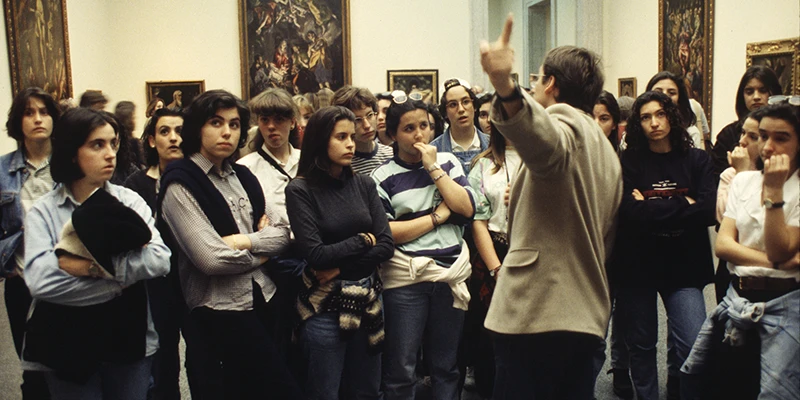
It is always smart in any huge museum to begin with your personal favorites while you are still fresh. The Prado is especially noted for its extraordinary collection of paintings by Velázquez — around 50 canvases by the greatest of all Spanish artists.
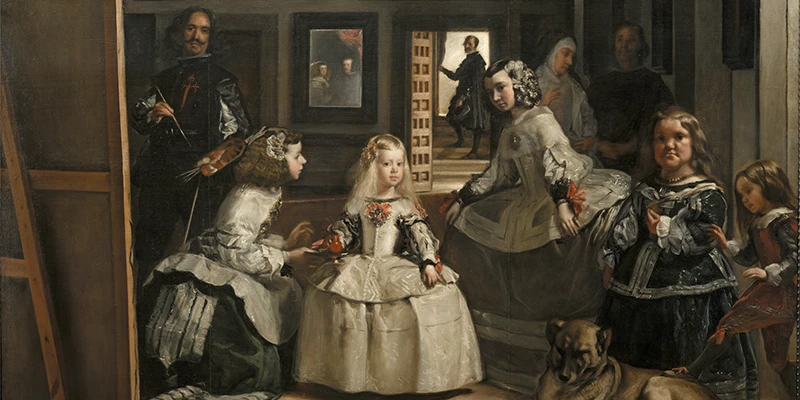
Two of his most important masterpieces, Las Meninas and The Surrender of Breda, would by themselves make a visit to Madrid worthwhile for the serious art lover. Velázquez was one of the first artists to truly capture the personality and realistic appearance of the people he painted. As the court painter to Philip IV, he was highly respected during his lifetime, and the very best of his work is here.
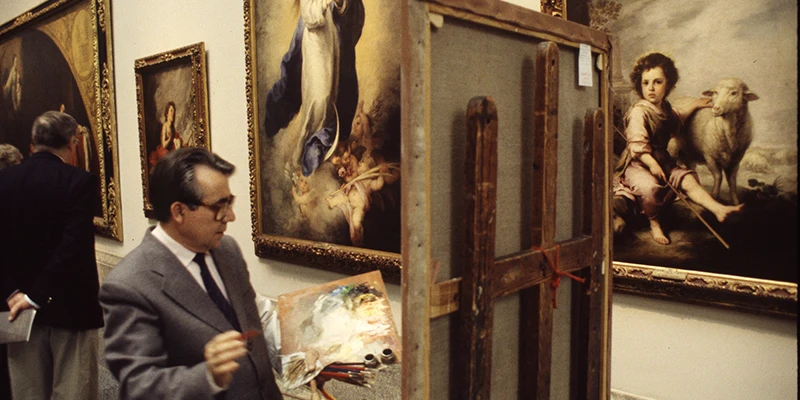
Numerous other great masters are well represented in the galleries of this wonderful shrine of the arts. The world's finest collection of Spanish painting is here, with Ribera, El Greco, Zurbarán and Murillo each represented by around 40 paintings, and over 100 canvases by Goya — including the haunting Black Paintings in their own dedicated gallery.
.webp)
The Prado ranks alongside the Louvre, the Hermitage and New York's Metropolitan Museum for quality and quantity of European masters on display. There are many benches for resting as you wander through the galleries, and a café and restaurant are available. With the right pace you should be able to cover all the artists that appeal to you in one visit.
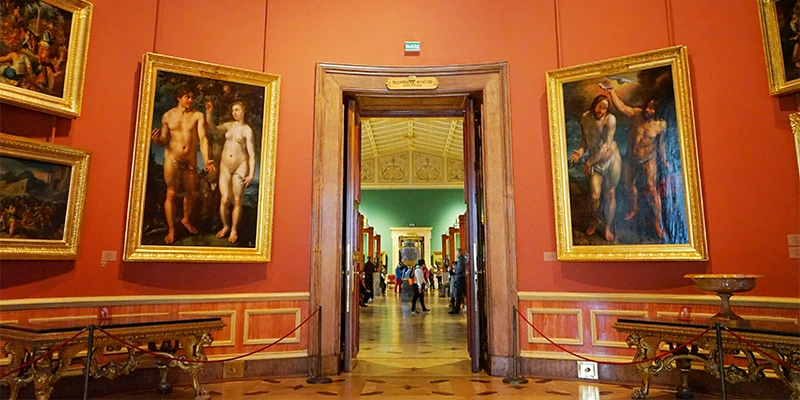
Opening Hours:
Monday to Saturday: 10:00 to 20:00
Sundays and public holidays: 10:00 to 19:00
Retiro Park
square-2upcopy.webp)
, copy.webp)
Located in the heart of Madrid, Retiro Park (Parque del Buen Retiro), is one of the city's most famous landmarks — a vast green oasis of over 120 hectares filled with gardens, monuments, lakes, and cultural spaces. Originally built in the 17th century as a royal retreat for King Philip IV, it opened to the public in 1868 and is now a UNESCO World Heritage Site.
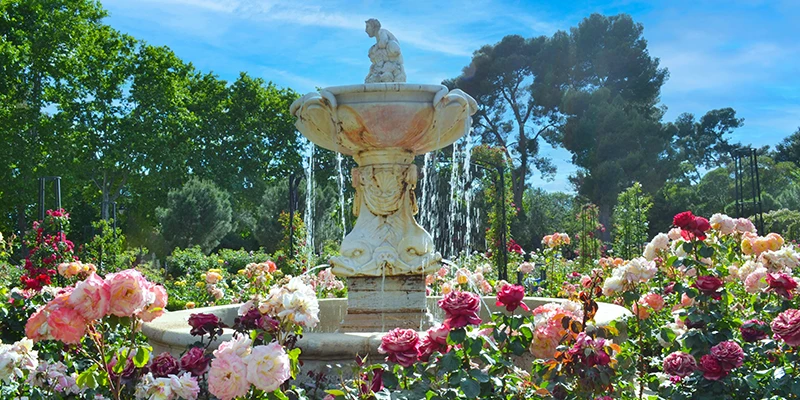
The essence of travel is doing what you can in a limited amount of time — should you walk through the prettiest park in town or go to another museum? Park-lovers can have it both ways, walking from the Prado through part of Retiro Park for some fresh air to clear the mind, then continue a few blocks to the nearby Reina Sofia museum.
.webp)
Retiro Park is one mile long and half a mile wide, crisscrossed by dozens of pathways leading past fountains, flower beds, inviting benches and ponds, sheltered by a marvelous tree canopy that completes this lush green environment.
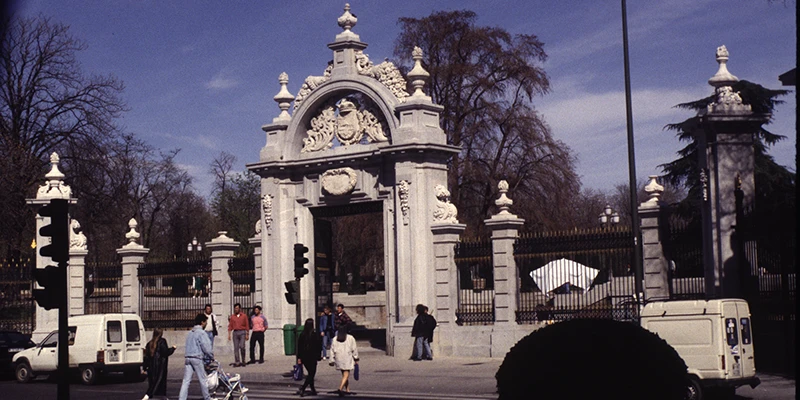
You can enter the park behind the Prado through a monumental gateway, Puerta de Felipe IV, one of the most ornate entrances to Madrid's Retiro Park. Located on the western edge of the park along Calle de Alfonso XII, this gate serves as the grand entrance directly aligned with the Casón del Buen Retiro.
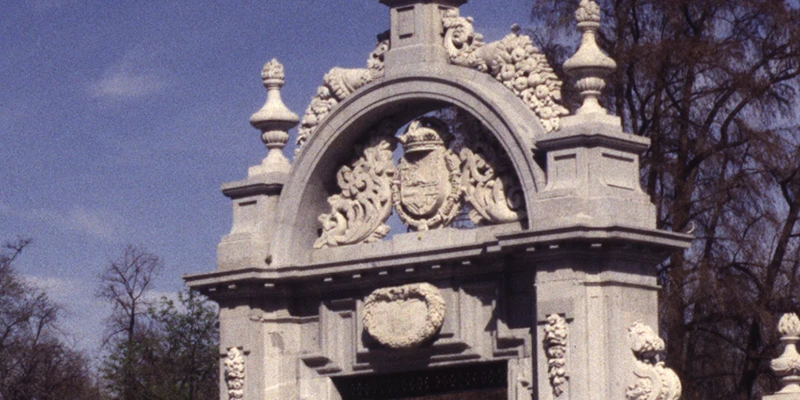
Originally built in 1690, it is the oldest gate in the park. It is a prime example of the Baroque style, constructed from stone with heavy ornamentation. The top of the arch features a large royal coat of arms and is crowned with stone sculptural details.
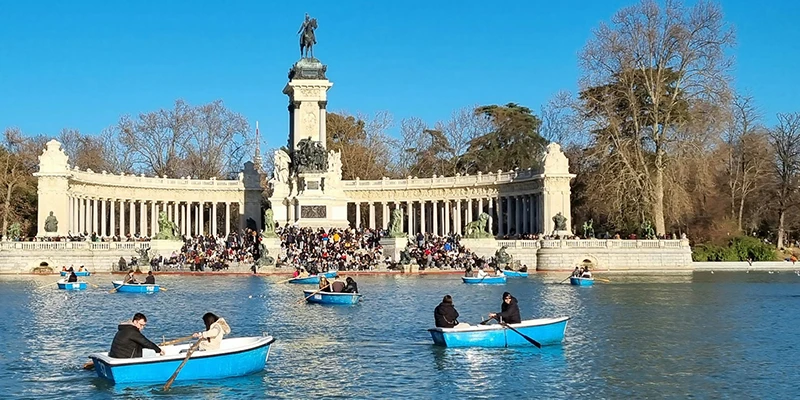
If you want to extend the park visit, take a stroll around the Estanque Grande del Retiro (Great Pond), an artificial lake that has been the park's centerpiece since the 17th century. You will see several small blue rowboats, which can be rented for a classic Madrid experience.
.webp)
Originally built as a stage for water pageants, mock naval battles, and royal boat rides for King Philip IV, it now serves as a major public space for leisure and photography. This area is the heart of the park's leisure activity, often surrounded by street performers, musicians, and vendors.
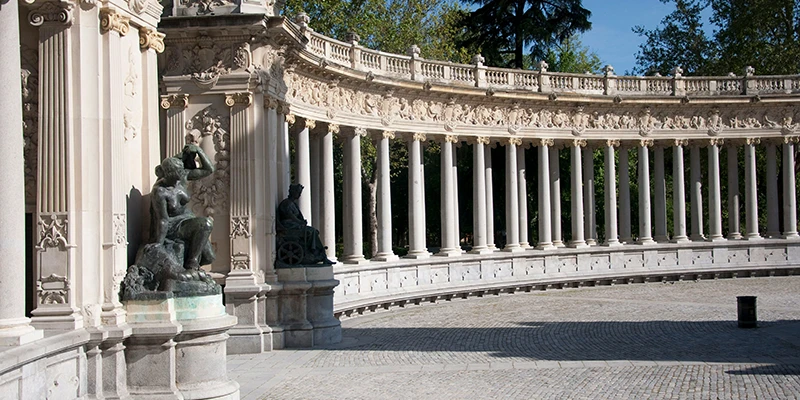
Monument to King Alfonso XII, a grand architectural ensemble, is located on the eastern shore of the lake. This semi-circular colonnade is one of the most iconic landmarks within the park. It features a massive stone pedestal topped with a bronze equestrian statue of King Alfonso XII. The monument is built from white marble and stone, including intricate sculptures of lions and allegorical figures. The steps leading down to the water are a popular gathering spot for locals and tourists to sit and enjoy the view of the lake.
.webp)
The park comes alive on weekends when street performers, rowboaters on the large central lake and families spread out across the lawns, creating one of the most animated outdoor scenes in the city.
Modern Art: Reina Sofía
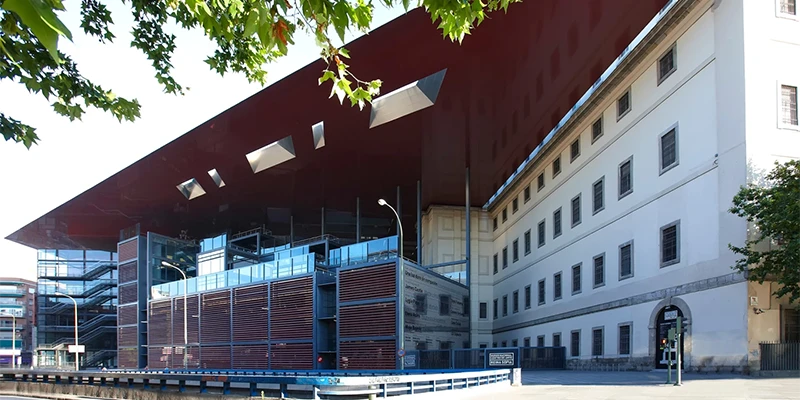
The Museo Nacional Centro de Arte Reina Sofía houses the nation's main collection of modern and contemporary art. Housed in a former hospital, it blends historic architecture with contemporary design. The museum focuses on 20th- and 21st-century art, featuring works by Spanish and international artists. Visitors can explore movements such as surrealism, cubism, and abstract art through thoughtfully curated exhibitions.
.webp)
Its airy courtyards, glass elevators, and rotating displays create a dynamic experience. Beyond its collections, the museum hosts lectures, film screenings, and cultural events, making it a vibrant center for artistic dialogue and creativity in Spain today.
.webp)
The most important single painting in the collection is Picasso's mammoth anti-war canvas, Guernica, inspired by the devastating German bombing of that Basque town during the Spanish Civil War in 1937.
.webp)
Perhaps the most famous painting of the 20th century, this meditation on suffering makes the visit worthwhile by itself, but there is much more to see by Picasso, Miró, Dalí and most of the leading artists of the past hundred years. The Reina Sofía is open until 9:00pm, so no problem if you are running late.
.webp)
To truly appreciate the breadth of the collection, visitors should venture into the Nouvel Building, a striking red addition that provides a stark contrast to the original 18th-century Sabatini structure. This expansion houses a massive library and temporary galleries that push the boundaries of modern media.
.webp)
Walking through the halls, one encounters Dalí's haunting The Great Masturbator and Miró's minimalist masterpieces, which challenge traditional perceptions of form and color.
.webp)
The museum also places a heavy emphasis on the socio-political context of art, documenting the transition from dictatorship to democracy in Spain. This narrative depth ensures that a visit is not merely an aesthetic experience, but a profound historical journey.
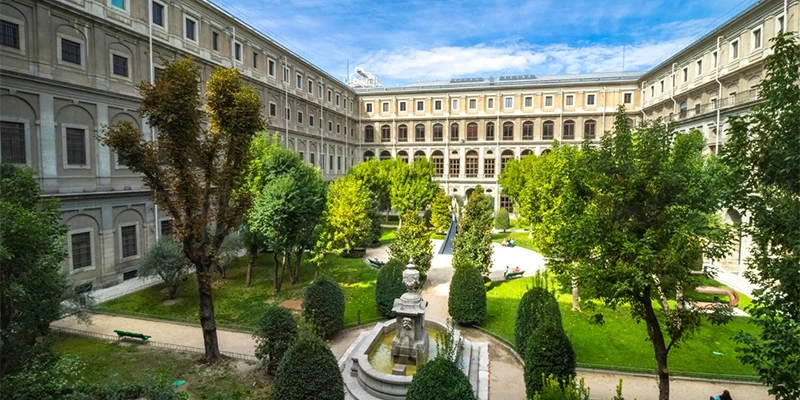
Whether you are contemplating the stark monochromatic tragedy of Picasso or the vibrant, radical experiments of the contemporary wing, the museum serves as a vital bridge between Spain's turbulent past and its innovative future.
,.webp)