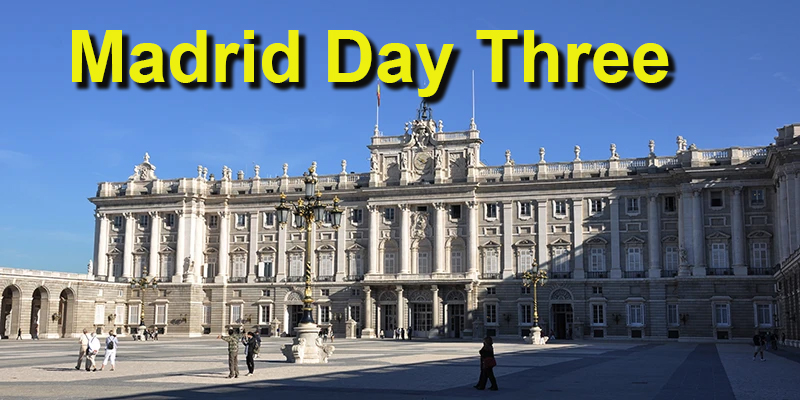
Madrid Day Three
Museum, Walk in Lanes, Palace, Salamanca, Flamenco
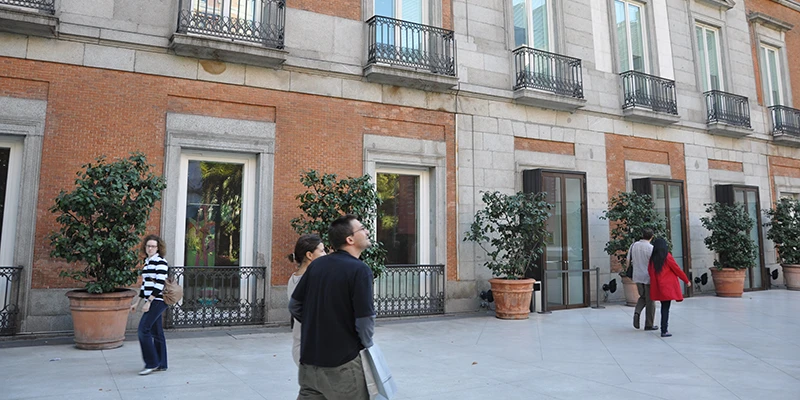
Get your day started with a visit to another one of Madrid's truly excellent art museums, then take a stroll through some of the best little streets and plazas on your way to the Royal Palace, and more. Another big experience to complete this three-day itinerary.
Thyssen-Bornemisza
.webp)
Although it is not nearly as famous as the Prado, the Thyssen-Bornemisza Museo Nacional is one of the world's great museums, with an art collection spanning from the 13th through the 20th century and including masterpieces by most of the Western world's influential artists.
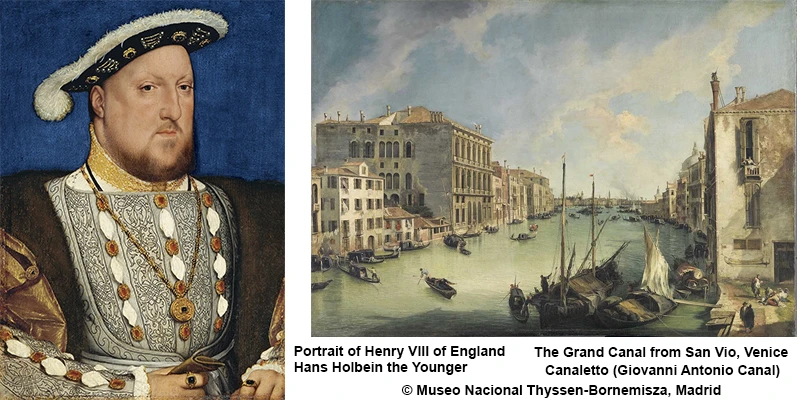
It is a joy to experience this sweep of art history in a museum that is not so huge as to be overwhelming. The exceptional quality of the 1,000 pieces on display assures that wherever you look there is astonishing beauty to enjoy.
.webp)
Two to three hours should be sufficient. Begin on the top floor, which covers the Gothic through the Renaissance and Baroque periods. Highlights include Giotto, Van Eyck, Ghirlandaio, Caravaggio and a statue by the young Bernini. Continue through the 19th century with Constable and the Impressionists — Monet, Manet, Degas and Renoir — followed by Gauguin and Van Gogh.
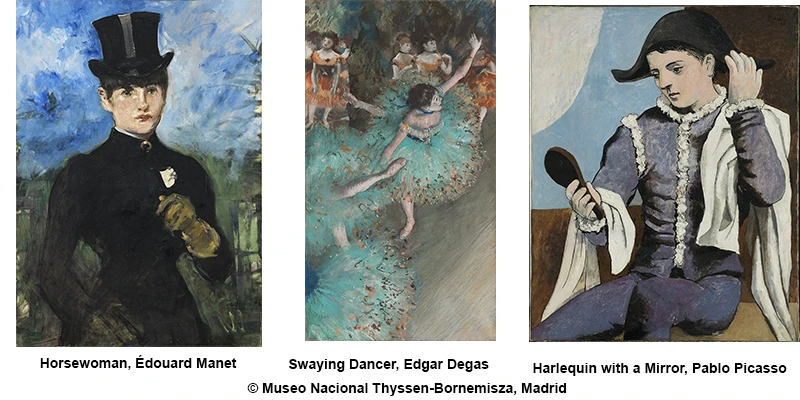
Complete your visit in the 20th century rooms with a very strong collection including Picasso, Kandinsky, Pollock, Rothko, Hopper and Rauschenberg. The museum website offers virtual visits with audio commentary. There is no substitute, however, for the real thing. They also have a lovely terrace café.
.webp)
Opening Hours:
Arrive at least two hours before closing time to properly view this large collection.
Monday: 12:00 – 16:00 (free admission, will be crowded)
Tuesday to Sunday: 10:00 – 19:00
Official museum website
Gran Vía

Walking several blocks north of the museum brings you to the Gran Vía, the city's biggest commercial street lined with cinemas, restaurants, nightclubs and offices. A major renovation completed in 2018 significantly widened the pavements, added benches and trees, and removed a lane of traffic in each direction, making it far more pleasant to walk than the old version. Plaza del Callao, the midpoint where the street turns northwest, is now fully pedestrianized. This is the modern heart of Madrid, pulsating with tall buildings, contemporary shops, theaters and the energy of a city that takes its streets seriously.
copy.webp)
Buses and taxis still run the full length, but the Gran Vía today is as much a place to stroll as it is a traffic artery. Have a walk along it, up one side and back down the other, and be sure to look up frequently — the architecture of the buildings, constructed between 1910 and 1929, is spectacular and easy to miss if you keep your eyes at street level. If this boulevard appeals to you, keep going six more blocks northwest to Plaza de España.
Canalejas
.webp)
Walk a few blocks south along Calle del Clavel to one of Madrid's most upscale shopping zones. The Canalejas neighborhood has undergone a significant urban improvement, transforming a cluster of quiet, historic bank buildings into a world-class luxury destination. This massive architectural feat unified seven historic buildings into a single 72,000-square-meter complex.
.webp)
The buildings, originally constructed between 1882 and 1974, were completely rebuilt to accommodate supreme luxury. The project meticulously modernized the interiors, restored historic facades, grand skylights, and intricate metalwork. The lower floors of this complex have become the "icon of luxury" in Madrid, offering high-end fashion and a sophisticated food scene. Galleria Canalejas spans three floors and features over 40 prestigious international brands, and a food hall that brings together world-renowned chefs and various international cuisines, ranging from traditional Spanish tapas to creative Asian fusion.
Pedestrian Zone
.webp)
Madrid's two busiest pedestrian streets, Calle del Carmen and Calle Preciados, extend to the west into another very lively shopping zone. This is the busiest district in town, packed with people throughout the day and well into the night. Hundreds of little shops are scattered throughout these blocks, anchored by El Corte Inglés, Spain's dominant department store, which hands out useful free maps at its information counters. Branching from the two main pedestrian lanes are several little side streets ideal for walking, with more shops and small plazas tucked away.
copy.webp)
This extremely lively neighborhood is a huge contrast to the quiet, narrow lanes of Old Madrid you previously wandered through, and is the best place in town for people-watching. If you feel like a rest, pull up a chair at one of the sidewalk cafes and watch the world hustle by.
San Ginés
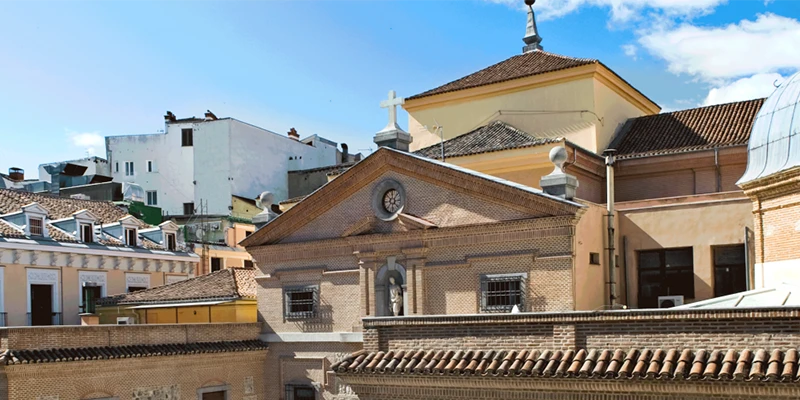
Two blocks further west along Calle Arena brings you to the Church of San Ginés on a quaint little plaza. This Iglesia de San Ginés de Arlés is one of the oldest and most historic churches in Madrid, dating from 1645. Some documents suggest a Mozarabic chapel existed here as early as the 9th century.
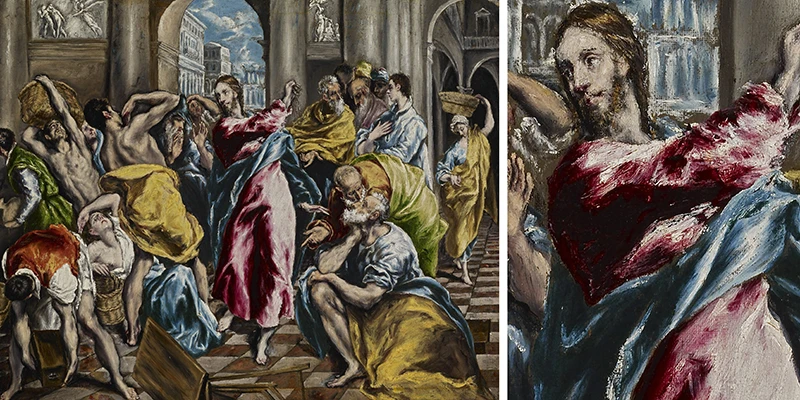
The church houses a masterpiece by El Greco titled The Purification of the Temple (or The Expulsion of the Moneychangers). It is typically on display for the public except during mass.
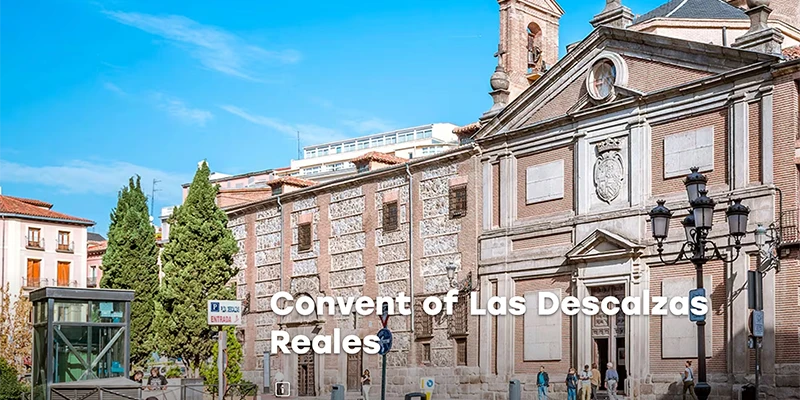
Just north you can find the Convento de Las Descalzas Reales, a former royal convent transformed into a small museum of Spanish art with a remarkable collection of tapestries and paintings. Another excellent museum, one block east of Sol along Calle de Alcalá, is the Royal Academy of Fine Arts of San Fernando, in a splendid 18th century palace with 1,500 paintings and 800 sculptures.
Teatro Real
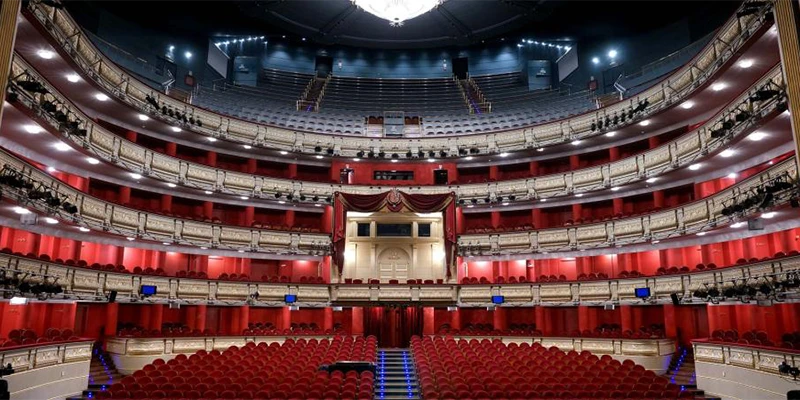
If you enjoy opera, ballet or symphony, continue walking west along Calle del Arenal a few blocks to the Royal Theater, Teatro Real, and check the box office for tickets. This is one of the great opera houses of Europe. Performances are often sold out well in advance, but returned tickets are sometimes available a few days before, or book ahead online at teatroreal.es. Return to Plaza de la Villa through the quaint, narrow lanes of this elegant neighborhood.
Madrid's Royal Palace
copy.webp)
Sometime after lunch, visit the Royal Palace. Built for King Philip V, grandson of France's Louis XIV, the Royal Palace has an unbelievable 3,418 rooms, making it the largest palace in Europe by floor area — a selection of the finest state rooms are open to the public. Late afternoon is a fine time to visit, when it is less crowded than during the busy morning hours when bus tours and school groups fill the rooms.
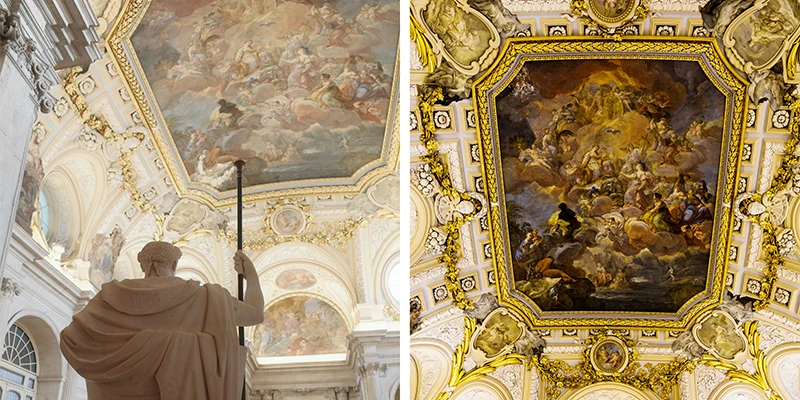
Construction began in 1738 on the site of a former Alcázar destroyed by fire, and was completed about 30 years later under Charles III. Philip's architects designed the structure in French and Italian styles, a deliberate attempt to rival the Versailles of his grandfather. Spain's royal family no longer lives here — they reside at the smaller Palacio de la Zarzuela outside the city — but the palace is still used for official state functions and ceremonies.
You can walk through the state rooms with an audio guide or join an organized group tour. The visit covers around 50 of the most impressive rooms, including the Reception Room, State Apartments, Library, Armory, Royal Chapel, Throne Room and the spectacular Banquet Hall, where receptions for heads of state are still held. Each room is packed with extraordinary decoration in the most elaborate Baroque and Rococo styles, with tapestries, carpets and drapes framing murals — several ceilings painted by Tiepolo — and sparkling gold highlights everywhere. Everything is so dazzling you might need sunglasses.
.webp)
After the royal tour, get some fresh air and refreshments at one of the outdoor cafes on the Plaza de Oriente terrace between the palace and the Royal Theater. The plaza itself is one of the finest in Madrid, with a magnificent equestrian statue of Philip IV at its center and formal gardens stretching toward the theater. While you are here, check again for returned tickets to any musical events at the theater this evening.
Plaza de España
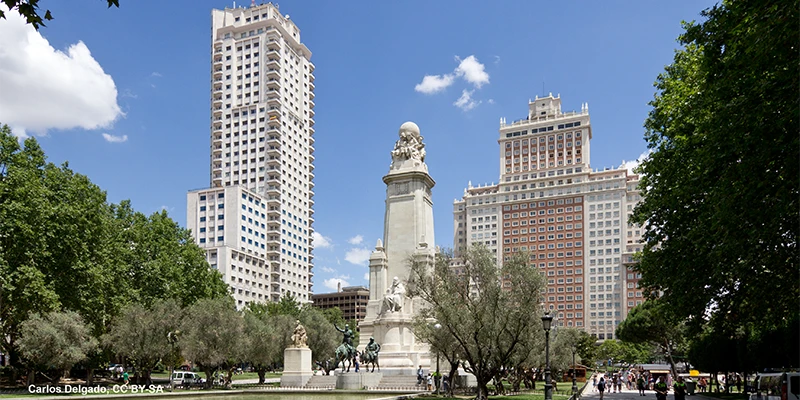
From the palace walk north along the Sabatini Garden to Plaza de España. The plaza is a vast, open square that underwent a massive redesign between 2019 and 2021. It now features over a thousand trees and a series of integrated walking paths that link it directly to the Sabatini Gardens and the Temple of Debod.
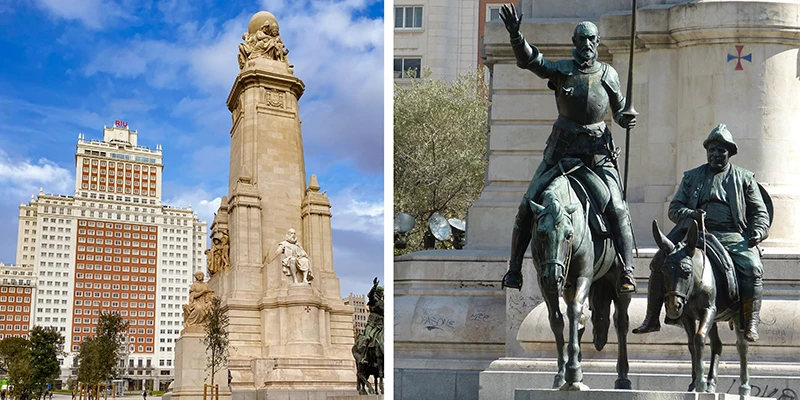
The plaza is framed by two of Madrid's most famous skyscrapers: the Edificio España (notable for its red-brick Baroque revival style) and the Torre de Madrid, which was once the tallest concrete building in the world. There is a statue of Don Quixote and Sancho Panza at its center and behind the characters rises a massive stone pedestal topped with a globe, symbolizing the worldwide reach of the Spanish language.
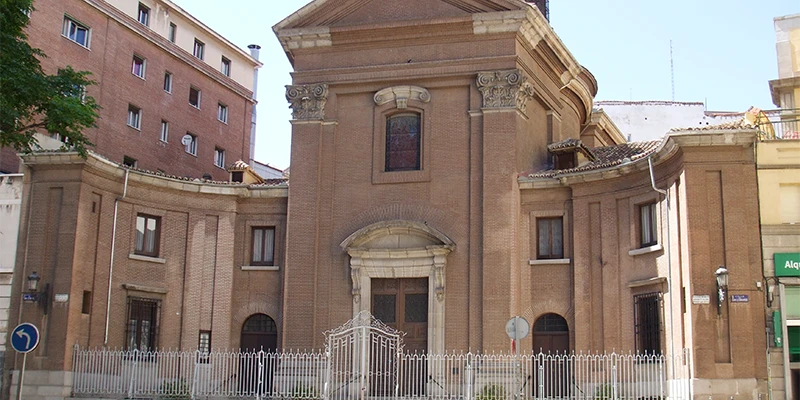
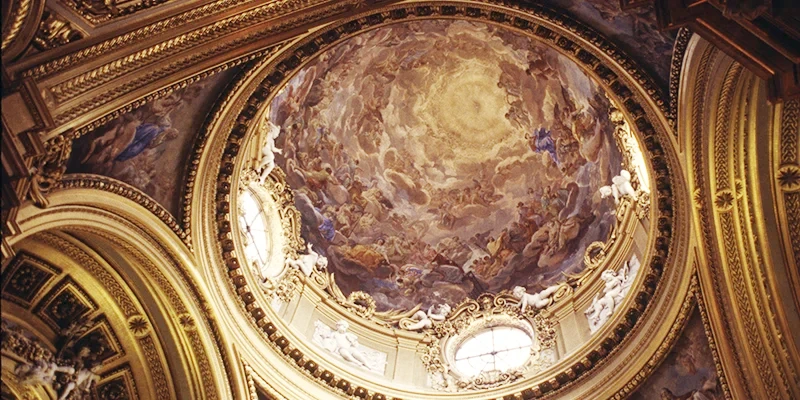
Just beyond the plaza across the Gran Vía stands the most beautiful Baroque church in Madrid, the Church of San Marcos, finished in 1743. Its dazzling interior of five intersecting ellipses is based on the Italian architecture of Bernini and Borromini, with a huge dome uniting all the elements.
Temple of Debod
copy.webp)
2upcopy.webp)
This Egyptian temple is situated in the Parque de la Montaña, about 600 meters from Plaza de España. It dates back to the 2nd century BC as a chapel dedicated to the god Amun and the goddess Isis, and expanded by various Ptolemaic kings and Roman emperors, including Augustus and Tiberius.
.webp)
The temple was a gift from the Egyptian government to Spain in 1968 as a gesture of gratitude for the assistance in saving the Great Temple of Abu Simbel from being flooded during the construction of the Aswan High Dam. Inside, you can see original reliefs and hieroglyphics. There are also scale models and audiovisual displays that explain its history and symbolic meaning. Entrance is free, though there is often a queue as capacity is strictly limited for conservation reasons.
Salamanca
.webp)
A different part of town to consider is the Salamanca district, another one of Madrid's most upscale shopping neighborhoods, about a mile northeast of the palace just above Plaza de Cibeles. Rather than walking all the way over, hop in one of the dozens of taxis passing any corner and arrive in a few effortless minutes.
.webp)
Anyone interested in the history of human civilization would thoroughly enjoy the Museo Arqueológico Nacional in the Salamanca district, on Calle Serrano just north of Plaza de Colón. This huge collection spans the range of human culture from the Stone Age through the 19th century, with a special focus on the Iberian, Roman, Visigothic and medieval periods, including a famous reproduction of the Altamira cave paintings.
.webp)
Early evening hours between 6:00pm and 8:00pm are prime time for strolling, so resist the urge to sit down in a restaurant just yet and go take another walk. The two main streets defining this expensive shopping zone are Serrano, heading north, and Goya, heading east.
.webp)
Between them you find the quieter streets of Claudio Coello, Lagasca and Velázquez, with fine stores selling clothing, jewelry and shoes, along with a sprinkling of art galleries and excellent restaurants. The Salamanca district is also where many of Madrid's best restaurants are concentrated — upscale but less tourist-oriented than those in the city center.
Flamenco
.webp)
After finishing all the touring and shopping, there is just one major thing left to do: have dinner at a flamenco show to experience the fiery music and dance of Spain. You have various choices, ranging from established tourist venues — which put on excellent, polished shows — to more authentic local performances in smaller bars and municipal theaters, which can be a little harder to find but more spontaneous.
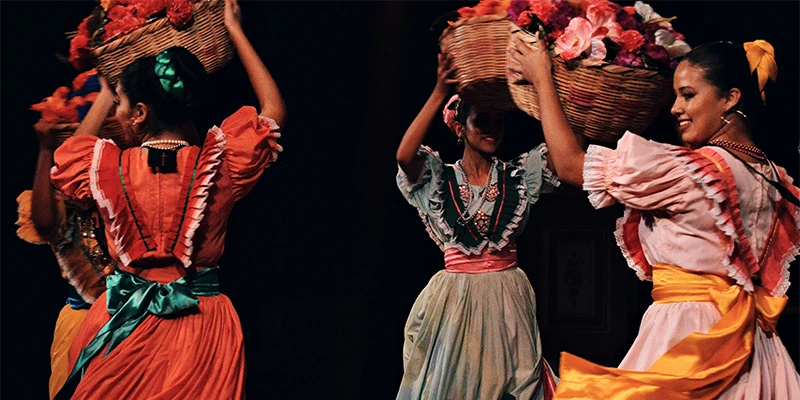
Shows geared for local crowds often start after midnight, which might be challenging after three long days. Your hotel desk can suggest current options. It is your last night — make the most of it.
.webp)