Europe's Best Trips
Eight itineraries — 65 cities — all by train
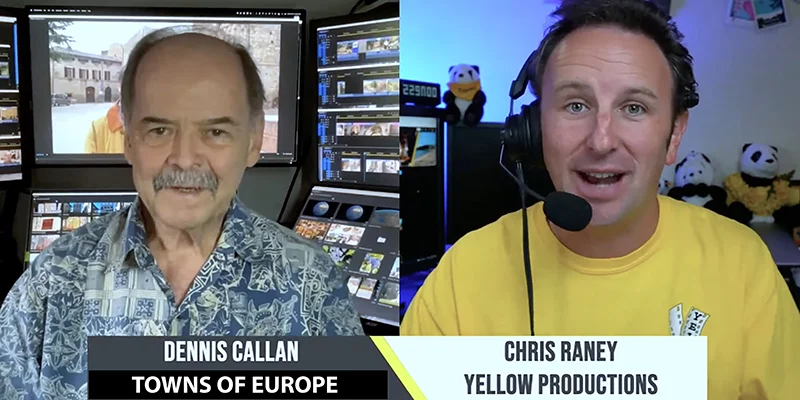
This page comes out of a conversation with Chris Raney of Yellow Productions, who asked a simple question: after thirty years of leading tours in Europe, which trips are the best ones? The answer took a while. What follows is a big list — eight itineraries covering sixty-five cities, all of them worked out on the ground over more than eighty tours. Chris has a popular travel channel on YouTube you would enjoy: Yellow Productions.
Every town mentioned here has its own page on this site, with photos, video and a walking route. Rather than break up the reading with links to all sixty-five of them, they are left as plain text — use the country menu at the top of any page, or the sidebars throughout the site, to go straight to the ones that interest you.
.webp)
Every one of these trips is built around the train. That is not nostalgia; it is the practical choice. The stations are in the centers of the cities, the trains are fast and comfortable, and the hours between stops are spent looking out a window at the countryside rather than sitting in traffic or waiting at an airport.
.webp)
The shape of each itinerary is the same. Two or three nights in each place, never one. A single night means you arrive tired, see the main square, and leave before you have understood anything. Two nights gives you a full day. Three gives you a full day plus the morning and evening either side of it, which is when most towns are at their best.
.webp)
Each trip runs about eighteen days. That is long enough to reach six or eight places without hurrying and short enough that most people can take it. Every one of them can be shortened by dropping stops from either end, or lengthened by adding the side trips noted along the way.
Rome to London by Train
Rome — Florence — Venice — Lucerne — Paris — London
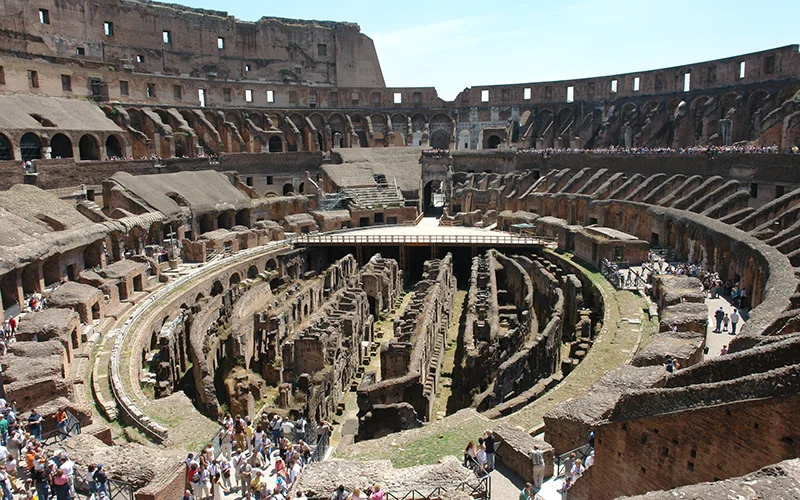
This is the one I have led the most — about thirty times — and it remains the best first trip to Europe anybody can take. Six of the greatest cities on the continent, three days in each, connected end to end by rail. Nothing else packs this much into eighteen days without feeling rushed.
.webp)
Rome comes first, and three days is the minimum. The historic center on foot takes one of them — Piazza Navona, the Pantheon, the Trevi Fountain, the Spanish Steps, about two miles of walking through two thousand years.
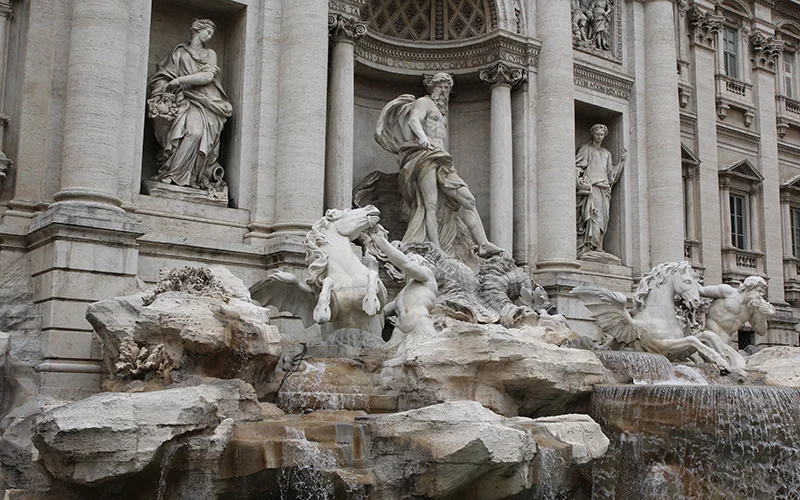
The Trevi is worth going back to twice, once in the middle of the day for the sculpture and once late at night when the crowd thins and the floodlighting takes over. It is one of the few famous sights in Europe that is better in person than in photographs.
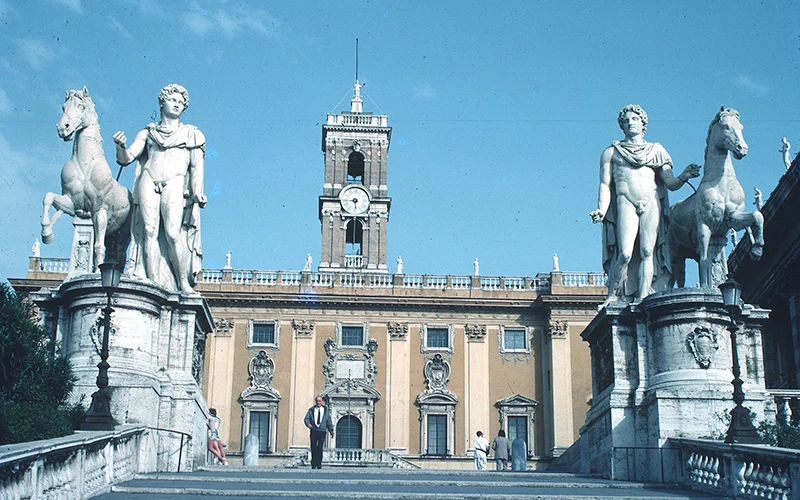
Day two is ancient Rome — the Colosseum and the Forum in the morning, St. Peter's and the Vatican Museums in the afternoon, with the Sistine Chapel at the end of it. The Campidoglio, Michelangelo's square on the Capitoline hill, sits between the two and is easy to walk through on the way.
.webp)
Day three is for the quieter neighborhoods, which is where Rome stops being a monument and starts being a city. The lanes around Via Giulia, the Ponte Sant'Angelo, and the ordinary shopping streets where Romans actually shop.
.webp)
The Campo de' Fiori market runs every morning except Sunday and is the best free entertainment in Rome. Come at eight when the stalls are being built rather than at noon when the tour groups arrive.
.webp)
By midday the square turns over to the restaurants around its edges, and by evening it is a drinking crowd. Three completely different places in the same paving stones, which is a fair description of Rome generally.
.webp)
Eat where the menu is short and handwritten. The rule holds across Italy but it holds hardest in Rome, where the volume of visitors supports a great many restaurants that do not need repeat customers.
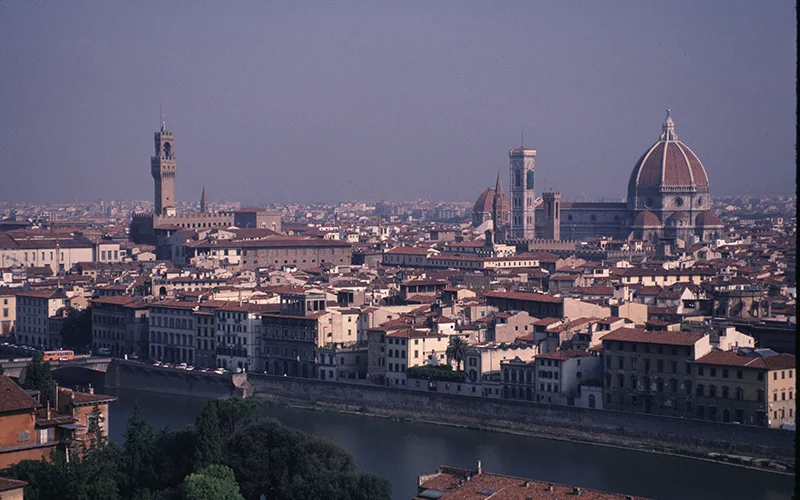
Florence is ninety minutes north by fast train. Two nights is enough because the essentials sit within a ten-minute walk of one another — the Duomo and Brunelleschi's dome, Giotto's bell tower, the baptistery doors, the Piazza della Signoria and the Uffizi.
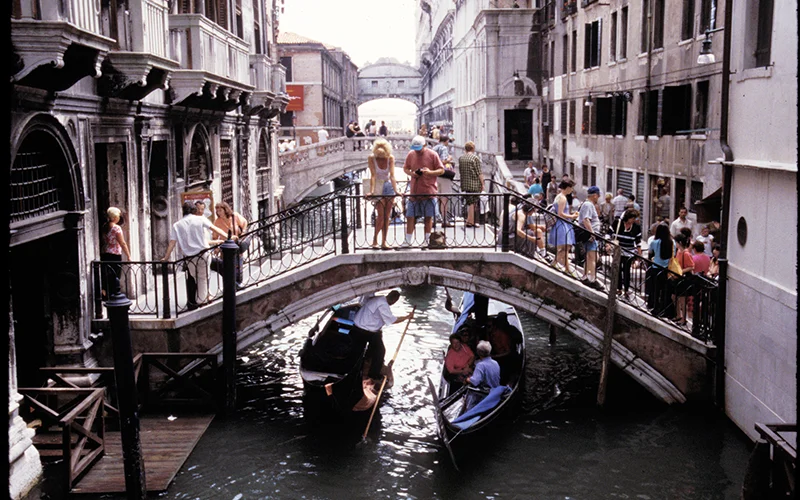
Venice is under two hours further on. Day one covers San Marco, the basilica and the Doge's Palace. Day two is for getting lost in Dorsoduro and Cannaregio, which is the only way to see the city that most visitors never reach.
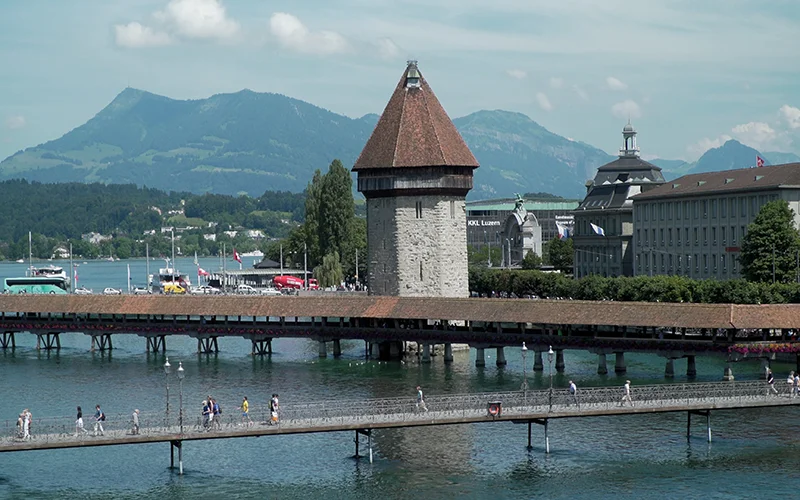
From Venice the train climbs into Switzerland, and Lucerne is where the trip changes gear. After three Italian cities, three nights beside a lake ringed by mountains is exactly the right correction.
.webp)
The Kapellbrücke, the fourteenth-century covered wooden bridge with painted panels along its roof beams, is the landmark. The old town behind it is compact, entirely walkable, and full of painted facades.
.webp)
Hotels on these trips are three- and four-star, chosen for location rather than luxury. The Hotel des Balances in Lucerne is the kind of thing I mean — right on the river in the old town, so you step out of the door into the sights.
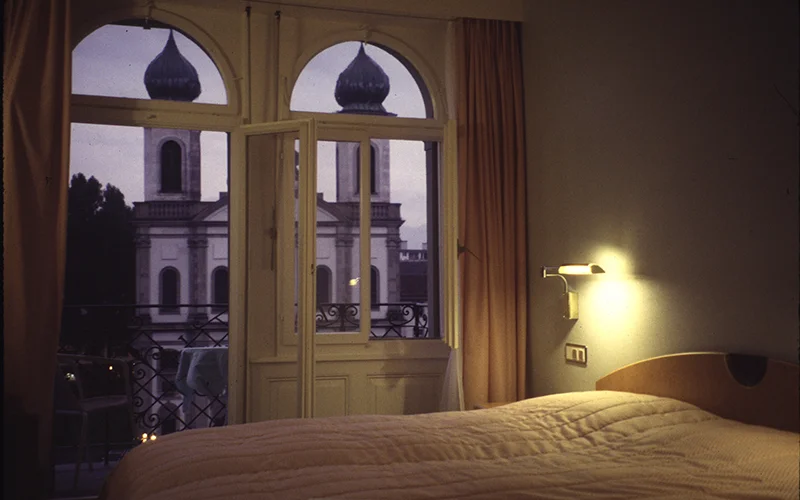
Paying a little more for a central hotel saves an hour of commuting every day and hands you the early mornings and late evenings, which are the best hours in any European town. It is the single most useful thing you can spend money on.
.webp)
The TGV reaches Paris from Switzerland in under four hours. Three nights is the minimum: the Latin Quarter and Notre-Dame on foot, a morning at Versailles with tickets booked well in advance, the Louvre, the Champs-Élysées and the Marais, and the Musée d'Orsay.
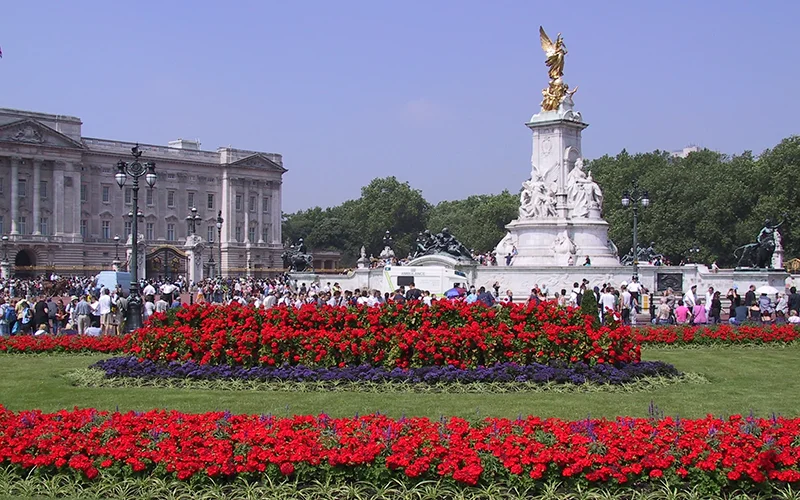
The Eurostar runs under the Channel and arrives at St Pancras in a little over two hours. London closes the trip, and three days covers the essentials comfortably — the West End, the Tower, the Changing of the Guard, the National Gallery and the British Museum.
.webp)
London is also personal for me. I lived here as a boy, from five to seven, and came home to California with a British accent that took about two months to disappear entirely. Every arrival at St Pancras since has felt like a return rather than a visit.
Switzerland
Lucerne — Interlaken — Jungfrau — Zermatt — Zurich
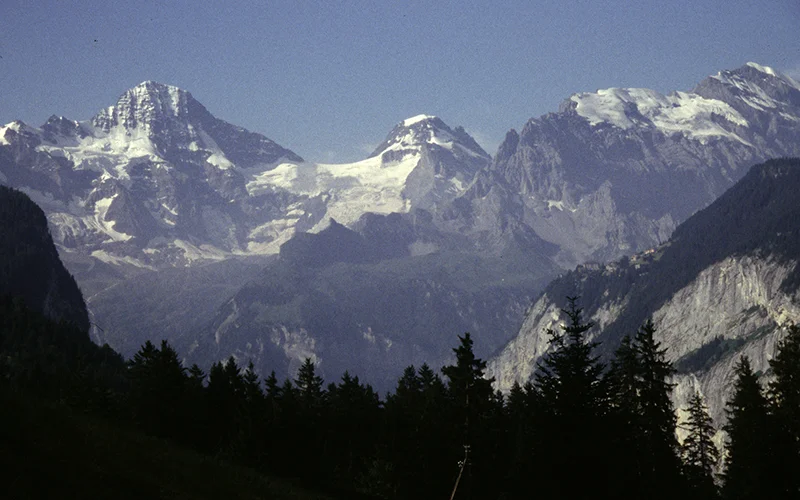
Switzerland deserves a trip of its own, and the way to do it is to pick a base and radiate out rather than moving hotels every second night. Interlaken sits in the middle of the Bernese Oberland with rail lines running up into the mountains in several directions.
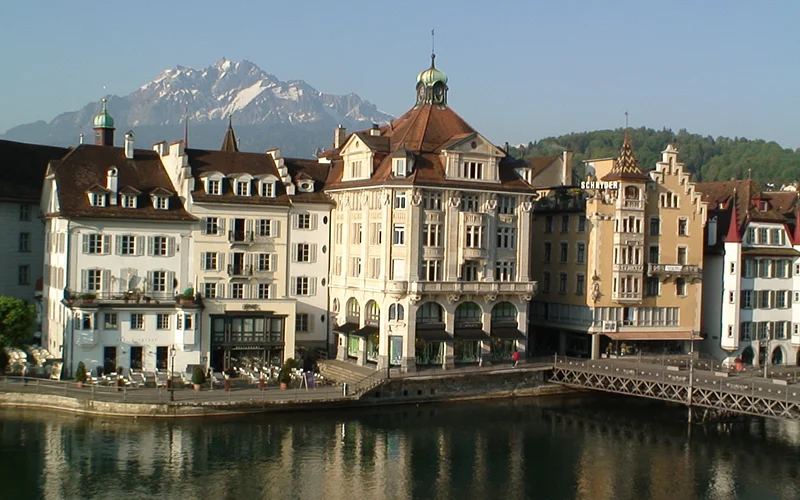
Start in Lucerne, which is the most popular city in the country and deservedly so. Two or three nights here covers the old town, the lake boats, and an excursion up Pilatus, Rigi or Titlis depending on the weather.
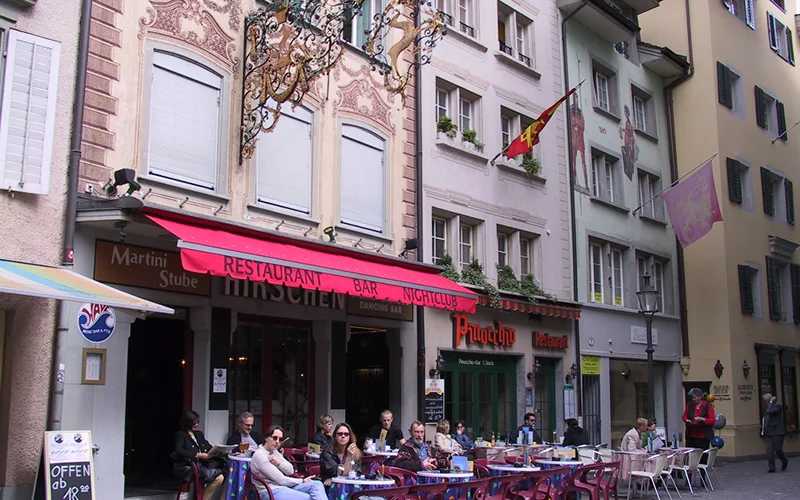
The old town squares are the reason to stay in the center. Painted facades on every side, cafés out across the cobbles, and the whole thing small enough to cross in ten minutes.
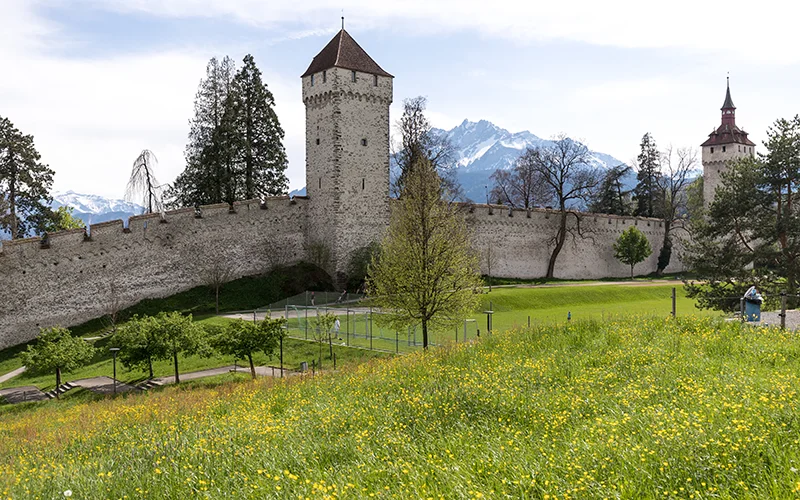
The Musegg wall above the town still has most of its towers, several of which you can climb, and the walk along it takes half an hour. Almost nobody does it, which is reason enough.
-5.webp)
The train from Lucerne to Interlaken crosses the Brünig Pass, and this is where the trip properly begins. It is one of the great short rail journeys in Europe and it costs no more than the fare.
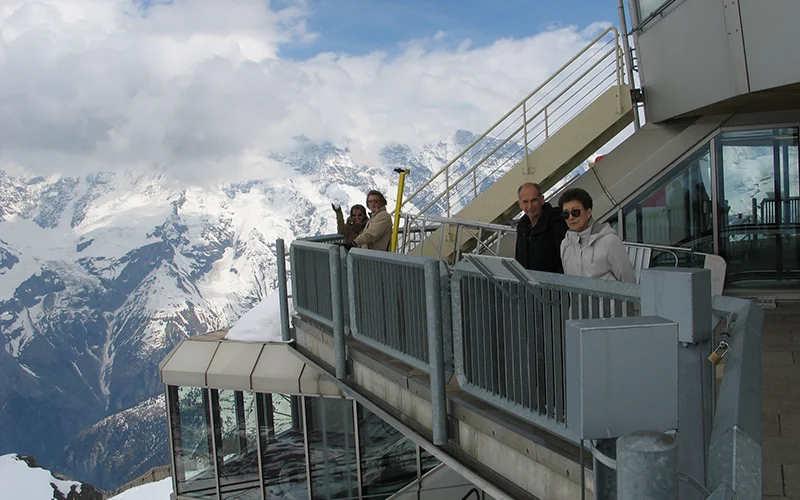
From Interlaken the Schilthorn is the first excursion. A cable car in stages up to nearly ten thousand feet, with a revolving restaurant at the top and a platform looking straight across at the Eiger, Mönch and Jungfrau.
-29.webp)
Go on a clear morning and check the webcams before you buy the ticket. The summit is above the weather often enough that a gray day in the valley does not necessarily mean a wasted trip, but it is worth knowing before you commit.
.webp)
Mürren, on the way up, is a car-free village on a shelf above the valley with a footpath running along it. This is the easiest good walk in the Oberland — level, paved, and with the entire wall of peaks in front of you the whole way.
.webp)
The Jungfraujoch is the other big excursion — a rack railway tunneled through the Eiger to a station at 11,332 feet, the highest in Europe. It is expensive and it is worth it once. There is snow at the top in every month of the year.
.webp)
The run west to Zermatt is done in panoramic cars with windows curving up into the roof. Reserve a seat, sit on whichever side the conductor recommends, and do not spend the journey looking at your phone.
.webp)
Zermatt is car-free, reached only by train, and built along a single main street. It is touristy in the way that all famous mountain villages are, and it is still worth two or three nights for what is above it.
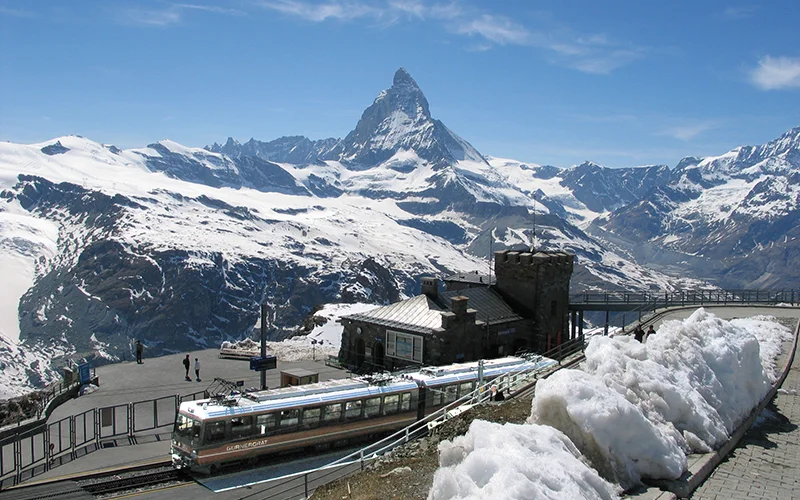
The Gornergrat railway climbs to just over ten thousand feet and delivers the Matterhorn view that everyone comes for, along with a view of the second-longest glacier in the Alps running away below.
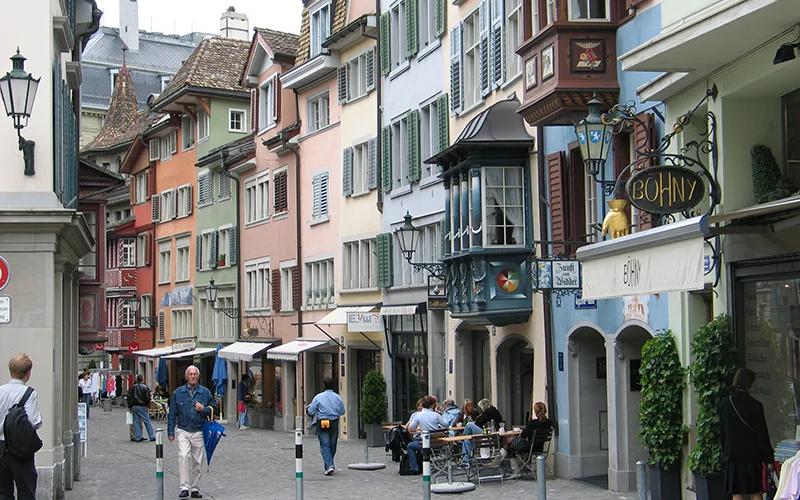
Zurich makes a natural end, an hour from Lucerne and the country's main air gateway. The old town along the river is better than its banking reputation suggests, and a day there is enough.
.webp)
One timing note. Late May is the moment for Switzerland — the meadows are in flower and the summer schedules have started. Early May is too soon: the high trails are still under snow and half the mountain railways have not opened for the season.
The Mediterranean
Barcelona — Carcassonne — Avignon — Nice — Monaco — Cinque Terre — Portofino — Rome
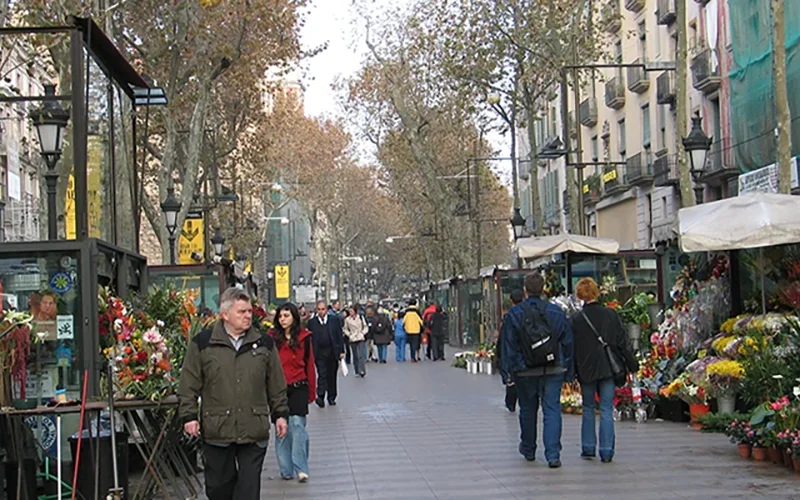
This trip runs along the northern rim of the Mediterranean from Spain to Italy, and it is the best of the eight for anyone who wants sunshine and coastline along with the cities. It starts in Barcelona with three nights.
.webp)
Barcelona is two cities stacked together — the medieval Gothic Quarter and the nineteenth-century Eixample grid with Gaudí's buildings scattered through it. Book the Sagrada Família and Park Güell online before you leave home.
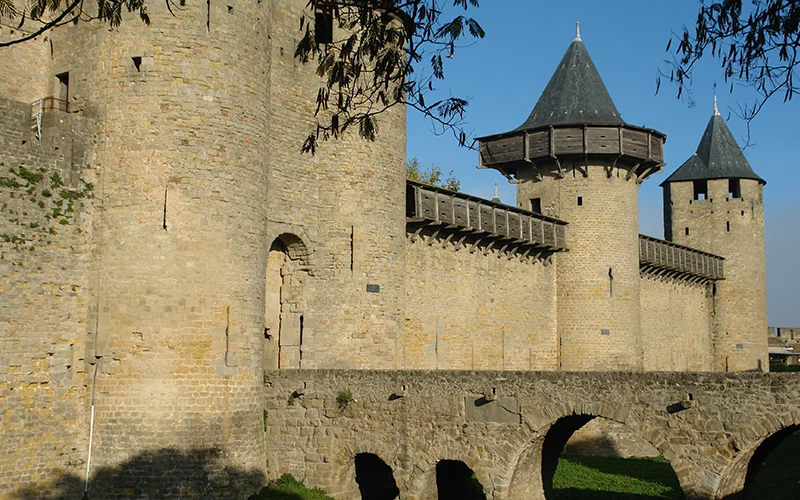
Carcassonne is the first stop in France and one of the most complete walled cities in Europe, with a double ring of ramparts and more than fifty towers standing above the river.
.webp)
Much of what you see is a nineteenth-century restoration by Viollet-le-Duc, and the conical roofs in particular are his invention rather than medieval fact. That does not spoil it. The plan and most of the stonework are genuine.
.webp)
Stay inside the walls if you can. The day visitors leave by six and the citadel becomes something entirely different — quiet, lit, and almost empty, with a handful of restaurants in the squares.
.webp)
The view of the whole citadel from across the river at dusk is the picture everybody has seen. Walk down to the old bridge for it rather than shooting from the parking lot.
.webp)
Avignon comes next, where the popes moved the papacy for most of the fourteenth century. The Palais des Papes they left behind is the largest Gothic palace in the world and dominates the town completely.
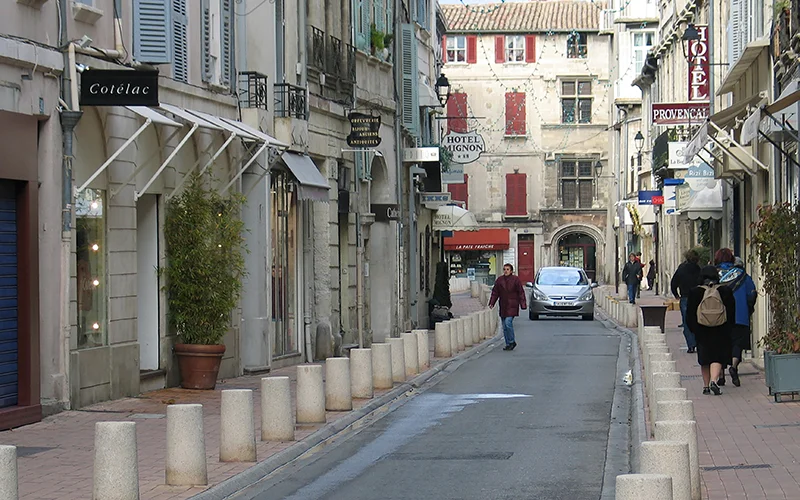
The walled town around it is small and easy to walk, and its main square fills with café tables. Avignon also makes the best base in Provence, with Arles, Nîmes and the Pont du Gard all inside an hour.
-04.webp)
Arles has a Roman arena still standing and still in use, along with the streets Van Gogh painted during his year there. It is a half-day trip from Avignon and one of the best-value stops in the south.
.webp)
The towns along this coast share a look — tall narrow houses in ochre and pink, shutters against the afternoon sun, laundry across the street. It is the same building tradition from Catalonia to Liguria.
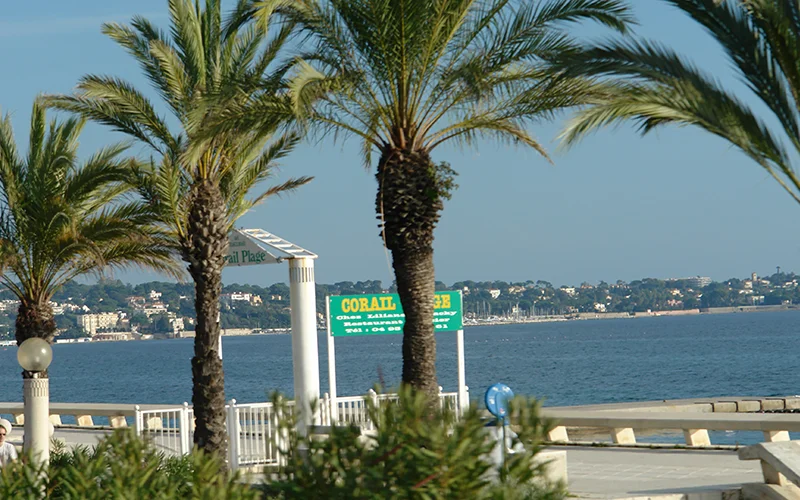
Nice is the base for the Riviera. The Promenade des Anglais runs for miles along the water, the old town behind it is a dense Italian-flavored maze, and the trains along the coast make everything else a day trip.
.webp)
The Cours Saleya in the old town holds a flower and produce market every morning and turns into a restaurant terrace by night. Eat socca — the chickpea pancake sold from carts — while you are there.
.webp)
Inland from Nice are the perched villages, and Saint-Paul-de-Vence is the best known of them. Go early. By eleven the lanes are full, and by two the coach parties have arrived.
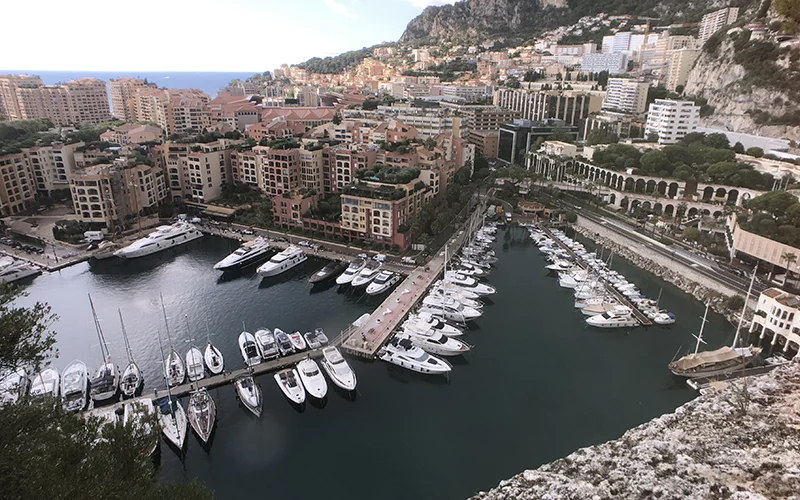
Monaco is twenty minutes along the coast by train and worth a day for the harbor, the palace, the old town on its rock and the casino. The scale of the money on display is itself part of the sight.
.webp)
Crossing into Italy, the Cinque Terre are five fishing villages built into a cliff coastline with a train line linking them through tunnels. Base yourself in one and use the train and the footpaths for the rest.
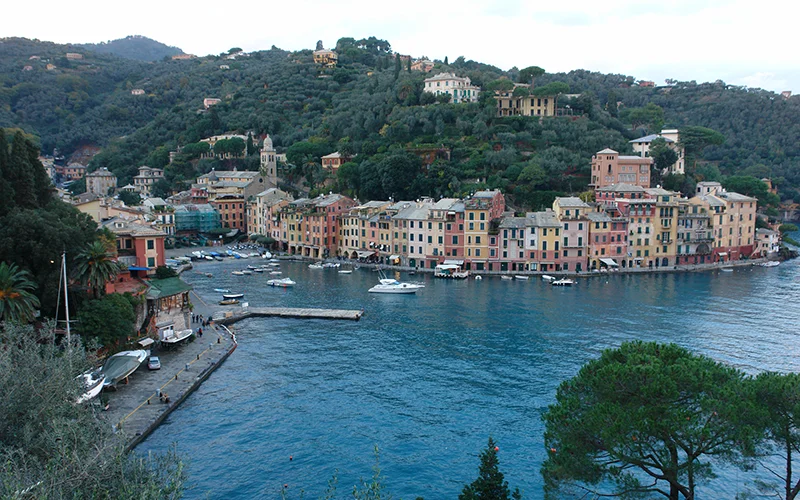
Portofino is further along the same coast, smaller and considerably more expensive, arranged around a harbor the size of a swimming pool. Come by boat from Santa Margherita rather than driving; there is nowhere to park and never has been.
.webp)
Camogli, a few minutes away by train, is the one I would actually stay in — the same painted houses and the same water, a working fishing fleet, and a fraction of the visitors. The trip then finishes in Rome.
Northern Europe
Helsinki — Tallinn — Stockholm — Oslo — Flåm — Sognefjord — Bergen
(5).webp)
The northern trip is the most varied of the eight, mixing capital cities with fjords and using ships as well as trains. It begins in Helsinki, where the harbor market sits right in the middle of town and the boats leave from the same quay.
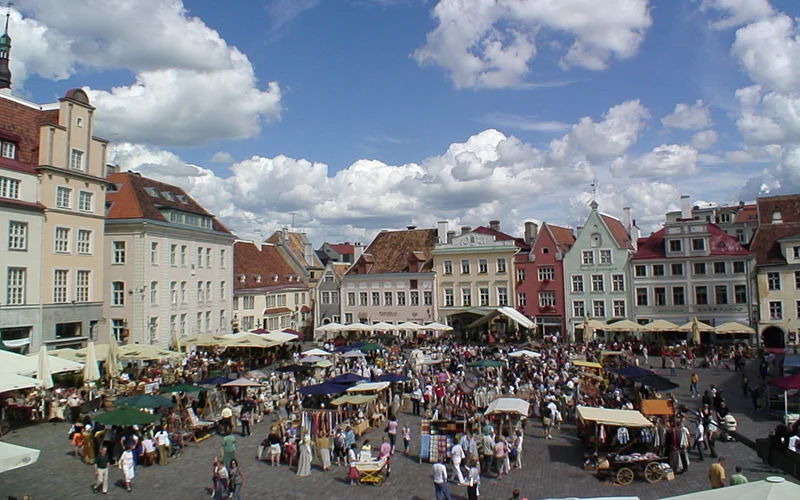
Tallinn is two hours south across the Gulf of Finland by fast ferry and can be done as a day trip or an overnight. Its old town is the best preserved medieval center in northern Europe, walled, compact and almost entirely intact.
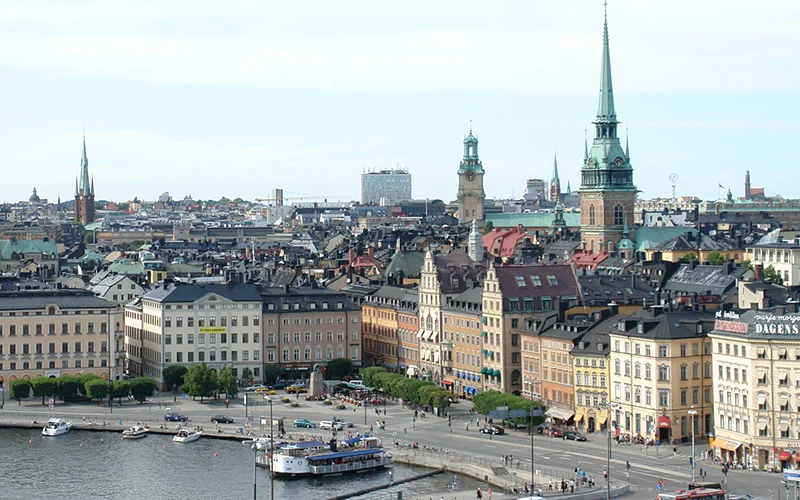
An overnight ship crosses to Stockholm, which is built across fourteen islands and is the handsomest capital in Scandinavia. Arriving by sea at breakfast time, threading through the archipelago, is much the best way to see it for the first time.
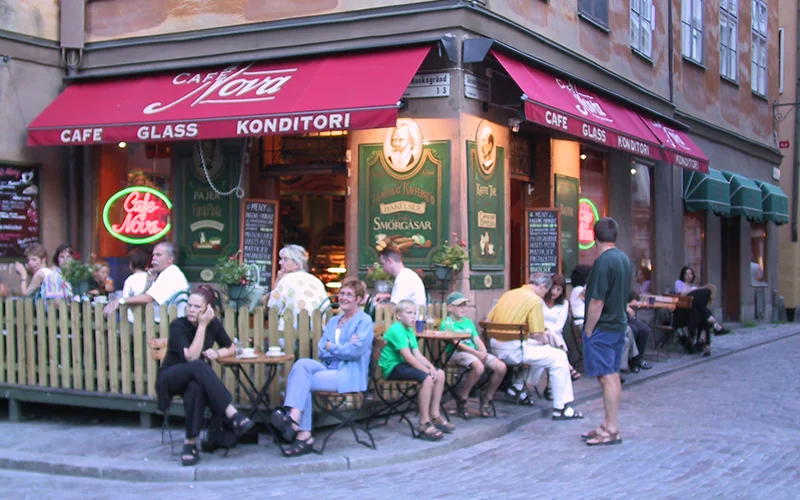
Gamla Stan, the old town, occupies its own island and holds the palace, the cathedral and a set of small squares full of café tables. Two or three nights covers it along with the Vasa museum, which is worth the trip on its own.
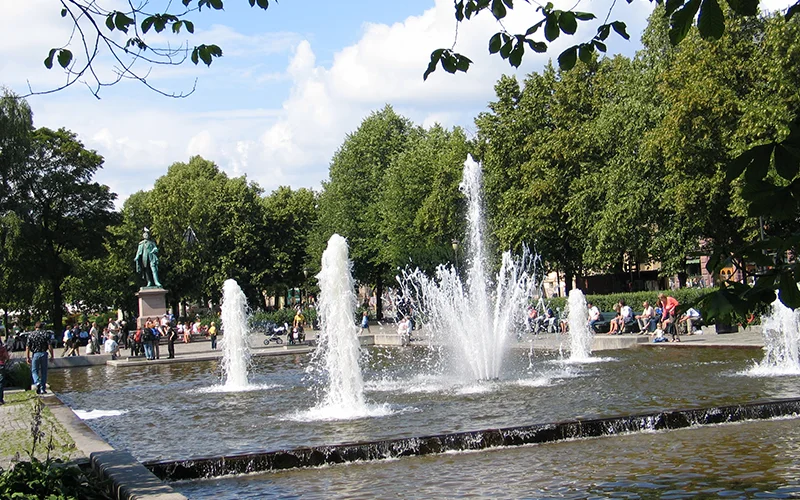
Oslo is six hours west by train through forest and lake country. It is the least immediately charming of the northern capitals and the one with the best museums — the Viking ships, the Fram, the Munch collection and the Vigeland sculpture park.
.webp)
From Oslo the Bergen line climbs across the mountains, and at Myrdal the Flåm railway branches off and drops into the fjord. It is one of the steepest adhesion railways anywhere, and it stops at the Kjosfossen waterfall so everyone can get out and stand in the spray.
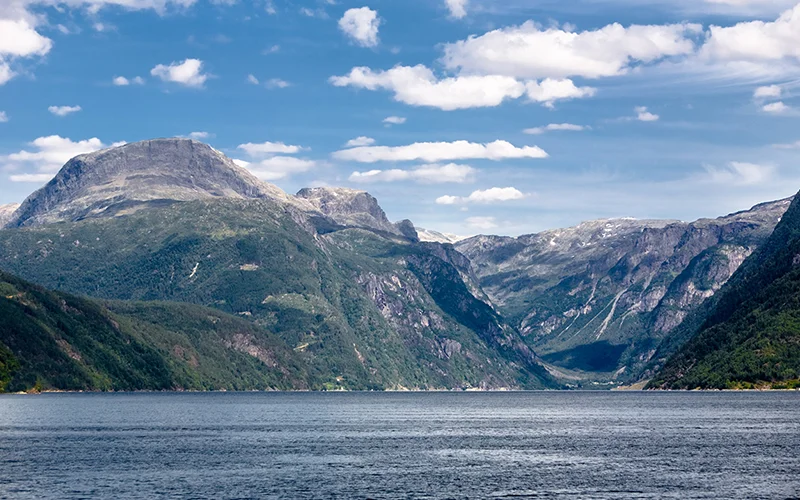
At the bottom is the Sognefjord, the longest and deepest in Norway, and the boat along it to Gudvangen runs between cliffs rising straight out of the water for three thousand feet. This is the single best half-day of the entire trip.
.webp)
The country between the fjords is farmed on any ground flat enough to stand on, in red-painted timber buildings that have looked the same for two hundred years. Much of the route is spent looking at it out of a window.
.webp)
Bergen finishes the trip. The Bryggen — the row of wooden Hanseatic warehouses along the harbor — is a World Heritage Site, and the fish market beside it has been running for six hundred years. It rains here constantly. Bring a coat and go anyway.
Northern Italy
Genoa — Camogli — Milan — Brescia — Verona — Bologna — Florence — Venice
.webp)
The northern Italy trip is the one for a second or third visit to the country, taking in the top twenty towns of the north rather than the obvious three. Genoa is where it starts, and it is the most underrated large city in Italy.
.webp)
Genoa was one of the great maritime republics and its wealth is still visible along the Strada Nuova, where the palaces of the merchant families run in an unbroken line. The old harbor below has been rebuilt as a public waterfront.
.webp)
Behind the harbor is the largest medieval old town in Europe, a dense network of alleys called caruggi that are barely wide enough to walk two abreast. Nobody restores them for tourists; they are simply where people live.
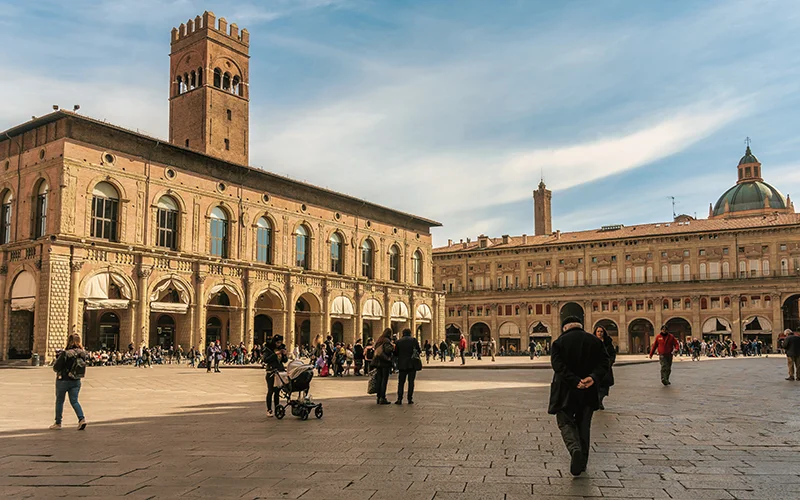
Bologna is the food capital of Italy and a university town that has been running since 1088, the oldest in the world. Piazza Maggiore at its center is one of the great civic squares of the country.
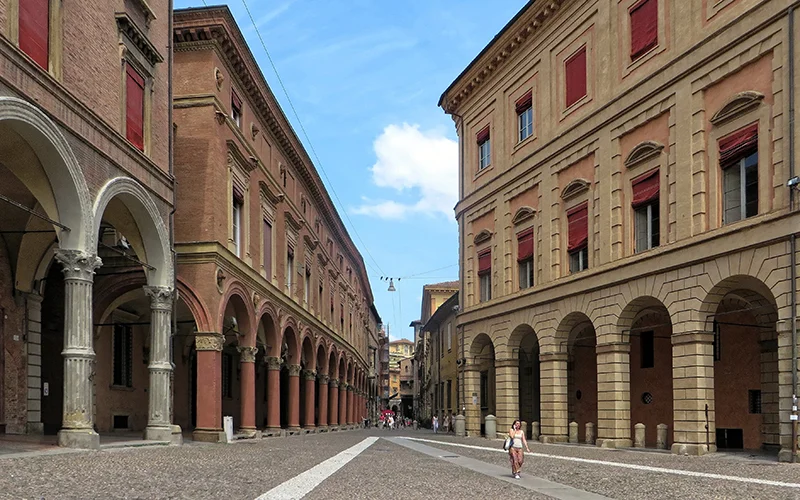
What sets Bologna apart is the porticoes — some twenty-five miles of covered arcade through the center, built over centuries because the city required them. You can cross the whole town in the rain without getting wet.
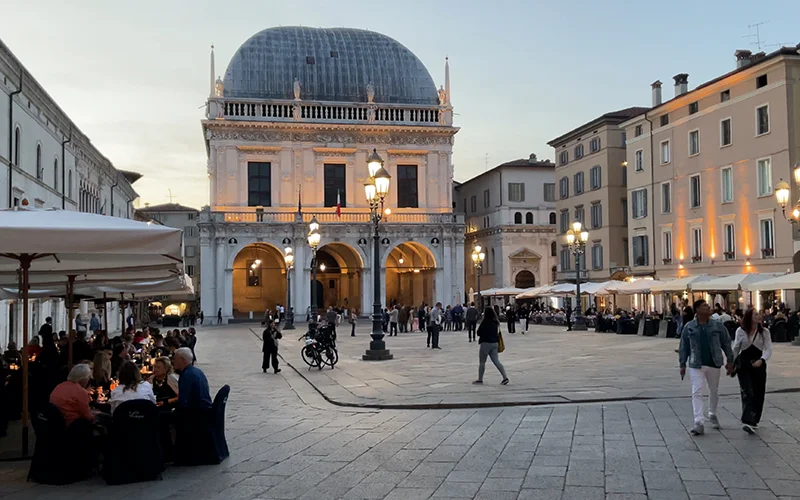
Brescia is the sort of place this trip exists to find — a Roman and Renaissance city of two hundred thousand people that almost no foreign visitor stops at, halfway between Milan and Verona on the main line.
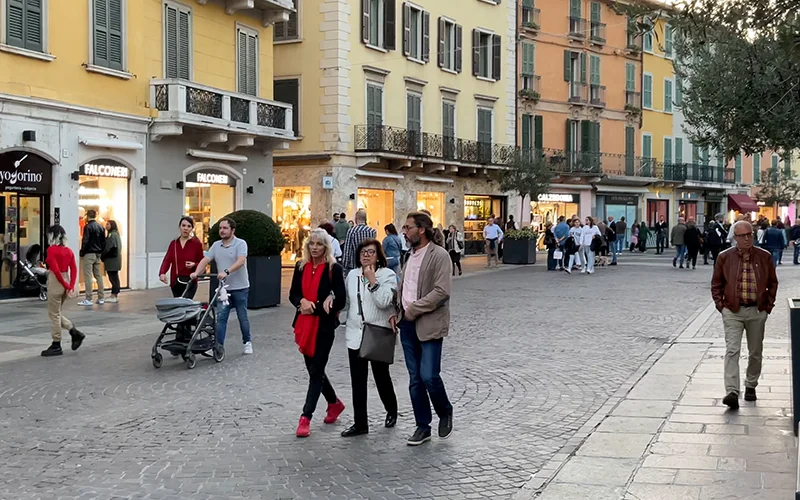
Its Roman forum and temple are among the best preserved in northern Italy, and the pedestrian shopping streets in the evening are full of locals rather than visitors. Two nights here is a genuinely different Italian experience.
.webp)
The pattern repeats through the north. Every one of these cities has a passeggiata in the early evening, when the whole population walks the main street, and it costs nothing to join in.
.webp)
Markets are the other constant. Every town has one, most mornings, and they are the best way to see what a place actually eats — which in northern Italy changes noticeably every fifty miles.
The British Isles
London — Bath — York — Yorkshire Dales — Lake District — Edinburgh — Dublin — Galway
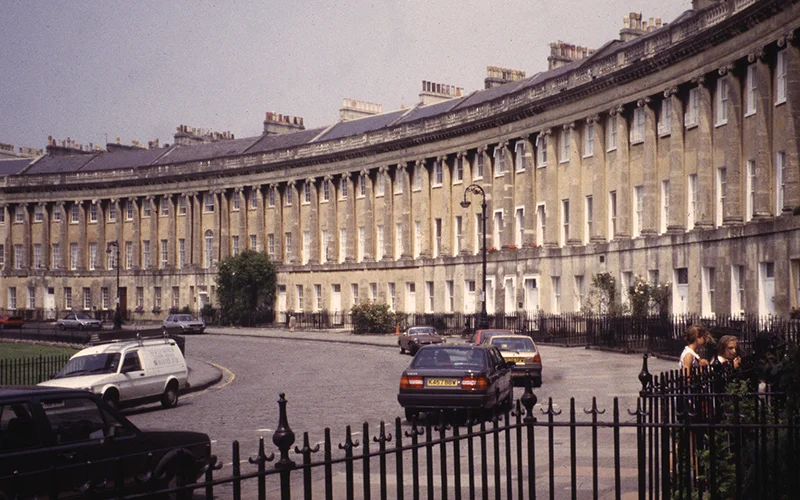
The British Isles trip has the advantage that you understand everything anyone says, which for a first trip abroad counts for a great deal. It starts in London and works north. Bath is the first stop out.
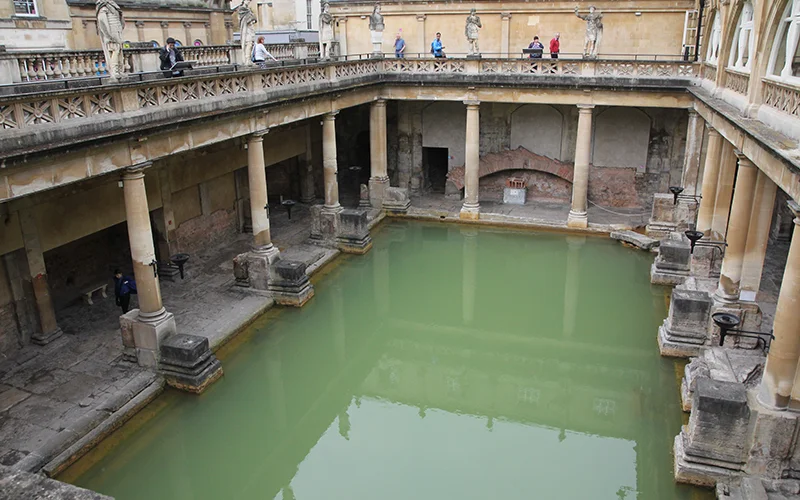
Bath has been a spa since the Romans built over the hot spring here, and their bath complex survives underneath the eighteenth-century town. The Georgian city above it is honey-colored stone from end to end.
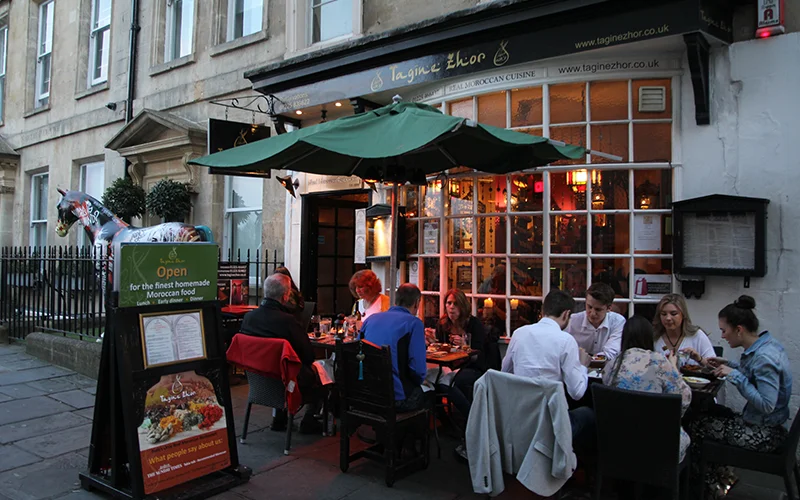
Two nights is right for Bath. It is small enough to walk in an afternoon and pleasant enough that you will want an evening in it as well, when the day-trippers from London have gone home.
.webp)
York is two hours north of London by fast train. The Minster is the largest Gothic cathedral in northern Europe, and the medieval walls run right around the old city with a walkway along the top.
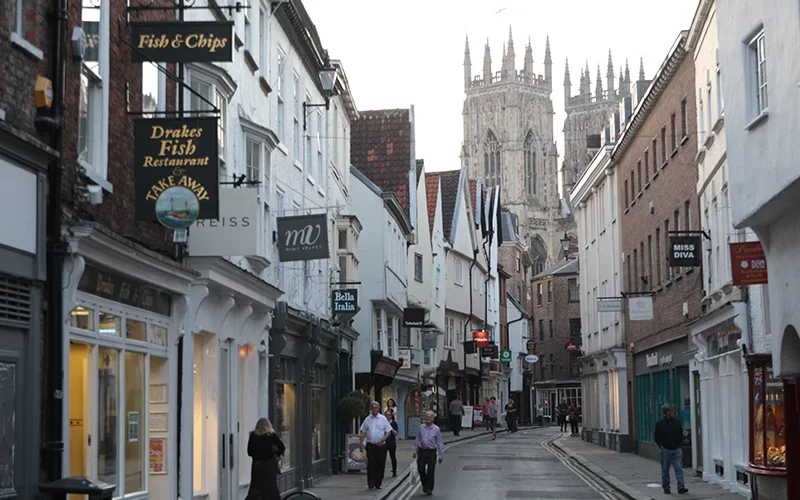
The Shambles is the famous street, timber-framed with upper floors leaning across the gap, but the whole center is like this. York is the best-preserved medieval city in England and it does not take much imagination to see it as it was.
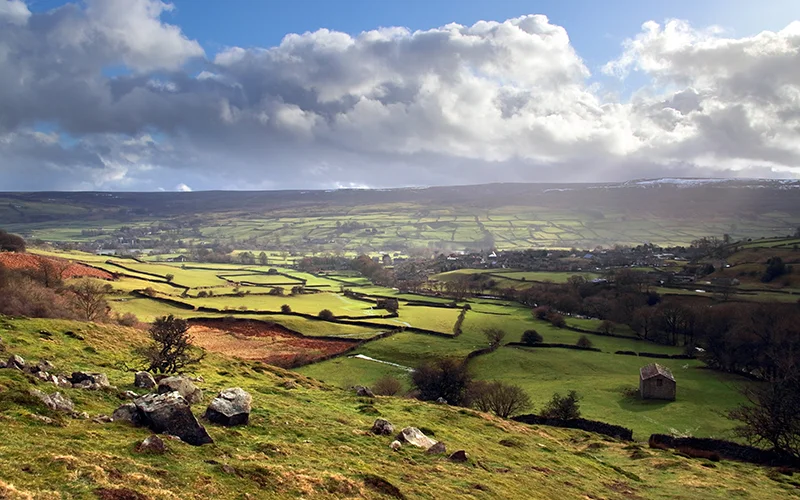
West of York are the Yorkshire Dales, an upland of green valleys divided by drystone walls into a pattern that has not changed in centuries. This is where the trip leaves the cities behind.
.webp)
Public footpaths cross private land throughout England by ancient right, marked with signposts and stiles. You can walk from village to village all day across fields, which is not something most visitors realize is possible.
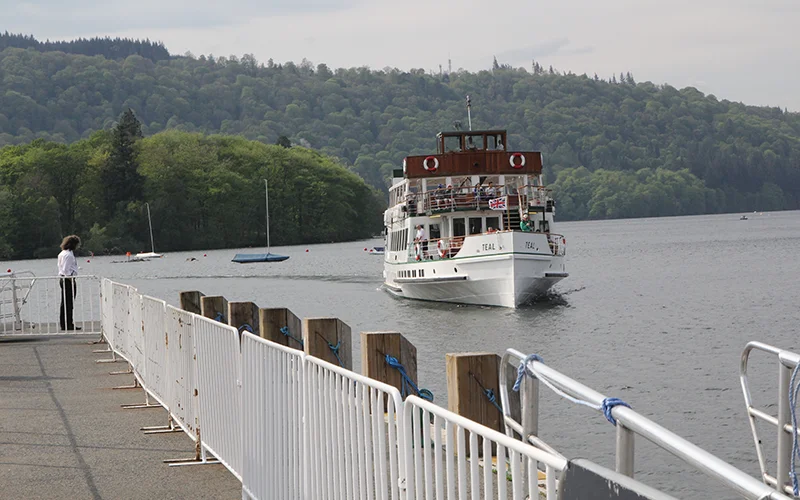
The Lake District is further northwest, and Bowness on the shore of Windermere makes the usual base. Steamers run the length of the lake, and the fells behind hold the best walking in England.
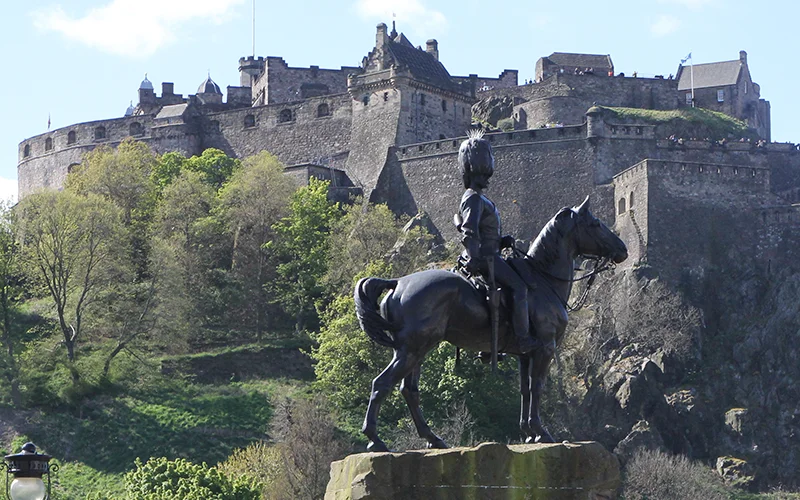
Edinburgh is the finest-looking city in Britain, built along a ridge from the castle on its volcanic rock down the Royal Mile to Holyrood, with the Georgian New Town laid out on the slope opposite.
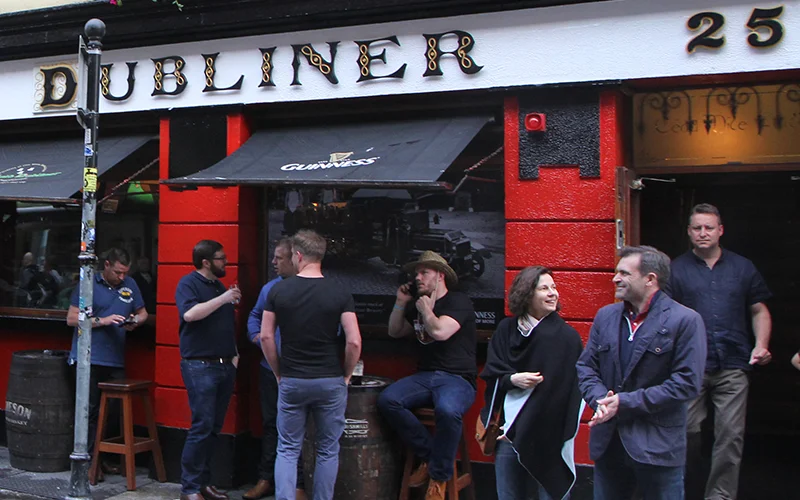
Ireland is a short flight or a ferry crossing away. Dublin is a walking city of Georgian squares and Victorian pubs, with Trinity College and the Book of Kells at its center, and the National Museum a few streets away.
.webp)
Galway is three hours west on the Atlantic coast, a small city with a permanent street festival running through its center. Traditional music is played in the pubs most nights and nobody charges for it.
.webp)
The Burren, south of Galway, is a limestone plateau unlike anything else in Europe — bare gray rock split into blocks, with alpine and Mediterranean flowers growing side by side in the cracks.
.webp)
Beyond it the country is small fields, stone walls and low hills, in a green that people always describe as unreal until they see it. The rain that produces it arrives several times a day.
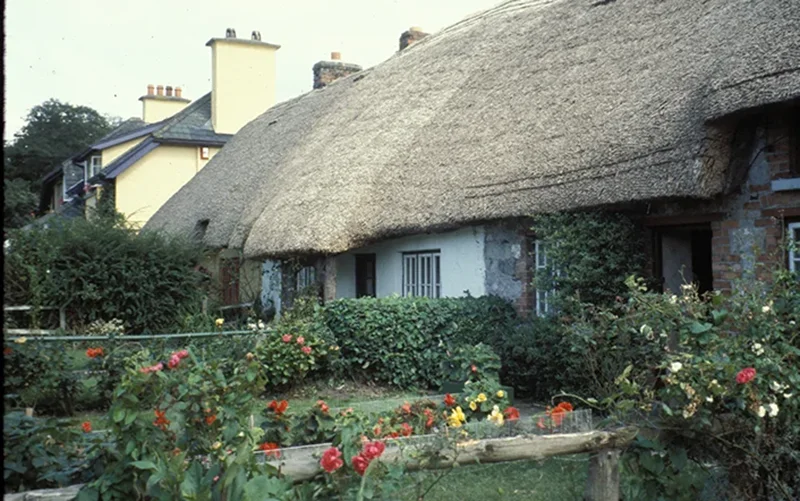
Thatched cottages are rarer than the postcards suggest, but they do survive, mostly restored and lived in. The west of Ireland generally rewards driving slowly and stopping often.
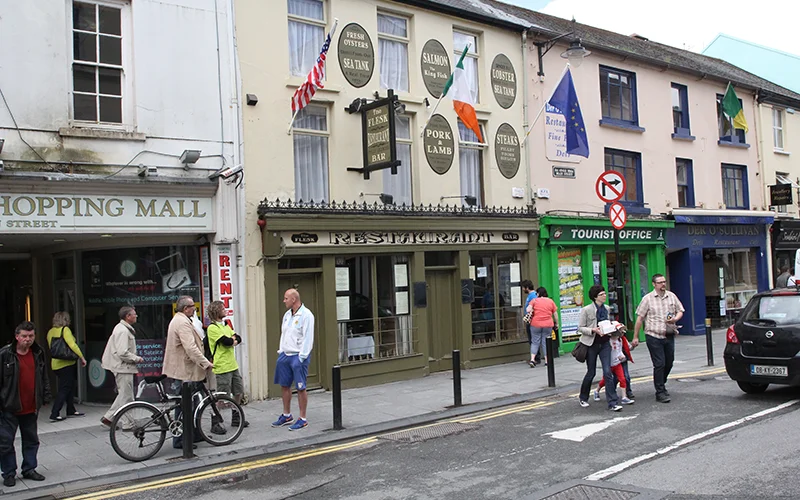
Killarney in the southwest is the base for the Ring of Kerry and the Dingle Peninsula, and it makes a natural extension if you have the days. Otherwise the trip ends in Galway and flies home from Shannon or Dublin.
Central Europe
Heidelberg — Munich — Salzburg — Vienna — Budapest — Prague — Nuremberg
.webp)
Central Europe is the great loop through the German-speaking countries and the old Habsburg lands, and it is the best-connected of the eight by rail. Flying into Frankfurt, Heidelberg is forty minutes away and makes the ideal first stop.
.webp)
Munich is three hours southeast. The Marienplatz and the Viktualienmarkt sit at the center, the beer halls are genuine institutions rather than tourist inventions, and the museums are among the best in Germany.
.webp)
Salzburg is ninety minutes further and is dominated by the fortress on the rock above it, the largest fully preserved castle in central Europe. The baroque old town below is a World Heritage Site.
.webp)
Go up to the fortress for the view down over the domes and green copper spires, with the river running through and the mountains closing the valley behind. The funicular saves the climb.
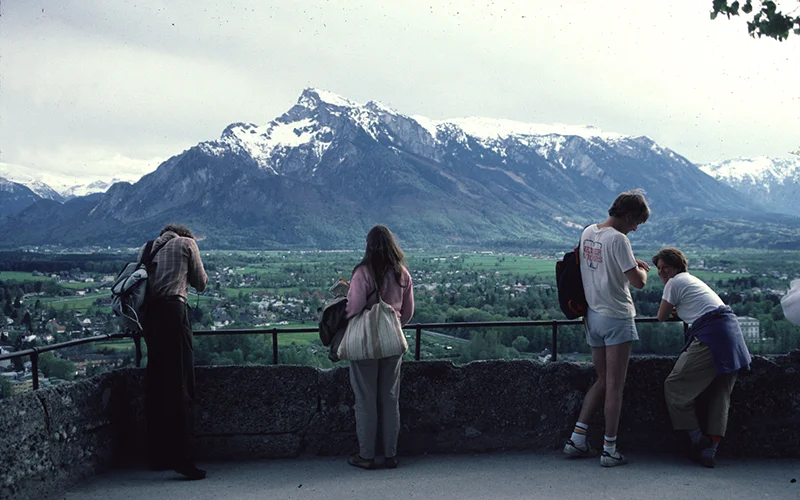
Salzburg is also the jumping-off point for the Salzkammergut lakes, and Hallstatt in particular is close enough for a day trip. Go early; it has become one of the most crowded villages in Europe.
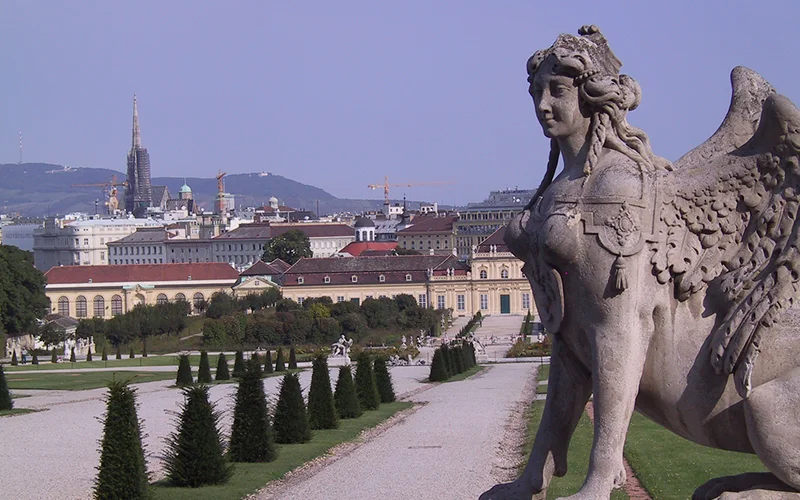
Vienna is three hours east and was the capital of an empire of fifty million people, which explains the scale of everything in it. Three nights minimum for the Ringstrasse, Schönbrunn, the Belvedere and the coffee houses.
.webp)
Budapest is under three hours further, two cities joined across the Danube — hilly Buda with the castle and Pest flat on the opposite bank with the parliament. The thermal baths are the thing to do that you cannot do anywhere else.
.webp)
Prague sits at the top of the loop, the best-preserved large historic center in central Europe because it came through the war essentially undamaged. The castle complex above the river is the largest in the world by area.
.webp)
The Old Town Square is the heart of it, ringed by painted baroque facades with the astronomical clock on the town hall. It is extremely crowded by ten in the morning and almost empty at seven, which tells you when to be there.
.webp)
Nuremberg closes the circle on the way back toward Frankfurt. Its old town was rebuilt after the war to the medieval plan, with the imperial castle above and the walls still ringing the center, and it holds the best Christmas market in Germany.
The Netherlands
Amsterdam — Haarlem — Leiden — The Hague — Delft — Rotterdam — Utrecht — Gouda — Alkmaar — Maastricht
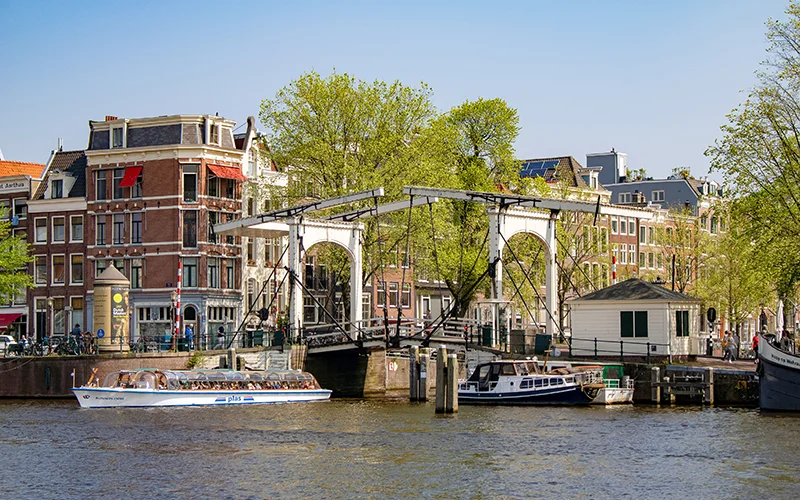
The Netherlands is the smallest of the eight trips geographically and one of the richest. Nothing in the country is more than two and a half hours from anything else by train, so you can base yourself in one place and see all of it.
.webp)
Amsterdam gets three nights. The canal ring is a planned seventeenth-century development, dug as a single project when the city was the richest in the world, and the merchant houses along it have barely changed.
.webp)
The Rijksmuseum and the Van Gogh Museum are next door to each other and both need booking ahead. The Anne Frank House needs booking further ahead than that — weeks, not days.
.webp)
Amsterdam is best on foot and by bicycle, and worst by car. The canal-side terraces fill the moment the sun appears, which in this climate is treated as an event.
.webp)
Haarlem is fifteen minutes from Amsterdam by train and is what people imagine Amsterdam will be — the same architecture, a great market square, and a fraction of the crowds. Many people now stay here and commute in.
.webp)
The Grote Kerk on its square holds an organ that Mozart played as a child, and the Frans Hals Museum is in a former almshouse a few streets away. A full day here is easy.
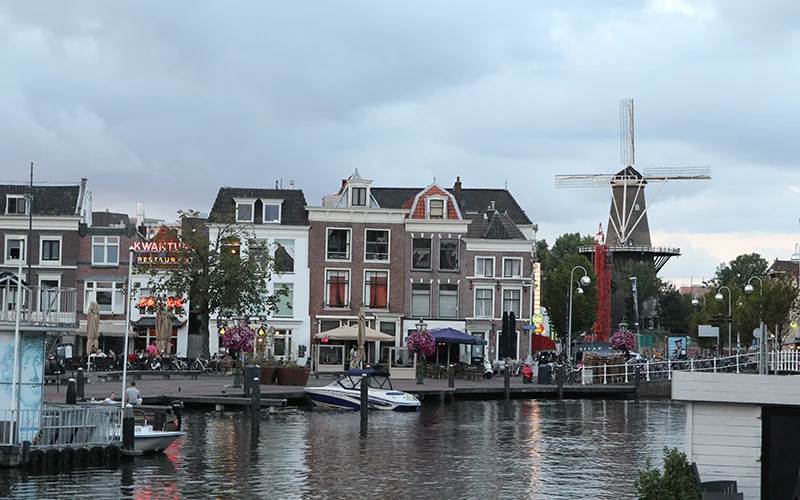
Leiden is the oldest university town in the country, laced with canals and with a windmill standing in the middle of it. The Pilgrims spent eleven years here before sailing, which explains the number of American visitors.
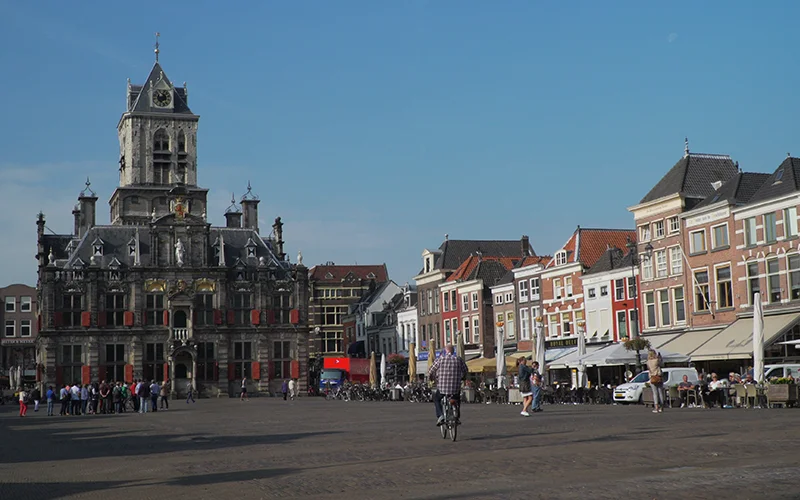
Delft is the prettiest small town in the Netherlands and the one that appears in Vermeer's paintings. Its market square, with the town hall at one end and the New Church at the other, is close to perfect.
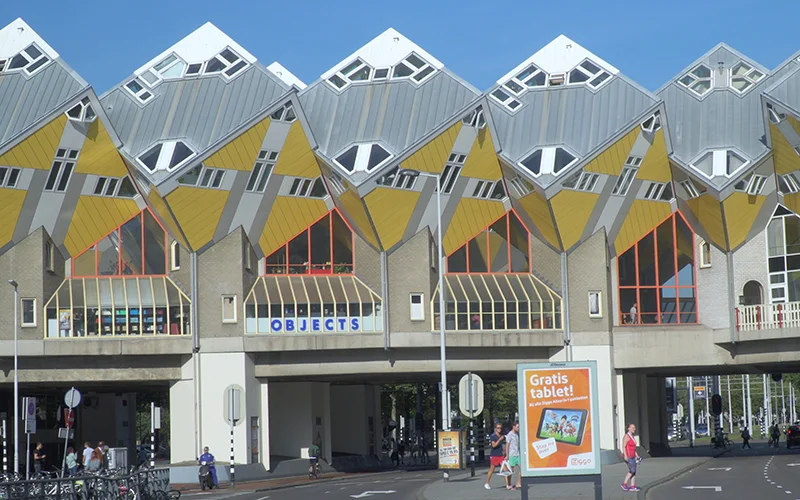
Rotterdam is the opposite case. The center was destroyed in 1940 and rebuilt from nothing, so it is the one modern city in a country of old ones — the cube houses, the market hall, and the largest port in Europe.
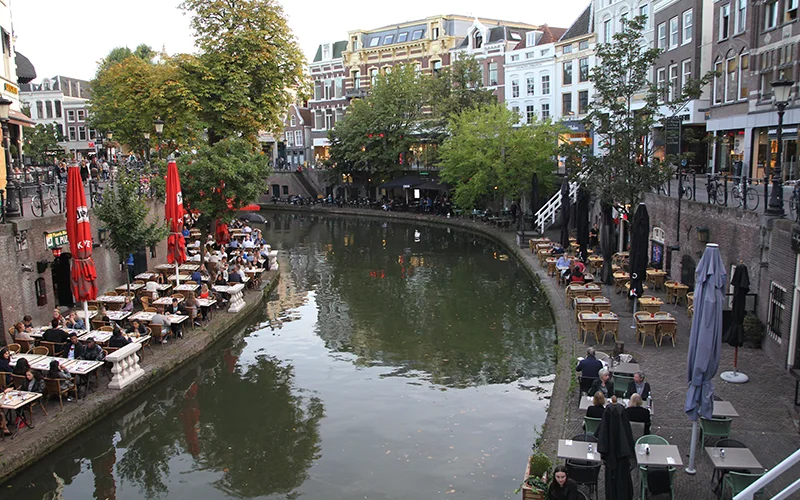
Utrecht has canals built on two levels, with wharves below street height that were once loading docks for cellars and are now restaurant terraces at the water's edge. Nowhere else in the country has anything like it.
.webp)
The Dom Tower above it is the tallest church tower in the Netherlands, and it stands apart from its church because a storm in 1674 took down the nave between them and it was never rebuilt.
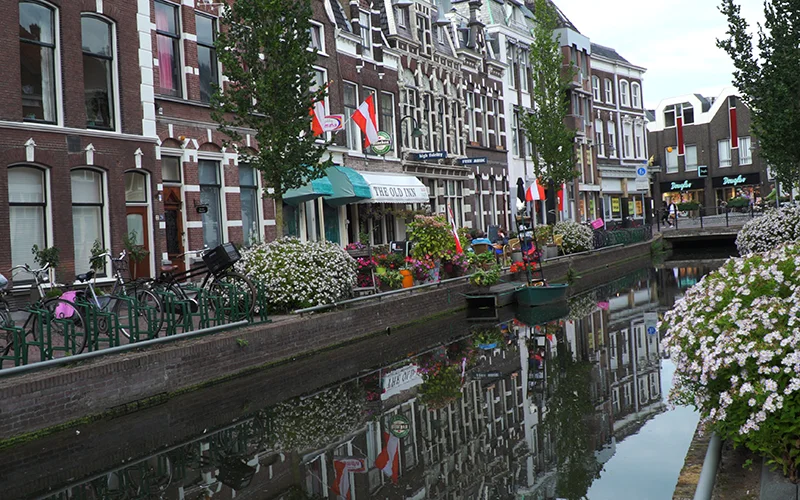
Gouda is a small town between Rotterdam and Utrecht with a Gothic town hall standing free in the middle of its market square. The cheese market runs there on Thursday mornings in summer.
.webp)
The bigger cheese market is at Alkmaar, north of Amsterdam, on Friday mornings from spring to autumn. Thousands of rounds of cheese are laid out on the square before the trading starts.
.webp)
The carriers work in guild teams, in white uniforms and colored straw hats, running the cheeses to the weigh house on wooden barrows. The guild has been doing it since the seventeenth century and it is a genuine survival rather than a reenactment.
.webp)
Get there by nine for a place at the rope. The market starts at ten and by then the square is several people deep along every side.
.webp)
Maastricht is two and a half hours south, in the narrow strip of the country wedged between Belgium and Germany, and it feels different from everywhere else — older, Catholic, and closer in character to the Rhineland than to Amsterdam.
.webp)
It is a university town with a large square full of café tables, a Romanesque basilica, and a bookshop installed in a medieval Dominican church. Two nights, and it makes a good end to the trip.
Traveling by Train
.webp)
All eight of these trips are designed around rail, and the reason is simple arithmetic. City center to city center, a train beats a plane on any journey under about five hours once you count the airport transfers, the security line and the wait.
.webp)
The high-speed networks now cover most of western Europe. Paris to Lyon, Rome to Florence, Madrid to Seville and Frankfurt to Cologne are all comfortably under two hours, and the trains run at up to 200 miles an hour.
.webp)
Reserve seats on the fast international trains, which usually require it, and buy those tickets in advance where the fare rises closer to departure. On regional trains you can generally walk up and buy on the day.
.webp)
A rail pass makes sense when you are covering long distances in several countries; individual point-to-point tickets are usually cheaper when you are not. Work out the fares for your actual route before you buy anything.
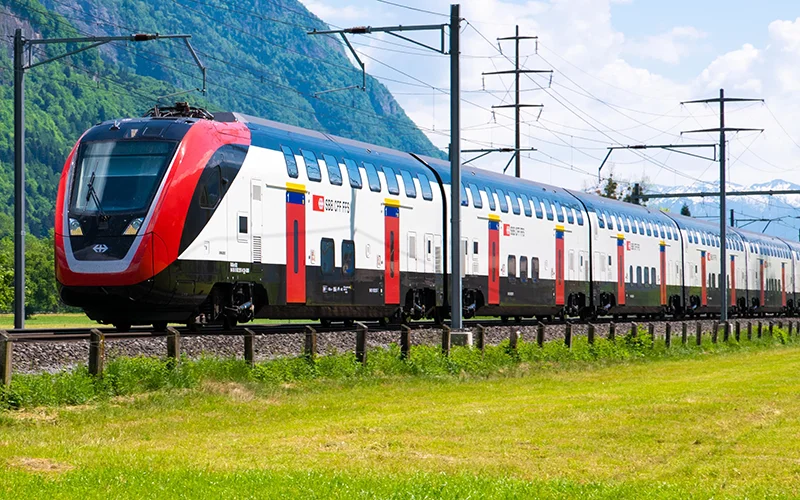
Switzerland is the exception where a pass nearly always pays, because it covers the mountain railways, the lake boats and the city transit as well as the main lines, and those are expensive bought individually.
.webp)
Travel light. You will be handling your own bag on stairs, on platforms and over cobblestones, and every one of these itineraries involves moving hotels five or six times. One wheeled case you can lift unaided is the correct amount of luggage.
Practical Notes
May and October are the two months to aim for. The weather is good, the days are long enough, the prices are lower and the crowds are a fraction of what they are in July and August. Late May in particular is the sweet spot.
Switzerland is the one place where the timing needs care. Wait for late May there, because in early May the high trails are still under snow and several of the mountain railways have not opened for the season.
On cost, when these ran as guided tours the ground price was around four thousand dollars per person sharing a room for eighteen days, or five to six thousand with meals included, staying in three- and four-star hotels. Doing it independently you can land anywhere either side of that depending on how you eat and where you sleep.
These itineraries are no longer sold as tours. The detailed write-ups are on toursbytrain.com as free do-it-yourself guides, and every town named on this page has its own page on this site with photos, video and a walking route. The links in the headings above will take you to the full itinerary for each trip.