Northern Italy
Top-20 Towns Itinerary
This is the Italy that most visitors never see — twenty handsome towns where nearly everyone on the street is a local, where the piazzas fill with residents rather than tour groups, and where the food, history and lakeside scenery rival anything in the famous cities. The route links these places by train, boat and foot over about three weeks, threading the Ligurian coast, the great northern lakes and the historic towns of Emilia and the Veneto into one continuous journey.
The itinerary deliberately avoids Rome, Florence, Milan and Venice in favor of smaller, far less crowded destinations. Two larger cities, Genoa and Bologna, anchor the start and finish, but the heart of the trip is the string of compact towns between them, close together and connected by frequent trains, so getting around is easy and you cover a great deal in a short time.
The Ligurian Coast
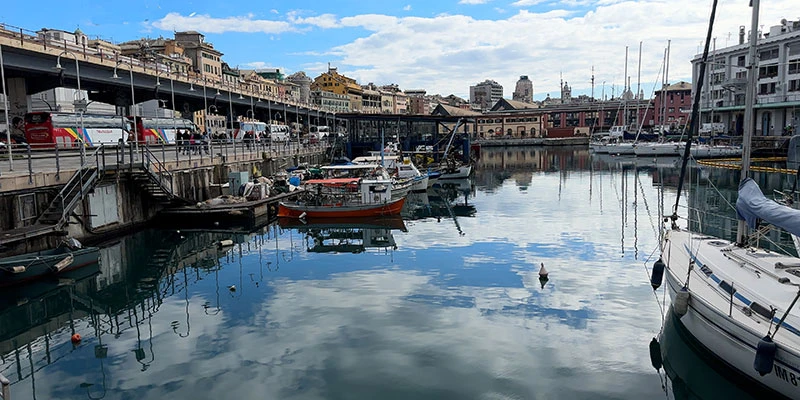
The journey begins in Genoa, a harbor city of grand classical buildings, monumental statues and one of Europe's largest pedestrian zones. Its tangle of narrow alleys, some quiet and some packed with shops, gives the old center enormous character, while the waterfront holds a marina, a maritime museum and the largest aquarium in Italy. Pastel palaces line Via Garibaldi, a World Heritage street, and viewpoints at Spianata Castelletto survey the whole city. With half a million residents Genoa is the largest stop on the route, yet it draws relatively few international tourists.
A short train ride reaches Camogli, a seaside town as beautiful as nearby Portofino but far less famous, with a black-pebble beach and a promenade of restaurants leading to a fishing marina. Thirty minutes on is Sestri Levante, where a 600-meter pedestrian lane of shops and pastel buildings ends at an idyllic crescent beach. Further west, Savona offers the porticoed Corso Italia, a medieval harbor tower and the massive 16th-century Priamar Fortress, while tiny Albenga preserves a uniform medieval old town barely 400 meters across, still lived in and full of working shops and cafes.
The Lakes
Leaving the coast, the route climbs to Lake Como and the village of Bellagio, famous for its seven staircase streets rising from the lakeshore to the upper shopping lane, with arcaded restaurants and a quiet evening charm once the day-trippers leave. A 15-minute boat ride crosses to Varenna, smaller and equally lovely, where a stone-tunnel staircase descends to the Riva Grande waterfront and the cantilevered Lovers Walk follows the shore.
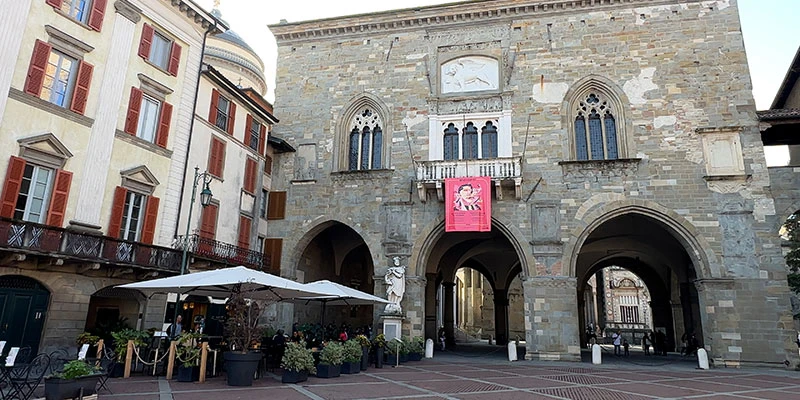
Bergamo ranks among the highlights of the whole trip. Its Citta Alta, the upper town, sits behind well-preserved Venetian walls now designated a World Heritage Site, with a level pedestrian main street, medieval towers and the Piazza Vecchia, considered one of the prettiest in Italy. The Palazzo della Ragione, the Civic Tower and three churches including the Baroque Colleoni Chapel cluster at its center. A funicular connects the upper town to the modern city below.
Next is Brescia, one of the least-known cities on the route yet rich with three adjoining piazzas, the best-preserved Roman ruins in northern Italy, and a vast hilltop castle. Saturday afternoons bring crowds of locals to Piazza della Loggia for drinks in the open air. From Brescia a 30-minute train reaches Lake Iseo, smaller and quieter than Como or Garda, where boats cross to Peschiera on Monte Isola, the largest inhabited lake island in southern Europe, car-free and ringed by fishing villages.
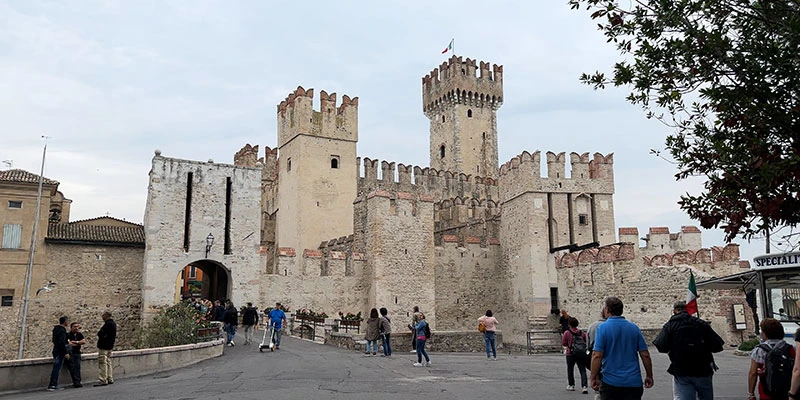
On Lake Garda, the fortified village of Sirmione spreads along a narrow peninsula behind the 14th-century Scaligero Castle, with a walkable main lane, lakeside restaurants and the Roman ruins known as the Grottoes of Catullus at its tip. A boat crosses to Garda town, a compact lakeshore resort with a marina, promenade and old-town lanes, easily visited from a base in Verona.
Verona to Bologna
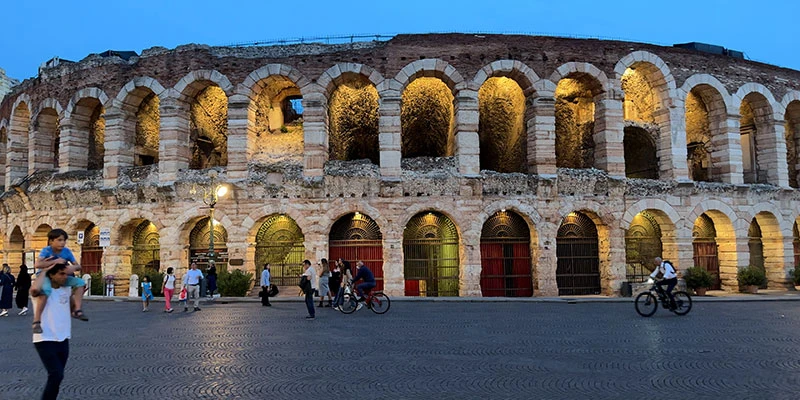
Verona, the city of Romeo and Juliet, centers on its remarkably preserved Roman Arena, still used for concerts, beside the enormous Piazza Bra. The shopping street Via Mazzini leads to Piazza Erbe and, inevitably, to Juliet's balcony. Half an hour away, Vicenza is an open-air museum of Andrea Palladio's architecture, its small old center crowned by the Palladian Basilica on Piazza dei Signori.
Padua follows, with its market squares around the great Palazzo della Ragione, the long pedestrian Via Roma, the second-oldest university in Italy and Prato della Valle, the largest piazza in the country. A two-hour train ride reaches Mantua, ringed by three artificial lakes and built around three linked piazzas. Its Palazzo Ducale, the sixth-largest palace in Europe, holds Mantegna's illusionistic ceiling, and the separate Palazzo Te is famous for its dramatic murals.
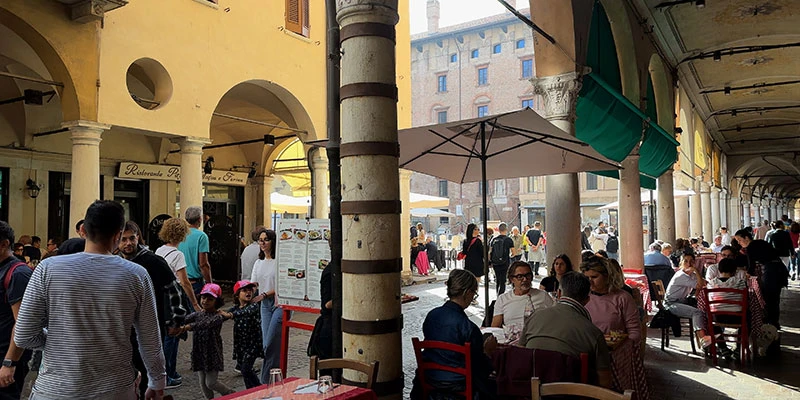
An hour from Mantua, Cremona is quieter still, known for the tallest brick bell tower in Italy and as the home of Antonio Stradivari, with priceless instruments in its Violin Museum and around a hundred workshops still active across town. Parma offers more than its celebrated cheese and prosciutto, with the Governor's Palace, a neoclassical opera house and a thousand-year-old cathedral. Modena, a short ride on, centers on the UNESCO-listed Piazza Grande, with porticoed streets, the historic Albinelli Market and the balsamic vinegar for which the town is famous.
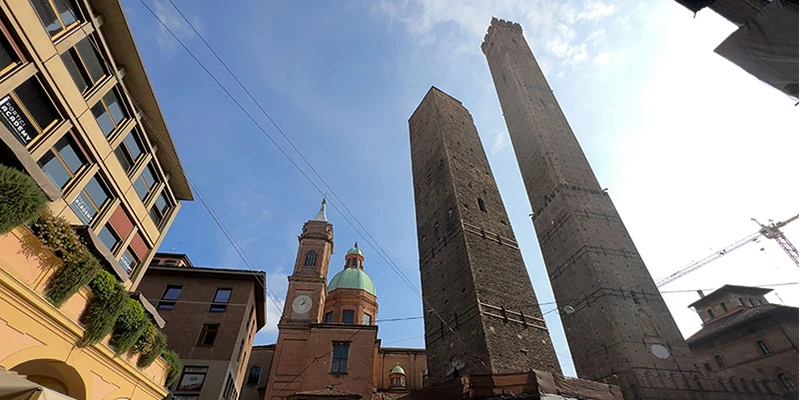
The grand tour ends in Bologna, holder of one of the largest and best-preserved historic centers in Italy. Piazza Maggiore and the Basilica of San Petronio anchor the heart of the city, the food-packed Quadrilatero district draws diners to its crowded lanes, and Piazza Santo Stefano gathers seven connected churches in one scenic space. The city's porticoes run 38 kilometers and are themselves a World Heritage Site. Saving the best for last, the leaning Asinelli and Garisenda towers have stood for 900 years as the symbols of Bologna — a fitting close to the top-20 towns of northern Italy.