Paris Day Two
The second day opens with the major cultural event of any visit to Paris and then spends the afternoon on foot, crossing from the Right Bank to the Left and finishing on the islands in the middle of the Seine as the lights come on.
The Louvre
The Louvre is the largest and most visited art museum in the world, and with a plan you can cover its highlights in about three hours, which is roughly as much as most people can absorb in one visit. If you want more, come back another day.
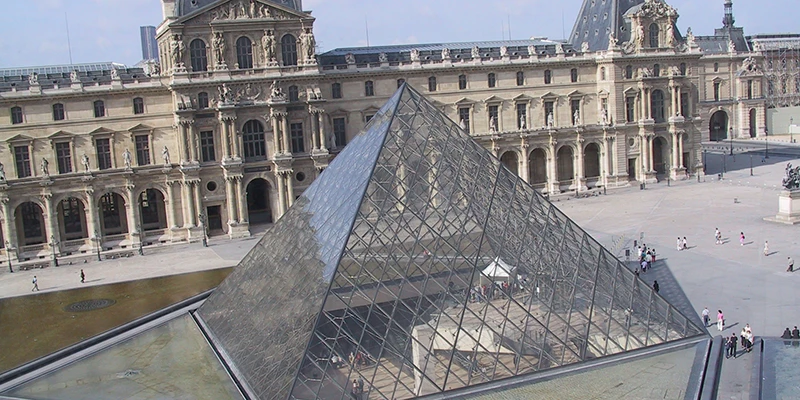
Start by booking online. The museum now sells timed-entry tickets with a thirty-minute admission window, and buying in advance is the single most effective thing you can do — walking up without a reservation in high season can mean an hour or more in line, and in the summer months a reservation is required outright. Since January 2026 the standard ticket costs €22 for residents of the European Economic Area and €32 for everyone else. Visitors under eighteen enter free, as do EU residents under twenty-six. The museum is closed on Tuesdays, and it stays open until nine on Wednesday and Friday evenings, which is by some distance the quietest time to visit.
You also have a choice of entrances, and the famous glass pyramid is the worst of them when a line has formed. The Carrousel entrance at 99 Rue de Rivoli, marked by a red awning, opens at seven in the morning and leads in through the underground gallery to the reception hall beneath the pyramid, usually with a much shorter security queue. The Porte des Lions, on the Seine side about fifty yards from the Tuileries end of the building, is quieter still, though it admits ticket holders only and closes at six. The Passage Richelieu entrance off the Rue de Rivoli is a fourth option. Any valid ticket works at any open entrance, so check the museum's site on the day for which are staffed.
Once inside, the simplest approach is to see the Mona Lisa, the Winged Victory and the Venus de Milo and leave. The following route covers a great deal more in the same time.
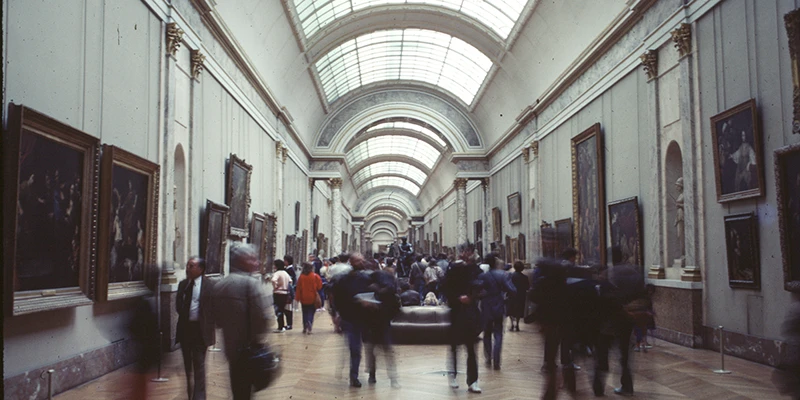
Begin with the Italian sculpture on the ground floor of the Denon Wing, including Michelangelo's Slaves and Canova's Psyche Revived by Cupid's Kiss. Go upstairs to the large French paintings — David, Géricault's Raft of the Medusa, Delacroix's Liberty Leading the People. From there enter the Grand Gallery with the Italian Renaissance, the Mona Lisa among them in her own room off to the side. Walk in along one wall and back along the opposite one, which brings you to the Winged Victory of Samothrace at the head of the stairs, and then around the corner to the crown jewels in the Galerie d'Apollon, whose painted and gilded ceiling is as much the point as the contents of the cases.
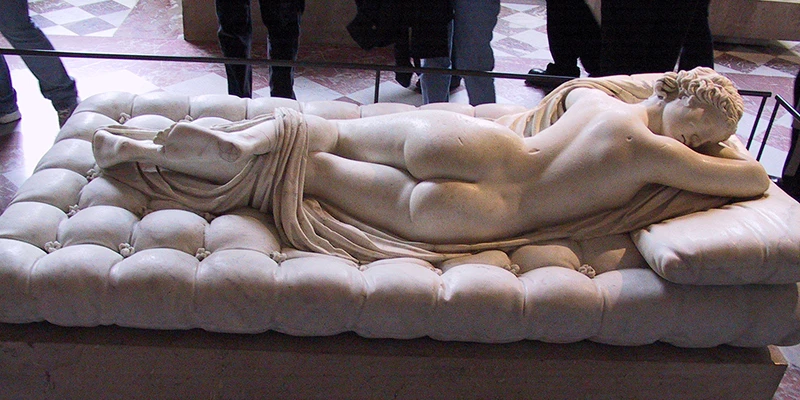
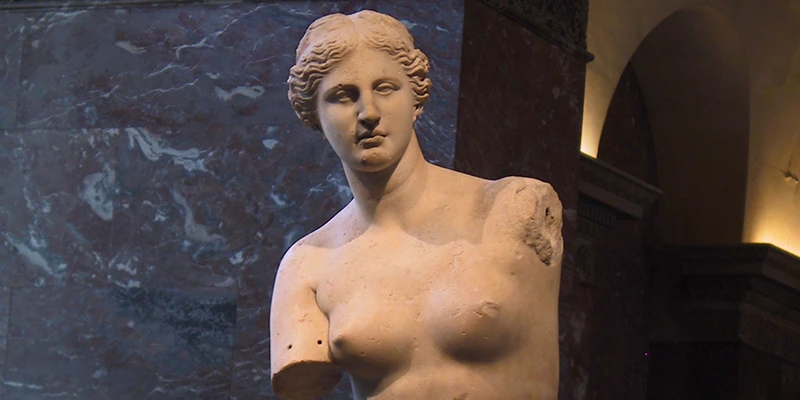
Go down to the classical collections, taking in the Room of the Caryatids and, across the hall, the fragments from the Parthenon, with the Venus de Milo at the end of the gallery. Descend the stairs behind her and you face a decision. Left leads to the medieval foundations and the second half of the museum. Straight ahead lies ancient Egypt, an hour or more of mummies, jewelry, statuary and objects from the Nile spread over two floors. The Egyptian collection is superb, but it will exhaust you and you will not reach what follows. Consider saving it for a second visit.
In the basement are the remains of the fortress built by Philippe Auguste around 1190, the original Louvre, rediscovered during the excavations for the pyramid in the 1980s. The circular base of the keep and the moat walls are still there, and standing in them is the best sense you can get of how old the site is. If you are giving the whole day to the museum, this is a good point to break for lunch in the food court under the Carrousel. Otherwise carry on for another hour.
Beyond the medieval foundations, an elevator tucked to the right by the restrooms goes to the top floor. Pass through the small Impressionist room and turn left — turning right leads into a very large number of middling French paintings. Left brings you into the Richelieu Wing and the northern European masters: Vermeer, van Eyck, Rubens, Rembrandt, van Dyck.
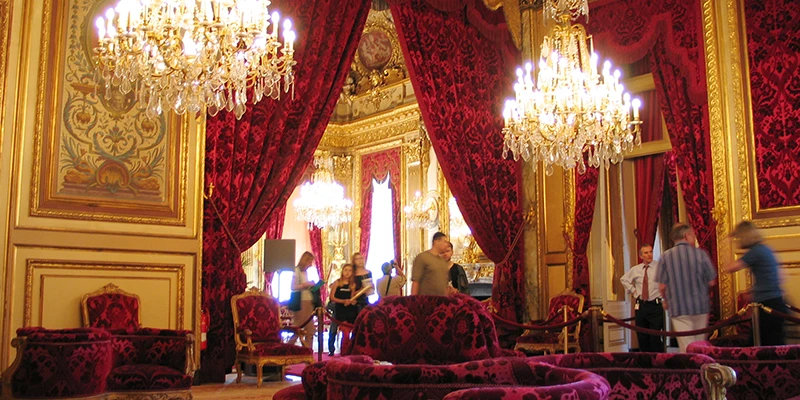
Do not miss the Napoleon III Apartments one level down. It is only a few rooms, but the opulence is remarkable — gold, crystal, crimson velvet, chandeliers and Second Empire furniture, preserved as they were used. You will see the same taste on a larger scale at Versailles tomorrow. On the way out, look through the decorative arts of the Renaissance and Middle Ages on this floor, and skip the endless furniture galleries beyond and the Islamic art on the ground floor unless you have energy left.
The Tuileries and Right Bank Shopping
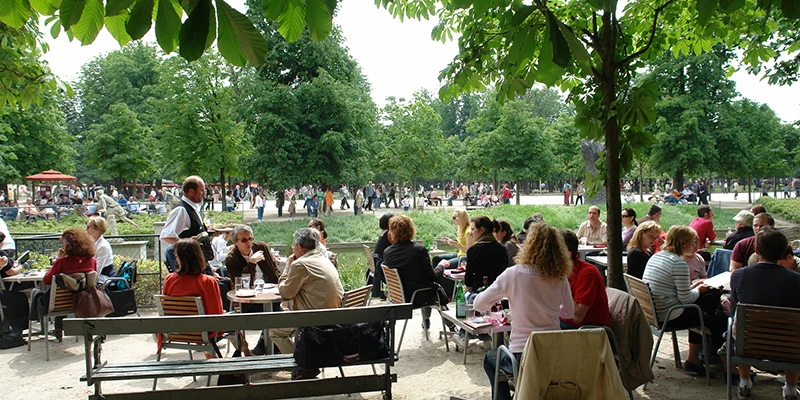
Come out of the museum into the Tuileries, the long formal garden running west from the Louvre to the Place de la Concorde. André Le Nôtre laid it out in 1664 in the same geometric manner he would later use at Versailles — gravel allées, clipped hedges, statuary, and two large octagonal basins where children sail model boats. The green metal chairs scattered around the basins are free to move and free to use, and after three hours of standing in a museum an hour in one of them is time well spent. At the far end, the Musée de l'Orangerie holds Monet's Water Lilies in two oval rooms built to his own specification, and if you have any appetite left for painting it is the best small museum in Paris.
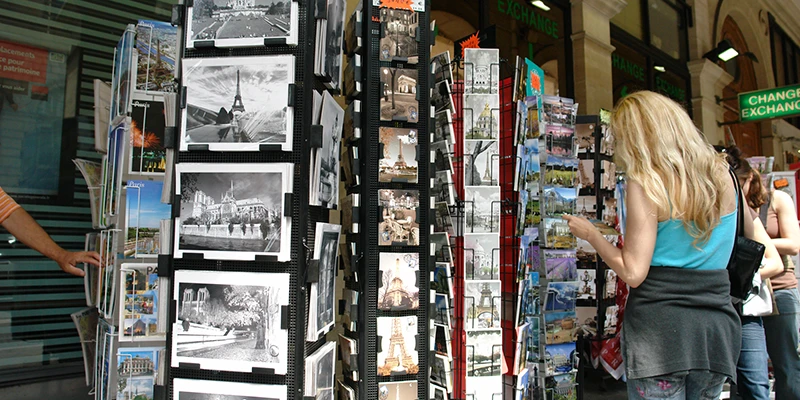
Alternatively, come out onto the Rue de Rivoli and its eight lanes of traffic, and be glad you are not driving. The arcades here are full of the standard tourist goods — scarves, small Eiffel Towers, postcards, perfume, chocolate, ceramics — and browsing them is a decent way to recover from three hours of art. Keep walking under the arcades toward the Concorde to reach Angelina at number 226, a tea house open since 1903 and known for a thick hot chocolate served with a pot of whipped cream. Expect a line at busy hours.
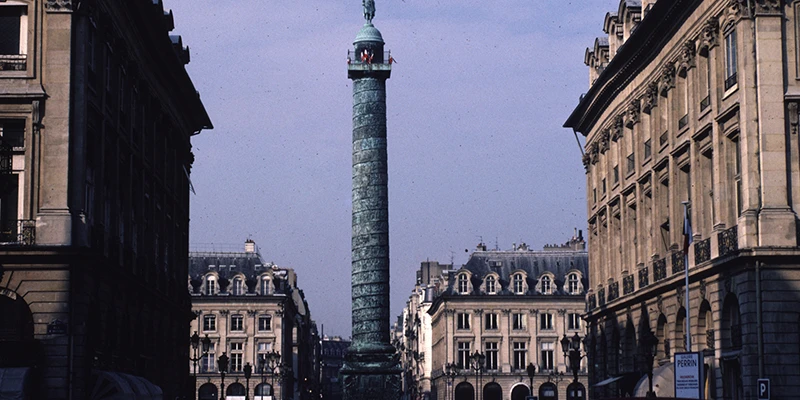
For a longer version of this walk, continue along the Rue Saint-Honoré, one block inland, which holds some of the best boutiques in the city, and follow it to the Place Vendôme — an octagonal square of uniform stone facades laid out in 1699, now occupied almost entirely by jewelers and the Ritz, with a column at the center cast from cannon captured at Austerlitz.
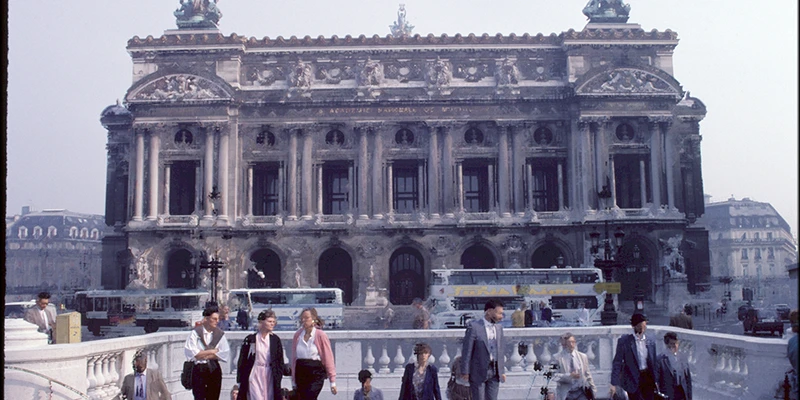
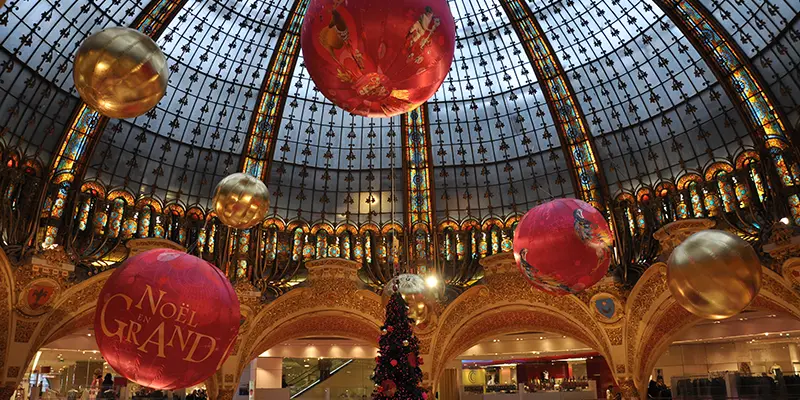
Two blocks beyond is the Place de l'Opéra and Garnier's opera house. Behind it are the two large department stores, Galeries Lafayette and Printemps — the domed central hall of the Galeries is worth stepping into whether or not you intend to buy anything.
The Left Bank
The late afternoon is for the Left Bank. If you are still near the Opéra, walk back down the Avenue de l'Opéra to the Louvre and cross the river on the Pont des Arts footbridge. Otherwise take the Métro to Saint-Germain-des-Prés or Saint-Michel.
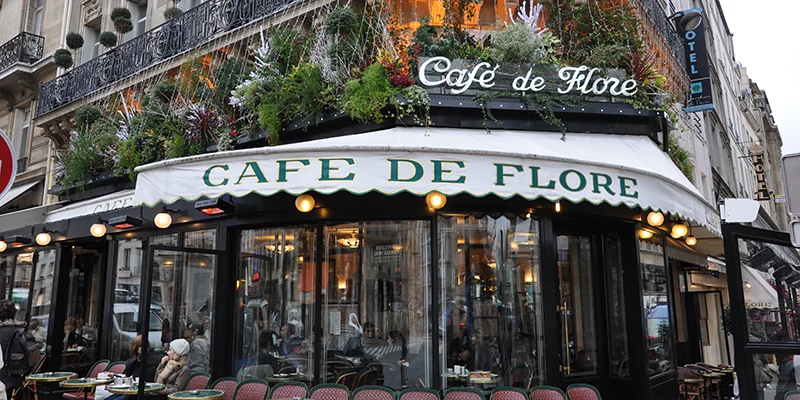
These streets are the Paris of small galleries, food shops and tree-lined squares, and they are good for walking with no particular destination. Come down the Rue Bonaparte to the Boulevard Saint-Germain and the two cafés the existentialists made famous, the Deux Magots and the Café de Flore, opposite the church of Saint-Germain-des-Prés — the oldest church in Paris, with a tower dating from the eleventh century.
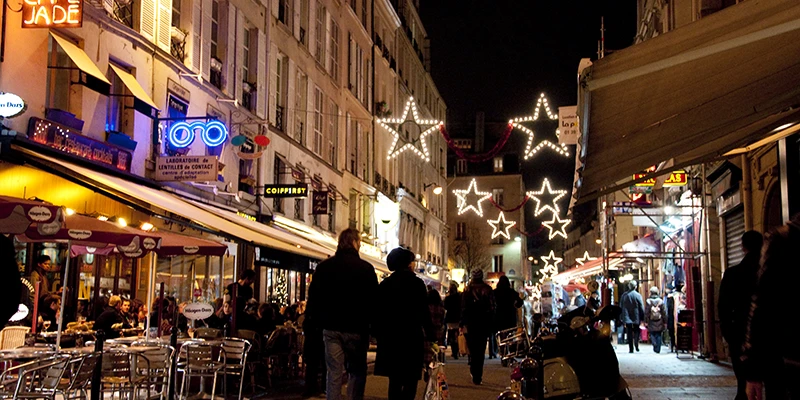
From there take the Rue de Buci and the Rue Saint-André-des-Arts toward the Place Saint-Michel, then into the narrow lanes around the Rue de la Huchette and the Rue de la Bûcherie, crowded with restaurants of every nationality.
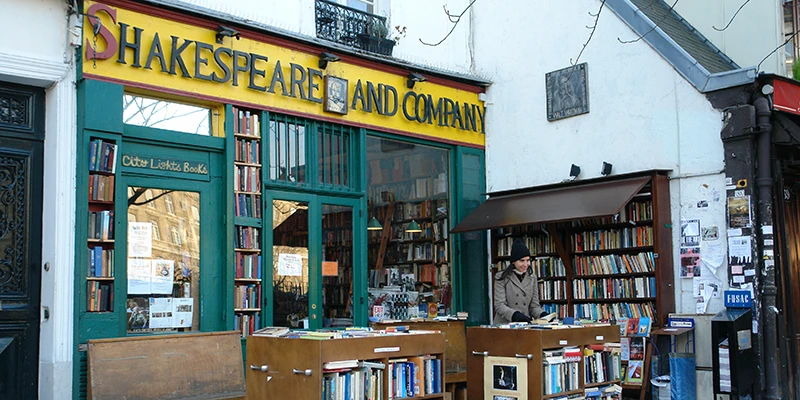
On the Rue de la Bûcherie, directly across the river from Notre-Dame, is Shakespeare and Company, the English-language bookshop opened by George Whitman in 1951 and named for Sylvia Beach's earlier shop, which first published Ulysses. The interior is a warren of narrow rooms, sagging shelves and beds tucked between the stacks, where traveling writers have been allowed to sleep in exchange for a few hours of work for seventy years. It is a working bookstore rather than a museum, and busy, but it is one of the few literary landmarks in Paris that still does the thing it is famous for.
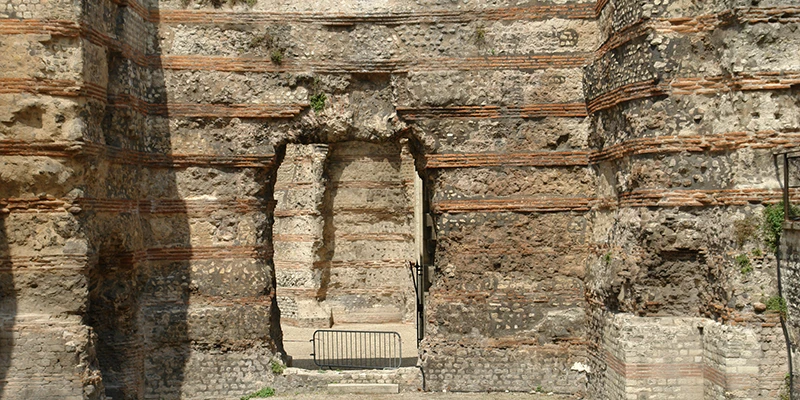
A few blocks inland, the Musée de Cluny is the best medieval collection in France and one of the more surprising buildings in the city. A late fifteenth-century mansion built for the abbots of Cluny stands directly on top of a Gallo-Roman bath complex from around the year 200, and you walk from one into the other — the vaulted stone frigidarium is still standing, with its original masonry sixty feet high.
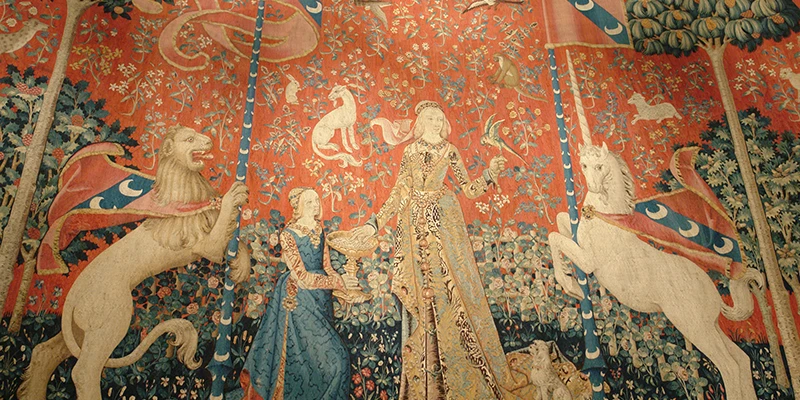
The collection includes the Lady and the Unicorn, six tapestries woven around 1500 and among the great works of medieval art, hung together in a single darkened room. It also holds the heads from the Gallery of Kings on the front of Notre-Dame, hacked off during the Revolution and rediscovered in a cellar in 1977, which are worth seeing today of all days.
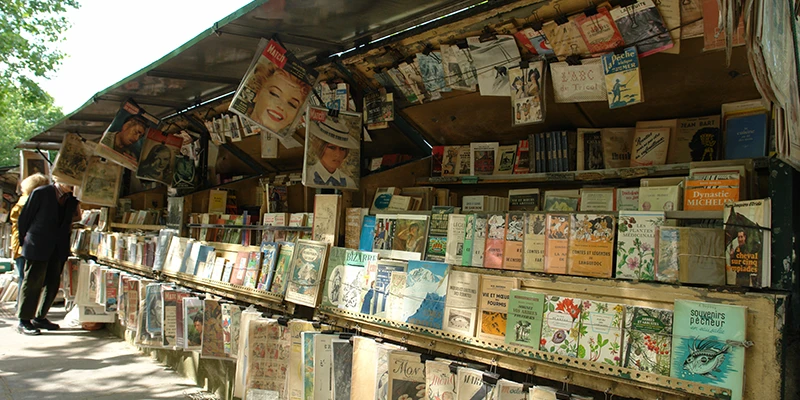
Before leaving the Left Bank, walk the quay to see the bouquinistes, the green boxes of secondhand books, prints and posters clamped to the parapet, which have been trading here since the sixteenth century. Then take the steps down to the water and walk a few blocks at river level. This stretch of the Seine is on the UNESCO World Heritage list, and it gives a preview of the boat ride later.
The Islands
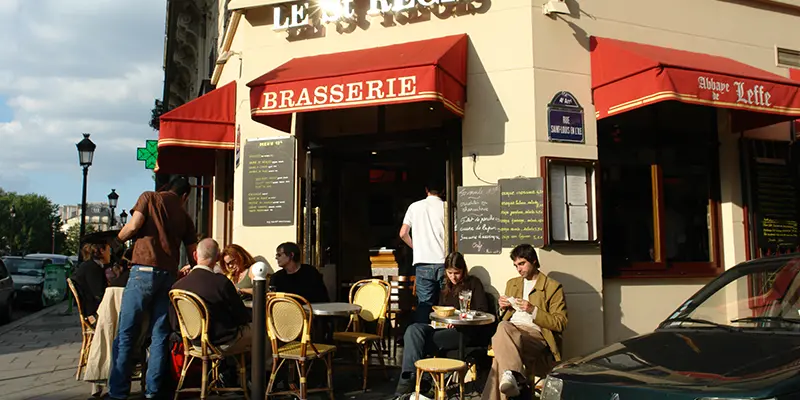
Cross at the Pont de la Tournelle to the Île Saint-Louis, which feels like a village dropped into the middle of the city. One street runs its whole length — the Rue Saint-Louis en l'Île — lined with seventeenth-century houses, small galleries, cheese shops and old restaurants, among them Nos Ancêtres les Gaulois behind its dark green frontage, and brasseries on the corners with tables out on the pavement.
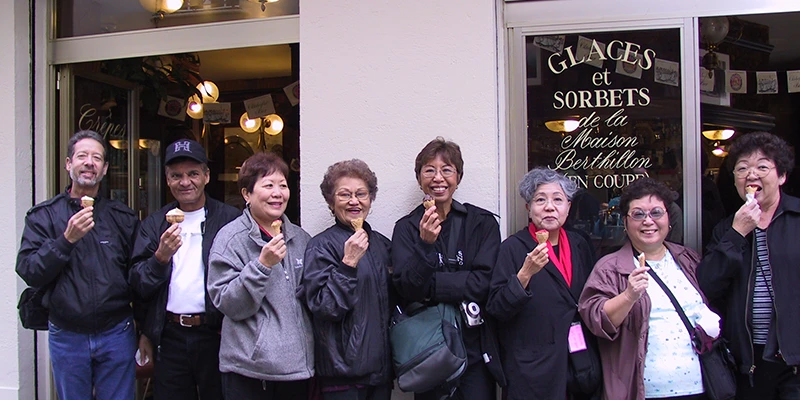
Berthillon has been making ice cream at number 31 since 1954 and is still the best in Paris. The original shop keeps limited hours and closes for much of the summer, which catches people out, but a dozen cafés on the island are licensed to sell it and display the name in the window — look for glaces Berthillon on the glass and you can sit down with a cone anywhere along the street.
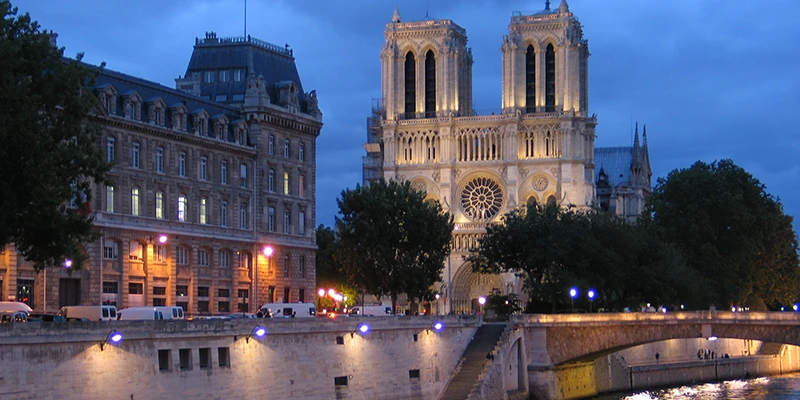
The footbridge at the western end leads to the Île de la Cité and an immediate view of the east end of Notre-Dame, with its flying buttresses standing clear of the choir. Walk around to the front. The cathedral was begun in 1163 and took the better part of two centuries to finish; its towers rise 226 feet and were the tallest structures in Europe when built, and the design was copied by Gothic churches across the continent.
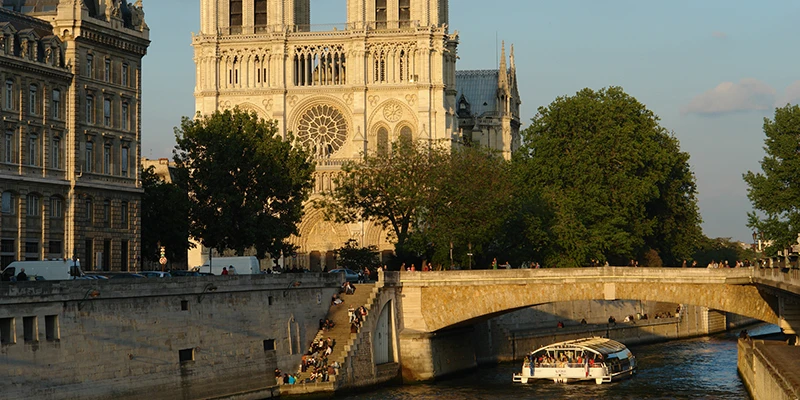
On 15 April 2019 a fire destroyed the roof and brought down the nineteenth-century spire, and the building was closed for five and a half years while some two thousand craftsmen rebuilt it. Notre-Dame reopened in December 2024, with the spire reconstructed to its original design, the stonework cleaned to a pale gold that few living visitors had ever seen, and the medieval timber roof frame rebuilt using oak and traditional joinery.
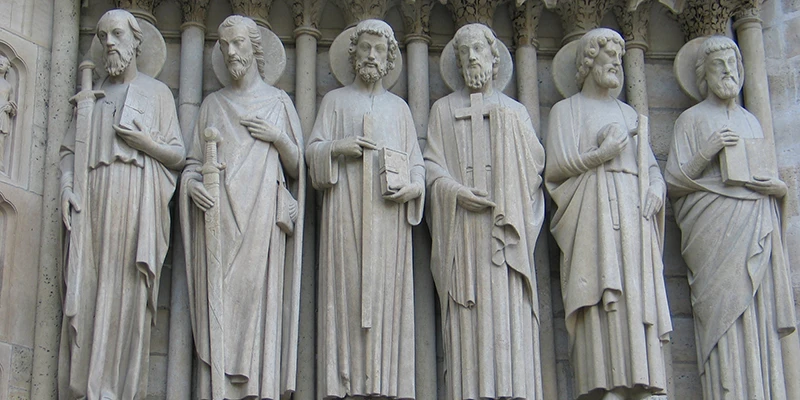
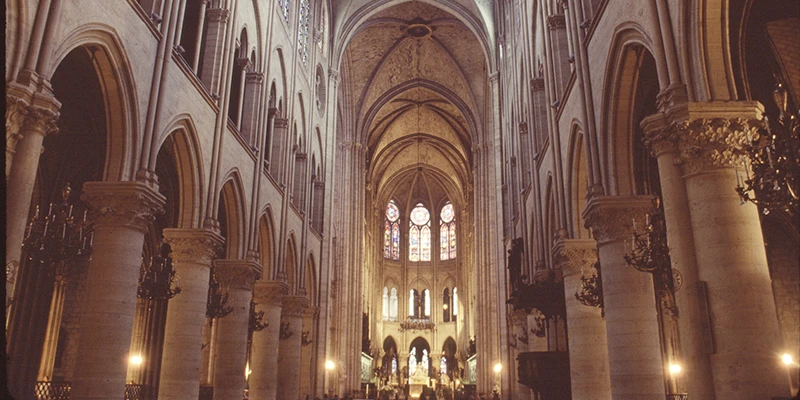
Entry is free, but reserve a time slot through the cathedral's app or site — the lines without one are long. The interior is worth however long you can give it: the pointed arches, the three rose windows, the vaulting, and the newly bright stone.
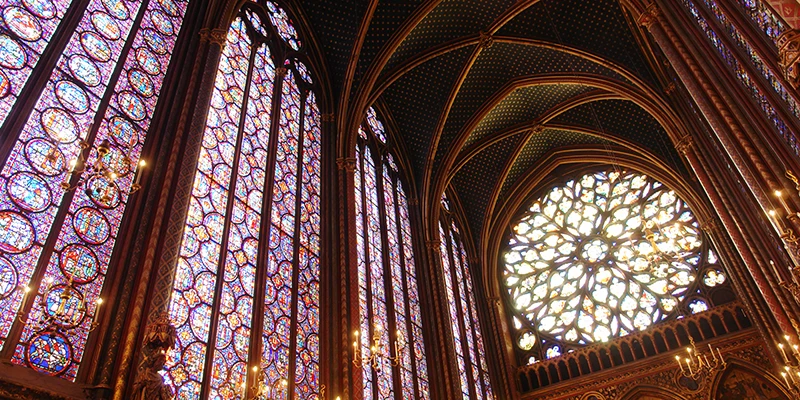
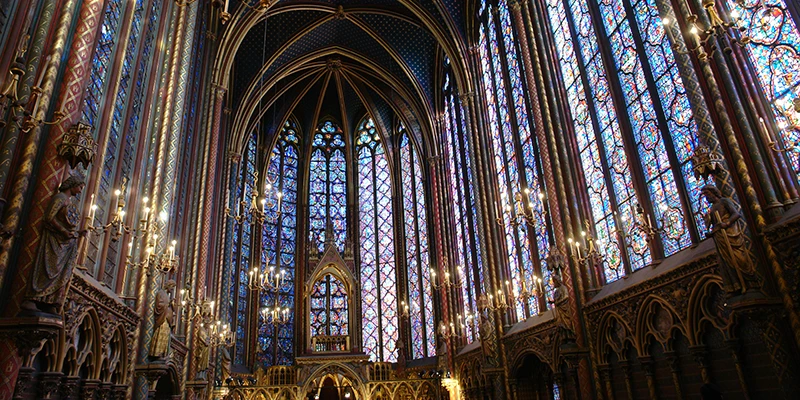
Two blocks away is the Sainte-Chapelle, and it is worth checking the closing time before you go, as it varies by season. Built by Louis IX in the 1240s to house the Crown of Thorns, the upper chapel is essentially a glass box — fifteen windows more than fifty feet high, carrying over a thousand scenes in deep blue and red, wrapped almost entirely around you. On a bright afternoon there is nothing else like it in Europe.
A combined ticket with the Conciergerie next door costs a little more than either alone.
Walk west past the bulk of the Conciergerie, the medieval palace turned revolutionary prison where Marie-Antoinette was held before her execution.
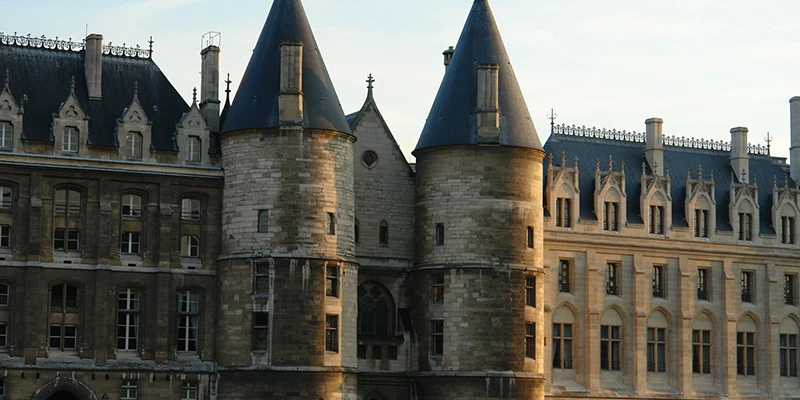
Beyond it is the Place Dauphine, a small triangular square of seventeenth-century brick and stone buildings around a gravel park, laid out in 1607 and among the quietest corners in central Paris.
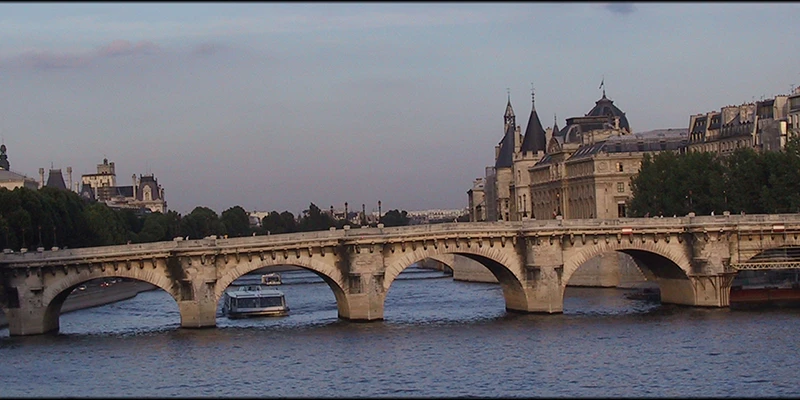
Just beyond is the Pont Neuf, which despite its name is the oldest bridge in the city, completed in 1607.
Evening: The Boat Ride
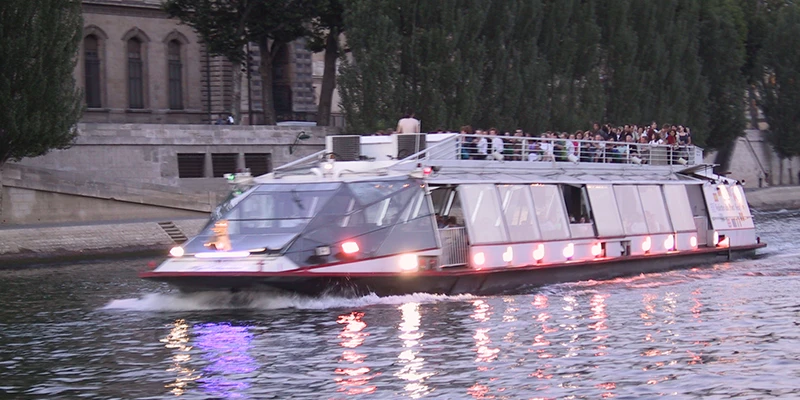
The classic hour-long boat ride departs from the steps of the Pont Neuf at the tip of the island, and it is one of the better values in Paris at around €15 to €20, with departures every half hour. Going at twilight is much the best choice, when the buildings along the quays are floodlit and the bridges are lit from below. The route runs down past the Louvre and the Orsay to the Eiffel Tower and back around the islands, and it gives you the city from the angle it was designed to be seen from.
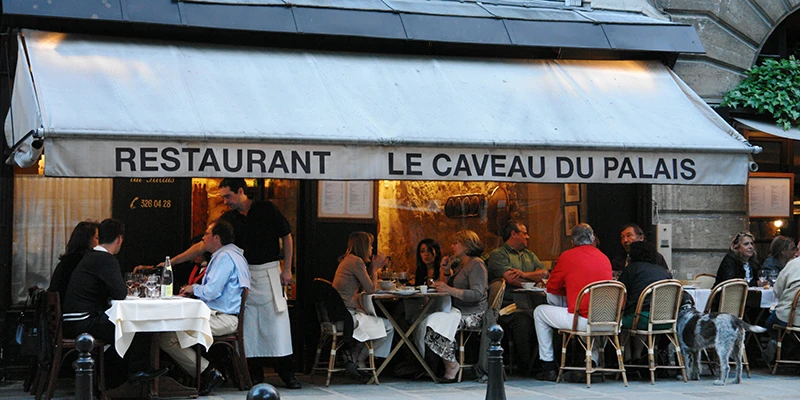
Afterward, find a good restaurant, eat well, and rest for the last day.