Paris Day One
The first day is about getting the shape of the city, then walking into the middle of it. Paris is large and complicated enough that an overview pays for itself, and the neighborhoods covered this afternoon are where Parisians actually spend their time rather than where tour buses stop.
Morning: The Overview Tour
A three-hour bus tour provides the big picture. Driving the main routes with commentary puts the geography in context and helps you set priorities for the sights you will return to on foot. A typical circuit passes the Place de la Concorde, the Seine, the Arc de Triomphe, the Eiffel Tower and the Place de l'Opéra — most of which appear again later in this itinerary at close range. Several companies run similar tours, and hotel reception can advise which departure point is most convenient. The open-top hop-on hop-off buses are an alternative, though they move slowly in traffic.
Afternoon: Rue de Rivoli and the Marais
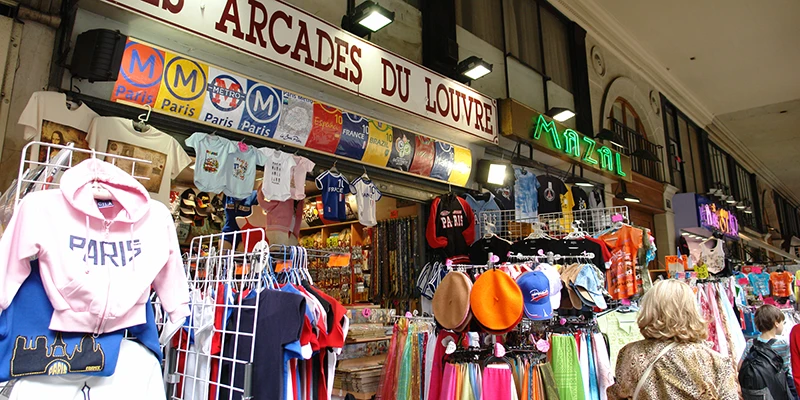
After lunch, start walking. The Rue de Rivoli runs east from the Louvre with its long arcaded sidewalks, busy with locals and visitors moving between work and the shops. The Louvre itself is a main target of this trip but not a good first impression of the city, so it waits until tomorrow. Today begins with street life instead.
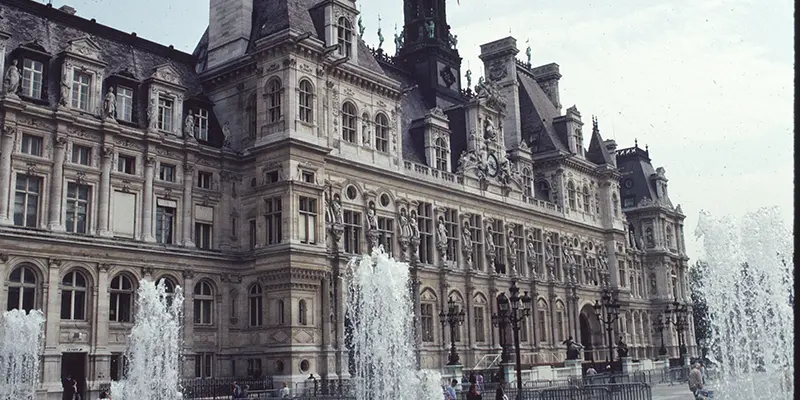
The Rivoli continues past the Hôtel de Ville — the enormous neo-Renaissance city hall rebuilt in the 1870s after the Commune burned the original, with a fountain-filled plaza in front that is used for public events year round — and becomes the Rue Saint-Antoine, running about half a mile toward the Marais. This is one of the oldest quarters in Paris and one of the few to escape Haussmann's nineteenth-century rebuilding.
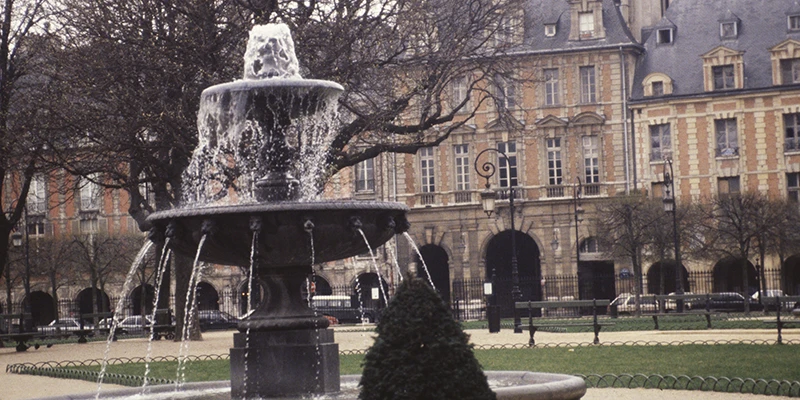
At its center is the Place des Vosges, a quiet arcaded square of red brick and stone completed in 1612 and the oldest planned square in the city. The lawns and fountains make a good place for a coffee break, and Victor Hugo's apartment at number six is open to visitors.
Leave by the street forming the north edge of the square and ramble along the Rue des Francs-Bourgeois, which becomes the Rue Rambuteau, taking detours up and down the side streets — the Rue du Temple and the Rue des Rosiers in particular. This is a fashionable, densely shopped neighborhood, and it repays wandering. Admirers of Picasso should make time for the Musée Picasso on the Rue de Thorigny, housed in a seventeenth-century mansion and holding the largest public collection of his work anywhere.
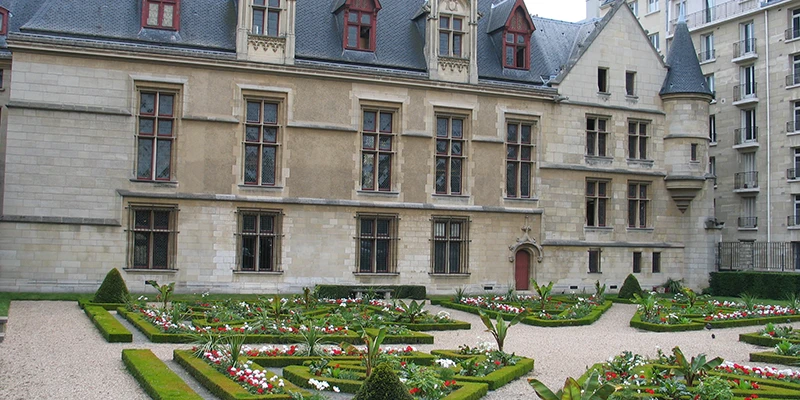
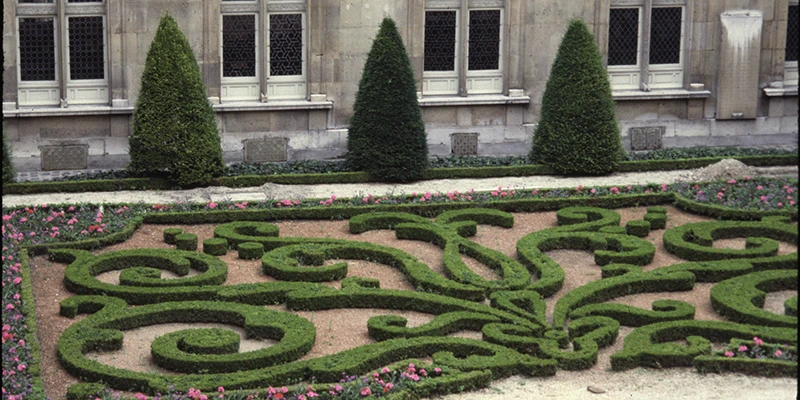
This route deliberately runs a little off the main tourist track. Having three days rather than two makes it possible to mix ordinary Paris with the monuments, and the contrast is worth the time. The garden behind the Hôtel de Sully, reached through an unmarked door on the Rue Saint-Antoine, is one of several quiet courtyards in the quarter that most visitors walk straight past.
Les Halles
Walking west from the Marais brings you into Les Halles, the largest pedestrian zone in Paris, some thirty blocks of shops and restaurants with no cars. This was the city's central wholesale market for eight centuries until it moved to Rungis in 1969, and the district has been rebuilt twice since. The current version is covered by the Canopée, a curved glass and steel roof completed in 2016 over the underground Westfield shopping center, which is worth walking past but not worth going into.
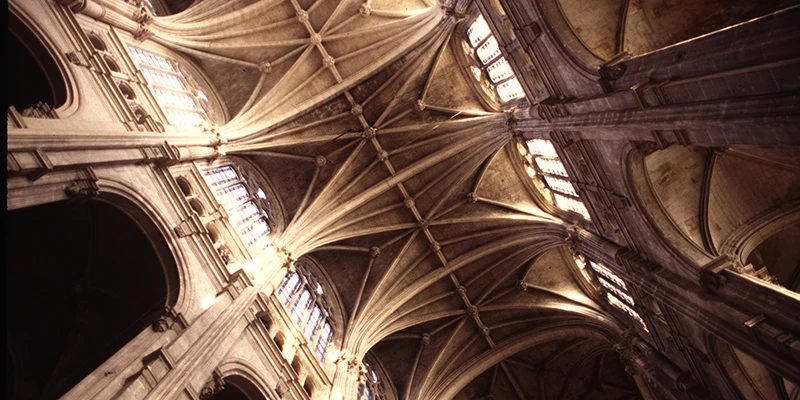
The building that survived all the demolition is Saint-Eustache, the great church on the north side of the gardens. Built between 1532 and 1632, it has the structure of a Gothic cathedral with Renaissance detail applied over it, and the interior is among the largest and highest in Paris — Colbert is buried here, Berlioz conducted here, and the organ is one of the biggest in France.
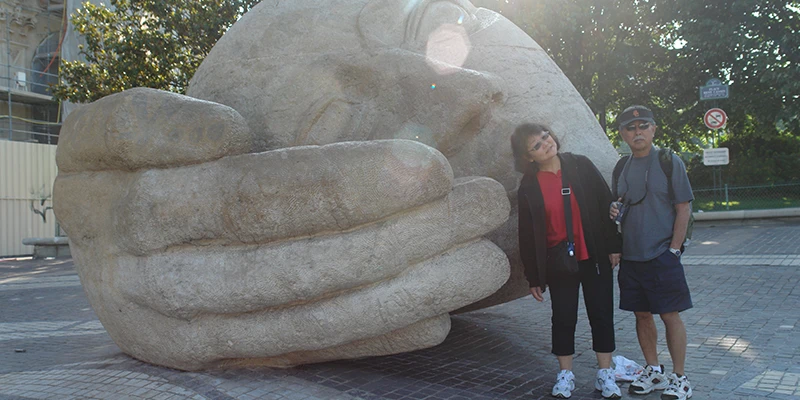
On the paving outside lies Henri de Miller's Écoute, a stone head and hand the size of a small car, installed in 1986 and permanently covered in visitors having their photograph taken with it.
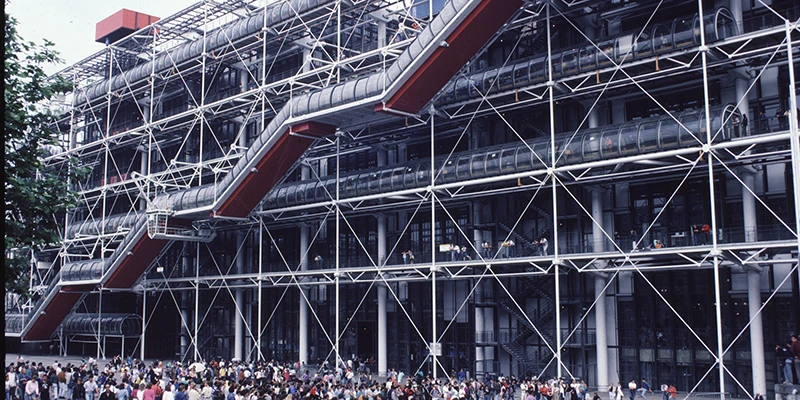
The Centre Pompidou stands at the eastern edge — the inside-out building wrapped in colored pipes and exposed structure that shocked Paris when it opened in 1977. Note that it closed on 22 September 2025 for a five-year renovation and is not expected to reopen until around 2030, so plan to admire it from the outside. Its collection of modern art is being shown in the meantime at partner venues including the Grand Palais and Centre Pompidou-Metz. The Stravinsky Fountain alongside is unaffected and still running, its brightly colored kinetic sculptures by Jean Tinguely and Niki de Saint Phalle spinning and spraying in the basin.
For modern and contemporary art on this afternoon, the nearest substitute is the Bourse de Commerce, about ten minutes west. The circular former commodity exchange was converted by Tadao Ando and opened in 2021 as the home of the Pinault Collection, and the concrete cylinder set inside the nineteenth-century glass dome is worth seeing for the building alone.
Dinner and the Palais Royal
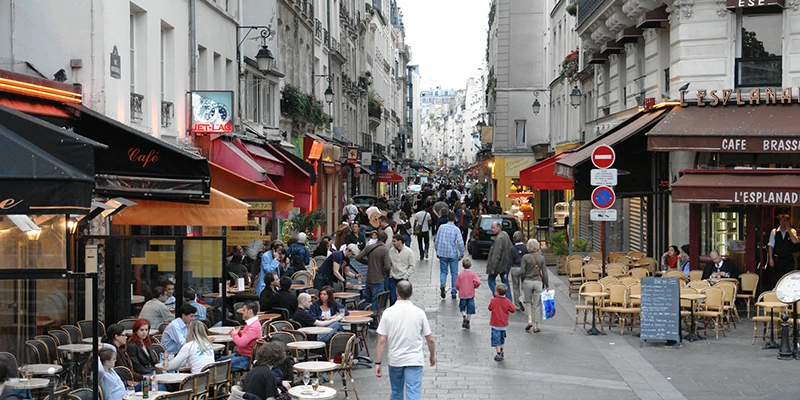
Depending on your pace you may be ready to eat. Be selective here — a good many of the restaurants immediately around Les Halles are indifferent places aimed at passing tourists. The better plan is to walk five minutes north to the Rue Montorgueil, a pedestrian market street that has been feeding this quarter since the market days and still does: fishmongers, cheese shops, produce stalls, oyster counters and cafés with tables down the middle of the street. Stohrer, at number 51, has been making pastry there since 1730 and is the oldest patisserie in Paris.
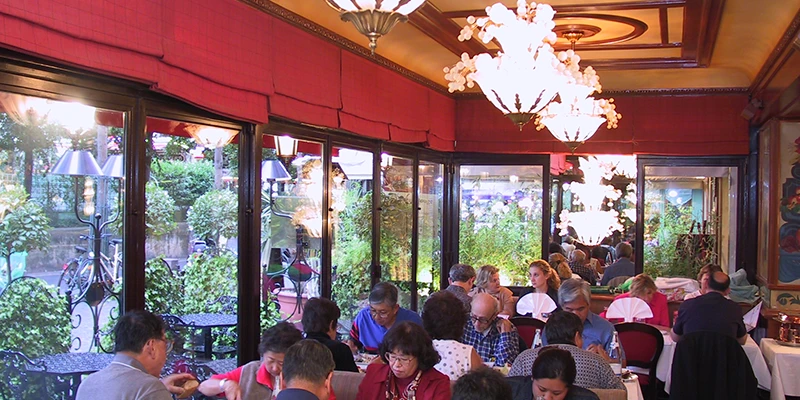
If you would rather sit down to a full meal nearby, Au Pied de Cochon on the Rue Coquillière has been serving since the market days and remains reliable, and Au Chien qui Fume is another long-established address. As always with restaurant recommendations, quality varies and places change hands, so confirm anything you plan on before setting out.
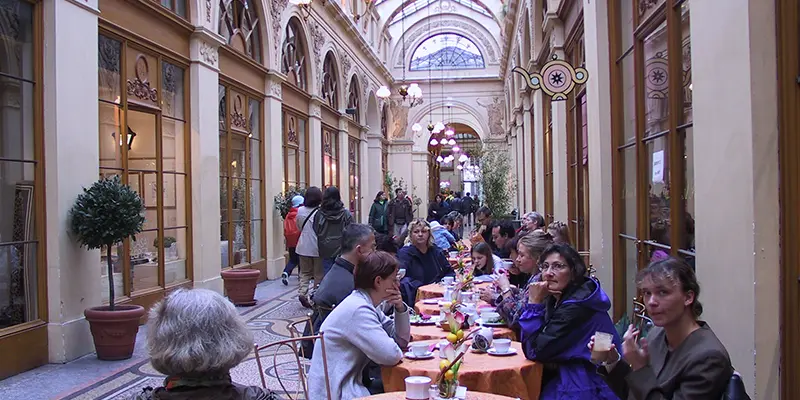
If you are not hungry yet, continue three blocks west through the Place des Victoires to Le Grand Colbert, a belle époque brasserie beside the Galerie Vivienne. The Galerie itself, opened in 1823, is one of the finest surviving covered passages in Paris, with a mosaic floor, a café, antique dealers, boutiques and bookshops under a glass roof.
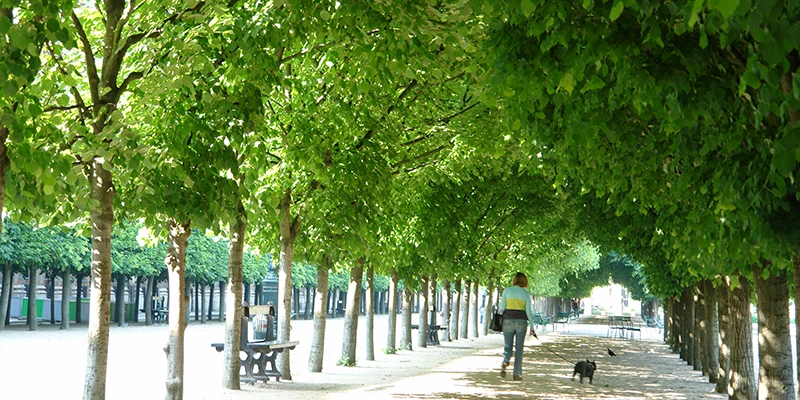
One block south is a surprise that most visitors walk past. From the street the Palais Royal looks like another government building, but pass through the arch on the Rue de Beaujolais and you enter a garden the size of a city block, enclosed by arcades and planted with lime trees, fountains and flowerbeds. It was built as a residence for Cardinal Richelieu in 1636 and later occupied by the young Louis XIV. The forecourt at the southern end holds Daniel Buren's Les Deux Plateaux, the field of black and white striped columns installed in 1986 that caused a considerable argument at the time and is now among the most photographed spots in the city.
Evening: Montmartre
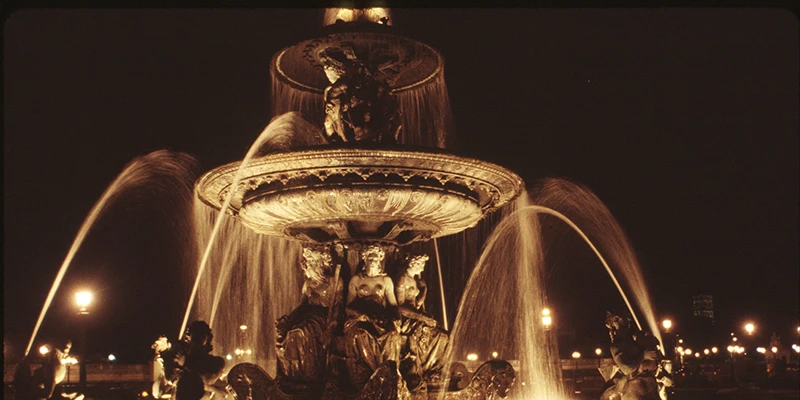
A good way to end the first day is with a trip up to Montmartre. A taxi is quick, or take the Métro and stop off at the Place de la Concorde while changing trains to see the square at dusk. The Luxor obelisk at its center is the oldest monument in Paris by a wide margin, roughly thirty-three centuries old and given to France in the 1830s, flanked by two large fountains that are floodlit after dark.
Exit at Abbesses or Anvers, depending on your route, walk to the foot of the hill and ride the funicular to the top. Montmartre is the highest point in the city at about 130 meters, and the view from the terrace runs across the whole of Paris.
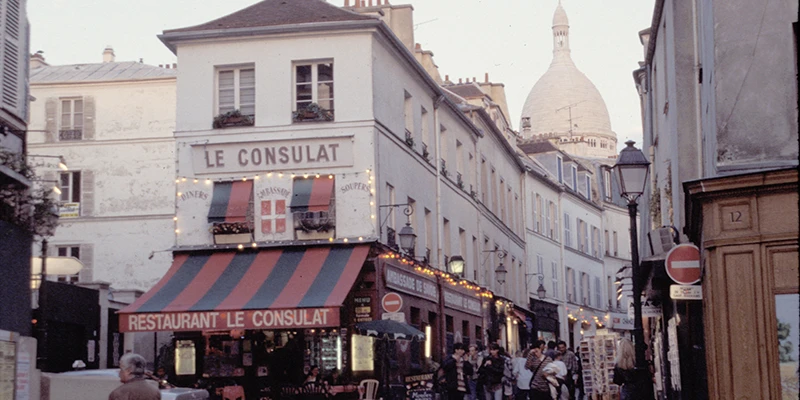
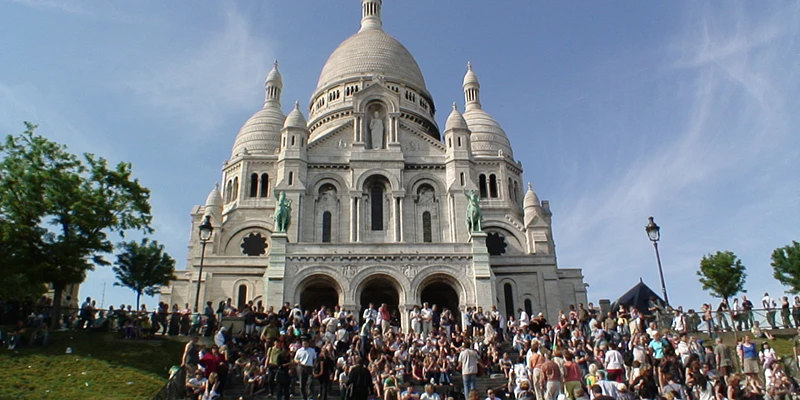
Above stands the white domed Sacré-Cœur, begun in 1875 and finished just before the First World War, but the reason to come up is the small artists' square behind it, the Place du Tertre.
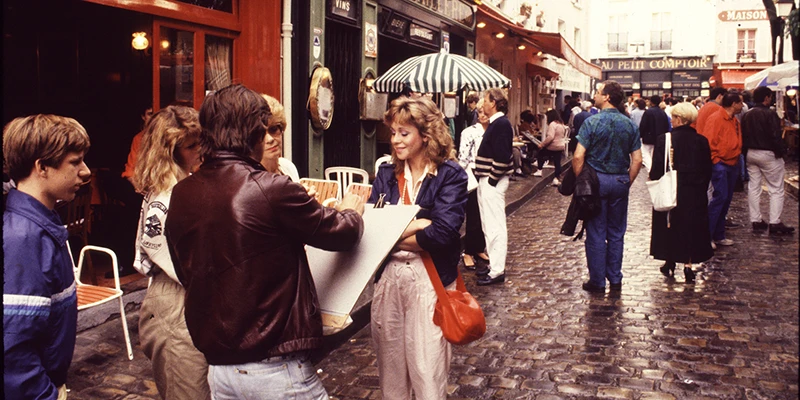
It is crowded and unapologetically touristy, and it is still a fragment of the nineteenth century, with easels and portrait painters, small shops and outdoor restaurants around a tight square of plane trees. Twilight is the best time to be there.
That is the end of the first day, and already a substantial piece of Paris. There is a good deal more to come, so get some rest.