Haut-Koenigsbourg, France
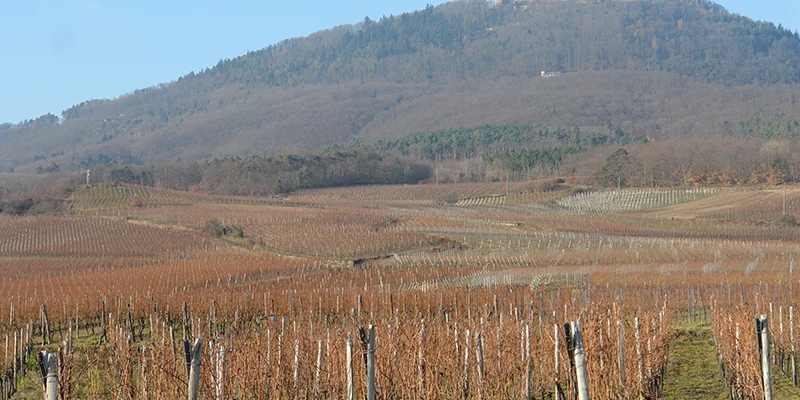
Haut-Koenigsbourg is the most dramatic thing on the Alsace wine road and the only stop on it that is not a village. The castle stands at 757 meters on a rock spur above the vineyards, visible for thirty kilometers across the plain, a long red sandstone fortress with a square keep, round bastions, tiled roofs and a drawbridge.
Unlike the other great castles of Alsace it is not a ruin. It was rebuilt at the start of the twentieth century, roofed, furnished and fitted out, which makes it one of the few places in the region where a medieval castle can be walked through rather than imagined.
The Approach
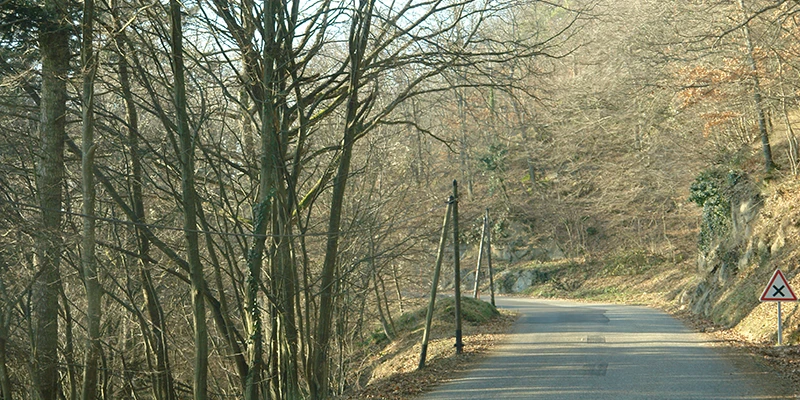
The approach is part of the visit. The road climbs out of the vineyards above Orschwiller and Kintzheim through several kilometers of forest, switching back up the hillside until the walls appear through the trees. There is a large parking area below the entrance and a short walk up to the gate.
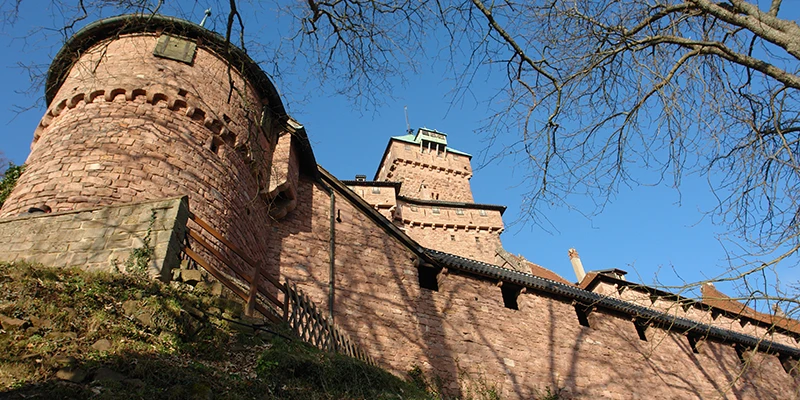
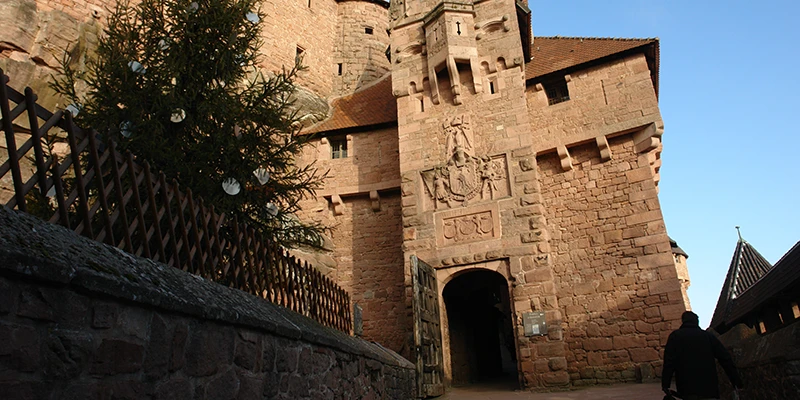
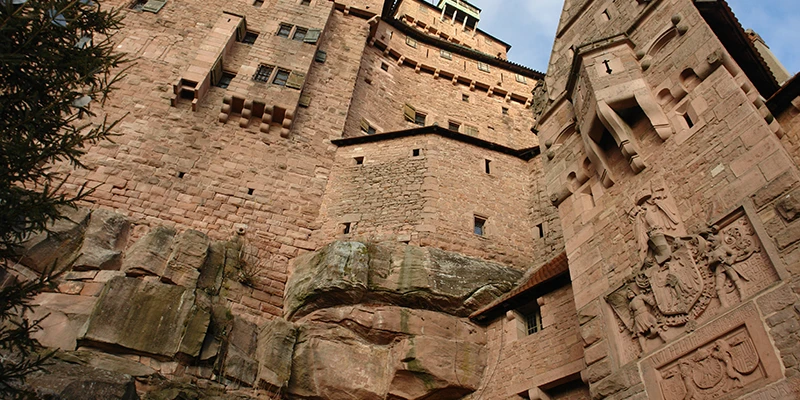
The first thing visible from below is the great western bastion, a mass of red sandstone rising straight out of the rock with the roofs of the castle stacked behind it. The scale only registers once there are people at the foot of it.
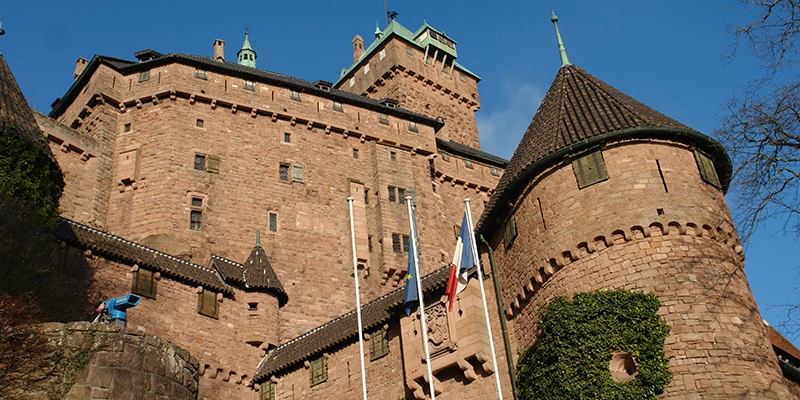
The stone is Vosges sandstone, quarried locally, and its color is the defining feature of the building. It runs from pink to deep rust depending on the light, and against snow or a winter sky it reads darker than it does in summer.
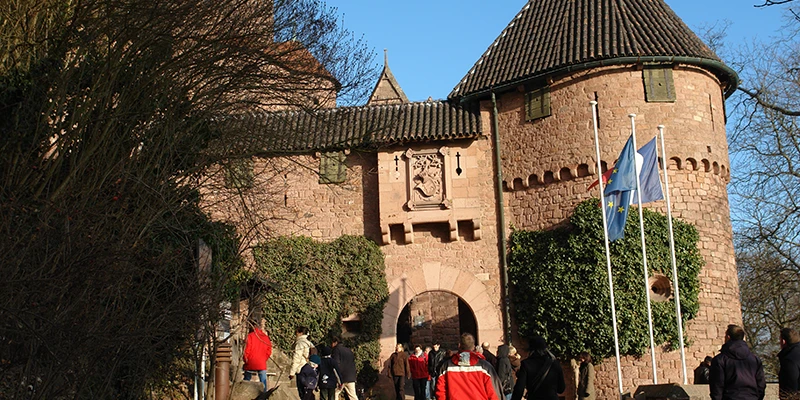
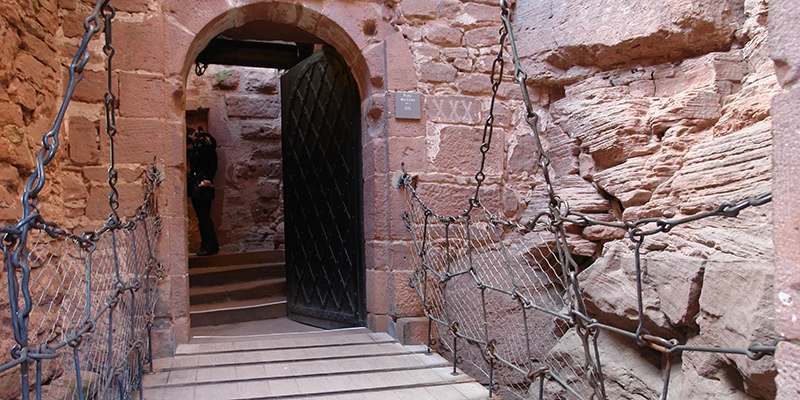
Entry is through the main gate on the eastern side, under the flags and past the ticket office. The gate arrangement is defensive in intent, with the approach forced to turn under the walls rather than run straight at the door.
Eight Centuries of Sieges
A castle was recorded on this rock in 1147, held by the Hohenstaufen, and its position was the point. It watched the roads carrying wine, wheat, salt and silver between the Rhine valley and Lorraine, and whoever held it took a share of what passed.
It changed hands repeatedly through the Middle Ages, and at one stage was being used as a base by robber knights, which in 1462 brought a coalition of Strasbourg, Colmar and Basel against it. They destroyed it.
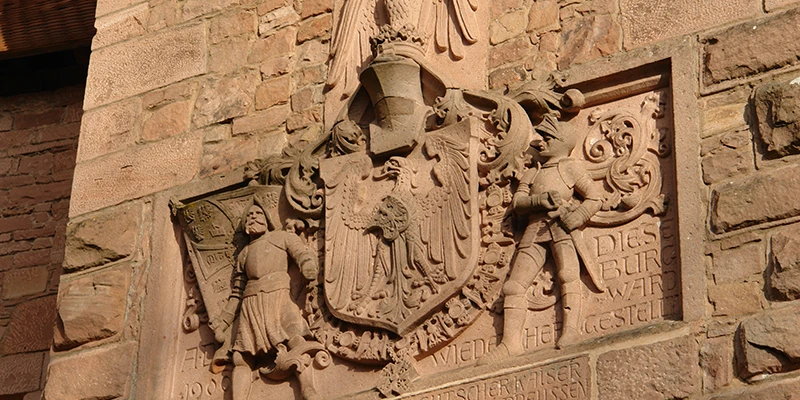
The Thierstein family rebuilt it between 1479 and 1517, this time adapted for gunpowder, with the great western bastion and the thick-walled gun positions that survive today. Carved coats of arms set into the walls record the families that held the place through those changes.
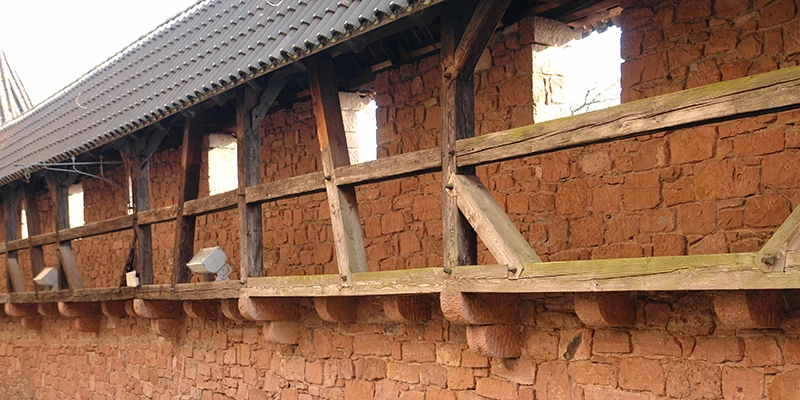
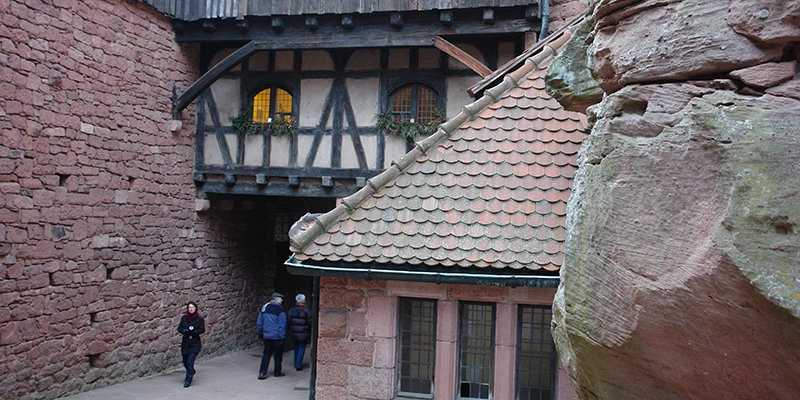
Timber galleries and wooden hoardings run along the inner faces of the walls, reconstructed as they would have been for defense. They let defenders move under cover and drop things on anyone at the base of the masonry, and almost none survive anywhere in original form.
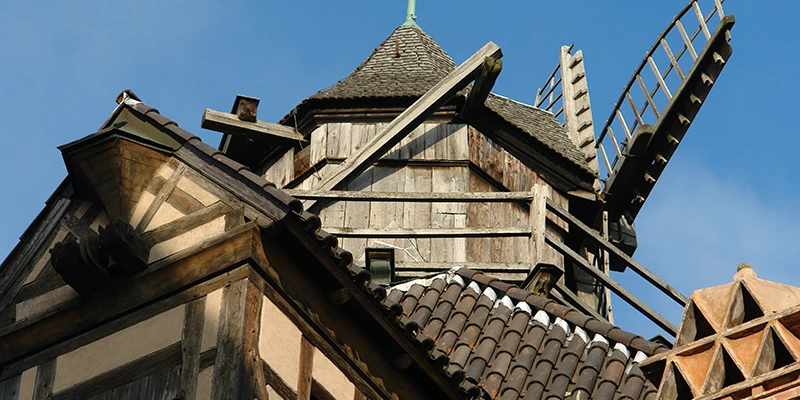
Inside the walls the castle is effectively a small village. There is a windmill, a forge, a bakery, stores and stabling, all of it necessary because a castle at this altitude had to survive independently for months at a time.
The well is one of the essential pieces: sixty-two meters deep, cut down through the rock, since a castle under siege lives or dies on its water supply. This one was in use during the siege of 1633.
Its end came in the Thirty Years' War. Swedish artillery besieged the castle for fifty-two days in 1633, then burned and looted it. After that it was abandoned, and for nearly three centuries it stood as an overgrown ruin with trees growing out of the walls.
The Kaiser's Restoration
The town of Sélestat, which owned the site, presented it to Kaiser Wilhelm II in 1899. Alsace had been German territory since the Franco-Prussian War of 1870, and the emperor wanted a monument marking the western edge of his empire, along with a gesture toward a French population that had not welcomed the annexation.
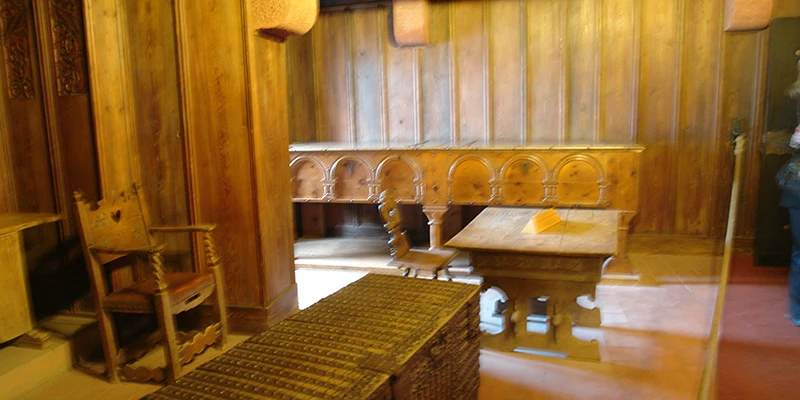
He commissioned the architect Bodo Ebhardt, who spent eight years on the work between 1900 and 1908, studying the ruins and comparable castles before rebuilding. The result opened to the public and has been argued about ever since.
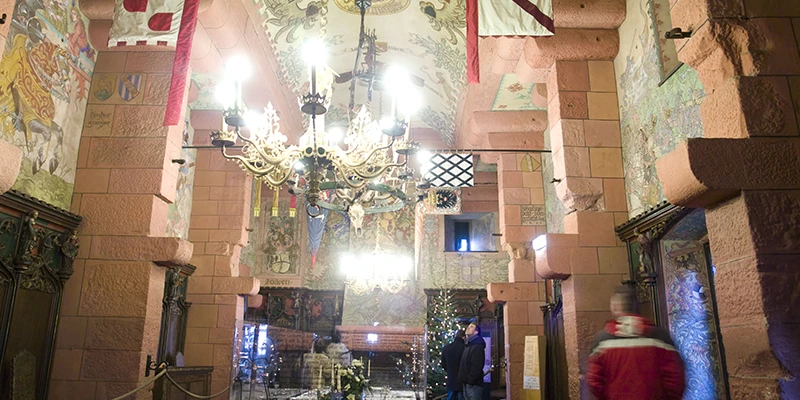
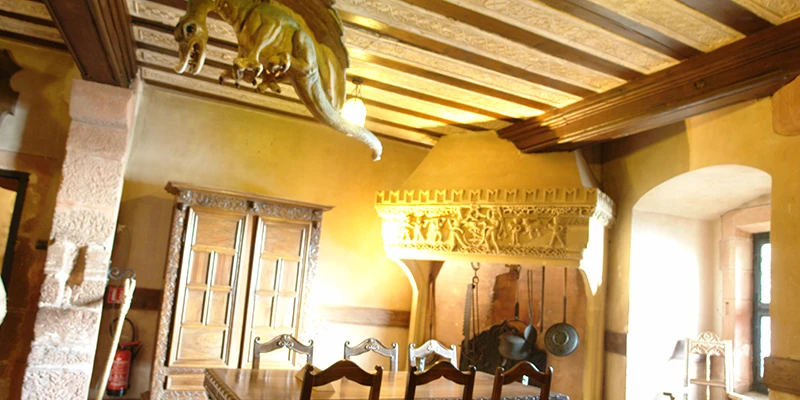
Some of it is careful archaeology and some of it is what the Kaiser and his architect believed a castle of the fifteenth century ought to look like, and the two are not always separable. The furnished rooms belong firmly to the second category, which does not make them less worth seeing.
The Views
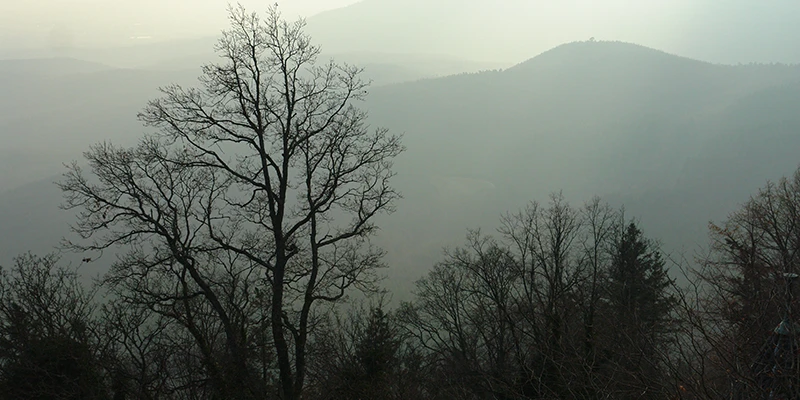
From the terraces the view runs west into the Vosges and east across the whole Alsace plain to the Black Forest, and on a clear winter day as far as the Alps. In December the plain is often under mist while the castle sits above it in sunlight.
Between the levels the route passes through gates and up flights of steps, each of which was a defensive stage in its own right. An attacker who took the outer works still had the whole climb ahead of him.
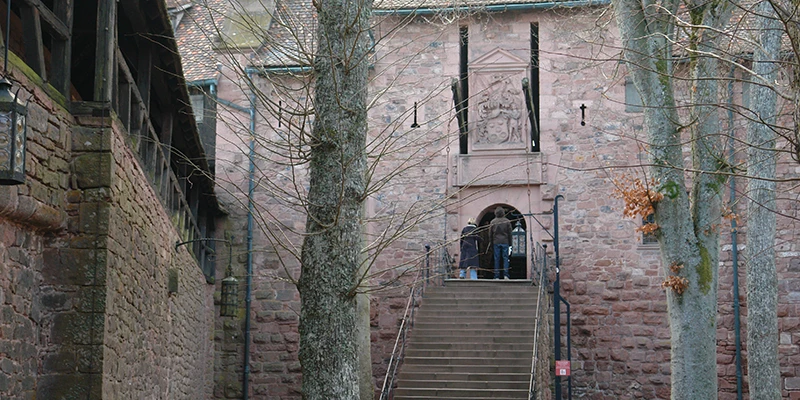
A walkway runs between the inner and outer walls, lined with iron lamps, which is the coolest and quietest part of the circuit. The trees on the slope beyond come up almost to the masonry.
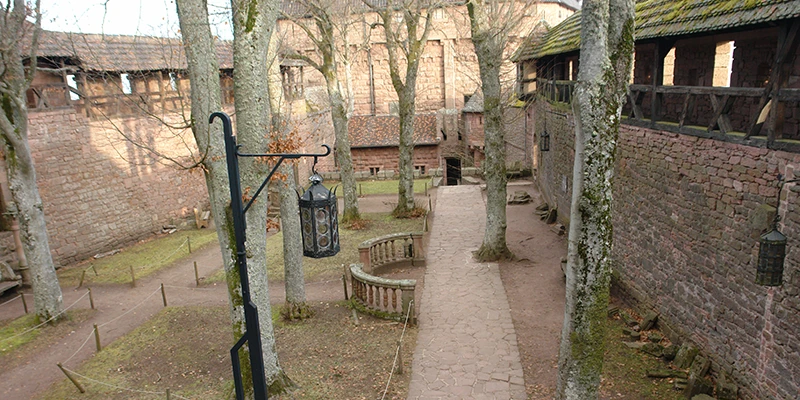
The lower ward held the working buildings and the garden. In winter it is bare and the layout is easy to read, which is harder in summer when everything is in leaf.
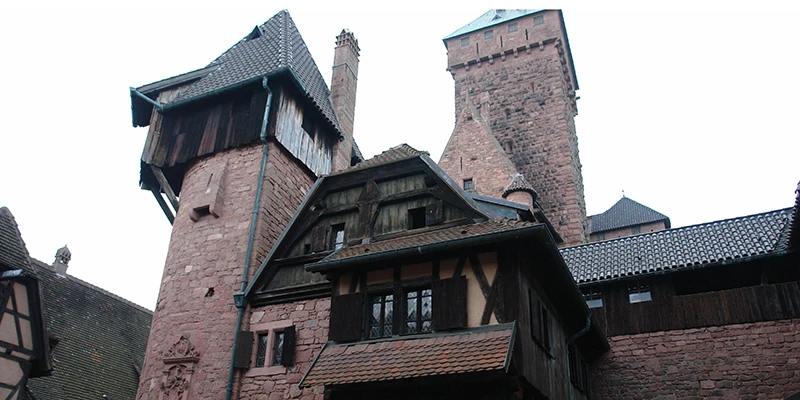
Roofs are one of the ways the restoration announces itself. Copper, slate and glazed tile were used in combination, and the green of the oxidized copper against the red sandstone is a deliberate effect rather than an accident of weathering.
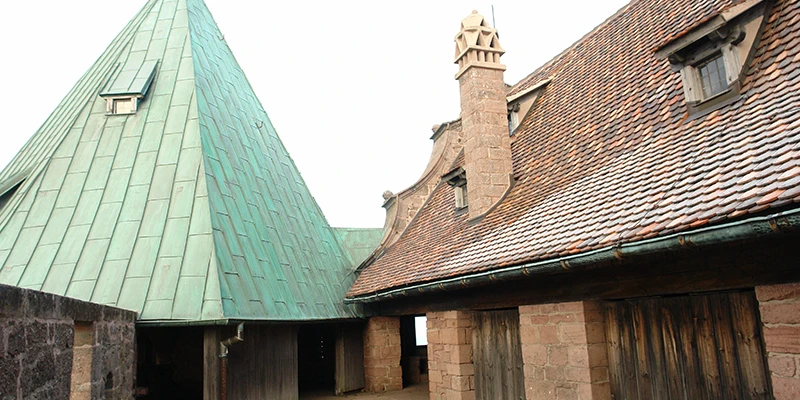
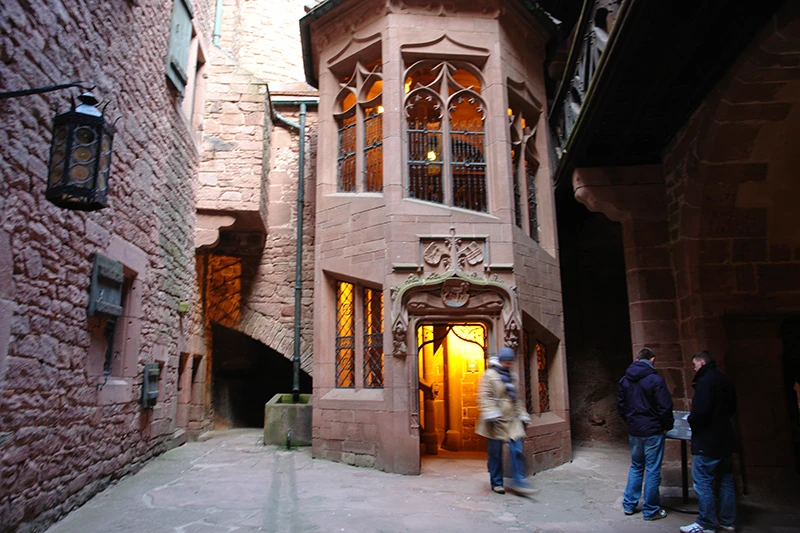
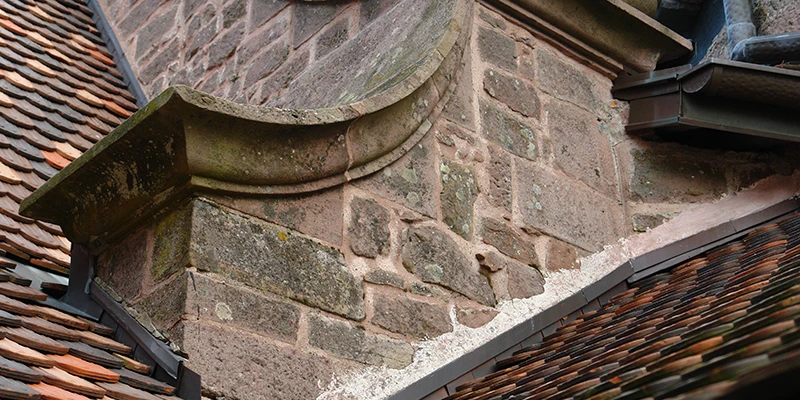
Close up the tilework and the stone detailing are worth attention. The carving is crisp because it is a century old rather than six centuries old, and once that registers the whole building reads slightly differently.
The square keep is the oldest surviving element in outline, standing at the highest point of the spur. From the garden it rises clear of everything around it with the wooded ridges of the Vosges falling away behind.
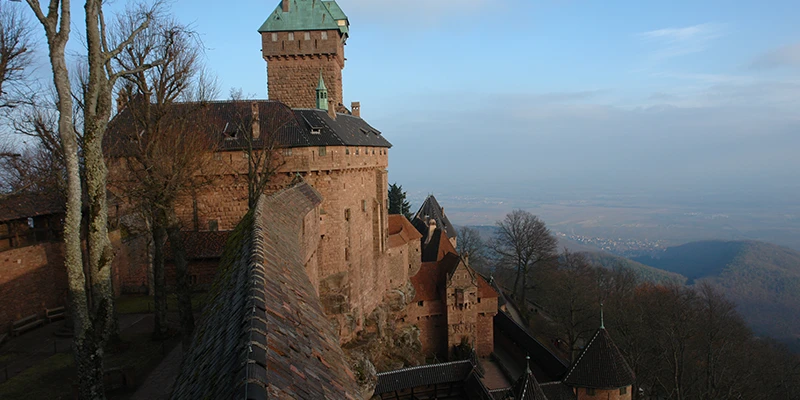
From the upper walls the whole plan is laid out below, the wards, the roofs, the bastion, and the drop into the forest on every side. It is the view that explains why the site was fortified in the first place.
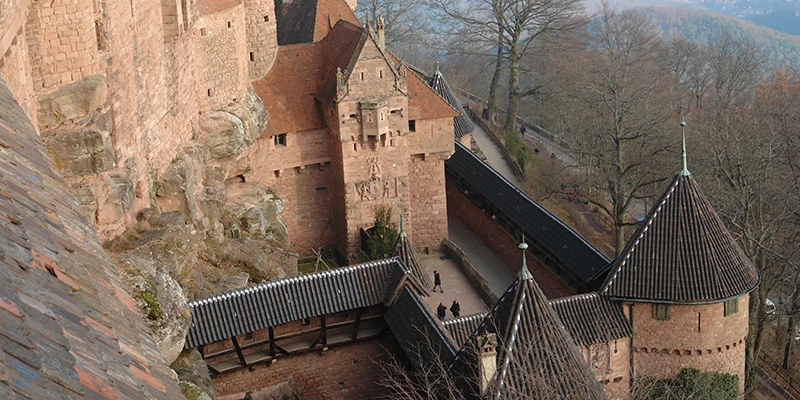
Late afternoon is the best light on the walls, and in winter it comes early. The sandstone takes the low sun well and the plain below goes blue an hour before the castle does.
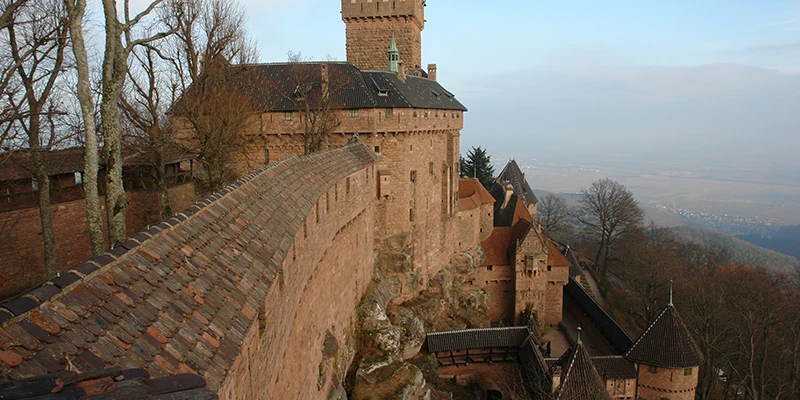
The Great Bastion
The high point of the exterior circuit is the great bastion at the western end, where the artillery positions face the ridge an attacker would have to come along. Cannon are mounted under a timber roof, aimed at the only ground that offers an approach.
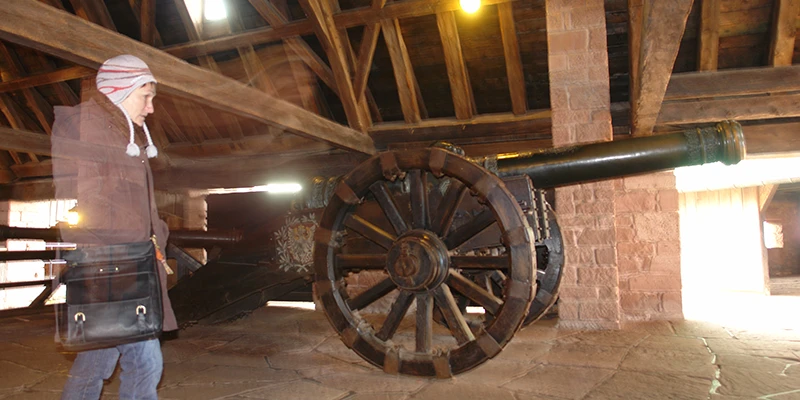
Below the walls the rock is left raw, with moss and ferns growing in the seams and steps cut into it. The castle sits directly on this without foundations in any modern sense, which is both its strength and the reason its shape is so irregular.
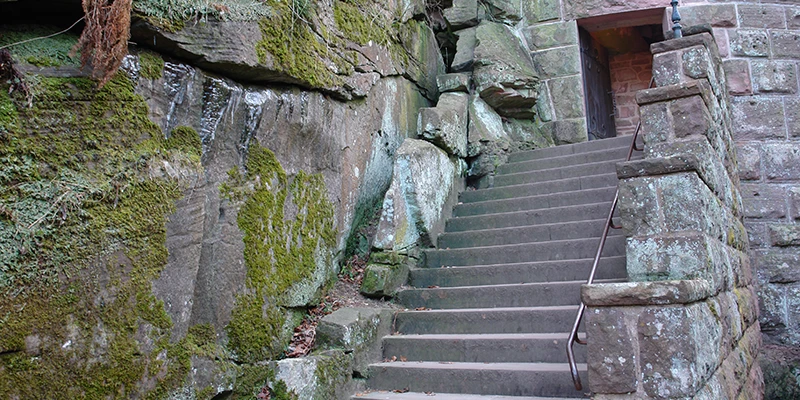
Narrow passages run between the rock and the outer wall, dark even at midday. They are part of the circuit and give the clearest sense of how the fortress was fitted to the ground rather than laid out on it.
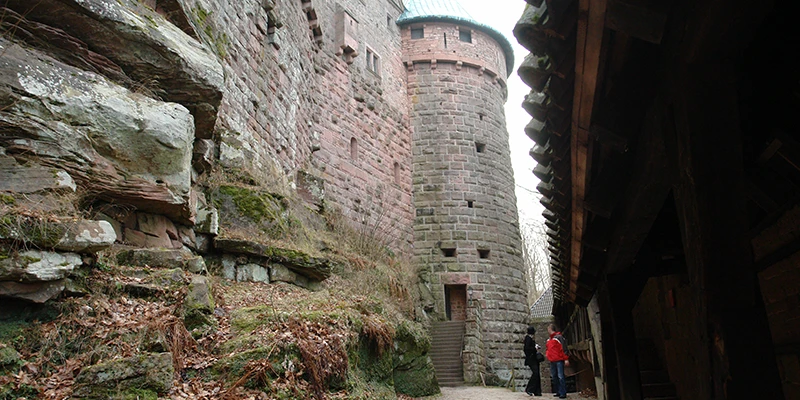
The half-timbered upper structures are Ebhardt's most conspicuous intervention. Timber framing on a castle at this altitude looks improbable to modern eyes, but the evidence for it is reasonable and the effect from below is striking.
Visiting
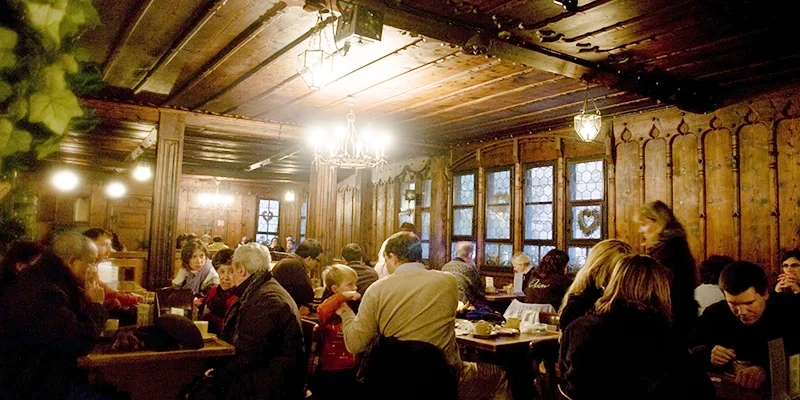
The route through takes about an hour and a half and climbs constantly, with stairs cut into the rock in places and the natural stone left exposed alongside the masonry. There is a restaurant inside the walls, in one of the half-timbered buildings off a courtyard, which is a practical thing to know on a winter day at 757 meters.
The castle is open year-round with shorter hours in winter, and admission is often included in the price of a day tour from Colmar. Independent visitors should book online in high season. There is no public transport to the gate for most of the year, though a shuttle runs from Sélestat station in summer.
After the First World War the castle passed to the French state under the Treaty of Versailles, and in 2007 it was transferred to the Bas-Rhin département. It now receives more than half a million visitors a year and is among the most visited monuments in France. Jean Renoir shot part of La Grande Illusion here in 1937, using the castle as the German prison fortress, a piece of casting that suits its history exactly. Most visitors combine it with the wine villages below: Ribeauvillé and Riquewihr to the south, Kaysersberg beyond them, and Colmar as the base for the whole circuit.