Temple Bar: Dublin's Entertainment Zone
One of the most popular places in Dublin is Temple Bar, known for its traditional music, lively nightlife, many pubs, enticing restaurants, and artistic vibe. It is a must-visit destination for locals and tourists alike. In fair weather you will see thousands of people out on the streets, standing or sitting on the pavement with a pint in hand, having a grand time.
The sidewalks are mobbed and the pubs are packed. Sure, it can get a little rowdy and noisy with all that Guinness flowing, but do not worry, this area is very safe, night and day, with people out just to have a good time. It is one big street party, with a lively atmosphere created by lots of people around the clock, giving the quarter a unique, energetic character. If you are looking for a tranquil evening in a quiet neighborhood, there are many other parts of Dublin that will suit you better. But if you are up for some fun, come on over to Temple Bar.
.webp)
It is also a good place to have dinner, where you will find a more peaceful atmosphere inside the restaurants. There are usually a few locals around, but granted, this is a touristic place, and there are many good reasons why visitors flock here. So do not come to Dublin and avoid it because you think it is a tourist trap. This is a fun, authentic place with much to offer.
A Local Alternative Around the Corner
There is a kind of mini-Temple Bar for locals, just across the way over on Dame Lane, where you will find Dubliners out enjoying themselves at outdoor pubs, having a drink and a chat, with hardly any tourists. It is only a block away from Temple Bar, a place where you might strike up a conversation with the locals.
The Music
While Temple Bar is famous for its nightlife, the area also has a daytime charm, when it takes on a different character, with the restaurants and shops and many of the pubs still offering live music. And yes, you can dance.
.webp)
That thriving music scene is one of the best features of Temple Bar, creating a lively and energetic atmosphere. Traditional Irish music, with its soul-stirring melodies and foot-tapping rhythms, can be heard echoing through the streets. Many of the neighborhood's pubs and bars host live music sessions, inviting talented musicians to showcase their skills. It is usually a fiddle and guitar with some singing, but these sessions often involve a variety of traditional instruments such as the bodhran (the Irish drum), the tin whistle, and the accordion, creating an unforgettable ambiance that captivates locals and tourists alike.
You will also hear music from many street performers, so stop a while, listen, and be generous with your tip if you like what you hear. These streets serve as an open stage for musicians, from solo performers to small bands, a place to express their art and connect with passers-by. For aspiring players, street music can be a platform to gain exposure and support themselves, a launching pad for their careers while they refine their skills and build a following. The music continues late into the night, enhancing the city's renowned nightlife and the vibrant atmosphere of Dublin's streets.
The Temple Bar Pub
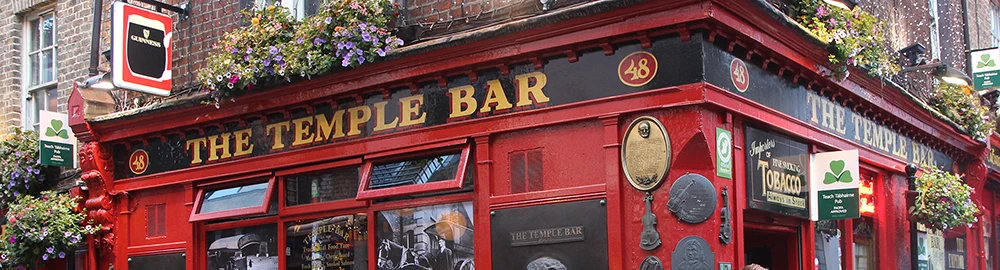
Perhaps the most famous and most photographed music pub is the Temple Bar Pub itself, a true institution in the neighborhood, with cozy interiors adorned with vintage photographs and memorabilia. If you are a fan of Irish music and a good pint of Guinness, you are in for a treat. It is one of Dublin's most iconic and well-known establishments, perhaps the most famous pub in Ireland, so well known that its name has become synonymous with the whole area.
Inside, the pub exudes a cozy, traditional atmosphere, with low ceilings, dark wood furnishings, and an abundance of memorabilia giving it an old-world charm. It occupies a historic building with a distinctive red exterior adorned with hanging flower baskets, and it is quite large inside, with many rooms. It is a great place to experience the warm hospitality for which Irish pub culture is famous. The vibrant atmosphere, bustling crowds, and live music make it a favorite spot for tourists and locals alike, though because of its popularity it can get quite crowded, especially during peak hours and weekends.
Food and Shopping
This neighborhood is a treasure trove for food lovers. From traditional Irish fare to international cuisine, you will find an array of dining options to suit every palate, whether you are in the mood for hearty pub grub, gourmet burgers, seafood, or vegetarian delights. There is plenty of pasta and Asian food too, just about anything you want. Many restaurants and cafes cater to all preferences, from a hearty Irish breakfast or a bowl of Irish stew to a fusion of global cuisines.
If you are on a budget or do not have time to sit down for a full meal, there are affordable places with quick service. One favorite fast food is a sandwich, an easy, affordable meal served quickly with a variety of fillings to choose from. If you are interested in shopping, Temple Bar offers a mix of independent boutiques, vintage stores, and craft shops, where you can find unique clothing, jewelry, artwork, and souvenirs to take home.
Temple Bar Square
.webp)
Temple Bar Square is the very center of this colorful neighborhood. This lively plaza has a pleasant terrace in the middle with open-air restaurant tables, surrounded by pubs, bars, and eateries. You will also find Bad Bob's here, offering food freshly prepared in-house from locally sourced suppliers. Then there is the Clarence Hotel, which was opened and operated by U2's Bono and The Edge; they still own the building, though others now manage it.
What's in the Name
Temple Bar is a curious name, because there is no temple here and there is far more than one bar. In fact, the place is loaded with pubs, the defining characteristic of the neighborhood. The name derives from Sir William Temple, a renowned English diplomat and writer who lived here in the seventeenth century. The deeper history goes back to the Vikings and earlier still. In the eighteenth century Temple Bar became a thriving commercial district of warehouses, taverns, homes, and brothels, and a center of Dublin's political and cultural life.
.webp)
In the nineteenth century the area began to decline as the city's commercial center moved to the north side of the River Liffey, and by the twentieth century it had fallen into urban decay, with many derelict buildings. In the 1980s a regeneration project was launched to revitalize the area, and it proved a great success, turning the quarter into the cultural and nightlife hub it is today.
Around the Quarter
Temple Lane South is a quieter street in the neighborhood, with a few restaurants and bars and beautiful cobblestone paving. Most of the action, though, is centered on the main street that changes its name three times, starting as Fleet Street, becoming Temple Bar, and finishing as Essex Street. It is only about 400 meters from the Millennium Bridge down to the O'Connell Bridge, the effective boundaries of Temple Bar. It is a small area, but packed with people.
Watch the video: Temple Bar, music in the streets » | « Back to the Dublin page