Salzburg Day Three: Viewpoints, museums, churches, and afternoon day-trip
Day Three includes a classic view from the terrace, visits to museums and churches, suggestions for day-trips, and a big festival.
Terrace
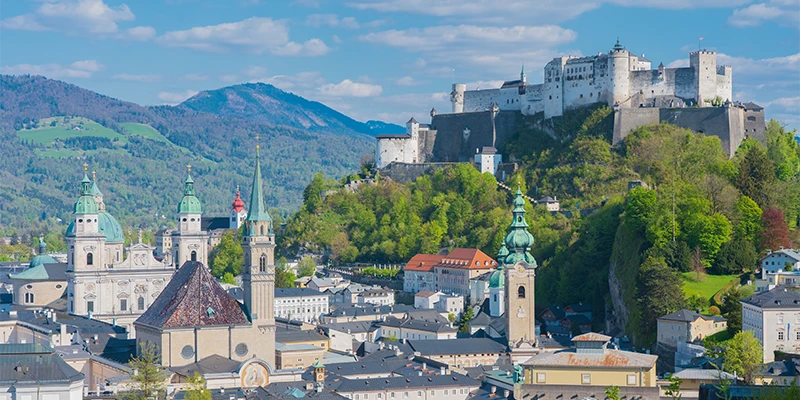
The best view awaits at Café Winkler, high on the hill overlooking the city, offering one of Europe's most celebrated viewpoints, with a panoramic sweep of the Old Town, the Salzach River, and the Hohensalzburg Fortress. To reach the Winkler Terrace, walk past the university to Sigmundsplatz, where another Baroque fountain — the Horse Trough — is set into a rock face. Continue two blocks along Gstattengasse to the Mönchsberg Lift. The elevator carries visitors up the cliff. The terrace offers a commanding view of the old town with the castle behind. An outdoor restaurant serves drinks and snacks; prices match the view.
You can take the same elevator back down, but for a walking alternative, a fairly level path through the woods leads along the ridge to the castle; from there, descend by funicular or on foot. There you find views of the Bürgerwehr, the old medieval wall that protected Salzburg.
Afternoon
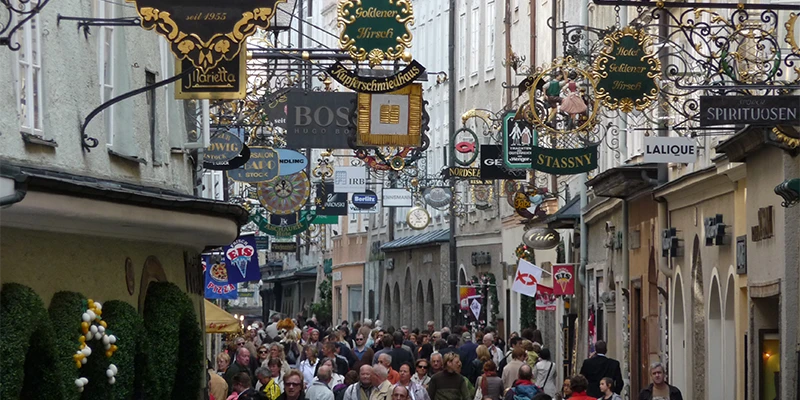
The afternoon offers choice. Museums, palaces, and more old-town strolling compete with half-day bus tours. One additional day in Salzburg makes most of the options possible.
Museums and Palaces
copy2.webp)
Near the foot of the Mönchsberg Lift is the Haus der Natur, the Natural History Museum, with 80 exhibition rooms covering everything from outer space to local insects, including one of the best aquariums in Central Europe. The Salzburg Museum, presenting the cultural history of the city from its origins to the present, is adjacent.
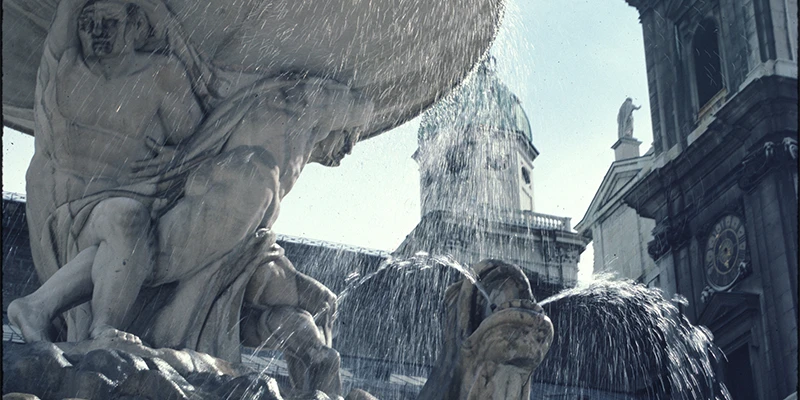
The Residenz, former seat of the archbishops, is of particular interest to art lovers. Its rooms are furnished in Renaissance and Baroque style and decorated with illusionist ceiling murals. The attached gallery holds works by Rembrandt, Rubens, Brueghel, and others. Admission includes an audio guide; allow about an hour. Notice the dramatic fountain with horses in the courtyard.
Stiegl-Brauwelt, the beer museum, demonstrates the brewing process and includes a tasting with admission. Open Wednesday to Sunday.
Hellbrunn Palace, a few miles outside town, is most easily reached by taxi. It is famous for its Surprise Fountains, commissioned in 1613–15 by the mischievous prince-bishop who built the complex, and designed to soak his guests; the trick fountains still operate, so walk carefully. Other kinetic features include a Mechanical Theater and a Water Organ, powered by gravity-fed hydraulics. Several palace rooms are decorated with trompe-l'œil murals that cover walls and ceilings.
Three Churches
.webp)
The cemetery of St. Peter is one of the oldest active burial grounds in Europe, a cloistered garden nestled against the Mönchsberg cliff. Its colorful flowerbeds and well-tended plots, connected by a footpath, lead through to the church entrance.
(02).webp)
St. Peter's Church has one of the most elaborately decorated interiors in town, the Baroque in full flower. The mix of styles reflects its long evolution: the building began as a Romanesque basilica in the 13th century, and subsequent centuries added statues, murals, and High Baroque detail. Mozart occasionally played the church's large organ and premiered his Mass in C Minor here.
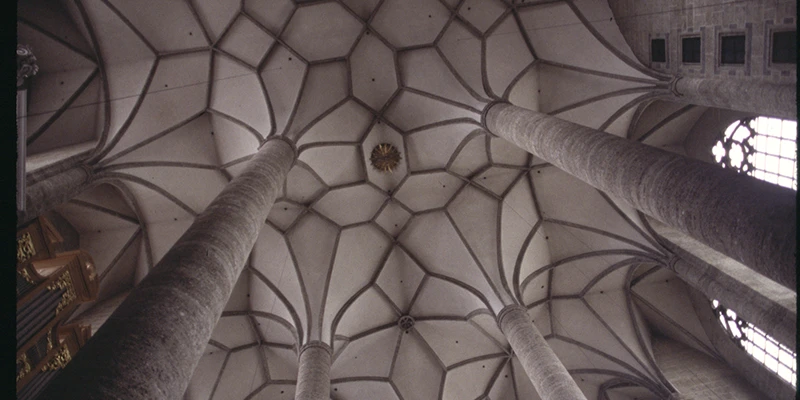
A block away, the Franciscan Church (Franziskanerkirche) is one of Salzburg's oldest, parts dating to 1221. Three hundred years later, a tall Gothic choir was added; two hundred years after that, Baroque elements including the main altar by Fischer von Erlach. The altar contains a late-Gothic wooden Madonna carved by Michael Pacher, the same Tyrolean master whose altar stands at St. Wolfgang. The Franciscan Church illustrates the full 600-year span of European architecture from the Romanesque through the Gothic and Renaissance to the Baroque in a single building.
copy.webp)
One block from there, the University Square is lively, especially on Saturdays, when the outdoor food market runs. A pretzel and a soda from the market is an easy lunch on the move. Also called Universitätsplatz, it is the site of the Collegiate Church (Kollegienkirche), Fischer von Erlach's most important Salzburg work, which influenced later churches throughout Austria and Germany. Its interior is notable chiefly for its scale.
Day Tours
A range of half-day tours operates out of Salzburg. Typical options:
copy.webp)
The Sound of Music Tour, about four hours, visits filming locations from the movie, beginning at Mirabell Gardens — where Maria and the children danced around the Pegasus statue in "Do-Re-Mi" — and continuing to Nonnberg Abbey, Schloss Anif, the Mondsee wedding church, and Schloss Leopoldskron, used as the exterior of the Von Trapp home.
(02).webp)
The Bavarian Mountain Tour or the Eagle's Nest Tour takes visitors into 6,000-foot peaks for panoramic views across the Alps, along the Königsseeache, and through the farmland around Unterau and the Obersalzberg.
The Salt Mines Tour includes a cable car to the top of Mount Dürrnberg, a reconstructed Celtic village, and the oldest salt mines in the world. The mines are entered on a small train and toured partly by boat across an underground lake. The route passes snowcapped Bavarian peaks and stops in Berchtesgaden.
Major Festival: St. Rupert's Day
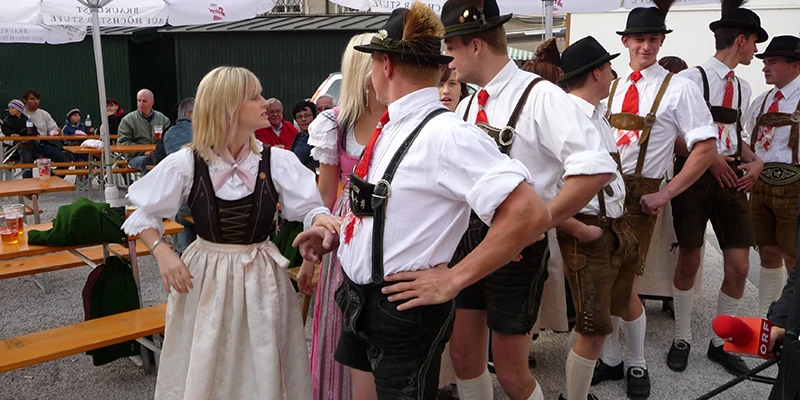
Travelers who arrive in the final week of September may coincide with Rupertikirtag, Salzburg's five-day festival honoring St. Rupert, the city's founding saint and builder of its first church in the eighth century.
Watch the Salzburg St. Rupert's Fair video →
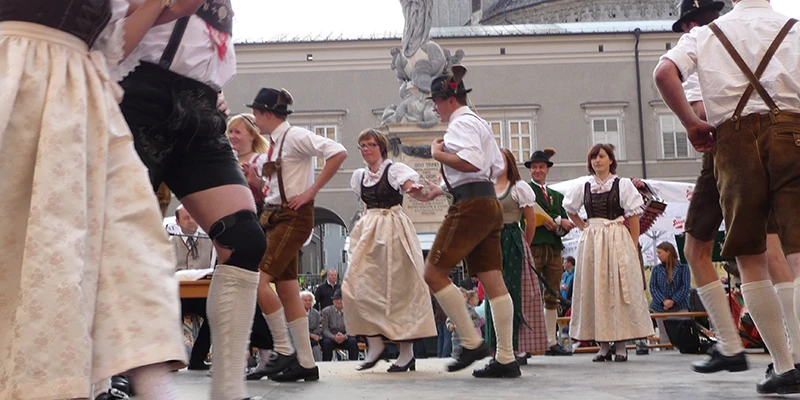
The fairground attractions include restored vintage rides such as a steam-powered carousel and wooden swing boats. Locals attend in Tracht — Lederhosen and Dirndls — almost universally. Artisans gather in the market squares to demonstrate heritage crafts including blue-printing on fabric and woodturning. Food stalls serve regional specialties: Steckerlfisch (grilled fish on a stick), roasted ox, and Bauernkrapfen (farmhouse doughnuts). A dedicated festival tent pours traditional Märzen beer. Brass bands and folk dance groups provide the soundtrack, and the program includes ceremonial gun salutes by the historic marksmen's guilds and performances of the classic Hans-Wurst puppet theater. Hours run roughly 10 a.m. to 10 p.m.
Watch the Salzburg Festival beer tent video →
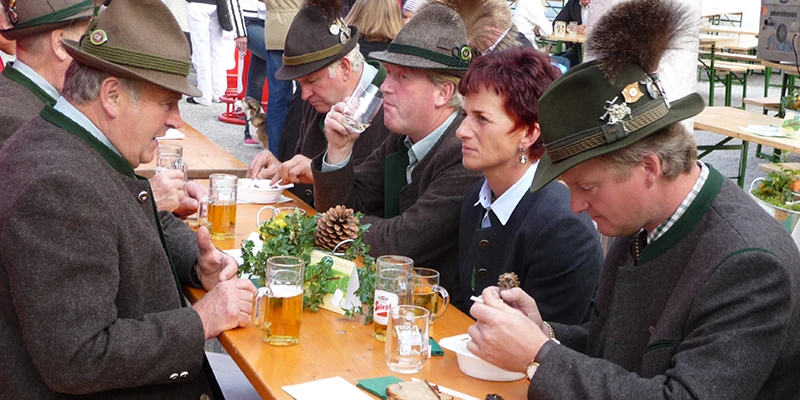
St. Rupert's remains were transferred to the Cathedral on 24 September 774, and the first recorded festival in his honor took place in 1331. Today the event centers on the squares around the Salzburg Cathedral, where the medieval setting serves as backdrop to a celebration that has stayed close to its folk roots and avoided the commercial gloss that has overtaken many comparable European festivals.
Rupertikirtag is smaller, more local, and more family-oriented than the Salzburg Festival in summer, and quite different in character from Munich's Oktoberfest, which overlaps it on the calendar but operates on a far larger scale.